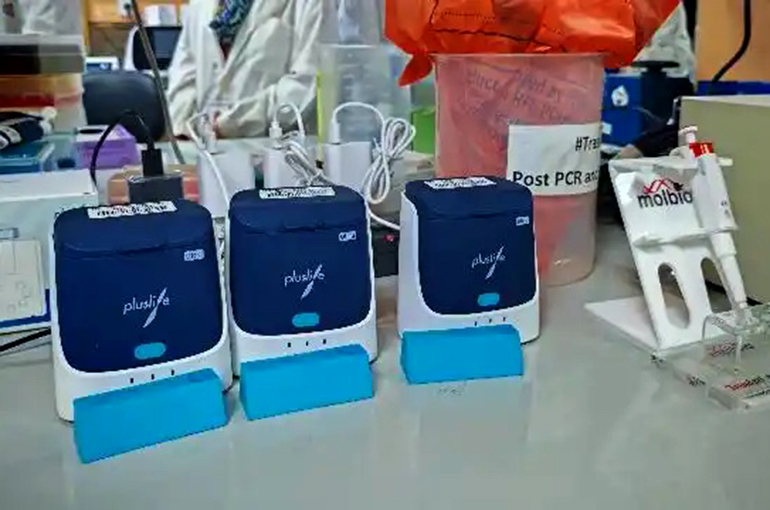
The International Center for Diarrhoeal Disease Research in Bangladesh, a renowned global health research organization based in Dhaka, has initiated field testing of a new rapid, affordable molecular test for tuberculosis detection using swabs. This innovative test was developed by a Chinese technology firm.
The world’s largest funder of tuberculosis prevention programs plans to distribute approximately 300,000 near point-of-care nucleic acid amplification tests, created by the Chinese company, across Bangladesh. These tests will be administered at 83 sites nationwide, especially targeting more remote regions.
Earlier this month, the funding organization announced its commitment to promoting this product in Bangladesh and 12 other developing countries. The swab-based molecular tests, known as NPOC-NAATs, can deliver results in under an hour from a simple sputum or tongue swab sample. They operate with battery-powered devices that do not require complex infrastructure or extensive training, making them particularly suitable for resource-limited settings, according to the World Health Organization. The only swab-based TB diagnostic that meets WHO standards is produced by this Chinese firm.
The TB detection device is roughly palm-sized and costs around 150 USD. During a visit to a laboratory in Dhaka, it was demonstrated that ordinary users could easily operate the device after viewing a brief instructional video. Furthermore, it can be powered either by batteries or power banks, which extends its use in areas lacking reliable electricity.
A senior scientist from the research institute emphasized the need for more affordable and dependable TB testing options in Bangladesh. She mentioned that if the Chinese-made products perform well, they should be considered for broader use and promotion. Her team is currently comparing the new device’s performance against existing diagnostic tools to evaluate its sensitivity and accuracy.
The primary targets for the ongoing trials include children in Dhaka as well as community residents near the port and export zones in Chittagong, as these areas are critical in the nation’s TB prevention efforts.
Traditional TB testing methods are often slow, costly, and reliant on cold chain logistics, stable electricity, large laboratory facilities, and skilled personnel—requirements that are difficult to meet in many developing countries. These constraints contribute to TB remaining one of the top infectious disease killers worldwide.
The global health initiative supporting this technology aims to validate and integrate innovative solutions into real healthcare environments before expanding their use.
Bangladesh currently has about 384,000 TB patients, ranking sixth globally. Nearly 18% of these individuals are unaware they are infected, which elevates the risk of transmission. The disease causes roughly 44,000 deaths annually in the country. Globally, TB claimed 1.2 million lives in 2024, making it one of the three major infectious disease crises alongside AIDS and malaria.