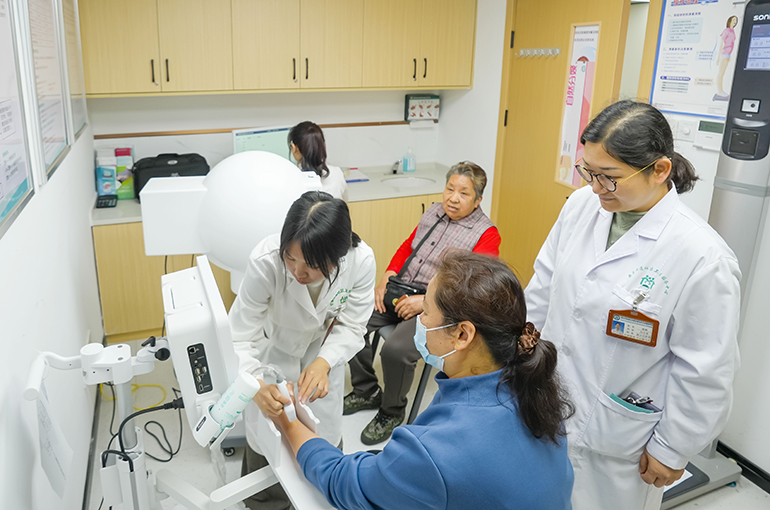
China aims to ensure that by 2030, every urban sub-district has at least one community healthcare center, making it easier for residents to access treatment for common illnesses closer to home, according to a recent policy announcement from the National Health Commission.
To meet this target, local governments are encouraged to expand community healthcare services through government procurement programs where needs are identified through official assessments. Private capital is also being promoted to establish community medical institutions that meet all statutory public service requirements typical of standard community health centers.
Sub-districts with populations exceeding 100,000 residents are permitted to establish an additional community health service center. In China, a sub-district represents a fundamental urban administrative division that typically encompasses several residential communities. These sub-districts are managed by local administrative offices appointed by district-level authorities to provide public services and support community governance.
Community health service centers operate as autonomous grassroots medical institutions. They run community health stations, oversee public health initiatives in their area, provide standardized guidelines to private medical providers, and evaluate their performance.
The policy emphasizes expanding outpatient healthcare services in areas such as pediatrics, dentistry, rehabilitation, mental health, weight management, and hemodialysis. There is also a gradual push to introduce inpatient services, home-based hospital beds, and home rehabilitation and nursing care.
To strengthen healthcare delivery at the community level, efforts are being made to facilitate regular staff exchanges between community clinics and major public hospitals. Community healthcare workers are required to undergo periodic additional training at major hospitals. Additionally, each community health center should have at least one doctor regularly available for outpatient consultations from a public hospital.
The policy also advocates integrating advanced technologies like artificial intelligence to enable seamless recognition of lab and imaging test results between grassroots centers and larger hospitals. It further aims to broaden the range of prescription medicines accessible at community healthcare facilities.