The acclaimed game Blasphemous recently marked its fifth anniversary on September 10. Following this milestone, the developers revealed plans to launch the challenging Metroidvania title for mobile platforms.
Having already graced PC, PlayStation 4, Xbox One, and Switch, Blasphemous will be available on iOS and Android starting February 24, 2025, for a price of $8. Gamers can now preorder the title on the Apple App Store or pre-register on the Google Play Store.
This mobile version will support gameplay via touchscreen or an external game controller, and it will include the complete base game along with all downloadable content (DLC). While all three expansions were initially released for free, consolidating them in one package for mobile users is a welcome addition.
More On This Subject
Elden Ring just took pity on us and nerfed Shadow of the Erdtree’s final boss
Animal Crossing: Pocket Camp is shutting down, but there’s good news for fans
The next Elder Scrolls game will launch in September, but only on mobile
The developers expressed their excitement on X (formerly Twitter), stating, “The Miracle be praised! After years of fan requests, you’ll soon be able to carry the dark and brutal world of Cvstodia in your pocket!” They also released a brief trailer, which, while lacking new footage, serves as a reminder of the intense atmosphere Blasphemous creates.
Blasphemous – Mobile Announcement & Pre-Order/Registration Trailer
Blasphemous is often described as a Soulslike side-Metroidvania platformer, renowned for its challenging gameplay, rich Gothic visuals, and unyielding religious themes reminiscent of FromSoftware classics such as Bloodborne and Dark Souls. New players may find it quite daunting, so pairing a Bluetooth controller with your mobile device could enhance the experience.
Since its debut in 2019, The Game Kitchen has launched Blasphemous 2, a sequel that largely retains the familiar gameplay elements fans have come to love, catering to those seeking a new challenge in the Blasphemous universe.
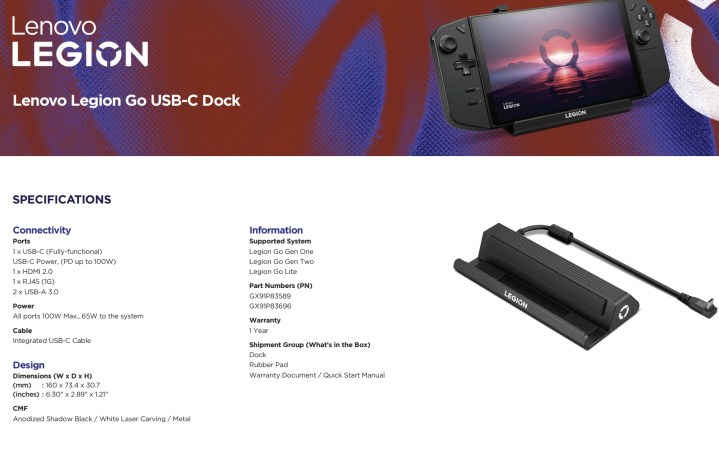
Lenovo has inadvertently revealed plans for two new handheld gaming consoles. The company recently issued documentation for its new Legion Go USB-C Dock, which mentions support for two upcoming devices: the Legion Go Gen 2 and Legion Go Lite.
This isn’t the first mention of the Legion Go Lite; back in May, Windows Central reported that Lenovo is developing a more affordable version of the original Legion Go. This smaller device, anticipated to have a 7-inch display, is expected to use the same AMD Z1-series chipset, offering improvements while coming at a reduced price.
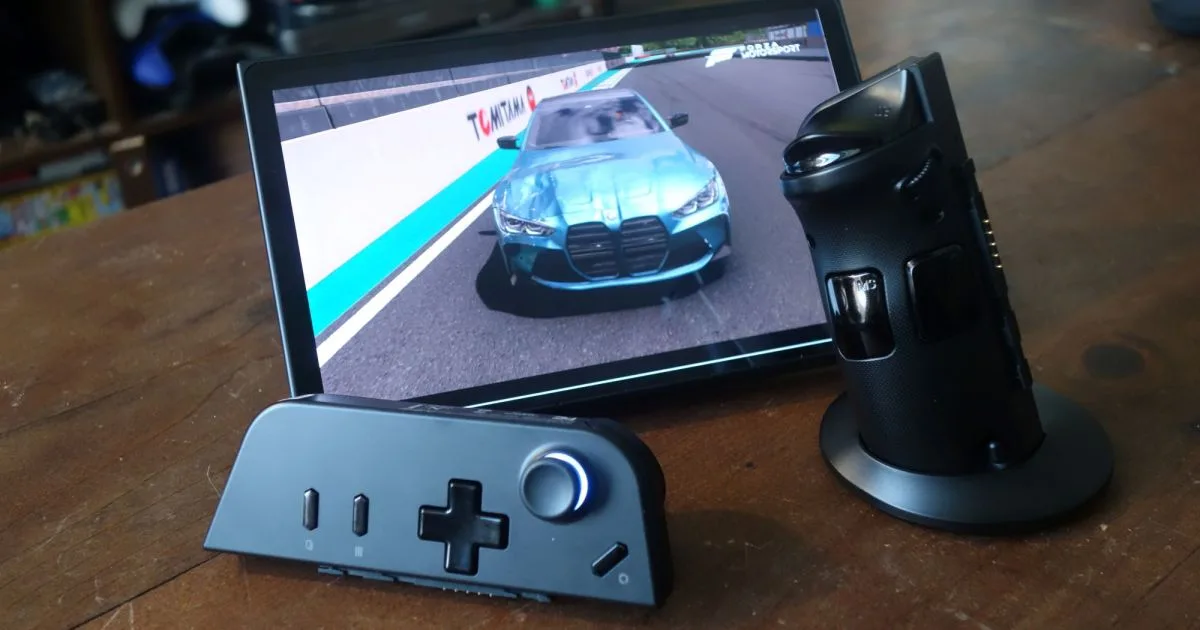
Just recently, YouTuber NITRXX shared images that appear to show the exterior design of the Legion Go Lite. It seems this model may come with fixed controllers, distinguishing it from the original Legion Go, which featured detachable controls, thereby removing the necessity for a dedicated mouse. Additionally, it might feature a smaller trackpad located beneath the right analog stick, reduced rear button functionality, and relocated auxiliary buttons.
NITTRX
Currently, details about the Legion Go Gen 2 remain scarce, with this being its first mention. It could potentially serve as the direct successor to the original Legion Go.
Lenovo’s current Legion Go model boasts the AMD Ryzen Z1 Extreme processor, 16GB of LPDDR5X-7500 RAM, and up to 1TB of PCIe Gen4 SSD storage, making it competitive with other handhelds like the Steam Deck and ASUS ROG Ally. What sets the Legion Go apart is its larger 8-inch display and detachable controllers, similar to the design seen in the Nintendo Switch.
While there is no solid information yet, many anticipate that the Legion Go Gen 2 will come with an upgraded processor. AMD has introduced new processors in the Ryzen 8000 lineup, including the Ryzen AI 300, which are found in various laptops and mini PCs. Transitioning to a new AMD Z2 or Z2 Extreme would seem logical, although Intel’s upcoming Lunar Lake chips also show promise and could make a good match for future handheld gaming devices.
Nvidia’s highly anticipated top-of-the-line GPU appears to be delayed, with reports suggesting it won’t be available for some time. According to a recent article from Benchlife and other sources, the RTX 50 series is set to be revealed at CES 2025 in January. This implies that the RTX 5090 may not debut until at least three to four months from now. On a brighter note, new insights have emerged regarding the card’s specifications and features.
For several months, GPU enthusiasts have set their sights lower concerning the RTX 50 series, with many doubting its release within the current year. Recent leaks have corroborated this sentiment, with publications like The Verge joining Benchlife in asserting that Nvidia’s next-generation GPUs will not be unveiled until 2025. Well-known hardware leakers such as kopite7kimi have also indicated that early 2025 is the latest target release timeframe.
At the beginning of 2024, I anticipated that the RTX 5090 would hit the market around October. This expectation was not solely Nvidia-focused; there was a general assumption that AMD, Nvidia, and Intel would all debut their new graphics cards this year. However, ongoing signs suggest that 2024 may end up being a lackluster year for PC hardware. Besides the anticipated refresh of the RTX 40 series and AMD’s RX 7600 XT, there may be few new releases, as even the RX 7900 GRE was merely an older model receiving a global launch earlier this year.
Jacob Roach / Digital Trends
The disappointing release date news isn’t entirely unexpected. On the upside, the recent spec leak has clarified some features we can expect from the RTX 5090. For instance, Nvidia is reportedly transitioning to a PCIe 5.0 interface, meaning you will need a modern processor and a compatible motherboard that supports PCIe Gen 5 for optimal performance.
This GPU will also incorporate a DisplayPort 2.1a connection that fully supports UHBR20, allowing for significantly greater bandwidth than previous versions. Additionally, it will feature a 14-layer printed circuit board (PCB). Recent leaks suggest that the RTX 5090 will offer 21,760 CUDA cores, a 512-bit memory bus, and 32GB of GDDR7 memory. However, it’s essential to approach this information with caution, as none of it has been officially confirmed.
The absence of the RTX 5090 and RTX 5080 this year could mean Nvidia is passing up a critical chance. The last quarter of the year usually brings the highest PC sales, and Nvidia has a pattern of unveiling new GPUs during this period in prior generations. Yet, with speculations indicating that Nvidia is just now nearing the finalization of its flagship card’s specs, the prospect of a 2024 launch seems increasingly unlikely. However, definitive answers will only come when Nvidia makes an official announcement.
Get a weekly breakdown of the technology behind PC gaming
The upcoming RTX 5090 is rumored to require a staggering 600 watts of power, and its performance could surpass anything we’ve seen before. Users will need to ensure their systems are ready to make the most of this powerful hardware when it finally arrives.
Anticipation for the second half of Yellowstone Season 5 is reaching new heights, especially with the news that the premiere episode will air on two different networks. CBS will feature the Season 5, Part 2 debut on the same night it premieres on Paramount Network.
The upcoming episode of Yellowstone is set to air on Paramount Network at 8 p.m. ET on Sunday, November 10. CBS will follow up with a re-airing at 10 p.m. ET, taking the place of an episode of The Equalizer and airing after a new episode of Tracker.
Since pausing in January 2023, Yellowstone has faced various challenges and delays over the course of the past 18 months, with the ongoing situation involving star Kevin Costner being a primary concern. The actor, who plays John Dutton, has been tangled in disputes with Paramount and creator Taylor Sheridan regarding his filming schedule and compensation. These tensions arose due to Costner’s commitments while shooting Horizon: An American Saga.
In June, after much speculation, Costner made the announcement that he would be departing from Yellowstone. “I just realized that I won’t be able to continue Season 5B or move forward in the future,” he stated on X (formerly Twitter). He expressed his gratitude for the experience and the audience’s support, sharing, “I know you loved it. I just wanted to let you know that I won’t be returning, and I love the relationship we’ve built. I’ll see you at the movies.”
The storyline of Yellowstone continues to follow the Dutton family as they navigate the complexities of maintaining their power and influence in their region. The show features a talented cast, including Kelly Reilly as Beth Dutton, Luke Grimes as Kayce Dutton, Wes Bentley as Jamie Dutton, Cole Hauser as Rip Wheeler, Kelsey Asbille as Monica Long Dutton, and Gil Birmingham as Chief Thomas Rainwater.
Although Season 5, Part 2 was initially intended to be the series’ conclusion, discussions between Reilly and Hauser have been ongoing since June for a potential Season 6 of Yellowstone.
Yellowstone Season 5 Part 2 Teaser | ‘Generations’
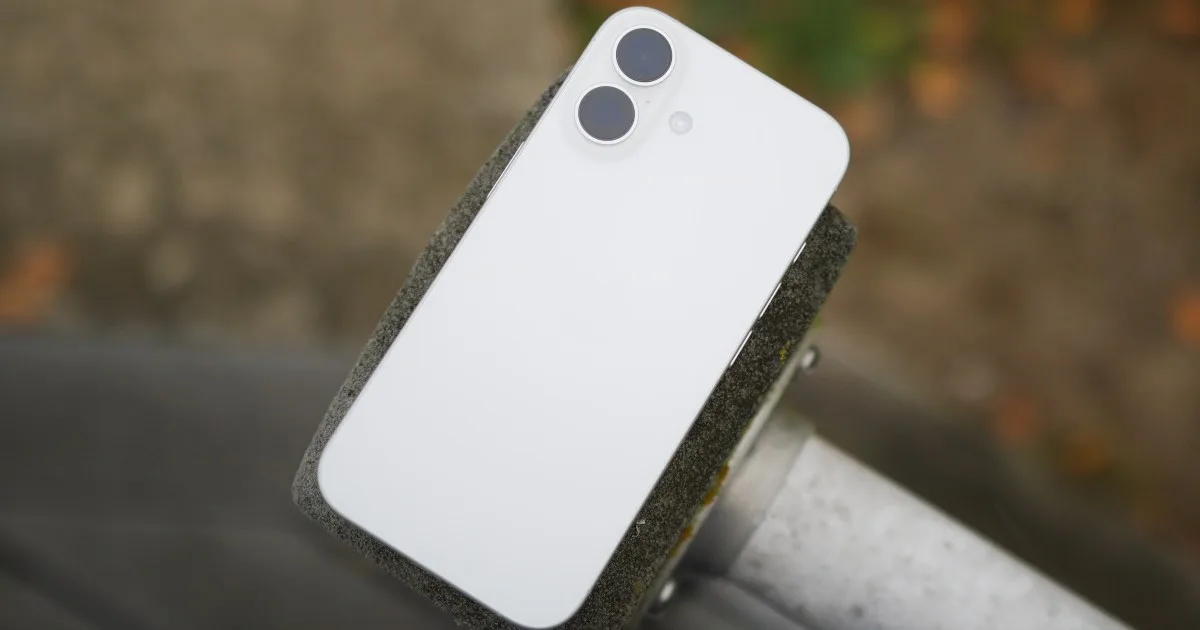
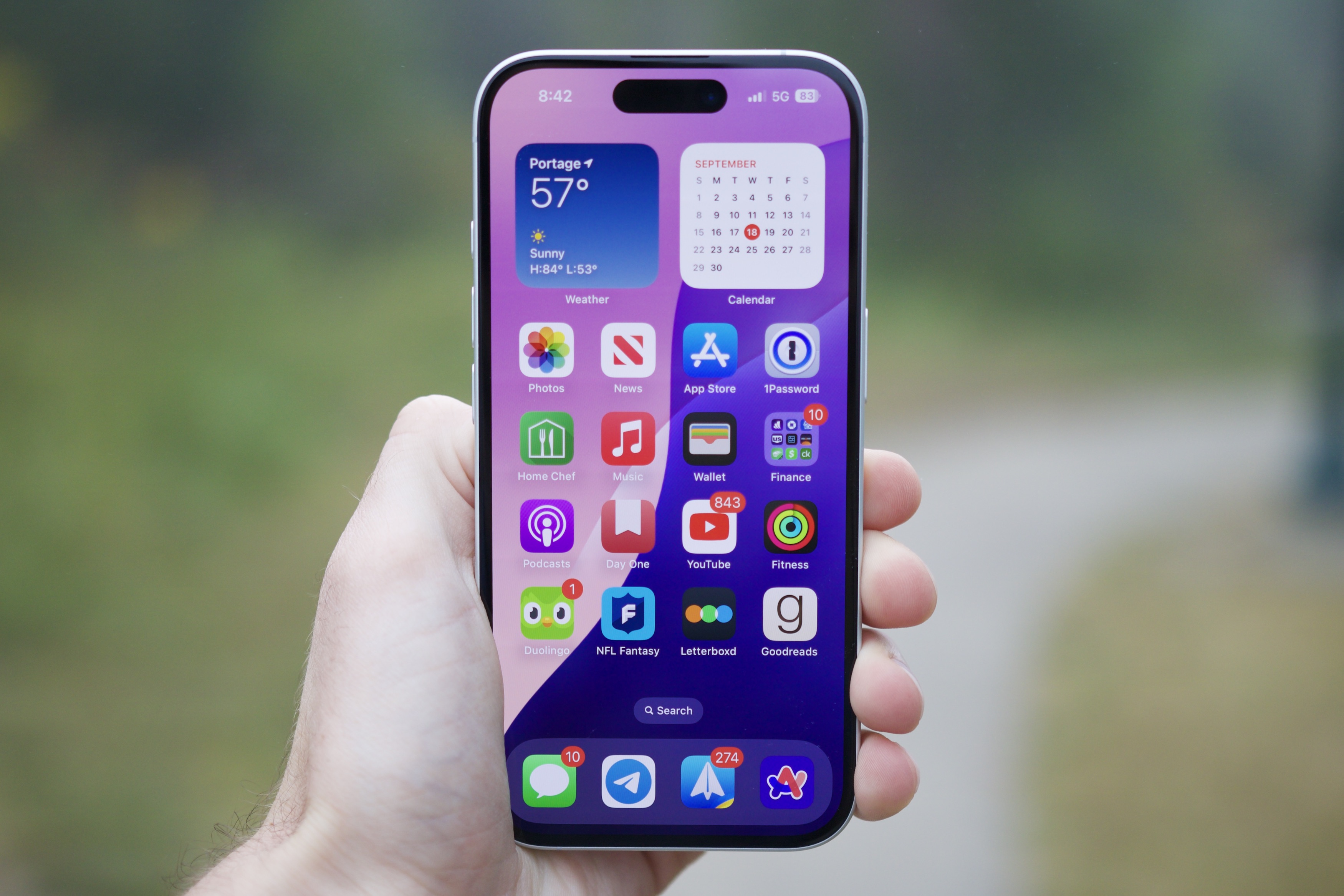
The iPhone 16 has made a bold entrance, but it seems to lack the excitement of previous models. As reported by AppleInsider, a report from Morgan Stanley indicates that the iPhone 16 and iPhone 16 Plus together moved approximately 37 million units during their debut weekend. Nonetheless, interest appears to be waning compared to the iPhone 15. This decline in demand is reflected in the lead times—the period it takes for an order to ship after purchase.
This year’s lead times are significantly shorter than last year’s, signaling reduced consumer demand. The current lead times are as follows:
25.5 days for the iPhone 16 Pro Max, down from 43.5 days last year.
18.5 days for the iPhone 16 Pro, compared to 32.5 days last year.
9 days for the iPhone 16, shorter than last year’s 14 days.
7.9 days for the iPhone 16 Plus, previously 13.9 days.
The report from Morgan Stanley highlights that the lead times for the iPhone 16 are the shortest seen in the last five years, similar to those of the iPhone 12. However, these numbers do not provide the full picture.
Joe Maring / Digital Trends
Lead times reflect Apple’s inventory levels, and the tech giant is well-known for keeping such data under wraps. These shorter lead times might suggest Apple has effectively managed production to meet demand, rather than signaling a general disinterest in the latest device.
Related
5 alternative smartphones to consider instead of the Google Pixel 9
Exciting possibilities for a 120Hz display in the upcoming iPhone 17
Two features in iOS 18 I expected to love—but didn’t
Despite the lukewarm sales of the iPhone 16 initially, history shows that Apple often experiences impressive financial results well after a product’s launch. While current sales figures may seem subdued, it’s premature to judge the total success of the iPhone 16.
This latest model includes an array of advanced features; however, they may not be sufficiently appealing to attract new customers. Reports suggest that many users are upgrading primarily because their older devices have become outdated, rather than because they are drawn to new functionalities such as Apple Intelligence. Given the looming talk of a potential economic downturn, it’s understandable that some consumers might prefer to postpone an upgrade until absolutely necessary.
Speculation surrounding the RTX 5090 has ramped up recently, and we’re starting to get more definitive insights into Nvidia’s highly anticipated RTX 50-series GPU. Renowned hardware insider Kopite7kimi reports that the RTX 5090 is expected to demand an impressive 600 watts of power.
The leaker disclosed specifications for both the RTX 5090 and RTX 5080 on X (formerly Twitter). While previous hints about RTX 50-series graphics cards were mostly vague, this marks the first time that complete details have been revealed. According to the information shared, the RTX 5090 will indeed require 600 watts and feature an astounding 32GB of GDDR7 memory, paired with a 512-bit bus.
Though whispers had circulated regarding the RTX 5090’s high power requirements, this is the first occasion that specific metrics have surfaced alongside other specifications. As a point of comparison, the RTX 4090 requires 450 watts. However, its 16-pin power connector can deliver up to 600 watts, suggesting that Nvidia may fully utilize this capacity with the next-generation RTX 5090. Interestingly, despite its demanding power needs, Kopite7kimi indicates that the RTX 5090 will utilize a dual-slot cooler design.
Details about the RTX 5080 were also shared by the leaker, stating that it would need 400 watts of power and feature 16GB of GDDR7 memory operating on a 256-bit bus. This represents only a slight upgrade from the RTX 4080 Super, hinting that Nvidia may choose to maintain a notable performance disparity between the RTX 5090 and RTX 5080, similar to the previous RTX 40-series lineup.
So far, Nvidia has not officially acknowledged the existence of the RTX 5090 or RTX 5080, although he have acquired substantial knowledge regarding the forthcoming Blackwell architecture, which the GPUs will employ. Nvidia has already unveiled this new architecture for data centers, although its enterprise version was postponed due to design issues.
As for when Nvidia will roll out its next-generation graphics cards to the gaming market, we typically expect announcements in October or November. However, delays in the enterprise sector could result in the launch being pushed back to 2025.
Employees at Amazon are expressing significant discontent over the company’s decision to mandate a return to the office five days a week starting January. This sentiment was captured in a survey conducted by Blind, a platform for anonymous discussions among tech workers.
An overwhelming 91% of the 2,585 Amazon employees surveyed by Blind indicated dissatisfaction with the newly announced office return policy, which was detailed in a memo from CEO Andy Jassy last week.
One participant voiced their frustration, stating, “The blanket return-to-office policy is absurd, especially for those of us who were hired to work remotely and live far from any office. I have family and kids here, so relocating isn’t an option for me. Even if I weren’t in that situation, there’s a high chance of being laid off in six months, so why take that risk?”
Since June 2023, Amazon’s office policy has required staff to be on-site at least three days a week. However, aiming to conclude the hybrid working model adopted during the pandemic, Jassy emphasized last week his belief that “the benefits of being together in the office are substantial” and asserted that it is time for everyone to return on a full-time basis.
In his memo, Jassy noted, “Our observations show that it’s easier for teams to learn, model, practice, and reinforce our culture when together. Collaboration, brainstorming, and innovation are more effective in person; teaching and learning from each other are more fluid; and team cohesion improves.” He added that the previous 15 months of at least three days a week in the office have only strengthened this view.
Jassy assured employees that the company would support a “smooth transition” for those who might need to make personal adjustments to accommodate the full-time return. However, it remains uncertain how flexible the company will be regarding individual circumstances.
Amazon is not alone among tech giants in revising its workplace policies during the pandemic. Other major companies like Apple, Microsoft, Google, and Meta have similarly shifted their approaches, currently mandating in-office attendance at least two or three days each week. It will be interesting to see if any of these firms follow Amazon’s lead and require their employees to be in the office five days a week.
Starlink satellites being deployed by SpaceX.SpaceX / SpaceX
SpaceX has announced that its Starlink internet service, which beams internet directly from space, has reached 4 million users around the globe.
In a statement shared on X (formerly Twitter), the company noted, “Starlink is connecting more than 4 million people with high-speed internet across over 100 countries and territories.”
Under Elon Musk’s leadership, this ambitious internet initiative is experiencing rapid growth, having gained 1 million new users just in the last four months. The service started onboarding users in October 2020 and reached its first million subscribers by December 2022.
Starlink has evolved significantly since SpaceX launched its first 60 satellites into low-Earth orbit back in 2019. The satellite network now boasts approximately 6,300 satellites and continues to expand its service to offer faster, more dependable, and broader coverage.
In addition to catering to residential customers, Starlink is attracting a growing number of business clients, including airlines and cruise companies. Just recently, Air France announced plans to begin implementing Starlink’s high-speed internet service on its aircraft starting next summer. This initiative aims to provide ultra-fast internet connectivity to passengers throughout their flights.
As Air France stated, “Passengers will be able to easily stay connected with friends and family, keep up with live news, play online games, and enjoy streaming movies and series.” This service will be accessible via smartphones, tablets, and laptops, with each passenger able to connect multiple devices at once.
However, the Starlink project has not been without its challenges. Astronomers have voiced concerns regarding the satellite constellations, as the bright trails left behind by the satellites hinder their observations of the cosmos. Moreover, electromagnetic interference from the newer satellites has caused disruptions to ground-based radio telescopes, affecting the work of scientists in the field, as reported by the BBC.
After the announcement of Horizon Zero Dawn Remastered for PlayStation 5 and PC, Sony has decided to increase the price of the original PlayStation 4 Complete Edition by $20 on the PlayStation Store.
This price hike comes without any prior notice. Previously, the game had been priced at $20 for a couple of years, meaning the cost has effectively doubled overnight.
This adjustment was first noted by Video Games Chronicle. Additionally, price-tracking sites like PSDeals.net and PSPrices.com have confirmed that the price has risen to $40, the highest it has been since 2018, surpassed only by its initial launch price of $60. If you’re looking for a physical copy, you might still find it for less at third-party retailers such as Amazon, although updated list prices reflect the new $40 tag.
While Sony has yet to address the price increase publicly, it appears that the launch of the remastered version is intended to steer players away from purchasing the older edition. Current owners of Horizon Zero Dawn can upgrade to the remastered version for just $10, available on both PS5 and PC via Steam and the Epic Games Store.
This increase follows another unexpected price rise: earlier this month, the cost of the DualSense controller increased by $5 universally across PlayStation Direct and various online retailers. This price change applies to all versions of the controller except the DualSense Edge, which retails at $200.
Sony introduced Horizon Zero Dawn Remastered during its September State of Play event on Wednesday. The remaster is set to launch on October 31, featuring The Frozen Wilds DLC and numerous enhancements, including PS5-specific 3D audio, DualSense capabilities such as haptic feedback and adaptive triggers, and support for the upcoming PS5 Pro. The update will also include re-recorded motion capture, new dialogue, and visual improvements, ensuring it remains competitive with its sequel, Horizon Forbidden West.
The John Wick franchise has introduced its latest skilled assassin, Ana de Armas, in the teaser for Ballerina.
The film, officially named From the World of John Wick: Ballerina, features de Armas as Eve Macarro, a young ballet dancer training to become an assassin within the Ruska Roma crime syndicate. Set against the backdrop of Elton John’s classic Tiny Dancer, the trailer showcases Eve, also known as the ballerina, as she embarks on a quest for revenge against the murderers of her family. The culmination of the action-packed preview reveals the iconic boogeyman, John Wick, played by Keanu Reeves.
“How do I start doing what you do?” Eve queries, to which John retorts, “Looks like you already have.”
Returning to their roles from the John Wick series, Ian McShane as Winston Scott, Anjelica Huston as the Director, and the late Lance Reddick as Charon make appearances in Ballerina. The cast also includes Gabriel Byrne, Catalina Sandino Moreno, Sharon Duncan-Brewster, David Castañeda, and Norman Reedus.
From the World of John Wick: Ballerina (2025) Official Trailer – Ana de Armas
Ballerina takes place concurrently with the events of John Wick: Chapter 3 — Parabellum, during which Unity Phelan briefly portrays a ballerina.
Len Wiseman, known for directing Underworld, helms Ballerina from a screenplay by Shay Hatten, who also contributed to John Wick: Chapter 4. Chad Stahelski, the director behind all the John Wick films, serves as a producer alongside Basil Iwanyk and Erica Lee.
Marking the first spinoff in the John Wick saga, Ballerina follows the launch of the franchise’s inaugural television series, The Continental: From the World of John Wick, which premiered on Peacock in 2023. Initially slated for a June 2024 release, Lionsgate has shifted the film’s debut to 2025 and enlisted Stahelski to collaborate with Wiseman on additional action sequences.
Recently, Samsung unveiled a fresh approach for developers to enhance its health-monitoring features. The Samsung Health Software Development Kit (SDK) Suite provides developers with access to data captured by Samsung devices, including the Galaxy Watch. This Suite is divided into four main components: the Sensor SDK, the Data SDK, the Accessory SDK, and the Research Stack.
The Sensor SDK enables developers to harness the BioActive Sensor algorithm of the Galaxy Watch, along with improvements in data tracking capabilities. For the first time, it offers continuous access to advanced features, incorporating infrared and red LED data. This enhancement allows for deeper insights into eight existing health metrics, such as muscle mass and body composition.
The Data SDK is likely to have the most significant impact, especially since it can leverage information collected from the Galaxy Ring, smartphones, and other Samsung health devices. With this tool, developers can analyze metrics sourced from the Samsung Health app and gauge how the algorithm converts this data into quantifiable statistics.
The Accessory SDK facilitates the integration of data from third-party equipment, including gym exercise bikes, heart rate monitors, and glucose monitors. By consolidating all this information into a single ecosystem, developers can access and manage data more efficiently.
Lastly, the Research Stack is an open-source initiative aimed at creating seamless connectivity between data collected by sensors and the Health SDK Suite. This upgrade is set to provide researchers with more valuable insights.
It’s crucial to mention that these SDKs are intended for developers rather than individual application creators. However, any advancements made could greatly influence the user experience of the Galaxy Watch. It’s important to note that independent apps are unlikely to emerge from these SDKs; instead, Samsung is more likely to incorporate any findings into future device versions.
Additional Articles
The Galaxy S25 Ultra may have another advantage over the iPhone 16 Pro Max
Samsung has just introduced the Galaxy S24 FE, and it’s quite intriguing
Here’s a breakdown of the pricing for the Galaxy S24 FE and Galaxy Tab S10 Ultra
A new discrete GPU from Intel has appeared on Geekbench, providing a glimpse into its possible specifications. This current entry is the first Battlemage GPU to be featured on a benchmarking platform. The listing was initially spotted by Benchleaks, showcasing a test system with an Intel Core i5-13600K processor paired with an “Intel Xe Graphics RI” GPU.
The GPU achieved a score of 97,943 points in the OpenCL benchmark, positioning it just below the Nvidia GeForce RTX 4060 and Intel Arc A770. When compared to AMD’s offerings, it falls between the Radeon RX 7700 XT and RX 7600 XT in terms of performance. By examining the GPU’s PCIe ID (E20B), further analysis of the Linux kernel driver database reveals that it is built on Intel’s forthcoming Battlemage architecture. The database indicates five Battlemage SKUs, and this particular GPU appears to be the second most powerful among them.
With Nvidia preparing to launch its RTX 50-series GPUs and AMD working on RDNA 4 graphics cards, this level of performance might not seem competitive. However, it’s crucial to keep in mind that this is just a single test, and it doesn’t represent the performance in real-world gaming scenarios. Additionally, the GPU tested is likely an early engineering sample, which may have different specifications upon its final release.
In terms of specifications, the GPU boasts 160 compute units (20 Xe cores), 12GB of VRAM, and a peak boost clock of up to 2,850 MHz. Although the core count is lower compared to the Alchemist-based Arc A770 (32 Xe cores) and A750 (28 Xe cores), the boost clock speeds surpass those of both the A770 and A750.
Geekbench
One of the major enhancements with the upcoming Battlemage GPU is its transition to Intel’s Xe2 GPU architecture, which is a refinement over the initial Xe architecture. This upgrade is anticipated to deliver improved power efficiency, enhanced ray tracing capabilities, and better AI-driven upscaling with features like Intel’s XeSS.
Additionally, the new Xe2 architecture is expected to focus on better driver support and software enhancements, areas where Intel has faced criticism previously. The company has been actively addressing initial concerns regarding stability and performance in its Arc A-series, and the Battlemage series could represent a significant improvement in those aspects.
Intel’s foray into the GPU market has been met with a mix of responses. While the Arc A750 and A770 laid a solid groundwork, they had difficulty competing with the well-established offerings from Nvidia and AMD. Though no official release date or pricing is available yet, industry sources suggest Intel may unveil the Battlemage GPUs by early 2025.
The Samsung Galaxy S25 Ultra is expected to make its debut early next year, yet a surge of rumors surrounding the device has emerged in recent months. The most recent speculation comes from a reliable source, Ice Universe.
This leaker claims that the Galaxy S25 Ultra has outperformed Apple’s newly launched iPhone 16 Pro Max in benchmark tests. According to data shared by Ice Universe, the Galaxy S25 Ultra achieved a single-core score of 3,011 and a multi-core score of 9,706. In comparison, its predecessor, the Galaxy S24 Ultra, averaged a single-core score of 2,142 and a multi-core score of 6,693. These results indicate a substantial advancement between the two generations.
Given that Apple’s latest flagship is still fresh off the assembly line, it’s premature to establish standard benchmark scores for the iPhone 16 Pro Max, though we can make some educated guesses. For example, TechRadar recorded a single-core score of 3,386 for the iPhone 16 Pro Max in their testing, along with a multi-core score of 8,306. In my own tests with the new phone, I obtained a single-core score of 3,419 and a multi-core score of 8,195.
If these figures hold true, the Galaxy S25 Ultra featuring Qualcomm’s upcoming Snapdragon 8 Gen 4 chip could be positioned to excel in multitasking compared to Apple’s offering. However, the practical implications of these scores are yet to be determined, as various factors remain unknown regarding Samsung’s device.
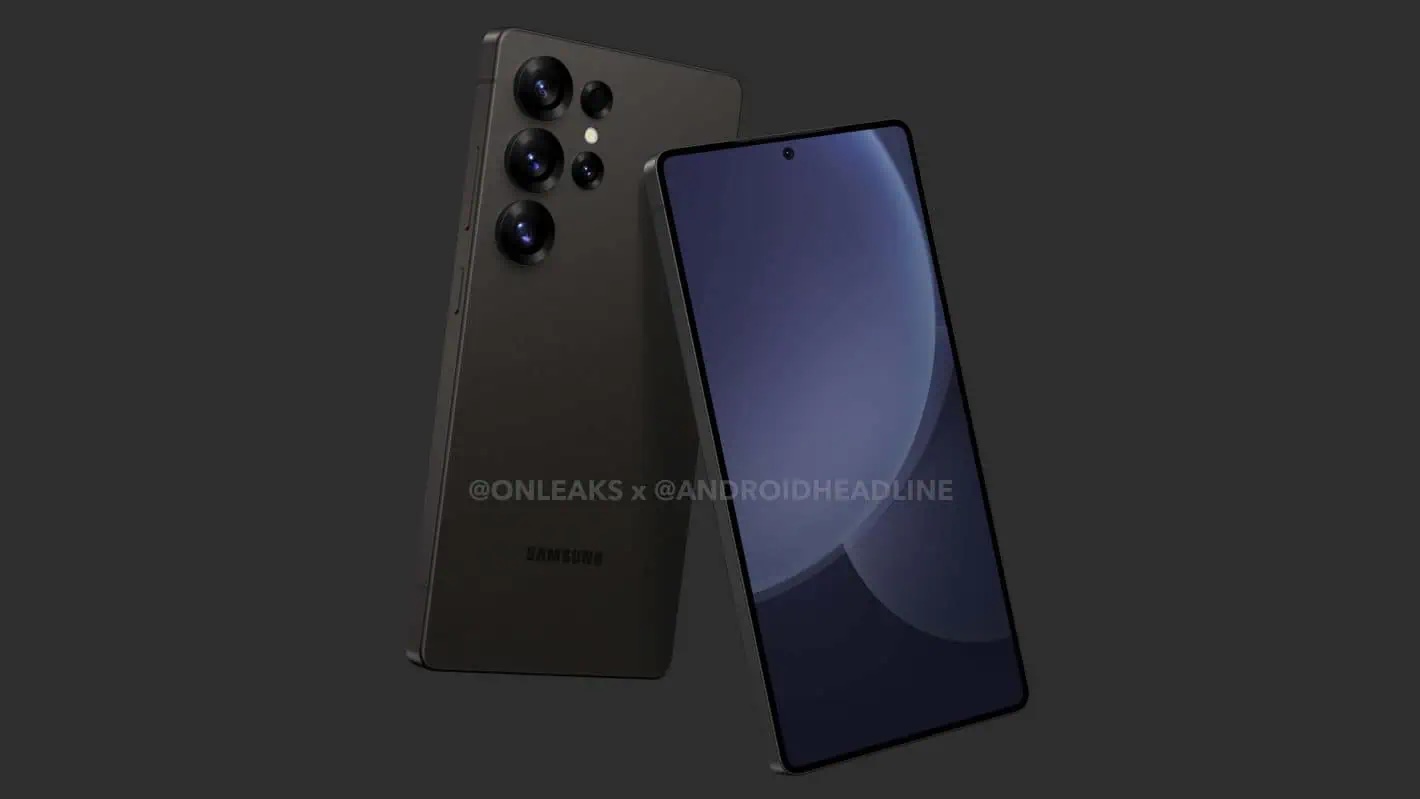
A render of the Samsung Galaxy S25 UltraSource: Android Headlines
Moreover, the Galaxy S25 Ultra might surpass the iPhone 16 Pro Max in another aspect. Recent reports suggest that the newer device may come with smaller bezels, a feature Samsung will likely highlight if accurate. Apple’s presentation of the iPhone 16 Pro Max emphasized its trim bezels, so if Samsung achieves the same, it would be significant.
It isn’t surprising that the upcoming Galaxy S25 series is poised to outperform Apple’s iPhone 16 in several metrics, especially considering the Snapdragon 8 Gen 4 will be a newer chip compared to the A18 Pro found in the iPhone 16 Pro models. Currently, the tables are turned, with Apple’s latest offerings outperforming Samsung’s nearly year-old Galaxy S24 series in many respects.
Samsung is anticipated to unveil the Galaxy S25, Galaxy S25 Plus, and Galaxy S25 Ultra in January or February, followed quickly by their release. The latest Galaxy S Ultra is projected to be lighter than its predecessor and will include upgraded camera features and more. Stay tuned for additional leaks and information in the coming weeks and months.
You read that right. Like a Dragon: Pirate Yakuza in Hawaii marks the latest chapter in the Like a Dragon (formerly known as Yakuza) series, venturing into a thrilling new direction. It might seem surprising that a new title is on the way so soon after Like a Dragon: Infinite Wealth was released at the beginning of 2024, but the developers at Ryu Ga Gotoku have proven to be remarkably swift at crafting expansive games on a nearly annual basis. This new installment won’t be following our familiar protagonist Ichiban, nor will it stick to the turn-based RPG format that recent entries have adopted. There are countless treasures waiting to be unearthed, so let’s delve into all that we’ve discovered about Like a Dragon: Pirate Yakuza in Hawaii.
Release Date
Sega
Like a Dragon: Pirate Yakuza in Hawaii will launch on February 28, 2025, just over a year after Like a Dragon: Infinite Wealth.
Platforms
Like a Dragon: Pirate Yakuza in Hawaii is not tied to any specific platform and won’t be limited to current-generation consoles. It will be available on PlayStation 4, PS5, Xbox One, Xbox Series X/S, and PC. Although the Nintendo Switch is set to receive its first titles in the Like a Dragon series with Kiwami, it won’t be able to support this particular entry.
Trailers
Like a Dragon: Pirate Yakuza in Hawaii | Announce Trailer
The announcement trailer for Like a Dragon: Pirate Yakuza in Hawaii is notably lengthy, running for just over 7 minutes, providing ample intriguing insights into this unique title.
The story kicks off with longtime antihero Goro Majima who recounts his journey from six months earlier. After waking up on a beach under mysterious circumstances—similar to the promotional material for Infinite Wealth—he discovers he’s lost his memories. He crosses paths with a young boy named Noah and his pet tiger on Rich Island off Hawaii and quickly finds himself in conflict with some pirates. By defeating the former captain, Majima claims the title for himself and dives into a new life as a modern-day pirate.
The narrative will closely tie to events from Infinite Wealth, particularly focusing on Nele Island and the toxic waste stored there. Naturally, no pirate adventure would be complete without a legendary treasure to seek out. A character references the “Lost Treasure of the Esperanza,” which clearly drives Majima’s quest.
Gameplay
Sega
Like a Dragon: Pirate Yakuza in Hawaii will return to the action-oriented gameplay of the series’ roots. Players will control Majima as he battles numerous adversaries in real-time using a mix of combos, weaponry, and firearms alongside his crew. Players can switch between two combat stances: Mad Dog, focusing on rapid, flashy attacks that stun enemies, and Sea Dog, which enables the use of dual short swords for engaging in pirate-inspired melee combos and abilities.
A fresh gameplay element will involve commanding your own ship. Players can recruit and enhance a crew of pirates—potentially including characters from earlier titles—and invest in upgrades. While it remains unclear if players will have total free exploration in open water, there’s confirmation that ship-to-ship combat will be part of the experience. The main objective will be to inflict enough damage on enemy vessels to board them and engage in close-quarters combat with the opposing crew.
Preorder
Sega
With the release date officially announced, preorders for Like a Dragon: Pirate Yakuza in Hawaiiare now available. Players can choose between the base game and a Digital Deluxe Edition, each providing unique bonuses:
We initially reported on the instability issue affecting Intel CPUs in February 2024. Since then, Intel has implemented various fixes, although none have fully resolved the problem. Fortunately, it appears that users of Intel’s top-tier processors may soon find some relief. Intel has released a comprehensive update that identifies four specific causes of the Raptor Lake instability and outlines potential solutions.
In its latest update released in July, Intel acknowledged that the issues stemmed from microcode discrepancies linked to incorrect voltage levels. Today’s communication breaks down the instability into four scenarios that could be problematic. Intel has dubbed these enduring challenges the “Vmin Shift Instability.”
“Intel has identified the Vmin Shift Instability issue as stemming from a clock tree circuit within the IA core that is particularly susceptible to reliability degradation under high voltage and temperature conditions. We have observed that these conditions can lead to a shift in the clock duty cycle, resulting in system instability,” explained Thomas Hannaford in a community post. In simpler terms, Intel has confirmed that increasing voltage can negatively impact the stability of these processors, even when they operate within the specified warranty voltage range.
Jacob Roach / Digital Trends
Intel has already implemented microcode updates addressing three of the four root causes of the Vmin Shift Instability, including:
Some motherboards were set to deliver power at levels higher than Intel’s guidelines, which has since been addressed through Intel’s Baseline Profiles, though these profiles were somewhat confusing for users.
An efficient thermal velocity boost (eTVB) microcode allowed CPUs to operate at higher performance levels despite heat elevation, potentially endangering the processors. This issue was corrected with a BIOS update in June 2024.
Another microcode (serial voltage identification, or SVID) inadvertently requested high voltages at specific frequencies and durations, leading to CPU instability. This was resolved by Intel in August.
Finally, Intel has found that the microcode and BIOS were requesting elevated core voltages, which exacerbated the Vmin Shift Instability even during light tasks or when the CPU was idle.
The last identified cause of Vmin Shift is now being tackled by Intel. The company plans to roll out a new microcode update, 0x12B, which integrates the previous two updates while also rectifying the issue of high voltage requests. Depending on your motherboard manufacturer, it may take some time for the update to become available as it is gradually being distributed.
Intel has assured consumers that the new microcode will not hinder performance, supporting this claim with internal benchmarks using tools like Cinebench R23 and Crossmark, as well as gaming tests conducted on titles such as Cyberpunk 2077 and Shadow of the Tomb Raider. The company also reiterated that, contrary to earlier reports, the Vmin Shift Instability does not impact laptops or CPUs from other generations.
Will this be the final solution to the instability of Intel CPUs? Time will tell, but Intel appears optimistic — a promising sign for users of processors like the Core i9-14900K. It might finally be time to relax and anticipate those pertinent microcode updates.
The PlayStation 5 Pro is shaping up to be an impressive gaming console, offering stunning visuals through its advanced custom GPU and AI-driven machine learning upscaling. This means that performance modes in even the most demanding games will be notably enhanced. However, the console’s $700 price point—significantly higher than the PS5 Slim at $450—has raised eyebrows among potential buyers.
In a recent interview with IGN, Toshi Aoki, Sony’s senior principal product manager, addressed the high cost, emphasizing the sophisticated technology bundled into the package.
“[The technologies] that we are putting in to deliver new experiences for game players, and also not just the technological differences, but the SSD, the Wi-Fi 7, and the new technologies that surround the gameplay as well,” Aoki stated. “So it’s more of a full package that will give that exceptional value to the players… the most engaged players that we’re targeting.”
Related
Helldivers 2, Stellar Blade, and more will cameo in free Astro Bot DLC
Sony resolves PS5 bug impacting Final Fantasy 16
Recent PS5 firmware update may have triggered significant issues in select games
Concerns about pricing weren’t limited to just the console itself. The PS5 Pro will not include a disc drive by default, requiring gamers to purchase one separately for $80. Although the PS5 Slim offered a bundled disc drive option, this new model does not. Aoki maintained that the PS5 Pro already provides a comprehensive gaming experience, even if its appeal may be more limited.
“It is an option for players. Not all players have discs, even though most players may…but we have the option for being able to add that for those players. So I think it’s more of the balance of the value proposition that we’re giving,” he added.
Aoki acknowledged that the PS5 Pro seems tailored for a specific niche of avid gamers willing to invest in premium gaming tech. While the price places it in the ballpark of a basic custom gaming PC, the PS5 Pro brings unique GPU features not found in other AMD PCs. Early previews suggest it may deliver significant performance for dedicated gamers, even if it isn’t the mid-generation upgrade many had anticipated.
British audio company KEF has introduced its first major update to the well-regarded Q Series speakers in seven years. This latest version incorporates the company’s advanced Metamaterial Absorption Technology (MAT) and other enhancements, with a price range from an accessible $600 to $2,200.
The newly launched KEF Q Series with MAT comprises a collection of eight speakers designed for various setups. Whether you’re an avid music enthusiast looking for a simple stereo arrangement or a movie buff interested in a full multi-channel home theater experience featuring up-firing height speakers for dynamic Dolby Atmos sound, this lineup has you covered.
The complete home theater setup of the KEF Q Series collectionKEF
This latest generation of the Q Series marks its ninth update since its initial release in 1991. A notable feature is the inclusion of KEF’s MAT, which was previously found in some of their premium models, such as the LS50 Meta wireless speakers and the Reference line.
KEF’s MAT technology consists of a complex maze-like structure within the speaker that effectively absorbs specific frequencies. The result is claimed to be an “acoustic black hole,” which can eliminate 99% of unwanted sound, leading to a richly detailed and distortion-free listening experience.
The KEF Q11 floorstanding speaker in white.KEF
All eight models in the Q Series Meta lineup pair the MAT with KEF’s innovative 12th-generation Uni-Q driver technology. Each speaker is meticulously designed and tuned according to its dimensions, allowing the driver array and metamaterial to work harmoniously for enhanced clarity and detail.
A detailed view of the Q Concerto’s MAT technologyKEF
In addition to the MAT, updates to the Q Series range include a shift from a two-way to a three-way speaker design for floorstanding models, such as the Q7 Meta and Q11 Meta, along with the bookshelf versions, Q Concerto Meta and Q6 Meta. This change aims to improve frequency separation between mids and highs, with a new bass driver that enhances the low-end response, resulting in deeper and cleaner bass tones.
The KEF Q3 Meta bookshelf speakers alongside a turntableKEF
The updated Q Series lineup encompasses a variety of models: the streamlined Q7 Meta and Q11 Meta floorstanding speakers; three bookshelf speakers—Q1 Meta, Q3 Meta, and the brand-new Q Concerto Meta, recalling the classic KEF Concerto from 1969; the Q4 Meta, KEF’s inaugural on-wall speaker, suitable for LCR configurations or as surround; the more conventional Q6 Meta center speaker, which can also serve as LCR or surround; and the versatile Q8 Meta, height speakers that can be positioned on top of the M7 or M11 floorstanders or mounted on walls for surround sound use.
1 of 3
WalnutKEF
Satin BlackKEF
WhiteKEF
As in previous models, the contemporary KEF Q Series is available in Satin Black, Satin White, and Walnut finishes. New this time is the inclusion of magnetic grilles, which were sold separately in earlier versions.
Here’s a comprehensive list of pricing and availability for the Q Series Meta speaker lineup:
Q1 Meta: $600 per pair — bookshelf, two-way
Q3 Meta: $800 per pair — bookshelf, two-way
Q Concerto Meta: $1,300 per pair — bookshelf, upgraded to three-way
Q6 Meta: $800 each — center speaker, upgraded to three-way, can be set up as left/center/right
Q7 Meta: $900 each — floorstanding, upgraded to three-way
Q11 Meta: $1,100 each — floorstanding, upgraded to three-way
Q8 Meta: $800 per pair — height speaker, also suitable for wall mounting
Q4 Meta: $500 each — on-wall speaker, can function as LCR or surround