- How Much $100 Can Get You Around the World in 2025
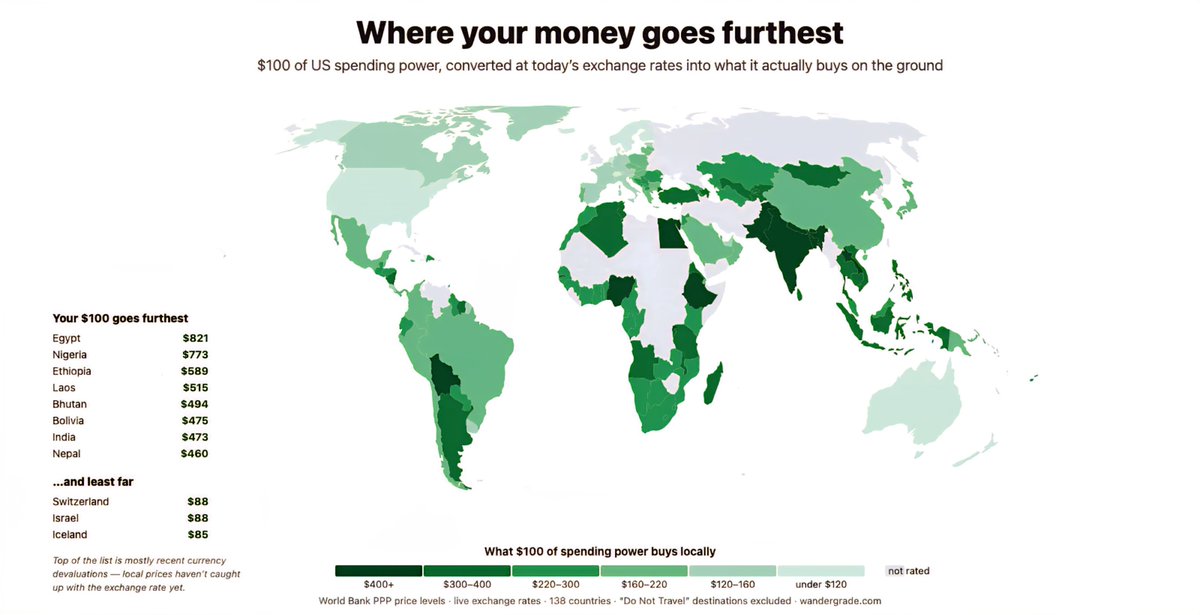
Traveling with $100 in your pocket can mean vastly different things depending on where you go. Using current exchange rates and purchasing power parity (PPP) data from the World Bank’s latest 2024 report, we’ve mapped out exactly what that hundred bucks actually buys across 138 countries. Here’s a detailed look into what $100 is really worth in the global landscape today.
1. Countries Where $100 Goes Further Than You Might Expect
Certain nations boast incredibly low costs of living, making your dollar stretch much farther. Countries like Nigeria, Egypt, and Ethiopia top the list owing to recent currency devaluations, which inflate the amount of local currency you receive for each dollar. In these places:
- Nigeria: You get roughly double the local goods and services for $100, thanks to a heavily devalued naira.
- Egypt: The Egyptian pound’s recent fall means you’re effectively getting twice what it would normally buy pre-devaluation.
- Ethiopia: Currency devaluations have similarly amplified your spending power, making local prices seem half of what they are in the United States.
Note: These rankings are relatively unstable and may change as currencies fluctuate over the coming year.
2. Top Nations with the Cheapest Real-World Prices for U.S. Visitors
Looking beyond currency fluctuations, these countries naturally have lower living costs:
- India: Your $100 could cover a luxurious day of activities, local meals, and even several nights in a budget hotel.
- Vietnam: Known for affordable street food, transportation, and accommodations, Vietnam offers incredible value.
- Pakistan: With its low prices in transportation, food, and entertainment, Pakistan makes your money go much further.
In these nations, the local prices mean your $100 can do twice as much compared to spending it back home.
3. Countries Where Your $100 Still Pack a Punch
Some nations, though not as inexpensive as those above, still allow your money to buy a decent amount of goods and experiences:
- Mexico: With the peso relatively stable, your dollar grants access to excellent food, local transportation, and sightseeing.
- Turkey: Despite inflation, the Turkish lira still offers good value for tourists, especially outside of Istanbul.
- Philippines: Your money stretches well, particularly in rural areas and on lesser-known islands.
4. What Are the Countries Where $100 Has the Least Buying Power?
At the upper end of the spectrum are places where prices are high—primarily due to stable or strong local currencies and high living costs:
- Switzerland: The iconic country remains among the priciest, and your $100 will cover only a fraction of daily expenses.
- Norway and Iceland: These Scandinavian countries’ high standards of living translate into steep prices, limiting what your dollar can buy.
- Australia: Its strong currency and costly lifestyle mean less bang for your buck.
Note: Because this data excludes countries under travel advisories, some high-cost nations with travel restrictions like Switzerland and Australia are not represented in the ranking.
5. How Currency Fluctuations Impact Your Spending Power
The recent currency devaluations in nations like Nigeria, Egypt, and Ethiopia have temporarily boosted local purchasing power. However, these figures are volatile and will likely change as currencies stabilize or further fluctuate in response to economic shifts.
Caveat: It’s essential to consider not just exchange rates but also local price levels, inflation, and travel advisories when planning:
- Countries with ongoing conflicts or severe sanctions often lack reliable PPP data and are excluded from the current analysis.
- Countries with “Do Not Travel” advisories are filtered out for safety considerations but would otherwise add some intriguing insights.
6. Global Map of Real-World Value of $100
The accompanying map illustrates how far $100 stretches in different parts of the world. The darker the shade, the more local goods and services your dollar can purchase. Countries like Vietnam, India, and Nigeria shine bright in these maps, while Switzerland and Norway cast long shadows, indicating higher costs.
7. What Does This Mean for Travelers and Budget Seekers?
Understanding what your dollars are actually worth around the world can dramatically influence trip planning, budgeting, and even the choice of destination. This data reveals that, depending on where you go, your $100 can mean a luxurious weekend or a frugal adventure.
Pro Tip: Always check current currency trends and local prices before traveling. Currency devaluations or economic shifts could dramatically alter these figures by the time you visit.
Interested in the data or the code behind this map? The detailed scripts and intermediate datasets are available for sharing and remixing, perfect for travelers or analysts looking to dive deeper into global purchasing power trends in 2025.
Remember, smart planning and understanding local costs can make all the difference in transforming your travel budget into unforgettable experiences.