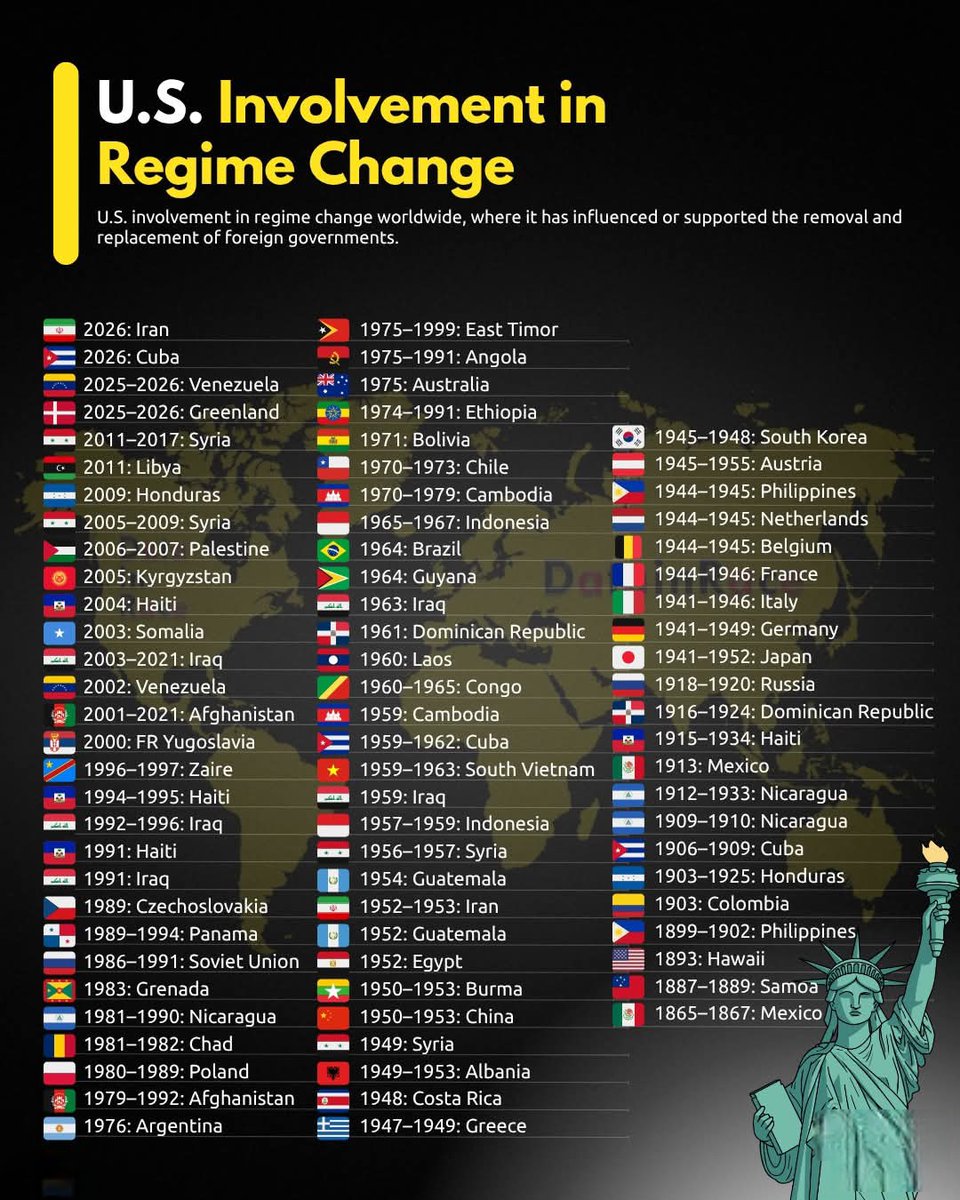
A Timeline of U.S. Military and Political Interventions from 1865 to 2026
1. Historical Roots of U.S. Interventions: The Early Years (1865–1930s)
The United States has a long history of military and political involvement across the globe. Starting in the late 19th century, the U.S. engaged in a series of interventions aimed at establishing influence and protecting its interests. Notably, between 1865 and 1902, the U.S. involved itself in regions such as Mexico (1865-1867), Samoa (1887-1889), and Hawaii (1893), laying the groundwork for future interventions.
The suppression of sovereignty was evident in Central America with interventions in Honduras (1903-1925), Cuba (1906-1909), and Nicaragua (1909-1933). These actions often manifested as military occupations or political support for puppet regimes, serving strategic interests during the anxious years leading up to World War II.
2. The World War II and Cold War Era (1941–1990s)
The global landscape drastically shifted after World War II, with the U.S. emerging as a superpower. During this period, the United States actively participated in regime change operations across Europe, Asia, and the Middle East:
-
Post-WWII Occupations and Regime Changes (1941–1953): Notable interventions include the military occupation of Japan (1941-1952), Germany (1941-1949), and Italy (1941-1946). The U.S. also played a pivotal role in restructuring France, Belgium, the Netherlands, the Philippines, and Austria into stable Western allies.
-
Cold War Conflicts (1947–1990s): The Cold War fostered numerous regime change efforts aimed at containing communism. In Greece (1947–1949), Korea (1945–1948), and Iran (1952–1953), the U.S. supported regimes aligned with Western interests, often through covert operations. Significant interventions include the 1953 overthrow of Iran’s Prime Minister, Mohammad Mossadegh; and the 1954 coup in Guatemala.
-
Latin America and Africa: U.S. involvement persisted with operations in Congo (1960–1965), Bolivia (1971), Ethiopia (1974–1991), Angola (1975–1991), and in other nations where Cold War tensions led to destabilization efforts or support for autocratic regimes.
3. Post-Cold War Interventions and the 21st Century (1990s–2026)
The collapse of the Soviet Union did not slow U.S. interventionism. Instead, the focus shifted toward fighting terrorism, fostering democracy, and managing regional conflicts:
-
Late 20th and Early 21st Century: U.S. led campaigns like the invasion of Iraq (2003–2021) and Afghanistan (2001–2021), significantly impacting Middle Eastern geopolitics. In the Balkans, NATO interventions in Kosovo (2000) and violence in Serbia marked the decade.
-
Recent Developments (2020s): The year 2025 marked a new wave of interventions, with Greenland (2025–2026) and Venezuela (2025–2026) narratives emerging around strategic resources. U.S.-supported regimes, such as Cuba (2026) and Iran (2026), signaled ongoing geopolitical shifts.
4. Present and Future Outlook
The pattern of intervention shows no signs of waning. The U.S. continues to influence foreign governments directly or indirectly, through military presence, economic pressure, or covert activities. The motivations remain a blend of strategic interests—control over resources, regional stability, or containment of rival states.
5. Reflection on Power and Sovereignty
In examining over a century of interventions, it’s clear that America’s foreign policy has significantly shaped national sovereignty across continents. Whether through overt military campaigns or covert operations, the U.S. has often prioritized strategic dominance over the political independence of nations.
The above chronicle underscores a recurring theme of intervention that has persisted for over 150 years—a complex legacy intertwined with the pursuit of national interests and global influence.