The Complexities of Kashmir: A Deep Dive into the Politically Claimed Territories
The Kashmir region continues to be one of the most sensitive and complex geopolitical flashpoints in South Asia. Its strategic significance, intertwined with historical disputes and national interests, has resulted in multiple claims by neighboring countries. Understanding the current state of territorial claims is essential to grasp the ongoing regional tensions.
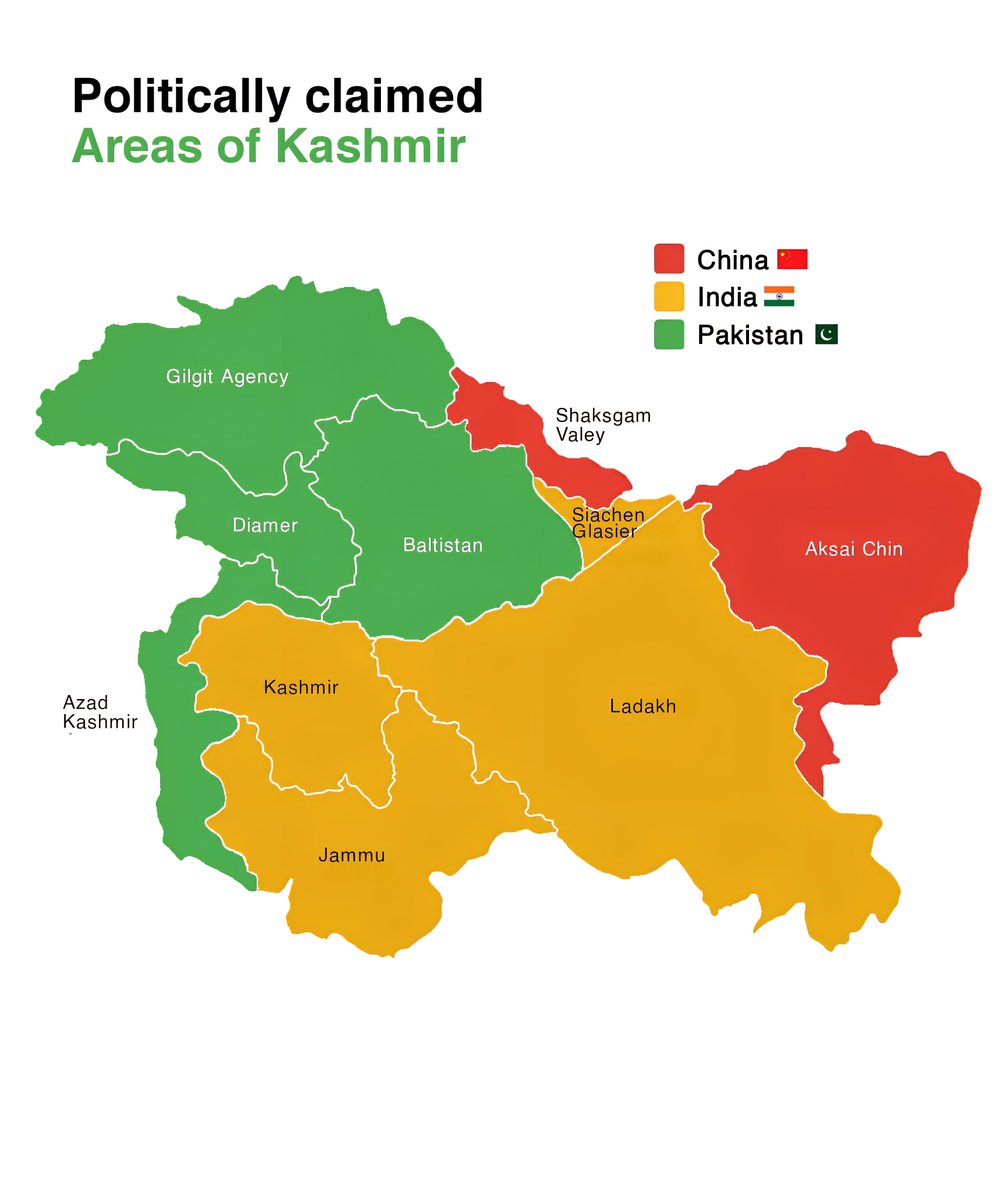
China’s Claims Over Kashmir
China maintains a strategic interest in parts of Kashmir, particularly in the northern regions. The Chinese government claims territories such as Aksai Chin, which is administered as part of its Xinjiang and Tibet Autonomous Regions. These areas are claimed by India as well, leading to a long-standing border dispute that dates back to the 1960s.
China asserts sovereignty over these disputed zones mainly due to their strategic importance and historical Indian maps that it considers outdated. The region holds significant geopolitical value because of its proximity to Xinjiang, home to various minority groups and vital infrastructure, including border roads that facilitate China’s Belt and Road Initiative.
Furthermore, Beijing’s expansion of infrastructure projects in the region, such as the China-Pakistan Economic Corridor (CPEC)—which passes through Pakistan-administered Kashmir—has intensified tensions. China’s posture reflects a focus on consolidating its territorial claims while also expanding influence in South Asia.
India’s Stance on Kashmir
India claims the entire Jammu and Kashmir region, including Ladakh, which it reorganized in 2019 by revoking Article 370 of its constitution. This move severed the region’s special autonomy and integrated it directly into the Indian Union, a decision that has been met with both domestic support and international criticism.
India’s territorial claims are rooted in historical governance and land rights, with the Indian government asserting that Kashmir is an integral part of India. The Indian military maintains a significant presence in the region, citing security concerns due to insurgent activities and cross-border terrorism emanating from Pakistan-controlled Kashmir.
India’s ongoing development projects and military buildup in Jammu, Kashmir, and Ladakh aim to bolster security and improve infrastructure. However, these actions continue to fuel tension with both Pakistan and China, leading to heightened military alerts and diplomatic negotiations.
Pakistan’s Perspective on Kashmir
Pakistan claims the territory known as Azad Kashmir and Gilgit-Baltistan, regions administered by Pakistan but historically connected to the larger Kashmir territory. Islamabad regards itself as a supporter of the Kashmiri people’s right to self-determination and has repeatedly called for international intervention to resolve the dispute.
The conflict with India over Kashmir dates back to the Partition of British India in 1947. Pakistan views Kashmir as an integral part of its national identity and has established its own administration over parts of the region—raising the stakes for regional stability.
Pakistan’s military and political leadership have emphasized their commitment to supporting Kashmiri independence efforts, often citing human rights concerns and the need for self-determination. The ongoing insurgencies and political unrest in Pakistani-administered Kashmir underpin the region’s volatility.
The Impact of External Influences and Future Outlook
External countries, notably China and Pakistan, continue to shape the geopolitics of Kashmir with strategic investments, diplomatic alliances, and military support. The region’s instability affects neighboring countries and international actors, making peaceful resolution increasingly complicated.
With 2025 marking another year of tension and diplomatic negotiations, the future of Kashmir remains uncertain. The territorial claims of China, India, and Pakistan each hold deep historical roots and are backed by significant military and political interests. Achieving a peaceful settlement would require comprehensive engagement, international mediation, and goodwill among the involved parties.
The image below encapsulates the layered claims over Kashmir, highlighting the depth of the dispute and the importance of understanding multiple perspectives:
As regional powers continue their strategic pursuits, the Kashmir dispute remains a delicate chess game. Its resolution, if pursuedin earnest, could set a precedent for conflict resolution in other regions of the world grappling with border and sovereignty issues.