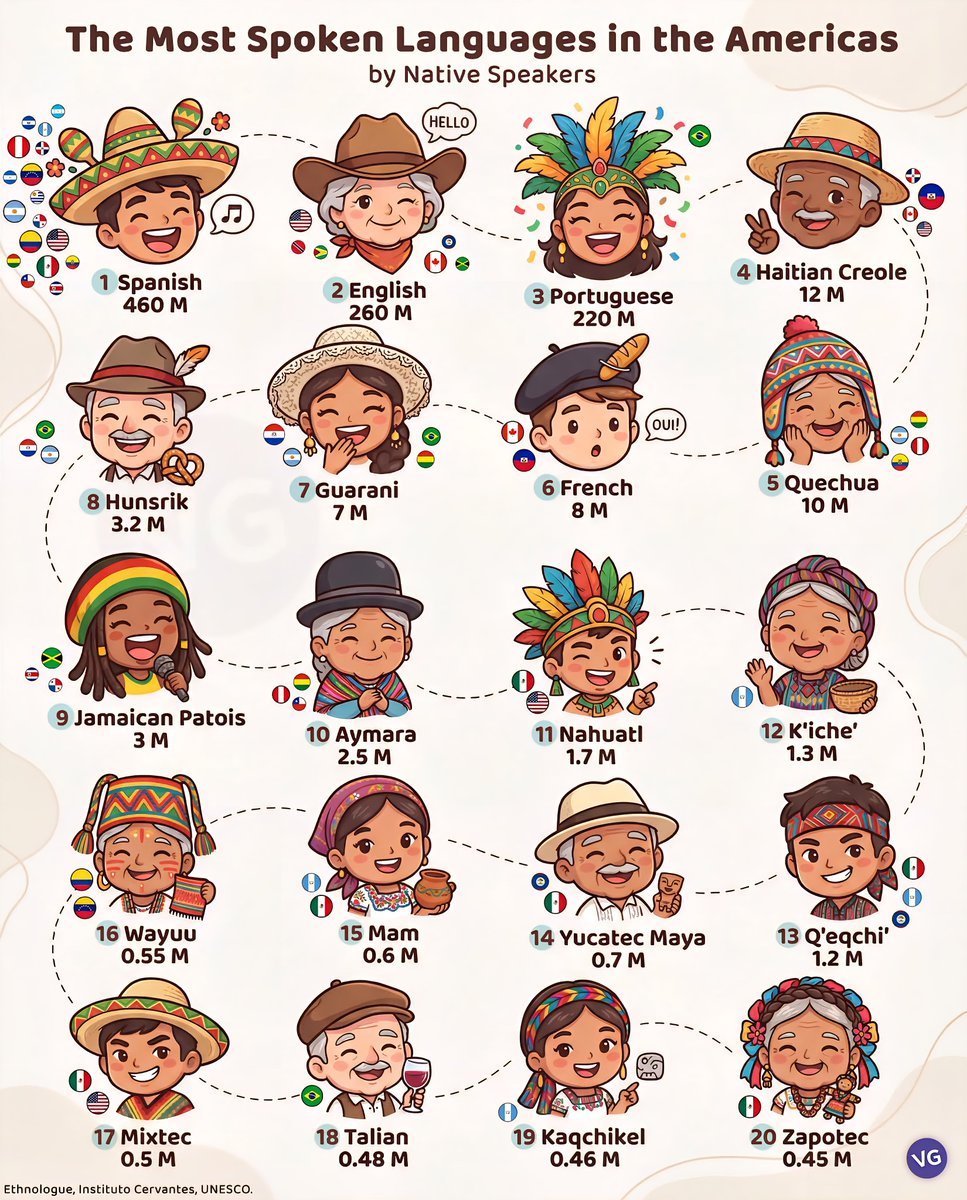
1. Spanish Dominates with Over 460 Million Native Speakers
Spanish remains the most widely spoken language across the Americas, boasting approximately 460 million native speakers. Countries such as Mexico, Colombia, Argentina, and many others contribute to its vast number of speakers. Its widespread usage is a result of historical colonization and ongoing cultural influence, making it a vital language in the region for politics, business, and daily communication.
2. English as a Major Language with 260 Million Native Speakers
English claims its spot as the second most spoken native language in the Americas, with around 260 million speakers. The language’s prominence is particularly evident in countries like the United States and parts of the Caribbean. English’s global influence is also bolstered by its role as an international lingua franca, impacting education, media, and commerce across the continent.
3. Portuguese: Brazil’s Linguistic Heartbeat with 220 Million Speakers
Brazil, the largest country in South America, is home to approximately 220 million native Portuguese speakers. Portuguese serves as a cultural and national identity marker for Brazilians. Its influence extends through music, cuisine, and literature, solidifying its importance in the regional and global cultural landscape.
4. Haitian Creole: A Unique Linguistic Identity with 12 Million Speakers
Haitian Creole stands out as a distinct language with around 12 million speakers, primarily in Haiti. Born from the blending of French, African languages, and various influences, Haitian Creole reflects the complex history and cultural resilience of its people. It remains a fundamental aspect of Haitian daily life and national identity.
5. Quechua: The Heritage of the Andes with 10 Million Speakers
Quechua, an indigenous language with roughly 10 million speakers, is widely spoken in the Andean regions of countries like Peru, Bolivia, and Ecuador. Recognized as a symbol of indigenous culture, Quechua’s preservation is vital amid ongoing efforts to maintain indigenous languages and traditions throughout the continent.
6. French: A Colonial Legacy with 8 Million Speakers
French is spoken by about 8 million people, mainly in parts of Canada, such as Quebec, as well as in several Caribbean islands and parts of Central America. The language’s rich literary and cultural history continues to influence the region, maintaining its relevance in various sectors including diplomacy and education.
7. Guarani: Paraguay’s Indigenous Language with 7 Million Speakers
Guarani is an official language alongside Spanish in Paraguay, spoken by roughly 7 million people. Its significance is evident in everyday communication, national symbols, and cultural expressions. The language’s resilience underscores Paraguay’s cultural uniqueness and respect for indigenous roots.
8. Hunsrik: A Lesser-Known Germanic Language with 3.2 Million Speakers
Hunsrik, a Germanic language variety, has approximately 3.2 million speakers in parts of southern Brazil, Paraguay, and neighboring regions. Its presence reflects historical German migration and settlement, contributing to the region’s diverse linguistic tapestry.
9. Jamaican Patois: An Iconic Creole with 3 Million Speakers
Jamaican Patois, a vibrant creole language, is spoken by about 3 million Jamaicans. The language embodies the island’s rich cultural fusion, blending African, European, and Caribbean influences, and plays a key role in cultural expression, music, and identity.
10. Aymara: An Indigenous Presence in the Andes with 2.5 Million Speakers
Aymara is spoken by around 2.5 million people, predominantly in Bolivia and Peru. Its survival and promotion are central to indigenous rights movements, and it influences local customs, festivals, and spiritual practices.
The linguistic diversity of the Americas showcases the continent’s rich history and cultural complexity. While dominant languages like Spanish and English continue to play crucial roles, indigenous and creole languages are vital in maintaining cultural identities and histories that stretch back centuries. Preserving these languages remains a priority for local communities and international organizations alike.