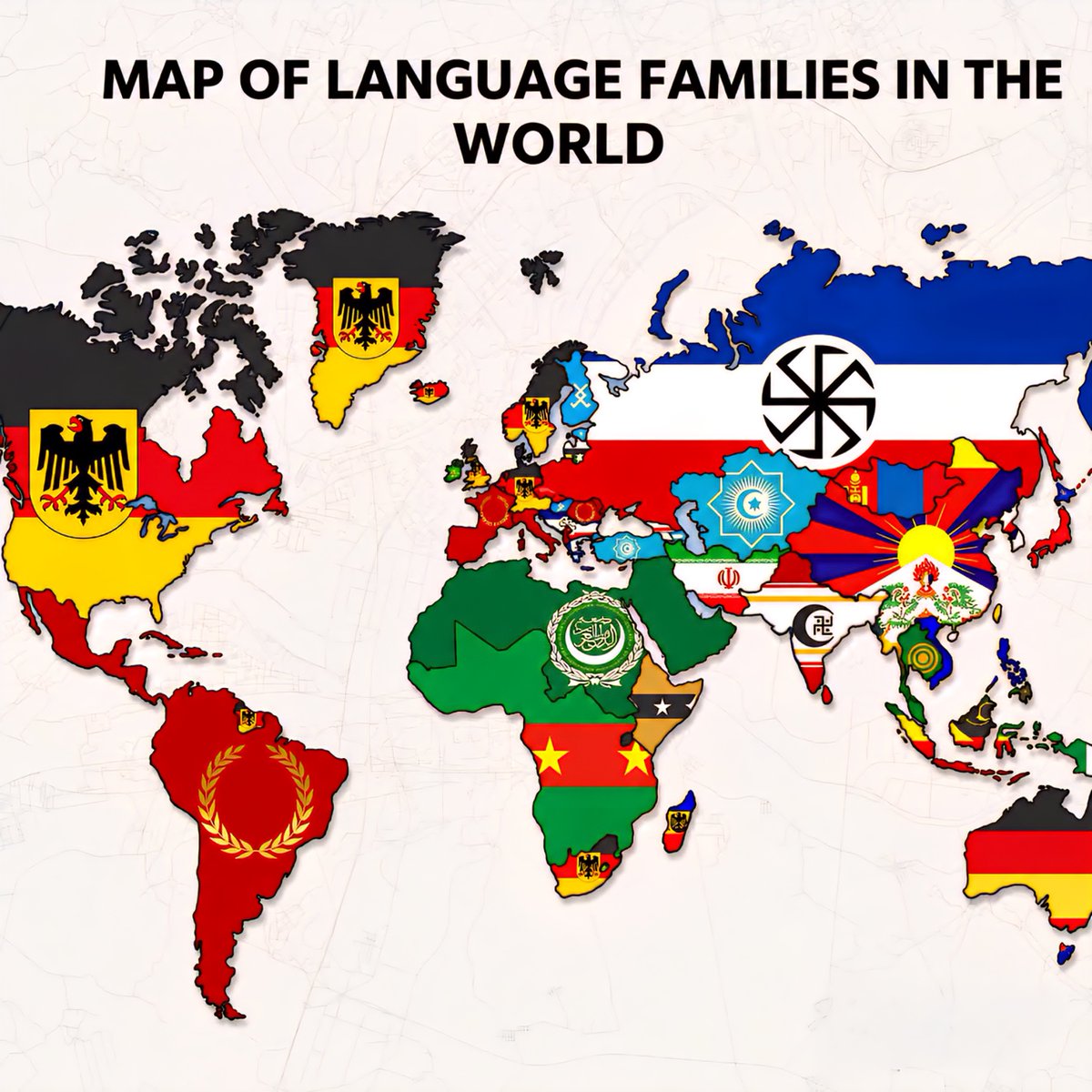
1. The Dominance of the Indo-European Language Family
Spanning the majority of Europe, South Asia, and the Americas, the Indo-European language family remains the most widespread in the world. Languages such as English, Spanish, Portuguese, French, German, Russian, and Hindi fall under this extensive family. Its global influence is a result of centuries of migration, colonization, and cultural exchange, which helped spread these languages across continents. Indo-European languages are characterized by shared roots and grammatical similarities, making them a crucial focus for linguists tracing human history.
2. The Complexity of Sino-Tibetan Languages
Covering vast regions of East Asia, Southeast Asia, and parts of South Asia, the Sino-Tibetan family includes Mandarin Chinese, Cantonese, Burmese, and Tibetan. This group is notable for its tonal languages and complex writing systems. The spread of these languages has been driven by migration and historic trade routes, influencing countless cultures along the way. Mapping their distribution illustrates the profound historical and cultural connections across East Asia and beyond.
3. Afro-Asiatic Languages Across Continents
Primarily spoken in North Africa, the Middle East, and parts of the Horn of Africa, the Afro-Asiatic family features languages such as Arabic, Hebrew, Amharic, and Hausa. These languages have played a significant role in shaping civilizations and religions, including Islam, Judaism, and Christianity. Their historical spread aligns with major trade routes and ancient empires, highlighting their importance in human development.
4. The Rich Linguistic Diversity of Niger-Congo Languages
This extensive family dominates Sub-Saharan Africa, with languages like Swahili, Yoruba, Igbo, and Zulu. Known for its tonal languages and noun-class systems, Niger-Congo languages reflect Africa’s linguistic richness. Their distribution showcases centuries of migration, cultural exchange, and resilience amidst colonial history.
5. Austronesian Languages: From Madagascar to the Pacific Islands
Encompassing languages from Tagalog in the Philippines to Maori in New Zealand and Hawaiian in Hawaii, the Austronesian family highlights human navigational prowess. Originating from Taiwan, these languages spread across the Pacific and Indian Oceans by sea voyages, illustrating remarkable maritime capabilities and cultural exchange.
6. The Dravidian Connection in South Asia
Centered mainly in southern India and parts of Pakistan, the Dravidian family includes Tamil, Telugu, Kannada, and Malayalam. These ancient languages have preserved classical traditions and continue to influence regional culture and identity. Their history intertwines deeply with the region’s migration and settlement patterns.
7. Turkic Languages: Across Eurasia
Languages such as Turkish, Uzbek, Azerbaijani, and Kazakh belong to this family, spanning from Eastern Europe to Central Asia. Historically linked to nomadic tribes and empires like the Seljuks and Ottomans, Turkic languages illustrate historical migration and empire-building across Eurasia. Their spread continues through regional trade and cultural ties.
8. Uralic Languages in Northern Europe and Siberia
Including Finnish, Hungarian, and Estonian, the Uralic family is characterized by unique grammatical structures. These languages reflect ancient migration patterns in Northern Europe and Siberia, maintaining their distinct identities despite neighboring language influences.
9. Kra-Dai and Austroasiatic: Southeast Asia’s Linguistic Spectrum
Kra-Dai languages, including Thai and Lao, spread throughout Thailand and parts of China, while Austroasiatic languages like Vietnamese, Khmer, and Mon dominate mainland Southeast Asia. These families underscore the region’s diverse origins and the complex layers of cultural influences over millennia.
10. The Japonic and Koreanic Language Families
Japanese and Ryukyuan languages form the Japonic family, while Koreanic encompasses Korean and related dialects. Their origins are still debated among linguists, but they serve as cultural pillars for their respective nations and highlight distinct developmental pathways within East Asia.
11. The Influence of Mongolic and Eskimo-Aleut Languages
Mongolic languages, such as Mongolian, link to nomadic cultures across Mongolia and parts of China and Russia. Eskimo-Aleut languages, including Inuit and Yupik, are spoken in the Arctic regions of North America and Siberia, reflecting adaptation to some of the world’s harshest environments.
12. The Enigmatic Khoisan Languages
Residing largely in Southern Africa, Khoisan languages are known for their distinctive click consonants. They underscore Africa’s deep and ancient linguistic roots, with some of the world’s earliest human speech elements preserved in these tongues.
This visual map offers a compelling look into the world’s linguistic mosaic—the threads that connect human societies across time, geography, and culture. While simplified, it captures the core families that illuminate our shared and diverse histories, showcasing the incredible journey of human language development in 2025.
Source: Modern linguistic classifications based on current research and classification systems used worldwide.