A Visual Guide to Global Alliances and Tensions in the Event of World War III
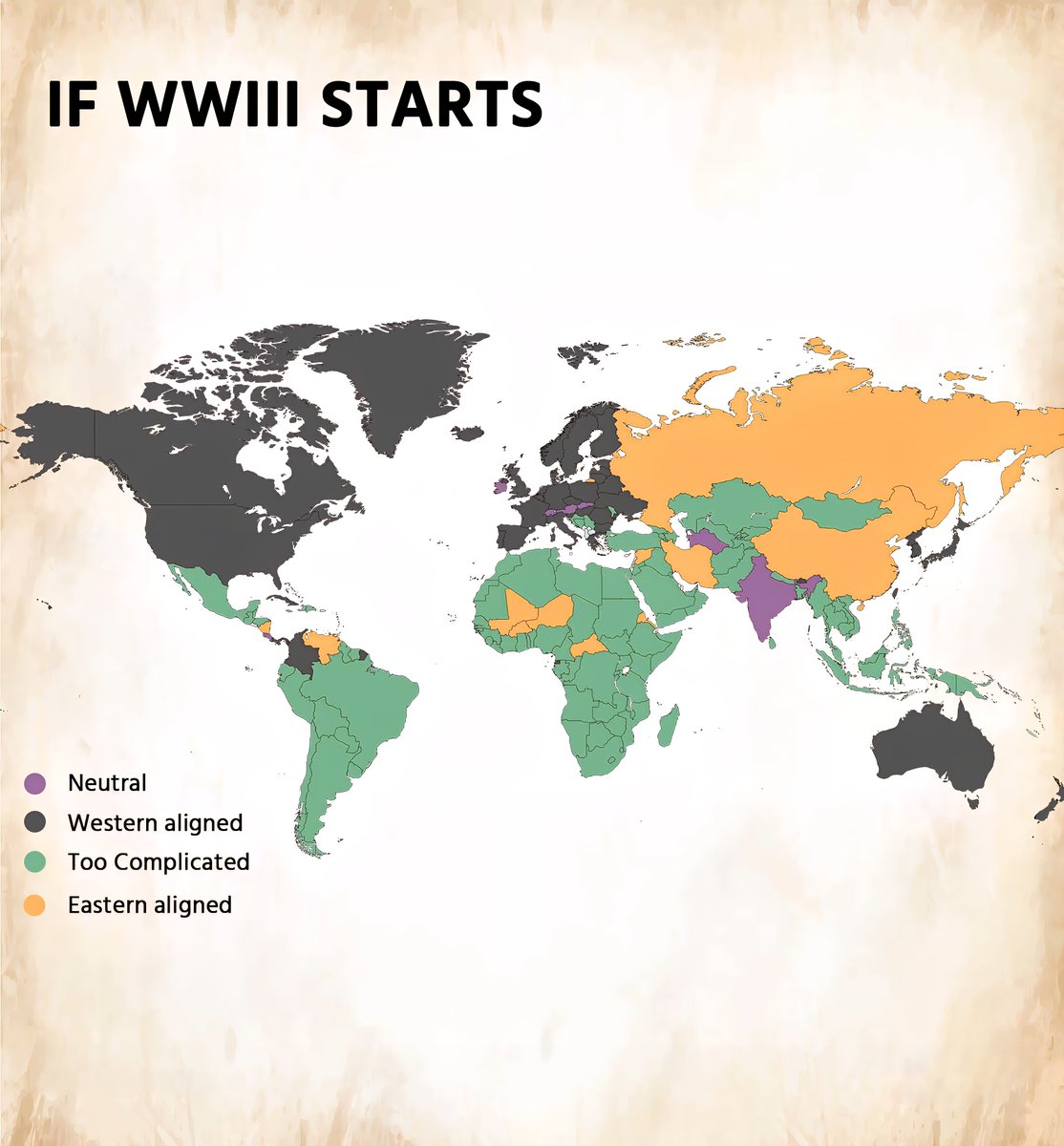
1. Understanding the Color Code: Who Would Stay Neutral?
In the event of World War III, not every country would get involved in the conflict directly. As depicted on the map, some nations could choose neutrality, avoiding escalation altogether.
-
Purple (Neutral): Countries marked in purple are expected to maintain a neutral stance. These nations prefer to stay out of the conflict altogether, prioritizing peace and stability within their borders. Their neutrality could be vital in peace negotiations and humanitarian efforts, even if they are not actively fighting. Examples include parts of Central America, Africa, and some Pacific Island nations.
-
Implication: While neutrality can offer safety and peace, it could also limit access to international support or embargoed trade routes depending on the conflict’s scope.
2. Western Alliances: The Nations Supporting Western Powers
Some countries would align with Western alliances, including the United States, NATO, and their allies. Their positioning on the map suggests economic, military, or diplomatic support for these blocs.
-
Black (Western Aligned): Countries in this category are expected to be at the forefront of Western-led efforts, possibly providing troop support, strategic resources, or logistical backing. This alignment would influence global supply chains, cybersecurity, and diplomatic negotiations.
-
Key Players: Notable Western allies include Canada, the United Kingdom, Australia, and several Western European nations. Their combined military strength and technological advancements could significantly impact the conflict’s trajectory.
-
Implication: Countries aligned with the West would likely impose economic sanctions on opposing nations, attempt to bolster defense strategies, and engage in direct military confrontations if necessary.
3. Challenging Complexity: Nations with Mixed or Unclear Alliances
Certain nations are labeled in green, indicating that their position on the global stage is too complicated to categorize easily. These states might pursue a balancing act, engaging with multiple alliances or remaining ambiguous to safeguard their national interests.
-
Green (Too Complicated): These countries could have historical ties, economic dependencies, or strategic interests that make their allegiance uncertain. For example, some nations might maintain strong diplomatic relations with both Western and Eastern powers, avoiding direct conflict for as long as possible.
-
Examples: Countries with complex geopolitical situations include India, South Africa, and parts of Southeast Asia. Their strategic choices could sway the conflict in unpredictable ways, depending on diplomatic negotiations and external pressures.
-
Implication: These nations could become crucial mediators or flashpoints, as their decisions might influence the broader international landscape.
4. Eastern Powers: Countries Supporting the Eastern Bloc
Similarly, nations in orange signify those aligned with Eastern powers, likely including Russia, China, and their respective allies. Their cooperation could involve military support, strategic resource sharing, or technological collaboration.
-
Orange (Eastern Aligned): Countries in this group are positioned as part of the Eastern bloc, potentially backing Russia and China’s objectives. Their support could bolster efforts against Western efforts, leading to escalated conflicts in various regions.
-
Potential Impact: These alliances might aim to counter Western sanctions, expand influence into new territories, or challenge the existing world order. Their military capabilities and resource pools could accelerate the scope and scale of the conflict.
-
Implication: These nations would likely seek to destabilize Western alliances and expand their spheres of influence, complicating diplomatic efforts to prevent widespread warfare.
5. The Strategic Significance of Geographic and Political Divisions
The map highlights how geographic proximity and political ideology influence global alliances during a hypothetical WWIII. Countries aligning with the West or East have strategic reasons rooted in history, economic ties, and regional security concerns.
-
Global Impact: The conflict’s expansion would likely disrupt international trade, climate policies, and technological development. Countries’ decisions to stay neutral or side with a particular bloc could alter the future geopolitical landscape for decades.
-
Diplomatic Efforts: While some nations prefer to stay out of direct conflict, their economic vulnerabilities could still make them targets of cyberattacks or covert operations. Diplomatic negotiations will be crucial in avoiding total escalation.
6. Final Thoughts: The Power of International Balance and the Path to Peace
While the map provides a speculative look at potential alliances and conflict zones, it underscores the importance of diplomacy, strategic neutrality, and international cooperation. Countries that manage to maintain balancing acts or uphold neutrality could serve as mediators, helping prevent the worst-case scenario of global war.
In 2025, as the world remains cautious of emerging threats, understanding these alliances and tensions becomes vital for policymakers, peace advocates, and everyday citizens. The hope remains that diplomacy and mutual understanding will prevail over conflict-driven alliances.
Note: This map is a visual simulation meant for illustrative purposes and reflects hypothetical alliances and tensions based on current geopolitical trends as of 2025.