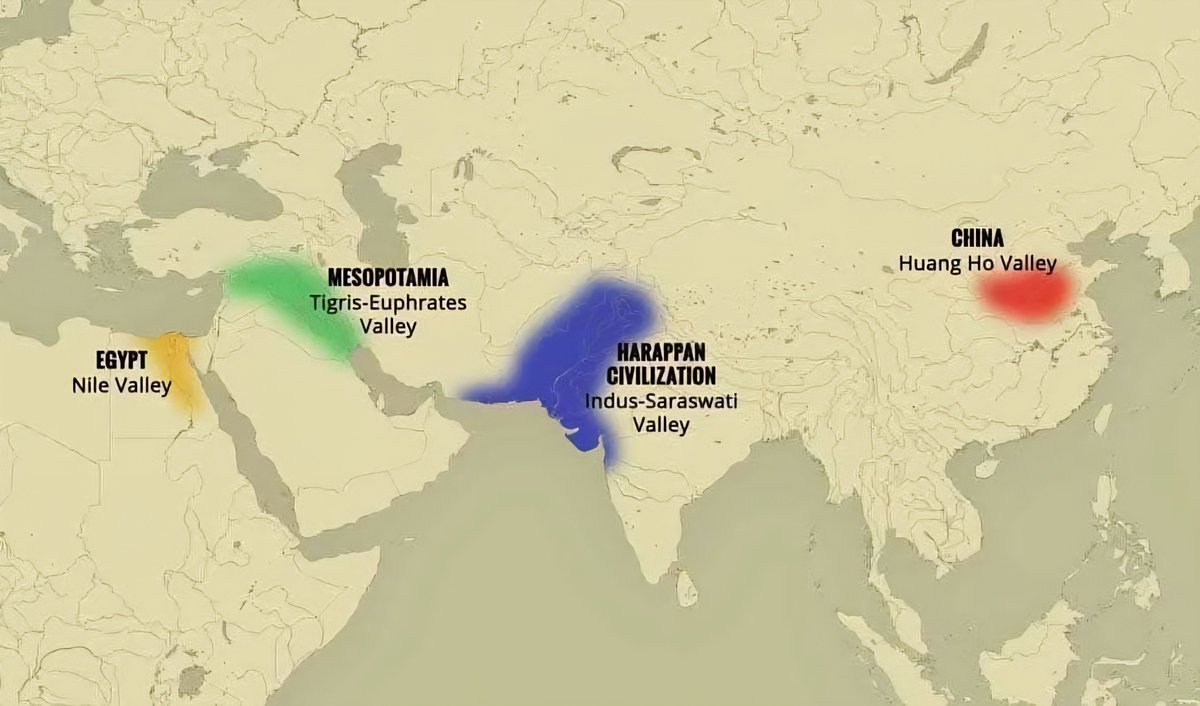
Unveiling the World’s Ancient Roots: The Four Oldest Civilizations
Egypt: The Cradle of the Nile Valley
Standing the test of time, Egypt’s civilization is often considered the epitome of ancient ingenuity. Flourishing along the lush banks of the Nile River, Egyptian society emerged around 3100 BCE with the unification of Upper and Lower Egypt under the first Pharaoh, Narmer. Known for its monumental architecture like the pyramids of Giza and the Sphinx, Egypt laid down foundational contributions to art, writing, and governance.
The Nile’s predictable flooding supported agriculture, enabling the Egyptians to develop a complex society with skilled artisans, scribes, and priests. Hieroglyphic writing became a sophisticated means of communication and record-keeping, while religion deeply intertwined with governance, reflected in the construction of grand temples and elaborate burial practices. Egyptian civilization’s achievements continue to influence global culture, from their math and medicine to their impressive architectural feats.
Mesopotamia: The Tigris-Euphrates Empire
Often heralded as the world’s first civilization, Mesopotamia sprawled across the fertile floodplains of modern-day Iraq and parts of Syria and Iran. Established around 3500 BCE, it became the birthplace of many pioneering innovations that shaped human history. Mesopotamians built some of the earliest cities like Uruk and Ur, along with the first known writing system—cuneiform—inscribed on clay tablets.
This region was a hotbed of innovation, witnessing the creation of the wheel, advances in agriculture, and early legal codes like the Code of Hammurabi, one of the earliest known systems of law. Sumerians, Babylonians, Assyrians, and Persians all called Mesopotamia home over its centuries of history. Its influence on governance, law, literature, and urban planning solidifies its place as a cornerstone in the story of human civilization.
Harappan: The Indus-Saraswati Valley Enigma
Centered along the banks of the Indus River, the Harappan civilization, also called the Indus Valley Civilization, thrived from around 3300 BCE to 1300 BCE. Known for its remarkable urban planning, the civilization boasted grid-patterned cities like Mohenjo-Daro and Harappa, featuring advanced drainage, synchronized street layouts, and uniform baked brick construction.
Despite its impressive layout, much about the Harappan society remains a mystery, including its script, which remains undeciphered. This society excelled in craft production, including bead-making, pottery, and metallurgy, reflecting a sophisticated economy. Their standardized weights and measures suggest a centralized administration, although few monuments or palaces indicate a rigid hierarchy. The decline of the Harappan civilization around 1300 BCE has sparked ongoing research into its mysterious disappearance.
China: The Yellow River Valley’s Historic Legacy
China’s ancient civilization blossoms along the fertile banks of the Yellow River (Huang He), dating back to roughly 2070 BCE with the establishment of the Xia Dynasty—considered China’s first historically recorded dynasty. Over millennia, this region nurtured a rich tapestry of culture, technology, and political innovation.
The development of writing systems like oracle bone script, the founding of influential philosophies such as Confucianism and Daoism, and technological advances like papermaking and gunpowder all trace back to this region. The construction of grand palaces and city walls, exemplified by sites like Anyang and the Great Wall, underscore China’s longstanding focus on centralization and defense. Despite periods of upheaval, the Yellow River Valley has continuously contributed profoundly to the cultural development and governance frameworks of modern China.
The legacies of Egypt, Mesopotamia, Harappan, and Chinese civilizations remain embedded in our modern world. Their innovations, cultural practices, and societal structures continue to shape contemporary civilizations, highlighting the incredible resilience and ingenuity of humanity across millennia.