Understanding the Distribution of Great Apes in 2025
1. The Critical Status of Western Gorillas
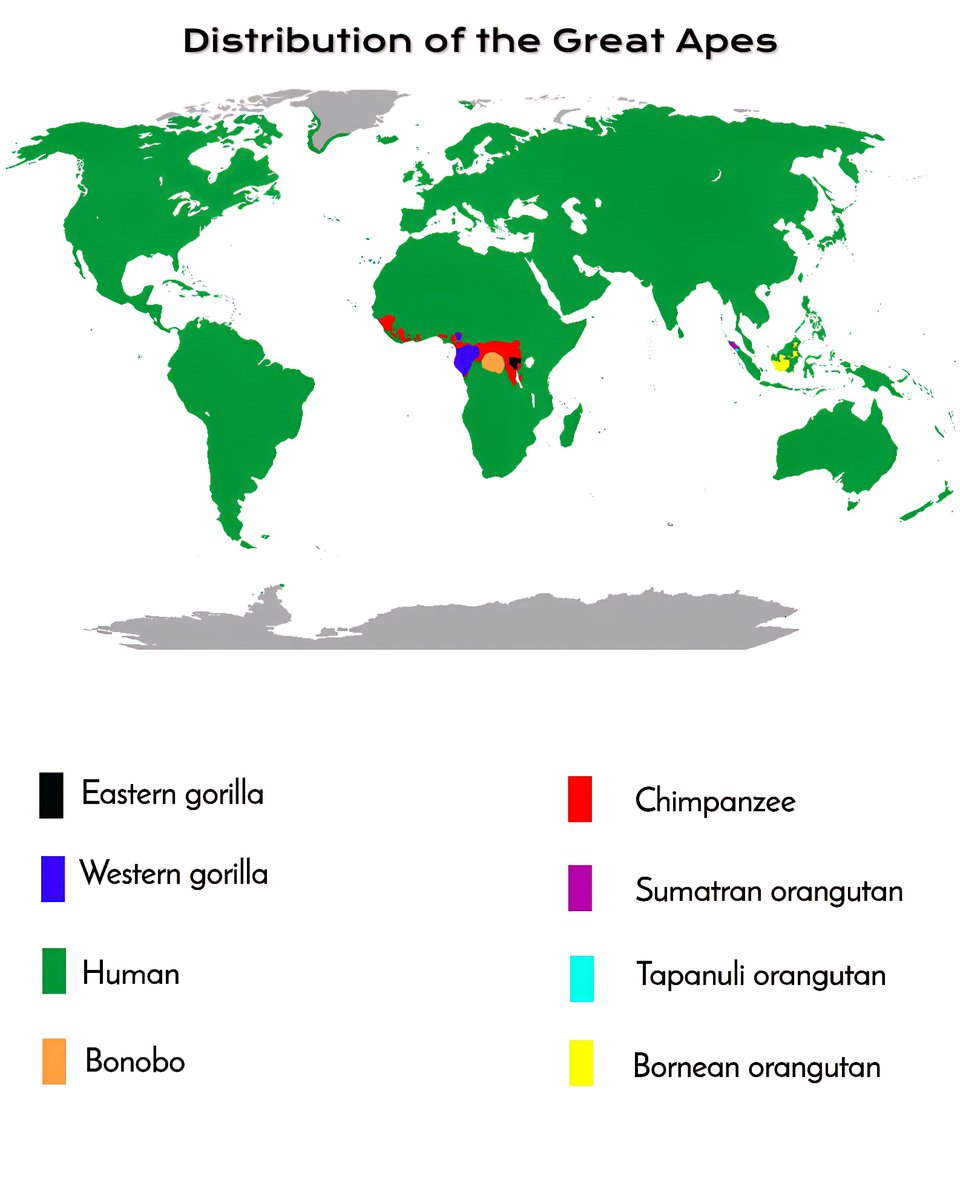
Western gorillas, comprising the western lowland and Cross River subgroups, remain critically endangered due to habitat destruction, poaching, and disease. Despite conservation efforts, their numbers continue to decline, with only approximately 100,000 individuals left in the wild. Their distribution is primarily limited to protected forest areas in countries like Cameroon, Central African Republic, and parts of the Democratic Republic of Congo. Preservation of their habitat and anti-poaching initiatives are crucial to prevent further decline.
2. Eastern Gorillas: An Increasing Presence
Eastern gorillas, which include mountain and Grauer’s gorillas, are primarily found within the mountainous forests of Rwanda, Uganda, and the Democratic Republic of Congo. Thanks to targeted conservation efforts, their population has shown signs of stabilization and slight growth. Mountain gorillas, in particular, have been a focus of eco-tourism and community engagement programs, which have helped foster local protection efforts. Approximately 1,200 mountain gorillas are believed to inhabit protected regions, making them one of the most closely monitored great ape groups.
3. Chimpanzee Range and Challenges
Chimpanzees, found across West and Central Africa, have a wide but increasingly fragmented distribution. Countries such as Ivory Coast, Ghana, Nigeria, and the Congo host sizable populations, yet habitat loss continues to threaten their survival. Ongoing conflicts, illegal wildlife trade, and deforestation contribute to their declining numbers. Current estimates suggest about 200,000 chimpanzees remain in the wild, with conservation organizations pushing for stronger habitat corridors and community-based protection programs.
4. Bonobos, The Endangered Closest Relatives
Bonobos are geographically restricted to the rainforests south of the Congo River in the Democratic Republic of Congo. With only roughly 10,000 individuals remaining, bonobos are one of the most endangered great apes. Their limited range and ongoing threats from poaching and habitat encroachment make their protection a pressing concern. Initiatives focusing on habitat preservation and anti-poaching measures are vital to securing their future and maintaining genetic diversity in great ape populations.
5. The Role of Protected Areas and Conservation
Significant efforts have been made globally to safeguard great ape populations by establishing national parks, wildlife sanctuaries, and community reserves. Countries like Rwanda, Uganda, Cameroon, and the Democratic Republic of Congo have prioritized conservation zones where scientific monitoring, anti-poaching patrols, and eco-tourism thrive. These areas have become critical refuges, providing safe habitats and enabling sustainable economic development through responsible tourism.
6. Impact of Climate Change on Great Ape Distribution
Climate change presents an emerging threat, altering forest ecosystems and resource availability for great apes. Rising temperatures and unpredictable weather patterns can lead to decreased food supplies and habitat unpredictability. Conservationists are increasingly incorporating climate resilience strategies, such as habitat restoration and corridors, to ensure these species can adapt to shifting environments and retain viable populations.
7. Community Engagement and Local Support
Sustainable conservation relies heavily on empowering local communities. In many regions, community-led initiatives provide economic incentives for preserving forests, reducing illegal hunting, and promoting eco-tourism. Education programs and benefit-sharing schemes help foster a sense of ownership and responsibility among local populations, which is essential for long-term conservation success.
8. The Future of Great Ape Conservation
The future of great ape populations hinges on continued international cooperation, effective enforcement of wildlife laws, and innovative conservation strategies. Advances in technology, such as drone surveillance and genetic monitoring, are enhancing protection measures. International organizations and governments need to maintain funding and political will to expand protected areas, mitigate threats, and promote coexistence strategies that benefit both humans and these majestic primates.
Conservation of the world’s great apes remains a pivotal challenge, requiring global commitment and local action. Protecting these species not only preserves biodiversity but also safeguards vital ecosystems that sustain life on Earth.