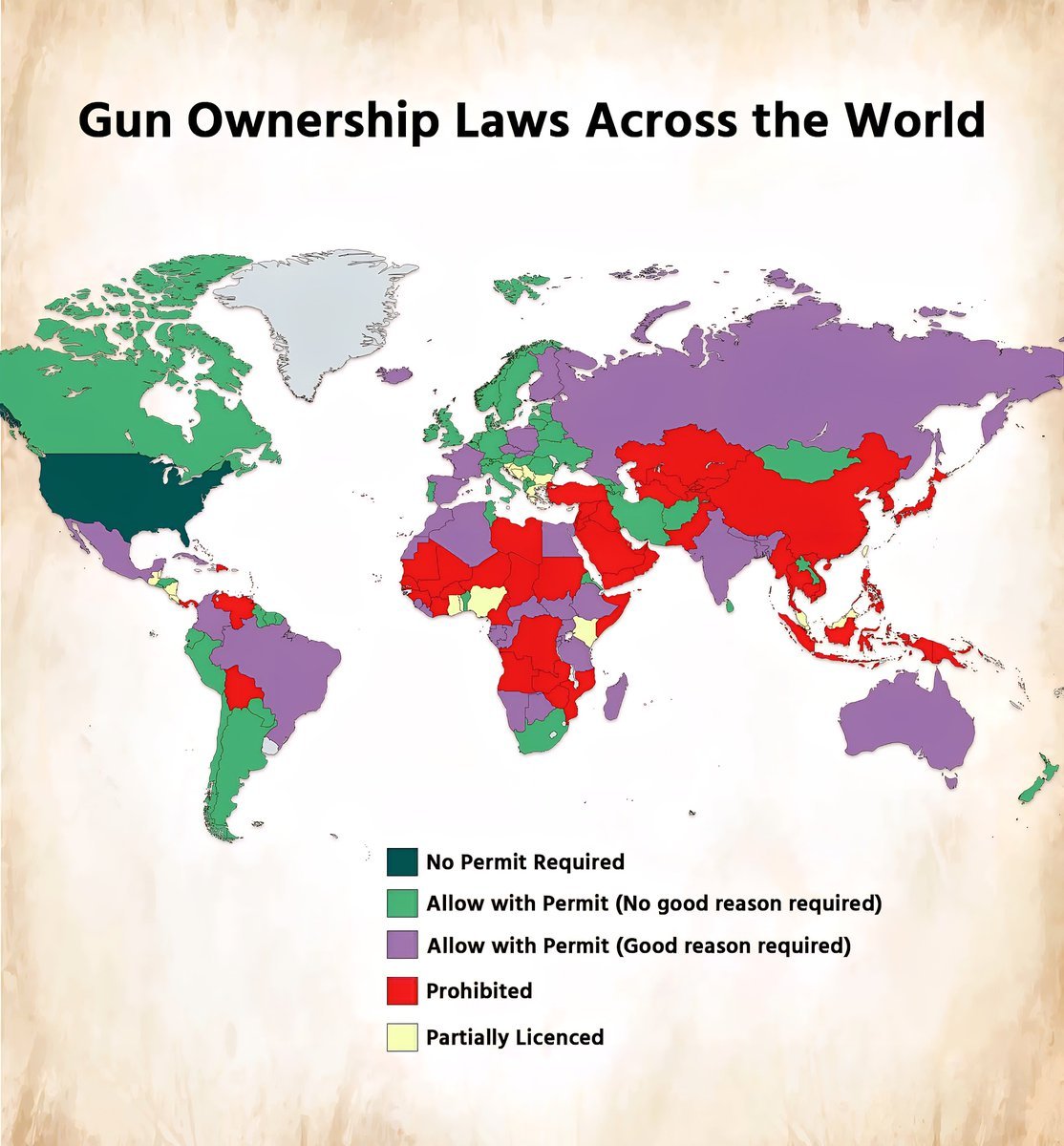
Gun Ownership Laws Across the World 🔫
The United States: A Complex Landscape of Gun Laws
The United States continues to stand out with its unique approach to gun laws, characterized by a patchwork of federal, state, and local regulations. While federal laws set baseline standards—such as background checks for licensed dealers—individual states have the authority to impose stricter restrictions. For example, California enforces comprehensive background checks, waiting periods, and bans on assault weapons, whereas states like Texas prioritize gun rights with minimal restrictions. The country experiences ongoing debates surrounding Second Amendment rights versus gun control measures, often reflected in legislative efforts and court rulings. Recent federal initiatives aim to close loopholes in background checks, but enforcement varies significantly across states.
Canada: Stricter Regulations with a Focus on Safety
Canada is renowned for its tighter gun laws aimed at reducing firearm-related violence. The country requires licensing for all gun owners, including background checks, safety training, and registration of certain firearms. Assault weapons are heavily restricted, and provinces like Ontario have implemented red flag laws allowing authorities to seize guns from individuals deemed a threat. Recent policy updates have included banning newer models of assault rifles and tightening regulations on firearm storage. Despite some resistance from gun owners, polls show broad public support for stringent safety measures, emphasizing a societal focus on responsible gun ownership.
European Nations: Leading the Charge in Gun Control
European countries generally have some of the strictest gun laws in the world. Nations such as the United Kingdom, Germany, and France enforce rigorous licensing processes, mandatory training, and comprehensive background checks. In the UK, firearm ownership is tightly regulated, and handguns are largely prohibited, except for specific purposes like sport shooting. Germany requires firearm owners to undergo psychological assessments and log their weapons with authorities. Recent legislation across Europe continues to advocate for banning high-capacity magazines and assault weapons, with many countries promoting community-based violence prevention programs.
Australia: A Model for Effective Gun Control
Australia’s groundbreaking gun reform policies, enacted after the 1996 Port Arthur massacre, have become a blueprint for effective gun control worldwide. The country implemented a nationwide buyback program, resulting in the removal of over 650,000 firearms, mostly semi-automatic rifles and shotguns. Current laws mandate strict licensing, background checks, and safe storage requirements. Since then, Australia has seen a significant reduction in gun-related deaths and mass shootings. The country’s proactive stance demonstrates how legislative action can effectively mitigate firearm violence while respecting responsible ownership.
Brazil: Struggling with Gun Violence and Regulations
Brazil faces significant challenges with gun violence, and its firearm laws reflect a struggle to balance rights with public safety. The country requires firearm licenses, but enforcement is inconsistent, and illegal gun trafficking is a major issue. Recent efforts aim to strengthen regulations by increasing penalties for illegal possession and streamlining the licensing process, but corruption and organized crime hinder progress. Despite legal restrictions, many Brazilians own guns illegally, contributing to high rates of violence. Ongoing debates focus on whether stricter laws or increased armed security measure would be more effective in curbing violence.
India: Tight Restrictions and Cultural Differences
India enforces some of the strictest gun laws globally, with licenses issued primarily for specific purposes such as sports, security, or personal protection in certain regions. The process involves thorough background checks, psychological assessments, and clear documentation. The country’s firearm mortality rate remains low compared to other nations, partly due to these stringent restrictions and cultural attitudes toward guns. However, illegal firearm circulation persists, especially in conflict areas, presenting ongoing security challenges. Recent amendments aim to further tighten licensing procedures amidst concerns about illegal arms trafficking.
South Africa: A Nation in Flux
South Africa’s gun laws have undergone numerous changes over recent years, attempting to address high levels of violence. The country allows firearm ownership for self-defense, hunting, or sporting purposes, but strict conditions apply, including background checks, safety courses, and licensing requirements. Despite legal frameworks, illegal firearms remain pervasive, fueling violent crimes, including homicide and robbery. The government continues to grapple with how to effectively curb gun violence without infringing on rights, often facing resistance from various community groups and legal advocates.
As countries worldwide grapple with balancing gun rights and safety, legislative responses continue to evolve, reflecting cultural attitudes, security concerns, and public opinion. Whether through restrictive policies or responsible ownership programs, the global landscape of gun laws remains a pivotal aspect of contemporary political discourse in 2025.