Countries Leading the Way in Food Self-Sufficiency in 2025
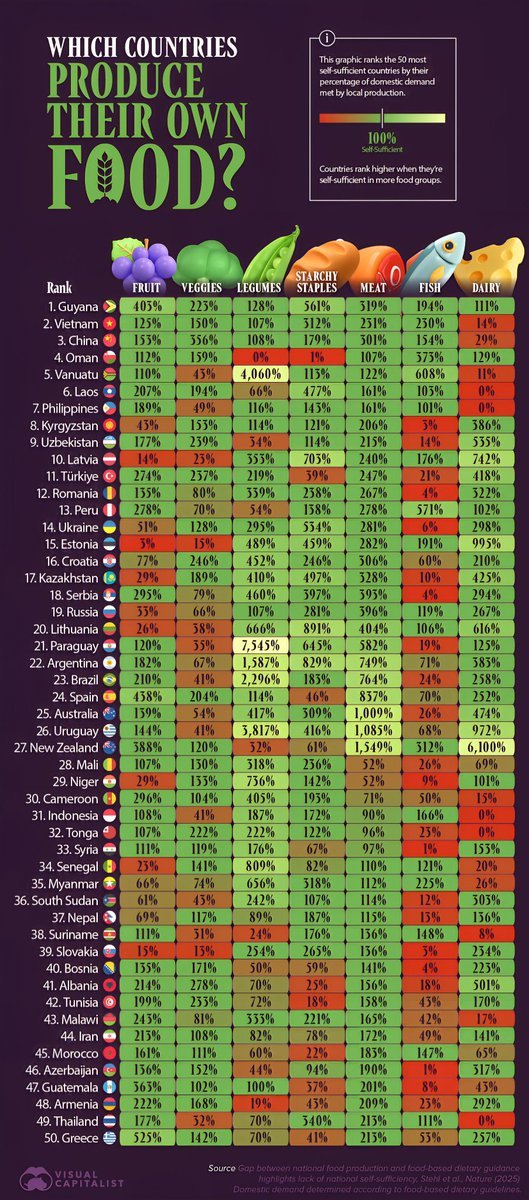
1. Guyana: The Model of Complete Self-Reliance
In 2025, Guyana stands out as the world’s only fully food self-sufficient nation across all major food groups. The South American country successfully produces enough fruits, vegetables, legumes, starchy staples, meat, fish, and dairy for its population, eliminating the need for food imports. This achievement is driven by extensive local farming and fishing industries, as well as innovative agricultural practices that emphasize sustainability and self-reliance. Guyana’s success highlights the potential for smaller nations to achieve food sovereignty through strategic resource management and modern agriculture.
2. China: Covering the Majority of Food Needs
China, with its vast population, has made remarkable progress toward self-sufficiency in 2025. The nation produces six out of the seven major food groups, missing only in some fishery products. Its agricultural sector is highly diverse, supporting the country’s large urban populations and sustaining rural communities alike. Innovations in crop technology, urban farming, and aquaculture have allowed China to maintain a high level of self-reliance, though it still relies on global markets for certain fishery products and specialized food items.
3. Vietnam: Achieving Near Complete Food Independence
Vietnam, a country known for its agricultural exports, has developed a robust domestic food system that covers six of the seven main food groups. Its extensive rice paddies, fish farms, and livestock operations contribute to its self-sufficiency in staples, meat, and seafood. The Vietnamese government’s emphasis on sustainable farming practices has also helped the country ward off dependency on imports, although certain dairy products and some vegetables are still imported to meet local demand.
4. Additional Countries with Significant Food Self-Sufficiency
While Guyana, China, and Vietnam lead the way, several other nations have made substantial strides in increases in local food production:
- Brazil: Known for its vast agricultural land, Brazil produces a significant portion of its own staple crops, meat, and dairy, though it imports certain fruits and vegetables.
- India: With its large population and diverse climates, India produces most of its food needs, especially grains, pulses, and dairy, but remains dependent on imports for some fishery products.
- Thailand: A key exporter of rice and seafood, Thailand is largely self-sufficient in staples and fish but imports specialized fruits and vegetables.
5. Challenges to Achieving Complete Self-Sufficiency
Despite impressive progress, many nations face obstacles in becoming fully self-sufficient:
- Climate Concerns: Changing weather patterns threaten traditional farming zones, pushing countries to develop resilient agricultural practices.
- Urbanization: Rapid urban growth limits arable land and disrupts traditional farming communities.
- Resource Limitations: Water scarcity and soil degradation hinder sustainable food production in some regions.
- Market Dependence for Certain Foods: Global demand for specific foods like specialty fruits, certain fish species, and dairy products creates reliance on imports.
6. The Significance of Local Food Production
Achieving food self-sufficiency enhances national food security, reduces reliance on volatile international markets, and promotes local economies. Countries like Guyana demonstrate that small-scale sustainable farming, combined with modern technology, can provide complete food independence. This not only bolsters resilience against global supply chain disruptions but also promotes environmental sustainability.
7. Looking Ahead: The Path Toward Food Sovereignty
As 2025 marks notable milestones in global food self-sufficiency, nations are increasingly investing in innovative agricultural technologies, urban farming, and sustainable resource management. Governments are recognizing the importance of local food systems as a strategic priority, especially in the wake of global supply chain disruptions experienced in recent years.
In summary, while Guyana remains the only country fully self-sufficient across all seven major food groups, nations like China and Vietnam continue to close the gap, aiming for greater independence. The ongoing efforts highlight a collective move toward resilient, sustainable, and autonomous food systems worldwide.
Note: The above insights are based on data from the 2025 Nature Food study and visual insights from Voronoi by Visual Capitalist.