Top Nations in Global Power: A 2025 Perspective
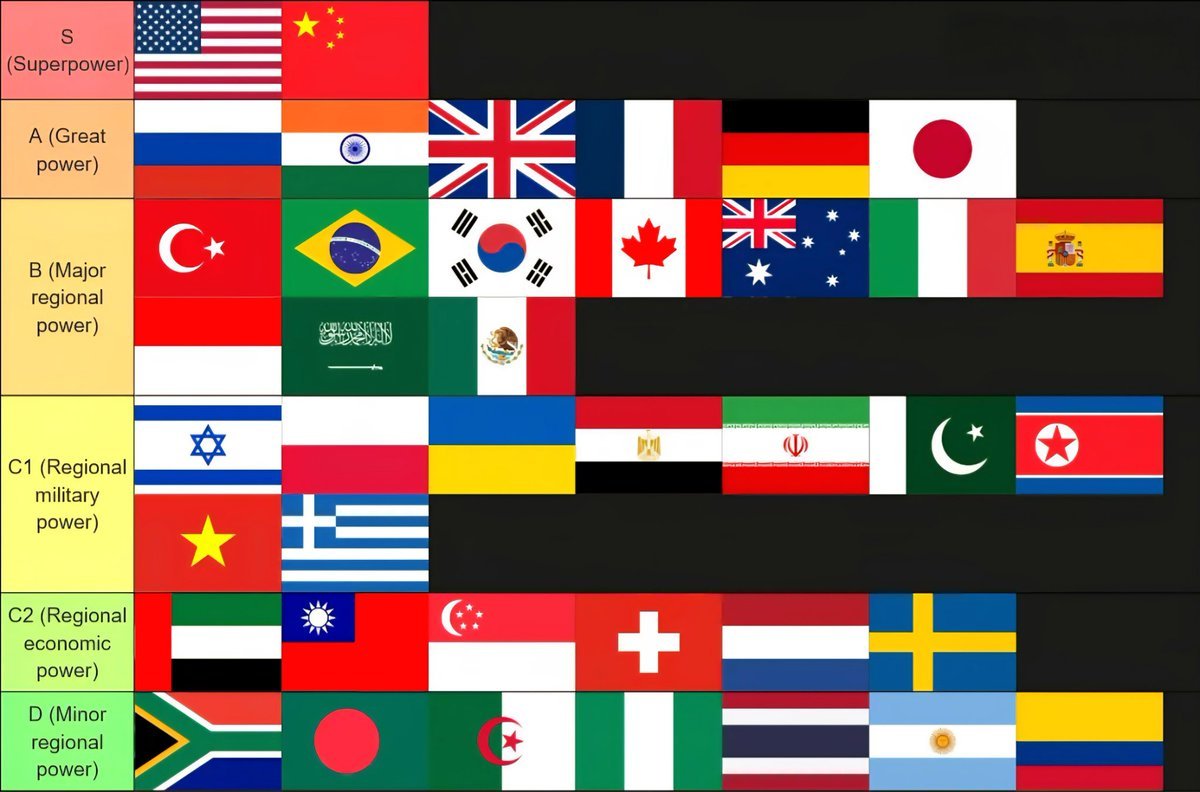
1. The United States: Dominance in Multiple Arenas
The United States continues to assert its influence as the most powerful nation globally in 2025. Its military prowess remains unrivaled, boasting the largest defense budget in the world, advanced technological capabilities, and a vast network of military bases worldwide. Economically, the U.S. maintains its position as the largest economy, driven by innovation, consumer spending, and a robust financial sector.
Politically, America’s leadership within global institutions like the UN, NATO, and the G7 cements its role as a key decision-maker. Even amid domestic challenges, the U.S. remains a central figure shaping international policies and alliances. The nation’s resilience is evident in its ability to adapt to emerging global shifts, including technological advancements and geopolitical threats.
2. China: A Rising Superpower
China has solidified its spot as a formidable rival to the U.S., ranking second in military, economic, and political influence. Its military expansion continues, with significant investments in modernizing the People’s Liberation Army and asserting territorial claims in the Indo-Pacific region.
Economically, China boasts the world’s second-largest economy, driven by manufacturing, technological innovation, and an expanding service sector. The Belt and Road Initiative further enhances its global reach, increasing influence across Asia, Africa, and Europe.
Politically, China’s strategic diplomacy and proactive participation in global governance bodies underscore its ambition to shape world affairs more assertively. Although challenges remain — such as demographic shifts and economic recalibrations — China’s trajectory in 2025 signals sustained growth and increased global clout.
3. Russia: Strategic Powerhouse
Russia retains its position as a major influential nation, excelling in military strength and geopolitical strategy. Its military is renowned for advanced weaponry, nuclear capabilities, and tactical prowess, reinforcing its role as a key player in global security matters.
Economically, Russia’s reliance on energy exports, particularly oil and gas, continues to influence its economic stability. Efforts to diversify are ongoing, yet the nation remains highly dependent on commodity markets.
On the political front, Russia’s assertive foreign policy, especially in Eastern Europe, the Middle East, and Central Asia, solidifies its diplomatic clout. The nation leverages its military and energy resources to maintain strategic influence amidst evolving global dynamics.
4. India: The Emerging Power
India’s rapid economic growth and expanding military capabilities position it as an emerging superpower in 2025. The country’s economy ranks third globally, fueled by a vibrant tech sector, manufacturing, and a growing middle class.
Militarily, India invests significantly in modernizing its armed forces and expanding its strategic reach, particularly in the Indian Ocean region. Its involvement in regional security pacts and territorial disputes signals ambitions for greater influence.
Politically, India continues to champion democratic values while increasing its presence in international organizations such as BRICS and G20. Its strategic partnerships, especially with the U.S. and Japan, aim to counterbalance China’s rise and assert India’s regional dominance.
5. European Union: A Unified Front
The EU remains a significant political and economic bloc in 2025, wielding substantial influence through collective policies and economic strength. With a diverse member base, the EU emphasizes cooperation on climate change, technological innovation, and defense collaboration.
Economically, it is one of the world’s largest economies, driven by advanced industries and a highly integrated single market. The euro remains a vital currency, fostering financial stability across member nations.
Militarily, the EU has augmented its defense capabilities, aiming for greater independence from NATO and the U.S., especially in light of evolving security challenges in Eastern Europe and the Mediterranean.
6. Japan: The Technological Powerhouse
Japan stands out as a technological hub with unmatched innovation in robotics, electronics, and automotive industries. Its economy ranks as one of the top five globally, supported by advanced infrastructure and high productivity.
Military modernization initiatives have enhanced Japan’s self-defense forces, reflecting a strategic move amidst regional tensions in the Indo-Pacific. Politically, Japan maintains strong alliances with Western nations and actively participates in regional diplomatic efforts.
Its influence extends through technological collaborations and sustainable development initiatives, positioning Japan as a critical player in shaping future global trends.
7. Germany: The European Economic Engine
Germany remains Europe’s economic engine and a leader within the EU. Its industrial base, renowned for manufacturing, engineering, and exports, sustains its elevated status on the world stage.
Politically, Germany advocates for stronger EU cohesion and sustainable policies, especially concerning energy transition and climate change. The nation’s diplomatic influence within European institutions amplifies its global role, particularly in mediating regional conflicts and fostering economic initiatives.
Strategic investments in digital infrastructure and renewable energy further bolster its position amid the shifting landscape of international power.
Final Thoughts
In 2025, global power dynamics continue to evolve, with traditional leaders like the U.S. and China leading the charge while emerging nations like India and regional blocs such as the EU grow in influence. Strategic military investments, economic resilience, and diplomatic agility are keys to maintaining or enhancing power in an increasingly interconnected world. As nations navigate complex challenges, their ability to adapt and collaborate will shape the future of global leadership.
Note: The provided image highlights the shifting landscape of world power and serves as a visual representation of these emerging trends.