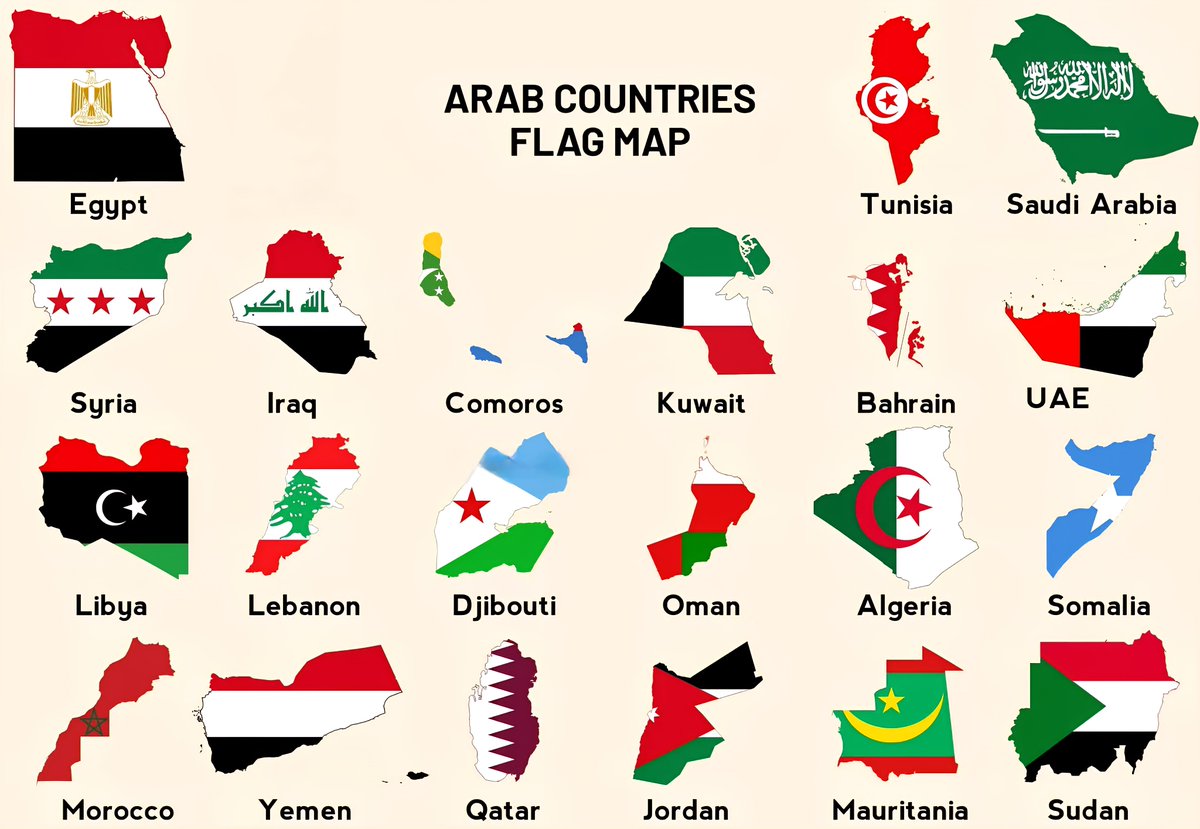
## A Closer Look at the Flags of Arab Countries in 2025
### 1. Egypt: The Land of the Pyramids and the Sphinx
Egypt’s flag features three horizontal stripes of red, white, and black, with the national emblem — the Eagle of Saladin — prominently displayed in the center. The colors symbolize the Arab revolution, purity of the land, and the fight for independence. Egypt remains a pivotal player in regional politics and culture, with its iconic history drawing millions of visitors annually.
### 2. Tunisia: The Star and Crescent of Modernity
The Tunisian flag showcases a red background with a white circle in the center, containing a red crescent and a five-pointed star. These symbols reflect the country’s Islamic heritage. As a leading example of political transformation in North Africa, Tunisia continues to navigate democracy’s challenges and opportunities in 2025.
### 3. Saudi Arabia: The Green Flag with the Shahada
Saudi Arabia’s distinctive green flag bears the Islamic declaration of faith—the Shahada—in white Arabic script, along with a sword beneath it. The flag emphasizes the kingdom’s steadfast Islamic identity and royal authority. It remains influential globally due to its oil reserves and religious significance.
### 4. Syria: A Banner of the People
The Syrian flag consists of three horizontal stripes—red, white, and black—with two green stars in the white band. These colors are inspired by the Arab Liberation flag, symbolizing Arab unity and independence. Despite ongoing conflicts, Syrian sovereignty persists amid regional complexities.
### 5. Iraq: The Flag of a Resilient Nation
Iraq’s flag features three horizontal stripes—red, white, and black—with the Takbīr (Allahu Akbar) in green across the white band. The flag reflects the country’s rich history and ongoing struggles for stability. Iraq continues to rebuild its infrastructure and political institutions in 2025.
### 6. Comoros: The Archipelago’s Unique Emblem
The Comoros flag displays four colored triangles—yellow, white, red, and blue—converging on a green crescent and four stars. The design represents the islands’ diverse cultural heritage and Islamic faith. The nation maintains efforts to promote tourism and regional cooperation.
### 7. Kuwait: Pride in Sovereignty
Kuwait’s flag is a horizontal tricolor of green, white, and red with a black trapezoid on the hoist side. These colors are Pan-Arab symbols emphasizing unity and independence. Kuwait remains a critical oil-exporting country with a thriving financial sector.
### 8. Bahrain: A Nation of Islands and Traditions
The Bahraini flag has a white band on the left divided by five white triangles on a red field, symbolizing the five pillars of Islam. Bahrain balances traditional Islamic values with modern development, especially as an important financial hub in the Gulf.
### 9. United Arab Emirates: The Seven-Emirates Banner
The flag of the UAE features a vertical red band next to horizontal green, white, and black stripes. These colors collectively represent Arab unity and the federation of the seven emirates, which continue to expand economically and culturally in 2025.
### 10. Libya: The Cyrenaica and Tripolitania
Libya’s flag has undergone various changes; the current version showcases a single green field — the traditional color of Islam and the green revolution. The country seeks stability following years of conflict, focusing on rebuilding its economy and infrastructure.
### 11. Lebanon: A Cedar in the Middle East
The Lebanese flag displays two horizontal red stripes separated by a white stripe with a green cedar tree in the center. The cedar symbolizes resilience and eternal life. Lebanon emphasizes its diverse cultural identity and seeks regional diplomacy in 2025.
### 12. Djibouti: The Horn’s Gateway
The flag of Djibouti features two horizontal stripes—light blue and light green—separated by a white triangle with a red star. The colors reflect the nation’s Islamic faith and hope for development as a strategic maritime hub.
### 13. Oman: The Sultanate’s Identity
Oman’s flag is composed of three horizontal stripes—white, red, and green—with a vertical red band on the hoist side bearing the national emblem. Oman actively promotes regional stability and economic diversification.
### 14. Algeria: The Land of Mountains and Olive Trees
Algeria’s green and white bicolor flag features a red crescent and star in the center, symbolizing Islam. The country is prioritizing economic reforms, harnessing oil and natural resources to boost growth.
### 15. Somalia: A Foundation for Future
The Somali flag is plain blue with a white five-pointed star in the center. The star signifies unity among Somali territories. Efforts toward national reconciliation and development are ongoing in 2025.
### 16. Morocco: The Red Kingdom
Morocco’s flag is red with a green five-pointed star (pentagram) in the middle. The red is a traditional Berber color, while the pentagram symbolizes wisdom and health. Morocco continues to strengthen ties with Africa and Europe.
### 17. Yemen: Navigating Transition
Yemen’s flag features three horizontal stripes of red, white, and black. Despite ongoing conflicts, Yemen strives for peace and reconstruction, with aid and diplomatic efforts intensifying.
### 18. Qatar: The Chief of the Peninsula
Qatar’s maroon and white banded flag, featuring a serrated line, symbolizes the country’s Islamic heritage and sovereignty. Qatar’s diplomatic and infrastructural projects continue to expand its global influence.
### 19. Jordan: The Hashemite Kingdom
Jordan’s flag displays three horizontal stripes—black, white, and green—overlaid by a red triangle, with a seven-pointed star. The country remains a key regional ally and mediator.
### 20. Mauritania: The Desert’s Sentinel
The Mauritanian flag is green with a gold star and crescent. Green reflects Islam, and the gold symbolizes the sands of the Sahara. Efforts focus on development and combating desertification.
### 21. Sudan: Building a New Future
Sudan’s flag sports horizontal red, white, and black stripes with a green triangle on the hoist. Despite political upheaval, Sudan advances with peace agreements and economic recovery strategies.
—
This comprehensive overview of the Arab countries’ flags in 2025 showcases the vibrant diversity, historical symbolism, and evolving national identities across the Middle East and North Africa. Each emblem represents centuries of culture, faith, and resilience, shaping the region’s complex geopolitical landscape today.