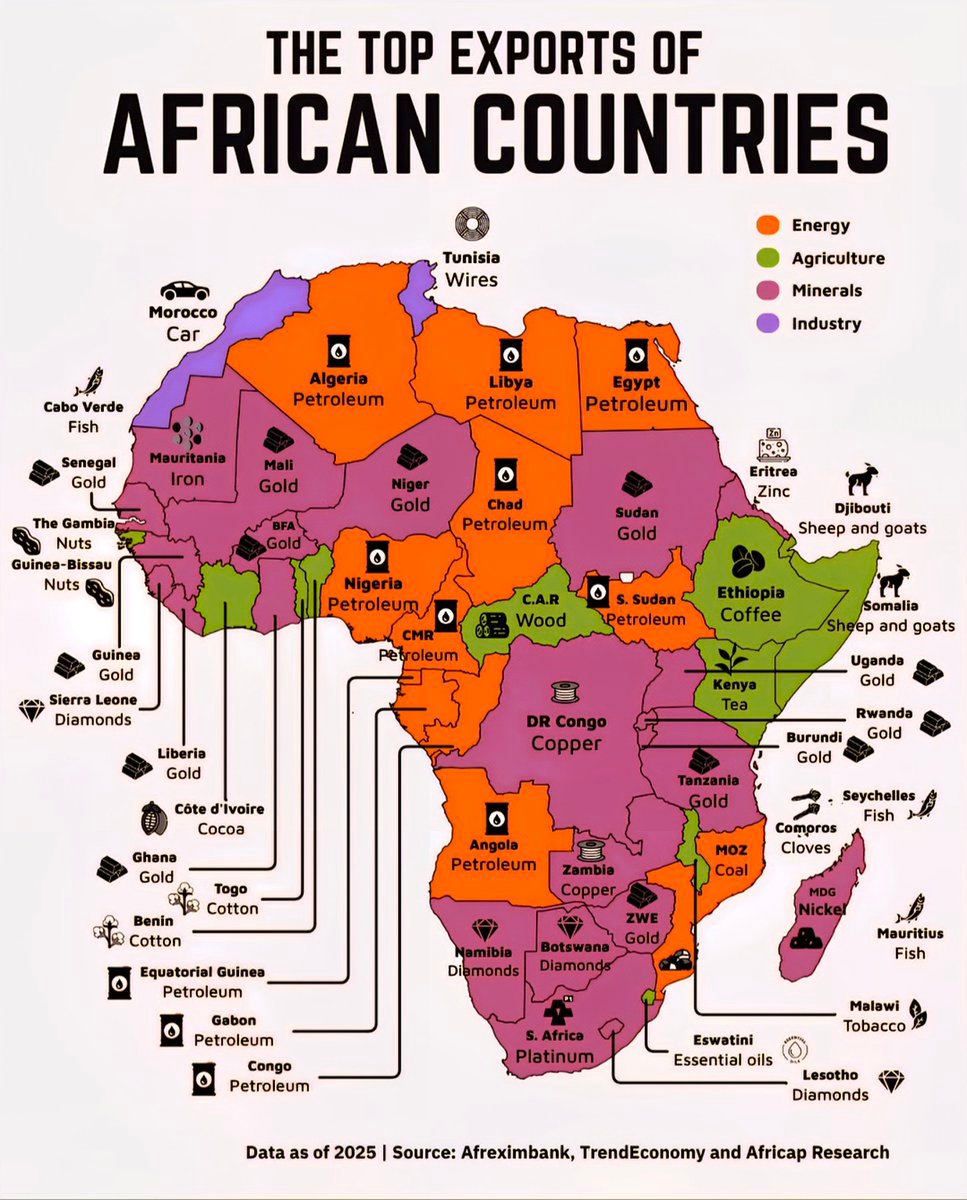
The Leading Export Products of African Nations in 2025
1. Algeria and Angola Dominate Petroleum Exports
Algeria and Angola remain at the forefront of Africa’s oil industry, with petroleum leading as their top export. Algeria continues to leverage its vast oil reserves, contributing significantly to its economy, while Angola’s oil sector plays a central role in its trade portfolio. The global demand for energy sustains these countries’ reliance on petroleum exports, making it a vital driver of their economic growth in 2025.
2. Botswana and Zimbabwe Shine with Diamonds and Gold
Botswana’s diamond industry stays robust, establishing the country as a global diamond exporter with refined jewelry and industrial gems. Similarly, Zimbabwe maintains its reputation as a top gold exporter, with the precious metal remaining a cornerstone of its economy. These commodities not only generate foreign currency but also attract international investments.
3. West African Countries Export Cotton and Cocoa
Benin and Togo have cemented their positions as leading producers of cotton, powering their textile industries and exports. Côte d’Ivoire continues to be the world’s leading cocoa exporter, fueling the global chocolate market with high-quality beans. These agricultural exports sustain millions of livelihoods across West Africa.
4. Oil-Rich Nations Rely on Petroleum
Cameroon, the Republic of the Congo, Chad, and Libya all prioritize petroleum as their top export product. While Libya’s oil sector faces geopolitical challenges, all these nations benefit from their hydrocarbon resources, which drive national revenues and support infrastructure development.
5. Central African Republic and Equatorial Guinea Benefit from Wood and Petroleum
The Central African Republic mainly exports wood, leveraging its forest resources, whereas Equatorial Guinea remains heavily dependent on petroleum exports. These commodities provide essential revenue streams, although diversification remains a goal for many African economies.
6. East African Countries Excel in Coffee and Tea
Ethiopia and Kenya have established themselves globally through their traditional exports—coffee and tea. Ethiopia’s coffee industry remains a cultural and economic pillar, while Kenya’s high-quality tea is highly sought after on international markets.
7. West African Gold and Nuts Drive Economies
Ghana, Guinea, and Mali continue to be major gold exporters, benefiting from rich mineral deposits. Guinea-Bissau and The Gambia also export nuts, with cashews and other seasonal crops contributing significantly to these nations’ incomes.
8. Heavyweights in Africa’s Automotive and Industrial Sectors
Morocco leads the continent with its automobile manufacturing industry, exporting cars to Europe and beyond. Tunisia also has a notable presence in exporting electrical wires and components, bolstering its industrial profile.
9. Southern Africa’s Precious Metals and Diamonds
South Africa remains a global leader in platinum exports, while Namibia and Zimbabwe continue to export diamonds. These resources are vital to their economies, although shifting toward more sustainable and diversified industries is on the horizon for these nations.
10. Countries Focused on Fish and Livestock
Seychelles, Mozambique, and Somalia heavily rely on fish exports, sustaining their maritime industries. Djibouti and Somalia also export sheep and goats, which are essential for regional livestock markets and cultural traditions.
Additional Highlights
- Copper: Zambia and the Democratic Republic of Congo (DR Congo) are key copper exporters, vital for global electronics and construction industries.
- Iron and Nickel: Mauritania and Madagascar export iron and nickel, supporting industrial expansion.
- Miscellaneous Products: Countries like Mauritius focus on fish exports, while Tunisia’s exports include electrical wires, emphasizing industrial diversity.
In Summary
Africa’s diverse resource base continues to shape its trade landscape, with petroleum, minerals, and agricultural commodities leading the way. While resource-based exports dominate, countries are increasingly exploring industrial and technological sectors to diversify their economies and ensure sustainable growth in 2025.
Source: Afreximbank, TrendEconomy, Africap Research, Data as of 2025.