The 25 Largest Islands in the World in 2025
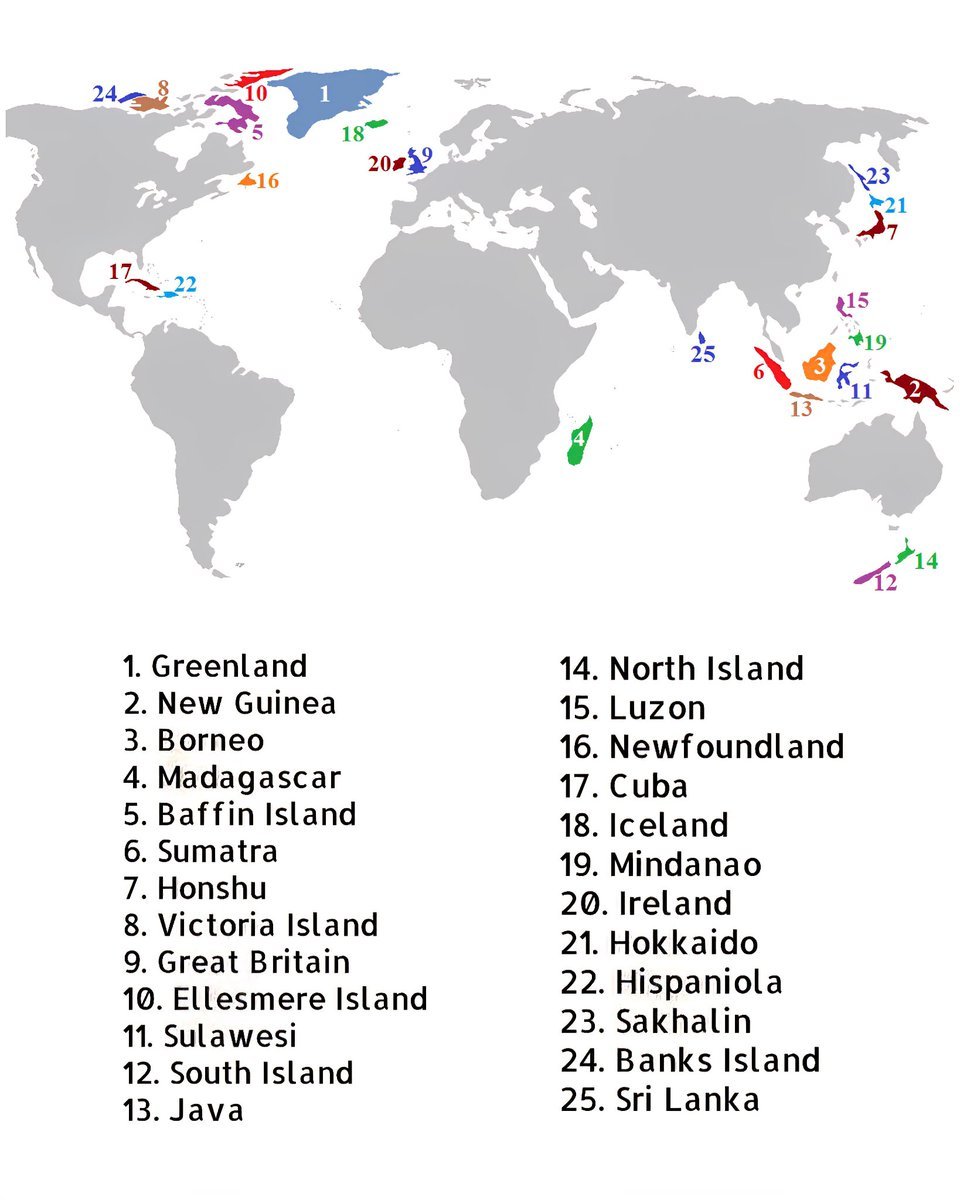
1. Greenland – The Largest Island on Earth
Covering approximately 836,330 square miles, Greenland takes the top spot as the largest island worldwide. Known for its vast icy landscapes and sparse population, Greenland is an autonomous territory of Denmark. Its ice sheets hold about 8% of the Earth’s fresh water, making it significant for climate studies.
2. New Guinea – The Cultural and Biodiversity Hub
With an area of around 316,600 square miles, New Guinea is the second-largest island. It sits in the South Pacific and is a melting pot of more than 850 indigenous languages. The island boasts unparalleled biodiversity, with many species found nowhere else on the planet.
3. Borneo – The Rainforest Wonder
Borneo spans approximately 288,800 square miles. Divided among Malaysia, Indonesia, and Brunei, it is renowned for its rich rainforests and unique wildlife, including orangutans, pygmy elephants, and the rare Rafflesia flower.
4. Madagascar – The Unique Island Ecosystem
Covering roughly 226,000 square miles, Madagascar is situated off the southeastern coast of Africa. Its isolation has led to the evolution of dozens of species that are nowhere else, like lemurs and chameleons, making its ecological diversity exceptional.
5. Baffin Island – A Northern Arctic Marvel
At around 75,000 square miles, Baffin Island is the fifth-largest island. Located in the Canadian Arctic Archipelago, it features stunning fjords, glaciers, and Arctic wildlife, including polar bears and Arctic foxes.
6. Sumatra – The Earth’s Natural Wonder in Southeast Asia
With an area of approximately 93,000 square miles, Sumatra is the largest Indonesian island. It’s known for its volcanoes, rainforests, and rare species like the Sumatran orangutan and the endangered Sumatran tiger.
7. Honshu – The Heart of Japan
Honshu, Japan’s main island, encompasses about 87,000 square miles. It houses major cities like Tokyo, Osaka, and Kyoto and is an economic and cultural hub with historic sites and vibrant modern life.
8. Great Britain – The Largest UK Island
Spanning around 88,000 square miles, Great Britain is the largest island in the United Kingdom. It features a mix of rolling hills, historic sites, and vibrant cities such as London, Edinburgh, and Cardiff.
9. Ellesmere Island – The Remote Arctic Landscape
Covering nearly 45,000 square miles, Ellesmere Island is part of Canada’s Arctic archipelago. Its icy terrain supports a sparse population and holds signs of ancient Inuit history and unique Arctic flora and fauna.
10. Sulawesi – Indonesia’s Shaped Treasure
Measuring about 73,000 square miles, Sulawesi stands out for its distinctive shape and diverse ecosystems. Its coral reefs and endemic species attract scuba divers and biologists alike.
11. South Island of New Zealand
About 58,000 square miles in size, South Island is famed for its breathtaking landscapes, including fjords, mountains, and lakes. It’s a haven for adventure tourism with activities like hiking, skiing, and kayaking.
12. K Quebec (Anticosti Island)
Covered in dense forests, Anticosti Island is around 2,200 square miles and is part of Quebec, Canada. Noted for its deer population and rugged coastline, it attracts nature enthusiasts.
13. Vancouver Island – A Natural Paradise in Canada
Spanning roughly 12,000 square miles, Vancouver Island features lush rainforests, rugged coastlines, and vibrant communities. It’s a popular retreat for outdoor activities and wildlife viewing.
14. Tasmania – Australia’s Island State
At about 26,000 square miles, Tasmania is known for its wild landscapes, unique flora and fauna, and vibrant arts scene. It offers a peaceful retreat with its pristine wilderness.
15. Chiloé Island – Chile’s Hidden Gem
Approximately 3,600 square miles, Chiloé is famous for its colorful wooden churches, rich mythology, and distinctive cuisine. It’s a cultural hub with a unique culinary scene.
16. Vancouver Island – A Natural Wonderland
Spanning roughly 12,000 square miles, Vancouver Island is a diverse landscape of temperate rainforests, rugged coastlines, and scenic mountains, making it ideal for trekking, fishing, and surfing.
17. Sri Lanka – The Pearl of the Indian Ocean
Covering about 25,000 square miles, Sri Lanka is famed for its ancient temples, lush tea plantations, and diverse wildlife, including elephants, leopards, and various bird species.
18. Newfoundland – Canada’s Atlantic Island
With an area of approximately 13,000 square miles, Newfoundland offers rugged coastlines, historic sites, and vibrant fishing communities, making it an island steeped in maritime tradition.
19. Taiwan – The Island of Contrasts
Spanning about 13,900 square miles, Taiwan boasts bustling cities, lush mountain ranges, and beautiful coastlines. It is a hub for high-tech industry and rich cultural heritage.
20. Hokkaido – Japan’s Northern Jewel
At nearly 8,500 square miles, Hokkaido is a winter sport destination known for its powder snow, hot springs, and national parks teeming with wildlife.
21. Bioko Island – An Equatorial Paradise
Part of Equatorial Guinea, Bioko covers roughly 1,000 square miles. It features volcanic landscapes, rare primates, and a vibrant coastal culture.
22. Barbados – The Caribbean Island Gem
Spanning just over 165 square miles, Barbados is famed for its beautiful beaches, lively culture, and warm climate, making it a preferred tourist destination.
23. Isabela Island – The Largest in the Galápagos
With an area of about 2,200 square miles, Isabela Island hosts unique wildlife and volcanic landscapes, being a key part of Ecuador’s famous Galápagos archipelago.
24. New Britain – Papua New Guinea’s Largest Island
Covering nearly 11,000 square miles, New Britain is known for its volcanic activity, dense rainforests, and indigenous cultures.
25. Faroe Islands – The North Atlantic’s Hidden Treasure
Although smaller at around 478 square miles, the Faroes are famed for their dramatic cliffs, rugged terrain, and vibrant fishing communities, representing a unique Nordic archipelago.
In 2025, these islands continue to fascinate with their unique landscapes, ecosystems, and cultural histories. Their preservation and exploration remain vital for understanding Earth’s diverse environments and human stories.