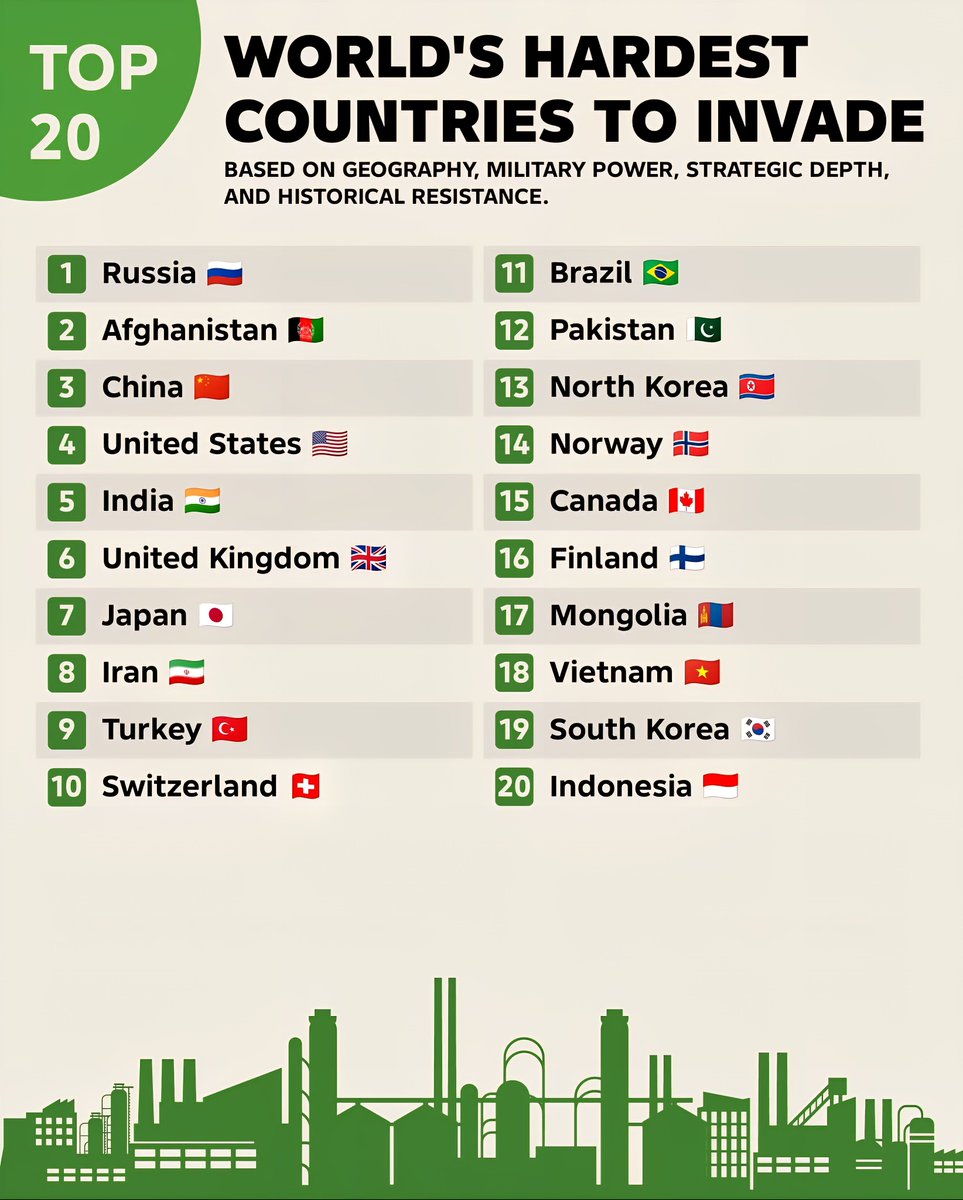
Top 20 Countries Most Difficult to Invade in 2025
1. Russia: The World’s Largest Landmass and Military Powerhouse
Russia remains the most challenging country to invade due to its immense geographical size, extensive border defense systems, and a formidable military force. Its harsh climate zones, particularly the Siberian region, act as natural barriers, making any invasion logistically complex. Additionally, Russia has invested heavily in modernizing its nuclear arsenal and defensive infrastructure, deterring potential aggressors. The country’s strategic depth and resilient military tradition have historically been a formidable obstacle for invaders.
2. Afghanistan: Rugged Terrain and Yearlong Resistance
Despite ongoing military operations over decades, Afghanistan continues to stand resilient. Its mountainous terrain and vast deserts make conventional invasion difficult, particularly in maintaining supply lines and controlling territory. The local population’s deep-rooted resistance, combined with guerrilla tactics, has rendered Afghanistan a tough country to conquer or pacify. Historically, foreign powers have struggled to impose control, and 2025 remains no exception.
3. China: A Major Power with Coastal Defenses
China’s extensive military infrastructure, coupled with its strategic coastal defenses and technologically advanced military capabilities, make it highly resistant to invasion. Its large landmass and formidable navy act as protective buffers, while its rapid military modernization ensures defensive readiness. The Taiwan Strait and East China Sea also serve as formidable maritime barriers, complicating any attempted invasion.
4. United States: Global Power with Extensive Defensive Capabilities
The U.S. boasts the world’s most advanced military technology, rapid deployment capabilities, and a global network of military bases. Its nuclear triad and sophisticated missile defense systems create significant deterrence. The country’s geographic isolation, combined with a strong homeland defense strategy, makes any invasion a formidable challenge, especially with the likelihood of significant international consequences.
5. India: Vast Terrain and Strategic Depth
India’s vast landmass, combined with rugged mountain ranges like the Himalayas, make invasion a complex undertaking. Its large and well-trained military, nuclear capabilities, and extensive border defenses add layers of protection. India’s regional alliances and resilient domestic infrastructure further solidify its defenses against external threats.
6. United Kingdom: Compact but Well-Defended
While geographically smaller, the UK’s strategic alliances, advanced military technology, and strong defense infrastructure make it difficult to invade. Its proximity to NATO allies and global naval presence also act as formidable deterrents, especially with advanced air and sea defenses protecting its coastline.
7. Japan: Well-Prepared and Geographically Protected
Japan’s archipelago status, highly developed military defenses, and alliance with the United States make it hard to invade. Its mountainous terrain, island fortifications, and superior naval forces contribute to its defense readiness, especially in the face of rising regional tensions.
8. Iran: Defensive Terrain and Regional Influence
Iran’s rugged landscape, fortified military bases, and regional strategic depth provide significant protection. Its ballistic missile capabilities and asymmetric warfare strategies serve as effective deterrents against invasion. Political resilience and regional influence also contribute to Iran’s defensive posture.
9. Turkey: Bridging Continents, Strategic Defense
Turkey’s unique position between Europe and Asia, combined with its sizable military and geography, offers strong defense advantages. The rugged terrain of Eastern Anatolia and the strategic importance of the Bosporus Strait add layers of defense, complicating any invasion plans.
10. Switzerland: Neutrality and Mountainous Terrain
Known for its longstanding neutrality, Switzerland’s rugged Alpine terrain and well-trained military make it extremely resistant to invasion. Its highly developed civil defense infrastructure and policy of military readiness act as deterrents to potential aggressors.
11. Brazil: Diverse Geography and Internal Security Measures
Brazil’s expansive Amazon rainforest and diverse terrain create logistical hurdles for invaders. Coupled with a large military and internal security measures designed to maintain sovereignty, Brazil’s geographic size and terrain are significant defensive advantages.
12. Pakistan: Mountainous Borders and Nuclear Power
Pakistan’s Himalayan and tribal mountainous borders, along with its substantial military and nuclear capabilities, make an invasion complex. The country’s strategic alliances and rugged landscapes serve as natural defenses, deterring external aggression.
13. North Korea: Mountainous and Isolated
North Korea’s mountainous terrain and heavily fortified borders with South Korea act as natural defenses. Its isolationist policies and military readiness preserve its sovereignty against external threats, making invasion highly challenging.
14. Norway: Arctic Environment and NATO Membership
Norway’s Arctic climate, mountainous landscape, and NATO alliance contribute to its resistant posture. Its advanced military capacity, particularly in coastal defense and Arctic sovereignty, makes invasion a complex endeavor.
15. Canada: Vast Wilderness and Strong Defense Alliances
Canada’s huge landmass, dense forests, and formidable military partnerships through NATO create a natural and strategic barrier. Its geographic isolation and well-developed civil defense system further protect against invasion.
16. Finland: Arctic Shield and Military Preparedness
Finnland’s extensive forested landscape, extreme cold climate, and compulsory military service system make invasion difficult. Its strategic partnership with NATO and its own defense readiness are key deterrents.
17. Mongolia: Steady Defense in Extensive Landmass
Mongolia’s vast open steppes and mountainous terrain serve as natural barriers. Its strong historical independence and proximity to Russia and China also contribute to its resilient defense posture.
18. Vietnam: Guerrilla Tactics and Dense Jungle
Vietnam’s dense jungles, rugged hills, and history of fierce resistance make it a tough country to invade outright. Its use of guerrilla warfare tactics and deep-rooted national resistance continue to serve as effective deterrents.
19. South Korea: Heavily Fortified and Geographically Protected
South Korea’s mountainous terrain and fortified border with North Korea, along with American military support, are crucial elements of its defense. Its strategic importance in the region keeps potential invasions high-stakes and complex.
20. Indonesia: Archipelago Defense Strategy
Indonesia’s extensive archipelago makes invasion logisticially challenging. Its regional military strength and the dispersal of islands serve as natural barriers, complicating any external invasion plans.
Note: This list is based on geography, military strength, strategic depth, and historical resilience as of 2025. With evolving technologies and regional dynamics, defense capabilities are subject to change.