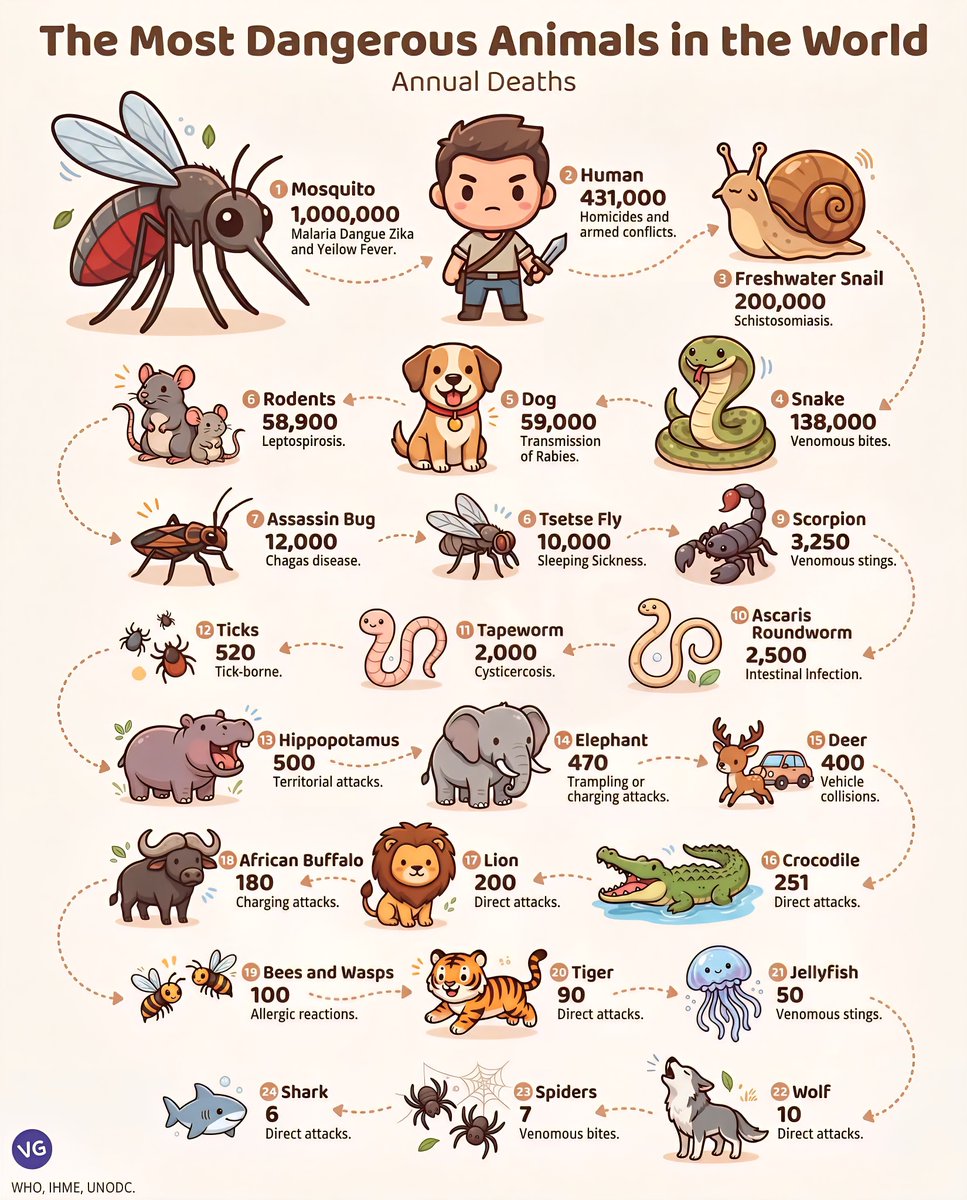
Top 24 Deadliest Animals in the World According to 2025 Data
1. Mosquitoes – The Deadliest Creatures on Earth
Mosquitoes are responsible for approximately 1 million deaths annually, making them the deadliest animal. Their ability to transmit diseases such as malaria, dengue, Zika, and chikungunya turns these tiny insects into deadly vectors. Different regions, especially tropical and subtropical areas, see higher incidences of mosquito-borne illnesses, emphasizing the importance of mosquito control and protection measures.
2. Humans – The Unexpected Threat
Surprisingly, humans themselves cause around 431,000 deaths each year. This figure includes fatalities from violence, accidents, and health-related issues stemming from lifestyle choices, conflicts, and environmental impacts. Our own species continues to be a major contributor to global mortality, highlighting ongoing issues like violence, road accidents, and systemic health disparities.
3. Freshwater Snails – Silent Spreaders of Disease
While small and often overlooked, freshwater snails contribute to approximately 200,000 deaths each year. They are notorious for spreading schistosomiasis (bilharzia), a disease affecting millions worldwide, primarily in regions with poor sanitation and limited access to clean water sources.
4. Snakes – Nature’s Venomous Threats
With about 138,000 fatalities annually, venomous snakes remain a significant danger in many parts of the world, especially in Africa, Asia, and Latin America. Snakebite envenomation can cause severe tissue damage, paralysis, and death if not treated promptly. Efforts to improve access to antivenom are critical in reducing these fatalities.
5. Dogs – Man’s Best Friend or Deadly Foe?
While beloved as pets, dogs are responsible for roughly 59,000 deaths each year due to rabies transmission and attacks, particularly in regions where vaccination programs are lacking. Rabies is a preventable disease, but strict vaccination and public health strategies are necessary to curb its impact.
6. Rodents – Small but Dangerous
Rats and mice contribute to approximately 58,900 deaths annually through disease transmission. They can carry pathogens that cause plague, leptospirosis, and hantavirus, making rodents a significant public health threat, especially in densely populated urban areas.
7. Assassin Bugs – The Blood-Feeding Culprits
Responsible for around 12,000 deaths each year, assassin bugs are vectors for Chagas disease, which affects millions globally. They stealthily transmit Trypanosoma cruzi, leading to chronic health issues if untreated.
8. Tsetse Flies – Vectors of African Sleeping Sickness
Tsetse flies cause about 10,000 deaths per year through the transmission of sleeping sickness (trypanosomiasis). This disease impacts populations in sub-Saharan Africa, causing fever, anemia, and neurological problems.
9. Scorpions – Poisonous Pests
Scorpions are responsible for approximately 3,250 deaths annually worldwide. Their venom can cause severe pain, illness, and, in some cases, death, especially in regions lacking immediate medical care.
10. Roundworms – Parasites in Our Bodies
Ascaris roundworms contribute to around 2,500 deaths each year. These parasitic worms infect millions, especially in impoverished regions where sanitation is inadequate, leading to malnutrition and intestinal complications.
11. Tapeworms – Another Parasitic Threat
Tapeworm infections are linked to roughly 2,000 deaths annually. They can cause nutritional deficiencies, neurological issues, and cystic diseases if not diagnosed and treated.
12. Ticks – The Carrying Menace
Responsible for about 520 deaths each year, ticks are vectors for diseases like Lyme disease and Rocky Mountain spotted fever, which can be fatal without prompt treatment.
13. Hippopotamuses – Surprisingly Dangerous
Despite their baleen and herbivorous reputation, hippos cause approximately 500 deaths annually in Africa, often through aggressive encounters or territorial disputes.
14. Elephants – Large but Deadly
Elephants, especially in Africa and Asia, are linked to about 470 fatalities per year, typically due to defensive attacks or human-elephant conflicts.
15. Deer – Unpredictable and Potentially Deadly
Deer are responsible for approximately 400 deaths annually, mainly through vehicle collisions resulting in accidents and injuries.
16. Crocodiles – Masters of Ambush
Crocodiles cause around 251 deaths yearly, primarily in Southeast Asia, Australia, and Africa. They are skilled predators and pose a serious threat to humans near water bodies.
17. Lions – Iconic But Dangerous Predators
Lions, with approximately 200 deaths per year, often attack humans in rural Africa, especially in areas where human settlements intersect with wildlife habitats.
18. African Buffalo – The Dangerous Bovid
Responsible for around 180 deaths annually, African buffalo are known for their unpredictable nature and aggressive behavior when threatened.
19. Bees and Wasps – Stinging Hazards
While often considered minor insects, bees and wasps cause about 100 deaths each year due to allergic reactions and venomous stings.
20. Tigers – Apex Predators
Tigers are responsible for roughly 90 fatalities annually, mainly in India and Southeast Asia, often through attacks on humans in rural or forested areas.
21. Jellyfish – The Ocean’s Touch of Death
Jellyfish cause about 50 deaths per year worldwide due to their venomous stings, which can lead to cardiac failure in severe cases.
22. Wolves – The Howling Threat
Wolves are linked to about 10 deaths annually, mostly in regions where reintroduction and human encroachment have increased conflicts.
23. Spiders – Often Misunderstood
Spiders are responsible for roughly 7 deaths per year. While most are harmless, venomous species like the Black Widow can cause severe health issues.
24. Sharks – The Ocean’s Predators
Shark attacks result in about 6 fatalities per year, with most incidents occurring in coastal waters where humans and sharks share habitats.
Sources: World Health Organization (WHO), Institute for Health Metrics and Evaluation (IHME), United Nations Office on Drugs and Crime (UNODC), via VG, 2025 data.
Understanding these animals and the risks they pose is essential for public safety and conservation efforts worldwide.