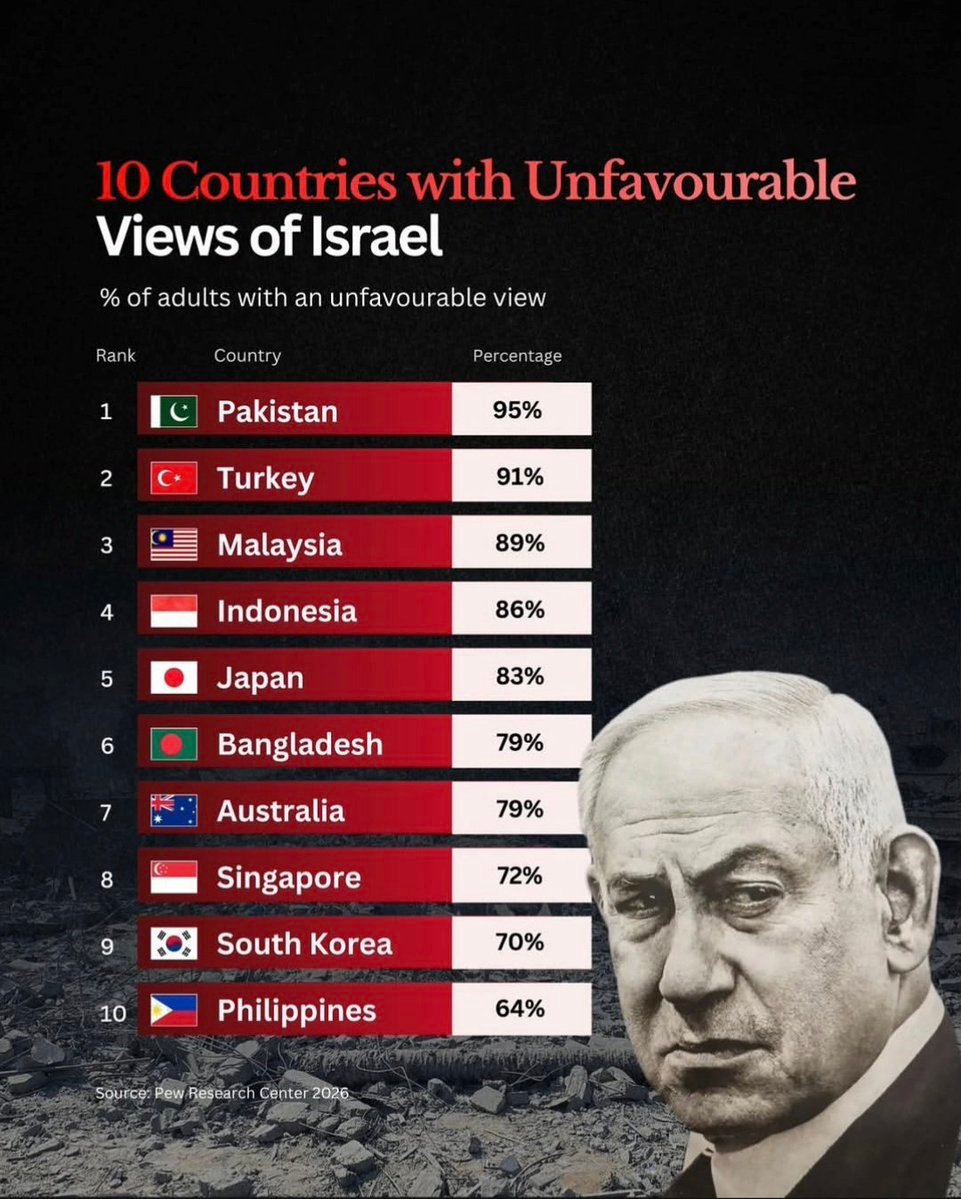
Top 10 Countries Holding the Most Unfavorable Views of Israel in 2025
1. Pakistan – 95%
Pakistan continues to hold the highest level of unfavorable sentiments toward Israel, with an overwhelming 95% of its population expressing negative views. This intense opposition is rooted in longstanding political and religious tensions, as well as ongoing disputes in the Middle East. Despite periods of diplomatic tension and regional conflicts, public opinion remains largely steadfast against normalization with Israel. Such widespread disapproval reflects Pakistan’s position on international issues concerning Palestine and its support for Palestinian sovereignty.
2. Turkey – 91%
Turkey ranks second with 91% of its citizens harboring unfavorable opinions of Israel. Political rhetoric, recent military conflicts, and diplomatic flare-ups have contributed to a tense relationship between the two nations. Public sentiment in Turkey is often influenced by government policies and media narratives, reinforcing negative perceptions. The longstanding ideological divide, combined with recent regional conflicts, fuels public opposition to Israel in Turkish society.
3. Malaysia – 89%
In Malaysia, 89% of the population perceives Israel negatively. Islamic solidarity with Palestine remains a significant factor influencing public opinion. Malaysia’s government has historically maintained a strong stance supporting Palestinian rights, and this stance is reinforced by popular sentiment. The cultural and religious narratives foster an environment where unfavorable views of Israel are prevalent across all demographics.
4. Indonesia – 86%
Indonesia, the country with the largest Muslim population globally, shows an 86% unfavorable view of Israel. The nation’s stance is deeply interconnected with its Islamic identity and support for Palestine. Despite some discussions around diplomatic relations, public opinion remains largely hostile, driven by regional sympathies and religious solidarity. Indonesia’s political rhetoric often condemns Israeli policies, which reflects in the widespread unfavorable sentiment.
5. Japan – 83%
Interestingly, Japan exhibits a significant 83% unfavorable view of Israel. Japan’s opinion is influenced more by geopolitical and economic considerations rather than religious or ideological reasons. Issues such as regional security, historical conflicts, and international diplomacy shape public perception. Japan’s complex relationship with the Middle East and its strategic alliances may also contribute to this dominant unfavorable viewpoint.
6. Bangladesh – 79%
Nearly 80% of Bangladeshis view Israel unfavorably. The nation’s strong stance on Palestinian rights, coupled with its Muslim-majority population, shapes negative perceptions. Political leaders and societal attitudes discourage normalization or engagement with Israel, reinforcing public disapproval across the country.
7. Australia – 79%
In Australia, 79% of the population holds unfavorable views of Israel. The sentiment is driven by ongoing debates surrounding the Israeli-Palestinian conflict, global human rights concerns, and activism from pro-Palestinian groups. Public opinion is often influenced by media coverage and international diplomatic debates, reflecting a divided but largely critical stance.
8. Singapore – 72%
Singapore, known for its pragmatic diplomacy, shows a 72% unfavorable view towards Israel. Citizens’ opinions are shaped by regional politics and international perceptions. While Singapore maintains good diplomatic relations with Israel for economic and technological purposes, public sentiment remains cautious and often skeptical, influenced by broader Middle Eastern issues.
9. South Korea – 70%
South Korea demonstrates a 70% unfavorable opinion of Israel. The country’s public prefers neutrality regarding Middle Eastern conflicts and closely monitors regional security issues. Diplomatic relations are stable, but public opinion remains cautious and often critical, especially during times of regional crises.
10. Philippines – 64%
The Philippines rounds out the list with 64% unfavorable views of Israel. The country’s history of activism concerning human rights and its strong support for Palestine contribute to widespread disapproval. While diplomatic ties exist, public opinion tends to favor Palestinian causes and criticizes Israeli policies, especially amid ongoing regional conflicts.
Key Takeaways:
Public opinion trends in 2025 show that unfavorability towards Israel remains high across numerous countries, influenced by political, religious, and regional factors. The persistent negative views reflect ongoing global debates surrounding Israel’s policies and regional conflicts, with cultural and religious solidarity playing significant roles in shaping public attitudes worldwide.
Source: Pew Research Center 2026