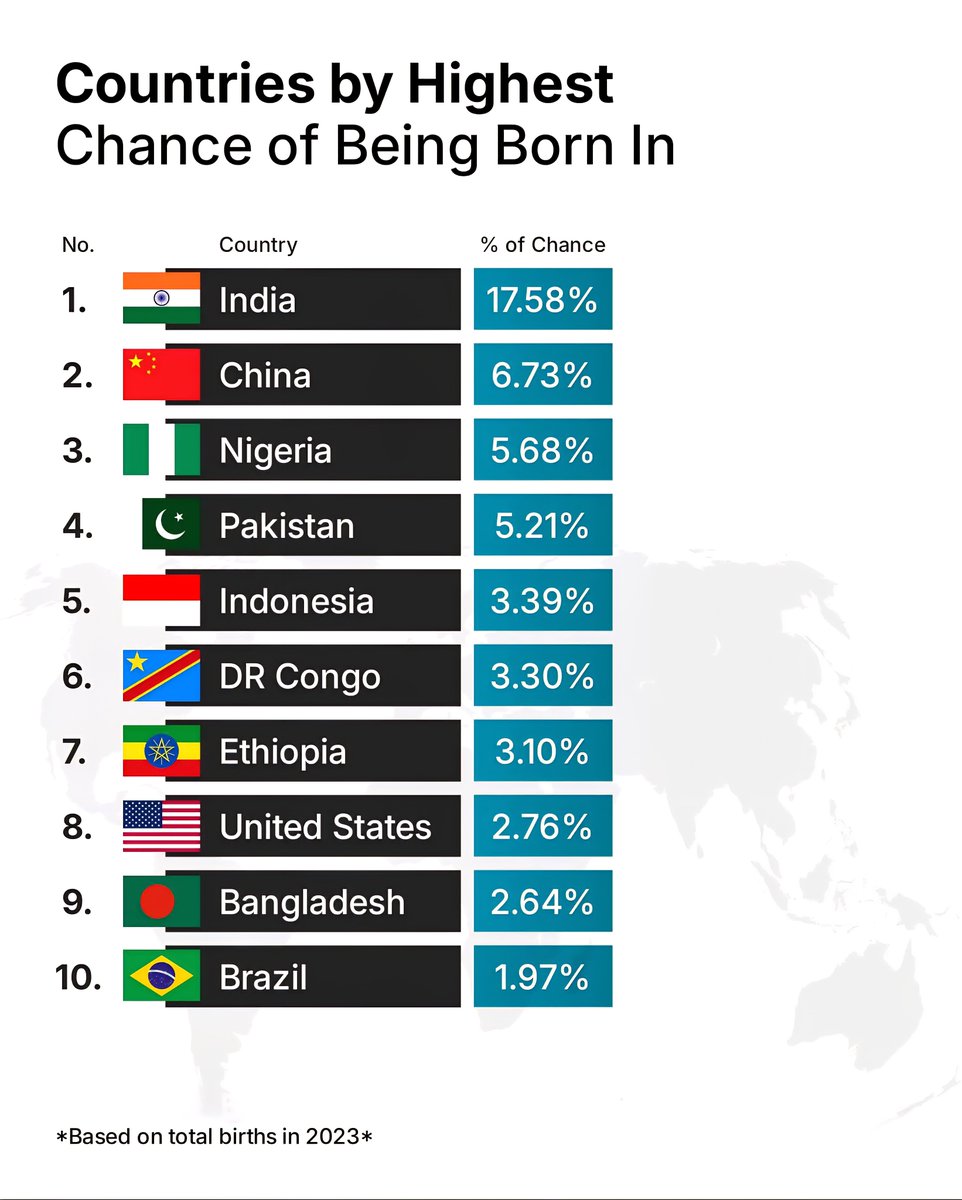
Top 10 Countries with the Highest Chances of Births in 2025
1. India Dominates the Global Birth Landscape
India continues its dominance as the world’s most populous country, with an estimated 17.58% chance of a person being born there in 2025. This overwhelming proportion underscores India’s ongoing demographic growth fueled by its high birth rate, large youth population, and ongoing population policies. Experts project that India’s population will surpass 1.45 billion this year, contributing significantly to the world’s baby boom.
2. China Remains a Major Player in Global Birth Trends
China ranks second with a 6.73% chance of being born to someone in the country. Although China’s absolute birth rate has slowed in recent years due to demographic shifts and aging population concerns, it remains a crucial player in global birth statistics. The country’s population is roughly 1.4 billion, and its birth policies and socio-economic factors continue to influence yearly figures.
3. Nigeria Surges as Africa’s Largest Birth Powerhouse
Nigeria’s birth prospects continue to climb, with an estimated 5.68% chance of someone’s birth occurring there in 2025. The nation’s high fertility rate, cultural preferences for large families, and improving healthcare infrastructure are major factors fueling this growth. Nigeria also leads Africa’s population expansion, with a current population nearing 220 million, expected to exceed 300 million by 2030.
4. Pakistan’s Population Growth Remains Steady
Pakistan accounts for approximately 5.21% of global births, reflecting its position as South Asia’s second-largest country. The country’s high fertility rate, combined with improvements in healthcare and education, continues to propel its population. Pakistan is forecasted to grow beyond 240 million by the end of 2025, making it a significant contributor to worldwide birth rates.
5. Indonesia Continues to Expand in Southeast Asia
The archipelago of Indonesia is home to about 3.39% of all births worldwide. With the world’s fourth-largest population—over 280 million—Indonesia’s birth rate remains high, driven by familial and cultural values. The nation’s population growth sustains Indonesia’s status as a key demographic player in Southeast Asia.
6. Democratic Republic of Congo’s Youthful Population
The DRC has a 3.30% chance of births occurring there in 2025, holding one of Africa’s youngest populations. High fertility rates, limited access to family planning, and improving healthcare initiatives are key drivers of this demographic trend. The country’s population is projected to hit 130 million this year, predominantly composed of young children.
7. Ethiopia- Africa’s Rapidly Growing Nation
Ethiopia’s birth chance stands at 3.10%, making it one of the fastest-growing populations in Africa. The country’s population is pushing past 125 million, with high fertility rates and rural-based communities fueling the growth. Ethiopia’s demographic expansion is vital to the broader African context.
8. United States: The Largest Western Birth Contributor
While the U.S. accounts for a smaller share of global births at 2.76%, it remains the most significant country in the Western hemisphere. The nation’s birth rate has experienced fluctuations, but immigration, socio-economic diversity, and changing family structures sustain its overall population growth, expected to reach 336 million in 2025.
9. Bangladesh Continues Its Population Rise
With a 2.64% chance of any given birth occurring in Bangladesh, the densely populated nation charts steady demographic growth. Its big population (over 170 million) and increasing urbanization contribute to its position among the top birth countries.
10. Brazil’s Steady Population Growth
Brazil holds a 1.97% share of global births, maintaining its status as the largest country in South America. Despite recent declines in fertility rates, Brazil’s population remains robust, projected to hit approximately 235 million this year, driven by natural growth and migration trends.
The global birth landscape of 2025 reflects ongoing demographic shifts, cultural influences, and healthcare advancements. Countries such as India and Nigeria continue to lead the charge in population expansion, shaping the future of global development.
(Note: Figures are based on total births in 2023 and projected trends for 2025.)