Tag: Xi Jinping

  • Xi Jinping makes rare visit to North Korea

    Xi Jinping makes rare visit to North Korea

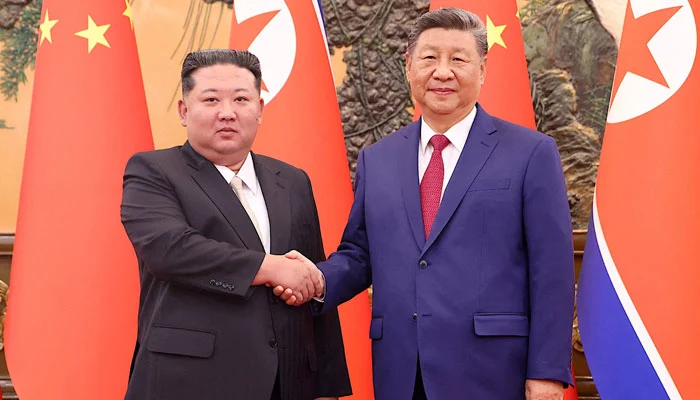
    China’s President Xi Jinping arrived in North Korea Monday, first trip abroad this year following numerous summits in Beijing. Xi praised a “formidable friendship” with Pyongyang, emphasizing their unbreakable bond. This visit underscores China’s longstanding role as North Korea’s primary trading partner and vital supporter despite international sanctions.

    Military personnel greeted Xi with a red carpet as his plane landed, and Kim Jong Un along with his wife Ri Sol-ju welcomed him. Children presented flowers, and banners celebrating China’s enduring alliance with North Korea were displayed beneath flags of both nations. Xi traveled accompanied by his wife Peng Liyuan for this significant visit, the first since 2019.

    During the visit, Kim’s sister reaffirmed North Korea’s commitment to its nuclear program, describing it as “the red line of no retreat.” Meanwhile, South Korea’s President Lee Jae Myung urged continued efforts towards denuclearization, noting that North Korea is actively producing nuclear material. Diplomacy experts suggest that Beijing might now accept North Korea as a nuclear state but will prioritize stability above all.

    Analysts believe China’s strategy has shifted towards ensuring regime durability over persuading North Korea to abandon its nuclear arsenal. Beijing appears to facilitate a stable, armed buffer zone that absorbs U.S. and allied military pressures, especially as North Korea resists international calls to denuclearize.

    Since the 2019 summit failure, North Korea has declared itself an “irreversible” nuclear power and has gained support from Russia amidst the Ukraine conflict, increasing its regional leverage. Some experts see Xi’s visit as a move to counter Russia’s influence over Pyongyang, but others point out that Moscow’s influence remains weaker compared to China’s.

    Xi wrote in North Korea’s official newspaper emphasizing the enduring “invincible” friendship between the two countries, regardless of changing international dynamics. His previous encounter with Kim involved inviting him and Putin to a military anniversary parade in Beijing, further highlighting military and diplomatic ties.

    South Korean guides and officials hope North Korea might adopt China’s development model, which could reduce tensions on the peninsula. Despite the lack of progress in U.S.-North Korea negotiations, North Korea’s exclusive military alliance with China offers strategic value as a regional counterbalance against U.S. partners like Japan and South Korea.

    Meanwhile, tensions in the region have intensified, especially with deteriorating China-Japan relations over Taiwan. Russian and Chinese interests seem aligned in maintaining stability and regional influence, with expert Lim Eul-chul observing that China is working to deepen its diplomatic engagement with North Korea as part of its broader regional strategy.
  • North Korea’s Nuclear Program: Declared Non-Negotiable by Leader’s Sister

    North Korea’s Nuclear Program: Declared Non-Negotiable by Leader’s Sister

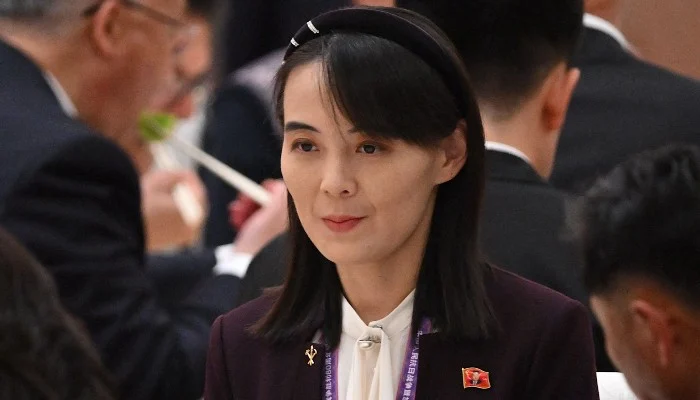
    North Korea’s nuclear weapons program is “completely non-negotiable,” announced Kim Yo Jong, the influential sister of leader Kim Jong Un, in a statement published by state media on Sunday, just before Chinese President Xi Jinping’s visit. Pyongyang has consistently maintained its right to develop nuclear and missile capabilities, despite international sanctions set by the UN Security Council that prohibit such programs. The country officially recognized its nuclear status in its constitution in 2023.

    “Our position as a nuclear power is entirely non-negotiable,” Kim Yo Jong declared, emphasizing that North Korea “will not accept any threats.” As a key figure in the nation’s communication and foreign policy spheres, her remarks were released on the eve of Xi Jinping’s scheduled visit to North Korea from Monday through Tuesday, according to government sources.

    Beijing remains a critical supporter, providing political backing and economic resources to North Korea, which continues to face international diplomatic isolation and heavy sanctions. Xi’s visit marks his first in seven years and follows recent high-level summits he held with U.S. President Donald Trump and Russian President Vladimir Putin last month.

    Since the collapse of the 2019 summit with Trump over disagreements regarding denuclearization and sanctions relief, North Korea has steadfastly declared itself an “irreversible” nuclear state. The ongoing conflict in Ukraine has further emboldened Kim Jong Un, who received significant support from Moscow after dispatching thousands of troops to aid Russian forces.

    Over the weekend, Kim inspected a major munitions factory and instructed the facility to increase production capacity, according to a report by the official Korean Central News Agency (KCNA). He cited the need to “supply an ample amount of missiles” as the reason for boosting manufacturing.

    Kim Yo Jong also criticized the United States for claiming that its recent summit with Xi Jinping reaffirmed Washington’s goal of denuclearizing North Korea. She dismissed this assertion as false, stating, “Some U.S. officials remain in an outdated and fanciful dream,” and accused Washington of spreading “false information” as a routine tactic.

    She dismissed U.S. efforts to challenge North Korea’s nuclear status, asserting that such efforts “hold no legal weight.” She reaffirmed North Korea’s commitment to strengthening its self-defense nuclear capabilities, describing this policy as “irreversible” and essential to implement without fail.

    Expert Hong Min of the Korea Institute for National Unification explained that Pyongyang is highly sensitive to any indication of a US-China deal regarding North Korea’s denuclearization, interpreting Kim’s statements as a categorical rejection of rumors suggesting such discussions. It’s also plausible that North Korea confirmed with Beijing during planning for recent summits that no such negotiations had taken place.

  • Xi to Tour North Korea Next Week

    Xi to Tour North Korea Next Week

    Chinese President Xi Jinping is scheduled to visit North Korea next week, according to state media reports Friday. This visit marks a significant diplomatic move as Xi’s first trip to Pyongyang in seven years and his initial official international journey this year. The trip is set for June 8-9, prompted by an invitation from North Korean leader Kim Jong Un.

    Beijing plays a crucial role in supporting North Korea both politically and economically, with China accounting for up to 95% of North Korea’s total trade and 85% of its exports, based on 2022 data from a Washington-based think tank. Despite North Korea’s international isolation and sanctions, the country has strengthened its ties with Russia recently, especially following Russia’s invasion of Ukraine in 2022, with Pyongyang providing military support and aid in return.

    The upcoming summit signifies China’s increasing global diplomatic presence, coming after Xi hosted parallel summits with U.S. President Donald Trump and Russian President Vladimir Putin last month. Experts suggest Beijing aims to deepen its influence over Pyongyang, positioning North Korea closer within China’s broader diplomatic strategy.

    Xi last met Kim in September, during a military parade in Beijing honoring the 80th anniversary of Victory in World War II. Prior visits by Chinese leaders to North Korea, such as Hu Jintao in 2005, have been infrequent, with Xi and his wife Peng Liyuan visiting North Korea in 2019 to celebrate their “unbreakable friendship.”

    China’s foreign policy approach involves monitoring North Korea’s rapidly progressing nuclear program to prevent actions that could lead to regional instability or conflict, aligning with mutual interests. Kim Jong Un declared plans to significantly expand North Korea’s nuclear capabilities during a recent visit to a new atomic facility.

    South Korea’s government expressed hope that increased exchanges between North Korea and China could promote peace and stability, but North Korea continues to dismiss engagement efforts, viewing Seoul as its most hostile rival. Analysts interpret Xi’s diplomatic activity as part of China’s effort to position itself as a stable, strategic alternative to the U.S., with broader outreach to traditional U.S. allies such as the U.K. and France.

    However, the likelihood of Beijing facilitating a summit between Donald Trump and Kim Jong Un remains low, according to experts.

  • Xi to welcome Putin as China promotes stable global leadership post-Trump visit

    Xi to welcome Putin as China promotes stable global leadership post-Trump visit

    Chinese President Xi Jinping is scheduled to host Russian President Vladimir Putin at the Chinese leader’s private residence in Beijing, Zhongnanhai, on September 2, 2025. This visit comes less than a week after Donald Trump’s prominent trip, as Beijing aims to present itself as a steady and predictable global power amid ongoing trade disputes, conflicts, and energy shortages.

    This marks Putin’s 25th trip to China, a visit that China and Russia emphasize as a sign of their “permanent” partnership, despite Western calls for Beijing to pressure Moscow to end its Ukraine war. Putin affirms that China and Russia support each other’s core interests and is looking to enhance energy cooperation with the world’s second-largest economy despite Western sanctions.

    Analysts suggest the Xi-Putin summit signals to the world that the China-Russia strategic alliance remains central to their foreign policies and that U.S. efforts to divide them are likely to fail. The visit follows Trump’s recent trip, which garnered positive global optics but yielded few significant business agreements. Xi described U.S.-China relations as one of “strategic stability,” contrasting this with the notion of “strategic competition” typical of the Biden administration.

    By hosting international leaders, China seeks to reinforce its image as a source of global stability, contrasting with Western difficulties in resolving the Ukraine conflict and addressing other regional tensions such as Iran, which have disrupted energy markets.

    In foreign diplomacy, China aims to assure its trading partners, including the U.S., of its peaceful rise as an economic and technological leader, often downplaying concerns about its strategic ambitions. The U.S. State Department noted after Trump’s visit that there was a consensus on issues fostering stability for global markets and consumers.

    At the same time, Beijing’s engagement with Russia and other partners signals a consistent diplomatic stance, even under Western pressure. Experts note that Xi does not have the influence to compel Putin to end Ukraine’s conflict and recognizes that a Russian defeat would weaken Putin’s position domestically. Therefore, China continues to provide diplomatic cover at the UN, supports Russia with economic aid, and supplies dual-use technologies for Moscow’s military efforts.

    Although China has publicly denied supplying lethal weapons to either side in the Ukraine war and maintains strict control over exports of sensitive items, it continues to explore energy cooperation. During Putin’s last visit in September 2025, Russia and China agreed to develop the Power of Siberia 2 gas pipeline, although pricing negotiations are still pending. With energy shortages stemming from conflicts elsewhere in the Middle East, Russia is positioning the pipeline as a crucial long-term supply source, but Beijing remains committed to diversifying its energy imports, engaging with Turkmenistan and Russia separately. The potential deal may set broad supply terms without finalizing prices, which could take years to resolve.

    China is also the largest purchaser of Russian oil, buying both pipeline and sea shipments. Despite Western sanctions, Chinese refiners continue to import Russian oil, often paid for in yuan. Russia has agreed to boost exports to China by an additional 2.5 million metric tons annually via Kazakhstan. Putin expressed optimism about ongoing cooperation advancements and hopes to finalize substantial energy deals during the current visit.

  • Putin’s China Visit Scheduled for May 19-20 After Trump Trip

    Putin’s China Visit Scheduled for May 19-20 After Trump Trip

    Russian President Vladimir Putin (left) greets Chinese President Xi Jinping during a meeting at the Belt and Road Forum in Beijing on October 18, 2023. — Reuters

    – Putin and Xi Jinping are set to discuss strengthening their strategic partnership.
    – They are expected to sign a joint declaration following their discussions.
    – The visit comes shortly after former President Donald Trump’s trip to China this week.

    Putin is scheduled to visit China on May 19 for two days, according to the Kremlin, arriving shortly after U.S. President Donald Trump’s visit to Beijing. During his trip, Putin will focus on deepening the comprehensive partnership and strategic cooperation with Xi Jinping, as well as exchanging views on major international and regional issues. The leaders will also sign a joint declaration at the end of their meetings.

    In addition, Putin plans to hold talks with Chinese Premier Li Qiang about boosting economic and trade ties. The announcement of Putin’s visit follows Trump’s visit to China, which ended on Friday with a lavish reception despite ongoing tensions over trade and geopolitics, including the Russia-Ukraine conflict.

    During his discussions with Xi, Trump addressed the prolonged Ukraine-Russia war and tensions with Iran, but he left China without reaching any breakthroughs on these issues. Negotiations to resolve the Ukraine conflict, brokered by the U.S., seem to be stalled since the outbreak of hostilities between Israel and Iran on February 28.

    Before Trump’s visit, Ukrainian President Volodymyr Zelensky asked him to raise efforts to end the conflict during his talks with Xi. Russia has refused to consider a ceasefire or negotiations unless Ukraine agrees to its maximalist demands.

    While China consistently advocates for negotiations to end the fighting, it has not condemned Russia’s military actions in Ukraine since February 2022 and claims neutrality. Beijing denies supplying weapons to Moscow and blames Western countries for prolonging the conflict by arming Ukraine. As the world’s leading importer of Russian fossil fuels, China remains Moscow’s primary economic partner, especially since Western sanctions targeted Russian oil and gas.

    Trump departed China on Friday touting “fantastic” trade agreements, including a pledge from Beijing to buy 200 Boeing aircraft, along with U.S. oil and soybeans. However, specifics were vague, and China did not officially confirm any trade deal.

    China’s response to the summit was more subdued compared to Trump’s praise of Xi as a “great leader” and “friend.” Meanwhile, Russia’s top diplomat, Sergey Lavrov, acknowledged the China-U.S. summit but emphasized that Moscow maintains closer ties with Beijing, describing their relationship as deeper and stronger than typical political or military alliances.

  • Top 5 Insights from Trump and Xi’s Power Summit

    Top 5 Insights from Trump and Xi’s Power Summit

    U.S. President Donald Trump departed Beijing on Friday following discussions, a visit to a temple, and tea with Chinese President Xi Jinping. Their conversations covered a range of topics, from trade to the Middle East.

    Below are five key points from the two-day high-level summit:

    Were any agreements made?
    Trump claimed to have secured “fantastic trade deals” with Xi, who mentioned reaching a “consensus.” However, neither side has issued formal statements or released specific details. Trump aimed for significant Chinese purchases of American aircraft and agricultural products, a priority for his domestic supporters. After leaving Beijing, he told reporters aboard Air Force One that China would be “buying billions of dollars worth of soybeans.” He also said China agreed to buy “over 200 planes from Boeing, with a promise of 750 planes… if they do a good job with the 200, which I am confident they will.” Trump added in an interview with Fox News that Xi had also agreed to purchase more American oil. The Chinese foreign ministry did not confirm or deny any purchase agreements when questioned shortly after Trump’s departure. Notably, tariffs—expected to be discussed in extending a trade truce from last October—were omitted from the agenda, with Trump stating that the issue had not come up.

    Addressing the Strait of Hormuz
    China has labeled the ongoing U.S. confrontation with Iran as “illegal” and has repeatedly called for its cessation. Beijing has been discreetly acting as a mediator, hosting Iran’s foreign minister a week before Trump’s visit and engaging with several Gulf nations. Trump reported that during Thursday’s talks, Xi agreed to assist in reopening the critical Strait of Hormuz, which Iran has largely blocked since the U.S. and Israel began strikes against Iran on February 28. The White House stated, “The two sides agreed that the Strait of Hormuz must remain open to support the free flow of energy.” China, directly impacted by the strait’s blockade, has long supported the safe transit through it, as over half of China’s imported sea-borne crude comes from the Middle East. When pressed, China’s foreign ministry declined to comment on whether Xi had committed to help reopen the waterway.

    Taiwan? No comment
    In surprisingly direct comments, Xi warned Trump during their first bilateral meeting that mishandling the Taiwan issue could push their two nations into conflict, deeming it the most critical obstacle to US-China relations. Some analysts viewed this as an attempt by Beijing to seek concessions or alter Washington’s longstanding position on Taiwan. Trump responded that Xi asked whether the U.S. would defend Taiwan if conflict arose, to which he replied, “I don’t talk about that.” U.S. Secretary of State Marco Rubio reaffirmed that “U.S. policy on Taiwan remains unchanged.”

    A notable milestone
    Throughout the trip, Trump spoke highly of Xi, calling him a “friend” and a “great leader,” and extended an invitation for Xi to visit the United States in September. Xi, however, did not mirror Trump’s public warmth but offered a gesture of goodwill by saying he would send some Chinese rose seeds to the White House, after Trump expressed admiration for the flowers at the exclusive Zhongnanhai compound. Xi referred to the visit as a “milestone,” introducing a new framework of “constructive strategic stability” to guide U.S.-China relations for the next three years. Peking University professor Dong Wang said this represents a “major strategic repositioning,” emphasizing coexistence and shared interests, even amid disagreements over technology and geopolitics. The term is seen as progress compared to previous terminology like “strategic competition,” especially during Biden’s administration. Following Trump’s departure, China’s state news agency Xinhua reported that top diplomat Xi is expected to visit the U.S. this fall.

  • Trump predicts China will buy 200 Boeing planes

    Trump predicts China will buy 200 Boeing planes

    President Donald Trump announced on Thursday that China has agreed to buy 200 Boeing jets, referring to the deal as “200 big ones” during a live broadcast interview. “It was kind of like a statement, but I believe it’s a commitment,” Trump said, describing his discussion with President Xi Jinping in a Fox News interview.

    “That’s a significant number of jobs,” Trump told Fox host Sean Hannity in clips shared by the network. Following these comments, stock prices declined.

    U.S. media outlets had speculated that China might place an order for approximately 500 single-aisle Boeing 737 Max aircraft, along with about 100 larger models such as the 787 Dreamliner and 777.

    Boeing has yet to comment on the matter. The company’s CEO, Kelly Ortberg, was part of the U.S. delegation attending the Beijing summit. Last month, Ortberg expressed hope for a Chinese order, noting that the outcome largely depends on U.S.-China negotiations and relations.

    Boeing’s most recent order from Chinese authorities was in 2017 when Trump was on his first visit to Beijing. That deal involved 300 aircraft, both single and twin-aisle, valued at around $37 billion.

    Following the announcement, Boeing’s shares dropped by about 4% around 5 p.m. GMT.

  • Trump promises to press Xi on opening China at global summit

    President Donald Trump stated he would urge Xi Jinping to “open up” China to American businesses as he traveled to Beijing for a high-profile summit scheduled for Wednesday. The upcoming meeting will also address the Iran conflict. Trump’s focus on economic discussions was evident when Nvidia CEO Jensen Huang and Tesla founder Elon Musk joined him on Air Force One during a layover in Alaska.

    After leaving Washington, Trump tweeted that he planned to ask President Xi, whom he described as an “extraordinarily distinguished leader,” to facilitate opening China’s markets so talented individuals can contribute their expertise to elevate the People’s Republic.

    The visit marks the first U.S. presidential trip to China in nearly ten years and will feature influential business leaders, including Apple’s Tim Cook, who are also expected to participate. Despite economic ambitions, the trip faces diplomatic hurdles related to Taiwan and ongoing conflicts in the Middle East, which had previously delayed the trip from March.

    Trump indicated he would have an extended dialogue with Xi about Iran, particularly since most of Iran’s US-sanctioned oil exports go to China. He minimized disagreements by asserting that China has been “relatively good” on Iran and expressed confidence that the U.S. and China could avoid issues, due to his good personal relationship with Xi.

    Adding pressure for peace, China’s foreign minister contacted his Pakistani counterpart on Tuesday to encourage further mediation efforts between Iran and the United States.

    This week’s visit, which is set to include elaborate ceremonial activities such as a state dinner and a tea reception, will feature discussions on extending a one-year tariff truce agreed upon during their last summit in South Korea in October. Key topics will also include China’s control over rare earth exports, artificial intelligence competition, and the turbulent trade relationship between the two nations.

    The streets of Beijing are showing signs of the high-stakes nature of the summit, with police monitoring citizens and checking passenger IDs on the metro. Local observers, like 24-year-old Wen Wen from Nanjing, see the trip as significant, hoping for progress and lasting peace amid recent global instability.

    The relationship between the U.S. and China remains complex, with Trump emphasizing his personal rapport with Xi, which he believes helps prevent conflict like a potential invasion of Taiwan. Nonetheless, China’s more assertive stance since Trump’s 2017 visit and the ongoing economic challenges within China itself add layers of uncertainty as both countries navigate this pivotal diplomatic event.

  • Iran Conflict Heightens US-China Tensions Before Trump-Xi Talks

    President Donald Trump met with Chinese President Xi Jinping at Gimhae International Airport during the APEC summit in Busan, South Korea, on October 30, 2025, exchanging handshakes amid diplomatic discussions.

    This week, President Trump is scheduled to visit China. The ongoing conflict in the Middle East is prompting both nations to reassess their broader relationship strategies. China has called for an immediate halt to hostilities.

    The escalating tensions over Iran threaten to overshadow the upcoming summit between Trump and Xi. Key issues include:

    Iran Ceasefire Negotiations
    U.S. Treasury Secretary Scott Bessent indicated that the leaders will address the Iran conflict, with the U.S. urging China to collaborate on efforts to reopen the Strait of Hormuz to international shipping. While China has engaged behind the scenes to encourage Iran to participate in peace talks with the U.S. in Pakistan last month, analysts note that China’s actions are not solely driven by U.S. interests. Following Iran’s foreign minister’s recent visit to Beijing, China called for a complete end to hostilities and expressed appreciation for Iran’s non-nuclear weapon commitments, while also recognizing Iran’s right to peaceful nuclear energy. The U.S. suspects Iran aims to develop nuclear weapons and demands Iran forgo enrichment rights for two decades and surrender its stockpile of highly enriched uranium.

    Energy Security
    China’s energy supplies are increasingly at risk as the conflict prolongs, leading Beijing to scale back exports of refined products like gasoline and jet fuel to prioritize domestic needs. A substantial portion of China’s crude oil imports come from the Middle East, where the closure of the Strait of Hormuz and U.S. blockades have left ships stranded and vulnerable. Chinese customs data show that April crude oil imports fell 20% year-over-year to its lowest in nearly four years. China’s Foreign Ministry has criticized the U.S. blockade, stating it does not serve global interests, and confirmed that a Chinese crewed oil tanker was attacked in the strait last week.

    U.S. Sanctions on Iranian Oil and Arms Sales
    Despite pressure from the Trump administration, China remains the largest purchaser of Iranian oil, with over 80% of Iran’s exports headed to China. Independent Chinese refiners benefit from discounted Iranian oil under sanctions. Estimates from Kpler suggest China imported approximately 1.38 million barrels daily in 2025. In April, the U.S. Treasury sanctioned Chinese refiner Hengli Petrochemical for purchasing Iranian oil worth billions and issued warnings to two Chinese banks about secondary sanctions if they facilitated Iranian transactions. China has pushed back, instructing companies to ignore U.S. sanctions against five refiners and invoking its own laws to retaliate against entities enforcing what it views as unlawful sanctions. Just days before the visit, U.S. sanctions targeted four Chinese and Hong Kong entities involved in arm sales and ballistic missile materials intended for Iran.

  • Xi urges Chinese, Taiwanese to unite, tells Taiwan opposition leader

    Xi urges Chinese, Taiwanese to unite, tells Taiwan opposition leader

    Taiwan’s opposition leader, Cheng Li-wun, visited China for a peace initiative, marking the first visit by a KMT leader in ten years. She met with Chinese President Xi Jinping at the Great Hall of the People in Beijing on Friday, where Xi expressed strong confidence that Taiwanese and Chinese people would unify, emphasizing the ongoing trend of closer ties and unity across the Strait. Xi reiterated China’s readiness to enhance dialogue with Taiwanese groups, including the Kuomintang, based on a shared goal of opposing Taiwan independence.

    Cheng assured Xi that the Taiwan Strait would cease to be a hotspot for potential conflict and called for an end to political confrontations, highlighting a positive response from Xi regarding her proposal for Taiwan’s involvement in international organizations such as Interpol and regional trade agreements.

    The trip comes ahead of a visit by U.S. President Donald Trump to Beijing for a summit with Xi, amid increasing pressure from the U.S. for Taiwanese opposition figures to support defense procurement plans, including U.S. weapons. Cheng criticized the Taiwanese government’s defense budget, which has stalled in Parliament, and advocated for a smaller, more manageable defense fund of NT$380 billion ($12 billion), with the potential for additional arms purchases from the U.S.

    While the Kuomintang regularly engages with Chinese officials, their previous high-profile visit was in 2016 with Hung Hsiu-chu. Relations across the Strait have deteriorated recently, especially since Lai Ching-te, Tsai’s successor, was elected; Beijing considers Lai a separatist.

    Cheng arrived in Shanghai on Tuesday evening, asserting that war is not inevitable between the two sides, contrary to international fears. She also traveled to Nanjing to visit the mausoleum of Sun Yat-sen, a revered revolutionary leader widely respected in both Taipei and Beijing.

  • Xi Advocates Accelerated New Energy Development Amid Middle East Conflict

    Xi Advocates Accelerated New Energy Development Amid Middle East Conflict

    Chinese President Xi Jinping has called for faster development and planning of a new energy system to ensure the country’s energy security, especially amid recent global energy shocks triggered by the ongoing Iran conflict. During a session at the Great Hall of the People in Beijing on March 12, 2026, Xi emphasized the importance of expanding hydroelectric power and protecting ecological diversity, while also advocating for a safe and systematic increase in nuclear energy.

    He stated that the Party Central Committee has a clear grasp of global energy trends and has made significant decisions to deepen the new energy security strategy, reflecting China’s proactive approach. Though Xi didn’t explicitly mention the ongoing war, the geopolitical tensions involving the U.S. and Iran remain critical, with regional diplomacy trying to broker peace and control the Strait of Hormuz, a vital maritime route.

    Regarding energy sources, analysts note that China is better positioned to handle rising oil prices due to its substantial coal reserves, which comprise over half of its energy supply. Its oil imports through the Strait of Hormuz account for roughly 5% of total consumption. Xi highlighted that, despite pioneering wind and solar energy, coal remains foundational for China’s energy infrastructure and will continue to support the system. As the world’s largest coal consumer and a leading carbon emitter, China remains committed to low-carbon growth, aiming to develop a greener, more diversified, and resilient energy network that supports economic stability and progress.

    Recent projects include the construction of the world’s largest hydropower dam on the Tibetan Plateau’s eastern edge. Additionally, China General Nuclear Power Group has started building a solar thermal plant at an altitude of 4,550 meters in Tibet, marking significant steps toward sustainable energy development.

  • Trump plans China visit in May after Iran war postponement

    Trump plans China visit in May after Iran war postponement

    A trip to Beijing is scheduled for May 14-15, according to the White House. Trump’s spokesperson mentioned that Xi Jinping understood the reason for the delay. Trump expressed anticipation that the visit to China would be “a monumental event.”

    In a recent announcement, the U.S. President revealed that he will meet with Chinese President Xi Jinping in May during his first trip to China in eight years. Originally planned for the upcoming week, the trip was postponed due to the ongoing Iran conflict. Trump’s attempt to reschedule reflects his desire to project strength amid Middle Eastern tensions while managing the fragile relationship between the two largest economies.

    Trump took to Truth Social on Wednesday to share that he would visit Beijing on May 14 and 15, and that he plans to host Xi Jinping for a reciprocal visit in Washington later this year.

    “Our teams are wrapping up preparations for these historic visits,” Trump stated. “I am very much looking forward to spending time with President Xi in what I am sure will be a monumental event.”

    China’s embassy said it had no further details about the visit, as Beijing usually keeps Xi’s schedule private until just a few days before events.

    The trip had been on the calendar for some time and was part of a broader effort by Washington to reset relations within the Asia-Pacific region. However, a series of developments have continually shifted priorities. In February, the Supreme Court limited the president’s authority to impose tariffs, a tool Trump used in negotiations with this country’s third-largest trading partner. That same month, a joint military operation between the U.S. and Israel against Iran heightened tensions with Beijing, which relies on Iran for a significant portion of its oil.

    Trump’s last visit to China was in 2017—the most recent by a U.S. president. The upcoming trip in May will mark the first in-person talks since an October meeting in South Korea, where the leaders agreed on a trade truce.

    While the trip will showcase many of Trump’s customary diplomatic styles, it is expected that tangible agreements may be reached in areas like agriculture exports and aircraft parts. Nonetheless, issues like Taiwan are unlikely to see significant progress; Trump has increased U.S. arms sales to Taiwan during his second term, angering Beijing, which claims the island as its territory.

    It remains uncertain whether the Iran conflict will be resolved before the leaders meet in China. Trump has sought support from major oil-consuming countries, including China, to help counter Iran’s attempts to shut the Strait of Hormuz, but so far, most responses have been limited. China, which imported about 12 million barrels of oil daily in early 2026—the highest in the world—has not directly responded to Trump’s requests.

    The White House indicated that Trump and Xi had discussed the possibility of rescheduling the trip. White House spokesperson Karoline Leavitt stated that Xi understood the reasons for the delay, emphasizing the importance of Trump being present during current military operations.

    Overall, the upcoming visit is seen as a significant step amid ongoing global tensions, with both leaders expected to balance diplomatic gestures with addressing complex geopolitical issues.

  • US and China Economic Leaders to Convene in Paris Ahead of Trump-Xi Summit

    US and China Economic Leaders to Convene in Paris Ahead of Trump-Xi Summit

    Top US and Chinese financial officials are preparing for a fresh round of negotiations in Paris this Sunday. The goal is to smooth out issues in their trade truce and pave the way for President Donald Trump’s upcoming meeting with Chinese President Xi Jinping in Beijing at the end of March.

    Led by US Treasury Secretary Scott Bessent and Chinese Vice Premier He Lifeng, the talks are expected to zero in on adjusting US tariffs, facilitating the flow of Chinese rare earth minerals and magnets into the US, American restrictions on high-tech exports, and Chinese commitments to purchase US agricultural products.

    The negotiations will take place at the Paris headquarters of the Organization for Economic Cooperation and Development, a group more familiar to wealthy democracies, as China considers itself still developing.

    US Trade Representative Jamieson Greer will join the discussions, continuing a series of meetings held across Europe last year aimed at easing tensions that nearly crippled trade between the two largest economies.

    Trade analysts from both countries say the chances of reaching a major breakthrough are slim, especially since Washington’s focus is currently diverted by the ongoing US-Israeli conflict with Iran. The limited time for talks further diminishes prospects for significant agreements either in Paris or in Beijing.

    Many believe that both sides are primarily interested in simply maintaining dialogue to prevent tensions from escalating further. “As far as Trump is concerned, his objective in Beijing might be to secure large Chinese orders for Boeing aircraft and increased purchases of US natural gas and soybeans,” commented Scott Kennedy, a China economic expert at the Center for Strategic and International Studies in Washington. However, this may require concessions from the US on export controls.

    Kennedy also expressed skepticism, suggesting the upcoming meetings might produce only superficial signs of progress, leaving things largely unchanged from the past few months. There’s a possibility that President Trump and Xi could meet three more times this year—potentially during the APEC summit in China in November and the G20 summit in the US in December—where more tangible breakthroughs might be possible.

    Regarding the broader geopolitical context, discussions in Paris are likely to address the impact of the US and Israel’s stance toward Iran, particularly given recent increases in oil prices and concerns over the closure of the Strait of Hormuz, a crucial passage through which China sources about 45% of its oil. Recently, US officials announced a temporary suspension of certain sanctions to enable the sale of Russian oil stranded at sea and have called for international assistance in safeguarding shipping through the Hormuz Strait following recent US military strikes on Iranian targets and threats of retaliation from Iran.

    Amid these tensions, China’s state-run Xinhua news agency noted that progress in US-China economic cooperation could help restore confidence in the fragile global economy.

    The negotiations will also revisit the commitments made under the October 2025 trade truce declared by Trump and Xi in South Korea, which temporarily eased tensions, reduced certain tariffs, and halted China’s aggressive export restrictions on rare earths for a year. China also agreed to purchase 12 million metric tons of US soybeans in the 2025 season and 25 million tons in the following year.

    While some US industries currently benefit from Chinese exports of rare earths—crucial for manufacturing high-tech goods—others, particularly in aerospace and semiconductors, face shortages of key materials like yttrium used in jet engines.

    In the short term, US officials are likely to focus on increasing Chinese purchases of US agricultural products and gaining broader access to Chinese rare earth resources.

    Adding complexity to the talks, new investigations by the US government—under Section 301—are examining China and other major trading partners for alleged unfair trade practices, such as excess industrial capacity. These probes could lead to renewed tariffs within months and also target forced labor practices in dozens of countries, including China, risking further trade disruptions.

    China has criticized these investigations and warned of possible countermeasures. An editorial in China Daily described the probes as unilateral actions complicating negotiations, emphasizing the importance of Washington adopting a pragmatic approach to stabilize economic relations with Beijing.

  • Xi urges respect with Trump, praises Russia ties

    Xi urges respect with Trump, praises Russia ties

    Chinese President Xi Jinping has called for mutual respect in strengthening relations with the United States, warning President Donald Trump during a phone call to exercise caution when selling arms to Taiwan, according to Beijing’s state media. Xi expressed hope that key bilateral issues, especially trade, can be resolved amicably between the world’s two largest economies. He emphasized that addressing issues one by one and building mutual trust can lead to proper cooperation, urging both nations to move toward mutual respect, peaceful coexistence, and win-win collaborations in 2026.

    Following an “excellent” phone conversation, Trump announced on his Truth Social platform that US-China relations remain “extremely good.” He highlighted the importance of maintaining the good relationship with Xi Jinping, mentioning discussions on trade, Taiwan, Russia’s invasion of Ukraine, and Iran. Trump also expressed enthusiasm for an upcoming trip to China.

    On Taiwan, Xi warned the U.S. to handle arms sales with caution, emphasizing that the Taiwan issue is the most critical in China-U.S. relations. The U.S. approved $11 billion worth of arms sales to Taiwan in December, according to Taipei.

    Earlier in the day, Xi and Russian President Vladimir Putin had a nearly 90-minute video call, praising their growing alliance. The leaders described their relationship as friendly and trusting, with China and Russia bolstering their ties amid opposition from Western nations and Moscow’s economic struggles due to sanctions over its Ukraine invasion.

    Xi called for deeper China-Russia coordination, noting the increasingly turbulent international situation. Putin addressed Xi as his “dear friend,” expressing similar sentiments and confirming that he has accepted invitations to visit China in early 2026 and attend the APEC summit hosted by Xi in November. Xi reaffirmed his commitment to the UN-centered international system, countering U.S. efforts to establish a “Board of Peace” as a rival.

    The conversations coincide with ongoing peace talks involving Russian, Ukrainian, and U.S. negotiators in Abu Dhabi, amid rising tension in Iran. Both Xi and Putin shared similar opinions on the U.S., and their discussions touched on regional stability and the global balance of power.

  • Lee of South Korea selfies with Xi using gift phone

    Lee of South Korea selfies with Xi using gift phone

    South Korean President Lee Jae Myung took a selfie with Chinese President Xi Jinping after a dinner at the Great Hall of the People in Beijing. Xi Jinping gifted Lee a Xiaomi smartphone last year, joking during their previous meeting that the device might be capable of spying. During his visit to Beijing, Lee shared three selfies with Xi and their wives on social media platform X. He mentioned that the photos were captured with the phone Xi gave him.

    “I snapped a selfie with President Xi Jinping and his wife using the Xiaomi I received as a gift in Gyeongju,” Lee wrote. “Thanks to them, I got the shot of a lifetime.” He added, “I will communicate more often and work more closely moving forward.”

    This Xiaomi device gained attention in November when Xi made a humorous remark to Lee at an APEC summit in South Korea. Lee inquired whether the phone’s communication line was secure, prompting Xi to joke about checking for a backdoor, referring to software that could allow third-party monitoring—an unusual display of humor from the usually reserved Chinese leader.

    During their 90-minute meeting on Monday, Xi encouraged Lee to make strategic decisions jointly with Beijing amid a complex and turbulent global landscape. Lee’s visit comes after a U.S. military operation in Caracas captured Venezuelan President Nicolás Maduro and brought him to New York to face drug trafficking charges—a move condemned by both Beijing and Pyongyang.

    The online response to Lee’s selfie was swift, with more than 3,400 shares within hours. One user commented, “Sir, do you realize Nicolás Maduro used the same phone?” Lee, who became president in June after the impeachment and removal of his predecessor over martial law issues, has been working to thaw strained diplomatic relations with China after years of freeze.

  • Chinese President Xi speaks with US President Trump over call

    Chinese President Xi speaks with US President Trump over call

    US President Donald Trump and Chinese President Xi Jinping converse after a bilateral meeting at Gimhae International Airport during the Asia-Pacific Economic Cooperation summit in Busan, South Korea, on October 30, 2025. — Reuters
    • Xí emphasizes that Taiwan will eventually be integrated into China.
    • The US and China are close to reaching an agreement on critical resources like rare earth minerals and soybeans.
    • Under the proposed deal, the US plans to reduce tariffs on Chinese goods.

    Chinese President Xi Jinping and U.S. President Donald Trump had a phone conversation Monday discussing bilateral cooperation and Taiwan, according to Beijing’s official media.

    Xi urged Trump to keep up the momentum in their relationship, reflecting on their recent meeting in South Korea aimed at easing tensions in their ongoing trade disputes.

    Regarding Taiwan, Xi reiterated that the island’s “return to China remains an essential part” of the global order, as reported by Xinhua. China considers Taiwan to be a part of its territory.

    Recent comments by Japanese Prime Minister Sanae Takaichi suggesting Tokyo might intervene militarily if Taiwan comes under attack have further heightened tensions in the region.

    While the United States officially does not recognize Taiwan as an independent state, it remains Taipei’s primary partner and supplier of military aid.

    Taipei’s top diplomat, Lin Chia-lung, expressed earlier this month some concern that future high-level talks between Trump and Xi could overlook Taiwan’s interests.

    “It’s a concern, but not cause for panic—diminishing Taiwan’s interests could also harm U.S. strategic goals,” Lin noted.

    Trump and Xi’s first meeting since 2019 took place in late October, amid heightened global focus on their complex economic relationship involving everything from rare earths to port fees.

    The ongoing conflict has disrupted markets and supply chains worldwide for months.

    U.S. Treasury Secretary Scott Bessent indicated hope that a deal to secure supplies of rare earth minerals could be finalized by Thanksgiving, which is on Thursday this year.

    A tentative agreement from last month’s talks involved China agreeing to suspend certain export restrictions on key minerals for a year.

    China dominates the mining and processing of rare earths, crucial for advanced electronics, automotive, aerospace, and defense industries.

    Under the terms of the deal, the U.S. will reduce tariffs on Chinese goods, and Beijing has committed to purchasing at least 12 million metric tons of American soybeans this year and 25 million tons in 2026.

    Xi told Trump that their recent meeting in South Korea helped set the direction and renewed energy for the often-turbulent China-U.S. relationship, according to Xinhua.

    Since then, bilateral ties have remained steady and have shown signs of improvement, a development welcomed globally.

  • South Korea’s Lee seeks China’s support to engage North Korea

    South Korea’s Lee seeks China’s support to engage North Korea

    South Korea’s President Lee Jae Myung welcomed Chinese President Xi Jinping to the Asia-Pacific leaders’ summit in Gyeongju, marking Xi’s first visit to South Korea in 11 years. Lee urged Xi for support in reigniting dialogue with North Korea, which possesses nuclear capabilities. Xi conveyed China’s eagerness to expand cooperation and jointly address regional challenges, emphasizing the importance of solid bilateral relations and mutual respect for each other’s development trajectories.

    Ahead of the meeting, Xi highlighted the significance Beijing places on its partnership with Seoul, viewing South Korea as a vital cooperative ally. Lee, elected in a snap election in June, emphasized the importance of strengthening U.S. ties without antagonizing China and sought to ease tensions with North Korea.

    He expressed optimism about improving North Korea engagement, referencing recent high-level exchanges between China and North Korea, and encouraged South Korea and China to leverage these moments to bolster strategic communication aimed at resuming talks with Pyongyang. Lee advocates a phased approach to North Korea’s denuclearization, beginning with engagement and a halt to nuclear development.

    Pyongyang promptly dismissed the idea of denuclearization as an unattainable “pipe dream” and reiterated its refusal to negotiate with the South, having shifted away from traditional unification policies and branding Seoul as a primary enemy. Kim Jong Un suggested he would consider US talks if Washington drops its denuclearization demands, though he did not publicly respond to President Trump’s recent offer during his South Korea visit.

    During the same period, Trump and Lee announced a breakthrough on tariffs, agreeing to reduce U.S. tariffs in exchange for substantial South Korean investment, with Trump leaving before the main summit. U.S. and Chinese officials discussed regional stability and agreed on the importance of U.S.-North Korea diplomacy, though specific Chinese involvement was not detailed in reports.

    Xi outlined ways to enhance relations, including respecting each other’s political systems, addressing core concerns through dialogue, and bolstering multilateral efforts in artificial intelligence, biotech, green technology, and aging populations. During his visit, China and South Korea signed seven agreements covering currency swaps, online crime prevention, aging societies, and innovation collaborations. Both leaders expressed a shared commitment to peace and stability on the Korean Peninsula, with cautious plans for future cooperation.