الوسم: World Toilet Day

  • Cholera Surge: 3,400 Deaths in 2024, 120% Increase

    Cholera Surge: 3,400 Deaths in 2024, 120% Increase

    Overview of Cholera-Related Mortality in 2024

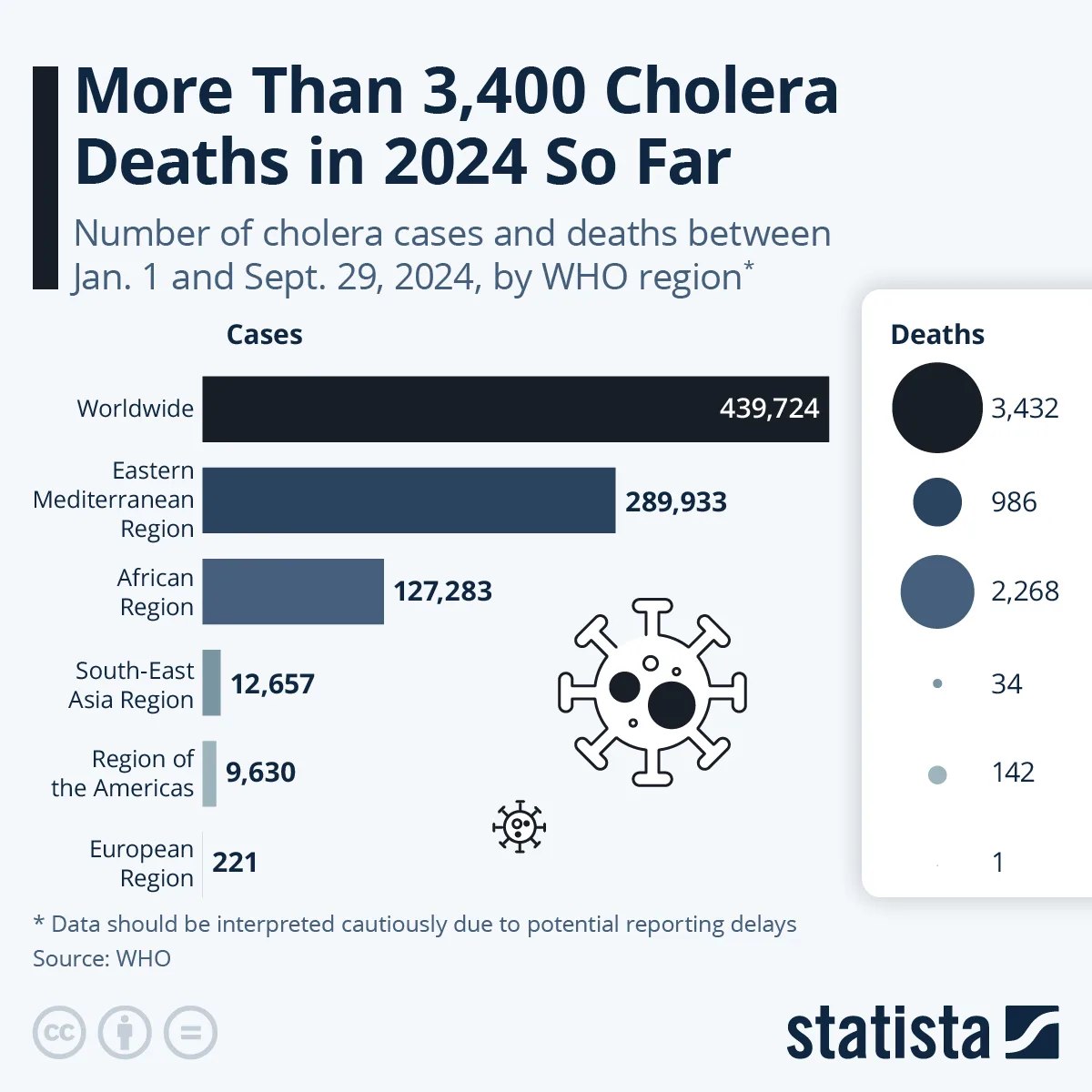
    Cholera, a waterborne bacterial infection, continues to pose a significant public health threat globally. Latest statistics reveal alarming trends in cholera-related mortality and infection rates for 2024. According to the World Health Organization (WHO), more than 3,400 deaths have occurred due to cholera between the start of the year and September 29, marking an increase of over 120% compared to the same period last year.

    Cholera Cases and Fatalities: A Closer Look

    As reported, the total number of cholera cases, including both suspected and confirmed instances, has exceeded 439,000 globally during the same nine-month timeline. Although this reflects a 16% decrease from 2023, the sharp rise in fatalities is deeply concerning and highlights underlying issues in public health responses.

    Regional Breakdown of Cholera Cases

    Eastern Mediterranean Region

    The Eastern Mediterranean Region has emerged as the area with the highest incidence of cholera cases, accounting for nearly 290,000 reported cases during this period. The numbers are alarming when considering the contributions from the following nations:

    • Afghanistan: 143,327 cases
    • Pakistan: 60,369 cases
    • Yemen: 36,404 cases
    • Sudan: 20,062 cases
    • Somalia: 19,208 cases
    • Syria: 10,563 cases

    These countries collectively reported nearly 1,000 cholera-related deaths, underscoring the severe public health challenges they face.

    African Region

    Following the Eastern Mediterranean, the African Region showed significant cholera cases, with more than 127,000 reported across 17 nations. Notably, the Democratic Republic of the Congo reported a staggering 25,221 cases, while Ethiopia and Zambia followed closely with 23,931 and 20,219 cases, respectively. Unfortunately, the African continent recorded the highest mortality rates tied to cholera in 2024, with particularly high fatalities in:

    • Zambia: 637 deaths
    • Zimbabwe: 399 deaths
    • Nigeria: 359 deaths

    Other Global Regions’ Cholera Statistics

    European Region

    In Europe, cholera cases have been limited, with only 221 recorded in Mayotte, a French department, which included one fatality. This situation contrasts sharply with regions facing more significant outbreaks.

    South-East Asia

    The South-East Asian region has reported over 12,600 cholera cases across five countries. These figures are broken down as follows:

    • India: 6,506 cases
    • Myanmar: 5,810 cases
    • Bangladesh: 241 cases
    • Nepal: 95 cases
    • Thailand: 5 cases

    Regrettably, all 34 deaths in this region were reported in India, emphasizing the need for enhanced healthcare response mechanisms.

    The Americas

    In the Americas, the situation appears concentrated, with all 9,630 cholera cases registered in Haiti, contributing to a tragic 142 recorded deaths. This data signifies the ongoing public health crisis in the country and highlights the necessity for intervention.

    Factors Contributing to Rising Cholera Mortality

    The increase in cholera mortality rates is emblematic of various contributing factors. Ongoing conflicts in affected regions frequently lead to a deterioration of healthcare infrastructure. These conflicts not only result in the destruction of sanitation facilities but also impede access to safe drinking water—one of the most critical vectors for cholera transmission.

    Impact of Armed Conflicts on Health Infrastructure

    The United Nations has outlined several consequences of armed conflicts that exacerbate cholera outbreaks:

    • Healthcare Access: Conflict often obstructs civilians’ ability to reach healthcare services.
    • Sanitation Damage: Armed hostilities can inflict physical damage to water and sanitation systems, severely limiting access for local populations.
    • Worker Safety: Attacks on healthcare workers discourage medical intervention and can lead to shortages in necessary resources for cholera treatment.

    The Role of Climate and Natural Disasters

    In addition to conflicts, severe flooding across Central and West Africa, as well as in South-East Asia, has catalyzed a surge in cholera transmission. The impacts of climate change and natural disasters significantly threaten critical public health infrastructures by:

    • Disrupting Services: Flooding often leads to infrastructure damage, rendering water and sanitation services inoperable.
    • Contamination of Water Sources: Increased rainfall can contaminate water supplies, creating ideal conditions for cholera outbreaks.

    As the world faces these dual challenges of conflict and climate, the implications for public health systems are profound. The need for effective strategies to combat cholera in these vulnerable regions is more urgent than ever.
  • 491 Million Still Defecate Outdoors: Global Sanitation Crisis

    491 Million Still Defecate Outdoors: Global Sanitation Crisis

    The Global Sanitation Crisis: Understanding Open Defecation

    The issue of open defecation remains one of the most pressing sanitation challenges facing the world today. Despite global efforts to improve access to sanitation facilities, millions of people continue to lack even the most basic toilet services, leading to significant health and environmental consequences.

    Current Statistics on Sanitation Access

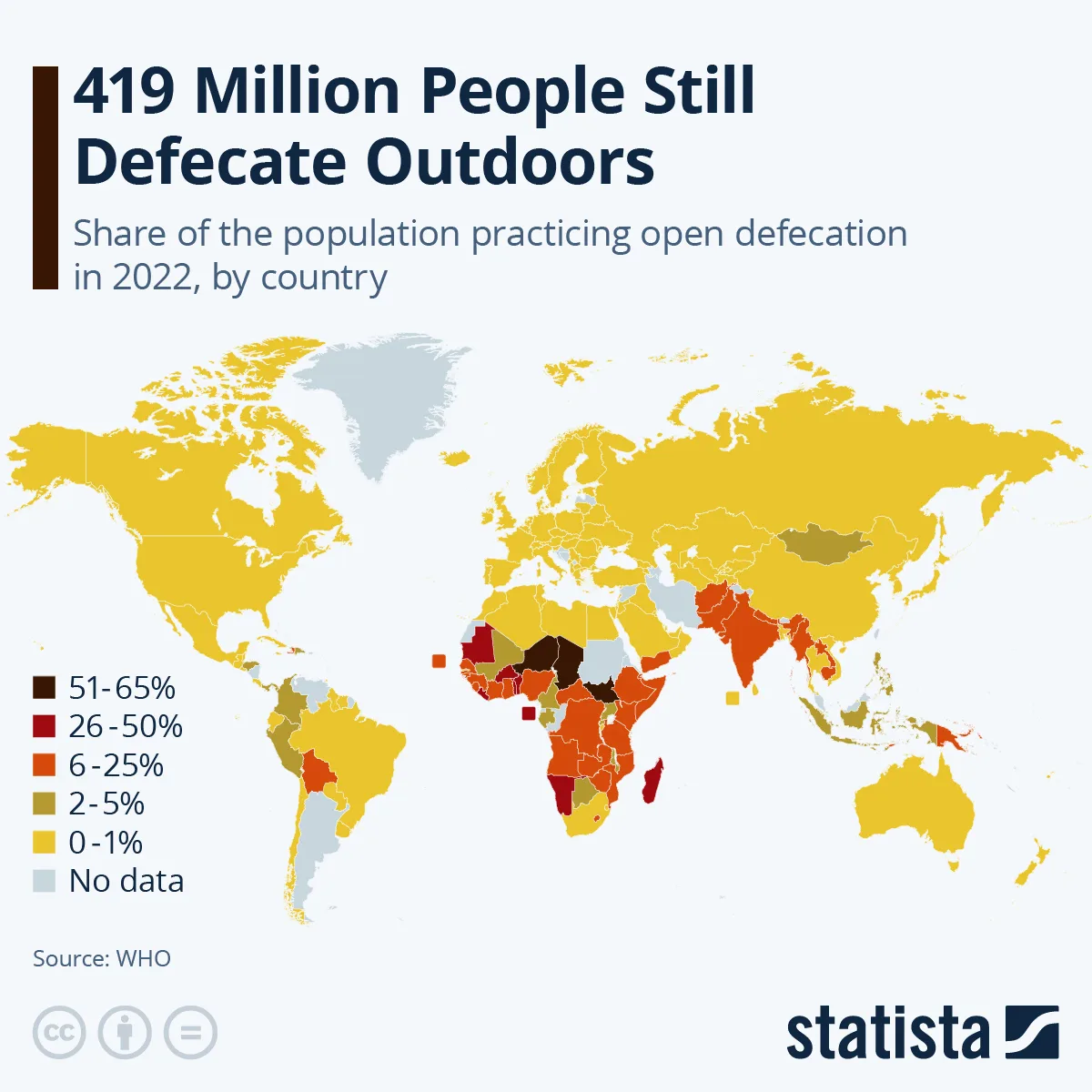
    As of 2022, an alarming 491 million people were still practicing open defecation. This statistic highlights that, despite improvements over the years, there remains a significant global health crisis related to inadequate sanitation access. The United Nations has recognized this issue, with November 19 designated as World Toilet Day, focused on promoting the importance of sanitation for health and dignity.

    Global Distribution of Those Affected

    In the context of global sanitation, it is sobering to note that approximately 3.5 billion individuals do not have access to safe and adequate toilets. This means that about 19% of the world’s population lacks at least basic sanitation services, which include private toilets connected to sewage systems or alternatives such as septic tanks or pit latrines.

    Impact of Conflict and Climate Change

    The theme for World Toilet Day 2022, "Toilets: A Place for Peace," underscores how sanitation access is often compromised in situations of conflict and climate-related disasters. Data from UNICEF reveals that children living in extremely fragile contexts are disproportionately affected, being three times more likely to engage in open defecation and face a severe lack of basic sanitation and drinking water services.

    Progress and Continued Challenges

    Over the last two decades, the global situation regarding open defecation has improved; in the year 2000, about 1.3 billion people were reported to be defecating outdoors. By 2017, this figure had decreased to 673 million, revealing the ongoing commitment by various governments and organizations to tackle this issue. The reduction to 491 million in 2022 is a significant step forward, yet it still highlights the critical need for continued efforts.

    Regional Disparities

    Progress has not been uniform across the globe. Sub-Saharan Africa continues to experience challenges due to rapid population growth, which places increased pressure on sanitation services. On the other hand, countries like Cambodia, Ethiopia, Nepal, and India have seen substantial decreases in outdoor defecation rates.

    In India, for instance, the movement toward improved sanitation has been marked by the Swachh Bharat Abhiyan initiative, launched in 2014. Prior to this campaign, more than 60% of the population lacked access to a household toilet. The initiative has reportedly reduced the rate of open defecation to 11% by 2022, showcasing a significant improvement.

    Health Risks Associated with Poor Sanitation

    The absence of proper sanitation facilities is not just an inconvenience; it poses severe health risks. Open defecation often leads to the contamination of water supplies, facilitating the spread of diseases and pathogens. Without safe sanitation, communities are vulnerable to a myriad of health issues, exacerbating existing burdens on healthcare systems.

    The Role of Government and NGOs

    Efforts to eradicate open defecation require a multifaceted approach, involving not only government initiatives but also the active participation of non-governmental organizations (NGOs) and local communities. Sustainable changes can be achieved through infrastructure development, education on hygiene practices, and the establishment of community-led initiatives that encourage ownership and maintenance of sanitation facilities.

    The Importance of Sustainable Solutions

    Access to safe and adequate toilets is a basic human right and is essential for health, dignity, and well-being. The ongoing efforts to improve sanitation must adapt to changing social and environmental conditions, ensuring that solutions are sustainable and equitable. The concerted actions taken today will pave the way for a future where sanitation is a given rather than a privilege.