الوسم: well-being

  • Almost 1.2 Billion Facing Global Mental Health Crisis

    Almost 1.2 Billion Facing Global Mental Health Crisis

    Mental health disorders now represent one of the most significant health challenges globally. A recent extensive international study reveals that mental health conditions are the leading cause of disability worldwide, impacting nearly 1.2 billion individuals in 2023. This marks a substantial increase over the past thirty years and underscores the urgent need for improved mental health services across all nations.

    The research, published in The Lancet, involved a large team of global experts analyzing health data from 204 countries and territories. Their objective was to trace how mental health issues have evolved and their effects on populations around the world.

    The findings show a concerning trend. In 1990, the number of people suffering from mental health conditions was considerably lower. By 2023, this number nearly doubled, affecting almost half of the world’s population. These conditions influence emotions, thoughts, behavior, relationships, educational pursuits, and employment.

    Common mental health disorders include anxiety disorders and major depression. Anxiety can lead to excessive worry, fear, and nervousness that interfere with daily routines. Depression often results in persistent sadness, reduced interest in activities, low energy, and difficulty functioning normally. Both conditions, if untreated, can severely diminish quality of life.

    The pandemic significantly worsened the situation. Millions experienced heightened feelings of isolation, uncertainty, financial strain, grief, and disruptions in daily living. Since 2019, depression cases have increased by around 24%, and anxiety disorders have surged by over 47%.

    However, the study suggests that these increases are not solely pandemic-related. Broader social issues like poverty, economic insecurity, exposure to violence and abuse, social isolation, and weakening community bonds also contribute to the rising mental health crises. Today’s society reports higher levels of disconnection from family, friends, and support systems than previous generations.

    Particularly alarming is the impact on adolescents. The highest burden of mental health disorders is found among teens aged 15 to 19. This stage of life is crucial as young people develop their identities, complete education, build relationships, and plan careers. Mental health struggles during adolescence can have lasting effects, influencing future opportunities, health, and social connections. The study emphasizes the importance of strengthening mental health resources tailored specifically to teenagers and young adults.

    The data also shows women are more frequently affected by many mental health conditions than men. Possible reasons include higher caregiving responsibilities, increased exposure to gender-based violence, social inequality, and other societal pressures, all of which can elevate stress levels and mental health risks.

    Beyond emotional well-being, mental health issues can lead to physical health problems, lower productivity, strained relationships, and increased strain on healthcare systems. The economic toll is significant, with billions of dollars lost annually due to reduced workforce participation and greater healthcare costs.

    Despite this growing burden, access to mental health care remains limited in many areas. There aren’t enough mental health professionals or treatment programs, and barriers such as long waiting periods, high costs, and social stigma prevent many from seeking help.

    To combat this crisis, experts advocate for significant investments in mental health services. This includes expanding access to treatment, implementing prevention initiatives, supporting schools and workplaces, and addressing the needs of high-risk groups.

    The evidence from this study makes it clear that mental health is one of the critical public health issues of our time. Although the exact reasons for the increase are complex and multifaceted, the pandemic’s role in amplifying mental health problems is significant. The findings reinforce the need for governments and healthcare systems to prioritize mental health equally with physical health.

    For those interested in the neurological aspects of depression, recent studies highlight a key brain feature linked to the condition. Additional research explores medications that could potentially harm the brain and compares various therapies for severe depression, including some that outperform ketamine.

    Source: Queensland Center for Mental Health Research.

  • Why Mental Health Issues Are Increasing Today

    Why Mental Health Issues Are Increasing Today

    Credit: Unsplash+


    Mental health has gained increased prominence in recent years, with discussions about anxiety, depression, stress, and emotional well-being becoming much more widespread.

    A significant new international study indicates there’s a solid reason for this rising focus. Researchers have discovered that mental health disorders are now the top cause of disability worldwide, impacting nearly 1.2 billion individuals in 2023.

    The study, published in The Lancet, analyzed health data from 204 countries and territories, offering one of the most comprehensive views ever on global mental health trends and their evolution over time.

    Data reveals that mental health conditions have surged dramatically since 1990. Over the past thirty years, the number of people affected has almost doubled, reflecting both population growth and an increasing burden of mental illness in many communities.

    Mental health challenges can influence people of all ages, cultural backgrounds, and income levels. They affect thoughts, feelings, and behaviors. Common issues include depression and anxiety, but problems can also involve mood swings, emotional dysregulation, concentration difficulties, and struggles with daily functioning.

    The study observed especially sharp rises in anxiety and depression following the COVID-19 pandemic. During this period, global populations faced unprecedented difficulties—lockdowns separated families and friends, many lost jobs or faced financial hardships, and others worried about their health or grieved loved ones who succumbed to the virus.

    Researchers estimate that major depressive disorder rose by roughly 24% after 2019, while anxiety disorders increased by over 47%, marking some of the steepest increases in recent decades. These figures suggest that the pandemic’s mental health toll may persist well beyond the immediate health crisis.

    However, the working researchers believe deeper societal issues are fueling this trend. Rapid changes in modern life—economic uncertainty, housing difficulties, social inequality, violence, abuse, and diminished social connections—all likely play parts. Experts emphasize the importance of strong relationships and community support systems as key protective factors; when these are weakened, emotional struggles tend to become more prevalent.

    A particularly worrying finding concerns teenagers. The study shows that mental health disorders impose their biggest burden on those aged 15 to 19. Adolescence is a period of intense change—emotionally, physically, and socially—while facing academic pressures and expectations for the future. When mental health issues develop during this stage, they can influence many aspects of a young person’s life—academic performance, friendships, and future employment prospects. Early intervention and support during adolescence are crucial in mitigating these effects.

    The study also highlighted notable differences between genders, with women experiencing higher levels of some common mental health disorders. Multiple factors may contribute, including caregiving obligations, social inequalities, and higher incidences of violence and abuse faced by women.

    The scope of mental illness impacts far beyond individuals. Families, workplaces, schools, and healthcare systems all bear the effects. People living with untreated mental health conditions often struggle with maintaining jobs, nurturing relationships, and managing physical health—conditions that are often intertwined with mental health challenges.

    Sadly, mental health care remains unevenly accessible worldwide. Many nations face shortages of mental health professionals, such as psychologists, psychiatrists, and counselors, along with a lack of community-based support programs.

    In some areas, individuals wait months for treatment, or find services entirely unavailable. Social stigma surrounding mental illness also prevents many from seeking help, compounding the problem.

    The study authors argue that governments and healthcare providers need to prioritize mental health—expanding treatment options, enhancing early intervention, supporting vulnerable populations, and increasing mental health awareness could help address this growing crisis.

    Analysis shows that mental health issues are now a central public health concern, not just a secondary issue. The strength of the study lies in its large-scale data from over 200 countries confirming that these problems are becoming more prevalent, especially among younger populations.

    The findings reinforce the need for improved prevention strategies, greater access to mental health services, and a focus on social factors influencing emotional well-being. Without proactive measures, mental health disorders are likely to continue escalating in the coming years.

    If mental health matters to you, consider exploring studies about how dairy products might influence depression or how B vitamins could help prevent anxiety and depression.

    For more insights, look into recent research suggesting that ultra-processed foods may contribute to feelings of depression, and that extra-virgin olive oil could help ease depressive symptoms.

    Source: Queensland Center for Mental Health Research.


  • Can Voting Boost Your Longevity? Discover the Surprising Link

    Can Voting Boost Your Longevity? Discover the Surprising Link

    Most people view voting as a civic duty or a way to voice their opinions, rarely connecting it to health or longevity. Yet, emerging research indicates that participating in elections could be associated with a longer life, particularly among older adults. A study conducted by researchers from the University of Pennsylvania in collaboration with Indiana University found that seniors who voted had a reduced risk of death over subsequent years.

    This finding adds to a growing body of evidence suggesting that social involvement can positively influence health. While factors like good nutrition, regular exercise, and healthcare access are well-known for extending life, scientists are increasingly examining social and psychological elements. Feeling connected, having a purpose, and engaging in community activities are all linked to better health.

    Activities such as volunteering and helping others have already shown benefits for both mental and physical well-being. These actions can combat loneliness and motivate ongoing activity. Voting, despite being a common form of civic engagement, has not been extensively studied in this context until now.

    The research, published in The Journals of Gerontology, Series B: Psychological Sciences and Social Sciences, tracked older adults who participated in the 2008 U.S. presidential election. Researchers compared voters and non-voters and followed their health over periods of five, ten, and fifteen years. Results indicated that those who cast ballots had a notably lower chance of dying during those years, an effect that persisted over time and was especially evident among individuals already facing health issues.

    To ensure accuracy, the study accounted for numerous variables, including income, education, lifestyle, political preferences, and other social activities. Even after these adjustments, voting continued to correlate with increased survival chances. Interestingly, the relationship was independent of whether a person’s preferred candidate won or lost, and both in-person and alternative voting methods showed similar outcomes.

    Several explanations are proposed for this connection. Voting might foster a sense of empowerment and societal participation, which can enhance mental health and reduce stress — factors known to support heart health and immune function. Additionally, voters tend to stay more informed and mentally engaged, which can help keep the mind sharp during aging. A strong sense of community and identity cultivated by voting may also improve emotional well-being.

    However, caution is needed in interpreting these results. The study demonstrates a correlation, not causation, meaning other unmeasured factors could influence both voting behavior and longevity. For instance, individuals who vote might be more organized, socially connected, or prone to healthier habits, which could contribute to longer lives. Further research is necessary to clarify these relationships.

    Despite these limitations, the findings send an encouraging message: staying socially involved, even through simple acts like voting, may offer long-term health benefits. Promoting civic participation and encouraging older adults to remain active could be valuable components of a healthy aging strategy.

    Looking ahead, public health initiatives might incorporate civic engagement as part of holistic approaches to well-being. While voting isn’t a substitute for medical care or healthy living, it could serve as one of many factors contributing to a healthier, longer life.

    This research reminds us that health extends beyond diet and exercise; it also involves how we connect with others and participate in society. Even small actions like voting might contribute to better health and increased longevity. For those interested in wellness, exploring how diet — such as reducing ultra-processed foods or increasing seafood intake — influences lifespan remains essential. Additional studies suggest that olive oil might promote longevity, and vitamin D could lower autoimmune disease risks, offering further avenues for supporting healthy aging.

  • Why Raising Testosterone Might Not Boost Your Energy or Mood

    Why Raising Testosterone Might Not Boost Your Energy or Mood

    Credit: Unsplash+

    Testosterone is often regarded as a vital hormone for men’s health, associated with strength, energy, and confidence.

    Because of this, many believe that low testosterone levels are at the root of issues like tiredness, mood swings, and a lack of motivation. Over recent years, an increasing number of men have sought treatments to boost their testosterone, hoping to feel more alert and balanced.

    However, recent research from the University of Gothenburg suggests that this view might be an oversimplification. By analyzing extensive data from both the U.S. and Sweden, the study indicates that testosterone is just one small piece of a much larger health puzzle.

    The study was conducted by Dr. Amar Osmancevic, a specialist in public health. He explored how testosterone interacts with various aspects of health like muscle health, inflammation, and common symptoms experienced by men.

    The findings reveal that while testosterone does have some correlations, they are relatively limited. The strongest associations were observed in sexual health.

    Men with lower testosterone levels were more likely to experience issues with libido, erection, and overall sexual performance. Yet, these links were not particularly strong when compared to men whose hormone levels were within normal ranges.

    The research also examined muscle health, reaffirming that testosterone is generally linked to muscle development. Men with higher testosterone levels tended to have greater muscle mass and lower fat accumulation within their muscles—an important factor since excess fat in muscles can impair function and affect metabolism.

    Interestingly, the study highlighted the role of estradiol, a hormone commonly associated with women, in influencing men’s muscle health. This suggests that the body’s hormonal system is intricate, and focusing on a single hormone may not provide a complete picture.

    Another significant discovery was the connection between testosterone and inflammation. Men with lower testosterone levels typically showed higher levels of chronic inflammation, which can develop gradually and contribute to long-term health problems.

    Despite these findings, the study found little evidence linking testosterone levels directly with common issues like fatigue and depression. This challenges the popular assumption that low testosterone is a primary cause of these symptoms.

    Instead, the research emphasizes that other factors, including age, lifestyle choices, existing health conditions, and especially excess abdominal fat, have a stronger impact on how men feel. This underscores the importance of lifestyle improvements over solely hormone-focused treatments.

    The results point to the need for a more holistic approach to health. Rather than relying only on testosterone therapy, adopting healthy habits—such as regular exercise, good nutrition, and weight management—can lower inflammation and enhance overall well-being.

    While the study provides valuable insights through its large-scale data analysis, it doesn’t establish a direct causal relationship between testosterone and specific symptoms. Further research is needed to clarify these connections.

    Overall, the findings challenge the common belief that testosterone is the main determinant of men’s health. Although the hormone influences certain areas, it isn’t the key to resolving widespread issues like fatigue or depression. A comprehensive approach to overall health appears to be more effective for improving quality of life.

    If you’re interested in nutrition, consider exploring current research about the optimal timing for vitamin intake to prevent heart disease and how vitamin D supplements may significantly reduce cancer mortality.

    For additional nutritional insights, look into recent studies on plant-based nutrients that can help lower high blood pressure, and antioxidants that might reduce the risk of dementia.

    Source: University of Gothenburg.

  • Research Says Playing Zelda Can Make You Feel Happier

    Research Says Playing Zelda Can Make You Feel Happier

    Video games are more than just a way to unwind digitally—they can play a meaningful role in boosting mental health. Fitness-oriented games have been shown to improve overall well-being, and some are even used to help manage phantom limb pain or aid individuals with wrist and hand mobility challenges. Recent studies suggest that engaging with expansive open-world games like Zelda can significantly elevate feelings of happiness.

    Exploring the connection between Zelda and scientific findings

    Researchers from Imperial College London, Kyushu Sangyo University, and Georgia State University carried out a randomized trial involving over 500 students. Participants were instructed to play The Legend of Zelda: Breath of the Wild and also watch films from Studio Ghibli, such as My Neighbor Totoro and Kiki’s Delivery Service.

    [Image: Poster for The Legend of Zelda: Breath of the Wild]

    At the conclusion of the study, students completed a questionnaire assessing their feelings of curiosity, calmness, mastery, skill, purpose, and life meaning after exploring the game’s vast world. The results indicated that playing Zelda can foster happiness by inspiring wonder and exploration. One compelling insight from the research notes:

    Engaging with these classic stories can evoke a sense of purpose—players often feel they are contributing to something greater than themselves, even within a fictional universe. This sense of being part of a larger cause can be profoundly fulfilling. Additionally, players frequently find tranquility in peaceful in-game moments, such as riding across open fields, gathering resources quietly, or watching sunrises from high vantage points.

    Why does this matter?

    While games are often dismissed as mere distractions, the researchers emphasize that they serve as a form of active escapism that revitalizes energy and resilience. For the students involved in the study, gaming helped alleviate stress, anxiety, and burnout, showcasing its potential as a tool for emotional renewal.

    Andreas B. Eisingerich, a professor at Imperial College Business School and co-author of the study, highlighted that immersing oneself in the world of Zelda can actively nurture essential human qualities like curiosity, peace, purpose, and happiness—offering valuable pathways to enhance everyday well-being.

    Interestingly, the research also found that watching nostalgic Studio Ghibli films combined with gameplay can trigger similar boosts in happiness, calm, and purpose while fostering a sense of discovering personal meaning. For more details, the full study is available in the Journal of Medical Internet Research.

  • 2023 Happiness Rankings: Finland Tops at 7.736, Afghanistan Low at 1.36

    2023 Happiness Rankings: Finland Tops at 7.736, Afghanistan Low at 1.36

    Understanding the International Day of Happiness

    Origins and Purpose

    In 2012, the United Nations officially designated March 20 as the International Day of Happiness, also known as World Happiness Day. This initiative aims to foster a deeper understanding of happiness as a universal aspiration and to promote a more inclusive, equitable, and balanced approach to economic growth that prioritizes the well-being of all individuals. The day serves as a reminder of the importance of happiness and mental well-being in daily life and encourages people worldwide to take actions that contribute to their own happiness and that of others.

    The Global Happiness Report: Insights and Rankings

    Methodology of the Report

    Every year, the World Happiness Report gauges the happiness levels of individuals across various countries. For its latest findings, researchers surveyed participants from 147 nations, asking them to rate their overall satisfaction with life on a scale of one to ten. This self-reported measure provides valuable insights into how people perceive their lives amidst varying circumstances and situations.

    Top Ranking Countries

    According to the survey data from the years 2022 to 2024, Finland consistently tops the happiness rankings with an impressive average score of 7.736. Following closely behind are Denmark and Iceland, with scores of 7.521 and 7.515, respectively. These countries are often praised for their strong social support systems, high levels of trust within communities, and established welfare systems that contribute to overall life satisfaction.

    Countries with Low Happiness Scores

    On the other end of the spectrum, the report highlights significant challenges faced by residents of Lebanon, Sierra Leone, and Afghanistan, who reported markedly lower life satisfaction scores of 3.19, 3.00, and 1.36, respectively. The struggles encountered in these nations may stem from factors such as political instability, economic hardship, and limited access to essential services, which can deeply impact the mental well-being of their populations.

    Factors Influencing Happiness

    Economic Factors

    The report identifies several key aspects that contribute to varying levels of life satisfaction across different nations. Economic stability is one major factor; however, it’s crucial to note that a direct correlation between wealth and happiness isn’t always straightforward. While higher incomes can lead to enhanced life satisfaction, the report emphasizes that the relationship is not as significant as previously thought.

    The Impact of Benevolence

    Interestingly, the study found that engaging in altruistic behaviors—such as donating to charity, volunteering, or helping strangers—can substantially enhance personal happiness. This stems from the inherent joy and fulfillment that often accompanies acts of kindness. A noteworthy observation from the report indicates that the anticipation of receiving help or having friendly interactions can also positively impact individuals’ overall happiness.

    Societal Trust and Security

    Societal factors play a critical role in shaping happiness levels, too. Expectations of having personal belongings returned when lost can provide a considerable boost to life ratings. Additionally, the fear of unemployment, mental health issues, or exposure to violent crime negatively influences how individuals evaluate their lives, illustrating the significance of a safe and secure environment in fostering happiness.

    The Role of Supporting Factors

    Beyond GDP and Life Expectancy

    In developing the happiness rankings, the authors of the World Happiness Report clarified that their evaluations are not merely based on traditional economic indicators like Gross Domestic Product (GDP) per capita, life expectancy, or the operational efficiency of social systems. Instead, these metrics are analyzed as supporting factors; they provide context but do not directly dictate a country’s happiness score.

    Inclusivity and Equitability

    The emphasis on subjective well-being measures highlights the need for policies and practices that cultivate inclusive and equitable growth. As nations strive to enhance the well-being of their citizens, it becomes essential to consider what truly matters to people’s happiness on a personal level, reinforcing the notion that happiness is not solely a quantitative measure but also a deeply qualitative experience.


    By understanding these various elements that contribute to happiness, both individuals and policymakers can work toward creating environments that nurture well-being and satisfaction worldwide. The data from the report not only illuminates where people find fulfillment but also sets a foundation for improving overall quality of life across diverse global communities.

  • 77% of Japanese Value ‘Having a Good Time’ in Life

    77% of Japanese Value ‘Having a Good Time’ in Life

    The Quest for Happiness: What Makes Us Truly Happy?

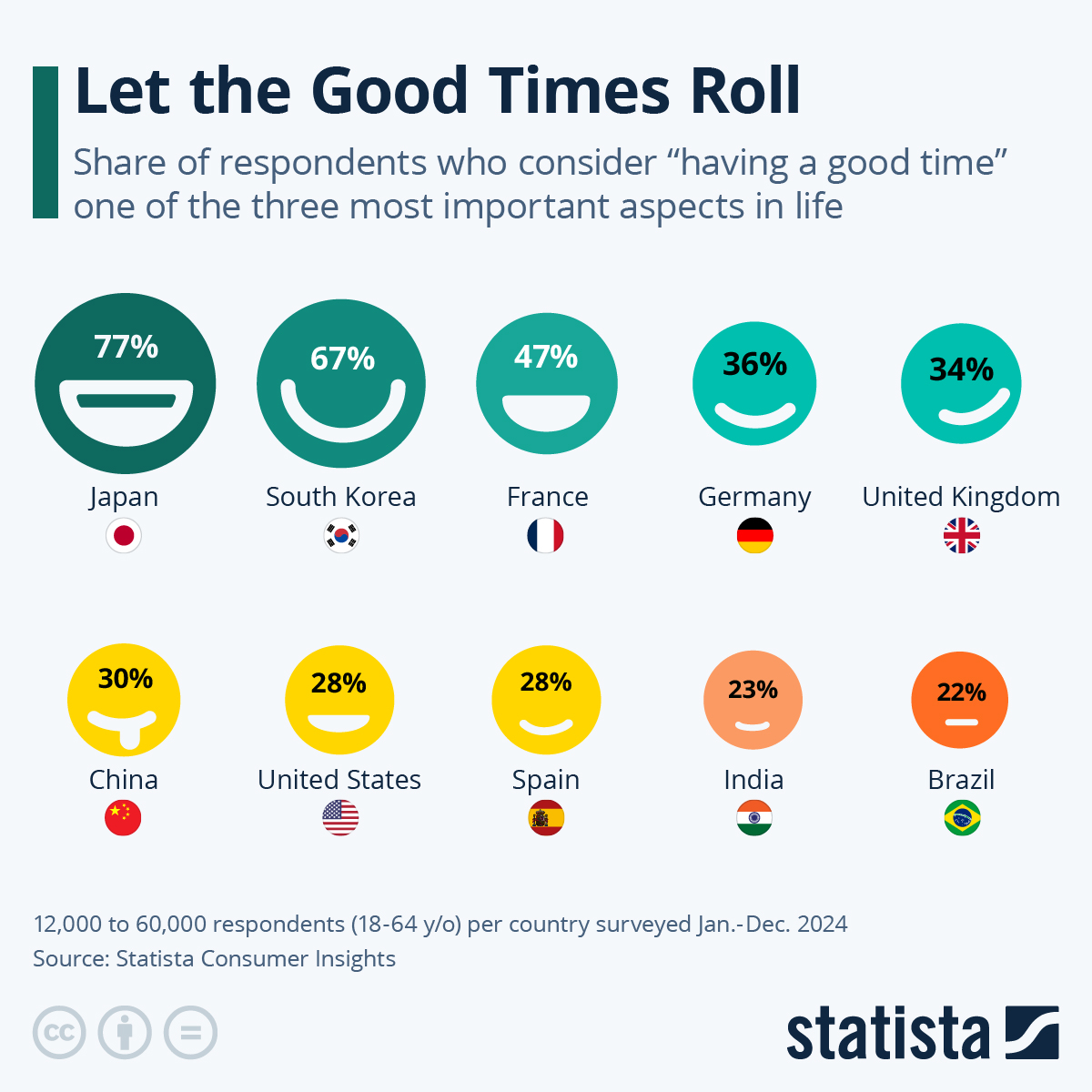
    In a world constantly striving for happiness, the pursuit of joy can take various forms. While the definitive answer to what brings happiness may remain elusive, recent studies shed light on diverse factors contributing to our well-being. According to a 2024 survey conducted by Statista Consumer Insights, one common thread emerges: the joy of simply "having a good time."

    The Importance of Enjoyment in Life

    The Universal Desire for Joy

    Across cultures and demographics, the desire for enjoyment stands out as a vital component of happiness. The 2024 Statista survey reveals that people generally prioritize leisure and pleasure, highlighting a collective aspiration for experiences that bring joy.

    Cultural Differences in the Pursuit of Happiness

    Interestingly, the survey results demonstrate significant variances by country. In Japan, an impressive 77% of respondents identified "having a good time" as one of the three most crucial aspects of life. This statistic hints at a profound cultural emphasis on enjoyment and the pursuit of leisure in Japanese society.

    Global Perspectives on Enjoyment

    Brazil: A More Reserved Approach

    In contrast, only 22% of Brazilian respondents cite enjoyment as a primary facet of their lives. This discrepancy raises questions about cultural values and how different societies perceive happiness and leisure. While Brazilians are often associated with vibrant celebrations and social gatherings, the survey may suggest a more complex relationship with enjoyment compared to other countries.

    The United States: Striving for Balance

    In the United States, about 28% of respondents recognize "having a good time" as significant. This reflects a common narrative that Americans are constantly balancing work and leisure, often leading to a quest for more fulfilling and enjoyable experiences—or, as the famous saying goes, "work hard, play hard."

    France: A Middle Ground

    French respondents present an intriguing midpoint with 47% indicating a strong value placed on enjoyment. The French lifestyle is often romanticized for its emphasis on leisure, food, and social interaction, encapsulating a philosophy where enjoying life is almost an art form.

    The Cultural Influence on Happiness

    Japan: A Cultural Appreciation for Leisure

    The overwhelming emphasis on enjoyment in Japan might stem from cultural practices that celebrate leisure as a crucial part of life. From traditional festivals to modern entertainment, the integration of fun into daily life illustrates how Japanese culture places significant value on enjoying the present moment.

    The Role of Social Interactions

    In many societies, the social dimension of enjoyment is pivotal. Engaging with friends and family during leisurely activities fosters connections and strengthens bonds. This social aspect of happiness cannot be overlooked, as it plays a crucial role in overall well-being.

    Why "Having a Good Time" Matters

    The Psychological Benefits

    Studies have shown that engaging in enjoyable activities can reduce stress, enhance mood, and improve overall psychological health. The act of "having a good time" serves as a natural antidote to life’s pressures, offering an escape that rekindles joy and fulfillment.

    Creating Lasting Memories

    Enjoyment creates memorable experiences that individuals cherish long after the moment has passed. These positive memories become foundational elements of our life stories, reinforcing the notion that happiness often lies in the memories created through joyful experiences.

    Conclusion

    As we delve into the intricate connections between happiness and enjoyment, it becomes evident that while the specifics of what makes us happy can vary significantly across cultures, the universal desire for "having a good time" remains a powerful thread. Understanding these differences enriches our perspective on happiness and encourages a collective appreciation for the diverse ways in which people seek joy in their lives.