الوسم: war crimes

  • Trump Admin Launches Campaign to Block International Criminal Court

    Trump Admin Launches Campaign to Block International Criminal Court

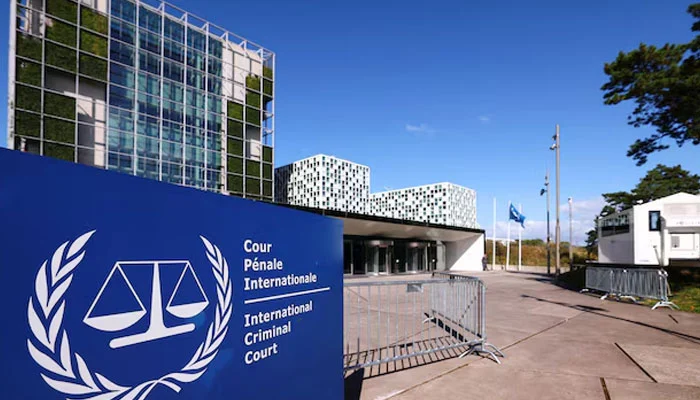
    The exterior of the International Criminal Court (ICC) can be seen in The Hague, Netherlands, as the U.S. considers imposing sanctions as early as this week against the entire court, according to Reuters on September 22, 2025.

    Rubio claims the ICC and its allies are waging a war against the United States. A State Department official stated that various options regarding the ICC are currently under review, emphasizing that no diplomatic measure is off the table.

    The Trump administration is actively working to dismantle what it views as a threat to U.S. sovereignty posed by the ICC, confirmed Secretary of State Marco Rubio on Monday. Historically, President Donald Trump and other leaders like former President George W. Bush have argued that the ICC should not have authority to investigate or prosecute Americans, especially military personnel.

    Reuters reports that the Trump administration supported sanctions against ICC officials partly to prevent future efforts to hold Trump or his associates accountable for U.S. military actions abroad. In a video message, Rubio explained that while the ICC was originally meant to prosecute only severe crimes like genocide and war crimes, it has evolved into a more radical and extreme entity. He made it clear that the U.S. would not allow the court to threaten its personnel.

    A State Department official, speaking anonymously, revealed that a broad array of measures, including travel bans, visa cancellations, expanded sanctions against the ICC and its affiliates, and diplomatic efforts to persuade other countries to leave the court, are being considered.

    “The United States will not rule out any diplomatic option in its effort to neutralize the threat the ICC poses to Americans,” the department affirmed.

    The ICC spokesperson, Oriane Maillet, stated that the court would not comment on these developments at this time.

    Established in 2002 by the international community, the ICC prosecutes war crimes, genocide, and crimes against humanity. Its jurisdiction applies only when a member state cannot or will not prosecute atrocities. The U.S. has never been a member, but the ICC’s statute also permits it to prosecute crimes committed on the territory of member states by individuals from non-member countries.

    Trump’s opposition to the court dates back to his first term and intensified after the court issued an arrest warrant for Netanyahu, an ally of Trump, in November 2024. Last month, three ICC judges sued Trump and his administration over sanctions imposed last year, claiming those measures were unlawful.

    In an opinion piece for the Wall Street Journal, Rubio highlighted concerns about activists and others calling for the ICC to prosecute U.S. personnel over issues like migrant deportations and military strikes that allegedly involved illicit activity.

    “As we speak, the ICC and its allies are waging a war against our nation—not with guns or bombs, but through statutes, treaties, and the power of so-called international law,” Rubio said. He warned that U.S. Border Patrol agents, Marines, and terrorism prosecutors could face prosecution by the court.

    Recently, the ICC has refrained from investigating U.S. personnel. In March 2020, prosecutors opened an investigation into possible crimes by U.S. troops in Afghanistan, but since 2021, the focus shifted away from the U.S., concentrating instead on crimes by Afghan government forces and the Taliban.

    The official from the State Department stated that Rubio and other senior U.S. officials are pressuring other countries to diplomatically isolate the ICC, preventing it from targeting Americans. Countries allied with U.S. law enforcement, hosting U.S. military bases, or benefiting from U.S. security support are being urged to reject the ICC’s authority over American officials and personnel.

    Countries that continue to rely on U.S. assistance while refusing to reject the ICC are expected to face increased scrutiny.

    “We’re watching closely to see which nations stand with us against this threat to Americans risking their lives in service of others,” the official added.

  • Australian soldier detained over alleged Afghanistan war crimes

    Australian soldier detained over alleged Afghanistan war crimes

    Ben Roberts-Smith, pictured in January 2011 when he received the Victoria Cross, is facing serious allegations. An Australian federal police officer stated that Afghan victims were not engaged in combat when they were shot. The officer also claimed that these victims were either directly shot by Roberts-Smith or by his subordinates under his orders. Consequently, Roberts-Smith is set to face five charges of war crimes, specifically murder.

    The former member of Australia’s elite Special Air Service Regiment was once celebrated as one of the nation’s top war heroes, having been awarded the Victoria Cross for exceptional bravery during a mission to find a senior Taliban leader in Afghanistan. He was even given the opportunity to meet Queen Elizabeth II, and his image has been displayed at the Australian War Memorial in Canberra.

    However, in 2018, investigative reporting by major newspapers revealed links between Roberts-Smith and the killing of unarmed Afghan prisoners by Australian forces. These revelations sparked an ongoing police investigation into potential war crimes committed by Australian soldiers during their deployment in Afghanistan between 2009 and 2012.

    Throughout the controversy, Roberts-Smith has maintained his innocence. He launched a multi-million dollar lawsuit against the newspapers that reported the allegations, disputing the claims and seeking to clear his name.

    The serious accusations include accounts of Roberts-Smith kicking an unarmed Afghan civilian off a cliff and allegedly ordering subordinates to shoot him. Reports also suggest he participated in machine-gunning an injured man with a prosthetic leg and reportedly used the limb as a drinking vessel among colleagues.

    Australia has deployed approximately 39,000 troops to Afghanistan over two decades as part of US and NATO-led efforts against the Taliban and other militant groups. As veterans returned home, investigations uncovered widespread misconduct, including a 2020 military probe that found Australian special forces unlawfully killed 39 Afghan civilians and prisoners, with allegations of summary executions, body count competitions, and torture.

    Growing pressure led the government to appoint a special investigator to examine whether current and former soldiers should face criminal charges related to these incidents.

  • Drone attack in southern Sudan kills 6 UN peacekeepers

    Drone attack in southern Sudan kills 6 UN peacekeepers

    Six UN peacekeepers from Bangladesh were killed Saturday in a drone attack in Sudan’s southern Kordofan region, according to the UN mission, with Dhaka strongly condemning the act. The United Nations Interim Security Force for Abyei (UNISFA) reported that “six troops lost their lives and six others were injured,” including four seriously, when a drone struck their camp in Kadugli, the capital of South Kordofan. All the victims were from Bangladesh.

    UN Secretary-General Antonio Guterres denounced the “horrific” assault, stating it “could be considered a war crime under international law.” He added, “Attacks like today’s in South Kordofan against peacekeepers are indefensible. Accountability must be pursued.” Bangladesh’s interim leader, Muhammad Yunus, expressed his deep sorrow over the incident, confirming six deaths and eight injuries. He urged the UN to provide any necessary emergency assistance to his country’s personnel and assured that Bangladesh will support the families during this difficult time.

    The Bangladeshi foreign ministry also issued a strong condemnation of the attack. UN peacekeepers are stationed in Abyei, a contested area between Sudan and South Sudan.

    Earlier, a medical source told AFP that the strike on a UN facility in Kadugli resulted in at least six fatalities, believed to be UN staff members. Witnesses described the incident as a drone strike on the UN compound in the city. The Sudanese army released footage showing fires and smoke rising from the UNISFA base. The government in Port Sudan, aligned with the military, condemned the attack and accused the paramilitary Rapid Support Forces (RSF) of being responsible.

    The Sudanese Sovereignty Council, led by Army General Abdel Fattah al-Burhan, called it a “dangerous escalation.” Meanwhile, the RSF issued a statement denying any involvement, rejecting claims of an airstrike targeting the UN headquarters and dismissing accusations that they used a drone.

    Sudan’s Prime Minister, Kamil Idris, labeled the rebel militia involved in the conflict as a terrorist organization and called on the UN to hold the perpetrators accountable. Kadugli, which saw famine declared in early November, has been under siege by the RSF for over a year and a half.

    Following their late-October seizure of El-Fasher, the RSF has advanced east into the oil-rich Kordofan region, which is divided into three states. This expansive agricultural area lies between RSF-controlled Darfur to the west and government-held zones in the north, east, and center, playing a strategic role for supply routes and troop movements.

    Since April 2023, the RSF has been fighting the Sudanese military, deploying fighters, drones, and allied militias in the fertile region. Analysts believe the RSF aims to break through the military’s defenses around central Sudan, potentially paving the way to recapture Khartoum.

    Recently, strikes on a kindergarten and hospital in South Kordofan’s Kalogi killed 114 people, including 63 children, according to the World Health Organization. The ongoing conflict has resulted in tens of thousands of deaths, millions displaced, and one of the world’s worst humanitarian crises. Diplomatic efforts to bring peace have so far failed. Last month, then-U.S. President Donald Trump expressed a desire to end the conflict after talks with Saudi Crown Prince Mohammed bin Salman, but this initiative has not yet resulted in concrete actions.

  • IDF Lawyers Alerted to Potential Gaza War Crimes, US Intel Finds

    IDF Lawyers Alerted to Potential Gaza War Crimes, US Intel Finds

    Palestinian children stand amidst the debris of destroyed structures in Jabalia, northern Gaza Strip, on November 6, 2025. — Reuters

    Last year, U.S. intelligence indicated that Israel’s military legal advisors warned there was evidence potentially supporting charges of war crimes linked to Israel’s military operations in Gaza. This intelligence, previously unreported, was among the most startling pieces of information shared with U.S. policymakers during the conflict. It revealed doubts within the Israeli military about the legality of their tactics, which sharply contrasted with Israel’s public defense of its actions.

    Two former U.S. officials stated that this intelligence was not widely circulated within the U.S. government until late in President Biden’s administration, when it was more broadly shared ahead of a congressional briefing in December 2024. The information heightened concerns in Washington about Israel’s conduct in a war that Israel claimed was necessary to eliminate Hamas fighters embedded in civilian infrastructure—the same group responsible for the October 7, 2023, attack on Israel. There were worries that Israel was intentionally targeting civilians and aid workers, which could constitute war crimes, a claim Israel strongly denies.

    U.S. officials expressed alarm over these findings, especially as the rising civilian death toll in Gaza raised questions about whether Israel’s military operations might be violating international legal standards regarding collateral damage. The former officials did not specify what particular incidents or evidence prompted these legal concerns from Israel’s military.

    According to Gaza health officials, Israel has killed over 68,000 Palestinians during a two-year campaign, with the military stating at least 20,000 of those killed were militants. Nine former U.S. officials who served during President Biden’s term, including six with direct knowledge of the intelligence and the internal debates, spoke anonymously due to sensitivity.

    Reports of internal dissent within the U.S. government over Israel’s Gaza campaign emerged during Biden’s presidency. This account, based on detailed recollections from those involved, provides a comprehensive picture of the intensity of the debate in the final weeks before the transition to President Trump’s term in January.

    The Israeli ambassador to the U.S., Yechiel Leiter, declined to comment on the intelligence or the internal discussions. Neither the Israeli Prime Minister’s office nor the military promptly responded to requests for comment.

    The intelligence prompted an interagency meeting at the National Security Council, where officials and legal experts discussed how to respond. Declaring that Israel committed war crimes would have meant halting future arms shipments and ceasing intelligence sharing, both of which are essential given Israel’s close cooperation with U.S. intelligence over decades, particularly regarding the Middle East.

    During December, officials from across the government, including State, Defense, intelligence agencies, and the White House, discussed the issue. President Biden was also briefed by national security advisors. The White House did not comment publicly; a State Department spokesperson simply stated, “We do not comment on intelligence matters.”

    Ultimately, the debate within the Biden administration concluded that supporting Israel with weapons and intelligence remained legal because the U.S. had not independently gathered evidence proving Israeli violations of the laws of armed conflict. The reasoning was that the intelligence did not demonstrate Israeli intent to deliberately kill civilians or block aid, which are critical elements for legal liability.

    Some senior officials hesitated, fearing that publicly labeling Israel’s actions as war crimes could force the U.S. to cut off military aid, potentially emboldening Hamas, delaying ceasefire talks, and shifting the political landscape in favor of the militant group. Hamas had launched a brutal attack on October 7, 2023, killing 1,200 people and kidnapping 251, prompting Israel’s military response.

    This decision to avoid a definitive stance frustrated some involved, who believed the Biden administration should have been more outspoken about alleged Israeli abuses and the U.S. role in enabling them. Former officials noted that President Trump and his officials, briefed on the intelligence, showed little interest after taking office in January and increasingly aligned with Israel.

    Concerns about potential war crimes predated the intelligence, with State Department lawyers regularly raising worries about Israel’s conduct in Gaza during meetings with Secretary of State Antony Blinken. They believed Israel’s military actions might violate international humanitarian law and possibly amount to war crimes. However, these lawyers avoided making conclusive assessments, a move criticized by others in the department, who saw it as a way of avoiding accountability.

    The lack of definitive conclusions was reflected in a 2024 State Department report suggesting Israel might have violated international law using U.S.-supplied weapons, though it acknowledged the complexities of the conflict. Secretary Blinken said the Biden administration continuously reviewed Israel’s compliance with laws of armed conflict but declined to discuss specific intelligence.

    Internationally, concerns about war crimes escalated when, last November, the International Criminal Court in The Hague issued warrants for Israeli Prime Minister Benjamin Netanyahu, his former defense chief, and Hamas leader Mohammed Deif—alleging crimes related to the Gaza conflict. Israel dismisses the ICC’s jurisdiction and denies any war crimes, as does Hamas regarding any allegations against them.

    Throughout the final weeks of Biden’s presidency, U.S. officials debated whether the U.S. could be considered complicit if Israeli officials faced international charges. While publicly supporting Israel, private discussions acknowledged the potential diplomatic and political vulnerabilities this issue posed for Democrats. Biden and Vice President Kamala Harris’s campaigns faced scrutiny over these debates.

    Biden has yet to comment on this matter. Democratic Senator Chris Van Hollen from Maryland, a critic of Israel’s Gaza operations and U.S. support, accused the Biden administration of intentionally ignoring evidence of war crimes. He argued that the U.S. had “deliberately looked the other way” despite overwhelming evidence of the misuse of American weapons in Gaza.

    Israel maintains that its military operations are aimed at Hamas, not civilians, and claims to take measures to minimize civilian harm, including issuing warnings and using appropriate munitions to target militants embedded in civilian sites. The Israeli military stated it is investigating approximately 2,000 incidents of possible misconduct, including civilian casualties and infrastructure damage, some of which emerged during the Hague’s genocide case against Israel.

  • YouTube Removes 700 Videos Showing Gaza War Atrocities

    YouTube Removes 700 Videos Showing Gaza War Atrocities

    YouTube, a leading technology platform, has removed over 700 videos that documented human rights abuses in Palestine during ongoing conflict, highlighting violations committed by Israel and acts of genocide in Gaza.

    According to a report by The Intercept, these videos, belonging to three major Palestinian human rights organizations—Al-Haq, Al Mezan Center for Human Rights, and the Palestinian Centre for Human Rights—were deleted from the platform. The removed content included emotional footage of a mother enduring the aftermath of Israel’s actions in Gaza, the death of a Palestinian American journalist, and other videos exposing the destruction inflicted by Israeli forces on Gaza.

    The removals occurred amidst a U.S.-led effort to prevent accountability for alleged Israeli war crimes against Palestinians in Gaza and the West Bank. This is despite the International Criminal Court issuing arrest warrants in October for Israeli Prime Minister Netanyahu and Defense Minister Yoav Gallant, citing crimes against humanity in Gaza.

    YouTube, owned by Google, confirmed that these accounts were suspended citing U.S. sanctions and trade laws. A spokesperson for YouTube stated, “Google is committed to complying with all applicable sanctions and trade regulations.”

    Katherine Gallagher, a senior attorney at the Centre for Constitutional Rights, noted that deplatforming these accounts contributes to the U.S. government’s broader agenda of hiding evidence of human rights violations and war crimes from public scrutiny. A representative from Al-Haq, one of the affected groups, stated that their YouTube channel was terminated unexpectedly and without warning, illustrating a breach of the platform’s own policies.