الوسم: voter fraud

  • Trump alleges Chinese meddling in 2020 US election

    Trump alleges Chinese meddling in 2020 US election

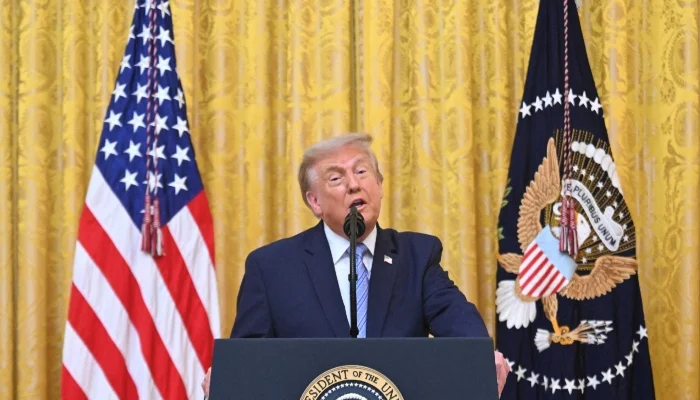
    President Donald Trump announced the declassification of intelligence he claims shows Chinese interference in U.S. elections, reigniting ongoing accusations surrounding election security. This comes despite a U.S. intelligence assessment stating there is no evidence that Beijing attempted to influence or altered the outcome of the 2020 presidential vote, which Trump lost.

    In a 25-minute speech, Trump emphasized his push to prioritize election security ahead of the upcoming November midterms, a period when Republicans are defending their congressional majorities amid fears of losing control of either chamber. The former president has urged his Republican colleagues in Congress to pass legislation imposing stricter voter ID laws and citizenship verification requirements, despite evidence indicating that instances of voter fraud in the U.S. are exceedingly rare.

    Trump claimed he was releasing sensitive information indicating China had unlawfully obtained data on approximately 220 million U.S. voters, including personal details used for registration. He accused U.S. intelligence officials of intentionally downplaying China’s activities in this area, although the 2021 declassified intelligence report found no signs that foreign entities attempted to manipulate voter registrations, ballots, or election results in 2020.

    Before his remarks, some White House officials reportedly worried that releasing the China-related information could be misleading. Trump’s rhetoric about China also threatens to disrupt a relatively stable relationship following last year’s trade conflicts. His intention to meet Chinese President Xi Jinping in September to discuss trade issues remains a goal.

    In response, Liu Chang, a spokesperson for China’s embassy, denied any interference, stating, “China has never and will never interfere in U.S. presidential elections.”

    Trump has long propagated baseless claims about electoral fraud, falsely asserting that his 2020 defeat was rigged. He also propagates false narratives about widespread voting machine vulnerabilities, non-citizen voting, and postal voting fraud, despite numerous courts and recounts showing no evidence of significant fraud in the last election.

    He also announced he was releasing information purportedly exposing vulnerabilities in the U.S. election infrastructure, but some of the documents, like one related to Venezuela’s elections, actually referred to other countries. Other reports suggested that manipulating vote tabulation systems on a broad scale to alter results would be highly difficult, and a CIA document indicated that China currently does not plan to interfere covertly but might consider doing so in the future.

    Senior Democratic officials criticized Trump for what they called false claims unsupported by intelligence agencies, which have uniformly agreed that China did not attempt to tamper with the 2020 vote. Democratic members of the House Intelligence Committee sent a letter urging intelligence officials to avoid enabling Trump to misuse classified information for false narratives about election security.

    Major television networks chose not to broadcast Trump’s address live, breaking from usual practice for significant national addresses. Since returning to office in January 2025, Trump has sought to increase federal authority over election processes, which are constitutionally managed by states. Recently, he has advocated for legislation, like the SAVE America Act, which would require voter photo IDs, citizenship proof for registration, and federal access to state voter registration data. Critics argue such laws would suppress voter turnout and that voter fraud remains an extremely rare phenomenon.

    Some Republican leaders advise Trump to focus on pressing issues such as economic concerns and national security rather than dwelling on the 2020 election. Meanwhile, Democrats aim to secure a majority in Congress with limited seat gains needed in the House and challenging races ahead in the Senate, with fears of election manipulation from the White House, according to Senate Democratic leader Chuck Schumer.
  • 60% of Americans Fear Voter Fraud Despite Rare Occurrence

    60% of Americans Fear Voter Fraud Despite Rare Occurrence

    Infographic Overview: Fear of Voter Fraud in America

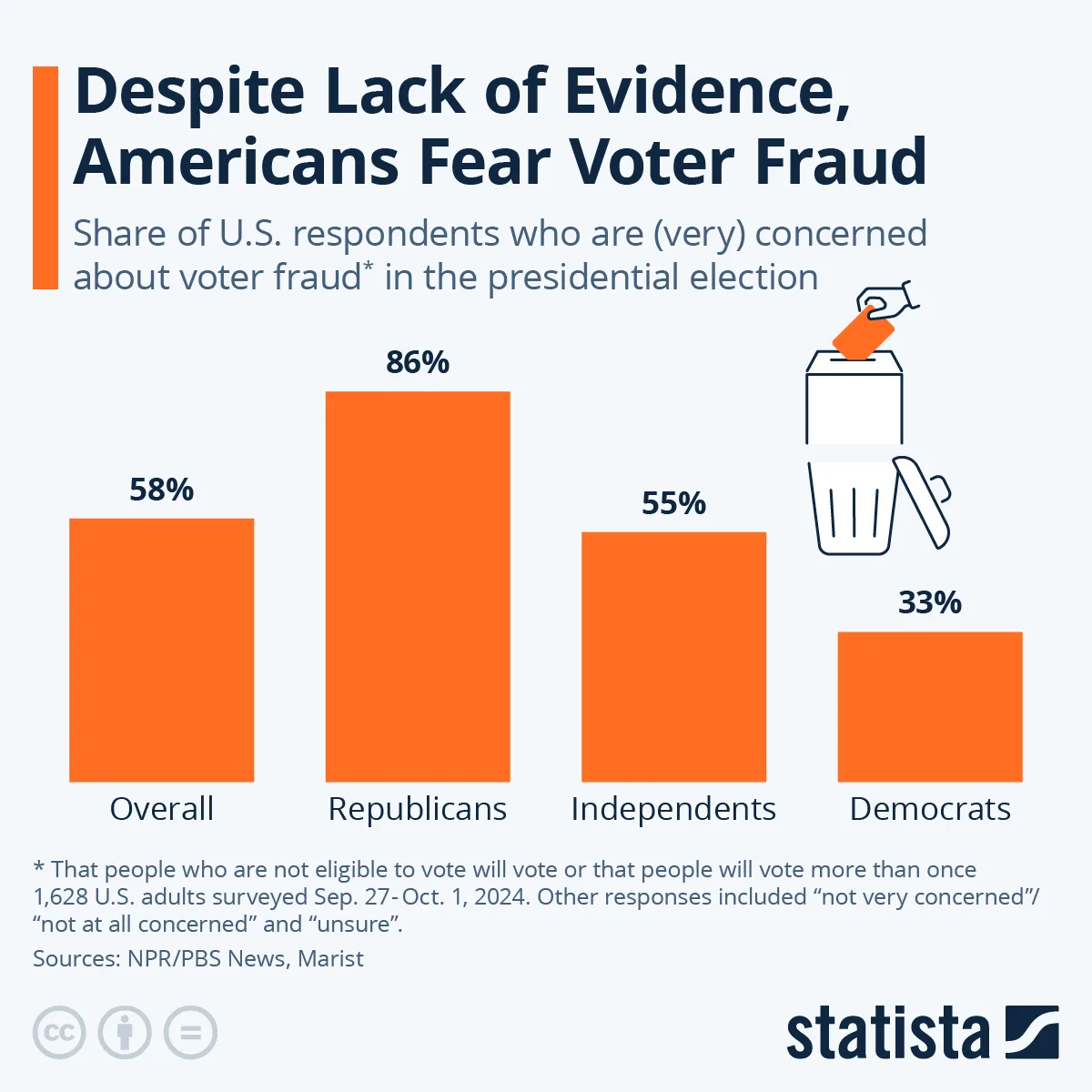
    The anxiety surrounding the integrity of elections is a compelling issue in the United States. According to recent data presented by Statista, despite the rarity of election fraud, a significant portion of the American public expresses concern over this issue. In a poll conducted by NPR/PBS News and Marist, it was revealed that a staggering 60% of U.S. adults reported feeling concerned or very concerned about voter fraud as the presidential election approached.

    The Poll Breakdown: A Closer Look

    General Concerns About Voter Fraud

    The statistics illuminate a critical perspective on American sentiments regarding electoral integrity. Though the instances of voter fraud have been proven to be minimal, the anxiety surrounding it has permeated public consciousness. This disconnect between perceived risk and actual evidence serves as a focal point for discussions about electoral reforms and public trust in the democratic process.

    • Overall Concern: 60% of U.S. adults showed concern regarding voter fraud.

    Party Line Divides

    The divide in perception of voter fraud concerns highlights how political affiliations can shape one’s views.

    • Republican Voters: A notable 86% of Republican-leaning individuals expressed concern about voter fraud. This overwhelming majority can be attributed to several factors, including rhetoric from party leaders and media narratives that emphasize the fear of electoral irregularities.

    • Independents: The concerns among Independent voters are markedly lower, with only 55% expressing apprehension. This group often comprises individuals who may swing between party lines and have more varied opinions, reflecting a more moderate stance on the issue.

    • Democratic Voters: Only 33% of Democratic-leaning voters reported concern about voter fraud. This stark contrast raises questions about the differing narratives and the underlying beliefs that influence each party’s perspective on election integrity.

    Voter Fraud: Reality vs. Perception

    Understanding the misalignment between fear and evidence is critical in addressing the widespread concerns about voter fraud.

    Rarity of Voter Fraud

    Multiple studies and analyses have demonstrated that actual cases of voter fraud are incredibly rare in the United States. Data compiled from various reputable sources shows that the instances of individuals voting illegally, manipulating ballots, or committing fraud is negligible compared to the millions of votes cast in each election.

    • Statistical Insights: Reports indicate that voter fraud rates are often cited to be between 0.0003% and 0.0025%. Such rates reveal how, statistically speaking, fraudulent voting is an infrequent occurrence that doesn’t warrant the level of concern exhibited by many Americans.

    Influence of Media and Political Rhetoric

    The media plays a significant role in shaping public opinion, especially on contentious issues like voter fraud.

    Media Coverage

    The portrayal of voter fraud in the news can amplify fears, often focusing on allegations rather than providing context about the actual scope of the problem. Sensationalized headlines and unsubstantiated claims can skew public perception, leading individuals to believe that the threat of voter fraud is more prevalent than it really is.

    Political Narratives

    Political figures from various parties contribute to the discourse surrounding voter fraud, often leveraging fears to mobilize their base or justify legislative changes. The rhetoric used can fuel partisan divides, as seen in the remarkable differences in concern among Republican, Independent, and Democratic voters.

    The Implications of Voter Fraud Anxiety

    The anxiety around voter fraud has significant implications for American democracy, influencing both policy decisions and public trust.

    Policy Responses

    In light of these concerns, there have been various legislative efforts aimed at curtailing perceived voter fraud, ranging from stricter voter ID laws to heightened scrutiny of voter registration processes. These measures often have a disproportionate impact on minority and low-income populations, raising concerns about accessibility and equity in voting practices.

    Trust in Democracy

    The persistent fear of voter fraud can also erode trust in the electoral process. When a substantial portion of the population believes that elections are compromised, it can lead to apathy, voter suppression, and disillusionment with the democratic system as a whole. This cycle poses a fundamental challenge to the health of American democracy, which relies on public confidence in electoral integrity.

    Conclusion Context

    In understanding the complexities surrounding voter fraud fears, it’s essential to recognize the factors contributing to these perceptions. The discrepancies among political affiliations and the influence of media narratives illustrate the intricacies of public opinion in the context of elections. While facts indicate that voter fraud is rare, the implications of these fears are far-reaching, affecting legislation, public trust, and ultimately, the democratic process in the United States.