Tag: vessels

  • Gulf States Support Iran’s Voluntary Fees for Hormuz Access

    Gulf States Support Iran’s Voluntary Fees for Hormuz Access

    Oman’s suggestion would make the fees for crossing the Strait of Hormuz voluntary.

    Trump warns that U.S. airstrikes could resume if negotiations don’t succeed.

    Oil prices continue to decline after Trump halted the airstrikes.

    Oman has gained support from Gulf nations for a plan allowing Tehran to collect voluntary fees for using the Strait of Hormuz, a Gulf source told Reuters on Tuesday. This approach could help end the disruption to oil shipments caused by the ongoing US-Israeli conflict with Iran.

    President Donald Trump, who unexpectedly stopped a two-week bombing campaign over the weekend in his latest strategic shift, said there are “positive talks” happening with Iran but warned that strikes could restart if negotiations fail. Iran denies actively seeking new talks with the U.S.

    Earlier this month, the U.S. renewed its bombing efforts to weaken Iran’s control of the strait, which previously facilitated about 20% of the world’s oil and liquefied natural gas trade prior to the conflict.

    Iran effectively shut down the strait to ships other than its own after the U.S. and Israel launched strikes on February 28. A partial reopening was achieved last month through a U.S.-Iran agreement, but that deal fell apart in early July after Iran fired upon ships in a channel it disapproves of.

    Iran has expressed interest in jointly managing the strait with Oman, which controls the opposite side, and levying service fees on ships passing through. The U.S. aims to restore the free passage past before the conflict, considering mandatory fees illegal.

    According to a source, the Omani proposal would prevent Iran from exercising exclusive control and would introduce voluntary payments, similar to the system used in Southeast Asia’s Strait of Malacca, where Indonesia, Malaysia, and Singapore solicit voluntary contributions for navigation, environmental efforts, and rescue services.

    Iranian Foreign Minister Abbas Araqchi discussed the Strait of Hormuz with his Omani and Saudi counterparts on Monday, emphasizing the importance of regional cooperation, according to Iran’s Foreign Ministry.

    Trump warns of further strikes
    Trump called off his latest bombardment after military advisors advised that the strategy had reached its limit. The 13 nights of renewed U.S. airstrikes resulted in multiple casualties in Iran and targeted infrastructure like bridges and tunnels across the south, in addition to military targets.

    Iran responded with attacks on U.S. bases in neighboring countries, killing four service members, and struck civilian infrastructure in Gulf states as retaliation for U.S. attacks on civilian sites.

    Iran has stated it will hold fire as long as the U.S. does. However, reports indicate drone attacks in Jordan, Saudi Arabia, and northern Iran on Monday, with Jordan also reporting another drone downed on Tuesday.

    On Monday, Trump expressed cautious optimism about reaching a deal to end the five-month conflict but warned that U.S. strikes could restart if negotiations fail.

    “I think there’s a good chance something could happen, and if it does, great. If not, we’ll just go back to what we were doing two days ago.”

    Iran maintains it has not initiated new negotiations with the U.S., accusing Washington of violating last month’s agreement on framework talks to end the hostilities.

    U.S. President Trump is scheduled to meet Israeli Prime Minister Benjamin Netanyahu in Washington on Tuesday. Although involved initially in the bombing campaign, Israel has not participated in subsequent peace negotiations, and tension has recently increased between the leaders.

    Trump has also had to restrain Israeli efforts to attack Hezbollah in Lebanon in an attempt to weaken Iran-backed groups, complicating efforts to secure peace with Iran.

    The end of U.S. bombing over the weekend caused oil prices to drop sharply, around 8%, and prices kept falling on Tuesday. Brent crude futures fell more than 2.5%, trading around $86 a barrel by mid-morning.

    In June, Washington and Tehran agreed on a framework for talks aimed at addressing key issues, including Iran’s nuclear program, with plans to hold discussions by the end of August.

    Disputes over the interpretation of the agreement’s language about the strait have arisen, with the U.S. insisting it ensures free passage, while Iran claims it authorizes Iran to oversee transit.

  • Iran Envoy: Friendly Nations Will Receive ‘Special’ Hormuz Fee Privileges

    Iran Envoy: Friendly Nations Will Receive ‘Special’ Hormuz Fee Privileges

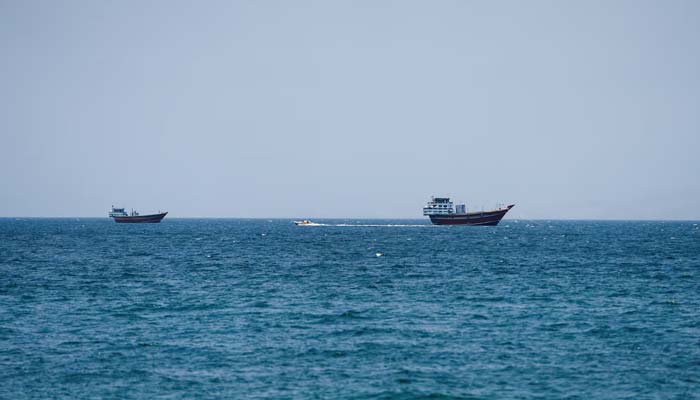
    Vessels are visible at the Strait of Hormuz, as observed from Musandam, Oman, on June 1, 2026. — Reuters

    – Iran’s envoy states that ships passing through Hormuz will be subjected to service fees.
    – Tehran is collaborating with Oman on establishing new arrangements for the Strait.
    – The fees collected are intended to enhance security and oversee vessel passage, according to Fazli.

    Iran’s ambassador to China emphasized on Saturday that new charges will be imposed on ships traveling through the Strait of Hormuz, a move rejected by U.S. officials. He assured that “friendly” nations will receive special treatment.

    The initial agreement between Iran and the U.S. aimed to allow commercial ships to transit the strait without fees for 60 days. The future framework beyond this period remains uncertain.

    Ambassador Abdolreza Rahmani Fazli, speaking at the World Peace Forum in Beijing, said Iran is working in partnership with Oman to develop “new arrangements” for the crucial waterway.

    “As a country that considers the Strait of Hormuz part of its territorial waters, we will indeed implement service fees,” Fazli explained in translated remarks, clarifying these would not be tolls.

    He added that these new arrangements would focus on ensuring safe passage, overseeing vessel movements, and addressing environmental impacts stemming from the high volume of ships.

    Furthermore, Fazli noted that Iran intends to offer special considerations for countries that have shown friendship and support during difficult times.

    The Strait of Hormuz typically facilitates about 20% of global crude oil and liquefied natural gas shipments. However, Iran had largely closed the strait during regional conflicts, causing energy prices to spike.

    Iran resumed allowing passage through Hormuz following an initial agreement with the U.S. aimed at ending regional hostilities, with negotiations ongoing for a permanent resolution.

  • US, Iran Talks Wrap Up in Doha, Emphasizing Strait of Hormuz

    US, Iran Talks Wrap Up in Doha, Emphasizing Strait of Hormuz

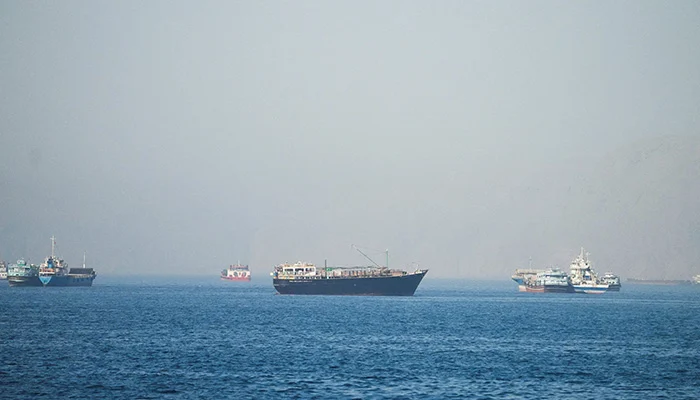
    Vessels can be seen navigating the Strait of Hormuz from Musandam, Oman, on June 26, 2026, as captured by Reuters.

    – President Trump states that discussions regarding Iran’s denuclearization are progressing smoothly.
    – Sources report that Iran’s nuclear program was not a topic of conversation during the Doha talks.
    – Iran indicates that the talks in Doha have wrapped up, with neither side claiming any significant breakthrough.

    The United States and Iran wrapped up a round of indirect negotiations, but there was little indication of progress toward a durable peace. Instead, talks focused on issues previously resolved with the interim agreement announced two weeks earlier.

    Insiders familiar with the negotiations revealed that representatives from both nations spent two days in Doha discussing maritime traffic through the Strait of Hormuz and efforts to unfreeze Iran’s assets—two key elements from the initial deal.

    A follow-up meeting is scheduled after Iran’s funeral processions for Supreme Leader Ayatollah Ali Khamenei, set for July 9, according to Qatar’s Foreign Ministry.

    The Doha discussions made “positive advances” on matters related to the memorandum that ended the war in June and built upon outcomes from a summit in Switzerland, the ministry’s spokesperson posted on X (formerly Twitter).

    In Washington, President Trump claimed that both sides were making strides on potential restrictions to Iran’s nuclear activities, which was the primary motivation behind the recent conflict involving Israel and the U.S. in February.

    “The denuclearization of Iran is progressing nicely,” Trump said. “They’re having very productive meetings, and we’ll see how it unfolds.”

    However, sources clarified that nuclear issues were not a direct part of the recent discussions, which remained highly technical.

    Vice President JD Vance added that nuclear matters will be addressed in future talks. “Of course, we’re concerned about Iran’s nuclear ambitions, and those discussions will begin soon,” he stated.

    Negotiators from the U.S. and Iran separately met with mediators from Qatar and Pakistan, the Qatari Foreign Ministry confirmed.

    Jared Kushner, Trump’s son-in-law, and high-level U.S. envoy Steve Witkoff, who traveled to the region for what the White House called “high-level” talks, did not participate in the sessions, according to an anonymous source.

    Iran’s chief delegate, Deputy Foreign Minister Kazem Gharibabadi, said the talks had concluded. Neither side disclosed whether they had managed to bridge any gaps.

    ### Who holds control of the Strait?

    The initial agreement aimed to reopen shipping lanes through the Strait of Hormuz, which previously handled 20% of global oil and natural gas trade before the conflict. Although traffic has partially resumed, the status of this strategic waterway remains uncertain, especially after last weekend’s exchanges of strikes following Iran’s attack on a cargo vessel.

    Iran is determined to secure international recognition of its control over the strait, even if that means using force. Two senior Iranian officials stated the country plans to start charging tolls on shipping in mid-August, after an agreed-upon toll-free period expires.

    President Trump downplayed the possibility of a full-scale war with Iran, mentioning, “I think they’ve made significant progress.”

    Following Trump’s remarks, oil prices dropped to their lowest in four months, and analysts revised their price forecasts downward for the first time since hostilities began.

    Iranian state media reported that a foreign cargo ship ran aground outside the designated shipping route managed by Iran. Vandana Hari, founder of Vanda Insights, noted that “Hormuz remains partially open, but the situation is inconsistent, unpredictable, and not fully transparent.”

    While some European nations have offered to assist with clearing mines in the Strait, Germany’s Defense Minister Boris Pistorius indicated he does not expect Germany to participate, citing Iran’s reluctance to cooperate with other countries.

  • US Hits Iran Again Amid Trump Denial on Hormuz Deal

    US Hits Iran Again Amid Trump Denial on Hormuz Deal

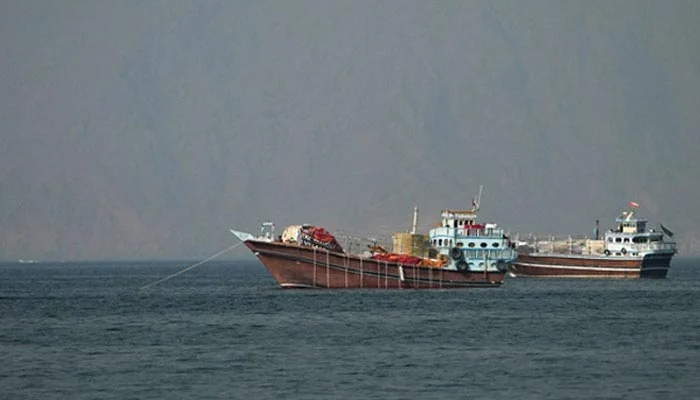
    A drone shot captures vessels anchored in the Strait of Hormuz, viewed from Musandam, Oman, on May 25, 2026. — Reuters

    • The U.S. launches targeted strikes against an Iranian military site, downing several drones.
    • A U.S. official describes the response as cautious and defensive.
    • President Trump denies any agreement with Iran and Oman regarding navigation through the Strait of Hormuz.

    The U.S. military reported conducting new defensive operations against an Iranian drone operation threatening American forces and commercial ships in the Strait of Hormuz. This comes just hours after President Donald Trump dismissed reports of a potential deal to restore shipping traffic in the waterway.

    An anonymous U.S. official told Reuters on Wednesday that the military shot down four Iranian attack drones and attacked a ground control station in Bandar Abbas before a fifth drone could be launched. A ceasefire agreement between the U.S. and Iran has been in place since early April.

    “These actions were deliberate, solely defensive, and aimed at preserving the ceasefire,” the official stated.

    Iran’s Tasnim news agency cited a military source claiming the Islamic Revolutionary Guards Navy fired warning shots at a U.S. oil tanker attempting to transgress the strait, causing it to turn back. The source also indicated that the U.S. responded with strikes on open ground around Bandar Abbas, with no reports of casualties or damage.

    Later reports from Iranian media indicated that four ships trying to pass early Thursday were turned back after warning shots in their directions.

    Additionally, the U.S. conducted strikes in southern Iran on Monday, claiming they were defensive. Iran called these actions a “gross violation” of the ceasefire.

    Oil prices, which had fallen over 5% on Wednesday, rebounded after reports of these strikes. U.S. crude futures rose nearly 2% to $90.38 per barrel early Thursday in Asian trading.

    Trump asserts no country will control the strait

    During a cabinet meeting on Wednesday, which was open to the media, Trump dismissed an Iranian state TV report claiming Iran had obtained an unofficial draft for an agreement to restore shipping to pre-war levels within a month, with Iran and Oman jointly managing traffic.

    Trump emphasized that no single country would dominate the waterway, hinting at a potential threat to Oman, a longstanding U.S. ally.

    “No one is going to control the strait,” Trump said. “It’s international waters, and Oman will act like everyone else, or we’ll take action. They get it, and they’ll be fine.”

    The White House and Oman’s embassy did not immediately comment. Iran’s UN mission was also unavailable for comments.

    Later, the U.S. Treasury announced that the Persian Gulf Strait Authority, Iran’s official body responsible for managing passage, was added to the list of sanctioned entities threatening U.S. national security.

    The Iranian report also claimed that the U.S. would lift its blockade of Iranian ports and withdraw military forces from the region, but the White House dismissed these reports as “complete fabrications.” Iran has not responded publicly.

    The U.S. has approximately 15,000 troops involved in enforcing a blockade of Iran, with thousands more stationed at regional bases. U.S. naval vessels continue routine transits, stopping at ports like Oman, although the number of daily crossings has decreased by 88% since the initial strikes in late February.

    President Trump has also urged countries like Pakistan, Saudi Arabia, Qatar, Turkey, Egypt, and Jordan to join the Abraham Accords, normalizing relations with Israel as part of efforts to end the conflict—but these nations have declined.

    Iranian officials say the proposed draft deal would involve the U.S. withdrawing military forces from the area, though the White House dismisses this as untrue. Negotiations on Iran’s nuclear program are expected to proceed separately, which some analysts view as a sticking point for Trump’s supporters. Iran insists its nuclear pursuits are peaceful.

    U.S. Secretary of State Marco Rubio has stated confidently that Iran will never develop a nuclear weapon.

    On Wednesday, Iran’s Revolutionary Guards announced that 23 ships, including oil tankers and commercial vessels, had transited the strait over the past 24 hours—far fewer than the usual 125-140 vessels before recent hostilities began.

    Despite ongoing tension, the international law governing the Strait of Hormuz grants all vessels the right to passage, though recent military actions have reduced daily traffic significantly.