Tag: Venus

  • New Study Indicates Venus Might Still Be Geologically Active

    New Study Indicates Venus Might Still Be Geologically Active

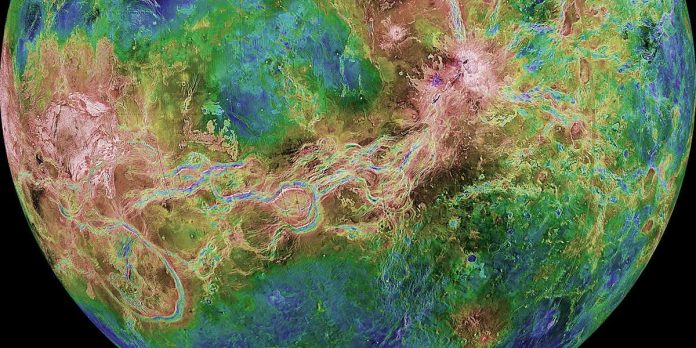
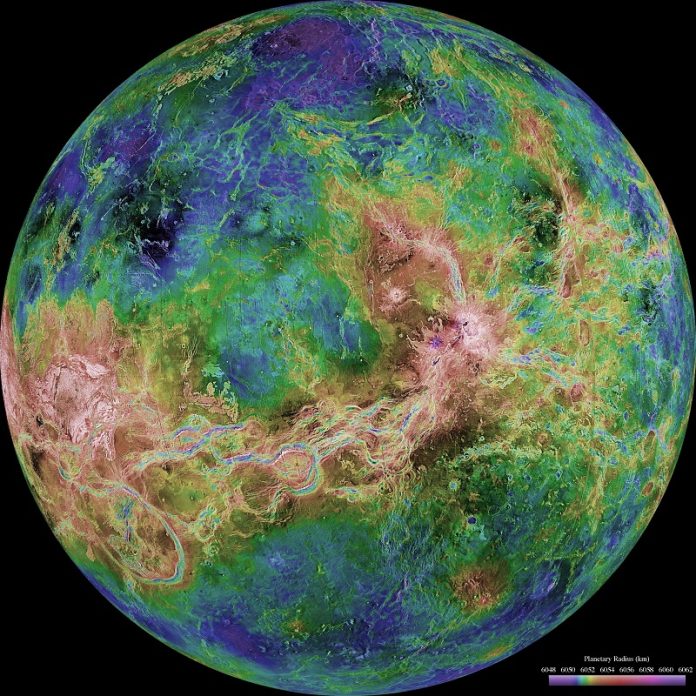
    Many years ago, scientists thought Venus was a quiet, geologically dormant planet where major surface changes had long since ceased. However, recent research challenges that belief, indicating that Earth’s closest neighbor might still be tectonically active, with large rift valleys that formed relatively recently.

    This new study, led by researchers at ETH Zurich and published in Nature Geoscience, presents compelling evidence that Venus’s interior may still be dynamic, continually reshaping parts of its surface. Although often called Earth’s “sister planet” due to similarities in size and composition, Venus is vastly different. Its surface temperatures are hot enough to melt lead, its atmosphere is thick and mostly carbon dioxide, and the surface experiences immense pressure. Unlike Earth, Venus lacks oceans and plate tectonics—the moving continents that drive geological changes here.

    Yet, Venus displays prominent rift valleys—vast cracks in its crust that resemble Earth’s African Rift Valley, where the crust gradually pulls apart. Some of these rift systems extend up to 10,000 kilometers, making them among the planet’s largest geological features. Previously, most scientists believed these rifts formed over 100 million years ago and have remained unchanged since, leading to the assumption that Venus was largely inactive.

    To reevaluate that idea, the ETH Zurich team employed advanced computer simulations. Led by Professor Taras Gerya and graduate student Xi Yang, they developed detailed three-dimensional models that are far more accurate than earlier two-dimensional simulations, which relied on simplified assumptions about rock behavior. These newer models allowed scientists to understand better how rift valleys form and evolve over time.

    The simulations suggest that young, active rift valleys often develop steep, narrow mountain ridges—called rift flanks—along their edges. These features are most prominent when the rift is still opening or has only recently ceased moving. The team also discovered that these rifts might expand faster than previously thought, growing by roughly 3 to 10 centimeters each year. After movement stops, these ridges gradually flatten as the crust relaxes.

    Unlike Earth, where erosion from wind, rain, rivers, and ice continually reshapes landscapes, Venus lacks liquid water, so its surface modifications primarily result from slow crustal sinking and settling under the planet’s own weight.

    To verify their models, the researchers compared their simulation results with images from NASA’s Magellan spacecraft, which mapped most of Venus during its 1990s mission. They observed that several Venusian rift valleys still display big, steep flanks, consistent with features of relatively young geological age. This correlation suggests that many of these giant cracks could have formed far more recently than once believed, supporting the idea that Venus’s interior is still active.

    With ongoing interest in Venus, NASA and the European Space Agency (ESA) are preparing new missions for the upcoming decade to explore the planet in greater detail. ESA’s EnVision, scheduled for launch in the early 2030s, will carry instruments developed with help from ETH Zurich researchers, aiming to study everything from surface features to internal processes and atmospheric conditions.

    These discoveries could help scientists identify the most geologically active regions for future exploration. Beyond helping us better understand Venus, this research offers insights into how rocky planets evolve across the universe, including Earth-like worlds orbiting distant stars.

  • NASA Skywatching Tips for August Include Jupiter and Venus Meetup

    NASA Skywatching Tips for August Include Jupiter and Venus Meetup

    There’s a lot of exciting celestial activity happening this August, according to NASA’s latest insights on celestial events for the month.

    Among the highlights are a morning alignment between Jupiter and Venus, an excellent opportunity to catch the Perseid meteor shower, and a look into the future of our own Sun.

    Mars
    Mars remains visible this month and is the only planet observable in the early evening sky during August. You can see it low in the western sky approximately an hour after sunset, but spotting it might be a bit tricky. Its distinctive salmon-pink glow is now roughly 60% as bright as it was in May, so it requires a keen eye.

    Saturn
    Later in the evening, around 10 p.m., Saturn becomes visible. As the month progresses, it will be visible earlier each night. Look for Saturn in the east after sunset, near the constellations Cassiopeia and Andromeda. By dawn, the planet will appear to drift toward the western horizon, making early risers the perfect audience for observing this planetary wonder.

    Jupiter and Venus
    The most notable event this August is the close approach of Jupiter and Venus. These planets shine brightly in the eastern sky before sunrise all month long. They start the month appearing far apart, but gradually draw nearer as days pass. The closest they’ll get is on August 11th and 12th, with only about a degree separating them—roughly twice the width of a full moon. This celestial dance takes place against a dazzling backdrop featuring Orion, Taurus, Gemini, and Sirius. Additionally, a slim crescent moon joins the pair on the mornings of August 19th and 20th, after they drift apart again.

    Perseids Meteor Shower
    The Perseid meteor shower returns this August, reaching its peak overnight on the 12th and 13th. However, the nearly full moon on peak nights will make it hard to see all but the brightest meteors. Although this limits viewing somewhat, another spectacular meteor shower, the Geminids, will provide an ideal opportunity to observe bright meteors without moonlight interference come December.

    Dumbbell Nebula
    This month also offers a superb chance to observe the Dumbbell Nebula, also called M27—a type of planetary nebula.

    A nebula is a massive cloud of gas and dust scattered across space. Planetary nebulas form when aging stars similar to our Sun exhaust their nuclear fuel and shed their outer layers. This process leaves behind a small, hot core known as a white dwarf. The white dwarf emits intense ultraviolet light that illuminates the surrounding gas shell, causing it to glow visibly.

    Nicknamed for its dumbbell-like shape, the Dumbbell Nebula appears as a faint, small patch of light through binoculars or small telescopes—roughly a quarter the width of the full moon. To find it, consult your astronomy app or use the star chart below as a guide.

    Dumbbell Nebula

    This month provides a chance to glimpse into one of the future phases of our Sun—about five billion years from now. Such observations remind us of the ongoing cycle of cosmic renewal that seeds the galaxy with the ingredients for future stars and planets—perhaps even worlds similar to our own.

  • Rita Hayek Reveals Betrayal Over “Venus”: “They Stole My Role!”

    Rita Hayek Reveals Betrayal Over “Venus”: “They Stole My Role!”


    Rita Hayek Speaks Out After Being Replaced in the “Venus” Play

    Rita Hayek has recently addressed the situation following her departure from the play “Venus,” where she starred alongside Badih Abou Chacra as “Vanda.” This comes as Rola Baksmati steps into her role for upcoming performances in Canada and Dubai.

    In a heartfelt video shared on her Instagram, Rita expressed her gratitude for the unwavering support from her fans. “I find it hard to express my emotions,” she said, alongside a promotional image for “Venus,” which is a revival of the original Lebanese production that gained immense popularity, boasting over 120 sold-out shows.

    She reflected, “One of the key factors behind this success, with all humility, is the role I painstakingly crafted, portraying the character of Lebanese Vanda. It’s important for me to share this story and clarify your questions, as I have always included you in my joys and achievements. The upcoming version of ‘Venus’ in Canada or Dubai is not the same show you remember and cherish, and that made it all the more successful.”

    In her post, Rita also noted that three of her friends collaborated and worked hard to shape the concept of the play, contributing significantly to its success. Unfortunately, she revealed that those she considered close took away her artistic and financial rights. However, she is determined to reclaim what is hers.

    Furthermore, she pointed out that her name is still being used to promote ticket sales for the Dubai performances, commenting humorously in a social media post, “‼️They are using my name to sell tickets in Dubai 😂 Please share‼️.”

    Through her candid posts and statements, Rita Hayek continues to engage with her audience, ensuring they are part of her journey during this pivotal time.

  • Saudi Arabia Announces May 27 for Zil Hajj Moon Sighting

    Saudi Arabia Announces May 27 for Zil Hajj Moon Sighting

    Sure! Here’s a rewritten version of the content in American English:

    A crescent moon accompanied by Venus shines through an oak tree in Ellaville, Georgia, USA, January 3, 2025. — Reuters

    RIYADH: The Supreme Court of Saudi Arabia has called upon Muslims throughout the kingdom to observe the crescent moon on the evening of Tuesday, May 27, to mark the beginning of Zil Hajj 2025, the Islamic month dedicated to Eid ul Adha and the Hajj pilgrimage.

    In a statement released on Sunday, the court urged anyone who can sight the crescent—whether with the naked eye or using binoculars—to report to the nearest court and document their observation.

    The court also invited participation in the official moon-sighting committees established in various regions to support this important religious activity.

    The Hajj pilgrimage is set to start on the 8th of Zil Hajj and continue until the 13th of the month. This year, Hajj is anticipated to occur between June 4 and June 9.

    However, if the crescent moon is not seen on May 27, then Zil Qadah will complete its 30 days, and Zil Hajj will commence on Thursday, May 29.

    As a result, Eid ul Adha would be celebrated on Saturday, June 7, adjusting the dates for both the Hajj pilgrimage and related festivities by one day across the kingdom.

    The final confirmation of Eid ul Adha and Hajj dates will depend on the official moon-sighting announcement made as Zil Qadah comes to a close.

    Feel free to ask for any modifications or further assistance!