الوسم: users

  • Google Home Fixes Voice Commands But Not Ready for Most

    Google Home Fixes Voice Commands But Not Ready for Most

    Google has just released a genuinely useful update for Google Home centered around voice command functionalities, but there’s a hidden catch in the fine print.

    The latest update allows you to specify exact light colors using Kelvin values (or color temperature) and streamlines years of awkward voice broadcast commands. However, most of these features only work if you’ve already enrolled in the early access program.

    So, what are the real improvements with voice commands?

    In my opinion, the standout feature is the improved control over color temperature. You can tell Gemini something like “set the living room lights to 2700 Kelvins” and get that precise warmth. This update simplifies what used to be a tricky slider in the Google Home app into a straightforward voice request.

    That said, I am concerned about how users will need to memorize Kelvin values to get their preferred lighting warmth just right. For reference, 3000K is warm, 4000K is neutral or daylight-like, and anything above 5000K is considered cool.

    Other notable updates include enhancements to Spotify voice requests. Google reports improved accuracy in matching songs, artists, and playlists by name, which should lead to better search results. Additionally, the process for broadcasting messages has been redesigned into two steps: first saying “OK Google, broadcast message,” then waiting a moment to speak the actual message. This approach makes conversations sound more natural, giving you time to prepare your message.

    All three features are currently exclusive to Gemini for Home, which is still in early access. If you’re not enrolled in that program, these voice capabilities won’t be available to your setup yet, regardless of having the latest app.

    However, everyone else can still enjoy some improvements. For instance, Android streams that previously stuttered at 360p now stream in full resolution. European-style smart locks now have separate control options for unlatching and unlocking, with clearer status indicators. Lastly, temperature units now remain consistent across the app, voice commands, and Nest devices, simplifying the user experience.

  • Top HM Users in Pokémon FireRed & LeafGreen: Completing and Solving

    Top HM Users in Pokémon FireRed & LeafGreen: Completing and Solving

    The first Pokémon games, like Pokémon FireRed and LeafGreen, don’t have the convenience features found in newer titles. In these older games, you need to teach your Pokémon HM moves like Cut, Rock Smash, and Surf to explore secret areas across Kanto.

    Though HMs aren’t very useful in battles, they’re crucial for your journey. Using fewer Pokémon to carry multiple HMs gives you more options to build a balanced team for battles.

    What Are HMs?

    HMs, or Hidden Machines, are moves you can teach your Pokémon that have uses outside of fights. They help you navigate the environment by clearing paths, crossing water, and solving puzzles during your adventure in Kanto. The seven HMs in FireRed and LeafGreen are:

    • HM01 – Cut
    • HM02 – Fly
    • HM03 – Surf
    • HM04 – Strength
    • HM05 – Flash
    • HM06 – Rock Smash
    • HM07 – Waterfall

    You’ll need at least two Pokémon to cover all these HMs, which leaves only four team slots for other Pokémon.

    Note: You don’t have to have access to every HM throughout the game. Flash, Waterfall, and Cut are less frequently needed, and you can find powerful Pokémon with these moves later in the game.

    The most useful HMs to focus on are:

    • HM03 – Surf
    • HM02 – Fly
    • HM04 – Strength
    • HM06 – Rock Smash

    Since few Pokémon learn most or all of these key moves, here are some top choices for HM users in FireRed and LeafGreen.

    Which Pokémon Make the Best HM Pokémon?

    The best Pokémon to assign HMs to are usually not battle-focused, as their primary job is to help you carve a path through the game world. Still, some strong Pokémon can serve as HM slaves, and if you want, you can keep separate Pokémon for battling and for HMs.

    Here are some of the top Pokémon for teaching HMs and the moves they learn:

    Pokémon HMs Learned
    Dragonite Cut, Fly, Surf, Strength, Rock Smash, Waterfall
    Nidoqueen/Nidoking Cut, Surf, Strength, Rock Smash
    Gyarados Surf, Strength, Rock Smash, Waterfall
    Charizard Cut, Fly, Strength, Rock Smash
    Lapras Surf, Strength, Rock Smash, Waterfall
    Aerodactyl (Learnable HMs vary; not all standard moves listed here)
    Vileplume (Limited HM options)
    Sandslash (Limited HM options)
    Snorlax (Limited HM options)

    For overall usefulness, Dragonite is considered the best HM user because it can learn Surf, Fly, Strength, and Waterfall. Other strong HM candidates include Nidoqueen/Nidoking, Charizard, Lapras, and Gyarados—all of which can learn four important HMs.

    Most of these Pokémon can learn four key HMs, making them versatile choices for navigating the game world efficiently.

  • Google Chrome Helps iPhone Users Balance Work And Play

    Google Chrome Helps iPhone Users Balance Work And Play

    Unless you work for a government agency or handle highly sensitive corporate information, it’s likely that your organization permits the use of personal phones for work-related tasks. Some companies, however, do mandate the use of an internal VPN or a distinct work profile to access online resources.

    On desktop, switching between different user profiles in Chrome is fairly straightforward. Android users have the option to set up a work profile that keeps their professional data private and secure. Unfortunately, iPhone users haven’t had similar functionality until now. Starting in 2025, Google is set to make strides in this area for iOS users.

    What’s on the horizon?

    In the near future, Chrome on iOS will enable users to easily toggle between personal and professional profiles. This transition will be smooth, ensuring that all browsing activities and saved data remain distinct and organized for each profile.

    Users will have their login details, tabs, groups, and browsing history kept separate. “When users log in or switch to their managed account in Chrome, browsing linked to their organization will be isolated from their other activities on the device,” the company states.

    Upon first activating the profile switching feature in Chrome, users will be educated about the data retention policies set forth by their organizations. Every time they switch to the work profile in Chrome, they will receive a notification to this effect.

    Better protections for mobile users

    Moreover, a new URL filtering feature is coming that will stop employees logged into a work profile from accessing potentially harmful websites on iOS. Google is also enhancing its reporting tools for Chrome Enterprise on both Android and iOS, allowing IT administrators to better monitor security vulnerabilities and incidents.

    These features will be integrated into Chrome Enterprise bundles, covering both the Premium and Core tiers. For those unfamiliar, Chrome Enterprise Core enables companies to manage extensions, applications, and settings from a single dashboard, while the Premium package includes added security measures like deep malware scans, data loss prevention, website filtering, and more.

    As AI technology continues to grow, Google is further upgrading security measures for enterprise users. “Organizations can restrict employees from accessing unauthorized GenAI sites at a category level and direct them to sanctioned corporate services to mitigate ShadowAI risks,” the company announced in a press release.


  • Why Canʼt I See Other Bitchat App Users?

    Why Canʼt I See Other Bitchat App Users?

    Many users of the Bitchat app have experienced challenges when trying to locate or connect with others on the platform. Understanding the factors that contribute to this issue can help improve your experience and facilitate better communication. Here’s a deeper look into why you might not see other users in the Bitchat app.

    Privacy Settings and User Visibility

    Individual Privacy Controls

    Each user has the ability to set their privacy preferences, which can affect visibility. If a user has chosen to hide their profile or limit who can see them, you won’t be able to view them in your user list.

    • Profile Settings: Check individual settings to see if they are set to a private mode.
    • User Preferences: Some users might prefer limited interaction and choose to hide their profiles from strangers.

    Group Limitations

    In some cases, Bitchat users may only be visible within certain groups. If you haven’t joined specific groups, or if you’re not in the same chat rooms, the chances of seeing other users diminish.

    • Join Groups: Look for public groups and join them to increase your visibility.
    • Check Active Chat Rooms: Participate actively in ongoing chat rooms where users are present.

    Technical Issues

    App Glitches

    Sometimes, the inability to see other users stems from technical problems within the app itself. Glitches can occur for various reasons:

    • Server Issues: Temporary server downtime can limit functionalities including user visibility.
    • Software Bugs: Outdated versions of the app may contain bugs. Always ensure you have the latest version installed.

    Internet Connectivity

    Poor internet connection can also hinder the app’s performance.

    • Stable Connection: Ensure you’re on a stable Wi-Fi or mobile data connection.
    • App Update: Restart your device and check for app updates if performance is slow.

    Account Restrictions

    Age and Regional Restrictions

    Bitchat might have specific age or geographical requirements that can restrict who can see your profile or who you can see.

    • Age Verification: Check whether your age meets the requirements set by the app.
    • Geographic Limits: Some features may be limited based on your location.

    Account Status

    If your account is flagged for any reason, this could restrict your visibility to other users.

    • Community Guidelines: Familiarize yourself with the app’s guidelines and ensure you’re complying with them.
    • Account Suspension: If your account has been suspended or restricted, visibility will also be affected.

    User Engagement Levels

    Inactive Profiles

    If users aren’t engaged in the app or haven’t logged in for an extended period, they might not show up in your search results.

    • Regular Activity: Encourage friends to remain active, as inactive profiles might not appear.
    • Notifications: Turn on notifications to stay updated about user activities.

    Connection Suggestions

    The app may provide connection suggestions based on mutual contacts or interests. If you haven’t built connections or interacted with other users, finding them can be difficult.

    • Expand Your Network: Engage with other users through direct messages or comments.
    • Use Search Functionality: Utilize the search feature to manually find users by username.

    Understanding these factors will enhance your experience on the Bitchat app. By addressing privacy settings, managing technical issues, and ensuring account compliance, you can improve your interactions and visibility within the platform.

  • How Do I Fix Bitchat App Not Finding Other Users?

    How Do I Fix Bitchat App Not Finding Other Users?

    Fixing Bitchat App Not Finding Other Users

    If you’re experiencing issues with the Bitchat app not locating other users, it can be quite frustrating. This social messaging platform relies on user connectivity, and when it’s not functioning correctly, it can interrupt your experience. Here’s how to troubleshoot and potentially fix the problem.

    Common Reasons for Connectivity Issues

    Understanding why the app might be failing to find other users is essential. Here are some common reasons:

    • Weak Internet Connection: A slow or inconsistent internet connection can hinder user discovery.
    • Permissions Not Granted: The app requires specific permissions to access contacts and location.
    • Outdated App Version: Using an old version may cause compatibility issues.
    • User Location Settings: Users must enable location services for the app to find nearby users.
    • Account Settings: Some privacy settings may restrict your visibility to others.

    Steps to Resolve the Issue

    Here are some actionable steps you can take to potentially resolve the issue of the Bitchat app not finding other users:

    1. Check Your Internet Connection

    • Wi-Fi vs. Mobile Data: Switch between Wi-Fi and mobile data to see if the problem persists.
    • Speed Test: Use an internet speed test app to ensure you have a stable connection.

    2. Update the Bitchat App

    • Visit the App Store: Check for updates in the Google Play Store or Apple App Store.
    • Automatic Updates: Consider enabling automatic updates to avoid future issues.

    3. Verify Permissions

    • Access Location: Make sure the app has permission to access your location:

      • Go to your phone’s Settings.
      • Select Apps > Bitchat > Permissions.

    • Contacts Access: Ensure contacts are allowed if necessary for user discovery.

    4. Adjust Location Settings

    • Enable GPS: Make sure your GPS is turned on.
    • Location Accuracy: Set location services to “High accuracy” in settings for better detection.

    5. Review Privacy Settings

    • Visibility Settings: Check if you have set your account to be visible to others.
    • Block List: Ensure you haven’t accidentally blocked users you want to connect with.

    6. Restart the Application

    • Closing the app completely and reopening can sometimes reset connectivity issues.

    7. Reinstall the App

    • Backup Data: If applicable, back up your chat history.
    • Uninstall and Reinstall: This can refresh everything, but make sure you’ve saved any important information before doing this.

    Additional Considerations

    • Compatibility: Ensure your device’s operating system is compatible with the latest version of the Bitchat app.
    • Server Issues: Sometimes server maintenance can cause temporary disruptions. Check the Bitchat official website or social media for outage reports.
    • Contact Support: If none of the above solutions work, consider reaching out to Bitchat’s customer support for assistance.

    By following these steps, you should be able to troubleshoot the connectivity issues you’re facing with the Bitchat app.

  • WhatsApp Introduces Media Quality Selection for Downloads

    WhatsApp Introduces Media Quality Selection for Downloads

    An illustration of the WhatsApp logo.
    An illustration of the WhatsApp logo. — Unsplash

    WhatsApp is enhancing user experience by offering more control over data usage and device storage with a newly introduced feature for selecting the download quality of photos and videos.

    This much-anticipated update is currently being rolled out to a larger audience and includes options for “standard quality” and “HD quality” for media that is automatically downloaded. These options can be found in the “Storage and Data” section of the app’s settings.

    As noted by WABetaInfo, this new feature is presently available only to beta testers who have installed the latest WhatsApp beta version for Android (2.25.18.11) from the Google Play Store.

    This update effectively addresses a widespread concern among users regarding managing the large volume of media, particularly in busy group chats.

    Previously, all automatically downloaded media would use data and storage space regardless of whether users required high-resolution files. Now, individuals can adjust their auto-download settings to match their data plans or network conditions, allowing for a more tailored experience.

    A screenshot showcasing the new WhatsApp feature.
    A screenshot showcasing the new WhatsApp feature. — WABetaInfo

    Selecting “standard quality” will generate compressed files, which means faster downloads and reduced data and storage usage. On the other hand, choosing “HD quality” maintains higher details and resolution, albeit at a greater cost to data and storage.

    This feature is supported by an innovative dual-upload system for high-quality media.

    When a user sends an image or video in HD, their device will automatically create and upload both a standard and an HD version of the file. This process is necessary due to WhatsApp’s end-to-end encryption, which prohibits alterations to file quality at the server level.

    The recipient’s app will then download the version based on their predetermined auto-download preferences.

    A significant advantage, particularly for participants in group chats, is the option to only automatically receive standard-quality media.

    This feature prevents unnecessary data usage for high-resolution images or videos that a user might not wish to view in detail. If a user later decides they want to see the HD version, the app can still access it from the server, as long as it remains available.

    This update marks a notable improvement for users with limited data plans or slower internet connections, contributing to a more efficient and seamless WhatsApp experience.

    Meanwhile, users who favor high-quality images for important visuals can opt to consistently auto-download HD content.

    The feature is anticipated to be available to all users shortly.

  • Apple May Allow Users To Replace Siri As Default Assistant

    Apple May Allow Users To Replace Siri As Default Assistant

    Apple’s challenges in enhancing Siri with next-gen AI technology are widely recognized, while competitors like Google’s Gemini have gained traction in the Android realm. The situation escalated to the point where Apple had to retract advertisements promoting Siri’s advanced features, which have yet to be released nearly a year later.

    As a temporary fix, Apple has incorporated ChatGPT into the Apple Intelligence stack on iPhones, allowing the OpenAI chatbot to tackle questions that Siri is unable to answer. Additionally, there are discussions about integrating more AI chatbots to provide similar support.

    In the future, it’s possible that Apple will permit users to completely replace Siri as their primary voice assistant on Apple devices. This would mark a significant change, considering Siri has been a hallmark of Apple’s innovation. However, in response to increasing competition and regulatory pressures, Apple may take such a step, as noted by Bloomberg.

    The report indicates that in order to comply with anticipated European Union regulations, Apple is actively modifying its operating systems. For the first time, this will allow users to change from Siri as their default voice assistant to third-party alternatives, according to sources familiar with the developments.

    Why Does It Matter?

    Currently, if you ask Siri questions like “Who won the Academy Award for Best Director in 2023?” or “What principle best explains fluid motion in a closed loop?” it cannot respond. In such cases, Siri would refer these inquiries to ChatGPT, pending user approval.

    The overarching concern is that Siri remains a fixture, but permitting users to entirely replace it with third-party software—like Google’s Gemini, Anthropic’s Claude, or OpenAI’s ChatGPT—would clearly signal that Apple is faltering in the AI assistant sector. Apple is unlikely to allow this situation to unfold.

    However, many users have already transitioned to competing chatbots, such as Gemini, ChatGPT, and Perplexity, which are increasingly being integrated with various third-party applications. Personal tests with Gemini on an iPhone indicate that Google’s assistant is already superior to Siri in numerous ways.

    According to Bloomberg’s detailed report, users would likely switch from Siri if Apple gave them the option. “Unless there’s a significant improvement with Apple’s products, many users may make that choice,” it states. Apple has already made notable concessions for users in the EU, such as enabling third-party app stores and external in-app payment solutions, as well as the capacity to alter default messaging and calling applications.

    What’s Next for Apple in AI?

    Apple is currently developing a next-gen version of Siri, internally known as LLM Siri, intended to match the capabilities of contemporary AI chatbots. However, previous reports suggest that this major update is still a year or two away. Apple is enlisting user data to aid in the training for this new system.

    Apple aims to differentiate the Apple Intelligence branding from Siri to continue advancing AI-powered features without the hindrance of the struggling virtual assistant. As part of this approach, the company is exploring innovations such as an AI-powered battery management system and a personalized health coach.

    Moreover, Apple intends to adopt a more cautious strategy for feature announcements following the Siri missteps. “Apple will largely refrain from revealing features long before their official launch,” the Bloomberg report states. Further insights into the company’s future initiatives are expected to be unveiled at the WWDC 2025 conference next month.

  • Google Gemini Aids Web Surfing For Users With Sensory Issues

    Google Gemini Aids Web Surfing For Users With Sensory Issues

    For years, Android devices have featured TalkBack, an integrated screen reader designed to assist individuals with visual impairments. This tool enables them to understand the content displayed on their phone and navigate it using voice commands. In 2024, Google enhanced this functionality by incorporating its Gemini AI, which provides more comprehensive descriptions of images.

    Google is now enhancing TalkBack with a new layer of interactive features, allowing users not only to receive descriptions of images but also to pose follow-up questions and engage in more meaningful discussions about them.

    How Does It Benefit Users with Vision Challenges?

    “Imagine your friend sends you a picture of their new guitar. You can now get a detailed description and inquire about its make, color, and even elements surrounding it,” as noted by Google. This builds upon the accessibility improvements that integrated Gemini into the TalkBack system last year.

    The TalkBack menu on Android now includes a specially designed Describe Screen feature, which places Gemini front and center. For instance, when browsing a clothing catalog, Gemini will not only narrate what’s visible but also respond to relevant queries.

    Users might ask, “Which dress is best for a chilly winter night?” or “What sauce pairs well with a sandwich?” Gemini can analyze the entire display and provide details about products, including any available discounts.

    Enhancing Captions and Text Zoom

    In Chrome, Google is giving a boost to automatically generated captions for videos. For instance, while watching a football game, captions will reflect the commentator’s tone and emotions more accurately. Instead of simply displaying “goal,” users with hearing impairments will see “goooaaal,” enhancing the emotional impact.

    These Expressive Captions will now include crucial sounds like whistles, cheers, and even vocal nuances such as throat clearing. They will be available on all devices using Android 15 or newer in the US, UK, Canada, and Australia.

    Another expected update in Chrome is adaptive text zoom. This improvement allows users to enlarge text without disrupting the overall layout of the web page. Users will be able to tailor their zoom preferences and apply them universally across web pages or to specific sites only.

    “With a simple slider, you can easily adjust how much you want to zoom in,” Google explains. This feature aims to provide a more user-friendly browsing experience for everyone.

  • Google’s Nest Thermostat Removal Warns Smart Home Users

    Google’s Nest Thermostat Removal Warns Smart Home Users

    If you were one of the early adopters of the Nest Learning Thermostat, there’s some unfortunate news: Google has confirmed that support for the first and second generations of these devices will end on October 25. Essentially, they will no longer function as “smart” devices. You won’t be able to control them via your smartphone or Google Assistant, although they will still operate as regular wall-mounted thermostats.

    According to Google’s announcement, “As we assess our ability to support your energy needs moving forward, it has become increasingly difficult to continue updating these early hardware models. Therefore, we’ve made the tough decision to discontinue software updates starting October 25, 2025, for the Nest Learning Thermostat (1st gen, 2011), Nest Learning Thermostat (2nd gen, 2012), and the European version of the 2nd gen (2014).”

    Some features like schedules and modes will still be available, but they will require manual adjustments. On the brighter side, Google has offered discounts on the 4th gen Nest Learning Thermostat for eligible customers: $130 off for U.S. residents, $160 for those in Canada, and a 50% discount for European customers on the Tado Smart Thermostat X Starter Kit.

    While it’s normal for both hardware and software to lose support over time, this news has disappointed many loyal users who haven’t felt the need to upgrade. Though the discount is a nice touch, it doesn’t entirely alleviate the additional costs involved. For some, it might feel like a $140 charge to keep using a thermostat they already purchased.

    This isn’t the first time a smart home device has been rendered obsolete soon after its release. The first-gen Nest Learning Thermostat launched in 2011 and has enjoyed 14 years of support, while the second generation debuted in 2012. Most consumers expect their electronics to serve them until they naturally wear out.

    This situation prompts a reevaluation of how we perceive smart home technology. Unlike traditional electronics that may hold sentimental value, smart home gadgets could be seen more like appliances, designed for convenience rather than lasting memories. A toaster or stand mixer may need replacement over time, and perhaps the same mindset should apply to smart home devices.

    However, one might argue that brands like Cuisinart won’t suddenly remove the functionalities of a toaster just because it’s old. That would be absurd. Yet, smart gadgets might be seen in a different light due to their connectivity and potential vulnerabilities to cyber threats.

    Google finds itself in a tricky position. By discontinuing support for older models, the company can focus on enhancing newer products and mitigate risks associated with outdated hardware. Balancing customer satisfaction with overall business strategy is no easy feat, though.

    The backlash from customers has been significant. Since the announcement, many have taken to social media platforms to voice their concerns. One user succinctly stated, “It’s fine to end support for a product, but it’s not acceptable to force a migration and then shut down the app.”

    Other users have expressed that this decision has eroded their trust in Google, suggesting that a better approach would involve maintaining full functionality while ceasing software updates. Ultimately, users should have the autonomy to decide if they want to take risks with security.

    Personally, I resonate with this perspective. While I acknowledge the rationale behind the discontinuation, it troubles me that a company can revoke functionality. This scenario reinforces the notion that ownership is diminishing, particularly concerning internet-connected products. I’ve always believed that once I buy something, it should remain mine to use as I wish.

    At least some functionality still prevails. Other smart home systems have been completely closed, leaving users with expensive devices that serve no purpose, such as Lowe’s Iris, which operated from 2012 until its shutdown in 2019. Users were reimbursed for devices that couldn’t be used on other platforms, although Samsung did step in to help migrate compatible Iris products to SmartThings.

  • Meta Trains AI On Your Data But Opting Out Fails

    Meta Trains AI On Your Data But Opting Out Fails


    Picture a tech giant announcing that it intends to utilize your Instagram and Facebook content for training its AI models, without offering anything in return. The company claims you have the option to opt out. However, when you attempt to exercise that choice through their official channels, they simply don't function.

    This is the experience being reported by users of Facebook and Instagram. Nate Hake, publisher and founder of Travel Lemming, revealed that he received an email from Meta regarding its plans to use his social media content for AI training, but the link to opt out that was provided was inoperative.

    Furthermore, this isn't the only troubling aspect. Meta pledged to respect the wishes of users who do not want their data to be harnessed for AI training. According to Hake, however, when he submitted his request, he received a response stating that the company "cannot take further action" on it.

    What is going on?

    Meta AI on mobile and desktop web interface.
    Meta

    Back in 2018, during the period when Meta was still known as Facebook, the organization disclosed that it was training AI algorithms using the millions of photos uploaded to Instagram. At that point, Meta AI and the Llama AI models hadn't yet come into existence, but it foreshadowed future issues.

    Fast forward to 2025, and Meta is fully invested in AI, a technology that notoriously demands vast amounts of training data. Users on platforms like Instagram and Facebook are now discovering that their personal information is being utilized for AI training, while the geolocation-restricted opt-out tools are failing to work properly.

    Meta has a long history of training its models on user-contributed content, but in light of ongoing copyright and privacy concerns, the company has faced significant regulatory scrutiny. In June of last year, it announced plans to halt the use of EU user data for AI training.

    User complaining about Meta AI on X.
    @natejhake / X

    However, less than a year later, the company indicated that it would resume collecting user data, including photos and comments, from users located in the EU and the UK to support training for Meta AI. The company justified this move by claiming it is a standard practice adopted globally.

    In an official blog post, the company stated, "We’re following the example set by others including Google and OpenAI, both of which have already used data from European users to train their AI models."

    Allow them to opt out, if feasible

    In mid-April of this year, Meta announced plans to inform users in the EU and the UK about changes to its AI training policy. The notification process was set to include an in-app alert as well as an email notification.

    According to Meta, these notifications would feature a link granting users the opportunity to object to their data being utilized in this capacity at any time. The company assured users that the opt-out form would be easy to find and would provide clear information.

    Meta's consent response for AI training.
    @ichbinGisele / X

    Despite these assurances, many users, including Hake, reported that the opt-out link was malfunctioning. He and numerous others took to social media to express their dissatisfaction with Meta's handling of the situation. It remains uncertain whether the issue with the opt-out form is a technical glitch or something more deliberate.

    Hake emphasizes the apparent disregard for user choice and criticizes the company's sudden shift in stance. Although Meta recently vowed to respect all objection forms received, including new submissions, Hake’s efforts to express his concerns were met with a claim that no further action would be taken. Meta promotes a transparent approach regarding the use of social content for AI training, but there seems to be a lack of follow-through on these commitments.

  • Meta Trains AI Using Your Data, Opting Out May Not Help

    Meta Trains AI Using Your Data, Opting Out May Not Help


    Imagine a leading tech company seeking to use your posts from Instagram and Facebook to enhance its AI models, with no incentives offered in return. Although they claim you have the option to opt out, users are discovering that the mechanisms to do so simply don’t function.

    Recently, Facebook and Instagram users have voiced concerns about this issue. Nate Hake, founder and publisher of Travel Lemming, shared that he received an email from Meta on this topic. However, the link provided to opt out was non-functional.

    Compounding the problem, after reaching out to Meta for clarity on his request, Hake was informed that the company could not accommodate his request. He simply received a lackluster response indicating they would take no further action.

    What is going on?

    Back in 2018, when Meta was still known as Facebook, the company disclosed its intention to train AI algorithms using the vast number of photos shared on Instagram. At that time, the Meta AI and Llama AI models had not yet been established, but this foreshadowed future challenges.

    Fast forward to the present, Meta is heavily investing in AI technology, which relies on vast amounts of data for training. Users of its platforms are now recognizing that their content is being utilized for this purpose, as the opt-out options seem ineffective.

    For years, Meta has been repurposing user-generated content, yet has faced significant scrutiny due to copyright concerns and privacy issues. As a result, the company paused plans to train its AI on data from users in the EU as of last June.

    However, less than a year later, Meta announced it would resume collecting user content—including photos, videos, comments, and chats—for AI training from users in the EU and the UK. The company asserted this is merely continuing a global standard practice.

    “We’re following the examples set by others, like Google and OpenAI, who have already leveraged data from European users to train their AI models,” the company stated in an official blog post.

    Allow them to opt out, if possible

    In mid-April of this year, Meta announced that it would update users in the EU and the UK about its revised AI training policies. This message would reach users through both in-app notifications and official emails.

    “These notifications will also include a link to a form, allowing individuals to object to their data being utilized in this manner at any time,” the company assured. Meta emphasized that the form would be easily accessible and written in clear language.

    Nate Hake reported that the opt-out link provided by Meta was failing to function. Others responding to his post echoed similar experiences, criticizing Meta for its seemingly dubious practices. It remains unclear whether this malfunctioning link is a technical error or something more deliberate.

    Hake has highlighted the lack of consideration for user autonomy and the apparent reversal on the company's commitments. Despite reassurances from Meta just over a week earlier that they would “honor all objection forms submitted, including those currently on file,” Hake's attempts to engage on this matter received a response indicating that they would not be taking any action.

    While Meta professes to support transparency concerning the use of social content for AI training, the reality appears to indicate a gap between their promises and actual practices.

  • Samsung Launches Good Lock Customization App for Galaxy Users

    Samsung Launches Good Lock Customization App for Galaxy Users

    Back in January, Samsung announced that its Good Lock customization application would soon be available to all users, and that moment has finally arrived. The Good Lock app is being launched globally today, so check your Play Store for availability. If it’s not accessible to you just yet, it should be soon. Reports from various countries indicate that users can now download the app.

    The application’s Play Store listing has also seen updates. Previously marked with an “early access” tag since 2024, that banner has now been removed, and the app has a refreshed look. One thing to note, however, is that it is generally only available for users operating on the latest versions of Samsung’s software, specifically One UI 7 or One UI 6.1. This news comes as a breath of fresh air, especially following the recent pause of the One UI 7 rollout.

    The Play Store currently lists only the Galaxy S25 series as compatible, but the team at 9to5Google successfully installed the app on a Galaxy S24 Ultra. They reported difficulties installing it on a Galaxy Z Fold 6, however.

    This news is certainly a pleasant surprise, although hints had been dropped by Samsung Newsroom in recent days about the potential of Good Lock when used with One UI 7. If you’ve been considering ways to personalize your home screen, this is your perfect opportunity to get creative.

    For those unfamiliar with Good Lock, it enables extensive customization of your Galaxy device. You can transform the appearance of your home screen in remarkable ways, tailoring it to suit your personal preferences. The app allows you to install individual modules, rearrange them, and more.

    If you’re unable to install it, make sure your device is updated and that you’re using one of the compatible models.

  • 33% of Travelers Book Based on AI-Generated Tips

    33% of Travelers Book Based on AI-Generated Tips

    The Growing Influence of AI in the Travel Booking Process

    As technology continues to evolve, artificial intelligence (AI) is becoming an integral part of many industries, including travel. A recent study by Deloitte highlights a compelling trend: a significant number of travelers are acting on AI-generated tips when it comes to booking their trips. This blog explores the implications of this trend, breaking down how AI impacts travel planning and booking behaviors.

    Understanding the Role of AI in Travel

    AI technologies are being utilized in various ways within the travel industry. From personalized recommendations to streamlined booking processes, AI is helping travelers make informed decisions quickly and efficiently. As a result, a newer form of decision-making is observed—many travelers are now willing to book accommodations and activities directly based on the suggestions provided by AI systems.

    AI Systems: How They Operate

    These AI systems analyze vast amounts of data to generate insights that cater to individual preferences. They take into account a user’s past travel behavior, preferences, and even real-time conditions to provide tailored recommendations that can enhance the travel experience. This not only saves time but also helps users discover options they might not have considered otherwise.

    Booking Trends Based on AI Recommendations

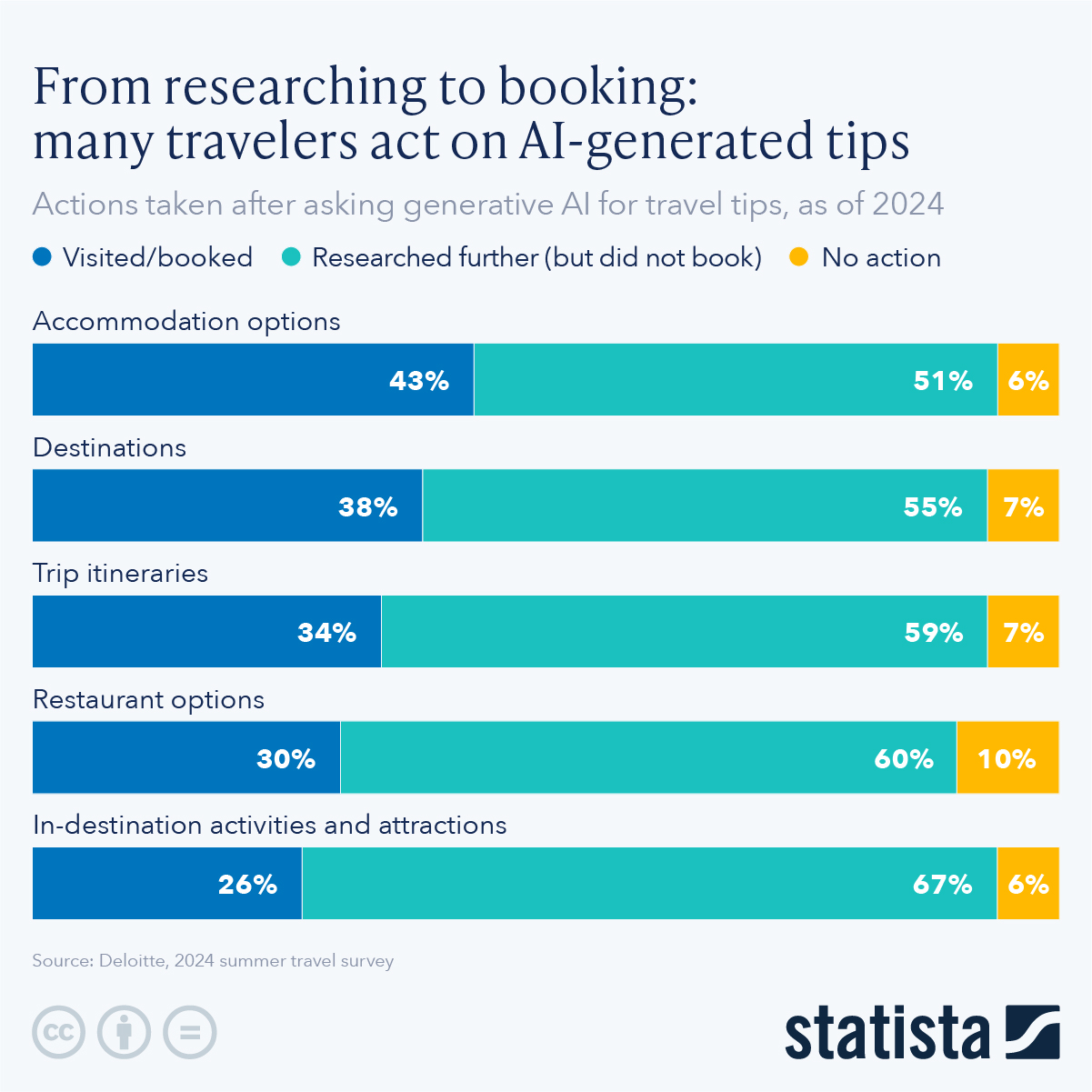
    According to the Deloitte study, at least one-third of respondents reported proceeding with AI recommendations for travel bookings. This statistic underlines an essential shift in how travelers approach planning their trips.

    Accommodation Recommendations

    The study revealed that accommodation bookings are often made with minimal additional research after receiving AI-generated suggestions. This indicates a growing trust in AI systems to provide reliable and relevant options for travelers, streamlining the booking process significantly. Travelers might appreciate the convenience of selecting a place to stay based on personalized recommendations, allowing them to spend less time searching through countless listings.

    Dining and Activity Choices

    In contrast to accommodation bookings, dining and activity suggestions appear to prompt more thorough research among travelers. This difference can be attributed to the nature of these experiences—travelers may want to explore menus, read reviews, or consider location factors before making dining or entertainment decisions. As such, while AI influences initial suggestions, many users still prefer to validate those options through additional resources before committing.

    Trust in Technology: A Double-Edged Sword

    While travelers are increasingly relying on AI-generated recommendations, it raises questions about the implications of such trust in technology. The convenience offered by AI systems can enhance the travel experience, but it also necessitates a level of caution.

    Balancing AI Usage with Human Input

    Travelers must balance AI suggestions with their own intuition and preferences. The best outcomes often come from blending AI insights with personal research. This behavior not only empowers travelers but also encourages them to engage more deeply with their travel plans.

    Future Implications for the Travel Industry

    The impact of AI on travel booking is still unfolding. As AI technologies continue to advance, the potential for even more sophisticated recommendations and interactions with travelers grows. For travel companies, adapting to these changes will be key to staying relevant and competitive in a rapidly evolving market.

    Opportunities for Travel Companies

    With the rise of AI in the travel sector, companies have a unique opportunity to enhance their services. By integrating AI tools effectively, travel companies can provide hyper-personalized experiences that cater to the needs of their customers. In addition, leveraging data analytics can help companies anticipate trends and consumer behavior, leading to better service delivery and customer satisfaction.

    By understanding and adapting to the growing role of AI in travel booking, both travelers and industry professionals can navigate this changing landscape more effectively, ultimately leading to better travel experiences across the board.

    Key Findings from the Deloitte Study

    • One-third of travelers are booking based on AI recommendations.
    • Accommodation bookings are frequently made with minimal additional research.
    • Dining and activity choices prompt more thorough investigations before confirmation.

    The integration of AI in travel planning is reshaping the industry, prompting a need for continued adaptation and consideration of the best practices in leveraging technology for optimal travel experiences.

  • Hue Offers Eight New Free Spring Themes For Users

    Hue Offers Eight New Free Spring Themes For Users

    The newest update for the Philips Hue app, version 5.39, is now accessible for download on both iOS and Android platforms. This version brings a collection of fresh scenes, each designed with a unique spring theme. After updating your app, you’ll find all of these themes available in the Hue scene gallery.

    The eight newly introduced scenes feature names like Nature’s Colors, Precious, Narcissa, Baby’s Breath, Crocus, Blossom, Spring Lake, and Spring Blossom. These scenes are filled with vibrant hues of pink, yellow, and green, with Nature’s Colors standing out as the highlight.

    According to its description, “Bring the best of nature inside with this outdoor-inspired All-Day scene, which transitions automatically throughout the day.” To experience the full effect, it’s best to use multiple Hue lights. This scene exemplifies the innovative 24-hour scenes, where colors shift according to the time of day.


    Philips

    This update is part of a wave of changes from Hue in recent weeks. Not long ago, the company collaborated with Samsung SmartThings to enhance its Works With SmartThings integration, followed by a leak of an upcoming smart doorbell within its app. Hue had faced some backlash for perceived stagnation, especially after previously leading the smart lighting industry during its inception, but the pace of announcements has picked up significantly.

    The recent developments indicate an exciting new chapter for Philips Hue. The company appears poised to adapt to the evolving market, and it’s thrilling to envision the smart lighting innovations they’re working on. Although details surrounding the smart doorbell remain scarce, we can enjoy the arrival of these eight new scenes that perfectly capture the essence of spring.

  • MSI Claw’s New Update Delivers What Users Wanted

    MSI Claw’s New Update Delivers What Users Wanted

    The MSI Claw had a tumultuous beginning, but the newest MSI Claw AI 8+ is now considered one of the top contenders in the gaming handheld market. Regardless of the specific console model, MSI demonstrates a strong dedication to incorporating user feedback. The latest update introduces several features that gamers have long requested. Let’s explore these enhancements.

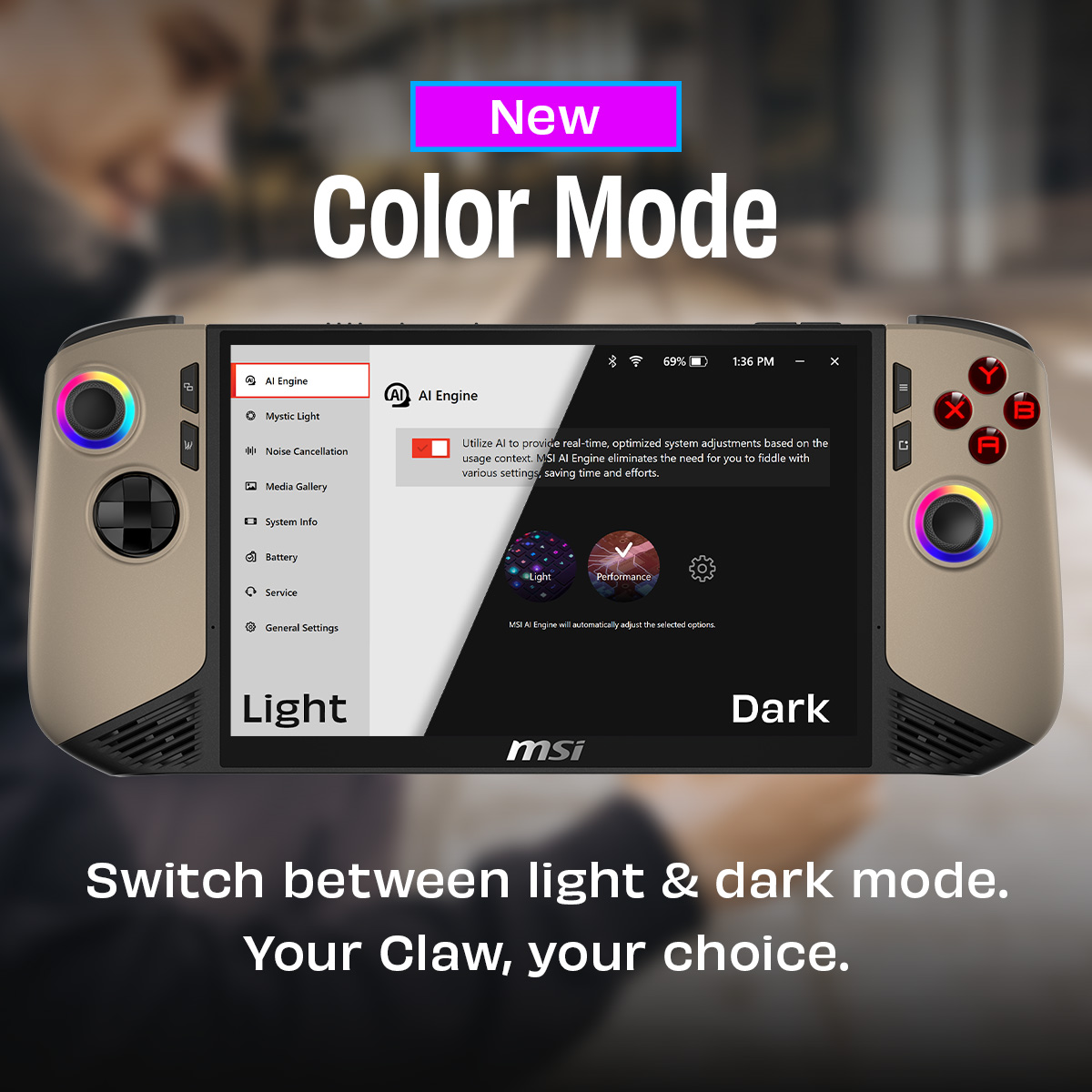
    MSI revealed the update in a post on X (formerly Twitter), stating: “We’re enhancing MSI Center M features based on community feedback.” Upon reviewing the new additions, it’s clear that they align with user requests—one notable feature is the option to toggle between light and dark themes, a functionality that I believe should be an essential part of any software.

    The color mode feature allows users to select a design that works best for them. Personally, I prefer dark mode on all my devices, but I must admit that the light mode looks quite appealing as well. It’s not overly glaring, which is beneficial for nighttime gaming sessions; however, you should try it out yourself and share your thoughts.

    Additionally, there are updates focused on battery performance. MSI has introduced Battery Master, which enables users to set a charging limit to help preserve battery longevity. Similar to the advice often given for smartphone charging—avoiding a full 100% charge—MSI now offers this same feature for the Claw.

    Lastly, there’s Battery Calibration, a separate tool that MSI suggests using every three months to optimize battery life further. Bear in mind this should only be performed while the handheld is plugged in, as it will close all applications, meaning you should avoid using it mid-game to prevent losing progress.

    MSI also mentioned that several bug fixes were included in this update, although specifics on what was addressed were not provided.

    The update is being rolled out now, so if you’re a Claw owner, you can download the patch and experience these enhancements firsthand.

  • New Security Feature For TikTok Users To Explore

    New Security Feature For TikTok Users To Explore

    Many users start their mornings by opening TikTok to catch up on the latest popular clips and track the performance of their own videos. It’s also a good opportunity to review your account’s security settings, as TikTok has launched a new feature called Security Checkup.

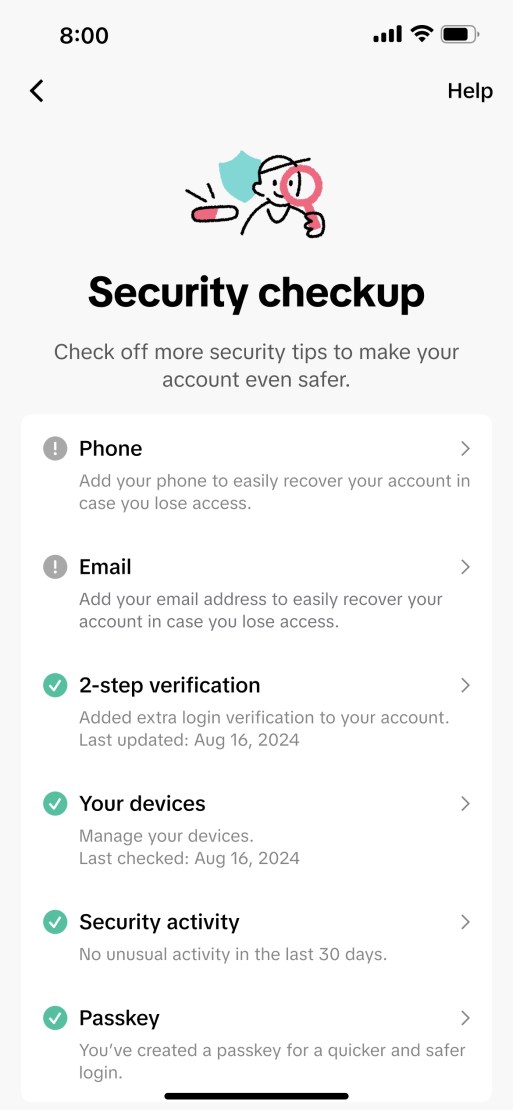
    Announced in a press release earlier this week, this new tool aims to help users strengthen their accounts against potential hacking attempts. To use the Security Checkup, go to Settings and privacy then click on Security and permissions in your TikTok profile, where you’ll find a list of steps to enhance your account’s security.

    Among these steps are linking both your email and phone number for backup login options if you lose access, activating two-step verification for logins from new devices, removing any unknown or unused devices, and utilizing passkeys for access instead of just passwords, such as Face ID or a PIN. TikTok already proactively scans for unusual activity on your account, and any flagged issues will appear in the Security and permissions hub for your attention.

    TikTok Security Checkup checklist.
    TikTok

    TikTok’s Security Checkup is inspired by a similar security feature from Google, sharing a comparable layout but with different settings, including overseeing third-party connections and stored passwords.

    This introduction comes shortly after TikTok unveiled a new feature designed to help teenagers manage their late-night usage, which plays calming music if they open the app after 10 p.m. Additionally, the app’s future in the United States remains uncertain, as President Trump recently extended the deadline for a potential ban by 75 days, allowing ByteDance, TikTok’s parent company, more time to negotiate a sale to an American firm. The new deadline for this decision is April 5.

  • Samsung Galaxy S25 Users Dislike New Magnet Case

    Samsung Galaxy S25 Users Dislike New Magnet Case

    Samsung Galaxy Unpacked 2025
    Samsung Galaxy Unpacked 2025
    This article is part of our coverage on Samsung Galaxy Unpacked 2025.
    Updated just now

    The Samsung Galaxy S25 has just launched, and alongside its debut, a fresh range of phone cases has appeared to safeguard your new device. However, one particular case is drawing considerable criticism: Samsung’s Magnetic Wireless Charging Case.

    This transparent magnetic case was made available shortly before the Galaxy S25 hit the shelves, but it hasn’t met user expectations, particularly regarding its performance. Drawing inspiration from Apple’s MagSafe cases, this case has become sold out on Samsung’s website. Despite this, it has earned a rather low rating of 2.5 out of 5 stars, based on a handful of mixed reviews.

    One customer noted that while the clear magnetic case looks appealing and fits well, it is “very hard to remove…without pressing down on the cameras…which I am reluctant to do.” Others echoed this sentiment, pointing out that the magnet lacks strength. One user commented that it “does not stick to metal items” and that it tends to slide off easily. Another added, “Just a bump while driving and the whole setup detaches from the magnetic mount.”

    Recently, Samsung announced plans to enhance wireless charging speeds in upcoming devices using the S2MIW06 chip, which supports charging speeds up to 50W and adheres to Qi and Qi2 standards. The Galaxy S25 Ultra currently supports only 15W wireless charging, which is comparatively slower than other Android devices that feature the new chip. Testing showed that the magnetic case could handle 25W of Qi2 wireless charging, despite the Galaxy S25 Ultra lacking the new chip.

    While Samsung’s magnetic case remains a viable option for those looking to utilize wireless charging, prospective buyers might want to be cautious regarding its limitations based on user feedback.