الوسم: US strikes

  • Katy Perry Criticizes White House for Using ‘Firework’ in Iran Strike Footage

    Katy Perry Criticizes White House for Using ‘Firework’ in Iran Strike Footage

    Digital Phablet – Renowned American singer and songwriter Katy Perry was incensed upon discovering that the White House’s official TikTok account used her hit “Firework” over footage of recent U.S. strikes on Iran.

    The artist took to X (formerly Twitter) to express her dismay, stating, “I am deeply outraged and upset to see ‘Firework’ used on the White House TikTok page as background music for videos of military strikes. I did not give my permission, I was not consulted, and I absolutely do not support it.”

    She further remarked, “I created this song to serve as an anthem of hope, healing, and inner resilience for those going through their toughest personal battles. Seeing a message of self-worth and upliftment weaponized to accompany destruction and violence completely contradicts every value my song represents.”

    Katy Perry Criticizes White House for Using ‘Firework’ in Context of U.S. Iran Strikes

    Perry emphasized to her followers that her music aims to unite and uplift, not to glorify warfare.

    This incident isn’t isolated; other celebrities have previously voiced their disapproval when political entities misuse their work. Actress Ariana Grande notably criticized the White House for incorporating her song “Bye” in a TikTok clip depicting Immigration and Customs Enforcement (ICE) agents arresting individuals.

    In her comment, Grande said, “Please never use my music in connection with this barbaric and inhumane nonsense. F*** ICE.”

    Additionally, artists such as Sabrina Carpenter, Olivia Rodrigo, Foo Fighters, and many others have condemned U.S. President Donald Trump for using their music to promote rallies and campaigns.

  • Iran mourns Khamenei as Gulf tensions rise again

    Iran mourns Khamenei as Gulf tensions rise again

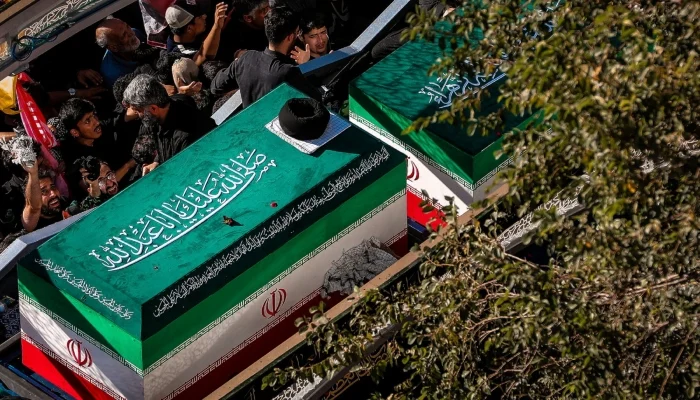
    An Iranian vehicle escorted the coffin of the late Supreme Leader Ayatollah Ali Khamenei, who was killed on February 28 in Israeli and US airstrikes. The coffins of his family members were also present during their burial, marking a large funeral procession in Mashhad, Iran, on July 9, 2026. — Reuters

    – Iran claims to have targeted US facilities in Kuwait, Qatar, and Bahrain.
    – Iranian officials report US strikes resulted in 14 deaths and 78 injuries.
    – President Trump states he does not foresee these strikes escalating into a full-scale war.

    Iranian forces launched retaliatory attacks on US military sites across Gulf nations following US airstrikes on southern and eastern Iranian regions, complicating a ceasefire that had been in place for three weeks. Later reports indicated multiple explosions throughout southern Iran, including near Bushehr—the location of a nuclear power plant—as well as in Konarak, Choghadak, and Bandar Abbas. The US military didn’t immediately comment on these incidents.

    Today also marked the burial of Iran’s slain Supreme Leader, Ayatollah Ali Khamenei, at a shrine in Mashhad, wrapping up a week of funeral gatherings that drew massive crowds. Khamenei was killed in a US airstrike on February 28, coinciding with the outbreak of conflict that has persisted for months, resulting in thousands of deaths and destabilizing global energy markets. Earlier this week, attacks on shipping vessels linked to Qatar and Saudi Arabia disrupted fragile peace talks, leading President Trump to declare the truce “over.”

    During Khamenei’s funeral, large crowds gathered at the most sacred shrine, some bearing banners condemning President Trump and threatening violence against him. Iran’s Revolutionary Guards Navy stated that US efforts to reroute shipping through the Strait of Hormuz have hindered the waterway’s gradual reopening. They reported that about half of the vessels normally transiting the Strait are now doing so under Iranian oversight, only on routes approved by Tehran. The Guards warned that any further US actions would be met with a “crushing” response.

    The US military explained its recent strikes aimed to keep the Strait of Hormuz open after Iran reportedly attacked three tankers in the area. These strikes occurred shortly after Trump suggested the interim ceasefire was over. While Iran hasn’t officially claimed responsibility for the attacks on ships, analysts believe Tehran uses such incidents to strengthen their negotiating position.

    Oil prices, which surged due to fears of disrupted shipping and supply, declined Thursday amid hopes that the escalation might be temporary or that the ceasefire could still hold. Iranian officials reported that US strikes on July 8 and 9 caused 14 deaths and injured 78 across five provinces. The Fars news agency also indicated one US airstrike hit a rail bridge used for trade with Russia and China.

    Multiple explosions were reported in Bushehr province and Bandar Abbas, a port city, on Thursday. Bushehr hosts a Russian-built nuclear reactor, and local authorities later confirmed a US projectile struck the plant’s perimeter, which had already been targeted multiple times before a ceasefire was established in April.

    Iran’s military announced the launch of attacks on US Patriot missile systems in Kuwait, an early-warning site in Qatar, and a US fuel depot in Bahrain. Kuwait reported engagement with a cruise missile, three ballistic missiles, and ten drones, resulting in one injury from shrapnel. Sirens sounded in Jordan following Iranian missile launches; eight were intercepted, with no casualties or damage.

    The Revolutionary Guards later claimed Iran fired ten ballistic missiles at Jordan’s Azraq military base—used by US troops—and a US-controlled command center in the Middle East, without providing further details. Qatar, which hosts the region’s largest US base and often mediates between Washington and Iran, strongly condemned the attacks on commercial shipping but called for diplomacy to resume. Similarly, Turkey and Oman’s foreign ministers emphasized the importance of avoiding further military escalation during separate discussions with Iranian officials. Pakistan also engaged diplomatically, with Iran’s Abbas Araqchi condemning US “warmongering policies.”

    Before the war, the Strait of Hormuz was a crucial conduit for about 20% of global oil supplies. Tehran has largely gained control over it, creating a stalemate in its confrontation with the world’s most powerful military.

    Iran’s top negotiator, Mohammad Baqer Qalibaf, stated on X (formerly Twitter) that the Strait would only reopen under Iranian conditions, rejecting US threats.

    President Trump, while attending a NATO summit in Turkey, claimed that US forces struck approximately 90 Iranian military targets, including air defense, coastal surveillance, missile, and drone storage sites, in response to Iranian attacks on ships. He expressed confidence that the situation would not escalate into full-scale war, assuring that any conflict would be brief and that it could even benefit oil markets. When asked if the Iran ceasefire was over, Trump responded negatively, indicating he did not wish to continue diplomatic dealings with Iran.

  • A third of Americans support US strike on Venezuela: Reuters poll

    A third of Americans support US strike on Venezuela: Reuters poll

    A Reuters/Ipsos poll, completed on Monday, found that about one-third of Americans support the US military action that ousted Venezuela’s president. Meanwhile, 72% are concerned that the US might become too involved in the South American nation. The two-day survey indicates that 65% of Republicans endorse the military intervention ordered by Republican President Donald Trump, compared to just 11% of Democrats and 23% of independents.

    US forces launched a pre-dawn raid in Caracas on Saturday, resulting in the capture of Venezuelan President Nicolas Maduro. The US handed Maduro over to federal authorities to face charges related to alleged drug trafficking. This operation, along with Trump’s statement that the US would now “manage” Venezuela, marks a notable shift for a president who has previously criticized other US leaders for foreign interventions.

    The move followed signals from Trump’s administration that their main focus would be on the domestic economy, a critical issue as voters prepare for midterm elections later this year that will determine congressional control for the remainder of Trump’s term.

    Support for aggressive foreign policies among Republicans is notable in the poll. About 43% agree with the statement: “The United States should have a policy of dominating affairs in the Western Hemisphere,” while 19% disagree. The rest were unsure or declined to answer. On Saturday, Trump said the US would “run” Venezuela for an unspecified period and mentioned the possibility of deploying ground troops. He also emphasized plans to overhaul Venezuela’s oil industry, stating the US needs “full access” to its vast oil reserves.

    In the poll, 60% of Republicans supported sending US troops to Venezuela, compared to 30% of the general American population. Additionally, 59% of Republicans favored the US taking control of Venezuela’s oil fields. While Trump has not specified exact plans, he suggested that US influence would be exercised more through intimidation of Venezuelan leaders rather than direct governance, saying, “If they don’t behave, we will launch a second strike.” Despite this ambiguity, the survey shows that 65% of Republicans favor US oversight of Venezuela.

    However, opinion within the party is divided on potential risks. Over half—54%—express concern that US involvement might become excessive, and the same percentage worry about the financial costs. Sixty-four percent are also concerned about the risk to military personnel in Venezuela.

    The poll surveyed 1,248 adults nationwide, showing Trump’s approval rating at 42%, the highest since October and an increase from 39% in December. The survey was conducted online with a margin of error of roughly 3 percentage points.

  • Iran Stands Firm on Nuclear Enrichment Ahead of EU Talks

    Iran Stands Firm on Nuclear Enrichment Ahead of EU Talks

    TEHRAN: Iran’s Foreign Minister, Abbas Araghchi, stated that the country has no intention of abandoning its nuclear program, including uranium enrichment, despite the significant damage inflicted on its facilities by U.S. strikes. This announcement comes as talks with European nations are set to resume.

    Iran is poised to engage in discussions with Britain, France, and Germany in Istanbul on Friday, amid accusations from Tehran that these European powers have undermined the 2015 nuclear agreement.

    This meeting marks the first set of discussions since last month’s 12-day conflict with Israel, during which the U.S. targeted Iran’s nuclear sites.

    “For the moment, enrichment is halted due to the serious damage,” Araghchi remarked in an interview with Fox News‘ “Special Report with Bret Baier” on Monday. “However, we cannot forsake enrichment, as it represents a significant achievement of our scientists and our national pride.”

    U.S. President Donald Trump chimed in on the matter, commenting on his platform Truth Social that the U.S. would retaliate if required.

    The 2015 accord was established between Iran and the five permanent members of the UN Security Council—Britain, China, France, Russia, and the United States—along with Germany. It aimed to limit Iran’s nuclear activities in exchange for the lifting of sanctions. However, the deal began to unravel in 2018 when the U.S., under Trump’s administration, exited the agreement and reinstated extensive sanctions.

    While Europe has assured ongoing support, a mechanism intended to mitigate U.S. sanctions never fully developed, prompting many Western businesses to withdraw from Iran and exacerbating its economic struggles.

    “Iran holds European parties accountable for their failure to implement the agreement,” said Foreign Ministry spokesman Esmaeil Baqaei prior to Friday’s discussions regarding the deal’s future.

    Additionally, Iran is set to hold a trilateral meeting with officials from China and Russia on Tuesday to address nuclear issues and potential sanctions. The Chinese Foreign Ministry has expressed its intention to facilitate dialogue and negotiations that take into account all parties’ legitimate concerns.

    In recent weeks, the three European nations have warned of the possibility of reinstating international sanctions against Tehran, accusing it of not adhering to its nuclear commitments. Germany stated that the Istanbul discussions would be conducted at the expert level, with the European trio, referred to as the E3, making a significant effort to reach a sustainable and verifiable diplomatic resolution.

    “Should no agreement be reached by the end of August, the snapback option remains on the table,” indicated Martin Giese, a spokesman for Germany’s Foreign Ministry. A clause in the 2015 agreement enables the UN to reinstate sanctions on Iran through a “snapback” procedure if the country is found to be non-compliant.

    However, as the agreement is set to expire in October, the clock is ticking.

    “No Plans for Talks with the U.S.”

    The International Atomic Energy Agency reported that Iran is the only non-nuclear-armed state currently enriching uranium to 60%—a level far exceeding the 3.67% limit established by the 2015 accord. This level is dangerously close to the 90% enrichment required for a nuclear weapon.

    Baqaei labeled the potential use of the snapback clause as “meaningless, unjustifiable, and immoral,” asserting that Iran’s reduced commitments were a response to the West’s failure to uphold the agreement.

    “Iran’s scaling back of its commitments was conducted according to the terms set forth in the agreement,” he said.

    Western powers, particularly the United States and Israel, have long accused Iran of secretly striving for nuclear armament, an allegation Iran has consistently rebuffed, asserting that its nuclear aspirations are strictly for peaceful purposes, such as energy production.

    Following five rounds of negotiations that began in April, a meeting scheduled for June 15 was scrapped after Israeli strikes on Iran triggered a 12-day escalation of conflict.

    “At this point, we have no plans to engage in discussions with the U.S.,” Baqaei stated on Monday.

    On June 13, Israel launched unexpected strikes aimed at critical military and nuclear facilities in Iran. Subsequently, the U.S. executed its own attacks against Iran’s nuclear infrastructure on June 22, targeting uranium enrichment sites in Fordo, as well as locations in Isfahan and Natanz.