الوسم: US Navy

  • US to Start Enforcing Maritime Blockade on Iran Today

    US to Start Enforcing Maritime Blockade on Iran Today

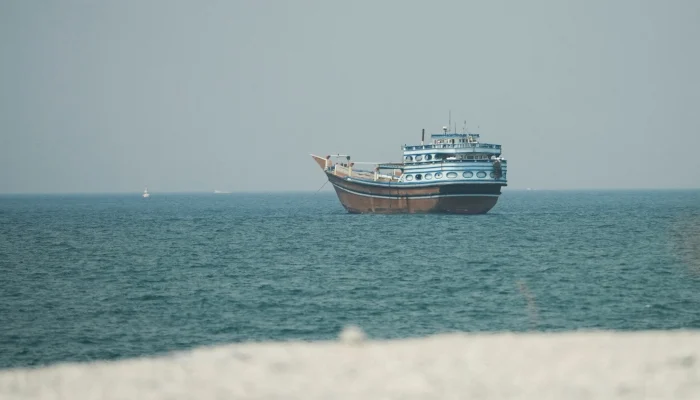
    A ship is visible at the Strait of Hormuz from Musandam, Oman, July 13, 2026. — Reuters

    The United States states that measures will be effective starting at 2000 GMT on July 14. The restrictions will apply to all vessel traffic without exception, regardless of the vessel’s flag. The Joint Maritime Information Center (JMIC) warns that force may be used against ships that do not comply.

    The US military announced that a maritime blockade against Iran will begin on Tuesday, managed by the Navy-led JMIC. This blockade will encompass all ports, oil terminals, and coastal zones of Iran and will be enforced for all vessel traffic from 2000 GMT on July 14. Ships suspected of entering or leaving the blocked area without permission may be intercepted, diverted, or captured, with force if necessary. However, transit through the Strait of Hormuz heading to or from destinations outside Iran will not face restrictions.

  • Hormuz Shipping Slumps Following Saturday Vessel Attack

    Hormuz Shipping Slumps Following Saturday Vessel Attack

    Traffic through the Strait of Hormuz slowed over the weekend following an incident where a vessel was hit while crossing the waterway on Saturday. Additionally, a new round of hostilities between the United States and Iran has put their tentative agreement to de-escalate tensions under strain.

    According to maritime tracking data from Kpler, 29 ships moved through the strait on Saturday, with 12 more transiting on Sunday. These numbers reflect a significant drop from last week when, fueled by a memorandum of understanding signed by Tehran and Washington on June 15, the number of crossings peaked at 70 on Wednesday — the highest since the conflict in the Middle East escalated.

    Despite Iran’s warnings against using unauthorized shipping routes, vessels continued to navigate various paths through the strait over the weekend. After a vessel was struck Saturday morning, ships for several hours continued along a southern route through Omani waters before traffic appeared to slow, according to MarineTraffic, which monitors vessels equipped with active transponders. This indicates that some ships may have crossed with signals turned off.

    Over the weekend, more ships entered the Gulf than left, reversing a trend from the previous week when the focus was on evacuating stranded sailors in the region. The UN-led effort to evacuate 11,000 seafarers was halted Thursday after another vessel was hit in the Gulf of Oman.

    On Sunday, four tankers and one container ship used the southern corridor through Oman to enter the Gulf, escorted by U.S. Navy vessels, as reported by HFI Research on X. No ships used that route for exit on the same day, and total crossing figures may rise as additional data, possibly from satellite imagery, becomes available.

    Iran announced on Monday that it conducted its first meeting with Oman to discuss management of the strait. Meanwhile, the U.S. has stated it will not accept transit fees for what it considers an international waterway.

  • Idaho Air Show Crash: Military Jet Crew Safely Ejects

    Idaho Air Show Crash: Military Jet Crew Safely Ejects

    Four crew members involved in a mid-air collision of military jets at an air show ejected safely Sunday outside Mountain Home Air Force Base in Idaho, according to the U.S. Navy. Two E/A-18G Growler jets collided approximately two miles from the base during the two-day Gunfighter Skies Air Show, stated Cmdr. Amelia Umayam, spokesperson for Naval Air Forces, Pacific Fleet.

    The collision occurred while performing an aerial demonstration around 12:10 p.m. MDT, with all four crew members ejecting successfully. The incident is now under investigation, and additional details will be provided as they become available, Umayam noted.

    Following the crash, the air base was placed under lockdown, as reported on Mountain Home’s Facebook page. The official air show website lists the U.S. Navy’s E/A-18G “Vikings” Growler Demo Team as one of the scheduled acts. The jets involved belonged to Electronic Attack Squadron 129 from Whidbey Island, Washington.

    This was the first Gunfighter Skies Air Show in eight years; the previous event in 2018 ended tragically with the death of a hang glider pilot during a crash. Emergency response teams from Mountain Home Fire Department, Mountain Home Police, and Elmore County did not immediately respond to requests for comment.

  • US Seizes Iranian Ship, Mideast Ceasefire in the Balance

    US Seizes Iranian Ship, Mideast Ceasefire in the Balance

    Iran announces plans to respond to what it describes as “armed piracy,” as tensions escalate. According to IRNA, Iran has rejected initiating new talks, citing the U.S. blockade and recent hostile rhetoric. Meanwhile, Islamabad is preparing for a second round of negotiations.

    On Monday, fears heightened that the fragile ceasefire between the U.S. and Iran might not last, following the U.S. claim of seizing an Iranian cargo vessel attempting to breach the blockade. Iran has promised retaliation. Efforts to establish a more durable peace appear uncertain, as Iran declined to participate in additional negotiations that the U.S. hoped to start before the ceasefire’s deadline on Tuesday.

    The U.S. continues its blockade of Iranian ports, while Iran has intermittently reimposed its own restrictions on maritime traffic through the Strait of Hormuz, which typically accounts for about 20% of global oil shipments.

    Sunday saw the U.S. military fire on an Iranian-flagged cargo ship heading toward Bandar Abbas port, with President Trump announcing on social media, “We have full custody of their ship, and we are inspecting its contents!”

    Iran’s military stated that the vessel was en route from China. A military spokesperson warned that Iran would soon retaliate against what it called US military “armed piracy.”

    As traders weigh the impact of ongoing disruptions, oil prices surged and stock markets faltered, reflecting concerns over continued minimal traffic through the Gulf.

    Iranian state media reported that Tehran has rejected new peace negotiations, criticizing the ongoing blockade, hostile rhetoric, and what they describe as the U.S. pushing for narrow, superficial deals that could drag on for years.

    Iran’s First Vice President, Mohammadreza Aref, emphasized, “You can’t restrict Iran’s oil exports and then expect everyone else to enjoy free security.” He added that the choice is clear: a free oil market for all or the potential for significant costs for everyone.

    Earlier, Trump warned that the U.S. would destroy Iran’s infrastructure if Tehran refused his terms, continuing a pattern of aggressive ultimatums.

    Iran has threatened to target power stations and desalination plants in Gulf Arab neighbors if attacked by the U.S.

    President Trump stated that his envoys are scheduled to arrive in Islamabad on Monday evening, one day before the two-week ceasefire expires. A White House official mentioned Vice President JD Vance would lead the delegation, supported by Trump’s envoy Steve Witkoff and Jared Kushner. However, Trump later indicated Vance would not participate.

    Pakistan, acting as the mediator, appears to be gearing up for the talks. Two large U.S. C-17 cargo planes landed at an airbase on Sunday, carrying security gear and vehicles. The city of Islamabad has suspended public transportation and heavy freight, with barbed wire placed near the Serena Hotel, where last week’s discussions took place, which has now evacuated all guests.

    The ongoing conflict, now in its eighth week, has severely interrupted global energy supplies, causing oil prices to soar due to the near-closure of the Strait of Hormuz.

    Since February 28, the war has resulted in thousands of casualties from U.S.-Israeli strikes on Iran and an Israeli invasion of Lebanon. Iran has responded with missile and drone attacks on Israeli and nearby Arab nations hosting U.S. bases.

    Iran’s parliamentary speaker, Mohammad Baqer Qalibaf, who has led Iran’s negotiation efforts, noted that while progress has been made, significant differences remain on nuclear issues and access to the Strait.

    European allies, often criticized by Trump for not supporting his military efforts, are concerned that Washington’s negotiating team aims for a quick, superficial deal that might require extensive, technical follow-up talks over months or years.

  • Are Iran’s missiles draining US interceptor supplies?

    Are Iran’s missiles draining US interceptor supplies?

    US forces have intercepted and shot down hundreds of Iranian ballistic missiles recently, prompting concerns about how long American air defense stocks will last in a conflict that could stretch on for weeks or more.

    Iran responded to the extensive US-Israeli air campaign launched over the weekend by unleashing hundreds of missiles and drones on countries throughout the Middle East that host American forces and installations.

    Since the conflict began, the United States has intercepted hundreds of missiles aimed at US personnel, allies, and regional stability, according to General Dan Caine, the top US military official, on Monday.

    While these interceptions have successfully prevented the missiles from hitting their targets, they also rely on expensive, high-tech interceptors that are currently in limited supply.

    “There’s a risk that the US and its allies could run out of interceptors before Iran depletes its missile stockpile, though it’s not a certainty,” explained Kelly Grieco, a senior researcher at the Stimson Center think tank.

    Initially, Israel estimated Iran possessed approximately 2,500 ballistic missiles—”almost certainly exceeding the combined missile interception capacity of Israel and the U.S.,” Grieco noted.

    However, both the US and Israel are conducting efforts to locate launchers and storage sites. “The race is essentially between Iranian missile launchers and American and Israeli strikes on those launch sites,” she added.

    Demand for interceptors is now outpacing production. General Caine mentioned that Iranian drones also pose a threat but did not specify how many had been shot down, only stating that “our systems have proven effective against these platforms, engaging targets swiftly.”

    Grieco emphasized that while drones are consuming interceptors, the most critical shortage currently is in ballistic missile interceptors.

    The length of the conflict remains uncertain, and how long the US can sustain its missile defense efforts depends heavily on how long it continues. Former President Donald Trump has mentioned a multi-week war, though he also said Monday that “we’re already ahead of our projections.”

    “Initially, we estimated four to five weeks, but we have the capacity to extend the fight if needed,” Trump stated.

    Pentagon Secretary Pete Hegseth suggested timelines ranging from two to six weeks, noting that the situation could accelerate or slow down.

    Joe Costa, who oversees defense programs at the Atlantic Council, warned that prolonged conflict with Iran could severely deplete US stocks of critical air defense interceptors, affecting both the China front and other global priorities.

    “The key factor is how effective the US and Israel are in dismantling Iran’s missile and drone launch capabilities,” he said.

    Grieco pointed out that manufacturing of interceptors simply can’t keep up with current demand. “Every theater—whether in Europe, the Indo-Pacific, or the Middle East—has an urgent need for missile defense systems, and the US is consuming them faster than we can produce more.”

  • Trump suggests Iran regime change might be best as second carrier heads to Middle East

    Trump suggests Iran regime change might be best as second carrier heads to Middle East

    The US Navy’s nuclear-powered Ford-class aircraft carrier, USS Gerald R. Ford (CVN 78), arrived in St. Thomas, U.S. Virgin Islands, on December 1, 2025. This vessel is recognized as the world’s largest aircraft carrier, symbolizing significant military strength.

    President Donald Trump publicly expressed support for the possibility of regime change in Iran, stating that “tremendous power” will soon be present in the Middle East. Concurrently, the Pentagon dispatched a second aircraft carrier to the region, reinforcing US military presence. Trump indicated that, should diplomacy fail, additional military force is ready to be utilized.

    While US and Iranian officials continue efforts to restore negotiations over Iran’s nuclear program, tensions remain high. Recently, US diplomats Steve Witkoff and Jared Kushner are scheduled to meet with Iranian counterparts in Geneva on Tuesday, with Oman serving as intermediary. These talks also include discussions with Russia and Ukraine about resolving the ongoing conflict in Ukraine.

    Trump responded affirmatively when asked if he favors regime change in Iran, describing it as potentially the best outcome. He refrained from specifying who should lead Iran, only mentioning that “there are people.” Trump criticized the long history of diplomatic talks, emphasizing the loss of lives during this period and advocating for more decisive action.

    The US aims to include discussions on Iran’s ballistic missile activities, support for regional armed groups, and the overall treatment of Iranian citizens. Iran has signaled willingness to negotiate limits on its nuclear activities in exchange for sanctions relief but refuses to link these talks to missile concerns.

    Threatening military action if negotiations stall, Trump mentioned the possibility of strikes on Iran’s nuclear facilities, with the goal of inspecting and potentially targeting remaining materials or infrastructure. Tehran has warned of retaliation, raising fears of a broader conflict as US forces increase their presence in the Middle East. Last year, the US targeted Iran’s nuclear sites with strikes.

    The deployment of the USS Gerald R. Ford involves a complex logistics process. It joins the USS Abraham Lincoln, along with guided-missile destroyers, fighter aircraft, and surveillance planes stationed in the Middle East. The Ford, which is the newest and largest carrier in the US fleet, has already been operating in the Caribbean, including participation in operations in Venezuela earlier this year.

    Earlier, President Trump mentioned that a second carrier had been sent “just in case we don’t make a deal,” suggesting readiness to escalate if necessary. The carrier will take approximately a week to arrive in the Middle East. Historically, the US has deployed two carriers simultaneously in the region, notably in June last year during strikes against Iranian nuclear sites.

    US aircraft carriers are scarce resources, with only 11 in the fleet, often scheduled well in advance. The Ford, powered by a nuclear reactor, can carry over 75 aircraft, including F-18 Super Hornets and E-2 Hawkeyes, which provide early warning capabilities. It features advanced radar systems to facilitate air traffic control and navigation.

    Support ships accompanying the carrier include the Ticonderoga-class cruiser Normandy and Arleigh Burke-class destroyers such as Thomas Hudner, Ramage, Carney, and Roosevelt, equipped for multiple warfare domains, including anti-air, anti-surface, and anti-submarine operations.

  • US to Send New Aircraft Carrier to Middle East Amid Iran Warnings

    US to Send New Aircraft Carrier to Middle East Amid Iran Warnings

    The U.S. is gearing up to send a second aircraft carrier to the Middle East amid rising tensions with Iran. President Donald Trump issued a warning, saying there would be “traumatic” consequences if Tehran didn’t agree to renegotiate its nuclear deal. This comes after the U.S. already deployed the USS Abraham Lincoln to the region as a show of strength.

    Tensions heightened last month when protests in Iran reportedly resulted in thousands of deaths, according to human rights groups. Trump has conditioned a potential de-escalation on Iran capping its nuclear ambitions, which Western nations fear is a covert effort to develop nuclear weapons.

    “We need to reach an agreement; otherwise, things will become very traumatic. I hope we don’t get to that point, but it’s necessary,” Trump told reporters Thursday.

    Sources indicate the USS Gerald R. Ford, currently operating in the Caribbean, and its escort ships are expected to join the USS Abraham Lincoln in the Middle East, with deployments extending into late April or early May, according to The New York Times.

    Recently, Iranian and American representatives held talks in Oman regarding Iran’s nuclear program, although no new negotiations are scheduled yet. Despite the lack of diplomatic ties since the revolution, both sides continue to communicate, and there’s cautious optimism from the Trump administration about the prospects for a deal.

    Israeli Prime Minister Benjamin Netanyahu met with Trump in Washington and expressed confidence that the U.S. might secure a “good deal,” though he remains skeptical if any agreement doesn’t also restrict Iran’s ballistic missile program. Meanwhile, the U.S. and Israel ramped up military actions last June, targeting Iranian nuclear facilities during a 12-day conflict, but there’s still debate over future targets and how to curb Iran’s influence and leadership.

  • US Downs Iranian Drone Near Aircraft Carrier in Bold Action

    US Downs Iranian Drone Near Aircraft Carrier in Bold Action

    A stealth US warplane, specifically an F-35C, shot down an Iranian drone on Tuesday as it aggressively approached an American aircraft carrier in the Arabian Sea. According to a Central Command spokesperson, Captain Tim Hawkins, the drone was destroyed in self-defense to safeguard the carrier and its crew. Fortunately, no injuries or damage to US personnel or equipment occurred during the incident. This event follows recent warnings from US Central Command (Centcom) to Iran’s Islamic Revolutionary Guard Corps (IRGC) against unsafe, unprofessional conduct near US forces.

    Meanwhile, US naval forces have a strike group led by the USS Abraham Lincoln aircraft carrier stationed in the Middle East, with President Donald Trump recently threatening military action amid protests in Iran last month. In addition, maritime sources and security firms report that Iranian gunboats approached a US-flagged tanker near the Strait of Hormuz, just north of Oman. The vessels ordered the tanker, the Stena Imperative, to halt and prepare for boarding but it managed to accelerate and continue its journey without crossing Iranian internal waters. The ship was accompanied by a US warship, and an American official confirmed its US flag.

    Earlier, the UK Maritime Trade Operations indicated that armed boats tried to intercept an unidentified vessel about 16 nautical miles north of Oman, within the inbound Traffic Separation Scheme of the Strait of Hormuz. The organization is currently investigating the incident. Later that day, Iran’s semi-official Fars news agency quoted unnamed officials saying that a vessel entered Iranian waters without proper permits, was warned, and then left the area without incident.

    The Strait of Hormuz serves as a vital route connecting the Persian Gulf to the Gulf of Oman and the Arabian Sea, with major oil-exporting countries like Saudi Arabia, Iran, the UAE, Kuwait, and Iraq primarily shipping crude oil through it, mainly to Asian markets. Iran has previously seized vessels near or within the strait in 2023 and 2024, actions sometimes in response to US seizures of Iranian-related tankers.

  • US Warships Deploy to Middle East Amid Rising Iran Tensions

    US Warships Deploy to Middle East Amid Rising Iran Tensions

    A U.S. military aircraft carrier strike group, along with additional assets, is scheduled to arrive in the Middle East in the upcoming days, according to two U.S. officials on Thursday. This development comes even as President Donald Trump expressed a desire to avoid resorting to new military interventions against Iran.

    Last week, U.S. warships—including the aircraft carrier USS Abraham Lincoln, several destroyers, and fighter jets—began repositioning from the Asia-Pacific region amid escalating tensions between Iran and the United States. The tensions have intensified following a harsh crackdown on protests within Iran in recent months.

    One official mentioned that the U.S. is also considering deploying extra air defense systems to the Middle East. Historically, the U.S. tends to bolster its military presence in the region during periods of increased tension—moves typically viewed as purely defensive, according to experts.

    In summer of last year, the U.S. conducted a significant military buildup prior to carrying out strikes against Iran’s nuclear facilities in June. The U.S. publicly acknowledged that it kept its plans for potential strike actions secret.

    Despite threats from Trump about possible military action over recent protests in Iran—where demonstrations have since diminished—his rhetoric on the matter appears to have softened. Trump has shifted his focus toward other international issues, including his interest in Greenland.

    On Wednesday, Trump stated that he hopes there won’t be any further U.S. military operations in Iran but emphasized that the U.S. would act if Iran resumed its nuclear activities. “They can’t develop nuclear weapons,” he told CNBC in Davos, Switzerland. “If they do, it’s going to happen again.”

    It’s been at least seven months since the International Atomic Energy Agency last confirmed Iran’s stockpile of highly enriched uranium. The agency’s guidelines recommend monthly inspections, yet this has not occurred recently. Iran is required to submit reports to the IAEA detailing any damage at U.S. strike sites and information about nuclear materials, such as approximately 440.9 kg of uranium enriched to nearly 60%, close to weapons-grade levels of around 90%. This quantity, if further enriched, could potentially produce enough material for 10 nuclear bombs, as per IAEA assessments.

    Uncertainty remains whether protests in Iran will surge again. That movement began on December 28 as modest protests in Tehran’s Grand Bazaar over economic challenges, quickly spreading nationwide.

  • Pakistan’s China-made missile success prompts US to pursue $1bn AIM-260

    Pakistan’s China-made missile success prompts US to pursue $1bn AIM-260

    F-15EX Eagle II aircraft fired AIM-120 air-to-air missiles, on January 6, 2023. — X/@usairforce

    • US Air Force and Navy jointly request $1 billion for AIM-260 missile production.
    • Lockheed Martin anticipates a $30 billion increase from the missile program.
    • AIM-260 intended for F-22, F-35, F-16, and F-15 fighters.

    ISLAMABAD — Recent funding requests highlight that, shortly after Pakistan used Chinese super-long-range missiles to shoot down Indian fighter jets, the U.S. might be preparing to deploy its own advanced weapon: the Lockheed Martin AIM-260, according to The News.

    As per budget documents and statements cited by Bloomberg, both the U.S. Air Force and Navy are asking for nearly $1 billion for the 2026 fiscal year, starting October 1, to commence production of this classified missile system.

    The Air Force, leading the development of the AIM-260—also called the Joint Advanced Tactical Missile—has requested $368 million for its first production phase, plus an additional $300 million on its annual “Unfunded Priorities List” submitted to congressional defense committees. Meanwhile, the Navy has requested $301 million.

    Market analysts at Melius Research estimated last year that the missile could grow into a $30 billion program, depending on production volume. This would provide a significant boost for Lockheed Martin following a second-quarter earnings report that revealed $1.6 billion in charges and a potential $4.6 billion tax liability.

    “Growing profits in Lockheed’s Missiles and Fire Control division is crucial,” said Scott Mikus, an analyst at Melius. “The key will be whether they can avoid or limit future charges related to this classified missile program, believed to be the AIM-260.”

    Once operational—though the Air Force has not specified when—the weapon will become the U.S.’s most advanced air-to-air missile. It will replace older versions of the AIM-120 AMRAAM, introduced in 1993, which have become increasingly sophisticated over time. The Air Force has yet to announce what advancements have prompted it to move ahead with production.

    The spotlight on long-range air-launched weapons grew in May, when Pakistani jets used Chinese-made PL-15 missiles to shoot down Indian aircraft over 100 miles away without fear of retaliation, according to experts.

    In last year’s Pentagon report on China’s military strength, it was noted that the Chinese air force likely declared the PL-17 air-to-air missile operational in 2023, with the follow-on PL-15 capable of striking targets from approximately 248 miles away.

    The U.S. claims that the AIM-260 will feature increased range over current weapons and be effective in various threat scenarios. A Ukrainian Air Force spokesperson said in 2023 that the AIM-120 model supplied to Ukraine has a range of about 100 miles.

    The AIM-260 is designed to fit inside the internal weapons bays of the F-22 and F-35 fighters while also being compatible with F-16 and F-15 aircraft.

  • US Navy Drone Program for China Encounters Failed Trials

    US Navy Drone Program for China Encounters Failed Trials

    During a recent US naval test off California’s coast last month, intended to demonstrate the Pentagon’s leading autonomous drone boats, one vessel unexpectedly experienced a stall. While technicians tried to resolve a software issue, a second drone vessel collided with the stationary boat’s starboard side, vaulted over its deck, and submerged back into the water—footage of which was obtained by Reuters.

    This incident, involving two vessels developed by American defense companies Saronic and BlackSea Technologies, remained unreported until now. It marks a series of recent hurdles in the Pentagon’s efforts to establish a fleet of autonomous maritime vessels, according to a dozen sources familiar with the project.

    Earlier, during a separate Navy trial, the captain of a support boat was thrown into the water when an autonomous BlackSea vessel it was towing suddenly accelerated, causing the support ship to flip. The captain was rescued and declined medical treatment. First reported by Defence Scoop, both mishaps resulted from a mix of software failures and human mistakes, including communication breakdowns between onboard systems and external control software, according to an insider who requested anonymity.

    The Navy, Saronic, and BlackSea declined to comment on these incidents. The videos capturing the drone collision were verified by two Reuters sources, showing terrain aligns with images of the Global Autonomous Reconnaissance Craft (GARC), confirming the vessels’ identities.

    Faced with the significant role maritime drones play in Ukraine’s conflict, U.S. military leaders emphasize the need for swarms of autonomous aerial and sea drones to hinder potential Chinese advances through the Taiwan Strait. Taiwan has initiated its own purchases of maritime drones for defense.

    Ukraine’s drones often resemble fast speedboats without seats, equipped with weapons, explosives, and surveillance gear. Many are remotely operated and cost approximately $250,000 each, serving as “kamikaze” weapons that have effectively neutralized Russia’s Black Sea Fleet.

    In contrast, the U.S. aims to develop an autonomous naval fleet capable of functioning in coordinated swarms without human commands—an ambitious and pricier goal, with individual vessels costing several million dollars.

    These recent failures underline the challenges of deploying cutting-edge autonomous systems, said Bryan Clark of the Hudson Institute. The Navy will need to adjust its tactics to better understand what these systems can and cannot do.

    However, the issues extend beyond technology. The Navy’s autonomous drone program has also been disrupted by the dismissal of its top commander, and a senior Pentagon official expressed concerns about the program during a candid meeting with Navy officials last month, Reuters reports.

    Since that incident, the Pentagon’s Defense Innovation Unit (DIU)—which procured the technology used in the tests—has paused a nearly $20 million contract with L3Harris, one of the companies providing autonomous software for the vessels. The Pentagon has not issued details on the cause of the accidents or the reasons for the contract suspension.

    A Pentagon spokesperson described the drone testing as part of a “competitive and iterative process” involving industry. L3Harris did not comment directly but reaffirmed its commitment to the safety and integrity of their autonomous control products.

    In 2023, to accelerate its drone initiatives, the Pentagon launched the $1 billion Replicator program, aiming to purchase thousands of aerial and maritime drones along with their control software. The first systems from this initiative are expected to be announced this month.

    The Navy has invested at least $160 million in BlackSea, which produces dozens of its GARC boats monthly. Saronic, recently valued at $4 billion in funding backed by Andreessen Horowitz and 8VC, has developed the Corsair sea drone but hasn’t secured any major contracts yet, though it has earned over $20 million from prototype deals.

    Naval leaders emphasize that these systems will play a vital role in future warfare by extending fleet reach, enhancing situational awareness, and boosting combat effectiveness, said acting Chief of Naval Operations Jim Kilby during a visit to BlackSea’s facility in June.

    Since the Biden administration took office, naval efforts to deploy autonomous drones—previously a priority for President Trump—have faced skepticism. The Navy’s key drone boat program was praised earlier this year, but subsequent internal reviews and leadership changes have cast doubt on its trajectory.

    The unit managing unmanned systems is now under review, following the resignation of Rear Admiral Kevin Smith over leadership issues. In a recent high-level meeting, Defense Secretary Steven Feinberg expressed doubts about some of the Navy’s autonomous vessel capabilities and questioned their value for money.

    The Navy maintains its commitment to these projects, stating the Program Executive Office Unmanned and Small Combatants (PEO USC) remains dedicated to acquiring and modernizing unmanned maritime systems. Meanwhile, the service is exploring bids for new medium and large vessels capable of carrying weapons, surveillance gear, and cargo, signaling plans to expand autonomous fleet components.

    Experts like TX Hammes note that the Navy is navigating uncharted waters, trying to overhaul decades of tradition at a swift pace—comparable to a large shipyard used to building massive ships taking years, now tasked with rapid development of autonomous systems.
  • Beijing Cautions Washington on ‘Hyped’ Tensions Over Taiwan Strait

    Beijing Cautions Washington on ‘Hyped’ Tensions Over Taiwan Strait

    U.S. Navy Operations in the Taiwan Strait Prompt Chinese Warning

    BEIJING: The Chinese government has issued a warning to the United States regarding what it describes as "public hyping" following the passage of a U.S. guided-missile destroyer through the politically sensitive Taiwan Strait.

    In a statement released on Thursday, the Chinese military confirmed it had deployed both naval and air units to observe and issue warnings to the U.S. destroyer that traversed the Taiwan Strait. This marked the second such operation since Donald Trump took office as President of the United States.

    Typically, the U.S. Navy conducts monthly transits in the Taiwan Strait, often accompanied by ships from allied nations. China, which maintains that Taiwan is part of its territory, asserts that the strategic waterway falls under its jurisdiction.

    Earlier this month, China conducted military exercises around Taiwan, which drew condemnation from Taipei and raised concerns among the U.S. and its allies.

    The Eastern Theatre Command of the Chinese People’s Liberation Army identified the destroyer as the USS William P. Lawrence, stating that it passed through the strait on Wednesday in an effort of “public hyping.”

    "Comments made by the United States have distorted the truth, misrepresented legal principles, confused the public, and misled international opinion," the command stated, without clarifying which specific comments it was addressing.

    The Chinese military urged the U.S. to cease its exaggerated narratives and collaborate to ensure peace and stability in the Taiwan Strait.

    Additionally, the command released a brief video on its social media channels showing a Chinese sailor observing the U.S. warship through binoculars from a distance, without providing exact details about the encounter’s location.

    In response, the U.S. Indo-Pacific Command issued a statement confirming that the ship’s journey through the strait was routine and took place in "waters where freedoms of navigation and overflight are upheld as per international law." It underscored the U.S. commitment to maintaining navigation freedom for all countries.

    The statement further emphasized that "navigational rights and freedoms in the Taiwan Strait should not be restricted."

    The last time the U.S. Navy publicly acknowledged a transit through the strait was in February, following Trump’s inauguration for a second term.