الوسم: US-Iran

  • Iran-U.S. Trade Tensions Escalate Amid Accusations of Breach

    Iran-U.S. Trade Tensions Escalate Amid Accusations of Breach

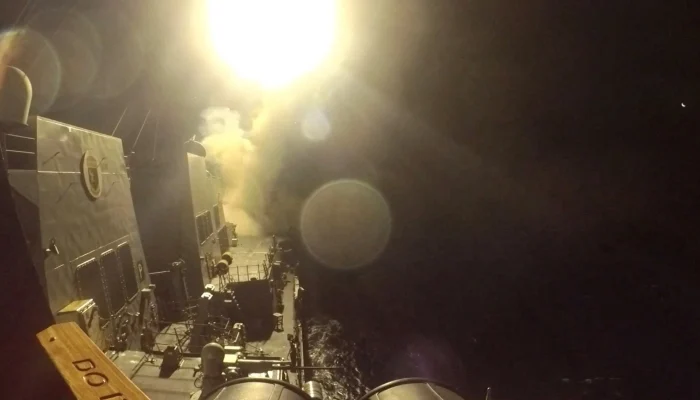
    A U.S. Navy destroyer, USS Michael Murphy (DDG 112), is seen launching Tomahawk cruise missiles from an undisclosed location amid new American strikes targeting multiple sites in Iran overnight, as captured in a still from a handout video released on June 10, 2026 — Reuters.

    The United States claims to have struck Iranian missile, drone, and radar facilities, while Iran reports hitting U.S. military installations in Kuwait and Bahrain. Meanwhile, Israel has conducted strikes in Lebanon, as regional tensions escalate.

    Iran and the U.S. continue to exchange retaliatory strikes in the Gulf, both accusing each other of violating a recent interim agreement aimed at de-escalation, just under two weeks after its signing. Tehran announced it carried out a third day of retaliatory attacks against U.S. targets following American operations on Iranian soil, with both nations accusing each other of breaching the fragile ceasefire. This ongoing cycle of escalation is straining negotiations brokered by Pakistan, intended to bring an end to the conflict ignited by the U.S. and Israel in February, which has disrupted shipping lanes through the Strait of Hormuz and unsettled global energy markets.

    Iran’s Revolutionary Guards indicated on Sunday that they are taking stricter measures to manage maritime traffic through the crucial Strait of Hormuz, warning that vessels violating regulations will face harsher penalties than before. Iran restricts passage to a designated corridor along its coast to maintain control.

    The Guards reported retaliatory strikes in Kuwait and Bahrain, claiming to have destroyed eight significant U.S. military sites, including facilities at the Ali al-Salem base in Kuwait and the Fifth Fleet naval base in Port Salman, Bahrain. They asserted that any form of enemy aggression, regardless of its justification or target size, would be met with “a crushing response.” Bahrain’s interior ministry confirmed that air raid sirens sounded twice on Sunday.

    A peace agreement brokered via Pakistan in mid-June stipulates that both Iran and the U.S., along with their allies, are committed to avoiding the initiation of war or military actions and refraining from threats or use of force against each other.

    U.S. President Donald Trump warned on Saturday that Iran might “no longer exist” if the U.S. is forced to restart military operations. This statement followed U.S. strikes targeting multiple Iranian facilities, including missile and drone storage sites and coastal radar systems, in response to recent attacks on shipping vessels in the Strait of Hormuz. Trump emphasized that Iran’s missile and radar sites had been targeted for violating the ceasefire agreement.

    The strikes aimed to disable Iran’s surveillance infrastructure, communication systems, air defenses, drone storage, and minelaying capabilities. Reports indicate explosions in Iran’s southern regions of Sirik and Qeshm, while the U.S. claims similar retaliatory strikes on Friday targeted the “Ever Lovely” vessel after an Iranian attack.

    Simultaneously, Israel targeted Lebanon, as Hezbollah’s leader Naim Qassem dismissed an agreement intended to end conflict there, calling it “humiliating” and a surrender of sovereignty, and demanding full implementation of the U.S.-Iran deal, which includes ending hostilities in Lebanon. The current deal does not explicitly promise a full Israeli withdrawal from southern Lebanon, a point frequently demanded by Hezbollah.

    Israeli Prime Minister Benjamin Netanyahu described the recent agreement as historic “a blow to Iran and Hezbollah,” while his security minister Itamar Ben Gvir criticized it as a “big mistake,” asserting only Israeli forces possess the capability to disarm Hezbollah.

    Lebanon and Israel signed a U.S.-backed peace agreement on Friday, but Hezbollah rejected it, emphasizing the need for Iran’s accord to be fully enforced and criticizing what they see as concessions. Israel maintains that its forces will stay in their southern security zone until Hezbollah disarms, with Netanyahu refusing to let civilians return until that occurs.

    Overall, regional tensions remain high, with ongoing military actions and diplomatic disputes threatening to destabilize this volatile part of the Middle East.
  • US Seeks Iran Deal, But Not at Any Cost

    US Seeks Iran Deal, But Not at Any Cost

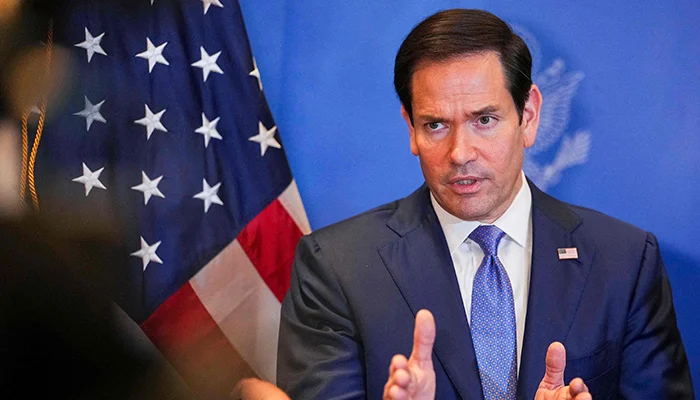
    U.S. Secretary of State Marco Rubio spoke with reporters before leaving Bahrain International Airport after visiting the Middle East to discuss the interim deal between the U.S. and Iran with Arab Gulf allies in Manama on June 25, 2026. — AFP

    – The United States opposes any future fees on the Strait of Hormuz.
    – Washington aims for an agreement that does not jeopardize regional stability.
    – Technical discussions between Iran and the U.S. are set to resume in the coming days.

    Top U.S. diplomat Marco Rubio emphasized Thursday that any deal with Iran wouldn’t come at any cost and reassured Gulf allies that their security wouldn’t be compromised. Rubio visited Bahrain as part of a regional tour, speaking to Gulf partners severely impacted by Iran during ongoing Middle East conflict—a campaign launched on February 28 involving significant U.S.-Israeli strikes against Iran.

    The U.S. and Iran have preliminarily agreed to begin negotiations addressing complex issues such as Iran’s nuclear program, sanctions relief, and energy transport through the Strait of Hormuz. Rubio stated at a Gulf Cooperation Council meeting in Bahrain, “While we want a deal, we don’t want a deal at any price. We need to ensure that no part of this agreement threatens the security, stability, or prosperity of our Gulf partners.”

    Rubio also reassured the Gulf nations that the Strait of Hormuz, vital for their oil and natural gas exports for decades, will remain free of tolls. Iran previously blockaded Hormuz as retaliation during the war, which caused a global economic shock. Iran has indicated plans to introduce maritime service fees and warned that unauthorized crossings will be dealt with harshly. The U.S. and allies have rejected such tolls outright, with Rubio reaffirming that Hormuz must be recognized as an international waterway, a principle essential to global order.

    Oman’s top diplomat, Badr Albusaidi, confirmed that plans for Hormuz do not include transit fees, despite Iran and Oman mentioning discussions of possible charges for services in the strait. Oman recently released a map of a temporary shipping route that runs close to its coast, coordinated with the International Maritime Organization. Iran, through its Revolutionary Guards, later criticized the new route without specifically mentioning Oman.

    An agreement signed last week by Iran and the U.S. allows commercial ships to transit the strait free of charge for 60 days, but future arrangements remain unclear.

    Iran, feeling emboldened since the conflict intensified, refuses to relinquish control over Hormuz and has called its initial deal with Washington a “declaration of America’s defeat.” President Donald Trump met with NATO Secretary General Mark Rutte at the White House on Wednesday, touting the negotiations as successful. Meanwhile, Trump requested nearly $88 billion in emergency funding to cover war expenses, just after Congress urged him to end the conflict unless explicitly authorized for further military action.

    Iran criticized NATO’s support for the U.S., with Foreign Minister spokesperson Esmaeil Baqaei accusing the transatlantic alliance of participating in an “illegal war.” Technical talks between the U.S. and Iran are expected to resume soon after a first round held in Switzerland. Additionally, separate reconciliation discussions between Gulf countries and Iran are anticipated to be held in Saudi Arabia, though no specific date has been provided.

  • US and Iran Expected to Reveal Peace Draft Within 24 Hours

    US and Iran Expected to Reveal Peace Draft Within 24 Hours

    The United States and Iran are anticipated to announce the completion of a draft peace agreement aimed at ending conflict on all fronts within the next 24 hours, according to sources cited by the Washington Times. Key negotiators from both nations, including Iranian Parliament Speaker Bagher Ghalibaf, U.S. Vice President JD Vance, special envoy Steve Witkoff, and Jared Kushner, President Trump’s son-in-law, have reportedly endorsed the draft.

    The news follows President Trump’s indication that he would consult with advisers on Iran’s latest draft agreement and potentially reach a decision by Sunday, as reported by Axios. The draft peace proposal has been forwarded to leaders of both countries for their final approval.

    If the agreement is finalized, it could transform the current fragile six-week ceasefire into a lasting peace. However, details of the proposed deal remain unclear, especially regarding major issues like Iran’s nuclear program and its demands for sanctions relief.

    Notably, Pakistan’s military and civilian leadership, including Chief of Defense Forces and Army Chief Field Marshal Asim Munir, played a crucial role in mediating between the U.S. and Iran. Munir’s efforts involved multiple high-level meetings to facilitate the drafting and submission of the agreement to both sides’ leaderships. Meanwhile, a delegation from Qatar has also arrived in Tehran as part of the diplomatic efforts to secure a final deal.

    In Washington, signs of progress are evident, with Vice President Vance unexpectedly returning from Ohio, and President Trump preparing for a conference call with Middle Eastern leaders after gathering his national security team at the White House. Iran’s Foreign Ministry has confirmed that Tehran is focused on finalizing a memorandum of understanding with the U.S. at this stage.

    Additionally, the Financial Times reported, citing sources familiar with the negotiations, that mediators are close to extending a ceasefire between the U.S. and Iran by 60 days and establishing a framework for discussions on Iran’s nuclear activities. The proposed deal might include reopening the Strait of Hormuz gradually, negotiations on reducing or transferring Iran’s enriched uranium stockpile, and steps by Washington to ease restrictions on Iranian ports and sanctions.

  • Global Wagers Rise Before US-Iran Talks

    Global Wagers Rise Before US-Iran Talks

    Amid escalating diplomatic efforts ahead of potential peace negotiations between the U.S. and Iran in Islamabad, a parallel and significant activity is taking place in the realm of online prediction markets. Here, hundreds of millions of dollars are being wagered on the potential outcomes of the ongoing conflict.

    Platforms like Polymarket and Kalshi see traders placing real money bets on whether the fragile ceasefire will hold, if diplomatic talks will succeed, and how the conflict might unfold. This high-volume activity indicates a shared global understanding: the stakes are immense, but there’s still a lot of uncertainty.

    Data indicates that over $300 million has been traded in markets related to Iran, with most transactions described as “trading” rather than outright betting. More than $250 million alone is tied to a single market focused on when and how a ceasefire might end.

    Participants are essentially assigning probabilities: Will peace talks in Islamabad lead to a breakthrough or will tensions flare back up? Market sentiment remains cautious, with the chances of a comprehensive, enduring peace currently estimated between 20% and 40%. More optimistic are those betting on a temporary or partial resolution, such as an extension of the ceasefire or a limited diplomatic understanding, which have perceived probabilities above 50%. Meanwhile, bets expecting renewed escalation or a total breakdown of the ceasefire hover between 30% and 50%, highlighting widespread doubts about long-term stability.

    Some traders have already achieved substantial gains. Market reports mention individuals earning over $600,000 by correctly predicting the ceasefire announcement before it was publicly known, prompting questions about possible insider knowledge.

    Experts note that prediction markets have evolved from simple speculative pastimes to robust gauges of geopolitical sentiment, where financial exposure converges with analysis and risk assessment.

    While international media describes the Islamabad talks as a “fragile but crucial moment,” analysts widely agree that the ceasefire remains precarious, with key issues unresolved. Iran’s nuclear program, control of the Strait of Hormuz, and ongoing conflicts in Lebanon continue to hinder diplomatic progress.

    For Pakistan, the stakes are high. Acting as a mediator could boost Islamabad’s international standing, but failure carries serious risks, including economic and security impacts, especially in energy markets and regional stability, which could be felt far beyond the negotiation table.

    Though wagering on geopolitical crises isn’t entirely new, the scale of activity surrounding the U.S.-Iran tensions is unprecedented. Modern conflicts now influence financial markets, digital platforms, and global opinion, extending far beyond traditional battlegrounds.

    As negotiations are set to commence in Islamabad within hours, the outcome remains uncertain. What’s clear is that the world is closely watching—and many are actively investing in whatever comes next.