الوسم: UNICEF

  • UN: 1 Million Afghan Children Face Critical Malnutrition

    UN: 1 Million Afghan Children Face Critical Malnutrition

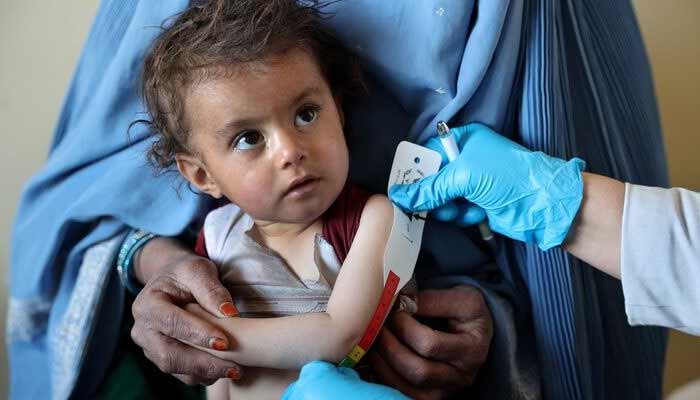
    A UNICEF report warns that one million children in Afghanistan are facing life-threatening malnutrition amid a worsening crisis. The country is home to 3.7 million children suffering from wasting, indicating severe acute malnutrition, according to the UN children’s agency. Of these children, approximately one million are battling the most severe form, said UNICEF Afghanistan Representative Tajudeen Oyewale.

    “If we don’t act quickly and provide treatment, that one million could succumb,” he emphasized during a briefing from Kabul to media in Geneva. Afghanistan has experienced recurrent hunger crises over recent decades due to ongoing conflict and instability. The situation worsened after the Taliban’s return to power in 2021, leading to an economic collapse.

    Oyewale highlighted that nearly 40% of children hospitalized with severe wasting and medical complications are under six months old. Additionally, children under two years old account for over 80% of the severe acute malnutrition cases nationwide.

    “Malnutrition is a major driver behind the increasing death toll among very young children,” Oyewale stated. The crisis is intensifying, with more than half a million children admitted to hospitals this year for moderate to severe wasting. In July 2025, there were around 6,000 cases; this number rose to over 8,000 in July of this year—a one-third increase.

    He warned that some hospitals in southern Afghanistan are currently seeing three to four severely malnourished children for every available bed.

  • UNICEF warns Afghanistan may lose 25,000 female health workers, teachers

    Afghanistan faces the potential loss of over 25,000 female educators and healthcare professionals by 2030 if the Taliban’s restrictions on girls’ education and women’s employment are not reversed, according to a recent UNICEF report released Monday.

    The Taliban has prohibited women from holding most public sector positions and has restricted girls’ education to only up to age 12. These policies have already impacted at least 1 million girls, a number projected to double if conditions remain unchanged by 2030. UNICEF has urged the Taliban to lift these bans imposed after their return to power in 2021.

    The report, titled “The Cost of Inaction on Girls’ Education and Women’s Labour Force Participation in Afghanistan,” highlights a sharp decline in qualified women entering teaching and healthcare roles. By 2030, up to 20,000 female teachers and 5,400 health workers might be lost, representing roughly a quarter of Afghanistan’s workforce from 2021. The situation could worsen, with as many as 9,600 health professionals potentially leaving the workforce by 2035.

    “Afghanistan cannot afford to lose its future educators, nurses, doctors, midwives, and social workers who provide critical services,” said UNICEF Executive Director Catherine Russell. “The ongoing exclusion of girls from education threatens the sustainability of these essential sectors.”

    The report notes that female healthcare workers are vital for attending to female patients, and female teachers are preferred in gender-segregated schools whenever feasible. The attrition of these professionals could result in an economic loss of around AFN 5.3 billion ($84 million) annually, which accounts for approximately 0.5% of the country’s gross domestic product.

    UNICEF calls on Afghanistan’s interim authorities to protect skills training programs and enable women to participate in the workforce, emphasizing the importance of safeguarding the country’s social and economic stability.