الوسم: uncertain

  • Dolby’s Future Uncertain With Rise Of Free Alternatives

    Dolby’s Future Uncertain With Rise Of Free Alternatives


    For many years, Dolby Labs has held a dominant position in the audio and video formats industry. Even if customers can't articulate why a movie sounds superior in Dolby Atmos or appears better on a television for having Dolby Vision, they recognize these terms as desirable markers when purchasing new TVs, sound systems, or subscribing to streaming platforms like Netflix. Dolby's pervasive influence reflects its groundbreaking innovations and strategic marketing; it’s rare to see a company that produces no physical merchandise yet enjoys such remarkable brand recognition.

    However, Dolby might soon face challenges to its reign as shifts towards free alternatives gain momentum.

    Royalties Necessitate Payment

    The bulk of Dolby Labs' revenue arises from licensing its technologies to various manufacturers and service providers. Each sale of a TV, streaming device, or soundbar compatible with Dolby’s formats generates a small fee for the company. While the precise fee per unit is confidential between Dolby and its licensees, it totals hundreds of millions collectively.

    Given the typically slim profit margins in consumer electronics, every cent is crucial. This reality has prompted industry players to collaborate on developing royalty-free alternatives to Dolby’s technologies.

    The Clash of Video Formats

    A split-screen demonstration of Dolby Vision versus SDR.
    Dolby Labs

    In the realm of video, Dolby Vision stands out as the leading dynamic HDR format — offering increased brightness and scene-by-scene adjustments for color and contrast compared to standard HDR.

    It has become a staple for 4K UltraHD Blu-ray releases, and nearly every HDR-compatible streaming service features titles formatted in Dolby Vision.

    Shortly after its launch, the HDR10+ format was developed by a consortium led by Samsung as a royalty-free, open-source alternative. Initial adoption of HDR10+ was sluggish, but Netflix's recent decision to provide HDR10+ for all HDR titles by the end of 2025 signals a decline in Dolby Vision's monopoly.

    This shift is particularly significant for Samsung, which not only initiated the HDR10+ format but also declined to license Dolby Vision for its televisions.

    The Challenge to Atmos

    Dolby Atmos Under attack.
    Digital Trends

    Dolby Atmos represents Dolby's other essential content technology. This spatial audio format has gained wide acceptance across films, television programs, and recently, music content through the Dolby Atmos Music initiative.

    Considering the sheer volume of audio content and devices, along with Atmos surpassing its main competitors (DTS:X and Sony 360 Reality Audio) in terms of adoption, Dolby Atmos has effectively become synonymous with spatial audio.

    A few years back, Samsung aimed to challenge Dolby Atmos, hoping to replicate its success with HDR10+.

    This time, Samsung partnered with Google and the Alliance for Open Media, which boasts members like Apple, Amazon, Microsoft, THX, and Nvidia. The result is a new open-source spatial audio format officially named IAMF. However, since that name lacked appeal, it has been rebranded as Eclipsa Audio.

    Eclipsa Audio logo.
    Open Media Audio

    According to Samsung and Google, Eclipsa Audio provides the ability for anyone to create spatial audio at no cost. For professionals utilizing industry-standard software like Avid Pro Tools, there will soon be complimentary Eclipsa plugins available. Most critically, manufacturers can incorporate Eclipsa in their audio products without incurring licensing fees.

    Like HDR10+, Eclipsa adoption may start slowly. Once again, Samsung is leading this initiative through hardware support, with its new flagship soundbar, the HW-Q990F, being the first to feature Eclipsa compatibility.

    The Possibility of a Free Future

    Despite the emerging competition, it’s unlikely that Dolby Vision or Dolby Atmos will fade away anytime soon. These technologies have a significant lead in market presence, and the public’s recognition of the Dolby brand adds significant value. The presence of Dolby labels on a product is viewed as assurance of superior audio or video quality, even among buyers lacking access to the content that maximizes those technologies. This perception motivates companies to keep licensing Dolby's innovations.

    It may take years for audiences to equate the same level of quality with HDR10+ and Eclipsa, if that ever happens. Achieving this will necessitate substantial marketing efforts. If a major player like Apple were to champion these new technologies in the same way it has with Dolby Vision and Dolby Atmos, it could significantly shift the landscape.

    Additionally, Dolby remains astute. Even with free alternatives threatening its market position, it continues to innovate. One such advancement is Dolby Atmos Flex Connect, a method enabling television manufacturers to provide wireless speakers that can be placed anywhere in a room without relying on a linked soundbar while still delivering an immersive sound experience.

    Ultimately, the budding rivalry seems to be doing exactly what is expected — broadening choices for consumers and acting both as motivation and pressure for the next wave of technological advancements — even if it means that you may need to familiarize yourself with some new tech terminology before purchasing your next television.

  • Apple Watch SE 3’s Future Uncertain With Price Increase Ahead

    Apple Watch SE 3’s Future Uncertain With Price Increase Ahead

    Apple last refreshed its budget-friendly "SE" smartwatch model in 2022, which retailed for $250. This version offered a solid blend of health features, stylish design, and impressive battery life. Since then, however, competitors such as Samsung, OnePlus, and Mobvoi have rolled out their own compelling value-driven options.

    Despite the competition, Apple has remained silent about plans for the next iteration of the Watch SE. Signals suggest that the anticipated third generation may be delayed, potentially due to significant hardware challenges. According to Bloomberg’s Mark Gurman, the affordable model is facing "serious jeopardy" because of these issues.

    Reports indicate that the design team finds the current aesthetics unappealing, while the production team is struggling to create a casing that is significantly cheaper than the existing aluminum variant. Apple is purportedly exploring alternative materials to reduce production costs.

    A Big Shift

    The World Time watch face showing on the Apple Watch SE 2.
    Andy Boxall / Digital Trends

    Currently, Apple uses aluminum for the Watch SE chassis, while higher-end models have included stainless steel and titanium. For the upcoming budget-friendly Apple Watch, speculations suggest that the company may be exploring plastic-based materials.

    Plastic derivatives are generally less expensive and easier to work with than aluminum. Additionally, they provide opportunities for a wider range of colors without compromising on weight or durability. For instance, Amazfit has been utilizing plastic materials in its Bip lineup for several years, but these don’t possess the same premium feel that metal does, which has been a defining feature of Apple’s watch design.

    If Apple ultimately decides against using plastics, they could revert to an aluminum casing. Upgrading the internal components of the Watch SE 3, such as the processor and sensors, could necessitate a price increase.

    A relevant comparison can be drawn from the iPhone SE series, which recently faced a price increase to accommodate new technology, such as 5G capabilities.

    What to Expect from Apple Watch SE 3?

    The side of the Apple Watch SE 2 showing the speakers.
    Andy Boxall / Digital Trends

    Rumors indicate that Apple aims to decrease the price of its upcoming SE smartwatch to better compete in the market. This may result in a plastic build for the lower-cost variants, while more premium versions continue to use aluminum.

    However, given Apple's commitment to environmental sustainability and the gradual reduction of plastic materials in its products, it would be surprising if the Watch SE 3 fully transitioned to a plastic design. Other speculations suggest a potential size increase, with the smaller version growing from 40mm to 41mm, and the larger model expanding from 44mm to 45mm.

    While an update to the processor is anticipated, it remains unclear whether improvements will also be made to the sensor suite. The ongoing challenges may impact the launch timeline, though a fall 2025 release seems plausible.

  • The Uncertain Future Cost Of Apple’s Emergency SOS Feature

    The Uncertain Future Cost Of Apple’s Emergency SOS Feature

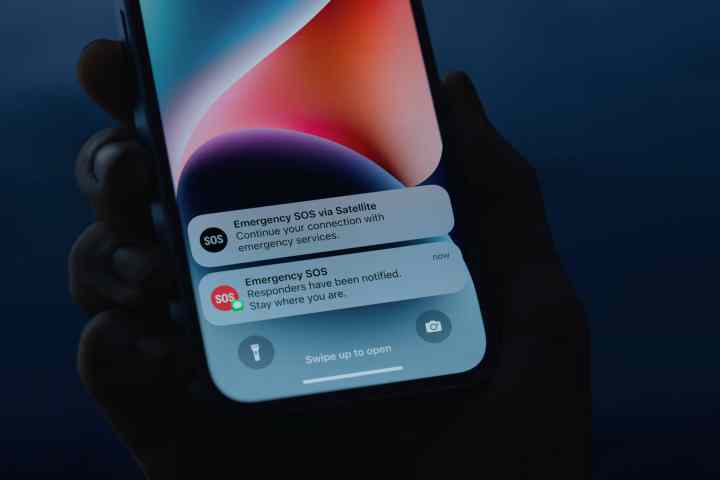
    Two years have passed since Apple introduced the iPhone 14, featuring the Emergency SOS via satellite option. Initially, Apple announced that this service would be complimentary for the first two years but hinted at a subscription model afterward, as reported by MacRumors. However, just last year, Apple decided to extend the free usage period by another year, allowing users to benefit from this service until November 2025.

    This extension is certainly reassuring. The Emergency SOS feature can be a lifesaver. For instance, in April of this year, three college students found themselves lost in a canyon and successfully used this feature to obtain assistance. In another instance from July, the technology once again played a crucial role during a critical situation. A quick search reveals many similar accounts highlighting the usefulness of this feature.

    Individual holding an iPhone 14 displaying Emergency SOS via satellite notifications.
    Apple

    However, the prospect of introducing subscription fees for a service that can save lives raises ethical questions. Apple has hinted at a shift towards paid services, but it has also expanded the functionality of the Emergency SOS feature to include services such as roadside assistance and messaging. While it could be acceptable to charge for roadside assistance, imposing fees for Emergency SOS raises serious moral concerns.

    It’s noteworthy that other smartphones, such as those in the Google Pixel lineup, already include a similar Emergency SOS feature without any associated costs. Additionally, Samsung is expected to incorporate similar functionality in its upcoming One UI 7 update. Currently, neither Google nor Samsung appears to be charging for this vital service.

    As of now, it’s uncertain whether Apple will ultimately implement a subscription fee for this service. Let’s hope that they choose to keep it free for users in need.