Tag: UN

  • Six Candidates Vie for UN Leadership in Televised Debate

    Six Candidates Vie for UN Leadership in Televised Debate

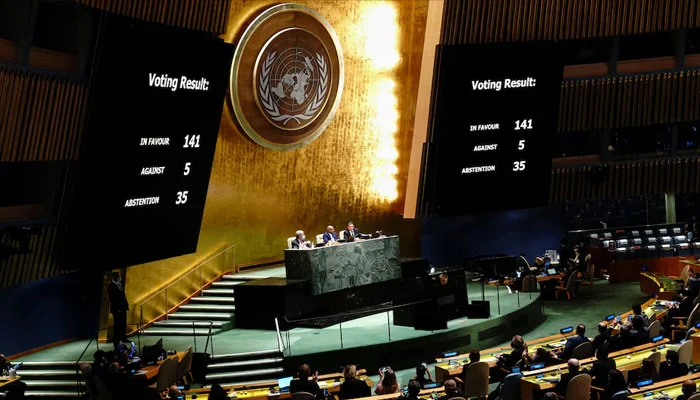
    Six contenders for United Nations secretary-general will engage in a debate Thursday within the symbolic General Assembly Hall, just a week before the official selection process kicks off—an event vital to an institution currently facing serious challenges.

    The race remains unpredictable, with no clear front-runner and minimal excitement, as candidates will undergo 90 minutes of questioning from diplomats, UN staff, and civil society representatives. The event begins at 5:00 p.m. local time and will be streamed by Bloomberg.

    Candidates include Michelle Bachelet from Chile, Maria Fernanda Espinosa of Ecuador, Rafael Grossi from Argentina, Rebeca Grynspan of Costa Rica, Carolyn Rodrigues-Birkett representing Guyana, and Macky Sall from Senegal—all vying to replace the outgoing Secretary-General Antonio Guterres.

    Annalena Baerbock, President of the General Assembly, emphasized the significance of the town hall, noting it’s a rare chance to explore candidates’ ideas, priorities, and leadership visions. She highlighted that amid a fractured world, the UN requires an exceptional leader capable of modernizing the organization and upholding the core principles of the UN Charter—its three pillars of peace and security, human rights, and development.

    The UN faces a deep-rooted financial and confidence crisis, with the Trump administration criticising it for mismanagement and inefficacy. The United States insists that the organization refocus on its primary goals of peace and security, while other nations stress the importance of its broader roles, including human rights and development.

    Compared to the more dynamic 2016 campaign, this year’s race appears subdued, with fewer candidates and less intrigue. Richard Gowan, an analyst with the International Crisis Group, told AFP that the process is notably cautious, with candidates deliberately treading carefully to avoid offending the veto powers, especially the U.S.

    Prior to the debate, each candidate has been questioned for three hours by representatives of all 193 UN member states. The candidates largely agree on the need for ongoing reforms to improve efficiency and advocate for increased engagement by the Secretary-General in global peace efforts.

    On July 30, the Security Council’s 15 members will conduct their first private, anonymous vote to indicate preferences. This initial “straw poll” will be followed by additional votes until one candidate secures at least nine votes without a veto from any of the five permanent members. The chosen candidate’s name will then be forwarded to the General Assembly for formal appointment, with the new Secretary-General scheduled to assume office on January 1, 2027.

    Diplomats remain cautious about predicting the outcome, noting several capitals have yet to make their choices. While Rafael Grossi is often seen as a leading contender, others such as Grynspan and Rodrigues-Birkett also have significant support. A surprise candidate could still emerge, as many names circulate within UN corridors and media outlets. Notably, rumors suggest FIFA President Gianni Infantino might be a candidate, especially considering Trump’s reportedly expressed interest in him leading the UN, according to the New York Post.

    Traditionally, the UN seeks a Secretary-General from a specific geographic region on a rotational basis; currently, Latin America claims this opportunity. Additionally, there is a growing call among member states for the organization to elect a woman to the top position for the first time.
  • NY Mayor Mamdani considers arresting Netanyahu at UN meeting

    NY Mayor Mamdani considers arresting Netanyahu at UN meeting

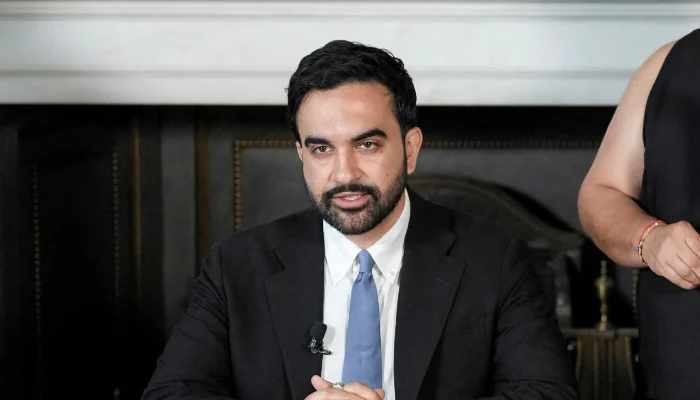
    New York City Mayor Zohran Mamdani is currently discussing the possibility of attempting to arrest Israeli Prime Minister Benjamin Netanyahu during an upcoming United Nations summit, he revealed in a Saturday interview. This statement has drawn sharp criticism from Netanyahu’s supporters.

    Mamdani stated to The New York Times, “I believe Prime Minister Netanyahu should be in The Hague. He’s a war criminal who has been charged by the International Criminal Court.” He reiterated his stance by describing Israel as an “apartheid regime,” a view shared by many due to the actions taken over recent years.

    While Mamdani acknowledged uncertainty about whether he has the authority to instruct the NYPD to detain a foreign leader, he is consulting with the city’s legal team to explore the options. “We will do whatever the law permits in New York City,” he affirmed.

    The UN General Assembly, which convenes in September at the UN headquarters in Manhattan, is often a stage for world leaders. Mamdani has previously vowed to activate the NYPD to execute arrest warrants against international figures, including Netanyahu.

    The Hague’s ICC stated in 2024 that there are reasonable grounds to believe Netanyahu committed war crimes and crimes against humanity related to Israel’s military actions in Gaza following the Hamas attack on October 7, 2023.

    Israel’s ambassador to the UN, Danny Danon, swiftly responded, criticizing Mamdani. “Instead of focusing on his mayoral duties and addressing the rising antisemitism in his city, he has chosen to incite hostility and seek headlines by attacking Israel,” Danon posted on X. “This changes nothing. Prime Minister Netanyahu will address the UN General Assembly with pride and reaffirm Israel’s right to defend itself. As for Mamdani, if anyone should be detained, it’s him.”

    Netanyahu has also accused Mamdani of supporting Hamas, claiming on a recent New York radio program that Mamdani “hates America secretly.”

  • UN Inquiry: Israel’s Actions in Gaza Lead to Child Genocide

    UN Inquiry: Israel’s Actions in Gaza Lead to Child Genocide

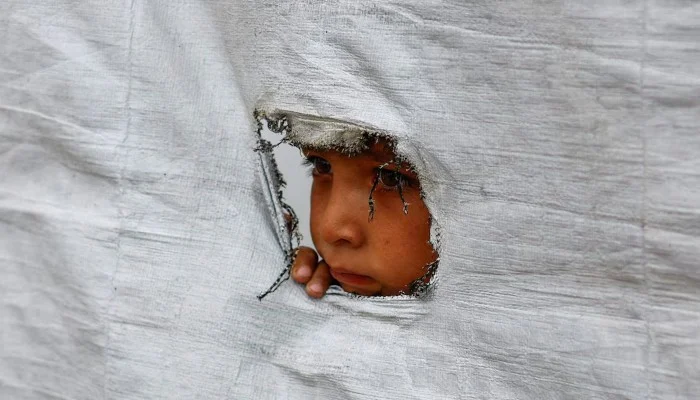
    A displaced Palestinian boy looks through a tear in a tent wall in Gaza City, May 6, 2026. — Reuters

    The UN independent inquiry accuses Israeli authorities and security forces of intentionally targeting Palestinian children, resulting in acts classified as genocide, crimes against humanity, and war crimes in Gaza, with additional war crimes in the occupied West Bank. The report examines violations against Palestinian children since the outbreak of hostilities between Israel and Hamas on October 7, 2023.

    The findings reveal that approximately 30% of those killed during the Gaza conflict were children. A prior report from September alleged that Israel committed genocide in Gaza, with high-ranking officials, including Prime Minister Benjamin Netanyahu, inciting such actions. Israel responded sharply, dismissing the report as “defamatory” and emphasizing that children deserve protection, accusing the commission of overlooking Hamas’s brutal tactics.

    According to the UN, Palestinian children were deliberately targeted and killed even after a ceasefire was declared in October 2025. This was seen as evidence of genocidal intent by Israeli forces to wipe out or weaken the Palestinian population in Gaza. Srinivasan Muralidhar, chair of the commission, stated, “The evidence shows that Palestinian children have been deliberately targeted and killed by Israeli security forces.”

    Regarding child fatalities, the report highlights that the proportion of children among conflict casualties has increased compared to previous conflicts. Between October 7, 2023, and October 7, 2025, over 20,179 children lost their lives, making up about 30% of the total death toll. In earlier hostilities during 2008–2009 and 2014, children accounted for roughly 24% of casualties. Despite rising child casualties, Israeli forces continued to employ high-impact munitions and wide-area weapons in crowded residential areas, actions that the commission views as intentional, aimed at civilians perceived to be linked to Hamas or other armed groups.

    Israel’s mission in Geneva defended its tactics, emphasizing efforts to minimize harm to children during conflicts and strongly denying deliberate targeting. Muralidhar added that targeting children undermines the future and existence of the Palestinian people.

    The report also detailed how Israeli-imposed conditions, including ongoing violence, displacement, and a blockade restricting aid, food, and medicine, have severely impacted children’s health and development, leading to preventable deaths, trauma, and decreased well-being. Healthcare facilities and reproductive services had been attacked, affecting newborn survival and increasing miscarriages. Nearly all Gaza children are reported to need psychological support.

    Israel’s response criticized the report for not mentioning its role in supporting vaccinations, facilitating medical aid, and establishing field hospitals, countering claims that Hamas diverts humanitarian aid and fuel, allegations Hamas has denied.

    In the West Bank and East Jerusalem, the commission observed a significant rise in violence by Israeli settlers against Palestinian children, including systematic abuses such as forced strip searches, beatings, and food deprivation during arrests and detention. These acts, the report states, constitute crimes against humanity, such as torture and inhumane treatment, causing great suffering and injury. Israel’s rebuttal argued that the report lacked context regarding the constant threat of terrorism that its security forces respond to.

  • UN to Blacklist Israel Over Sexual Violence in Conflict, Envoy Says

    UN to Blacklist Israel Over Sexual Violence in Conflict, Envoy Says

    Israeli soldiers embrace upon returning from Gaza amid ongoing conflict between Israel and Hamas in southern Israel, February 29, 2024. — Reuters

    – This is a political decision, says Israeli envoy, disconnected from facts and reality.
    – “Israel has decided to sever all ties with the UN Secretary-General’s Office.”
    – Guterres expresses grave concern over violations by Israeli forces.

    GENEVA: Israel’s UN ambassador announced his country has been placed on a UN blacklist for sexual violence in conflict zones, alongside Hamas.

    “This is a political move, completely detached from facts and reality,” said Danny Danon on X, referencing a report scheduled for publication soon. He added he learned about it during a phone call with UN Secretary-General Antonio Guterres, according to a statement from the Israeli UN mission.

    Guterres’ annual report to the Security Council on conflict-related sexual violence, released last August, warned that Israel and Russia could be added to a list of parties “credibly suspected” of committing patterns of sexual violence, including rape and other abuses, during the current year.

    The UN in Geneva and Hamas have not immediately responded to Reuters’ inquiries.

    Danon also criticized the comparison of Israel to Hamas, calling it a “new low,” and said Israel had responded in detail to each allegation, inviting UN officials for visits that were declined.

    Late Thursday, Israel’s foreign ministry said it would cut all contact with Guterres, citing his alleged dishonesty and unprofessionalism. “Given Antonio Guterres’s actions, Israel will sever all ties with his office and wait for a new UN Secretary-General,” the ministry posted on X.

    In response to Danon’s comments, UN spokesperson Stephane Dujarric stated, “From the Secretary-General’s perspective, his door remains open to Israeli representatives, as well as the other 192 member states and two observer states.”

    Guterres’ warning in August stemmed from documented concerns over certain patterns of sexual violence, which he called “significant.” At the time, Danon dismissed these concerns as unfounded.

    Guterres noted concerns about credible reports of violations by Israeli armed and security forces against Palestinians in various detention facilities and bases. Hamas, which launched a retaliatory attack on southern Israel on October 7, 2023, sparking the Gaza conflict, was listed in the report as a group “credibly suspected” of sexual violence during wartime. Hamas has firmly denied these allegations.

  • UN Nonproliferation Talks Collapse After Four Weeks of Negotiations

    UN Nonproliferation Talks Collapse After Four Weeks of Negotiations

    UN Secretary-General Antonio Guterres addresses delegates during a meeting on the Nuclear Non-Proliferation Treaty at the United Nations headquarters in New York City on April 27, 2026. — Reuters

    – Experts warn that repeated failures diminish the treaty’s credibility.
    – Activists blame nuclear-armed nations for stalling progress.
    – The treaty remains in place, but disagreements among member states persist.

    Talks at the UN aimed at reaffirming nuclear nonproliferation and disarmament goals concluded on Friday without success, after four weeks of negotiations held amid low expectations, according to the head of the conference, Do Hung Viet of Vietnam. He noted that, despite efforts, the conference was unable to reach an agreement on its core issues and announced that he would not recommend the draft for adoption.

    The negotiations focused on the Treaty on the Non-Proliferation of Nuclear Weapons (NPT), a critical instrument in controlling nuclear arms, amid fears of a new arms race. Previous review conferences in 2015 and 2022 also failed to produce consensus. Participants debated a heavily revised and diluted text, which was ultimately not adopted.

    Analysts suggest that even without a renewed review agreement for the third consecutive time, the NPT still exists, yet its legitimacy has been undermined. Richard Gowan of the International Crisis Group commented that the text has become increasingly disconnected from contemporary conflicts and proliferation risks — notably North Korea and Iran.

    The latest draft seen by AFP showed a statement that Iran must “never” develop nuclear weapons. However, this clause was in brackets, indicating ongoing disagreements. Additionally, concerns about North Korea’s nuclear activities and calls for denuclearization of the Korean Peninsula were absent. The draft also omitted any direct appeal for the US and Russia to negotiate a successor to the expired New START treaty, which limits their arsenals.

    Despite these omissions, the document still referenced risks like Russia, China, and the US potentially resuming nuclear testing, arsenal growth, and threats to nuclear infrastructure, according to Heloise Fayet of the French Institute of International Relations.

    The reasons behind the failure remain unclear. Seth Shelden of ICAN emphasized that most nations are working in good faith toward disarmament, but a small number of nuclear-armed states and their allies are hindering progress by expanding arsenals and complicating disarmament efforts, inching the world toward catastrophe.

    According to SIPRI, the nine nuclear-armed states—Russia, the US, France, the UK, China, India, Pakistan, Israel, and North Korea—had a total of 12,241 nuclear warheads as of January 2025, with 90% held by the US and Russia. Some countries are modernizing their arsenals or increasing their stockpiles.

    The NPT, which came into force in 1970 and has nearly universal signatories except for Israel, India, and Pakistan, seeks to prevent proliferation, promote disarmament, and facilitate peaceful nuclear cooperation.

  • UN Proliferation Meeting Opens Amid Rising Nuclear Arms Race Risks

    Signatories of the historic nuclear non-proliferation treaty convened Monday at the United Nations as concerns about a renewed arms race grow, with nuclear powers once again at odds over safety measures.
    In 2022, during the previous review of the treaty—considered the foundation of non-proliferation efforts—UN Secretary-General Antonio Guterres warned that humanity was “one misunderstanding, one miscalculation away from nuclear annihilation.”
    On Monday, he cautioned that “the factors driving” nuclear weapons proliferation are accelerating.
    Guterres stated, “For too long, the treaty has been deteriorating. Commitments have gone unmet. Trust and credibility are weakening. The forces promoting proliferation are speeding up. We need to reinvigorate the treaty.”
    Amid heightened global geopolitical tensions since the last meeting, it remains uncertain what this gathering at the UN headquarters can accomplish.
    France’s Foreign Minister Jean-Noel Barrot told delegates that “never before has the risk of nuclear proliferation been so high, and the threat posed by Iran’s and North Korea’s programs is unacceptable for every member of this treaty.”
    Lowering expectations, Do Hung Viet, Vietnam’s UN ambassador and the conference president, said: “We shouldn’t anticipate that this conference will resolve the underlying strategic tensions of our era.”
    “But a balanced outcome that reaffirms essential commitments and outlines practical steps forward could enhance the integrity of the NPT,” he added.
    “The success or failure of this gathering will have impacts far beyond these walls,” Viet warned. “The threat of a new nuclear arms race looms over us.”
    The nuclear non-proliferation treaty (NPT), signed by nearly every nation except Israel, India, and Pakistan, seeks to prevent the spread of nuclear weapons, promote disarmament, and foster cooperation on civilian nuclear technology.
    As of January 2025, the nine nuclear-armed states—Russia, the United States, France, the United Kingdom, China, India, Pakistan, Israel, and North Korea—held a combined total of 12,241 nuclear warheads, according to the Stockholm International Peace Research Institute (SIPRI).
    The U.S. and Russia possession accounts for roughly 90% of the world’s nuclear arsenals, with both countries investing heavily in modernization efforts in recent years, SIPRI reports.
    China has also rapidly expanded its nuclear stockpile, prompting G7 nations to voice alarm over Moscow and Beijing boosting their nuclear capacities.
    President Donald Trump indicated plans for new nuclear tests, accusing others of secretly conducting theirs.
    In March, French President Emmanuel Macron announced a significant shift in nuclear deterrence strategy, including an increase in France’s nuclear arsenal, which currently stands at 290 warheads.
    An “affront” to the NPT, according to Seth Shelden of the International Campaign to Abolish Nuclear Weapons—a Nobel Peace Prize laureate—stated that “trust is eroding both inside and outside the treaty.”
    He expressed doubts about the summit’s potential outcomes, noting that decisions require consensus, and previous conferences failed to pass final political statements.
    Historically, deadlocks have resulted from disagreements over regional issues, such as Israel’s opposition to a nuclear-weapon-free zone in the Middle East and Russia’s objections related to Ukraine’s Zaporizhzhia nuclear plant.
    This year’s summit faces numerous potential obstacles, including the ongoing conflict in Ukraine, Iran’s nuclear program, proliferation fears, and North Korea’s advancing nuclear capability.
    The U.S., along with Britain, the UAE, and Australia, criticized Iran’s appointment as a conference vice president, calling it an “affront” to nations that take the NPT seriously.
    Additionally, artificial intelligence is emerging as a prominent issue, with some nations advocating for strict human control over nuclear weapons.

  • Save Humanity: Four Leaders Clash for UN’s Future

    Save Humanity: Four Leaders Clash for UN’s Future

    Four candidates are competing to succeed Antonio Guterres as the United Nations Secretary-General amid unprecedented global turmoil, conflicts, and a severe budget crisis for the organization.

    Michelle Bachelet from Chile, Rafael Grossi from Argentina, Rebeca Grynspan of Costa Rica, and Macky Sall from Senegal will undergo three-hour questioning sessions by 193 member countries and NGOs on Tuesday and Wednesday.

    This marks only the second instance of a public Q&A format at the UN, introduced in 2016 to increase transparency.

    The ultimate decision rests with the five permanent Security Council members, who hold veto power over the selection process.

    Mike Waltz, the U.S. representative to the UN based in New York, has emphasized that the next secretary-general must prioritize “American values and interests,” asserting that Washington would support the most suitable candidate, regardless of whether they are a Latin American woman as some nations have requested.

    All four contenders promise to bolster trust within the deeply divided organization, which is grappling with a financial crisis largely due to the U.S. refusal to fulfill its financial commitments.

    Here’s a look at each applicant:

    Michelle Bachelet
    A socialist from Chile who endured torture under Augusto Pinochet’s regime, Bachelet made history as Chile’s first female president in 2006.
    She later served as UN High Commissioner for Human Rights—a sensitive role that led to disagreements with some countries, notably China, over her reports on alleged human rights abuses of Uyghur populations.
    At 74, she is confident that her extensive experience equips her to lead the UN through contemporary crises.
    Supported by Mexico and Brazil, she lost backing from Chile after the election of far-right President Jose Antonio Kast.

    Rafael Grossi
    A seasoned diplomat, Grossi, 65, has been running the International Atomic Energy Agency (IAEA) since 2019. His leadership has placed him at the heart of tensions surrounding Iran’s nuclear activities and Russia’s occupation of Ukraine’s Zaporizhzhia nuclear plant.
    Both the U.S. and Russia—each wielding vetoes on the Security Council—have scrutinized his management of these international conflicts.
    Grossi advocates for the UN to “return to its founding promise—to save humanity from the scourge of war.”

    Rebeca Grynspan
    Less prominent than her competitors, Grynspan, a former vice president of Costa Rica, heads UNCTAD, the UN’s trade and development body.
    She brokered the Black Sea Grain Initiative between Moscow and Kyiv, facilitating grain exports amid the ongoing conflict following Russia’s invasion.
    At 70, she highlights her personal history as the daughter of Jewish parents who survived the Holocaust and emigrated to Costa Rica.
    She emphasizes her firm commitment to the UN Charter, viewing it as a vital reminder of the dangers of dehumanization and distrust.

    Macky Sall
    At 64, Sall is the only candidate not from Latin America, defying the regional convention that the UN Secretary-General should come from that region.
    Former president of Senegal, he underscores the importance of linking peace and development, arguing that lasting peace depends on addressing poverty, inequality, exclusion, and climate risks.
    Proposed by Burundi, the current chair of the African Union, Sall does not enjoy regional support—20 African nations oppose his candidacy—and he faces criticism within Senegal for using force against protests that resulted in multiple deaths between 2021 and 2024.

  • US, Allies Confront Russia, China at UN Over Iran Nuclear Program

    US, Allies Confront Russia, China at UN Over Iran Nuclear Program

    Members of the United Nations Security Council voted in favor of a sanctions resolution concerning Iran and the Middle East at UN headquarters in New York City on March 12, 2026. — Reuters

    – The U.S. claims Russia and China are obstructing the sanctions committee’s work to shield Iran.
    – China and Russia failed to prevent the Security Council from discussing the issue.
    – The U.S. ambassador emphasizes that all nations should enforce an arms embargo against Iran, banning missile technology transfers and trade, and freezing financial assets related to Iran.

    The United States and allies clashed with Russia and China during a Security Council session, with the U.S. seeking to justify its recent military action against Iran. The 15-member council, chaired this month by the U.S., saw Russia and China attempt—unsuccessfully—to block talks about a committee responsible for enforcing UN sanctions on Iran. The motion was rejected by an 11-2 vote, with two members abstaining.

    U.S. UN envoy Mike Waltz accused Moscow and Beijing of trying to shield Tehran by disrupting efforts to activate the 1737 Committee, which oversees Iran sanctions. He stated, “Every UN member should be imposing an arms embargo on Iran—prohibiting missile tech transfers, trade, and freezing assets. These measures are narrowly focused on Iran’s nuclear, missile, and conventional arms programs, as well as its support for terrorism.”

    Waltz further alleged that both China and Russia oppose a functioning sanctions body because they want to protect Iran and maintain defense collaborations now once again prohibited. He pointed out that last week, the International Atomic Energy Agency (IAEA) noted Iran was the only non-nuclear-weapon state to produce and stockpile uranium enriched up to 60%, and Iran refused IAEA access to this uranium.

    Russia’s UN ambassador Vasily Nebenzya accused the U.S. and allies of fueling hysteria about Iran’s alleged plans to develop nuclear weapons, claims he said lacked corroboration from IAEA reports. Nebenzya argued that these claims are used to justify more military actions against Tehran and to escalate tensions across the Middle East.

    China’s ambassador, Fu Cong, called Washington the “instigator” of the nuclear crisis, accusing it of resorting to force during negotiations, which he said has hampered diplomatic efforts.

    Iran’s UN ambassador, Amir Saeid Iravani, reiterated that Iran’s nuclear activities have always been peaceful and stated Iran will not acknowledge any sanctions enforcement efforts against it.

    President Donald Trump has historically used Iran’s nuclear program as a justification for military interventions, claiming—without concrete intelligence support—that Iran could have developed a nuclear weapon within two weeks if the U.S. hadn’t targeted three nuclear sites in June.

    Britain and France conveyed to the Security Council their belief that re-imposing sanctions on Iran is justified due to Tehran’s failure to address nuclear concerns. France also mentioned that the IAEA can no longer confirm Iran’s nuclear program is peaceful, noting that Iran’s stockpile could potentially produce 10 nuclear devices.

  • Iran Prepared to Take Necessary Steps for US Deal: Deputy Foreign Minister

    Iran Prepared to Take Necessary Steps for US Deal: Deputy Foreign Minister

    Iran’s deputy foreign minister, Majid Takht-Ravanchi, who was then serving as Iran’s UN ambassador, addressed the media outside the Security Council chambers at the UN headquarters in New York on June 24, 2019. — Reuters

    – Iran’s deputy FM states they are prepared to reach an agreement as quickly as possible.
    – Takht-Ravanchi emphasizes that Iran will do whatever is necessary to make it happen.
    – Negotiations between Iran and the U.S. are scheduled for Thursday in Geneva.

    Iran has signaled its willingness to take any necessary measures to formalize an agreement with the United States as the two nations gear up for a new round of negotiations. The talks are set for Thursday in Geneva, according to a senior U.S. official, with U.S. representatives Steve Witkoff and Jared Kushner expected to meet with an Iranian delegation.

    These discussions follow a resumption earlier this month amid increased U.S. military presence in the Middle East. Iran has warned that it would target U.S. bases in the region if attacked.

    Takht-Ravanchi stated, “We are ready to reach an agreement as soon as possible. We will do whatever it takes to ensure this happens. When we go to Geneva, we will do so with honesty and good faith,” as reported by state media.

    White House Press Secretary Karoline Leavitt noted that President Donald Trump’s initial preference has always been diplomacy, but he remains prepared to use deadly force if necessary.

    A senior Iranian official told Reuters on Sunday that Tehran would seriously contemplate options such as sending half of its highly enriched uranium abroad, diluting the remaining stockpiles, and establishing a regional enrichment consortium—ideas that have been periodically discussed during Iran-related diplomatic efforts. Iran would consider these moves in exchange for U.S. recognition of Iran’s right to peaceful nuclear enrichment and the lifting of economic sanctions.

    Takht-Ravanchi warned, “If there is an attack or aggression against Iran, we will respond according to our defense plans… A U.S. attack on Iran is a real gamble,” reflecting Iran’s readiness to defend itself.

    Previous indirect negotiations last year did not lead to an agreement, mainly over U.S. demands that Iran cease uranium enrichment on its soil—a point Washington sees as a pathway to developing nuclear weapons, which Iran continuously denies seeking.

    In June, the U.S. and Israel conducted strikes on Iranian nuclear facilities, severely limiting Iran’s uranium enrichment capabilities. President Trump claimed key nuclear sites were “obliterated,” yet Iran is believed to retain stockpiles from prior enrichment activities, which Washington continues to seek relinquishment of.

  • China Denies US Allegations of Hidden Nuclear Tests

    China Denies US Allegations of Hidden Nuclear Tests

    China denied US accusations that it tested nuclear explosives in secret, calling the claims false and labeling them as “absolutely untrue.” They accused Washington of creating false pretenses to resume its own nuclear tests. During a UN Disarmament Conference in Geneva last Friday, US Under Secretary of State for Arms Control, Thomas DiNanno, alleged that China had carried out tests, including one on June 22, 2020, and was preparing for additional high-yield tests.

    The Chinese Foreign Ministry responded on Monday, stating, “US claims are completely baseless and outright falsehoods. China strongly opposes the US efforts to justify its own nuclear testing resumption.” They urged the US to halt these “irresponsible actions” immediately.

    In October, President Donald Trump announced that the US would restart nuclear testing “on an equivalent basis” with Russia and China, though he provided no details on the type or scope of testing envisioned.

    DiNanno’s remarks coincided with the unveiling of a new US proposal calling for trilateral negotiations with Russia and China to establish new nuclear limitations. This proposal emerges after the expiration last Thursday of the last remaining nuclear arms treaty, New START, between Washington and Moscow. China has already declined to participate in disarmament negotiations “at this time.”

  • Trump: UN to Persist Despite Proposal for ‘Board of Peace’

    Trump: UN to Persist Despite Proposal for ‘Board of Peace’

    The international community has responded cautiously to President Donald Trump’s recent proposal for a “Board of Peace,” which has raised concerns among experts. Some critics warn that the initiative’s structure could resemble an imperialist endeavor, potentially undermining the work of the United Nations. Diplomats suggest that the plan might do more harm than good to existing global peace efforts.

    When asked about the plan in a recent interview, Trump stated, “You have to let the UN continue,” emphasizing that he believes in the potential of the United Nations but feels it has yet to fulfill its promise. He mentioned the possibility of the “Board of Peace” replacing the UN, adding, “The UN just hasn’t been very helpful. I am a big supporter of its potential, but it has fallen short so far.” He further expressed hope that the UN will persist, citing its significant opportunities.

    The White House has announced a list of individuals slated to sit on the board, including Secretary of State Marco Rubio, Trump’s special envoy Steve Witkoff, former British Prime Minister Tony Blair, and Jared Kushner, Trump’s son-in-law. A UN Security Council resolution passed in mid-November authorized the creation of the “Board of Peace,” along with countries working with it to establish an international stabilization force in Gaza. This move was part of a fragile ceasefire agreement that began in October, based on a Trump-led plan agreed upon by Israel and Hamas.

    Under this plan, the board was tasked with overseeing Gaza’s temporary governance, with indications that the initiative might expand to address conflicts worldwide. However, many rights advocates warn that such a board could weaken the authority of the United Nations. Critics also point out that Trump’s supervision of a territory’s affairs echoes colonial models, and Blair’s involvement has drawn criticism due to his role in the Iraq War and Britain’s historical imperialism in the Middle East.

    Since the ceasefire’s inception, the situation in Gaza remains unstable. Reports indicate that over 460 Palestinians—including more than 100 children—and three Israeli soldiers have been killed. The effectiveness of the plan’s implementation and its long-term sustainability remain uncertain amid these ongoing tensions.

  • Trump pulls US from numerous international and UN organizations

    Trump pulls US from numerous international and UN organizations

    U.S. President Donald Trump walked to the White House on January 4, 2026, after returning from Florida, as captured in a photo by Reuters.

    The United States announced plans to withdraw from 35 non-UN organizations and 31 UN entities. Trump explained that these withdrawals are due to conflicts with American national interests. This decision highlights his longstanding skepticism toward multilateral organizations.

    Among the entities slated for exit is the UN Framework Convention on Climate Change (UNFCCC), often regarded as the foundation of global climate efforts and the parent agreement of the 2015 Paris accord. The U.S. notably skipped last year’s annual UN climate summit for the first time in thirty years.

    Manish Bapna, president and CEO of the Natural Resources Defense Council, stated, “The U.S. is set to leave the UNFCCC first. Other countries participate because they see value beyond moral duty—shaping economic policies and seizing opportunities that come with engaging in these negotiations.”

    Further withdrawals include UN Women, which advocates for gender equality and women’s empowerment, as well as the UN Population Fund (UNFPA), which focuses on family planning, maternal, and child health across over 150 countries. The U.S. had already cut funding to UNFPA last year. The memo specifies that withdrawing from UN bodies may involve ceasing participation or funding within legal limits. The Trump administration has already sharply reduced voluntary contributions to most UN agencies. No immediate comment was available from the UN Secretary-General’s office.

    Trump’s approach reflects his persistent wariness of multinational institutions, especially the UN. He has repeatedly questioned their efficiency, cost, and the extent to which they serve U.S. interests. Over the past year, he has cut U.S. funding for the UN, withdrawn from the Human Rights Council, suspended aid to UNRWA, and exited UNESCO. Additionally, plans to leave the World Health Organization and the Paris Agreement have been announced.

    Other targeted entities include the UN Conference on Trade and Development, the International Energy Forum, the UN Register of Conventional Arms, and the UN Peacebuilding Commission. The White House claimed these organizations promote “radical climate policies, global governance, and ideological programs that threaten U.S. sovereignty and economic strength.”

  • UN Alerts 17 Million in Afghanistan Face Food Insecurity

    UN Alerts 17 Million in Afghanistan Face Food Insecurity

    The number of individuals experiencing severe food insecurity in Afghanistan has grown significantly this winter, surpassing 17 million, according to the United Nations.

    “The situation continues to worsen, and immediate action is necessary as Afghanistan faces its peak winter months, when needs are most urgent,” stated Jean-Martin Bauer, head of food security and nutrition analysis at the UN World Food Programme.

    He disclosed that more than 17 million people are suffering from acute food insecurity, which is an increase of three million from the previous year, during a press conference in Geneva. Additionally, nearly four million children are battling severe malnutrition.

    From WFP’s headquarters in Rome, Bauer explained that this crisis stems from multiple factors, including droughts damaging crops and livestock, earthquakes that have plunged many families into poverty, and reductions in international aid.

    Compounding the issue, the return of over 2.5 million Afghans from Iran and Pakistan this year is straining already limited resources and the fragile infrastructure of the country. The WFP projects a similar number of returnees in 2026.

    Currently, the organization has only secured 12% of the funding required to sustain its programs in Afghanistan. Bauer highlighted that due to funding shortages, WFP cannot carry out its usual winter preparations, such as pre-stocking food in vulnerable communities.

    He called on donors to act swiftly to prevent the most severe impacts, emphasizing that a need for approximately $570 million over the next six months exists to support around six million people. Bauer also stressed the importance of keeping Afghanistan in global headlines due to its extremely high vulnerability levels.

  • UN Narrows 2026 Aid Appeal Amid Rising Needs

    UN Narrows 2026 Aid Appeal Amid Rising Needs

    The UN has announced that it is now requesting an aid budget significantly lower than previous years, only half of what was initially expected for this year. This reduction reflects a substantial decrease in funding from donors during a period when humanitarian needs are at an all-time high.

    The current appeal, totaling $23 billion, admits it cannot serve tens of millions of people urgently needing assistance, as dwindling support forces prioritization of only the most critical cases.

    Aid organizations face additional hurdles, including security threats to personnel in conflict zones and limited access to affected areas.

    “Ultimately, these funding cuts are forcing us to make incredibly difficult decisions,” said UN aid chief Tom Fletcher. “We’re stretched thin, underfunded, and under threat. We’re working tirelessly on your behalf, but we’re also being asked to put out fires with a limited supply of water—and we’re under attack.”

    Last year, the UN aimed for a $47 billion relief effort for 2025. However, a combination of aid cuts from the U.S. and other Western nations such as Germany caused that number to be scaled back. As of November, only $12 billion has been received—a record low over the past decade—covering just over 25% of the needs.

    For the upcoming year, the $23 billion plan highlights 87 million individuals classified as urgent cases where their lives are at risk. It estimates that approximately a quarter of a billion people are in immediate need of assistance, with a target to help 135 million of them at a cost of $33 billion, contingent on available resources.

    The largest portion of funding, $4 billion, is dedicated to the occupied Palestinian territories, primarily Gaza. The area has been ravaged by a two-year conflict involving Israel and Hamas, leaving nearly all 2.3 million residents homeless and heavily reliant on aid.

    Following Gaza, the next most urgent needs are in Sudan, then Syria.

    Fletcher emphasized the bleak outlook, with increasing hunger, the spread of disease, and record levels of violence, underscoring the critical importance of the aid appeal. “Our focus is on saving lives in the areas hit hardest by crises—wars, climate disasters, earthquakes, epidemics, and crop failures.”

    The UN’s humanitarian funding largely depends on voluntary contributions from Western countries, with the United States historically being the leading donor. Despite ongoing aid cuts, the U.S. remains the top supporter in 2025, though its share has shrunk from over a third of total donations to just 15.6% this year.

  • UN Urges Taliban to Allow Afghan Women Back in Offices

    UN Urges Taliban to Allow Afghan Women Back in Offices

    The United Nations urged Taliban authorities on Sunday to lift the ban on Afghan women working in UN offices, highlighting that the restriction endangers essential lifesaving services. Since the Taliban regained control in 2021, women in Afghanistan have been prohibited from most employment opportunities, visiting parks and beauty salons, and attending school beyond age 12.

    In September, Taliban officials started restricting female staff from entering UN facilities. Susan Ferguson, the UN Women’s agency’s special representative in Afghanistan, emphasized the importance of reversing these bans to ensure women’s safe access to offices and fieldwork. She warned that ongoing restrictions could undermine the delivery of critical services and conflict with UN principles of human rights and equality.

    While the exact number of affected staff remains unlisted, UN sources estimate that several hundred women are impacted by the ban. Over the past three months, these employees have been working remotely, focusing on aid for earthquake victims and Afghan migrants deported from neighboring Pakistan and Iran. Ferguson described their work as “indispensable” and stressed that their presence is vital for reaching women and girls with culturally appropriate assistance.

    The Taliban has yet to respond to the UN’s request for comment. Previously, the UN refugee agency halted cash assistance for returned Afghan migrants, citing difficulties in interviewing and collecting data on over half of the returnees, mainly women.

  • Every 10 Minutes, a Woman Is Killed by a Loved One: UN

    Every 10 Minutes, a Woman Is Killed by a Loved One: UN

    Last year, the United Nations reported that every 10 minutes, a woman or girl worldwide was murdered by someone close to her, such as a partner or family member. The UN highlighted the persistent lack of progress in combating femicide. In 2024, approximately 50,000 women and girls lost their lives due to violence from intimate partners or relatives, according to a joint report from the UN Office on Drugs and Crime and UN Women released on the International Day for the Elimination of Violence Against Women.

    The report indicated that 60% of women killed globally were murdered by partners or family members like fathers, uncles, mothers, or brothers. In comparison, only about 11% of male murder victims were killed by someone they knew personally. Breaking down the data from 117 countries, the figure equates to roughly 137 women each day, or about one woman every 10 minutes. Although this number is slightly lower than last year’s figures, the report clarified that this doesn’t necessarily reflect a real decline—it mainly results from variations in data availability across nations.

    Femicide remains one of the leading causes of death among women and girls, with no signs of diminishing. The study emphasized that the home continues to be the most dangerous place for women, with Africa reporting the highest number last year—around 22,000 femicides. Experts noted that femicide rarely occurs in isolation; it often forms part of a continuum of violence, which can begin with controlling behaviors, threats, harassment—including online intimidation—and escalate over time.

    Technological advancements have also contributed to increased risks, facilitating new forms of violence like non-consensual image sharing, doxxing, and deepfake videos. Sarah Hendricks, director of UN Women’s Policy Division, stressed the importance of implementing laws that recognize how violence manifests both online and offline. She emphasized the need to hold perpetrators responsible early on, before violence results in tragedy.

  • UN Nuke Watchdog Urges Iran for Complete Cooperation

    UN Nuke Watchdog Urges Iran for Complete Cooperation

    The International Atomic Energy Agency (IAEA) announced on Thursday that it has passed a resolution urging Iran to grant access and share information about its nuclear activities, in accordance with United Nations resolutions.

    This decision follows the IAEA chief’s recent appeal for Tehran to permit inspections at crucial nuclear sites targeted earlier this year by Israel and the U.S. in June. Tensions between Iran and the international watchdog have escalated over the past few years, particularly after a 12-day conflict that involved Israeli and U.S. strikes on major Iranian nuclear facilities.

    Since that conflict, inspectors have not been allowed to enter sites such as Fordo and Natanz, which suffered damage during the strikes. However, they have managed to visit other locations. The resolution, approved with 19 votes in favor, three against, and 12 abstentions, “encourages Iran to fully comply with its legal obligations under UNSC resolutions and to cooperate promptly by providing requested information and access,” the document states.

    IAEA Director Rafael Grossi expressed optimism about future inspections, noting, “We have conducted numerous inspections, but we haven’t yet been able to visit the attacked sites. We need to do so because it’s part of Iran’s commitments.” He added, “I hope we can proceed in a constructive manner.”

    Iran’s Foreign Minister Abbas Araghchi responded that Tehran would only cooperate with the IAEA on unaffected nuclear facilities, adhering to regulations. “We cooperate solely on nuclear sites that have not been impacted, in line with IAEA guidelines,” he said via Telegram.