الوسم: Ukraine

  • US Agrees Deal to Expand Patriot and THAAD Missile Parts Manufacturing

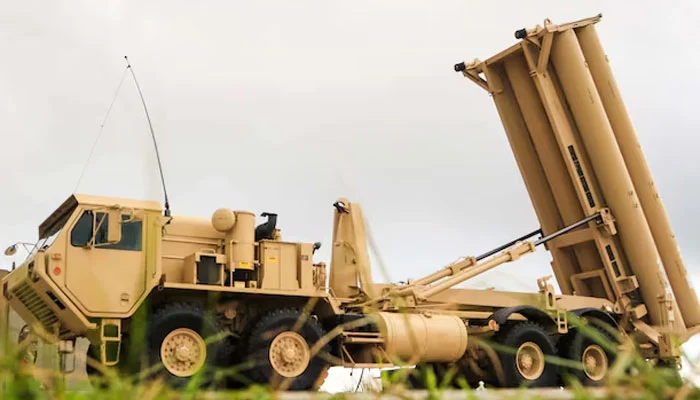
    US Agrees Deal to Expand Patriot and THAAD Missile Parts Manufacturing

    The United States has entered into a deal exceeding $3 billion with Lockheed Martin and Northrop Grumman to increase the manufacturing of Patriot and THAAD missile interceptors, due to strained stockpiles from conflicts in Iran and Ukraine. This announcement, made by the Pentagon and Northrop on Monday, follows a recent contract signed with Lockheed valued at up to $58.6 billion to produce Patriot interceptor missiles.

    The U.S. has been providing extensive arms supplies to allies while also deploying munitions in Iran, raising concerns about the sufficiency of air defense systems and precision-guided weapons inventories. According to the Pentagon, this framework agreement aims to triple Patriot missile production and quadruple THAAD system outputs.

    A recent estimate by the Center for Strategic and International Studies, a think tank based in Washington, indicates that the U.S. military currently has fewer than 1,000 Patriot interceptors and under 250 THAAD interceptors, both of which are critical air defense systems heavily utilized in the Middle East.

    Pentagon officials have been urging contractors to accelerate production, with earlier agreements this year aimed at increasing missile output. Ukraine, for its part, has faced significant shortages of Patriot systems, which remain its only missile defense capable of intercepting ballistic threats.

    The Pentagon also announced that the new deal will establish a secondary source for PAC-3 solid rocket motors and increase the production of ignition safety devices. Additionally, the U.S. has a similar agreement with Raytheon’s parent company, RTX, to escalate Tomahawk missile production from about 60 per year to a target of 1,000 annually.

  • Ukraine’s FM Assures Iran Kyiv Aims to Avoid Escalation

    Ukraine’s FM Assures Iran Kyiv Aims to Avoid Escalation

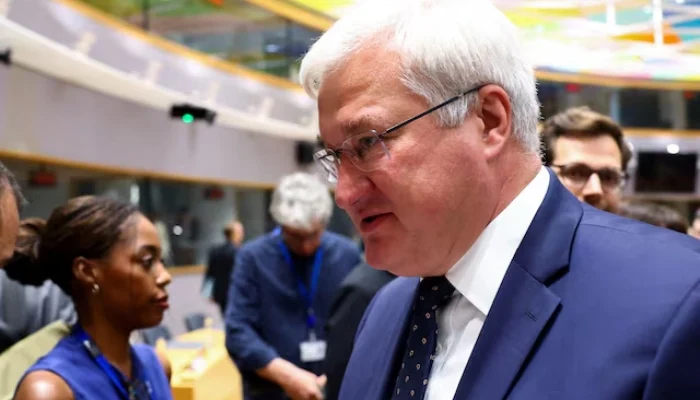
    Ukraine’s Foreign Minister Andrii Sybiha participated in a European Union Foreign Ministers’ meeting in Brussels on July 13, 2026. — Reuters

    – Araghchi states Ukraine assured that the Caspian Sea attack was unintentional.
    – He mentions Ukraine told Iran it aimed to prevent escalation.
    – Calls for compensation for damages caused by the attack.

    KYIV: Ukraine and Iran’s foreign ministers had a phone conversation on Tuesday, Kyiv reported, expressing a desire to prevent any ‘escalation’ following Ukraine’s strike on an Iranian vessel in the Caspian Sea.

    Sybiha, via his X account, shared that he had an open and honest discussion with Iranian Foreign Minister Abbas Araghchi.

    “Diplomacy involves direct dialogue, even when it’s tough. I emphasized that our primary goal is to avoid unnecessary escalation,” Sybiha stated.

    President Volodymyr Zelensky announced on Saturday that Ukraine had launched long-range strikes against vessels transporting military cargo in the Caspian Sea, involving Iran.

    Sybiha reassured Araghchi that Ukraine’s military actions are solely aimed at defending against Russian aggression and were never meant to target civilians or vessels.

    Regarding Iran’s report about the death of one of its citizens and the vessel involved, Sybiha pointed out that Russia is “the fundamental cause of all incidents,” bearing full responsibility for provocations and casualties.

    He stressed the importance of avoiding any steps that could escalate tensions and urged Iran to cease supporting Russia’s war effort in Ukraine.

    Araghchi, in his own X post, confirmed that Sybiha had assured him the attack was “unintentional” and that Ukraine seeks no escalation.

    He reiterated that “Iran does not desire escalation either but maintains that any attack on its citizens or interests is unacceptable and calls for compensation for the damages.”

    The Ukrainian Foreign Ministry’s spokesperson, Georgiy Tykhy, confirmed this was the first official communication between Sybiha, who has been serving since September 2024, and Araghchi.

    Relations between Kyiv and Tehran are tense. Iran, a key ally of Russia in the Middle East, notably supplied Shahed drone technology to Moscow at the beginning of Russia’s full-scale invasion of Ukraine in 2022.

    Kyiv, for its part, claims it has supported efforts to counter Iranian drones used during retaliatory strikes after Israel and the U.S. targeted Iran in late February.

  • Iran vows回应乌克兰在里海袭击其船只

    Iran vows回应乌克兰在里海袭击其船只

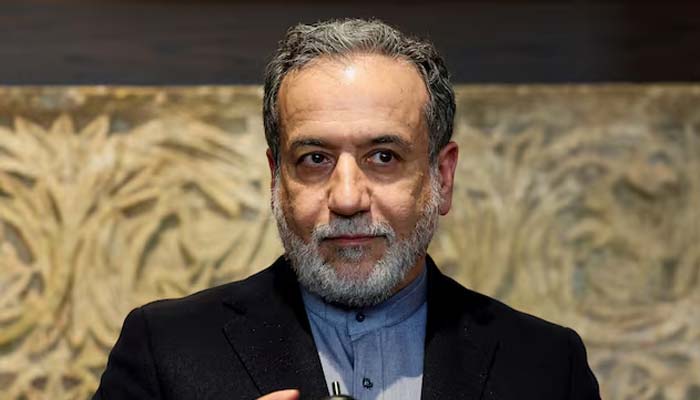
    Iranian Foreign Minister Abbas Araqchi observed as he addressed the press in Beirut, Lebanon, on October 4, 2024. — Reuters

    – Araghchi announces that the attack on a Ukrainian vessel has resulted in the death of an Iranian sailor.
    – Iran states that the assault on the ship violates the UN Charter.
    – Iran has summoned Ukraine’s chargé d’affaires in response to the vessel attack.

    TEHRAN — Iran’s Foreign Minister Abbas Araqchi issued a warning Sunday that his country will respond to a fatal Ukrainian assault on an Iranian ship in the Caspian Sea.

    Following Ukraine’s claims that Kyiv conducted long-range strikes in the Caspian Sea targeting vessels carrying military cargo connected to Iran—highlighting the expanding international scope of Russia’s conflict in Ukraine—Araghchi criticized the attack.

    “Zelensky has attacked an Iranian commercial vessel, killing one sailor,” he posted on X, calling it “a gross violation of the UN Charter, carried out at Israel’s behest to drag Europe into its war.”

    He added that, in conversations with the European Union’s Kaja Kallas and Russia’s top diplomat Sergei Lavrov, he had made it clear that what Kyiv did “cannot go unanswered.”

    The Iranian foreign ministry reported that the attack caused the vessel to explode, resulting in the death of one sailor and injuries to several others.

    The ministry also asserted that Iran has “never intervened” in the Russia-Ukraine conflict.

    On Saturday, President Zelensky announced on social media that Ukraine’s armed forces had achieved “significant results with long-range strikes in the Caspian Sea — including targeting vessels used for military cargo shipments involving Iran, as well as a warship.”

    Ukrainian intelligence claimed, via Telegram, that drone attacks targeted “cargo ships under international sanctions used to transport military supplies between Iran and Russia.”

    Iranian state television reported that the foreign ministry summoned the Ukrainian chargé d’affaires in Tehran on Saturday to protest what it described as a “hostile and criminal act.”

  • Zelenskiy Fires Prime Minister Svyrydenko After One Year

    Zelenskiy Fires Prime Minister Svyrydenko After One Year

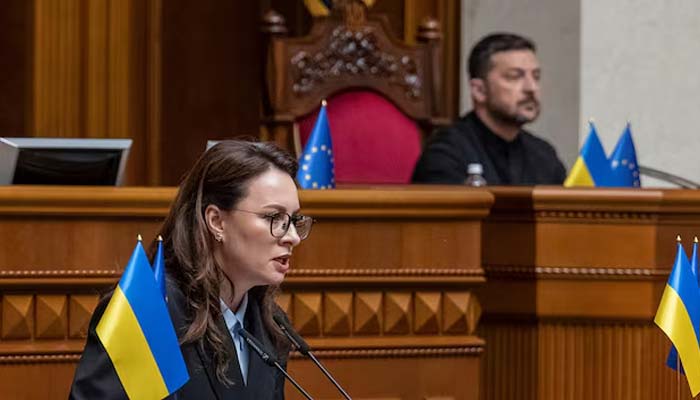
    Ukrainian President Volodymyr Zelenskiy announced plans to replace Prime Minister Yulia Svyrydenko after just a year in office, leading to the resignation of the current government. Though he didn’t specify who would take over or what Svyrydenko’s new role might be, Zelenskiy indicated there would also be leadership changes within law enforcement agencies. He explained these moves are necessary to “implement an updated political strategy” but provided no additional details.

    Zelenskiy expressed appreciation for Svyrydenko’s dedicated and effective work as Prime Minister, highlighting her years of valuable service to Ukraine. He mentioned offering her the opportunity to lead a new, significant area of relations with a key partner. He also said he expects cooperation with parliament to implement these changes.

    Svyrydenko, an economist, was appointed in July 2025 after serving a year as deputy head of Zelenskiy’s office and four years as deputy prime minister overseeing economic development and trade. Zelenskiy did not clarify why he desires new appointments for law enforcement leadership.

    Over the past year, Ukraine has endured its largest corruption scandal, resulting in the resignation of a prominent figure in the presidential administration. The scandal, known as the Midas case, involved authorities alleging a $100 million kickback scheme at Energoatom, the state nuclear energy company. Several individuals close to Zelenskiy, including former chief of staff Andriy Yermak and Zelenskiy’s ex-business partner Timur Mindich, have been implicated—both denying any wrongdoing.

    By Ukrainian law, the prime minister’s resignation requires parliamentary approval and results in the entire government stepping down. Possible successors include Zelenskiy’s previous energy minister Denys Shmyhal, defense minister Mykhailo Fedorov, or Naftogaz CEO Serhiy Koretskyi. Well-connected opposition lawmaker Yaroslav Zhelezniak suggested Koretskyi has the strongest chances for the position, with Svyrydenko potentially moving on to become ambassador to the United States. Currently, Olga Stefanishyna, appointed last August, serves as Ukraine’s ambassador in Washington.

  • Zelenskiy Urges Putin to Enter Peace Talks in Open Letter

    Zelenskiy Urges Putin to Enter Peace Talks in Open Letter

    Ukrainian President Volodymyr Zelensky addressed the nation in an open letter to President Vladimir Putin on Thursday, proposing that the two leaders meet to negotiate an end to more than four years of conflict. Zelensky emphasized that Kyiv is prepared to continue fighting if necessary, but expressed hope for peace.

    He noted that most Russians are weary of the ongoing missile and drone attacks, economic hardship, and fuel shortages in Ukraine, and are seeking stability. Zelensky pointed out that with the U.S. primarily focused on the Iran conflict, waiting for the European situation to regain prominence would be unwise.

    He stressed that the first step toward peace must occur at the frontlines, advocating for a full ceasefire during negotiations—an approach he described as standard practice. Zelensky cited the U.S.’s capacity to oversee ceasefire lines and suggested that a specific date be set for a meeting, mentioning Switzerland, Turkey, and Arab nations as potential host countries for such talks.

    Zelensky urged Putin not to be afraid to pursue a pathway out of the war, framing it as a crucial step. He proposed that Ukraine is willing to resolve the conflict through direct engagement between the two nations, emphasizing that if Russia’s leader does not see it as time to end the war, Ukraine will continue its fight for survival.

    He also implied that ongoing conflict could threaten Putin’s political standing, referencing Russian history: “When Russia gets tired, change happens.”

    The Kremlin responded that they had received Zelensky’s letter and that Putin would be briefed on its contents. Ukrainian Foreign Minister Andrii Sybiha announced on social media that the letter would also be officially sent through diplomatic channels, calling it a serious proposal with clear steps and an invitation for a personal meeting.

    Sybiha emphasized the importance of a meaningful response, stating, “It is time to end this war. It’s time for peace.”

  • Ukraine and Russia clash over US-backed ceasefire violations

    A ceasefire brokered by the U.S. is now showing signs of serious tension on its second day, as both Russia and Ukraine accuse each other of breaching the agreement through attacks over the weekend. The three-day halt, announced Friday by President Donald Trump, is part of a broader U.S.-led effort to restore peace. Despite months of diplomatic efforts, the conflict, which has lasted more than four years, remains unresolved.

    Since Saturday morning, Ukrainian officials reported over 200 clashes on the battlefield, with three individuals killed in Russian drone strikes near the front lines. President Volodymyr Zelenskiy noted that Russia has mostly avoided large-scale air and missile assaults but continues to push its forces along parts of the front line where they are advancing. He added that Ukrainian troops are actively defending their positions and responding to Russian actions.

    Russia’s Defense Ministry accused Ukraine of ignoring the truce, claiming they intercepted 57 Ukrainian drones in a single day and responded accordingly on the battlefield. Zelenskiy also predicted that the United States would guarantee the exchange of 1,000 prisoners of war from each side, a key component of the ongoing peace efforts.

    Earlier this week, both Russia and Ukraine announced separate ceasefires—Russia’s beginning Friday and Ukraine’s on Wednesday—yet each accused the other of violations shortly after their implementation. On Sunday, reports indicated that one person each in Ukraine’s Zaporizhzhia, Dnipropetrovsk, and Kherson regions were killed in Russian drone attacks. Additionally, regional authorities reported multiple injuries: eight in Kharkiv, including children, and seven in Kherson, with some wounded by drone or artillery strikes.

    In Dnipropetrovsk, a rescue vehicle was hit by a drone, wounding a 23-year-old driver. Ukraine’s air defenses shot down all 27 long-range drones launched by Russia overnight, according to Kyiv’s military command. Overall, nearly 210 clashes have taken place along Ukraine’s front line of approximately 1,200 kilometers since early Saturday, though verifies for the battlefield specifics remain unconfirmed.

    Diplomatic efforts are faltering, especially as Russian forces pursue an ongoing offensive in Ukraine’s eastern Donetsk region, which Moscow insists must be ceded by Kyiv before they consider ending their invasion. Meanwhile, negotiations mediated by the U.S. have stalled, particularly over control of the Zaporizhzhia nuclear power plant—Europe’s largest.

    Moscow has sent mixed signals about future peace prospects. Kremlin spokesperson Dmitry Peskov suggested peace is a “very long way off,” while President Vladimir Putin implied that the war might be approaching its end. U.S. envoy Steve Witkoff and Jared Kushner are expected to visit Moscow soon to continue diplomatic discussions, with recent meetings in Miami focusing on humanitarian issues and steps toward peace.

    In broader diplomatic developments, Germany dismissed Putin’s proposal for ex-Chancellor Gerhard Schröder to facilitate talks between the EU and Russia aimed at securing peace in Ukraine.

  • Putin Labels NATO-backed Force ‘Aggressive’ in Victory Parade Speech

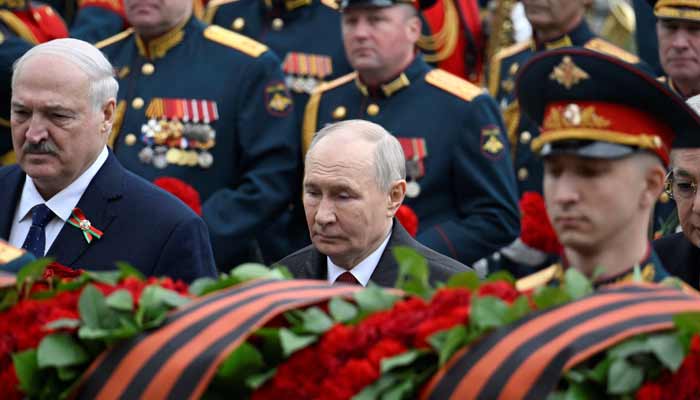
    Russian President Vladimir Putin attends a ceremony to lay flowers at the Tomb of the Unknown Soldier by the Kremlin wall in central Moscow, Russia, on May 9, 2026. — Reuters
    Russian President Vladimir Putin attends a ceremony to lay flowers at the Tomb of the Unknown Soldier by the Kremlin wall in central Moscow, Russia, on May 9, 2026. — Reuters

    • No Russian military hardware was visible during the event.
    • Putin references Soviet victory to boost support for the military.
    • Overnight drone exchanges between Ukraine and Russia.

    During the Victory Day parade on Red Square, President Vladimir Putin declared that Russian forces in Ukraine are combating an “aggressive force” supported by NATO countries and justified his war aims as “just.” His speech was delivered in a defiant tone.

    Putin frequently emphasizes Soviet triumph over Nazi Germany in World War II as a core part of his 25-year leadership narrative, with celebrations traditionally marked with grandeur and pomp.

    Recent Ukrainian long-range attacks have heightened Kremlin security and led to a scaled-down observance this year, with no military hardware on display—the first time in nearly 20 years—and mostly officials from Russia’s allied nations in attendance.

    Moscow and Kyiv agreed to a three-day ceasefire around the parade, following a last-minute appeal from U.S. President Donald Trump. Moscow threatened a significant strike on central Kyiv if Ukraine interfered with the parade plans.

    At the parade, Putin invoked Soviet victory to rally support for his military efforts in Ukraine, stating, “The remarkable achievement of the WWII generation inspires our soldiers today.” He added, “They face an aggressive force supported by NATO, yet our heroes continue to advance.” Later, he expressed his firm belief that their cause is just.

    Three-Day Ceasefire

    After attempts at truce earlier this week failed, Trump announced on Friday that a ceasefire between Russia and Ukraine would be in effect from May 9 for three days. He described it as “possibly the beginning of ending a long, deadly conflict,” and noted that the ceasefire would include a prisoner exchange.

    Ukrainian President Volodymyr Zelensky ordered his military not to attack during the ceasefire and confirmed his government would honor the truce to facilitate the exchange of 1,000 detainees from each side. Zelensky stated that the lives of Ukrainian prisoners are more critical than the historic event at Red Square.

    Both Ukrainian and Russian official sources reported a reduction in drone attacks overnight.

    The ongoing war, now in its fifth year, has resulted in hundreds of thousands of deaths and remains Europe’s deadliest conflict since WWII. Negotiations mediated by the U.S. have seen little progress since February, when attention shifted to Iran.

    Prior to Trump’s announcement, Zelensky had expressed reluctance to agree to a ceasefire during the parade and warned against attendance by Moscow’s allies. Russia had threatened to strike Kyiv heavily if the parade was disrupted and advised foreign diplomats to evacuate the city ahead of the event.

    In Kyiv, security was tight, with empty streets and disrupted mobile internet. Only leaders from Belarus, Malaysia, Laos, and Slovak Prime Minister Robert Fico were expected to attend, notably lower-profile than last year’s Chinese delegation with Xi Jinping.

    On Friday, Zelensky expressed hope that U.S. diplomats would visit Ukraine soon to help restart peace negotiations.

  • Trump calls for 3-day ceasefire in Russia-Ukraine conflict

    A three-day ceasefire has been announced to take effect from May 9 to May 11, in the ongoing conflict between Russia and Ukraine. This pause coincides with the Soviet Union’s victory celebrations over Nazi Germany in World War II and a military parade in Moscow’s Red Square.

    President Donald Trump revealed on social media that the truce will involve halting all active military operations and a prisoner exchange, releasing 1,000 detainees from each side. “Hopefully, this marks the start of the end for a very long, deadly, and bitter war,” Trump stated, noting continuous progress in peace talks.

    Following a phone conversation with Vladimir Putin on April 29, Trump indicated that a temporary ceasefire was possible. Last year, Putin had suggested a similar three-day halt, but it was not coordinated with Ukraine.

    Ukraine has proposed an open-ended ceasefire starting at midnight on Tuesday (2100 GMT), urging Russia to match the effort. Meanwhile, Russia has announced its own ceasefire for May 8 and 9, aiming to align with Victory Day commemorations and a parade in Moscow.

    Negotiations appear to be at a standstill, with discussions about eastern Ukraine’s Donetsk region stuck over demands that Kyiv withdraw troops from certain territories, which Ukraine refuses. Both sides have accused each other of violating previous ceasefires.

    In recent developments, Ukraine’s chief negotiator, Rustem Umerov, has traveled to Miami for talks with U.S. representatives, as diplomatic efforts to end the war face setbacks. The deadlock revolves around territorial disputes, with Russia insisting Kyiv retreat from contested regions and Ukraine pledging to defend its current positions.

  • Germany Calls for Defense Boost as US Plans Troop Reductions

    A planned withdrawal of 5,000 U.S. troops from Germany has ignited renewed debate about Europe’s defense duties. German Defense Minister Boris Pistorius emphasized that this move should motivate European allies to bolster their own military capabilities. The Pentagon confirmed the reduction in Germany, which hosts the largest U.S. military presence in Europe, amid escalating tensions between Washington and European capitals over issues such as the Iran conflict and trade tariffs.

    President Donald Trump indicated that this troop drawdown might just be the start, stating, “We’re going to cut way down, and we’re cutting a lot further than 5,000” during remarks in Florida on Saturday when questioned about the plan. The announcement has also raised concerns among prominent Republican lawmakers who believe the troops should remain in Europe, highlighting divisions within Washington about America’s military footprint on the continent.

    Additionally, a Biden-era initiative to deploy a U.S. battalion equipped with long-range Tomahawk missiles to Germany has been canceled—a move seen as a setback by Berlin, which viewed it as a critical deterrent against Russia. Senators Roger Wicker and Mike Rogers, leaders of the Senate and House Armed Services Committees, expressed their “very concerned” stance, asserting that the number of troops should not be reduced in Europe but rather repositioned eastward. They warned that “prematurely reducing America’s forward presence in Europe before those capabilities are fully developed risks weakening deterrence and sends the wrong message to Vladimir Putin.”

    German officials, including Pistorius, said the partial withdrawal was anticipated and would impact the current U.S. force of nearly 40,000 soldiers stationed in Germany. Pistorius reinforced the idea that Europeans need to shoulder more responsibility for their security, citing Germany’s efforts to expand its armed forces, accelerate military procurement, and upgrade infrastructure.

    Trump has long advocated for a smaller American military presence in Germany, urging Europe to take more responsibility for its defense. His recent hardline stance, intensified after disagreements with German Chancellor Friedrich Merz over Middle East exit strategies, underscores his push for Europe to do more independently.

    The Pentagon estimates the troop withdrawal will be completed within six to 12 months, though details remain unclear about which bases might be affected or whether the soldiers will return to the U.S. or be redeployed elsewhere in Europe. NATO has stated it is collaborating with Washington to clarify the specifics of this decision.

    Polish Prime Minister Donald Tusk, representing a country eager for continued U.S. support along NATO’s eastern flank amid ongoing Russia-Ukraine tensions, voiced concern about this setback. Tusk tweeted that “the greatest threat to the transatlantic community isn’t external enemies, but the disintegration of our alliance,” urging efforts to reverse the trend.

    This news comes amid broader tensions, as Trump announced plans to hike tariffs on EU auto imports to 25%, accusing the EU of failing to uphold a trade agreement. This move risks damaging Germany’s economy by potentially costing billions. A foreign policy official from Chancellor Friedrich Merz’s CDU party suggested these actions may stem from external pressures and domestic challenges faced by Trump, including poor polling and unresolved conflicts in Ukraine, Venezuela, and Iran. Peter Beyer remarked that both the troop withdrawal and trade measures seem more like reactive responses fueled by frustration than parts of a coherent strategy.

    Despite commitments from NATO members to bolster their defense capabilities, significant gaps in military readiness and constrained budgets mean regional security improvements will take years. Germany aims to increase its active-duty forces from 185,000 to 260,000, though critics call for even greater expansion in light of perceived threats from Russia.

    Historically, the U.S. military presence in Germany—peaking in the 1960s with hundreds of thousands of troops during the Cold War—includes strategic bases like Ramstein and Landstuhl. These facilities have supported U.S. military operations in Iran, Iraq, and Afghanistan. The current plan involves withdrawing one full brigade and canceling a long-range fires battalion scheduled for deployment later this year. This battalion had been viewed as an important element of deterrence against Russia, especially as Europeans develop their own long-range missile capabilities.

    Christian Moelling, director of the European Defense Think Tank EDINA, stated, “The U.S. holds a factual monopoly inside NATO on long-range fires—that’s why this is more operationally significant than troop numbers.”

  • Easter Ceasefire Starts Between Russia and Ukraine

    Easter Ceasefire Starts Between Russia and Ukraine

    A temporary ceasefire between Russia and Ukraine came into effect on Saturday, with Kyiv warning it will respond immediately if Russia breaches the agreement. Russian President Vladimir Putin ordered the ceasefire on Thursday to align with Orthodox Easter, more than a week after Ukrainian President Volodymyr Zelensky initially proposed it. Both parties have agreed to follow the terms of the ceasefire.

    The truce is scheduled to last for 32 hours, starting at 4:00 p.m. local time (1:00 p.m. GMT) on Saturday and ending at the close of Sunday, according to the Kremlin. Ukrainian President Zelensky stated, “Ukraine will observe the ceasefire and respond strictly in kind. The absence of Russian strikes by air, land, or sea will mean no retaliation from us.” The Ukrainian military remains prepared to respond immediately if the ceasefire is violated.

    Just hours before the ceasefire was to begin, Russia launched at least 160 drones at Ukrainian territory, resulting in four deaths in the country’s east and south, and injuring dozens of others, Ukrainian officials reported. The Odesa region in the south was among the hardest hit, with authorities confirming two fatalities and damage to civilian infrastructure. Meanwhile, Ukrainian drones ignited a fire at an oil depot and damaged apartment buildings in Russia’s Krasnodar region. Russian-occupied areas in Ukraine’s Donetsk and Kherson regions also suffered attacks, resulting in four deaths.

    Public skepticism about the ceasefire holding remains high among Ukrainians, especially given past violations—last year, both sides accused each other of numerous breaches during similar Easter truces. Despite the ongoing tension, both sides carried out a prisoner exchange, handing over 175 soldiers each, with the United Arab Emirates mediating the process, according to Russian Defense Ministry reports.

    Diplomatic efforts to resolve the conflict have largely stalled in recent weeks, especially amid the escalation of the conflict in the Middle East. Prior to this, efforts toward peace had been slow, chiefly due to disagreements over territorial control. Ukraine suggested maintaining current front lines as the basis for peace, but Russia rejected this, insisting Ukraine cede all territories in the Donetsk region that it currently controls—a demand Kyiv finds unacceptable. Several US-led negotiations have failed to produce an agreement, with Kremlin spokesperson Dmitry Peskov denying that Russia discussed ceasefire terms with Ukraine or the U.S. in advance, emphasizing that the ceasefire is unrelated to broader peace talks.

    The conflict has resulted in hundreds of thousands of deaths and displaced millions, making it Europe’s deadliest war since World War II. After over four years, fighting has largely stagnated. Russia has made some small territorial gains at a high cost, while Ukraine has recently pushed back in the southeast, with Russian advances slowing since late 2025, according to the Institute for the Study of War (ISW). Analysts attribute this slowdown to Russia’s ban from using SpaceX’s Starlink satellites and Moscow’s efforts to restrict the Telegram messaging app. However, the situation remains unfavorable for Ukraine in parts of the Donetsk region near Kramatorsk and Sloviansk, where Russia controls just over 19 percent of Ukrainian territory—most of it seized in the early weeks of the conflict.

  • Zelenskiy signs defense deals with UAE and Qatar during Gulf trip

    Zelenskiy signs defense deals with UAE and Qatar during Gulf trip

    Ukraine has agreed to joint defense efforts with the UAE and Qatar as President Volodymyr Zelenskiy visits both nations amidst rising regional tensions. Qatar’s defense department announced Saturday that Doha and Kyiv have formalized a defense cooperation agreement, which includes sharing expertise on missile countermeasures and unmanned aerial vehicles.

    Prior to this, Zelenskiy met with UAE President Sheikh Mohamed bin Zayed Al Nahyan during his visit to the Emirates, with both countries pledging collaboration in security and defense sectors. Zelenskiy indicated that further details will be finalized by their respective teams, and highlighted Ukraine’s extensive experience neutralizing Russian drones and missiles. The country is nearing security deal signings to counter Iranian attacks, according to Ukrainian Foreign Minister Andrii Sybiha, who spoke with Reuters on Friday.

    Meanwhile, Zelenskiy’s travels extended to Saudi Arabia, where he also signed an agreement on defense cooperation. During his visit, he met Crown Prince Mohammed bin Salman. The ongoing US-Israeli conflict with Iran has resulted in over 2,000 casualties, disruptions in global markets, and Iranian retaliatory strikes that have effectively blocked the Strait of Hormuz, targeting Gulf countries with missiles and drones.

  • Saudi Arabia and Ukraine Agree on Air Defense Partnership

    Saudi Arabia and Ukraine Agree on Air Defense Partnership

    During President Volodymyr Zelensky’s visit to Saudi Arabia, Ukraine and Saudi Arabia signed an air defense agreement as both nations face threats from Iranian drone attacks, according to two senior officials speaking to AFP. Kyiv is aiming to utilize its experience in intercepting Russian drones to assist Gulf countries, which are experiencing similar threats from Iranian-made Shahed drones used by Russia against Ukraine.

    One official explained that the purpose of the agreement is for Ukraine to help these countries develop their air defense systems, which they currently lack. The official added that the deal, signed on Thursday, involves more than just interceptors; it encompasses building an integrated system that combines various air defense components, leveraging Ukrainian expertise, AI, and comprehensive data analysis to counter drones like the Shaheds.

    Ukraine has been defending itself against nightly Russian drone assaults for four years using a combination of low-cost interceptors, electronic jamming equipment, and anti-aircraft weapons. Kyiv has also proposed trading its interceptors for more advanced, costly missile systems used by Gulf nations to shoot down Iranian drones, emphasizing the need for more of these missiles to defend against Russian missile strikes.

    Zelensky confirmed via social media that the two countries had reached a significant understanding regarding defense cooperation, and he had met with Crown Prince Mohammed bin Salman. Zelensky expressed willingness to share Ukraine’s expertise and systems with Saudi Arabia, noting that both nations have capabilities of mutual interest. He did not specify the exact details of the agreement but highlighted the importance of the cooperation.

    Additionally, Zelensky met with Ukrainian experts specializing in anti-drone technology, who have been deployed to the region following US and Israeli strikes on Iran that triggered retaliatory drone and missile attacks from Tehran. Zelensky praised the Ukrainian specialists for their quick sharing of extensive knowledge, asserting that Ukraine’s unique expertise attracts global interest.

    A memorandum on defense procurement was also signed between the Saudi and Ukrainian defense ministries in Jeddah. Saudi Assistant Minister of Defense for Executive Affairs Dr. Khaled Al-Biyari and Ukrainian Chief of the General Staff Lieutenant General Andrii Hnatov formalized the arrangement, aimed at enhancing defense collaboration.

  • Russia’s Large Daytime Drone Strike Kills 3, Wounds 30 in Ukraine

    Russia’s Large Daytime Drone Strike Kills 3, Wounds 30 in Ukraine

    A rare daytime drone attack in Ukraine resulted in at least three fatalities, 30 injuries, and a fire at a historic building in the central area of Lviv on Tuesday, according to officials. This follows an overnight barrage that claimed five lives nationwide. Over 400 drones were fired at Ukraine during midday—a significant shift from Russia’s typical approach of nighttime strikes in the ongoing four-year conflict.

    Footage circulating online shows a drone crashing into an old structure beside a church in Lviv’s historic district, about 37 miles from the Polish border.

    In Ivano-Frankivsk, in western Ukraine, two people died and four were wounded. The local mayor, Ruslan Martsinkiv, stated that windows at a maternity hospital were shattered but no one was hurt there. Meanwhile, Vinnytsia’s governor, Natalia Zabolotna, reported one fatality and 11 injuries in her region. Lviv’s mayor, Andriy Sadovyi, confirmed that a residential building was struck by a second drone, and debris from a third fell onto a street.

    Prime Minister Yulia Svyrydenko called out the attack on X, saying, “Russia is attacking a crowded city center in broad daylight.” The regional governor of Lviv, Maksym Kozytskyi, added that part of the UNESCO World Heritage Site, around 17th-century St. Andrew’s Church, sustained damage.

    Air defenses responded to drone threats near Kyiv throughout the day. Ukraine’s air force issued alerts about sightings in over a dozen locations nationwide. In Vinnytsia and Ternopil, both hundreds of kilometers from the front lines, residents were advised to stay in shelters amid reports of explosions.

    Earlier, a wave of nighttime strikes killed five people and disrupted power supplies in Moldova. Ukraine reported that Russia launched 34 missiles and 392 drones overnight, shooting down 25 missiles and 365 drones. Near Poltava, in the east, two people lost their lives and 12 others, including a 5-year-old child, were wounded. President Volodymyr Zelenskiy emphasized the widespread damage across 11 regions and urged allies to send more air defense equipment. He warned that the U.S., Ukraine’s primary supplier, is likely to face missile shortages amid its focus on the US-Israel conflict with Iran.

    Moldova’s Foreign Minister, Mihai Popsoi, announced that the critical Isaccea-Vulcanesti power line connecting Moldova to Europe was affected, with President Maia Sandu criticizing Russia’s role in the instability.

  • Ukraine strikes key Russian oil hub near Finland

    Ukraine strikes key Russian oil hub near Finland

    Ukraine launched drone attacks aimed at a major Russian oil terminal near the Finnish border on Monday, both Moscow and Kyiv confirmed, resulting in a large blaze at the facility. Satellite imagery captured flames and dense black smoke billowing from the oil terminal in Primorsk, a Russian town situated on the Gulf of Finland, roughly 30 miles from the European Union and NATO countries. Russia has been conducting almost daily air strikes against Ukraine, primarily targeting energy infrastructure and causing blackouts that left millions in cold and darkness during winter. In response, Ukraine has carried out drone raids on Russian military and energy sites, mainly around Moscow.

    Alexander Drozdenko, governor of Russia’s Leningrad region, stated that a fuel tank at Primorsk was damaged, igniting a fire. He added that Russian defenses had intercepted over 70 drones in the region, which is not a primary front in the ongoing conflict. Ukraine’s military reported hitting significant fuel and energy facilities within Russia, including at Primorsk, with initial reports indicating both the tank farm and loading infrastructure were struck. Satellite images suggest fires and smoke emanating from several cylindrical tanks at the site. The port is responsible for approximately 60 million tons of oil annually, Ukraine noted, accusing Russia of using the profits from oil sales to fund the war effort.

    The Ukrainian General Staff also claimed they targeted an oil refinery in Ufa, about 870 miles east of the front lines, resulting in a fire. Ukrainian air forces reported that Moscow launched 251 drones into Ukraine overnight, with 234 intercepted.

  • Stalled Ukraine Peace Talks End After Zelenskiy Accuses Russia

    Stalled Ukraine Peace Talks End After Zelenskiy Accuses Russia

    Peace negotiations between Ukraine and Russia in Geneva concluded after just two hours, with President Volodymyr Zelenskiy describing the session as “challenging” and accusing Russia of purposely stalling progress toward a resolution to end the ongoing four-year conflict.

    The US-organized talks in Switzerland took place amid recent comments from President Donald Trump, who suggested twice that Ukraine and Zelenskiy bear responsibility for ensuring the talks’ success.

    “While some progress has been achieved, the differences in positions remain because the negotiations were tough,” Zelenskiy told reporters via WhatsApp shortly after they wrapped up.

    Rustem Umerov, head of Kyiv’s negotiating team, added that the second day was “intensive and meaningful.” Both parties aim to prepare decisions that can be presented to their respective presidents.

    Russia’s lead negotiator, ex-culture minister Vladimir Medinsky, stated that further talks would happen soon but did not specify when. Earlier, Zelenskiy accused Russia of “trying to prolong negotiations that could have already reached the final stage.”

    Ukrainian officials often allege Moscow— which has conducted a winter bombing campaign against Ukraine’s energy infrastructure and maintains its military offensive— is negotiating in bad faith.

    In a Tuesday interview with Axios, Zelenskiy criticized Trump for publicly urging Ukraine to make concessions during peace talks, implying it’s unfair that the U.S. president singles out Ukraine rather than Russia.

    Trump on Monday urged fast talks, saying, “Ukraine better come to the table quickly, that’s all I’m telling you.”

    Zelenskiy also indicated that any peace plan asking Ukraine to relinquish territory not yet controlled by Russia would be rejected in a referendum, if that’s how Ukrainians voted.

    “I hope these are just tactics rather than actual decisions,” Zelenskiy was quoted as saying.

    The talks occurred days before the fourth anniversary of Russia’s full-scale invasion in 2022. The conflict has caused hundreds of thousands of deaths, displaced millions, and left numerous cities, towns, and villages in ruins.

    Russia denies intentionally targeting civilians.

    Umerov mentioned that the first day focused on “practical issues and decision-making mechanics,” but did not elaborate. Russian sources reported the day was “very tense” and lasted six hours across various bilateral and trilateral formats.

    In European markets, Ukrainian bond prices dropped by nearly 2 cents on the dollar amid reports of stalled progress.

    Before negotiations, Umerov tempered expectations, stating Kyiv was working “without over-optimism.”

    This Geneva meeting followed two rounds of US-mediated discussions in Abu Dhabi that failed to produce significant breakthroughs, mainly due to disagreements over territorial control in eastern Ukraine.

    Russia occupies roughly 20% of Ukraine, including Crimea and parts of the Donbas region, which it seized before its full invasion in 2022. Recent airstrikes targeting energy facilities have left hundreds of thousands without heat and electricity in the midst of a severe winter.

  • EU’s Kallas says EU countries ready to give Ukraine membership date

    EU’s Kallas says EU countries ready to give Ukraine membership date

    EU Foreign Policy Head Kaja Kallas addressed the Munich Security Conference on Sunday, emphasizing that EU nations are not prepared to assign a definitive membership date for Ukraine, despite President Volodymyr Zelensky’s insistence on having such a deadline. Zelensky reiterated on Saturday that securing a date is vital for security assurances in a comprehensive peace agreement with Russia.

    Kallas stated, “My impression is that member states are not ready to commit to a specific date; there’s significant work still to be done.”

    Ukraine has been advocating for EU membership by 2027, a timeline that appears in a 20-point peace plan discussed among the United States, Ukraine, and the EU, aiming to stabilize Ukraine’s economy after the conflict concludes. However, many EU countries dismiss this fixed timeline as unrealistic because accession depends on an applicant’s adherence to EU standards and progress in legal reforms.

    Latvian President Edgars Rinkevics acknowledged the lack of readiness to set a firm date but suggested that the EU has historically been flexible when truly necessary. He hinted that the EU might find a tailored approach, but this would also need to consider the aspirations of Western Balkan countries and Moldova, long-standing candidates for membership.

    “The peace deal is closely linked to Ukraine’s EU accession,” Rinkevics said. “If Russia doesn’t make a move, then a peace agreement is unlikely.”

    Since Russia’s invasion in February 2022, Ukraine has applied to join the EU, seeking political and economic alignment with Western institutions despite obstacles, including Hungary’s opposition to starting detailed membership negotiations. The push for swift integration continues amidst ongoing conflict and diplomatic challenges.

  • Ukraine Calls Abu Dhabi-Russia Talks ‘Substantive and Productive’

    Ukraine Calls Abu Dhabi-Russia Talks ‘Substantive and Productive’

    The first day of negotiations among Ukraine, Russia, and the United States wrapped up Wednesday in Abu Dhabi, with Kyiv describing the talks as “meaningful and productive.” Although no major breakthroughs were achieved during this session, Kyiv indicated discussions will continue into a second day.

    This US-facilitated dialogue is part of a surge of diplomatic efforts that have yet to produce an agreement to put an end to the conflict initiated by Russia’s invasion in February 2022. The war has become Europe’s deadliest since World War II, resulting in hundreds of thousands of deaths, millions displaced within Ukraine, and significant destruction across much of the eastern and southern regions.

    Amid ongoing negotiations, Russian strikes on Ukraine’s power infrastructure intensified, leaving residents in Kyiv in darkness and cold, with temperatures plummeting to -20°C. Despite these hardships, Ukraine’s top negotiator, Rustem Umerov, assured that the initial day of talks was “substantive and productive,” focusing on specific measures and practical solutions.

    As discussions commenced, the Kremlin reiterated its steadfast position, insisting Kyiv must capitulate if it expects the four-year-long invasion to end. “Our stance is well known,” said Kremlin spokesperson Dmitry Peskov on Wednesday. “Until the Kyiv regime makes the appropriate decisions, the special military operation will continue,” he added, referencing Russia’s term for its military actions.

    In Kyiv, Foreign Minister spokesperson Georgiy Tykhy stated Ukraine is “keen to understand the true intentions of the Russians and Americans.” The discussions primarily concern “military and military-political issues,” although specifics were not provided.

    A key obstacle remains the future status of eastern Ukraine. Moscow demands that Kyiv withdraw its troops from the Donbas area, including heavily fortified cities rich in natural resources, as a prerequisite for any deal. Russia also seeks international acknowledgment that territories seized during the invasion belong to Russia. Conversely, Kyiv insists the conflict should be frozen along the current frontline and opposes unilateral withdrawals.

    Former President Trump sent his familiar envoy Steve Witkoff and son-in-law Jared Kushner to press for an agreement. Russia’s lead negotiator is Igor Kostyukov, director of military intelligence and a retired naval officer who has been sanctioned by the West due to his role in the invasion.

    Europe feels sidelined from the negotiations, even as France and Britain advocate for forming a peacekeeping force to potentially deploy in Ukraine following any peace deal. The EU’s ambassador to Ukraine, Katarina Mathernova, emphasized the importance of Europe participating in the negotiations as a strategic objective.

    Russia currently occupies about 20% of Ukraine, but Kyiv retains control over roughly 20% of the Donetsk region. Ukraine warns that ceding territory could embolden Moscow, stressing that any agreement must effectively deter future invasions. Russia also claims control over the regions of Luhansk, Kherson, and Zaporizhzhia, with pockets of territory in at least three other eastern Ukrainian regions.

    On the battlefield, Russia continues to make gains at a significant human cost, aiming to outlast Ukraine’s overstretched military. Recent Russian artillery shelling in Druzhkivka killed seven civilians, according to Ukrainian officials.

    Following the first round of US-mediated talks last month, many Ukrainians remain skeptical about reaching an agreement with Moscow. Petro, a Kyiv resident, remarked, “I think it’s mostly for show. We need to prepare for the worst and hope for the best.” Meanwhile, in Moscow, some are more optimistic. Larisa, a retiree with family in Ukraine and relatives fighting on the front lines, said, “Everyone hopes this will end one day. We’ve had enough.” Anton, a 43-year-old engineer, added, “It has to stop eventually.”