الوسم: U.S. respondents

  • ارتفاع دعم الديمقراطيين إلى 50% قبل الانتخابات النصفية

    موقف الحزب الديمقراطي في الولايات المتحدة يقترب من أعلى مستوياته منذ عام 2009

    مقدمة عامة حول التغيرات السياسية
    قبل انتخابات التجديد النصفي لعام 2026، سجلت نسبة الانتماء للحزب الديمقراطي ارتفاعاً ملحوظاً، حيث وصلت إلى أعلى مستوياتها منذ الربع الأول من عام 2009، وهي الفترة التي شهدت بداية ولاية الرئيس السابق باراك أوباما. هذا الارتفاع يعكس تغيرات في المزاج السياسي وصورة الحزب الديمقراطي في أوساط الناخبين الأمريكيين، مما يثير العديد من التساؤلات حول اتجاهات التصويت المحتملة وتأثيراتها على نتائج الانتخابات المنتظرة.

    ارتفاع شعبية الحزب الديمقراطي حسب استطلاعات غالوب
    وفقًا لمؤسسة غالوب، ففي الربع الثالث من عام 2026، عبر حوالي 50% من المشاركين في استطلاعات الرأي عن دعمهم للحزب الديمقراطي أو ميلهم لدعمه، مقابل 39% فقط أبدوا دعمهم للحزب الجمهوري. من الجدير بالذكر أن هذه الفجوة كانت تبلغ 13 نقطة مئوية فقط في بداية عام 2009، مما يعكس تغيرات كبيرة في الرأي العام خلال السنوات الأخيرة. ويُظهر هذا الارتفاع أن الحزب الديمقراطي يكتسب قوة ملحوظة، ربما تكون عكس الاتجاه المعتاد الذي يظهر عادة تراجع الحزب الحاكم خلال انتخابات التجديد النصفي.

    تقييم شعبيّة الرئيس ترامب ومستوى الدعم الحالي
    أما فيما يخص الرئيس السابق دونالد ترامب، فإن متوسط تقييمه الشعبي خلال العام الحالي لم يتجاوز 41%، وفقًا للبيانات الصادرة عن غالوب. هذا المستوى المنخفض من الشعبية يعكس تراجع الثقة والدعم الشعبي، وقد يؤثر بشكل مباشر على نتائج الانتخابات القادمة، خاصةً إذا استمر تراجع الدعم للرئيس الحالي أو السابق.

    الانتخابات النصفية وأهميتها في التعبير عن الاستياء الشعبي
    تُعتبر انتخابات التجديد النصفي مناسبة حاسمة يُعبّر فيها الناخبون عن استيائهم من أداء الحزب الحاكم، وغالبًا ما يظهر voters اتجاهات معاكسة. وفي عام 2026، يبدو أن ارتفاع نسبة الانتماء للحزب الديمقراطي قد يكون مؤشرًا على تحديات أكبر للحزب الجمهوري، الذي سيحاول استغلال هذه الأجواء لصالحه في الانتخابات القادمة.

    الاستراتيجيات الحزبية وتأثيرها على توزيع الدوائر الانتخابية
    مع اقتراب انتخابات نوفمبر، تركز الحملات على إعادة تقسيم الدوائر الانتخابية (الترسيم)، حيث يتطلع الحزب الجمهوري للفوز بعدد أكبر من المقاعد عبر استغلال جهود إعادة التوزيع لصالحه. وفي الوقت ذاته، تحاول الحزب الديمقراطي مجاراة هذه التحركات، إلا أن نجاحها في إعادة رسم الخرائط لم يكن بنفس الكفاءة، حيث من المتوقع أن تؤدي جهود الجمهوريين إلى تحويل سبعة دوائر لصالحهم، بعد أن أوقفت المحكمة العليا في ميسوري عملية إعادة التقسيم في 10 سبتمبر. أما جهود الديمقراطيين فمتوقع أن تغير مسار أربع دوائر فقط.

    موقف المجلس السياسي والتحليل التوقعاتي
    حتى الآن، يمتلك الحزب الجمهوري أغلبية صغيرة من خمسة مقاعد في مجلس النواب الأمريكي، ويعتبر تصنيف استطلاع “كوك بوليتيكال ريبورت” أن نتيجة سباق مجلس النواب لا تزال غير محسومة، مما يعكس غموض النتائج المتوقعة وحجم التحديات التي قد يواجهها الطرفان خلال الانتخابات القادمة. هذه الحالة من عدم اليقين تضيف بعدًا إضافيًا إلى المشهد الانتخابي، وتبرز أهمية استراتيجيات الحملات الانتخابية وأثرها على النتائج النهائية.

    لمحة عامة عن المشهد الانتخابي القادم
    في خضم هذا المشهد السياسي، يظل الرأي العام يتغير باستمرار، يتأثر بالمتغيرات الداخلية والخارجية، ويتوقع أن يكون لنتائج انتخابات نوفمبر أثر كبير على السياسات الداخلية والخارجية للولايات المتحدة في السنوات القادمة.

  • الأقل سعرًا وجودة يتفوقان على العلامة التجارية في قرارات الشراء بنسبة تصل إلى 61٪

    تأثير السعر والجودة على قرارات الشراء لدى المستهلكين الأميركيين

    الاهتمامات الرئيسية عند اتخاذ قرارات الشراء

    تظهر الدراسات الأخيرة التي أجرتها شركة ستاتيستا للأبحاث والرؤى المستهلكية أن السعر المنخفض والجودة يتصدران أولويات المستهلكين الأميركيين عند اختيار المنتجات في فئات الطعام، العناية الشخصية، والملابس. حيث أشار بين 43% و61% من المستجيبين إلى أن هذين العاملين يلعبان دوراً محورياً في قرارات الشراء الخاصة بهم. بالمقابل، فإن العلامة التجارية كانت مهمة فقط بالنسبة لـ27% إلى 40% من الأشخاص، مما يدل على تفضيل المستهلكين للعوامل الملموسة على اسم العلامة التجارية عند الشراء.

    الفروق بين الفئات المختلفة من المنتجات

    يبدو أن الوعي بالعلامة التجارية يكون أعلى في فئات التجميل، يليه الملابس ثم الأطعمة. أما فيما يتعلق بالسعر، فهو العامل الأكثر أهمية في كل من فئة الملابس والأطعمة، إلا أن الجودة تعتبر العامل الأهم عند شراء الملابس، الأحذية، والإكسسوارات، مما يعكس تفضيل المستهلكين للمنتجات ذات الجودة المرتفعة في هذه الفئات.

    تحليل سلوك المستهلكين في الإلكترونيات والسيارات

    الاختلاف في الأهمية بين العلامة التجارية والسعر في الإلكترونيات

    عند النظر إلى الإلكترونيات، نلاحظ أن العلامة التجارية تتفوق بشكل كبير على السعر المنخفض في تحديد قرار الشراء. ففي فئات مثل الحاسوب المحمول، الهواتف الذكية، والتلفزيونات، أشار بين 25% و51% من المستهلكين إلى أن العلامة التجارية تعتبر عاملًا مهمًا، بينما فقط بين 21% و33% رأوا أن السعر المنخفض هو العامل الحاسم. هذا يشير إلى أن المستهلكين يضعون ثقتهم أكثر في العلامة التجارية وجودتها عندما يتعلق الأمر بمنتجات التكنولوجيا.

    السوق السيارة والتسويق بناءً على الجودة والسعر

    أما في فئة السيارات، فالسلوك مختلف تمامًا. حيث أن السعر المنخفض والجودة يتصدران قائمة العوامل الرئيسية التي تؤثر على قرار الشراء، مع نسب تصل إلى 46% و44% على التوالي. بالمقابل، فإن العلامة التجارية المفضلة تأتي في المرتبة الثانية بنسبة 22%، مما يوضح أن المُشتريين يركزون أكثر على القيمة مقابل السعر والجودة قبل اسم العلامة التجارية المعروفة.

    ملاحظات مهمة حول سلوك المستهلكين وتفضيلاتهم

    تُظهر هذه النتائج أن المستهلكين الأميركيين يفضلون بشكل واضح العوامل الملموسة مثل السعر والجودة على أهمية العلامة التجارية، خاصة في فئات الطعام، الملابس، والإلكترونيات. كما أن الاهتمام بالعامل المادي يتفاوت حسب الفئة، حيث تكون الجودة أكثر أهمية في الملابس والإكسسوارات، بينما السعر هو العامل المهيمن في الأطعمة والملابس ذات السعر المنخفض. أما في الإلكترونيات، فإن الثقة بالعلامة التجارية تلعب دورًا أكبر، بينما في السيارات، تُعطى الأولوية للقيمة بشكل عام.

    نظرة عامة على سلوك المستهلكين تظهر أن القيمة التي يحصلون عليها مقابل المال المخصص للشراء هي العامل الأكثر تأثيرًا، مما يعكس توجهًا حديثًا يركز على الجودة والسعر بدلاً من الاسم التجاري فقط.

  • Warren Buffett: 52% Favorability Among U.S. Billionaires

    Warren Buffett: 52% Favorability Among U.S. Billionaires

    Understanding the Public Perception of Billionaires in the U.S.

    A recent poll conducted by Reuters and Ipsos sheds light on the overall perception of billionaires among the American public. Notably, the survey indicates a significant lack of enthusiasm towards the wealthiest individuals in the country, with a few exceptions standing out. Among these exceptions is Warren Buffett, the longtime CEO of Berkshire Hathaway.

    Warren Buffett: The Exception to the Rule

    Warren Buffett has managed to captivate the hearts of many in the U.S., with 52 percent of Americans holding a favorable view of him. At 94 years old, Buffett’s decision to step down as CEO at the end of the year while retaining his role as chairman marks a significant transition for both him and Berkshire Hathaway. Over the decades, he has become synonymous with astute investments, financial wisdom, and a down-to-earth persona that resonates well with the public.

    The Rise of Berkshire Hathaway

    Buffett took the reins of Berkshire Hathaway in the 1960s, transforming the company from a struggling textile manufacturer into a sprawling conglomerate that holds diversified stakes across various industries. His remarkable ability to identify lucrative investment opportunities has solidified his status as a star investor. Unlike many of his billionaire peers, Buffett has maintained a relatable "guy next door" image, a feat that has endeared him to the masses.

    The Impact of Scandals on Public Image

    While other wealthy individuals have faced significant scrutiny due to various scandals, Buffett’s reputation has remained largely untarnished. This relative stability in his public image can be attributed to the absence of major controversies surrounding either him or Berkshire Hathaway. As a result, Buffett’s principles of long-term investing and philanthropy further enhance his appeal, setting him apart from other billionaires.

    The Contrast with Other Billionaires

    In stark contrast to Buffett’s favorable reputation, other billionaires such as Jeff Bezos and Mark Zuckerberg face considerable public backlash. Bezos, the founder of Amazon, enjoys a favorability rating of only 29 percent, while Zuckerberg, the head of Meta, trails even further at 26 percent. Both have been criticized for their business practices and personal behavior, which have played a role in shaping public perception.

    Elon Musk’s Mixed Reception

    Elon Musk, the CEO of Tesla and SpaceX, garners a slightly more favorable opinion, with 39 percent of Americans expressing positive sentiments towards him. However, his connections to controversial political initiatives, particularly those involving the Trump administration, could negatively impact his approval ratings in the long term.

    Bill Gates: A Philanthropic Approach

    Bill Gates shares a similar trajectory to Buffett, with strong philanthropic efforts contributing to his public image. His approval rating stands at 49 percent, showcasing that involvement in charitable activities can enhance a billionaire’s reputation. Gates’ focus on health and education initiatives has allowed him to remain relatively scandal-free, thereby fostering a positive public response.

    The Power of Public Perception

    The findings from the Reuters and Ipsos poll illustrate that public opinion on billionaires is complex and heavily influenced by factors such as individual actions, philanthropic efforts, and media representation. Buffett’s unique position as a beloved billionaire who has successfully cultivated a favorable image serves as a striking example of how personal branding and public perception can greatly impact a wealthy individual’s standing in society.

  • 80% Want More U.S. Manufacturing, Yet Only 20% Would Work in It

    80% Want More U.S. Manufacturing, Yet Only 20% Would Work in It

    The State of Manufacturing in America: A Closer Look

    The Dual Perspective on Manufacturing

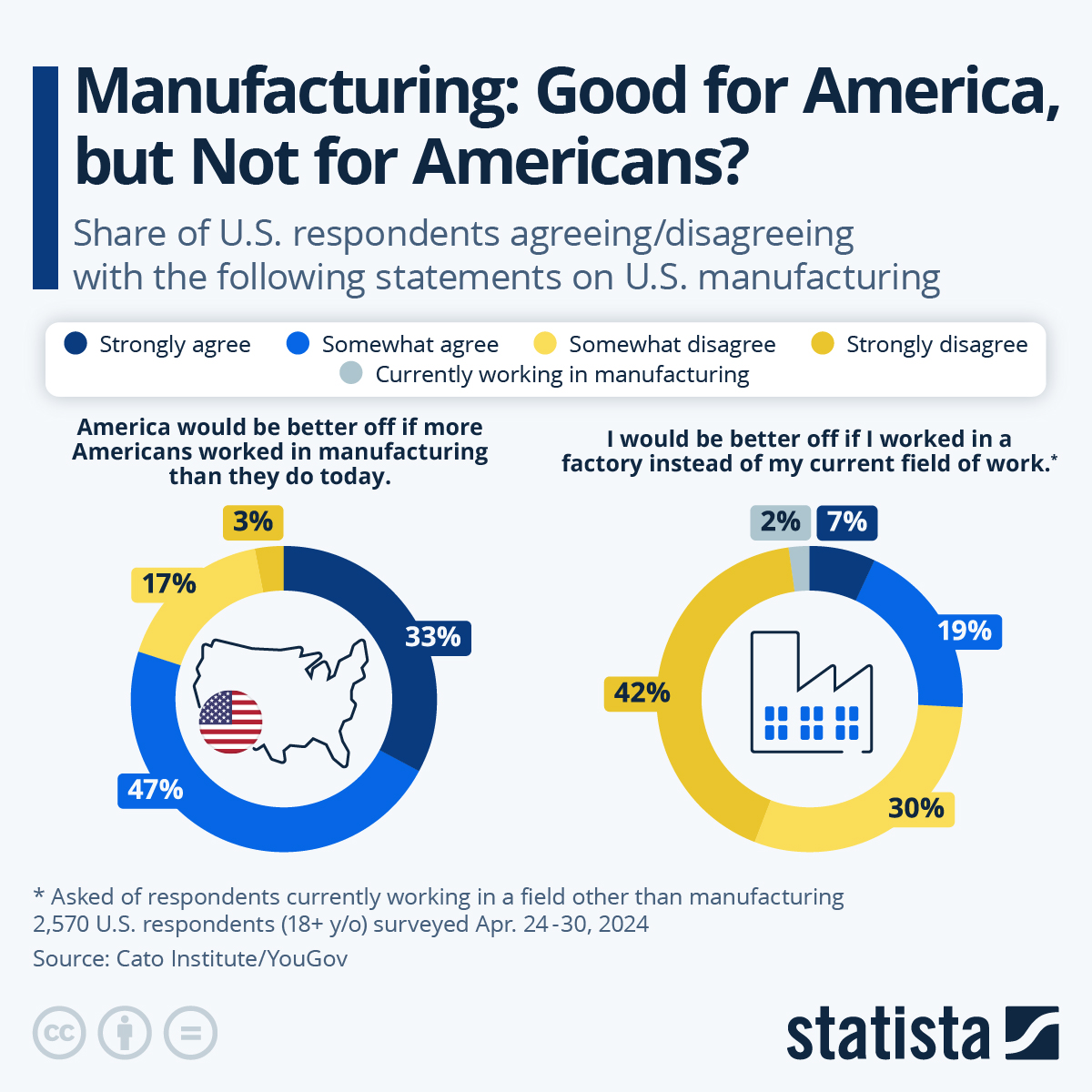
    Manufacturing has long been considered a vital pillar of the American economy. The sector not only contributes significantly to GDP but also plays a key role in job creation. In a recent survey conducted by the Cato Institute and YouGov, an interesting dichotomy emerged regarding American perspectives on manufacturing. While a considerable majority of respondents (80 percent) believed that increased manufacturing would benefit the country, only 20 percent expressed a desire to work in the sector.

    Survey Insights: Employment vs. Perception

    This striking contrast illustrates a disconnect between national sentiment and personal career aspirations. The low percentage of people willing to pursue manufacturing jobs raises questions about the current workforce landscape in the United States. Currently, a mere 2 percent of survey respondents indicated they are employed in manufacturing roles. This suggests that many Americans are either seeking opportunities in professions perceived as more desirable or have shifted away from traditional blue-collar jobs altogether.

    The Shift from Blue-Collar Jobs

    Historically, a significant portion of the American workforce was engaged in blue-collar occupations. However, over the years, there has been a noticeable shift towards white-collar jobs and service-based sectors. As the landscape of employment evolves, it appears that the allure of manufacturing roles has waned, particularly for younger generations who often prioritize jobs that offer flexibility, innovation, and other non-monetary benefits over traditional manufacturing positions.

    The Challenge of Workforce Shortages

    Manufacturing facilities across the United States are grappling with a growing challenge: attracting and retaining suitable workers. As the demand for skilled labor increases, many manufacturers report difficulties in finding individuals with the necessary qualifications. This shortage not only hinders production capabilities but also raises concerns about the future sustainability of the sector.

    Economic Implications of Workforce Shortages

    The implications of a dwindling workforce in manufacturing are multifaceted. With fewer hands available for production, companies may struggle to meet demand, potentially leading to increased prices and reduced competitiveness. Additionally, these challenges could stifle innovation as companies prioritize filling existing positions over investing in new technologies or processes.

    The Globalization Dilemma

    Another key finding from the survey was the vast majority of Americans (79 percent) agreeing that globalization has negatively impacted American manufacturing. This sentiment reflects growing frustrations over trade practices and their effects on domestic industries. While respondents were aware of the benefits associated with free trade, there is also a pervasive belief that such agreements have led to significant disadvantages for American workers.

    Free Trade vs. Protectionism

    Interestingly, even as many Americans acknowledge the merits of free trade, there exists a contradictory sentiment that trade agreements are detrimental to the well-being of the middle class. These conflicting views highlight a complex relationship with globalization and trade, where many see tariffs as a potential solution to reclaiming lost manufacturing jobs. For instance, 62 percent of respondents supported tariffs aimed at bolstering the American blue jeans industry, despite acknowledging potential price increases.

    The Impacts of Pricing on Public Opinion

    The survey further explored the public’s willingness to accept higher prices for domestic products. Findings revealed that while 58 percent of respondents would back tariffs on imported jeans if it meant higher costs, support dwindled with escalating price hikes. Only 34 percent would maintain their support if jeans became $10 more expensive, and this support dropped to 19 percent for a $20 increase. This indicates a delicate balance between protecting domestic manufacturing and consumer price sensitivity.

    Conclusion

    As the American manufacturing sector navigates the challenges of a shifting workforce and the complexities of globalization, the diverse opinions of the public play a critical role in shaping the future of the industry. While the desire for increased manufacturing may be widespread, the reluctance to engage in manufacturing jobs signifies a pivotal moment that may require innovative solutions to bridge these gaps and foster a thriving manufacturing landscape in the U.S.

  • 43% Boycott Brands Over Animal Cruelty, Survey Reveals

    43% Boycott Brands Over Animal Cruelty, Survey Reveals

    Understanding Brand Cancelation: The Reasons Behind the Boycott Movement

    In today’s socially conscious marketplace, consumers are more empowered than ever to hold brands accountable for their practices. Recent research by Statista highlights the primary reasons that lead consumers to boycott or protest against companies, revealing deep concerns regarding ethics and social responsibility.

    The Top Reasons for Brand Cancellation

    Animal Cruelty

    According to the survey conducted by Statista Consumer Insights, the foremost reason consumers choose to boycott a brand is due to animal mistreatment. In fact, 43% of over 3,000 respondents in the U.S. indicated that they would stop supporting companies that engage in practices they consider cruel to animals. This concern has risen to prominence across several Western countries, marking a significant shift in consumer priorities.

    Racism and Human Rights Violations

    Closely following animal cruelty, issues related to racism and human rights violations comprise another critical factor driving consumer boycotts. The survey shows that 42% of U.S. respondents cited racism, while 40% pointed to human rights abuses as significant deterrents to brand loyalty. These statistics underline the growing intolerance for unethical behaviors that impact marginalized communities.

    Environmental Concerns

    Environmental sustainability has become an increasingly vital aspect of corporate responsibility. In countries like Germany, respondents rated environmental concerns as a top reason for boycotting a brand—on par with human rights abuses. This perspective reflects a global recognition of the urgent need to mitigate climate change and reduce ecological harm.

    Health Risks and Misleading Advertising

    Interestingly, when examining consumer attitudes in Japan, there was a distinct emphasis on health risks associated with products and inappropriate advertising tactics. Japanese respondents prioritized the safety and integrity of products, suggesting a more health-conscious consumer base demanding transparency and authenticity from brands.

    Behavioral Insights from U.S. Consumers

    The survey not only sheds light on the reasons behind boycotts but also reveals consumer behaviors regarding brand engagement:

    Prevalence of Boycotting

    Approximately 13% of U.S. respondents admitted to having boycotted a brand in the past due to perceived unethical practices. This indicates that while many consumers express their willingness to actively support ethical business behaviors, only a fraction has translated this sentiment into action.

    Communication and Advocacy

    The survey also noted that 21% of consumers discussed their concerns about brands with friends, while 25% opted for social media platforms to broadcast their discontent. This highlights the role of social networks as influential space for consumers to rally support against companies they perceive as unethical.

    The Dichotomy of Intent vs. Action

    An intriguing finding from the survey is that while 86% of American respondents felt justified in boycotting or attacking a brand based on its practices, nearly half (49%) had never actually taken such action. This discrepancy calls into question the dynamics of consumer intent versus actual engagement, suggesting that while there’s significant awareness, it may not always translate to direct consequences for brands.

    Global Comparison of Concerns

    While the U.S. consumer landscape prioritizes animal cruelty, racism, and human rights violations, international perspectives vary. For instance, consumers in countries like Germany place equal weight on environmental issues, suggesting a more holistic view of corporate responsibility that includes the welfare of the planet. The contrast between these attitudes underscores the diverse values held by consumers around the world and indicates that brands must navigate a complex moral landscape.

    Cultural Differences in Consumer Attitudes

    Recognizing these cultural differences is imperative for brands operating in multiple markets. What resonates as a critical issue in one country may not hold the same weight in another, thus complicating the strategy for brand messaging and public relations across borders.

    The dynamics of cancel culture shed light on the increasing expectation for companies to align with ethical standards. With consumers wielding the power to shape brand reputations through their choices, businesses must remain vigilant and responsive to the concerns that drive today’s conscientious consumers.

  • Top 3 Breakfast Cereals: Enjoyed by 43%, 41%, and 34% of Americans

    Top 3 Breakfast Cereals: Enjoyed by 43%, 41%, and 34% of Americans

    The Breakfast Bowl: A Look into America’s Favorite Cereals

    The Cereal Craze in America

    For many Americans, breakfast is synonymous with a bowl of cereal. In recent surveys, oddly comforting brands like Cinnamon Toast Crunch, Cheerios, and Fruity Pebbles emerged as fan favorites. According to data from Statista, these cereals captivated the hearts (and taste buds) of approximately 43%, 41%, and 34% of respondents, respectively, who indulged in these sugary delights over the past year. This statistic sheds light on America’s enduring relationship with breakfast cereals, which serve as a nostalgic staple in the morning routine for countless households.

    Breakfast Habits Across the Nation

    A Unique Eating Culture

    American breakfast habits are unique and often scrutinized by observers from other countries. The tradition of standing up while consuming breakfast, perhaps over a sink, speaks volumes about the fast-paced lives many Americans lead. The love for sweet morning options is equally notable. From syrup-laden pancakes and waffles to sugary Pop-Tarts, the morning meal is often viewed as an invitation to indulge rather than a time to focus on nutrition. The scene becomes even more frenetic when considering the ritual of hastily preparing a cup of coffee, sometimes with generous amounts of creamer, before rushing out the door.

    The Global Influence of U.S. Cereals

    Despite criticism for dietary choices, American breakfast cereals like Lucky Charms and Cap’n Crunch are gaining popularity beyond U.S. borders. Their appeal fosters a sort of cult following in diverse markets, showcasing the power of American soft power and cultural influence. International consumers are increasingly seeking out these iconic brands, attracted by the charming mascots and enticing advertisements. The global demand serves as a testament to the cereal’s enduring status as a beloved breakfast option, transcending cultural and geographical boundaries.

    Nutritional Perspectives on Breakfast Cereals

    The Health Debate

    Amid the sugary allure, nutritionists are raising concerns about the dietary choices associated with these popular cereals. Health professionals recommend opting for whole grain cereals that boast high fiber content and minimal added sugars. They emphasize the importance of incorporating healthier options into the morning routine, steering clear of sugary cereals that could lead to negative long-term health impacts.

    The Call for Mindful Eating

    As consumers become more aware of health and wellness, there is a notable shift toward mindful eating practices. Dietitians advise taking the time to savor breakfast, encouraging individuals to sit down and enjoy their meal rather than rushing through it. This change reflects a growing emphasis on nutrition and the commitment to starting the day right—not just for our taste buds but for our overall health as well.

    The Evolving Landscape of Breakfast Choices

    Whether it’s nostalgia-driven consumption of childhood favorites or a conscientious decision to seek out healthier options, the cereal landscape in America is continuously evolving. The popularity of breakfast cereals remains high, but so does the awareness of making more informed dietary choices. As breakfast remains the most important meal of the day for many, it’s hard to deny that the love affair with cereal continues, albeit with an increasing focus on balancing enjoyment with health considerations.

  • Americans Divided on Sports Betting: 29% Find It Addictive

    Americans Divided on Sports Betting: 29% Find It Addictive

    Understanding America’s Ambivalence Towards Sports Betting

    The debate surrounding sports betting in the United States has elicited a range of opinions, reflecting the complexities of gambling culture. Recent data from a Statista Consumer Insights survey showcases the divided perspectives of Americans on the topic, revealing a nation caught between excitement and caution.

    The Spectrum of Opinions on Sports Betting

    The Statista survey indicates a substantial level of ambivalence among Americans regarding sports betting. A notable 24% of respondents expressed neutrality, indicating they do not align with either the positive or negative aspects of this gambling practice. This highlights a significant portion of the population that remains unsure or indifferent about the implications of sports betting on society and individual behavior.

    Addictive or Entertaining?

    Among those with a more definitive stance, the divide becomes pronounced. Approximately 29% of respondents characterized sports betting as "highly addictive," raising concerns about the potential for developing problematic gambling behaviors. This viewpoint aligns with ongoing discussions about addiction and the responsibility of regulatory bodies to address such issues effectively.

    Conversely, a slight majority of the opinions collected from the survey lean towards the benign, with 28% of participants categorizing sports betting as simply “fun.” This notion of enjoyment is a crucial factor in understanding why many individuals engage in betting activities, as it signifies not just a potential financial gain, but also an opportunity for entertainment and camaraderie among fans.

    Thrill vs Risks

    The survey further categorizes American sentiments into the thrill of betting and the inherent risks associated with it. A significant 24% of respondents found sports betting "thrilling," suggesting that the excitement surrounding potential wins fuels participation in these activities. However, this thrill is met with caution, as 19% of people believe that discussions about the risks of gambling are often insufficient. This discrepancy raises important questions about the need for more comprehensive information and education on responsible gambling.

    In contrast, a smaller faction, comprising 14% of respondents, advocated for a complete ban on sports betting. This group likely prioritizes the potential social costs and health risks associated with gambling, reflecting concerns that persist in the broader conversation about sports betting legality and regulation.

    Participation Rates in Sports Betting

    The survey also sheds light on the participation rate in sports betting, revealing that around 30% of the more than 1,000 respondents had engaged in some form of betting within the last year. This statistic demonstrates that sports betting is not merely a fringe activity but rather a widespread phenomenon among American sports fans.

    Most Bet on Football

    When broken down by sport, football emerges as the standout favorite for betting enthusiasts. An impressive 51% of those who had participated in sports betting reported placing bets on football matches. This preference for football is likely influenced by the sport’s immense popularity across the country, especially given the cultural significance of events like the Super Bowl.

    Basketball follows closely, with 38% of bettors stating they placed wagers on games in the past year. Other sports also drew interest from bettors, including:

    • Baseball: 25%
    • Soccer: 25%
    • Boxing: 18%
    • Tennis: 11%

    These statistics highlight that sports betting interests are diverse, with various sports finding substantial backing from bettors.

    The Regulatory Landscape

    The findings from the Statista survey also underscore the importance of understanding the regulatory environment surrounding sports betting in the U.S. As it stands, betting regulations vary significantly from state to state, with some states implementing very restrictive measures while others embrace a more open policy. This inconsistency can contribute to the confusion and mixed feelings many Americans have regarding the practice.

    Ultimately, the conversation about sports betting in America continues to evolve. As more states explore the potential benefits and challenges of legalized betting, public opinion will play a crucial role in shaping future legislation and regulatory frameworks. The dynamics of sports betting capture the essence of American culture—balancing the thrill of competition with the need for responsible participation.

  • 22% of Americans Took Over 6 Vacations in 2024

    22% of Americans Took Over 6 Vacations in 2024

    Travel Trends Among Americans: A Post-Pandemic Resurgence

    The travel landscape has significantly changed in recent years, particularly due to the impacts of the COVID-19 pandemic. As health concerns have receded, Americans have begun to travel more frequently, embracing the opportunity to explore both domestic and international destinations. This blog delves into the enhancing trends of American travel, backed by recent statistical insights.

    The Growing Frequency of Vacations

    Increase in Vacation Days

    According to a 2024 survey by Statista Consumer Insights, there’s a notable increase in the number of vacations Americans are taking. 22 percent of respondents reported going on more than six vacations this year—a remarkable rise from the mere 11 percent recorded in an earlier survey that spanned from July 2022 to 2023. This change indicates a growing inclination among U.S. adults to prioritize travel as they seek to make up for lost time during the pandemic.

    Shift in Travel Preferences

    The present-day traveler is not just looking for getaway options but also a variety of experiences that enrich personal development and social engagement. This shift in preferences implies that rather than traditional vacation spots, travelers have become more exploratory, seeking diverse cultural experiences and unique adventures that align with evolving lifestyle aspirations.

    Domestic vs. International Travel

    The Dominance of Domestic Leisure Travel

    While international destinations lure millions of travelers, domestic leisure travel remains the backbone of travel spending in the United States. The U.S. Travel Association projects that in 2024, the direct travel spending of domestic leisure travelers will reach an impressive $739 billion. This figure reflects not just an increase in the number of trips taken, but also highlights the economic significance of domestic tourism.

    International Tourist Arrivals

    In 2023, the United States ranked as the third most popular travel destination globally, attracting approximately 66.5 million international tourists. This statistic underlines the country’s allure for foreign visitors, emphasizing its diverse attractions—from national parks to urban experiences—a testament to the U.S.’s rich cultural and scenic offerings.

    Factors Influencing Travel Surge

    Post-Pandemic Readiness

    As vaccinations have become widespread and travel restrictions eased, Americans have demonstrated a renewed eagerness to explore. The emotional toll of the pandemic has fostered a desire for adventure and experiences, motivating individuals to embrace travel not merely as a luxury but as a necessity for mental well-being.

    Economic Considerations

    The rising trend in travel frequency is also influenced by economic factors. Increased disposable income and shifting spending priorities have led many Americans to allocate more of their budgets toward travel and experiences. Additionally, companies have begun to re-evaluate their vacation policies, encouraging employees to utilize their leave, further promoting travel.

    Conclusion

    [The blog continues, exploring deeper into specific travel trends and preferences, seasonal travel patterns, the impact of social media on travel decisions, and emerging travel destinations popular among Americans.]

  • 30% of Americans Bet on Sports: Football Dominates at 50%

    30% of Americans Bet on Sports: Football Dominates at 50%

    The Popular Landscape of Sports Betting in America

    In recent years, the phenomenon of sports betting has gained substantial traction across the United States, reshaping how fans engage with their favorite sports. A survey conducted by Statista Consumer Insights in 2024 reveals critical insights into the habits and attitudes of American sports bettors.

    The Engagement in Sports Betting

    According to the survey, approximately 30 percent of Americans reported that they had placed a bet on a sporting event within the past twelve months. This statistic highlights a significant portion of the population actively engaging in this recreational activity, underscoring how integral sports betting has become to the overall sports culture in the United States.

    Most Bet-On Sports

    When examining the specific sports that people are most inclined to bet on, football emerges as the unequivocal leader. More than 50 percent of people who participated in sports betting favored placing their bets on football matches, solidifying its status as America’s most popular sport for betting.

    Basketball

    Following closely behind football is basketball, with 38 percent of bettors expressing their preference for this fast-paced sport. The NBA, in particular, has a massive following, and its playoff seasons often see a spike in betting activity.

    Baseball

    Baseball, America’s pastime, holds a respectable position in the sports betting realm, with 25 percent of bettors throwing their wagers on Major League Baseball games. The blend of full-season match-ups and playoff excitement provides numerous opportunities for fans to engage.

    Soccer

    Soccer is also making strides in the betting landscape, with 25 percent of bettors choosing to place wagers on matches from various leagues, including the MLS and international events. The global appeal of soccer continues to grow, attracting both dedicated fans and newcomers.

    Other Notable Sports

    Beyond the top four, several other sports have captured the interest of bettors:

    • Boxing: This combat sport has historically been a betting favorite, particularly during major fight events.
    • Tennis: With numerous tournaments held throughout the year, tennis attracts bettors who enjoy the unpredictability of match outcomes.
    • Ice Hockey: The NHL has a loyal fanbase and offers another avenue for betting enthusiasts to engage with the sport.

    Bettors’ Attitudes Toward Sports Betting

    The survey also delved into the attitudes of both bettors and non-bettors regarding the implications of sports betting. A notable 29 percent of respondents equated sports betting to being as addictive as substances like alcohol, drugs, or tobacco. This statement reflects growing concerns about the potential adverse effects of betting.

    Opinions on Regulation

    Furthermore, 14 percent of participants advocated for a ban on sports betting, indicating apprehension towards the normalization and accessibility of this activity. On the other side of the spectrum, about 25 percent of respondents embraced sports betting as a source of enjoyment, suggesting that it enhances the excitement of watching professional sports.

    Conclusion

    The intricacies of sports betting in America reflect a complex, multifaceted activity that is intertwined with sports culture. The survey results reveal not only the popularity of various sports but also the diverse attitudes that Americans have towards this rapidly evolving form of engagement. As the landscape continues to change, further studies may provide deeper insights into this fascinating domain.

  • Top Outdoor Brands: 50% of Americans Favor North Face & Columbia

    Top Outdoor Brands: 50% of Americans Favor North Face & Columbia

    The Rise of Premium Outdoor Apparel Brands

    The outdoor clothing market in the United States has witnessed a significant transformation in consumer preferences, leaning towards premium brands that offer both quality and performance. According to the latest survey from Statista Consumer Insights, two brands dominate the landscape: The North Face and Columbia, both of which have carved a niche for themselves in the hearts of outdoor enthusiasts across the nation.

    The North Face: A Leader in the Outdoor Apparel Market

    The North Face, a subsidiary of VF Corporation, has emerged as the quintessential leader in outdoor apparel. With annual sales surpassing $10 billion, it holds a commanding position in the industry. The brand is synonymous with high-quality gear that caters to both casual hikers and professional athletes. Its reputation for durability and performance makes it a go-to choice for outdoor adventures.

    Columbia: Strong Performance and Market Presence

    Columbia, another heavyweight in outdoor fashion, is publicly traded and is headquartered in Oregon. The brand generates impressive annual revenues of over $3 billion. Known for offering a range of high-quality outdoor apparel and gear, Columbia appeals to a broad audience, emphasizing functionality and innovation in its product lines. The company has successfully positioned itself as both a trusted name and a savvy business player in the outdoor market.

    Consumer Preferences for Outdoor Brands

    The survey results paint a clear picture of consumer preferences:

    • Popularity Rankings: Over 50% of respondents reported a favorable opinion of The North Face and Columbia, solidifying their status as favorites.
    • Competitive Landscape: Brands such as Eddie Bauer and Patagonia also enjoy a significant portion of consumer affinity, with approval ratings between 24% and 28%. These companies, like The North Face and Columbia, cater to a more premium segment of the market.
    • Value Segment: In contrast, the brand REI garnered a modest 14% approval rating, indicating a noticeable gap in perception between high-end and more affordable outdoor brands.

    The Significance of Pricing in Outdoor Apparel

    The differences in brand approval ratings can largely be attributed to several factors, including pricing and perceived quality. Premium brands like The North Face and Columbia typically offer higher price points that reflect the quality and technological advancements in their products. This positioning aligns with consumer expectations, where many outdoor enthusiasts are willing to invest in better quality gear that enhances their outdoor experiences.

    The Outdoor Industry’s Economic Impact

    The outdoor industry in the U.S. is not only a favorite among consumers but also a significant contributor to the economy. In 2023, it generated over $1 trillion in revenue, underscoring the vast market potential. Furthermore, the industry employs approximately 5 million individuals, accounting for about 3.1% of total U.S. employment. This impressive statistic illustrates the outdoor sector’s importance not just in lifestyle choices but also in economic resilience.

    Conclusion

    Ultimately, as the outdoor apparel market continues to evolve, the emphasis on premium brands offers insights into consumer behavior and preferences. The continued popularity of leaders like The North Face and Columbia reflects a market trend favoring quality and performance, suggesting that outdoor enthusiasts are willing to invest in brands that provide value and enhance their outdoor adventures.

  • ChatGPT Leads with 1M Users as AI Landscape Evolves Rapidly

    ChatGPT Leads with 1M Users as AI Landscape Evolves Rapidly

    The Rise of ChatGPT: A Game Changer in AI Landscape

    When ChatGPT launched in November 2022, it marked a monumental shift in the way people interact with artificial intelligence. While several AI tools existed prior to its release, none captivated public attention as swiftly or intensely. The phenomenon that unfolded after the debut of ChatGPT was like wildfire; within just a few days, over a million users had signed up for the service, fascinated by its generative capabilities.

    ChatGPT: The Pioneer of Generative AI

    Generative AI Revolution

    ChatGPT stands out as the first generative AI tool to achieve mass adoption globally. This was a significant milestone, as it allowed users from various backgrounds to explore the potential of large language models in real-time. The allure of engaging with an AI that could understand and generate human-like text opened doors to a new world of possibilities in creativity, communication, and problem-solving.

    The Impact of Mass Adoption

    The rapid embrace of ChatGPT showcased not just its capabilities but also the broader acceptance of AI tools in everyday life. As organizations, professionals, and students began to leverage AI for various applications, the landscape transformed dramatically. Businesses explored creative ways to integrate AI, spurring innovation across multiple sectors.

    The AI Ecosystem Craze

    Emergence of Competing Tools

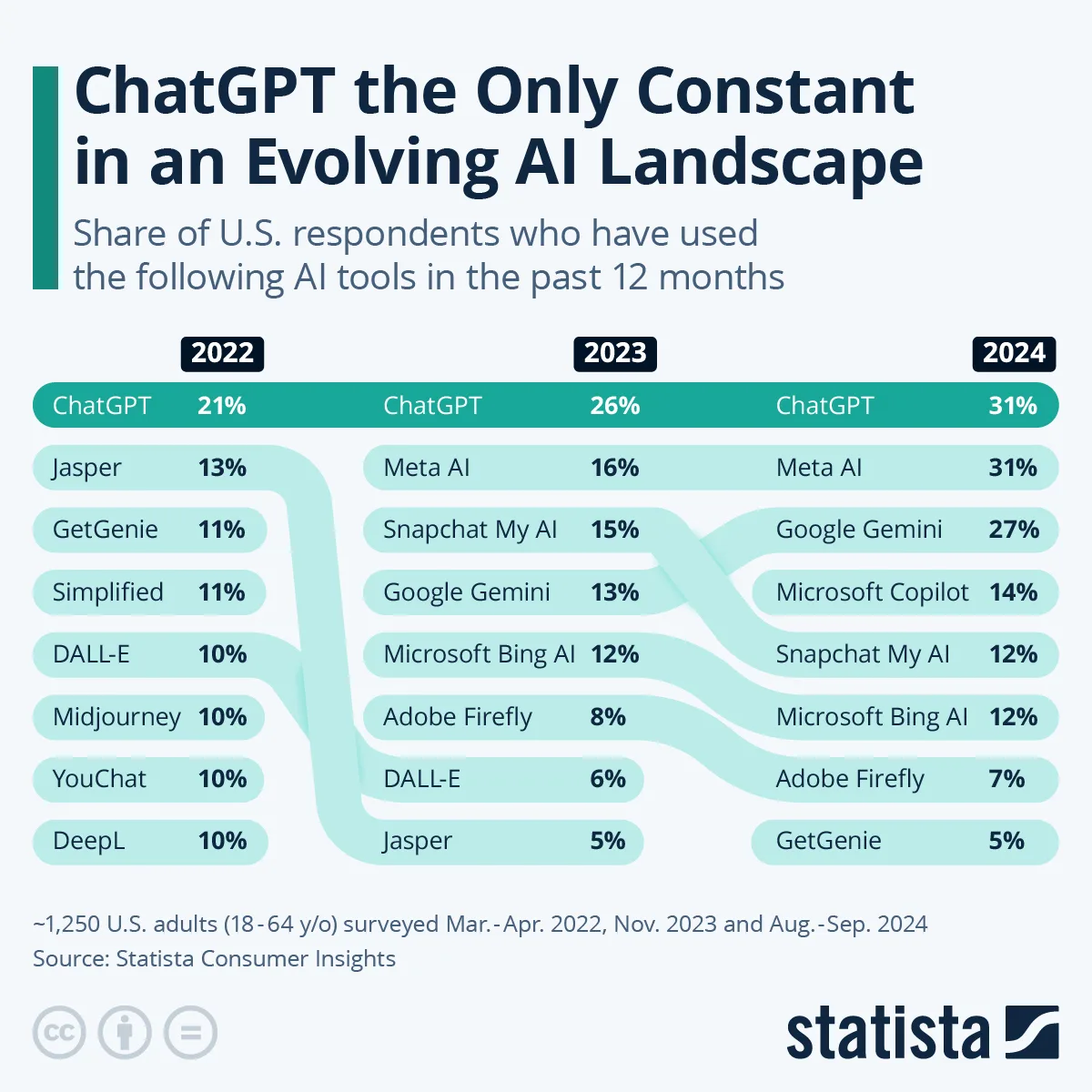
    Following the success of ChatGPT, a multitude of AI-powered tools began entering the market at an unprecedented pace. From creative applications like Adobe Firefly, which specializes in image generation and enhancement, to comprehensive productivity suites such as Microsoft Copilot, the variety of AI offerings reflects the diverse needs of consumers. Despite this influx, none have yet rivaled the mainstream acceptance that ChatGPT achieved.

    Survey Insights: ChatGPT’s Lead

    According to surveys conducted by Statista Consumer Insights across 2022, 2023, and 2024, ChatGPT has consistently led the AI landscape in user preference and adoption rates. While competitors have emerged and the environment continues to evolve, ChatGPT’s early success has allowed it to maintain a first-mover advantage. The data underscores the significance of initial market presence and user trust in technology adoption.

    The Competitive Landscape

    Meta AI: A Close Contender

    While ChatGPT has reigned supreme, its position has been challenged by other players, particularly Meta AI. According to the 2024 survey, Meta AI has begun to close the gap, signaling intensifying competition in the space. This development raises intriguing questions about the factors that contribute to user loyalty in AI tools and how competing platforms can effectively capture market share.

    Apple’s Entry: A Potential Game Changer

    Another key player poised to impact the AI landscape is Apple, which announced its entry into the market in late 2024. With a substantial installed device base and a loyal customer following, Apple’s foray into AI could drastically reshape the adoption curve. The brand’s reputation for quality and innovation means its AI offerings may garner considerable attention.

    Future of AI Tools

    Continuous Evolution of AI

    As the market for AI tools continues to grow, it is important to track the evolving dynamics between established leaders like ChatGPT and emerging challengers. The pace of innovation is rapid, with new features and capabilities being introduced regularly. Future developments will likely focus on improving user experience, ensuring responsible AI use, and expanding applications across domains.

    The Importance of User Adoption

    Ultimately, user adoption will hinge on how well these tools meet the needs of individuals and organizations. Factors such as ease of use, reliability, and the effectiveness of AI solutions will play crucial roles in influencing future market positions. As these AI tools evolve, they will shape the contours of the digital landscape, fostering an environment rich in creativity and efficiency.

  • 60% of Americans Fear Voter Fraud Despite Rare Occurrence

    60% of Americans Fear Voter Fraud Despite Rare Occurrence

    Infographic Overview: Fear of Voter Fraud in America

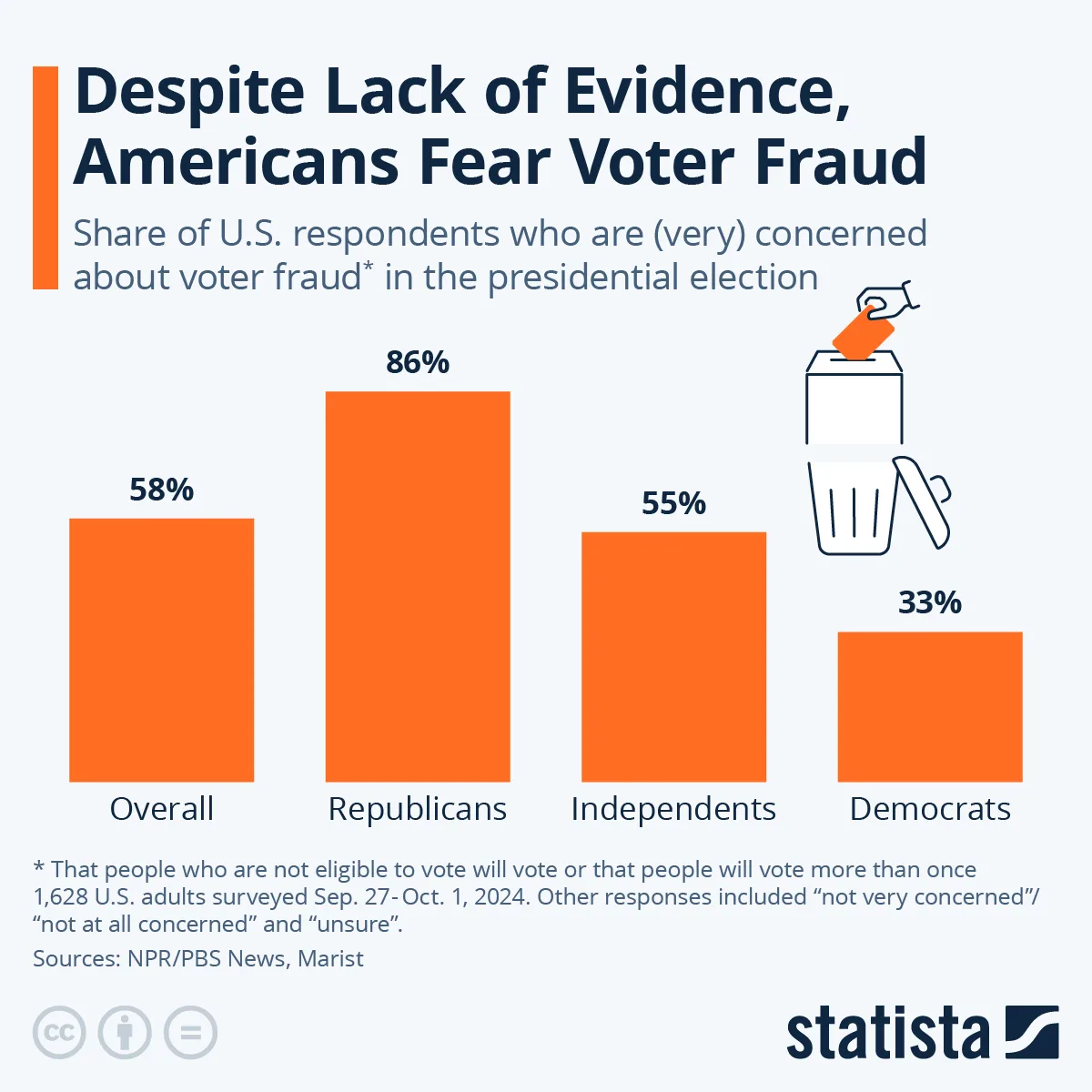
    The anxiety surrounding the integrity of elections is a compelling issue in the United States. According to recent data presented by Statista, despite the rarity of election fraud, a significant portion of the American public expresses concern over this issue. In a poll conducted by NPR/PBS News and Marist, it was revealed that a staggering 60% of U.S. adults reported feeling concerned or very concerned about voter fraud as the presidential election approached.

    The Poll Breakdown: A Closer Look

    General Concerns About Voter Fraud

    The statistics illuminate a critical perspective on American sentiments regarding electoral integrity. Though the instances of voter fraud have been proven to be minimal, the anxiety surrounding it has permeated public consciousness. This disconnect between perceived risk and actual evidence serves as a focal point for discussions about electoral reforms and public trust in the democratic process.

    • Overall Concern: 60% of U.S. adults showed concern regarding voter fraud.

    Party Line Divides

    The divide in perception of voter fraud concerns highlights how political affiliations can shape one’s views.

    • Republican Voters: A notable 86% of Republican-leaning individuals expressed concern about voter fraud. This overwhelming majority can be attributed to several factors, including rhetoric from party leaders and media narratives that emphasize the fear of electoral irregularities.

    • Independents: The concerns among Independent voters are markedly lower, with only 55% expressing apprehension. This group often comprises individuals who may swing between party lines and have more varied opinions, reflecting a more moderate stance on the issue.

    • Democratic Voters: Only 33% of Democratic-leaning voters reported concern about voter fraud. This stark contrast raises questions about the differing narratives and the underlying beliefs that influence each party’s perspective on election integrity.

    Voter Fraud: Reality vs. Perception

    Understanding the misalignment between fear and evidence is critical in addressing the widespread concerns about voter fraud.

    Rarity of Voter Fraud

    Multiple studies and analyses have demonstrated that actual cases of voter fraud are incredibly rare in the United States. Data compiled from various reputable sources shows that the instances of individuals voting illegally, manipulating ballots, or committing fraud is negligible compared to the millions of votes cast in each election.

    • Statistical Insights: Reports indicate that voter fraud rates are often cited to be between 0.0003% and 0.0025%. Such rates reveal how, statistically speaking, fraudulent voting is an infrequent occurrence that doesn’t warrant the level of concern exhibited by many Americans.

    Influence of Media and Political Rhetoric

    The media plays a significant role in shaping public opinion, especially on contentious issues like voter fraud.

    Media Coverage

    The portrayal of voter fraud in the news can amplify fears, often focusing on allegations rather than providing context about the actual scope of the problem. Sensationalized headlines and unsubstantiated claims can skew public perception, leading individuals to believe that the threat of voter fraud is more prevalent than it really is.

    Political Narratives

    Political figures from various parties contribute to the discourse surrounding voter fraud, often leveraging fears to mobilize their base or justify legislative changes. The rhetoric used can fuel partisan divides, as seen in the remarkable differences in concern among Republican, Independent, and Democratic voters.

    The Implications of Voter Fraud Anxiety

    The anxiety around voter fraud has significant implications for American democracy, influencing both policy decisions and public trust.

    Policy Responses

    In light of these concerns, there have been various legislative efforts aimed at curtailing perceived voter fraud, ranging from stricter voter ID laws to heightened scrutiny of voter registration processes. These measures often have a disproportionate impact on minority and low-income populations, raising concerns about accessibility and equity in voting practices.

    Trust in Democracy

    The persistent fear of voter fraud can also erode trust in the electoral process. When a substantial portion of the population believes that elections are compromised, it can lead to apathy, voter suppression, and disillusionment with the democratic system as a whole. This cycle poses a fundamental challenge to the health of American democracy, which relies on public confidence in electoral integrity.

    Conclusion Context

    In understanding the complexities surrounding voter fraud fears, it’s essential to recognize the factors contributing to these perceptions. The discrepancies among political affiliations and the influence of media narratives illustrate the intricacies of public opinion in the context of elections. While facts indicate that voter fraud is rare, the implications of these fears are far-reaching, affecting legislation, public trust, and ultimately, the democratic process in the United States.