Tag: U.S. adults

  • 69% of U.S. Adults Support Same-Sex Marriage in 2024

    69% of U.S. Adults Support Same-Sex Marriage in 2024

    Overview of U.S. Public Support for Same-Sex Marriage

    The evolving landscape of societal attitudes towards same-sex marriage in the United States reveals significant shifts over the decades. Recent data from a Gallup survey indicates that around 69% of U.S. adults support the legality of same-sex marriage, marking a notable journey from just 27% in 1996 when polling on this issue first began.

    Historical Context

    The acceptance of same-sex marriage has undergone a dramatic transformation since the late 20th century. In 1996, the concept was largely controversial, reflecting prevalent societal norms and legislative obstacles. The initial polling data from Gallup at that time captured only a quarter of the population advocating for legal recognition of same-sex marriages. This statistic highlights how far public perceptions have shifted in less than three decades.

    Recent Trends in Support

    The latest survey results, recorded in May 2024, show a slight decrease in support from the 2023 peak of 71%. Despite this dip, the current support level remains one of the highest recorded in recent history. In tracking the evolution of support, it is essential to consider how various demographics align with these changes:

    Support by Political Affiliation

    Public opinion on same-sex marriage is significantly influenced by political ideology:

    • Democrats: A remarkable 83% of self-identified Democrats support same-sex marriage.
    • Independents: Approximately 74% of independents also favor the legalization and equal rights of same-sex couples.
    • Republicans: In contrast, support among Republicans stands at 46%. Although Republican approval has occasionally surpassed the majority—recording 55% approval in both 2021 and 2022—recent trends indicate a drop below the 50% mark in subsequent years.

    This variation illustrates the complex interplay between political identity and views on marriage equality.

    Implications of Support Fluctuations

    The fluctuations in support, particularly among Republicans, raise questions about the broader political and social environments. As public sentiments evolve, they can have significant implications for legislative actions and the pursuit of equal rights.

    Political Climate Effects

    The legislative landscape surrounding LGBT+ rights is heavily influenced by the prevailing public opinion. A majority support often opens pathways for lawmakers to propose or reinforce laws that ensure equal rights for all. Conversely, dips in approval, particularly among key demographic groups, may contribute to legislative hesitance or pushback against progressive measures.

    Future Outlook

    The journey toward full acceptance and legal recognition of same-sex marriage is ongoing. Societal attitudes can rapidly shift, and as seen in historical contexts, new advocacy and cultural movements can impact public perceptions significantly.

    Understanding these nuances is crucial for advocates as they navigate the landscape to ensure that progress towards equality not only continues but accelerates in the years to come.

  • 54% of Teens & 45% of Adults Face Mental Health Treatment Barriers

    54% of Teens & 45% of Adults Face Mental Health Treatment Barriers

    Mental Health Awareness Month: Turning Awareness into Action

    Mental Health Awareness Month, observed in May, is a vital time to emphasize not only the recognition of mental health issues but also the necessity for tangible changes in the way these issues are treated. The 2025 theme, "Turn Awareness into Action," particularly highlights the importance of progressing from mere recognition to meaningful engagement with mental health support and treatment.

    Current Landscape of Mental Health Treatment

    Recent data from Mental Health America reveals striking statistics regarding mental health treatment accessibility in the United States. In 2023, the figures showed that while a significant number of adults and teenagers with mental health needs recognized their issues, the treatment they received was limited. Specifically, between 45% and 58% of individuals within these groups were able to access necessary treatment, indicating a substantial gap in mental healthcare delivery.

    Age-Based Disparities in Treatment

    A closer examination of these statistics reveals notable differences in the reasons for unmet mental health needs across age groups.

    Adults vs. Teenagers

    For adults, common barriers include:

    • Cost of Treatment: A large number indicated that financial constraints prevented them from seeking help. Many adults reported that their insurance either did not cover adequate costs or that out-of-pocket expenses were too high.

    • Self-Reliance: Another significant reason adults cited was a belief that they could handle their mental health challenges on their own, reflecting a cultural mindset that often stigmatizes seeking help.

    In contrast, teenagers aged 12 to 17 faced different obstacles:

    • Fear of Judgment: This age group expressed heightened concerns about being judged if they sought help, pointing to the lingering stigma attached to mental health, particularly among younger individuals.

    • Confidentiality Concerns: Many teenagers were apprehensive about their privacy, highlighting a crucial need for more open and supportive discussions around mental health within schools and communities.

    Awareness of Support Services

    An alarming statistic shows that 38% of adults and 56% of teenagers reported not knowing where to find the support services they needed. This lack of awareness adds another layer of complexity to the existing issues surrounding mental health treatment.

    Importance of Education

    Improving mental health literacy can play a fundamental role in addressing this gap. By educating both adults and teenagers about available resources and services, communities can reduce the stigma and barriers currently hindering access to treatment. Schools, local organizations, and healthcare providers must collaborate to ensure that individuals know where to seek help.

    Moving Forward: From Recognition to Action

    As we progress through Mental Health Awareness Month and beyond, it’s essential to convert increased awareness into actionable steps. This involves not only enhancing access to mental health services but also fostering environments where individuals feel safe and supported in discussing and addressing their mental health needs.

    By focusing on both prevention and treatment, communities can work towards a society where mental health is prioritized just as much as physical health, paving the way for improved overall well-being.

  • 60% of U.S. Smart Speaker Owners Prefer Amazon Echo

    60% of U.S. Smart Speaker Owners Prefer Amazon Echo

    America’s Favorite Smart Speaker: A Deep Dive into Market Trends

    Smart speakers have rapidly transformed how we interact with technology in our homes. With voice-activated assistants becoming a staple in modern households, the landscape of smart speaker ownership is evolving. According to recent survey data from Statista’s Consumer Insights, the dominance of Amazon Echo in the U.S. market highlights the preferences of consumers regarding their smart speaker choices.

    The Dominance of Amazon Echo

    Amazon’s Echo, powered by Alexa, stands out as a favorite among U.S. adults. The survey reveals that around 60% of voice-activated smart speaker owners have chosen the Amazon Echo for its versatility and performance. This overwhelming preference can be attributed to several factors:

    Features and Capabilities

    1. Voice Recognition: Alexa is known for its advanced voice recognition capabilities, allowing for seamless interaction.
    2. Smart Home Integration: The Echo easily integrates with a plethora of other smart devices, providing a central hub for home automation.
    3. Versatile Functionality: From music playback to setting reminders, Alexa’s extensive range of skills makes it a multifunctional tool for users.

    Competing Brands: Google Home and Apple HomePod

    While Amazon Echo leads the market, it faces competition from other significant players. According to the same survey:

    • Google Home is owned by 23% of smart speaker users, showcasing its appeal, particularly for those who rely heavily on Google services.

      Google Home’s Strengths

      • Google Assistant: Known for its robust search abilities and integration with various Google features, it is a solid choice for many users.
      • Smart Home Compatibility: Like Echo, Google Home also supports a range of compatible devices, allowing users to manage their smart home efficiently.
    • Apple HomePod follows behind with 16% ownership among respondents, catering primarily to Apple enthusiasts.

      HomePod Unique Selling Points

      • Sound Quality: The HomePod is recognized for its superior audio experience, making it a favorite for music lovers.
      • Privacy Features: Apple emphasizes user privacy, which can be a significant factor for consumers concerned about data security.

    Market Growth Potential

    Despite the current popularity of voice-activated smart speakers, there remains a considerable potential for market expansion. The survey indicates that a staggering 75% of U.S. adults do not currently own a smart speaker assistant. This statistic highlights several opportunities for growth and innovation in the industry:

    Barriers to Adoption

    1. Lack of Awareness: Many consumers may not fully understand the benefits and capabilities of smart speakers.
    2. Cost Concerns: The price point of devices may deter potential buyers, especially in economically challenging times.
    3. Privacy Concerns: Issues surrounding data privacy and security continue to be a significant concern, prompting hesitation among potential users.

    Trends in Smart Speaker Usage

    As the technology continues to evolve, user preferences are also shifting. The surge in smart home devices signals a growing trend towards enhancing home automation, which smart speakers significantly support. Additionally, the increasing integration of these devices into everyday activities, from cooking to home entertainment, illustrates their widening scope.

    Evolving Consumer Preferences

    • Personalization: Users are seeking smarter integrations that adapt to their daily routines and preferences.
    • Voice Interaction: The desire for more natural and intuitive voice interactions is pushing manufacturers to improve their software and capabilities.
    • Diverse Use Cases: Consumers are now looking for smart speakers that provide more than just music playback—features like home security integration, education tools, and productivity enhancements are becoming crucial.

    Conclusion: The Future of Smart Speakers

    As the popularity of smart speakers continues to rise, tracking trends and shifts in consumer behavior becomes essential. Amazon Echo holds a commanding lead over its competitors, but Google Home and Apple HomePod are significant players in this evolving market. With substantial room for growth, understanding user preferences and addressing their concerns will be key drivers in shaping the future of the smart speaker industry.

  • 69% of Americans Oppose Forceful Claim on Greenland

    69% of Americans Oppose Forceful Claim on Greenland

    U.S. Delegation’s Visit to Greenland: Mixed Reactions and Political Implications

    Overview of the Visit

    A recent planned trip by a U.S. delegation to Greenland has stirred controversy and led to significant backlash from Greenlandic leaders. The delegation, headed by U.S. Second Lady Usha Vance, included national security advisor Mike Waltz and energy secretary Chris Wright. The group intended to celebrate what was described as a "long history of mutual respect and cooperation" between the United States and Greenland. Their agenda involved visiting a U.S. military base and engaging in local cultural activities, such as a dogsled race.

    Greenlandic Leaders Respond

    Despite the friendly motives conveyed by U.S. officials, the reception in Greenland was far from warm. The outgoing Prime Minister of Greenland, Mute Egede, characterized the U.S. visit as "highly aggressive" and a "provocation." He expressed concerns regarding the presence of national security advisor Waltz, questioning his role in a visit that he perceived as an assertion of power over Greenland. Egede’s remarks highlight the sensitivity surrounding Greenland’s autonomy and its relationship with Denmark, which holds sovereignty over the territory.

    Context of Tensions

    The tensions surrounding the U.S. delegation cannot be overlooked, particularly in light of former President Donald Trump’s previous remarks regarding Greenland. In his first address to Congress, Trump reiterated his interest in acquiring Greenland, framing it as a matter of "national security and even international security." His declarations included a direct appeal to the "incredible people of Greenland," promising them safety, wealth, and autonomy in determining their future.

    Trump’s threats to "get" Greenland "one way or the other" raised alarms, especially considering the implications of such statements on international relations and sovereignty issues. As Prime Minister Mette Frederiksen of Denmark noted, the visit cannot be viewed in isolation from the concerning rhetoric surrounding Greenland’s status.

    Public Sentiment in the United States

    Despite the provocative nature of the situation, recent polling data reveals that American public opinion is largely opposed to the notion of wielding military force to take control of Greenland. A YouGov survey conducted on behalf of The Economist found that 69% of U.S. adults disapprove of the idea, with only 11% in support. This dismay is not limited to the general population; even among Republicans, 57% expressed opposition to the military acquisition of Greenland.

    The Role of NATO and International Relations

    The geopolitical implications of forcibly acquiring Greenland are significant. Denmark, a NATO member, presents a formidable barrier against any attempts at forcible control. An assault on Danish sovereignty would not only disrupt the regional balance but could also incite a broader international crisis. The commitment of NATO allies to collective defense means that any military action against Denmark (and by extension, Greenland) would be met with unified resistance.

    Greenland’s Autonomy and Future

    Greenland’s political landscape is unique; as an autonomous territory, it possesses its own government and a distinct cultural identity separate from Denmark. The aspirations of Greenlanders to define their own political future underscore the importance of recognizing their autonomy in international discussions. The rhetoric from U.S. leaders suggesting takeover or control has historically been met with fierce resistance from both local leaders and the broader Greenlandic population.

    The relationship between the U.S. and Greenland, underpinned by military alliances and shared strategic interests, necessitates careful navigation to avoid misunderstandings and foster goodwill. The recent visit by U.S. officials, despite its intentions, paints a complex picture of diplomatic relations infused with both historical ties and contemporary challenges.

    Conclusion

    This blog entry serves to unpack the intricacies of U.S.-Greenland relations amidst rising tensions and varying perceptions of sovereignty and autonomy. With strong public sentiment against military intervention and a landscape of diplomatic sensitivities, the path forward will require dialogue rooted in respect and acknowledgment of Greenland’s self-determination.

  • Nearly 1 in 5 U.S. Adults Experience Long Covid Symptoms

    Nearly 1 in 5 U.S. Adults Experience Long Covid Symptoms

    Understanding Long Covid: The Lingering Effects of the Pandemic

    The Ongoing Impact of Long Covid

    As we reflect on the journey since the World Health Organization declared a global pandemic due to COVID-19 five years ago, it becomes clear that the effects of the virus extend beyond just initial illness. While widespread vaccination has dramatically reduced hospitalizations and fatalities, a significant number of individuals continue to grapple with the long-term repercussions of COVID-19, commonly referred to as long Covid.

    What is Long Covid?

    Long Covid encompasses a range of symptoms that persist for weeks or months after the initial infection has resolved. These symptoms can manifest in various ways, affecting multiple organ systems and often severely impeding daily activities. Commonly reported issues include fatigue, cognitive dysfunction, shortness of breath, and joint pain, but the experiences vary widely among individuals.

    Long Covid Statistics: A Closer Look

    Prevalence Among Adults

    Recent data from the Centers for Disease Control and Prevention (CDC) has revealed alarming statistics regarding the prevalence of long Covid in the United States. According to a representative survey conducted between August 20 and September 2024, nearly one in five adults—or 17.9 percent—reported having experienced long Covid at some point. This figure marks an increase from 14.2 percent recorded in a previous survey conducted in September 2022, indicating that even years after the onset of the pandemic, the effects of the virus remain significant.

    Current Experience of Long Covid

    While the overall awareness of long Covid has grown, the proportion of individuals currently suffering from this condition has shown a decline over time. As of last summer, 5.3 percent of the U.S. population indicated they were currently experiencing long Covid symptoms, a drop from 7.2 percent in 2022. This trend suggests a gradual decrease in new long Covid cases as time progresses, potentially as a result of improved treatments and increased societal immunity.

    Activity Limitations Due to Long Covid

    The Impact on Daily Life

    The repercussions of long Covid extend beyond mere physical symptoms; they significantly affect the quality of life and daily functioning of those impacted. According to the CDC, a considerable portion of the population has faced activity limitations as a result of long Covid. The numbers may appear low in percentage terms, with 4.4 percent of U.S. adults reporting such limitations. However, this translates to over 15 million individuals who are struggling to perform everyday tasks due to persistent health issues associated with long Covid.

    Psychological Effects

    In addition to physical limitations, many individuals with long Covid also encounter psychological challenges, including anxiety, depression, and cognitive difficulties often described as "brain fog." The interaction between physical and mental health complicates the recovery process, creating a multifaceted issue that requires a comprehensive approach to treatment and support.

    Historical Context: Evolution of Long Covid Awareness

    Initial Findings

    The understanding of long Covid has evolved rapidly since the onset of the pandemic. Initially, the focus was primarily on acute COVID-19 cases; however, as healthcare providers began observing persistent symptoms in patients long after their recovery, the medical community quickly acknowledged the need to address this new phenomenon.

    Research Developments

    Subsequent research has devoted significant attention to identifying the causes of long Covid, its symptoms, and potential recovery pathways. Multidisciplinary studies are crucial as they investigate the long-term health impacts of COVID-19 and seek to provide evidence-based interventions for those suffering from long Covid.

    The Future of Long Covid Awareness and Treatment

    As the understanding of long Covid continues to grow, there is hope for improved treatment options and support systems. The emphasis on research and patient advocacy is vital to address the ongoing needs of those affected. As more data becomes available and the medical community learns from patient experiences, there is potential to develop tailored strategies to help manage and alleviate the symptoms associated with long Covid.

    Summary of Key Points

    • Long Covid remains a critical public health issue, affecting nearly one in five U.S. adults.
    • Although the prevalence of currently experiencing long Covid symptoms has decreased, millions still face significant health challenges.
    • The ongoing impact of long Covid highlights the importance of continued research and support for affected individuals.

    By investigating the current landscape of long Covid, we gain insight into the intricacies of its impact on society. Understanding the experiences of those affected by the condition is essential in fostering empathy and driving progress toward effective solutions.

  • 60% of Republicans Support Cuts to USAID Amid Polarization

    60% of Republicans Support Cuts to USAID Amid Polarization

    Americans Divided on Federal Mass Cuts

    In the whirlwind of political changes ushered in by the Trump administration, public sentiment surrounding federal funding cuts has become a contentious issue. A recent survey conducted by YouGov and the Economist showcased that Americans hold sharply divided opinions on which federal departments and agencies warrant reductions or elimination.

    Overview of Federal Cuts Announced by the Trump Administration

    Upon taking office, President Trump quickly set his agenda in motion, including significant changes in foreign and domestic policies. In the first month of his presidency, he enacted a 90-day freeze on all U.S. foreign assistance, including programs conducted by the United States Agency for International Development (USAID). This decision has profound implications both domestically and internationally, as millions rely on this aid for health and welfare programs.

    Public Sentiment on USAID Cuts

    The survey highlighted a stark divide between Republican and Democratic views on USAID. A staggering 60% of Republicans support cuts to USAID, while only 10% of Democrats agree. This sharp contrast underscores how party affiliation influences perceptions of federal assistance and its utility. For many Republican respondents, reducing the budget for foreign aid aligns with a broader “America First” philosophy, which prioritizes domestic spending and alleviates concerns about aiding other nations.

    Department of Defense: A Rare Consensus

    While opinions are divided regarding many agencies, there’s a notable consensus regarding the importance of the Department of Defense (DoD). The survey found that respondents across the political spectrum generally agreed that funding for the DoD should remain intact. This common ground might stem from a broader acknowledgment of national security concerns, which often transcends partisan divides.

    The Controversy Over Department of Government Efficiency (DOGE)

    Amidst the ongoing debates, the Department of Government Efficiency (DOGE), led by Elon Musk, emerged as a point of contention. Democrats show a higher level of concern regarding this department and its initiatives compared to Republicans. The disapproval likely arises from the perception that DOGE could further diminish public sector roles and responsibilities—a critical point for many progressives who argue for a robust and effective government.

    Implications of Funding Cuts on Global Health Programs

    The implications of the funding cuts are particularly dire for global health initiatives. USAID has funded programs worldwide that combat AIDS, malaria, and maternal mortality, among other critical health issues. The freeze threatens to cut off vital resources, impacting millions of vulnerable individuals in over 50 countries. Critics of the cuts argue that aligning spending solely with domestic interests neglects the global responsibilities that the U.S. holds in areas such as public health and humanitarian aid.

    Strategic Merging of Agencies

    In addition to the funding freeze, the Trump administration’s plan to merge USAID with the U.S. Department of State has raised concerns about the future of foreign assistance. Many worry that this merger may dilute the effectiveness and focus of programs designed to address urgent global challenges. The administration’s rationale centers on a more streamlined approach to foreign assistance, but the potential consequences could reverberate through various health and aid programs currently operational in many developing nations.

    Conclusion

    The ongoing debate surrounding federal cuts, particularly concerning USAID and other departments, reflects broader ideological battles within American politics. As public opinions show a clear divide, the ramifications of these cuts may pose significant challenges not only for domestic welfare but also for international health and aid initiatives. The tension between reducing government spending and maintaining a commitment to global health and security will continue to shape the political landscape in the coming months.

  • 20% of U.S. Adults Support Increasing Aid to Ukraine

    20% of U.S. Adults Support Increasing Aid to Ukraine

    Understanding American Perspectives on Military Aid to Ukraine

    In the context of ongoing geopolitical tensions following Russia’s invasion of Ukraine, American public opinion on military aid to the Eastern European nation has become increasingly relevant. A recent survey conducted by YouGov sheds light on how U.S. adults view military support for Ukraine, revealing sharp divisions based on political affiliation and differing perspectives on the conflict’s potential outcomes.

    Current Opinions on Military Aid

    Survey Insights

    According to the YouGov survey, only 20% of U.S. adults believe that the United States should increase its military aid to Ukraine. This figure suggests a notable hesitation among the broader population about escalating involvement in the conflict. In contrast, a significant 30% of respondents advocate for a decrease in aid, highlighting a substantial faction that believes the U.S. should reconsider its current level of commitment to Ukraine.

    Political Party Affiliation and Its Impact

    Democratic Views

    The responses to military aid become even more pronounced when broken down by party affiliation. Among Democrats, a considerable 74% express support for either maintaining or increasing U.S. military aid to Ukraine. This strong consensus reflects a party aligned with internationalist policies and a tendency to support Ukraine’s sovereignty against aggression.

    Republican Perspectives

    On the other end of the spectrum, Republican respondents present a starkly different view. While 35% support maintaining aid, a striking 45% believe that the U.S. ought to scale down its military assistance. The division within the Republican base underscores a growing isolationist sentiment that resonates with a significant portion of conservative voters. This divergence in opinions raises questions about the future of U.S. foreign policy and the potential for bipartisan support in times of crisis.

    War Outcomes According to U.S. Citizens

    Perceptions of Victory

    The survey also sought to gauge public sentiment regarding the likely victor of the ongoing conflict. Interestingly, 29% of respondents predict that Russia will emerge victorious, while only 13% hold the belief that Ukraine will achieve victory. These statistics reveal a pessimistic outlook among the public regarding Ukraine’s prospects, particularly in light of the sustained military and economic support they have received thus far.

    Uncertainty and Equal Likelihoods

    Further complicating the public opinion landscape, 19% of survey participants feel that both nations stand an equal chance of winning the war. Additionally, a significant 39% of respondents admitted they did not know which side would secure victory. This uncertainty may stem from the complex nature of the conflict, which has seen irregular shifts in momentum and ongoing negotiations that leave the outcome shrouded in ambiguity.

    Summary of Key Findings

    • 20% of Americans advocate for an increase in military aid to Ukraine.
    • 30% believe the U.S. should decrease its support.
    • 74% of Democrats favor maintaining or increasing aid, contrasted with only 10% of Republicans.
    • 29% predict a Russian victory, while only 13% foresee a Ukrainian win.
    • A significant number remain uncertain regarding the war’s outcome, highlighting the complexity and evolving nature of the situation.

    Through these findings, it becomes increasingly clear that public opinion on military aid to Ukraine is heavily influenced by political affiliation and perceptions of the conflict’s viability. The landscape of American support for Ukraine is complex, with a range of opinions that could potentially shift as the situation on the ground evolves.

  • 42% of Republicans Say Musk Has Too Much Influence

    42% of Republicans Say Musk Has Too Much Influence

    The Rise of Elon Musk’s Influence in U.S. Politics

    Elon Musk’s foray into the political arena has been nothing short of dramatic, especially with his vocal support for Donald Trump’s ambitions to reclaim the presidency. This blog post delves into the implications of Musk’s influence on the current Trump administration, particularly in a potential second term.

    Musk’s Entry into Political Support

    When Musk began openly endorsing Trump, the American public was left to speculate about how his immense financial resources and social media influence would impact governance. Initially, questions revolved around Musk’s actual sway—would he act as a puppet master behind the scenes, or his influence be more public and pronounced?

    The Silicon Valley Ethos in Washington

    Musk’s approach, rooted in the Silicon Valley principle of "move fast and break things," has manifested in what some are calling the Department of Government Efficiency (DOGE). This self-styled initiative has already set its sights on various facets of government operations, with Musk advocating for a radical reduction in what he deems excessive workforce and spending.

    The Impact on Government Agencies

    As Musk rallies for a leaner government, the consequences for various federal agencies are tangible. His methods have raised eyebrows, creating concerns regarding government efficacy and worker morale.

    Job and Budget Cuts

    Musk’s "slash-and-burn" mentality entails cutting jobs and slashing budgets across multiple departments. Critics argue that this has led to long-term damage, as employees become anxious and demoralized. The cascading effects of such a strategy may weaken critical government functions, affecting everything from public health and safety to environmental protection.

    Erosion of Trust in Institutions

    In addition to tangible operational changes, Musk’s approach risks damaging trust in American institutions. Many citizens worry that such drastic changes come with little adherence to laws, union agreements, or civil service protections, potentially setting a dangerous precedent for governance.

    Public Perception of Musk’s Influence

    Recent polling data from YouGov and The Economist highlights a growing concern among Americans regarding Musk’s level of influence within Trump’s administration.

    Republican Views

    Interestingly, even among Republicans, there’s a noticeable split in opinion about Musk’s role. The data indicates that 42% of Republicans believe Musk holds substantial influence in the current administration. However, only 32% express a desire for him to wield such power. This marks a decline from 47% post-election, revealing a potential shift in sentiment as Musk’s methods come under scrutiny.

    Democratic Sentiments

    The divide is even more stark within the Democratic voter base. 81% of Democrats perceive Musk as influential, while a mere 5% would welcome him having significant power. This indicates a substantial and growing concern likely fueled by Musk’s policies and actions that many Democrats view as detrimental.

    The Future of Governance Under Musk’s Shadow

    As Musk continues to exert his influence, it raises critical questions about the future of governance in America. The balance between innovation and functionality, efficiency, and ethical governance will be at the heart of this unfolding narrative. The opinion polls reflect a populace that is increasingly wary of the ramifications of Musk’s unilateral decisions.

    In this evolving political landscape, it will be essential to monitor both public sentiment and the administrative impacts of Musk’s initiatives as they develop. The interplay between a tech mogul’s influence and democratic governance poses a rich tapestry of challenges and questions yet to be fully explored.

  • Trust, Honesty, and Respect: Key to 90% of Relationships

    Trust, Honesty, and Respect: Key to 90% of Relationships

    Understanding Relationship Priorities: Insights from a Recent Survey

    With evolving societal norms and changing perspectives on relationships, understanding what individuals value most is essential. A recent survey conducted by YouGov, which encompassed the views of 2,167 U.S. adults, provides a detailed look at how different factors impact the perception of successful relationships. This article dives into the results of this survey, highlighting the variations in opinions among men and women, as well as across generational lines.

    Trust, Honesty, and Respect: The Cornerstones of Relationships

    Universal Values

    The survey revealed a consensus among respondents regarding the paramount importance of trust, honesty, and respect in a relationship. Each of these values garnered feedback from upwards of 90 percent of participants, irrespective of age or gender. This overwhelming agreement suggests that while specific preferences may shift over demographics, the foundational aspects of a healthy relationship remain steadfast.

    Monogamy: Divergent Views Across Generations

    Generational Perspectives

    When discussing monogamy, the survey highlighted a stark contrast between older and younger generations. In the 45+ age group, a substantial 81 percent declared the importance of being monogamous in relationships. Conversely, only 51 percent of respondents aged 18-44 echoed this sentiment. This generational divide reveals how societal shifts and changing relationship structures may alter perceptions of commitment.

    Gender Differences in Views on Monogamy

    The survey also indicated a notable gender disparity in views on monogamy. Among women, 73 percent considered it vital, compared to 62 percent of men. This difference points to a broader conversation about expectations in relationships and the inherent values that individuals bring from their background, culture, and personal experiences.

    The Role of Romance in Relationships

    Younger Generations and Romance

    Romance emerged as another area where generational viewpoints diverged. Approximately 68 percent of younger adults (18-44) deemed romance very important, while only 58 percent of those over 44 shared this belief. This trend suggests that younger people are likely to prioritize emotional connections and romantic experiences, perhaps influenced by media portrayals and social media’s emphasis on romantic ideals.

    Gender Comparisons in Romantic Preferences

    Interestingly, the data presents another gender-based contrast in romantic significance. Men (66 percent) were more inclined than women (59 percent) to assert that romance is very important. These insights challenge common stereotypes of masculinity and femininity, revealing a more nuanced understanding of how men and women experience romance differently.

    Perspectives on Parenthood and Its Importance

    Views on Having Children

    When discussing the importance of raising children in successful relationships, the survey found a shift in priorities, particularly among younger adults. While adults aged 18-44 indicated a higher likelihood (compared to their older counterparts) of viewing having children as crucial to a relationship, overall, this factor ranked lower in importance for most respondents.

    Gender Disparities in Reproductive Preferences

    The survey further revealed that men (28 percent) valued parenthood more than women (22 percent) concerning relationship success. This finding may reflect changing attitudes towards fatherhood and motherhood in contemporary society, revealing a more significant role that men are willing to acknowledge in parental responsibilities and involvement.

    Conclusion (not included as per request)

  • 9% of U.S. Adults Identify as Non-Heterosexual: Generational Trends

    9% of U.S. Adults Identify as Non-Heterosexual: Generational Trends

    Understanding Sexual Orientation Across Generations in the U.S.

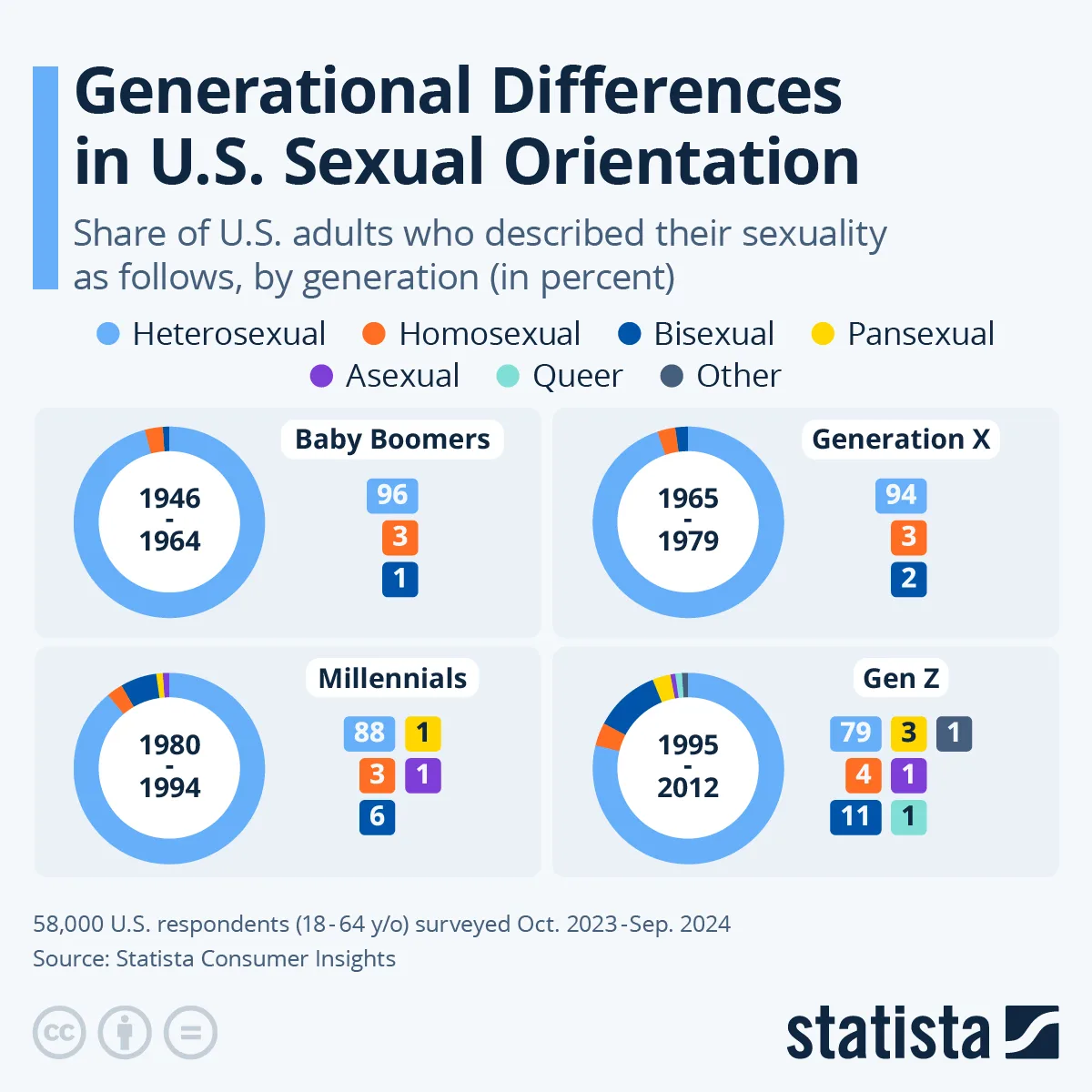
    The landscape of sexual orientation in the United States has undergone significant changes over the decades, reflecting broader societal shifts. Recent data reveals intriguing generational differences among U.S. adults aged 18-64 regarding sexual identity, with varying rates of identification as heterosexual, homosexual, bisexual, and pansexual.

    Generational Breakdown of Sexual Orientation

    According to findings from Statista, there is a notable correlation between age and the likelihood of identifying as non-heterosexual. Understanding these proportions can provide valuable insights into the evolving attitudes toward sexual orientation across different age groups.

    Baby Boomers (Born 1946-1964)

    In the Baby Boomer cohort, a staggering 96% identify as heterosexual. This substantial percentage highlights a conservative approach to sexual identity within this generation, possibly influenced by the societal norms and expectations prevalent during their formative years. Only a small fraction identifies as non-heterosexual, indicating a limited exposure or acceptance of diverse sexual orientations during this era.

    Generation X (Born 1965-1980)

    Following the Baby Boomers, Generation X shows a slightly more progressive stance, with 94% identifying as heterosexual. This group experienced significant cultural shifts, including the rise of LGBTQ+ rights throughout the 1980s and 1990s. As a result, although the majority still identify as heterosexual, there is a gradual opening toward broader sexual orientation acceptance.

    Millennials (Born 1981-1996)

    The Millennial generation marks the first major shift in sexual identity perceptions. Among Millennials, 88% identify as heterosexual. This marks a 6% decline from Generation X and reflects Millennials’ greater acceptance of diverse sexual orientations, shaped by more extensive discussions surrounding gender and sexuality that became prominent in media, education, and social movements in the late 20th and early 21st centuries.

    Generation Z (Born 1997-2012)

    The most pronounced generational shift appears with Generation Z, where only 79% identify as heterosexual. This generation’s relationship with sexual identity is notably more fluid, embracing various labels that reflect personal experiences and identities. Among Generation Z, the most common non-heterosexual identification is bisexual at 11%, suggesting a further acceptance of diverse sexual orientations compared to prior generations. Interestingly, 4% of Generation Z identifies as homosexual, a slight uptick compared to the other generations.

    Trends in Non-Heterosexual Identification

    While the percentages identifying as homosexual remain relatively steady across generations, we observe some nuances in bisexual identification:

    • Baby Boomers: The representation of bisexuality in this group is minimal, reflecting the sexual conservatism of the era.
    • Generation X: Similar trends continue with little representation for bisexual identities, although increased acceptance may have encouraged some individuals to explore and identify outside traditional labels.
    • Millennials: This generation shows a considerable increase in non-heterosexual identities, with bisexuality becoming more mainstream.
    • Generation Z: This trend is even more pronounced, highlighting a significant cultural shift toward recognizing and accepting a variety of sexual orientations.

    Factors Influencing Sexual Identity

    The changes in sexual orientation identification may stem from multiple factors, including:

    Societal Attitudes

    As society becomes increasingly accepting of different sexual orientations, younger generations feel more empowered to identify authentically. The normalization of LGBTQ+ identities through media representation and advocacy has led to a greater public discourse on sexuality.

    Educational Shifts

    With evolving sex education curricula that emphasize inclusivity and understanding of sexual diversity, younger individuals grow up with the confidence that comes from a knowledge-rich environment. This contributes to their willingness to embrace and declare their sexual identities openly.

    Technology and Social Media

    The rise of technology and social media platforms has allowed individuals from various backgrounds to connect, share experiences, and advocate for LGBTQ+ rights. This platform drastically reduces isolation and stigma, encouraging more people to openly explore and express their sexual orientation.

    The Importance of Understanding Generational Differences

    Recognizing the generational disparities in sexual orientation is essential for various reasons, including:

    • Policy-making: Understanding these variations can aid in implementing policies that cater to the needs and rights of different demographics.
    • Marketing: Businesses can more effectively tailor their products and services to resonate with the values and identity expressions of different age groups.
    • Mental Health: Awareness of generational trends can enhance mental health support tailored to specific challenges faced by these groups related to sexual orientation acceptance.

    In summary, the trends in sexual orientation identification among adults in the U.S. illustrate a profound shift in societal attitudes toward sexuality, particularly among younger generations. Each generation plays a crucial role in shaping the ongoing discourse surrounding sexual identity, and understanding these differences is vital in fostering an inclusive society.

  • 54% of Americans Rely on Social Media for News Despite Misinformation

    54% of Americans Rely on Social Media for News Despite Misinformation

    The Role of Social Media in Shaping News Consumption in America

    In today’s digital age, social media platforms play a significant role in how individuals consume news. A recent survey from the Pew Research Center reveals that a staggering 54% of U.S. adults often rely on social media for their news and information. Let’s delve deeper into this trend and explore the implications it has on society.

    The Statistics Behind Social Media News Consumption

    According to the survey conducted by Pew Research Center, social media has become an integral part of many Americans’ media diets. Here are some key findings:

    • Primary Sources: Facebook and YouTube are the two leading platforms where U.S. adults regularly receive their news, with 33% and 32% of participants, respectively, citing these sites as their go-to news sources.
    • Emerging Platforms: Following these giants, Instagram has carved out its space with 20% of users obtaining news from it. TikTok and X (formerly Twitter), which have been identified as significant contributors to the spread of misinformation, round out the top five platforms.

    The prevalence of these statistics indicates a fundamental shift in how news is disseminated and consumed across the United States.

    The Evolving Trust in Social Media as a News Source

    A concerning trend emerging from the recent data is the shift in trust levels regarding information obtained from social media versus traditional news outlets. Various surveys indicate:

    • Trust Levels: Many Americans—particularly younger individuals and those identifying as Republicans—are placing nearly as much trust in social media content as they do in established national news organizations. This is a stark contrast to earlier attitudes, where traditional news sources were regarded as the primary and more reliable source of information.

    The Erosion of Trust in Traditional Media

    The growing reliance on social media for news is indicative of a broader phenomenon—an erosion of trust in traditional media institutions. Factors contributing to this decline include:

    • Polarization: Our society has become increasingly polarized, leading individuals to prefer news that aligns with their pre-existing beliefs. Social media algorithms often cater to this preference, serving users tailored content that reinforces their viewpoints.
    • Accessibility: The instantaneous nature of social media makes it a more appealing source for quick news updates. However, this immediacy often comes at the cost of accuracy, as traditional processes of editorial oversight are frequently bypassed.

    The Dangerous Allure of Misinformation

    While social media offers unprecedented access to news and information, it also presents significant challenges:

    • Misinformation Spread: Platforms like TikTok and X have been recognized for their roles in amplifying misinformation. The algorithms, designed to maximize engagement, do not prioritize factual accuracy, often elevating sensational or misleading content to wide audiences.
    • Impact on Public Opinion: This rampant misinformation can severely distort public perception on critical issues, influencing debates, policies, and elections in ways that may diverge from reality.

    Challenges Ahead: Navigating the News Landscape

    The steady influx of news via social media, while convenient, raises substantial challenges for consumers and society at large. Individuals must navigate a complex landscape filled with biased narratives and misleading information.

    • Critical Thinking Skills: There is a pressing need to equip the public with stronger critical thinking skills, enabling them to discern credible information from dubious sources.
    • Media Literacy Education: Enhanced media literacy initiatives could empower users to better understand the media landscape, enabling them to approach information critically and responsibly.

    The intersection of social media and news consumption encapsulates a pivotal moment in communication history, demanding careful consideration of both its benefits and pitfalls. Understanding this complex dynamic is essential for fostering an informed public in an age characterized by rapid technological advancement and a deluge of information.