If you’re using classic Outlook to manage your emails, you’re probably aware of the frustrating bug that leads to significant CPU usage spikes while composing messages. This makes it challenging to send emails, especially when your system’s CPU consumption can surge by as much as 50%—along with increased power consumption. The good news is that Microsoft has confirmed a fix is coming. However, the catch is that it won’t be available to the majority of users until late May, although some beta testers may receive it as early as mid-May. In the meantime, a temporary solution is available.
Downgrading classic Outlook to version 2405 appears to mitigate the issue, but this approach has its drawbacks. Subsequent updates to Outlook after version 2405 have addressed various security vulnerabilities, so choosing this option could leave your system exposed to potential threats.
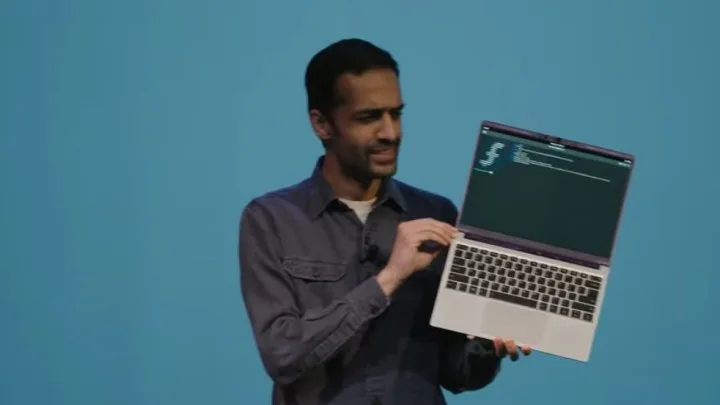
The idea of open-source, modular gadgets is thriving for Framework. Founder Nirav Patel shared the company’s steady yearly sales growth since it started, while introducing the new version of its highly customizable PC, the Framework Laptop 13, alongside advancements for the Framework Laptop 16, during a launch event held in San Francisco, California.
There has been considerable anticipation surrounding the new Framework Laptops since they haven’t been refreshed since 2022. Here’s what you need to know about the latest offerings from Framework.
Framework Laptop 13
In 2025, Framework introduced an updated version of the Laptop 13, now powered by the latest AMD Ryzen AI 300 series processors, showcasing features such as Zen 5 cores, Radeon Graphics, and a 50 TOPs NPU. Additionally, there's an option for the AMD Ryzen 9 processor, supporting up to 12 CPU cores and 16 GPU cores.
Framework
The revamped Framework Laptop 13 features a new thermal system equipped with a single heat pipe, support for Wi-Fi 7, and the ability to connect up to four external displays via the expansion cards. The design sees a new keyboard made with plastic innovation replacing the previous metal structure, having undergone extensive testing for performance.
On the software front, the Framework Laptop 13 runs Windows 11, boasting a dedicated Copilot key for AI capabilities, while also accommodating Linux as a customization choice. It's generally compatible with DIY Edition setups, allowing users to integrate specialized hardware and software into its framework.
This 13.5-inch laptop offers an optional 2.8K display with a 120Hz refresh rate and a 1080p webcam. The 61-watt-hour battery remains consistent with older models. Constructed from aluminum, the laptop's profile remains sleek and lightweight, measuring just 0.62 inches thick and weighing 2.86 pounds.
Furthermore, Framework has reintroduced a translucent bezel to this iteration of the Laptop 13, available in four distinct color choices, which complements the array of new translucent colors for USB-C expansion cards—this move is both stylish and functional.
Preorders for the Framework Laptop 13 are now open, with sales expected to launch in April in regions where Framework products are already distributed. The DIY Edition is priced at $899, while the prebuilt version will retail for $1,099, with the mainboard also sold separately. Additionally, the previous generation of the Framework Laptop 13 will see a price reduction to $749.
Framework Laptop 16
The Framework Laptop 16 has been on the market for over a year now. The brand has open-sourced its customizable input module system, fostering many innovative projects within the Framework community, including RGB LED matrices and e-ink displays. However, a challenge arose with the keyboard integration due to the thinness of the laptop, which conflicted with standard mechanical switches that require more space for connectivity. Patel explained that the community explored various approaches but couldn't establish a permanent solution.
Framework
For the launch event, Framework unveiled the One Key Module, a compact and self-contained mechanical and electrical switch that mimics the feel of a traditional mechanical keyboard but fits perfectly into the slim profile of the Framework Laptop 16. The company also highlighted that developers can create customized layouts and ergonomic designs with this module. A proof-of-concept has already been established on a Framework Laptop 16, with future collaborations planned with developers leveraging this solution.