Tag: Trust

  • Putin and Xi Reaffirm Strong Bond Following Trump Meeting

    Putin and Xi Reaffirm Strong Bond Following Trump Meeting

    President Xi Jinping praised the strong and unwavering partnership between China and Russia during discussions with Vladimir Putin on Wednesday, emphasizing their alliance just days after Donald Trump’s visit to China. The visit comes amid heightened attention on their evolving relationship, especially following Trump’s recent trip, which lacked significant breakthroughs like assistance in reopening the Strait of Hormuz.

    Due to widespread Western sanctions impacting Russia’s energy revenues and increasing dependence on China, Putin’s position has become somewhat fragile. Meanwhile, ongoing tensions over Iran have disrupted crude oil and natural gas shipments, providing Putin with an opportunity to promote Russian energy supplies as alternative options. Experts suggest Putin might focus on advancing the “Power of Siberia 2” gas pipeline, intended to deliver Russian natural gas to China via Mongolia—offering a land route as opposed to sea shipments from the Middle East.

    In Beijing’s grand Great Hall of the People, the leaders quickly highlighted their countries’ close ties as they renewed their “friendly cooperation” treaty. Xi expressed that Beijing and Moscow have “steadily deepened political mutual trust and strategic coordination,” with resilience that remains unbreakable. Putin, in turn, affirmed that their relationship has reached an “unprecedentedly high level,” despite external challenges, without specifying any third-party nations. Xi also subtly criticized the United States by warning against “unilateral and hegemonic countercurrents,” which some interpret as a veiled rebuke of U.S. policies.

    As the U.S. under Trump sought to strengthen alliances, China has hosted numerous world leaders, and Moscow’s support for Beijing has deepened since Russia’s invasion of Ukraine in 2022. Putin’s annual visits to Beijing reflect the growing closeness, even as his trip aims to be less showy than Trump’s and more focused on substantive cooperation. Xi referred to Putin as an “old friend,” a term not used for Trump during his recent visit, underscoring the strength of their bond. Both leaders see their relationship as more “structurally solid” and stable than China’s ties with the U.S.

    While Beijing advocates for negotiations to end the Ukraine conflict and has not condemned Russia’s military actions, its neutrality is nuanced by its reliance on Russian energy exports. Moscow, heavily dependent on Chinese markets, is unlikely to push Russia away but seeks to maintain support.

    Concerning the Middle East, Russia aims to leverage the energy crisis caused by the closing of the Strait of Hormuz, positioning itself as a key energy supplier in response to regional conflicts. Russia’s top diplomat Sergei Lavrov indicated that Moscow might compensate for China’s energy shortages amid the Middle East turmoil. Conversely, China emphasizes the urgency of ending the conflict, warning that continued hostilities in the region are “inadvisable,” highlighting their interest in stabilizing vital waterways to support their economic interests.

  • Iran’s Parliament Speaker: US Fails to Gain Tehran’s Trust in Islamabad Talks

    Iran’s Parliament Speaker: US Fails to Gain Tehran’s Trust in Islamabad Talks

    Iran’s Parliament Speaker Mohammad Bagher Ghalibaf, dressed in an IRGC uniform, presided over a session in Tehran on February 1, 2026, according to a photo from the Islamic Consultative Assembly News Agency.

    He stated there is no trust in the U.S. due to previous war experiences and mentioned that the Iranian delegation presented forward-looking proposals during the recent talks. Ghalibaf emphasized that the U.S. must decide if it can earn Iran’s trust in future negotiations, suggesting that Washington’s willingness to do so is still uncertain.

    Following a series of over 20 hours of intense negotiations in Islamabad—mediation facilitated by Pakistan—the meetings concluded without an agreement. U.S. Vice President JD Vance indicated that Iran rejected Washington’s demands, describing them as “unreasonable” according to Iranian state media.

    Vance reported at a press conference that negotiations covered key issues but ultimately failed. “The bad news is that no deal was reached, and I believe this is more damaging for Iran than for the U.S.,” he said. He also clarified that the U.S. made its red lines clear throughout the process.

    Iran’s Foreign Ministry spokesperson Esmail Baghaei noted that it was expected both sides wouldn’t finalize an agreement in a single meeting. Ghalibaf pointed out Iran’s lack of trust entering negotiations, citing past conflicts, and declared that Iran now faces a critical choice. “America has understood our logic and principles; now it must decide if it can earn our trust.”

    He reaffirmed Iran’s commitment to not abandoning its efforts to protect gains made during the recent six-week conflict. Ghalibaf acknowledged Pakistan’s pivotal role in sponsoring the talks and extended his appreciation to the Pakistani people.

    He praised the Iranian public support and the strength of the negotiation team, concluding with a message of resilience: “To my colleagues in these intense 21-hour negotiations, I say: well done. May Iran remain strong and enduring.”

    The ongoing conflict, which started on February 28 with joint U.S.-Israeli strikes targeting Iran’s leadership and infrastructure, has resulted in over 2,000 casualties and widespread regional instability. Iran responded with retaliatory measures, disrupting shipping through the Strait of Hormuz and attacking U.S. and Israeli military targets in the region.

    A ceasefire was announced on April 8, with Pakistan acting as the mediator. The U.S. proposed a 15-point framework addressing nuclear and missile issues, sanctions relief, and reopening the Strait of Hormuz. Iran countered with a 10-point plan emphasizing greater control over the Strait, transit fees, and a comprehensive sanctions removal.

  • Completing Coach Trust and Solving Happiness in College Football

    The “Road to Glory” mode in College Football 26 allows you to immerse yourself in the dream of being an athlete. You’ll have the chance to play for a legendary college team, earn individual accolades, and ideally, lead your squad to a national championship. But keep in mind, even the standout stars of football often start from humble beginnings.

    During your initial season, your playing time may be limited. To move up the depth chart, you’ll need to impress in practice and show your coach just how committed you are. As you put in this hard work, you’ll not only improve your skills but also earn more game time and, eventually, a starting position.

    Building Coach Trust

    Coach trust reflects how much confidence your coaches have in your ability to execute their strategies. You can enhance this trust mainly through making successful plays in games or, if you’re not a starter, by excelling in practice.

    In practice minigames, you can earn medals based on your performance: 50 points for bronze, 150 for silver, and 300 for gold.

    As your coach trust grows, you’ll find opportunities to secure a starting position and unlock special gameplay features, such as calling your own plays or setting hot routes. On the flip side, poor decisions both on and off the field can harm your trust and lead to less playing time.

    Competing for Positions

    Once your coach trust is equal to that of another player in your position group, you can initiate a position battle. This consists of competing against them in three practice minigames. Score higher than them in at least two of the three challenges, and you’ll rise up the depth chart. If you don’t succeed, you’ll need to regain trust before you can challenge again.

    You can also ascend the depth chart when other players transfer, graduate, or enter the draft, but this depends on simulation and randomness.

    Understanding Coach Happiness

    Coach happiness is a fresh feature in College Football 26. While trust builds gradually and determines your position, happiness can fluctuate more easily based on your actions off the field.

    Your coach’s happiness influences how quickly you earn trust. A happy coaching staff will allow you to gain trust faster, accelerating your progress on the team. Conversely, if you upset them, you might lose trust every week, causing setbacks until you repair those relationships.

    You can impact coach happiness primarily through the choices you make during the season. Responsible decisions will boost their morale, while unkind actions may lead to frustration.

    Failing tests or displaying poor leadership in your Weekly Agenda can also lead to declining happiness. However, by focusing on these areas, you can enjoy passive happiness bonuses, making it vital to prioritize these aspects if you find yourself in the doghouse with your coaches.

    Additionally, excelling in games and practices can naturally improve happiness.

  • Zelensky’s Approval at 57% Defies Trump’s 4% Claim

    Zelensky’s Approval at 57% Defies Trump’s 4% Claim

    Understanding the Dispute Between Trump and Zelensky

    In recent weeks, tensions have escalated between U.S. President Donald Trump and Ukrainian President Volodymyr Zelensky. The backdrop of this conflict is the ongoing war in Ukraine, which has led to a complex international landscape. This blog delves into the exchange of claims and counterclaims, focusing on the accuracy of Zelensky’s approval ratings and the political ramifications of the dispute.

    Trump’s Claims About Zelensky’s Approval Rating

    Donald Trump has publicly stated that Ukrainian President Volodymyr Zelensky holds only a four percent approval rating. This assertion has raised eyebrows, given the tumultuous political environment both leaders are navigating. Trump further went on to label Zelensky a “dictator without elections,” a statement that is not only provocative but also misleading.

    Zelensky Responds: A Web of Disinformation

    In response to Trump’s claims, Zelensky accused the former U.S. President of being ensnared in a "web of disinformation." This assertion highlights a growing concern regarding misinformation in political discourse, especially against the backdrop of war. Zelensky’s defiance underscores a commitment to transparency and factual representation during a period rife with conflict and distortion.

    The Reality of Zelensky’s Approval Ratings

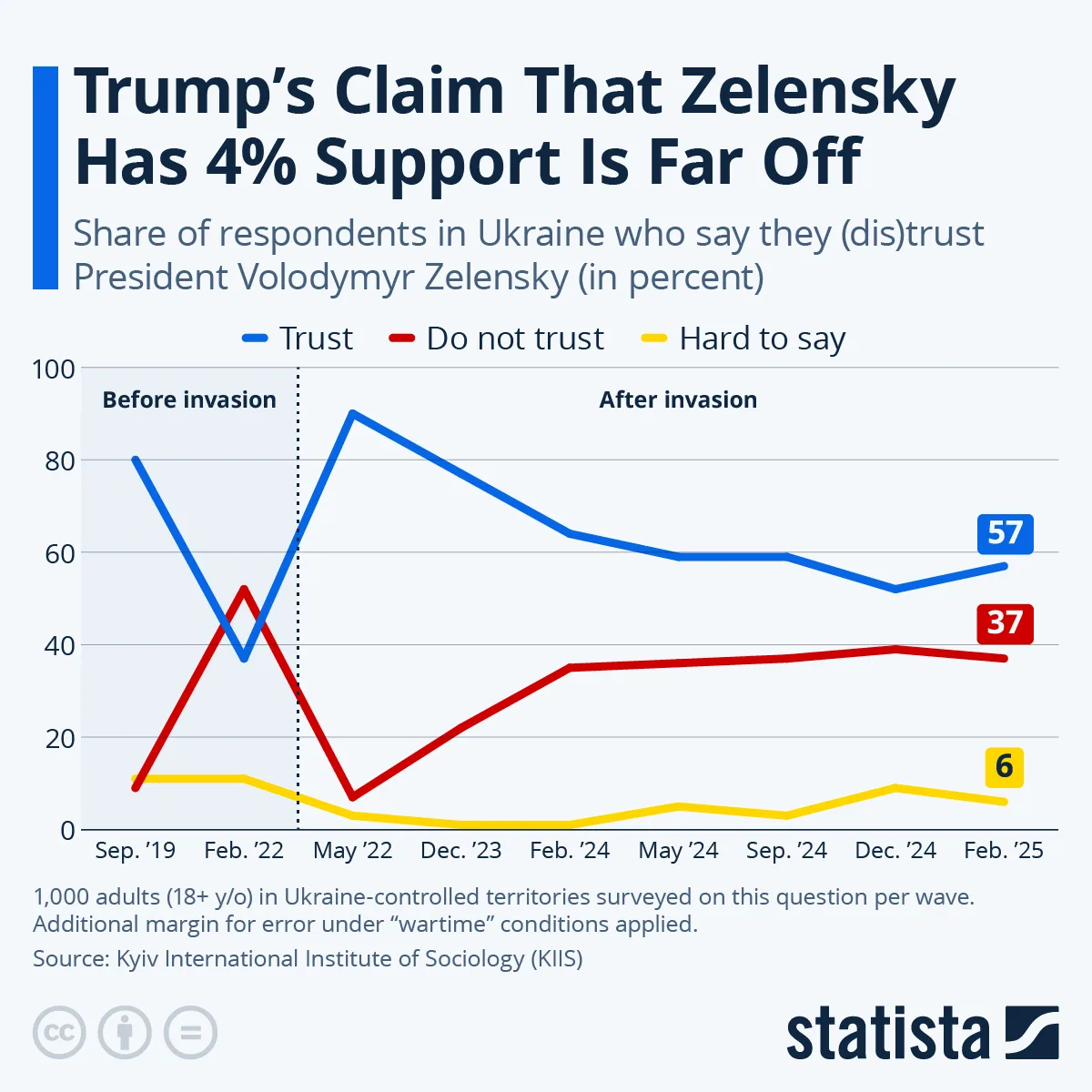
    To offset Trump’s erroneous claims, the Kyiv International Institute of Sociology (KIIS) conducted a poll that reflects a more favorable view of Zelensky among the Ukrainian populace. The survey, conducted between February 4-9, reveals that a significant 57 percent of adults trust Zelensky, while 37 percent do not. This statistic starkly contrasts Trump’s assertion, indicating a disconnect between political rhetoric and public sentiment.

    Historical Context of Approval Ratings

    Zelensky’s approval ratings have indeed fluctuated since Russia’s invasion in February 2022. Back in May 2022, the Ukrainian president enjoyed a remarkable 90 percent trust rating, a figure reflecting the unity and resilience of the Ukrainian people in the face of war. However, as the conflict has persisted, these numbers have naturally declined. Despite this downward trend, recent polling indicates a recovery; Zelensky’s approval rose five percentage points compared to December 2024, suggesting that public sentiment may be stabilizing.

    Methodology of the KIIS Poll

    The KIIS poll was designed to present a representative sample of individuals from Ukrainian-controlled territories, paying particular attention to the unique challenges posed by wartime conditions. Methodological rigor was applied, taking into account systemic deviations alongside traditional margins of error, thereby enhancing the credibility of the results.

    The Politics of Wartime Elections

    Zelensky was elected in 2019 with a landslide 73 percent of the vote, reflecting the Ukrainian public’s strong mandate for reform and governance. However, in light of the ongoing conflict with Russia, national elections scheduled for 2024 have been postponed indefinitely. Zelensky has publicly stated that elections will resume once what he terms the “hot phase” of the war comes to an end, showcasing his commitment to democratic processes even amidst turmoil.

    Conclusion

    The misinformation tactics that often surface in political narratives can have profound implications for public perception and international relations. As the situation evolves, it is critical for both leaders and followers to sift through these claims critically, seeking out factual representation in an era increasingly characterized by disinformation. The conversation between Trump and Zelensky is reflective of broader themes surrounding leadership, trust, and the challenges of governance in a time of crisis.

  • Trust in U.S. Institutions: Only 8% Trust Big Tech & 12% Gov.

    Trust in U.S. Institutions: Only 8% Trust Big Tech & 12% Gov.

    The Erosion of Trust in American Institutions: A Closer Look

    Understanding the Landscape of Distrust

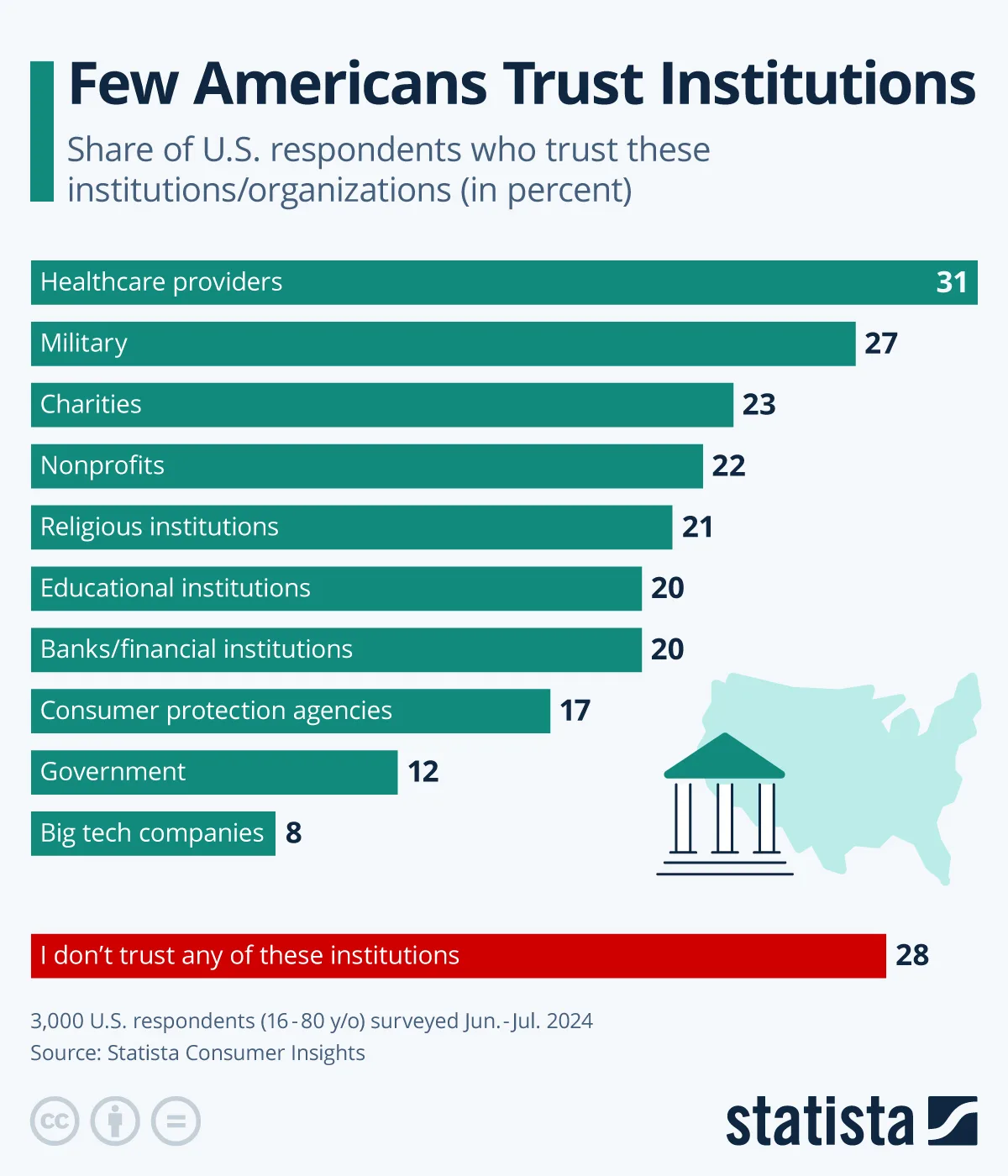
    In recent years, trust in American institutions has seen a significant decline, reflecting a growing skepticism among the populace. Various entities, from government to big tech, have been scrutinized by the public, raising questions about accountability and reliability. According to a survey conducted by Statista Consumer Insights, these concerns are not unfounded, as many Americans report an alarming lack of confidence in the organizations intended to serve them.

    Key Statistics from the Survey

    Distrust in Big Tech and Government

    The survey results reveal a stark reality regarding trust in a couple of significant sectors. Only 8% of Americans expressed trust in big tech companies, while just 12% placed their faith in government institutions. This profound distrust points to larger issues of privacy, surveillance, and the role of these entities in daily life. As technology evolves and becomes more integrated into our lives, the public’s discomfort surrounding data privacy and corporate responsibility grows correspondingly.

    Financial and Educational Institutions Under Fire

    Further compounding the issue of trust is the perceived integrity of financial and educational institutions. The survey noted that only 20% of respondents trusted financial organizations—a telling reflection of the fallout from financial crises and scandals that have marred the reputation of banks and similar entities. Similarly, educational institutions fared poorly, with only 20% expressing trust. The skepticism towards these institutions may also stem from rising tuition costs, student loan crises, and questions surrounding the value of degrees in today’s job market.

    The Role of Religious Institutions

    Evaluation of Faith-Based Organizations

    Interestingly, religious institutions garnered a modest trust level of 21%. This figure prompts deeper inquiry into how religious organizations are perceived today in comparison to eras with higher faith engagement. The decline may also reflect societal shifts towards secularism and increased public discourse surrounding accountability and moral integrity within these organizations.

    Trust in Consumer Protection Agencies

    Why Are Consumer Agencies Viewed with Distrust?

    Even consumer protection agencies, designed to safeguard the interests of everyday Americans, only managed to achieve 17% trust among survey participants. This alarming statistic may hint at a perceived ineffectiveness or lack of enforcement in protecting consumer rights, leading to frustration and further mistrust.

    Healthcare Providers and Military: A Slightly Brighter Outlook

    Comparison of Trust Levels

    Despite the general trend of distrust, healthcare providers and military institutions are viewed comparatively more favorably. Trust levels here are slightly higher, ranging from 27% to 31%. This relative confidence may be tied to their roles during crises, such as the COVID-19 pandemic, showcasing their importance in public health and safety.

    Nonprofits, Charities, and Community Trust

    Levels of Confidence in Charitable Organizations

    In the realm of charities and nonprofits, the trust rate hovers around 22-23%. While these organizations often work to uplift communities and help those in need, the sustainability and transparency of their operations have come under scrutiny. This disconnect may deter individuals from fully embracing these entities despite their noble missions.

    A Significant Percentage Lacking Trust

    The Widespread Distrust Phenomenon

    Most concerning is the revelation that 28% of Americans reported not trusting any of the listed institutions. This significant figure demonstrates a widespread sentiment of disillusionment and a pervasive belief that institutions fail to meet their commitments to the public.

    Implications for Energy, Retail, and the Media

    A Look at Other Misgivings

    The survey also touched on trust in energy and utility companies, media outlets, brands, and large retail chains, all of which are viewed with suspicion by the American public. As individuals navigate an increasingly complex societal landscape, the lack of trust in these critical areas raises fundamental questions about engagement, transparency, and the purpose of these institutions in modern America.

    The Consequences of Distrust

    Broader Societal Effects

    The consequences of this erosion of trust can ripple throughout society, affecting everything from political engagement to community cohesion. As Americans grapple with a lack of faith in the institutions meant to safeguard their interests, they face growing challenges in forming alliances and building trust within communities.

    In an era where reliable information and accountability are paramount, addressing these trends will require concerted efforts from leaders across all sectors to rebuild faith in our institutions and foster a sense of shared purpose amongst the populace.

  • Only 5% of Americans Trust Politicians: A Crisis in Confidence

    Only 5% of Americans Trust Politicians: A Crisis in Confidence

    The Plummeting Trust in Politicians: A Cross-National Concern

    In a landscape where the credibility of public figures is increasingly questioned, a striking trend has emerged regarding the trust placed in politicians. According to a recent survey by Statista Consumer Insights, trust levels for politicians in the United States are alarmingly low, with only 5% of respondents expressing confidence in their representatives. This statistic positions politicians as the least trusted profession in the country, overshadowing the skepticism faced by online influencers, celebrities, and professionals in finance.

    The Rise of Anti-Establishment Figures

    One of the most compelling aspects of this growing distrust in politicians is exemplified by the political trajectory of Donald Trump. His ascent to prominence, particularly during the 2016 presidential election, can be attributed to his non-traditional image. Trump’s demeanor, communication style, and approach to politics significantly differ from those of career politicians, which contributed to a perception of authenticity that resonated with many voters. Instead of engaging in typical political rhetoric, Trump’s candidness allowed him to relate to constituents who felt disenchanted with the political status quo.

    This phenomenon illustrates a broader trend where anti-establishment candidates—those who brand themselves as outsiders—often capitalize on the public’s dissatisfaction with conventional political figures. This discontent may stem from a perceived disconnect between politicians and their constituents, leading to a yearning for representation that feels more genuine and relatable.

    Distrust Beyond Borders

    The skepticism toward politicians is not confined to the United States. Internationally, countries such as Germany, Japan, and the UK exhibit similarly low trust levels in their political leaders. These sentiments reflect a global pattern of disenchantment, as citizens grapple with issues like corruption, political scandals, and unfulfilled promises made by elected officials. As political accountability wanes, the propensity for individuals to trust their representatives further diminishes.

    The Erosion of Trust in Journalism

    Concurrently, trust in the media has likewise faced significant challenges, particularly in the age of social media. The term "fake news," popularized by figures like Donald Trump and business magnate Elon Musk, has had a profound impact on the public’s perception of journalism. The framing of news outlets as biased or agenda-driven has created an environment where discerning credible information becomes increasingly complicated.

    The Impact of Social Media Echo Chambers

    Social media platforms have exacerbated this issue by fostering echo chambers where specific viewpoints are amplified while opposing perspectives are marginalized. In such a polarized climate, individuals are often only exposed to information that aligns with their existing beliefs, further deepening mistrust in institutions like journalism and politics. This fragmentation of information sources not only complicates the search for objective truth but also cultivates an environment ripe for misinformation.

    Consequences of Mistrust

    The implications of low trust in political figures and journalists extend far beyond mere public sentiment. When constituents perceive their elected officials as untrustworthy, it can lead to voter apathy and disengagement from the political process. Individuals may feel that their voices are not valued or heard, resulting in decreased participation in elections and civic activities.

    Moreover, when the media is viewed through a lens of skepticism, the vital role that journalism plays in holding power accountable is undermined. Citizens depend on a free press to provide accurate information and to investigate and report on governmental actions and policies. The crisis of confidence affects not only the professionals in these fields but also the overall health of democratic societies.

    In Summary

    The stark reality of public trust in politicians and journalism signals a critical moment for democracy worldwide. As citizens grapple with disillusionment and skepticism, the challenge remains to rebuild a foundation of trust that is essential for effective governance and informed decision-making. Without addressing these concerns, the divide between the public and their representatives, as well as the media, is likely to continue widening, posing a significant threat to societal cohesion and democratic norms.

  • 70% Distrust Leaders, Trust in Media Plummets 11-12%!

    70% Distrust Leaders, Trust in Media Plummets 11-12%!

    Understanding the Latest Trends in Leadership Trust: Insights from Edelman’s Trust Barometer

    Edelman’s Trust Barometer is a significant annual report that examines the trust levels people have in various institutions and leaders across the globe. The recent release of this data has sparked conversation, revealing concerning trends about trust in government, business, media, and other leadership figures.

    The Widespread Distrust of Leaders

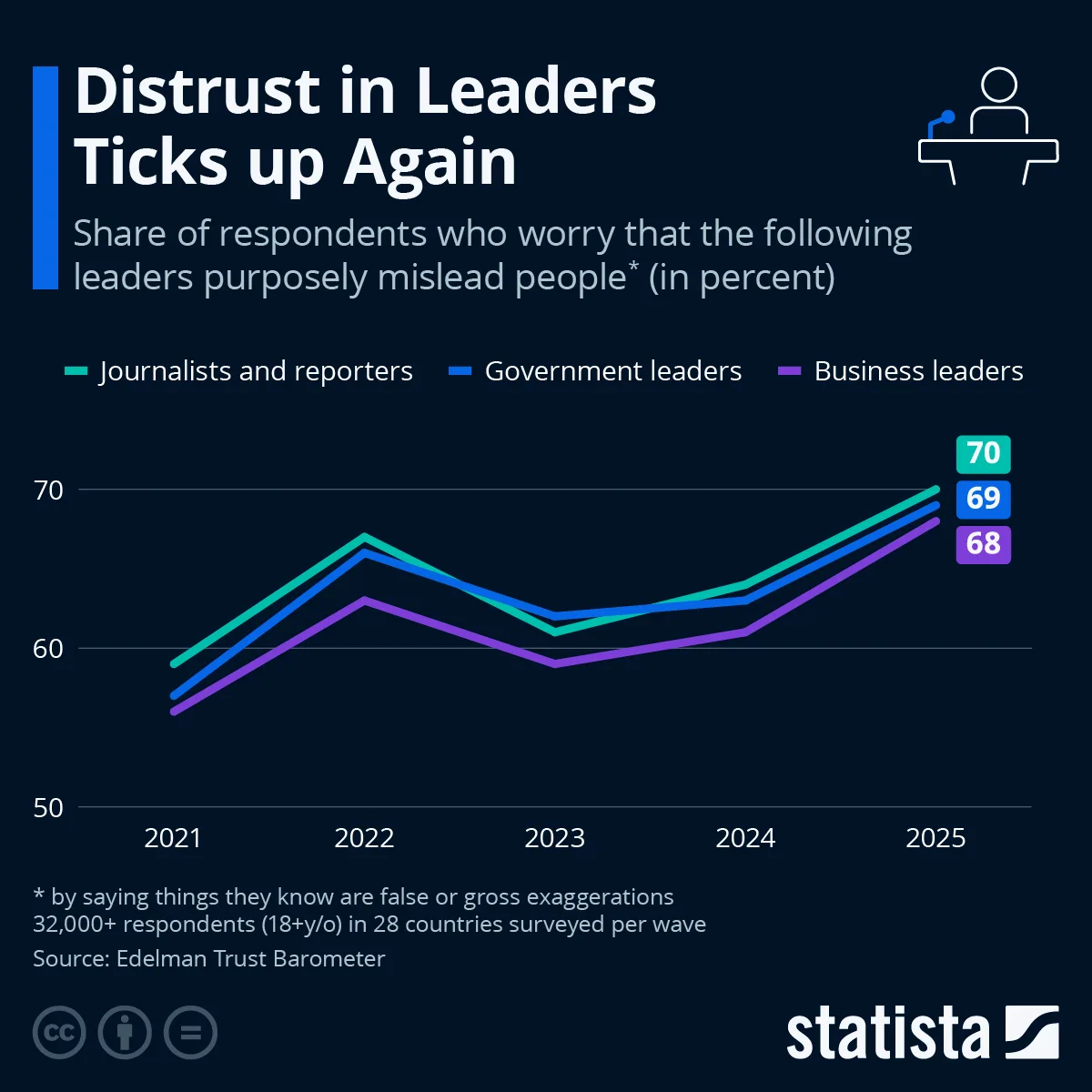
    The current Trust Barometer findings illustrate a growing anxiety among respondents regarding the integrity of leaders. With a staggering 70% of participants across 28 countries expressing skepticism towards government leaders, business executives, and journalists, the sentiment is clear: trust is in decline. This trend is particularly alarming, as it indicates an uptick in concern over misinformation and exaggerated claims made by these figures.

    Comparative Distrust Among Professions

    Although distrust is prevalent among all groups examined, journalists and reporters rank as the least trusted professions. The recent survey highlights a troubling reality where more individuals feel that these leaders are not only misleading the public but are aware of their deception. Specifically, this distrust is illustrated by an 11-12 percentage point rise since 2021, showcasing a substantial shift in public perception.

    Income and Trust: A Correlational Analysis

    An interesting dimension of the findings is the relationship between income levels and trust in leadership. Respondents from the lower income quartile exhibit heightened distrust compared to their counterparts in the upper income quartile. Specifically, only 48% of low-income respondents placed trust in business, government, media, and NGOs, a stark contrast to the 63% of high-income individuals who expressed similar sentiments.

    This disparity suggests that economic factors may play a critical role in shaping how different demographics view leadership and trustworthiness. The data implies that trust may become increasingly elusive for those who feel marginalized or economically disadvantaged.

    Who Do We Trust? Insights into Alternative Authority Figures

    When asked about trusted figures, scientists and teachers emerged as the most credible professions, with 77% and 75% of respondents respectively believing these groups will act in the public’s best interest. This preference highlights a clear shift towards valuing expertise and educational integrity over traditional authority figures.

    Global Sample and Methodology

    The Edelman Trust Barometer surveyed over 32,000 individuals across 28 countries, ensuring a robust and varied dataset that reflects a wide range of opinions and attitudes. This extensive reach allows for comprehensive analysis and understanding of global trust trends, offering essential insights into how different regions perceive leadership.

    The Implications of Distrust in Leadership

    The implications of these findings are far-reaching. A society with skepticism towards its leaders is likely to foster an environment where misinformation can thrive, and civic engagement may diminish. The growing distrust may also impact how leaders communicate, highlighting the necessity for transparency and accountability.

    The Role of Communication in Building Trust

    For leaders to rebuild trust, they must prioritize honest communication and engagement with their constituents. It becomes imperative for leaders in all sectors to establish more authentic connections with the public. By fostering dialogue, being transparent about goals, and addressing public concerns sincerely, the potential to regain trust exists.


    As the landscape of trust continues to evolve, it is clear that leaders must adapt to these changing sentiments. The insights from the Edelman Trust Barometer provide a necessary foundation for understanding and addressing the complexities of trust in today’s world. By identifying the key areas where distrust has emerged, leaders can take proactive measures to foster a more trustworthy environment.

  • 20% of Americans and French Distrust Mainstream Media

    20% of Americans and French Distrust Mainstream Media

    The Growing Distrust in Mainstream Media: A Global Perspective

    Understanding Distrust: A Comparative Analysis

    In recent years, the issue of trust in mainstream media has taken center stage, particularly in Western countries. A survey conducted by Statista Consumer Insights indicates a concerning trend: substantial portions of the population in various countries express skepticism towards their media outlets. This blog delves into the degrees of distrust across nations, particularly focusing on the United States, France, Spain, Switzerland, and China.

    Distrust in the United States and France

    High Levels of Distrust

    The survey reveals that approximately 20% of respondents in both the United States and France openly express a lack of trust in mainstream media. This significant percentage places these two countries at the forefront of media skepticism among the 21 nations surveyed. This distrust can be attributed to various factors, including political polarization, sensationalism in reporting, and perceived biases in news coverage.

    The Impact of Partisanship

    In the U.S., trust in media tends to be closely tied to political affiliation. Many individuals believe that mainstream media outlets favor certain political viewpoints, which exacerbates distrust among those who feel misrepresented. Similar trends can be observed in France, where media coverage of political events is often scrutinized for partiality.

    The Situation in Spain

    Emerging Skepticism

    In Spain, 19% of respondents reported distrust in mainstream media, reflecting a sentiment similar to that observed in the U.S. and France. This skepticism is not entirely surprising, considering Spain’s turbulent political landscape and the rise of various political factions that continuously criticize traditional media outlets. The public increasingly turns to alternative news sources, which can sometimes lead to echo chambers of information.

    Contrast with Switzerland and China

    Swiss Confidence in Media

    Conversely, Switzerland stands out in this survey, with only 13% of respondents conveying distrust toward their mainstream media. The Swiss media landscape is often viewed as robust and reliable, characterized by high journalistic standards and a tradition of neutrality. This cultural context fosters greater public trust, enabling news organizations to maintain credibility.

    Analyzing China’s Perspective

    China presents another unique scenario; fewer than 10% of respondents indicated any distrust in their mainstream media. This is reflective of the controlled media environment in the country, where the government exerts significant influence over news reporting. While this results in limited dissenting voices, it creates a perception of stability in information dissemination among the population.

    Factors Influencing Trust

    The Role of Digital Media

    The rise of digital media has fundamentally altered how individuals consume news. The proliferation of social media platforms allows for instantaneous sharing of information, but this can also lead to misinformation. As users grapple with competing narratives, the trustworthiness of traditional media is called into question.

    Critical Media Literacy

    Furthermore, a lack of media literacy can exacerbate distrust. As individuals become more adept at navigating information online, the ability to critically engage with news content varies widely. In countries where media education is prioritized, such as Switzerland, this could explain higher levels of trust in traditional media outlets.

    Conclusion

    This pervasive trend of distrust in mainstream media across various countries highlights a need for dialogue and reform within the industry. Understanding the factors contributing to this skepticism can help media organizations better engage with their audiences and improve their credibility.

  • UK Consumers Distrust Banks: 25% Hoard Cash Over IT Concerns

    UK Consumers Distrust Banks: 25% Hoard Cash Over IT Concerns

    Regulatory Developments

    Starting in January 2025, the European Union’s Digital Operational Resilience Act (DORA) will mandate that financial institutions adopt thorough IT risk management strategies and establish incident reporting protocols.

    In conjunction with DORA, UK regulators, including the Financial Conduct Authority and the Bank of England, have been granted expanded authority to oversee essential third-party vendors whose failures might compromise financial stability.

    Additionally, the UK’s Payment Systems Regulator has introduced new regulations requiring banks to reimburse fraud victims up to £85,000 within five days. This initiative places a heightened obligation on financial institutions to combat fraud effectively.

    According to Richard Kalas, Director of Client Solutions in Retail Banking at GFT UK, “These insights highlight a notable gap between the swift digital transformation of banking services and the trust consumers have in the security and robustness of these systems.”

    “While digital banking provides a multitude of advantages, it is crucial for banks to transparently showcase the various strategies they implement to ensure resilience in all essential customer services.”

    Acknowledgment for GFT

    This news comes on the heels of GFT receiving two 2024 Geography and Global AWS Partner Awards at AWS re:Invent 2024.

    The digital transformation consultancy was honored as the ‘Global Innovation Partner of the Year’ for its cutting-edge consulting and professional services, and as the ‘Financial Services Industry Partner of the Year – EMEA’ for its efforts to help financial institutions accelerate their cloud initiatives.

    The awards celebrated GFT’s collaborative work with Romanian Salt Bank and Brazilian bank Itaú.

    GFT Co-CEO Marco Santos remarks, “The recognition we’ve received from AWS reinforces our capabilities in transforming industries through innovation. These awards also illustrate our technological leadership and unwavering commitment to empowering our clients to succeed in this new digital growth landscape.”

  • 2024 Trust in News: 66% of Republicans Favor Local Sources

    2024 Trust in News: 66% of Republicans Favor Local Sources

    Understanding Trust in News Sources Among Americans

    In today’s rapidly shifting media landscape, Americans’ trust in various news sources is evolving. Recent data from the Pew Research Center highlights significant changes in how different political affiliations perceive the credibility of news organizations.

    The Decline of Trust in National News Organizations

    As of 2024, a striking trend has emerged: the overall trust in national news organizations is on a downward trajectory. This decline is particularly prominent among Republican-leaning respondents. Historically, national news outlets were seen as reputable sources of information across the political spectrum. However, as the data suggests, a seismic shift is occurring.

    Trust Among Republicans

    Recent findings indicate that Republicans are now just as likely to trust information from social media platforms as they are to trust national news organizations. This is a marked change from previous years and reflects a broader skepticism towards traditional media channels. The equal footing for social media suggests that many Republicans are turning to alternative sources of information, potentially seeking narratives that align more closely with their viewpoints.

    Trust Among Democrats

    Conversely, the perception of national news organizations remains significantly higher among Democrats and Democratic-leaning independents. Approximately 78 percent of this group expresses at least some trust in national news outlets, showcasing a stark contrast to the Republican sentiment. However, even among Democrats, 38 percent report a degree of trust in social media as a credible source of news, indicating a gradual shift in media consumption habits.

    The Value of Local News Organizations

    In an era where national news faces scrutiny, local news organizations emerge as a reliable alternative for many Americans. The data suggests that local news maintains a higher trust level across both political affiliations.

    Local News Trust Among Republicans

    For Republican-leaning respondents, trust in local news organizations remains relatively strong, with 66 percent expressing at least some confidence in the information provided. Nonetheless, this figure marks a decrease of 13 percentage points since 2016. This decline, while significant, highlights that local journalism still plays an essential role in the information ecosystem for many within this demographic.

    Local News Trust Among Democrats

    Similarly, Democratic-leaning individuals show a high level of trust in local news, with 83 percent indicating they rely on these sources for information. Interestingly, this represents a slight decline of 2 percentage points since 2016, but still reflects a robust faith in local journalism. This consistent trust may point to local news outlets’ ability to engage with their communities, fostering a sense of reliability and connection that national outlets may lack.

    The Implications of Changing Trust Dynamics

    The shifting trust dynamics in news consumption have significant implications for journalism, media strategy, and public discourse. Understanding these changes is crucial for news organizations striving to regain credibility and for consumers navigating the plethora of information available today.

    The Role of Social Media

    As Republicans increasingly turn to social media for news, the implications for information dissemination and verification are profound. Social media platforms, while convenient and often appealing, can propagate misinformation and create echo chambers. This trend raises critical concerns about the integrity of information that shapes public opinion and democratic processes.

    Strategies for News Organizations

    To adapt to these evolving preferences, news organizations must innovate their approaches to journalism. Strategies may include improving transparency, focusing on community engagement, and prioritizing fact-based reporting. Building trust with audiences will require a concerted effort to demonstrate reliability, accuracy, and accountability in reporting practices.

    Navigating the Future of News

    As Americans grapple with their trust in news sources, the media landscape continues to transform. The trend towards local news, the growing viability of social media as a news source, and the decline in trust among national organizations present both challenges and opportunities.

    Understanding these dynamics not only helps news organizations adapt but also empowers consumers to make informed choices about the information they consume. The responsibility lies with both media entities and the audience to navigate this intricate landscape carefully.

  • Only 12% of Marketers Trust Ads on X in 2024

    Only 12% of Marketers Trust Ads on X in 2024

    The Turbulent Journey of Twitter to X: A Two-Year Reflection

    Elon Musk’s Acquisition of Twitter

    In October 2021, Elon Musk made headlines by acquiring Twitter for a staggering $44 billion. Since the completion of this acquisition, the platform has undergone a series of dramatic overhauls that have left both users and advertisers apprehensive.

    Major Changes and Controversies

    Mass Layoffs

    Shortly after Musk took control, Twitter experienced significant layoffs, impacting thousands of employees. This move was part of an extensive cost-cutting strategy aimed at reorienting the company’s focus. However, critics argue that these cuts may have undermined the platform’s operational stability and integrity.

    Feature Alterations

    Musk’s approach included scrapping beloved features while introducing new, often controversial options. These rapid changes sparked user frustration, as many felt that the platform’s user experience was becoming less consistent and more unpredictable.

    Rebranding to X

    Perhaps the most notable change of all has been the rebranding of Twitter to X. This move represents Musk’s broader vision for creating an "everything app," a digital ecosystem that integrates social media, payments, and various services in one place. While ambitious, the rebranding has also led to confusion among long-standing users.

    Mixed Public Reception

    Divided Opinions on Musk’s Impact

    The response from Twitter’s user base has been polarized. Some users praise Musk for championing free speech, positioning X as a counterpoint to what they perceive as excessive political correctness. In contrast, others have criticized the platform for descending into an environment rife with disinformation, conspiracy theories, and unrestricted hate speech.

    Advertiser Trust Deteriorates

    Advertising Trust Issues

    Recent findings from Kantar Media Reactions reveal a concerning trend among advertisers regarding their trust in the platform. As of 2024, only 12% of marketing professionals reported that they trust ads on X. The perception of brand safety has deteriorated to such an extent that a net 26% of advertisers plan to reduce their ad spend on the platform.

    Brand Safety Concerns

    The core issue driving advertisers away from X is the glaring lack of brand safety. Alarmingly, only 4% of surveyed marketing professionals felt that ads on the platform provide a secure environment for their brands. This significant deficit in perceived safety reinforces the notion that many marketers now view X as a risky platform for advertising.

    Expert Commentary

    Insights from Industry Professionals

    Gonca Bubani, the Global Thought Leadership Director for Media at Kantar, provided insight into the ongoing challenges X faces in reclaiming advertiser trust. According to Bubani, the acceleration of advertisers moving their spending away from X signals a potentially dire future for the platform.

    "Advertisers are brand custodians and need to trust the platforms they use. X has changed so much in recent years and can be unpredictable from one day to the next – it’s difficult to feel confident about your brand safety in that environment," she stated.

    The Future of X

    As we move further into 2024, the question remains: can X navigate its way back to a semblance of stability and regain the trust of advertisers? Given the rapid changes and volatile environment under Elon Musk’s leadership, many industry experts remain skeptical. The evolving landscape of digital advertising and social media continues to make this a hot topic for marketers and consumers alike, shaping the future of how these platforms operate and are perceived in the real world.

    Summary

    The first two years of Elon Musk’s ownership of X have been characterized by significant upheaval and widespread criticism. As advertiser trust continues to wane, it will be crucial to monitor how the platform addresses these challenges and cultivates a safe environment for brands looking to engage with their audience.