Tag: TikTok

  • DNA Tech Solves the Unsolvable, Sora 2 Turns Fake, Alien Comet Detected

    DNA Tech Solves the Unsolvable, Sora 2 Turns Fake, Alien Comet Detected

    Sora 2 could be TikTok without people—powered solely by AI.

    OpenAI is gearing up to introduce Sora 2, a short-form video platform that closely resembles TikTok, but with a twist: every video is AI-generated. There are no user uploads or mobile recordings, only 10-second clips created from prompts.

    The layout feels familiar, with vertical scrolling, likes, comments, and remix options. However, Sora 2 introduces a new feature—identity verification. Users can consent to their likeness being used by AI, and they will be alerted if someone attempts to feature their image, even in draft videos.

    The timing isn’t coincidental. TikTok is under scrutiny in the U.S., while Meta and Google are advancing their AI-driven video technologies. By designing “everything fake by default,” OpenAI bets that audiences will crave endless streams of AI-generated cats, dance routines, and memes. Currently, it’s an internal project, but if launched broadly, Sora 2 could signal the rise of an AI-based social media feed.

    DNA technology solves Austin’s yogurt shop murders after 34 years

    In December 1991, firefighters responded to a small frozen yogurt shop in Austin, Texas. The fire initially seemed routine until the smoke cleared, revealing a haunting scene: four teenage girls, bound, gagged, and shot before the fire was started to destroy evidence.

    For years, the case remained unresolved, marked by false confessions, overturned convictions, and lingering questions. The victims’ families faced ongoing heartbreak as justice seemed increasingly distant.

    But technology has a way of uncovering truths that time cannot erase. In 2025, investigators revisited the case with advanced DNA testing and ballistic analysis. This time, science came through. DNA found under one victim’s fingernails matched Robert Eugene Brashers, a violent drifter who had committed suicide during a police standoff in 1999. A shell casing from the shop linked back to his weapon, finally closing the case that had remained unresolved for over three decades.

    Although there was no courtroom trial or chance for the families to confront their loved one’s killer, this breakthrough offered long-awaited closure—proof that even after many years, small traces can resurrect the truth.

    The yogurt shop murders now stand as a tragic reminder—and a testament—that patience and scientific advancement can breathe life back into the coldest cases.

    Are we witnessing alien technology or just ice? Scientists debate interstellar comet 3I/ATLAS

    When astronomers first spotted 3I/ATLAS in July, it resembled a typical comet—icy, dusty, more than three miles wide. Yet, its trajectory raised eyebrows. The object’s motion couldn’t be explained solely by gravity, and subtle shifts indicated something unusual was happening.

    This mystery prompted Harvard astrophysicist Avi Loeb to propose a provocative theory: 3I/ATLAS might be more than just a comet. Building on his earlier claim about ʻOumuamua’—the first confirmed interstellar visitor—he suggests it could be an alien artifact disguised as a natural object.

    Skeptics note that 3I/ATLAS is releasing carbon dioxide and dust, behaviors consistent with comets warming as they approach the Sun. Nonetheless, its retrograde orbit and unexpected movements keep the debate alive.

    Regardless of the truth, this is a rare scientific opportunity. Telescopes worldwide are racing to observe and study this interstellar visitor before it disappears into space once more, leaving us to ponder: is this truly a comet, or is it something more extraordinary?

  • U.S. Lawmaker Cautions Against Military ‘Misunderstanding’ with China

    U.S. Lawmaker Cautions Against Military ‘Misunderstanding’ with China

    A US congressional delegation visiting China issued a warning Tuesday about the potential for misunderstandings between the two nations’ militaries amid rapid advancements in defense technology. Adam Smith, the top Democrat on Washington’s Armed Services Committee, emphasized the importance of increased communication to prevent conflicts, noting, “Our ships, our aircraft, their ships, their aircraft — they come dangerously close to each other.” He added, “Better dialogue is needed to avoid miscalculations that could escalate.”

    The four-member team, which includes Democrats Ro Khanna and Chrissy Houlahan, along with Republican Michael Baumgartner of the Foreign Affairs Committee, met with Chinese Defense Minister Dong Jun. During their discussions, the Chinese official urged the delegation to “eliminate disruptive and restrictive factors” hindering cooperation, according to Chinese state news agency Xinhua.

    Smith, speaking alongside U.S. Ambassador to China David Perdue, highlighted the rapid pace of technological innovation such as AI, drones, cyber warfare, and space development, stressing that mutual misunderstandings of capabilities could lead to unintended conflicts if dialogue isn’t improved.

    This visit coincides with recent discussions between President Xi Jinping and former President Donald Trump, who spoke on the phone twice since Trump’s return to office. Trump plans to meet Xi at an upcoming Asia-Pacific summit in South Korea and expects to visit China next year. Both leaders are also scheduled for additional telephone conversations.

    Earlier this year, trade tensions led to increased tariffs, disrupting global supply chains, but recent negotiations have resulted in a tentative deal to lower duties: the US would impose a 30% tariff on Chinese imports, while China would apply a 10% tariff on US goods, with both sides agreeing to revisit the terms in November.

    The congressional delegation also met with China’s Vice Premier He Lifeng to discuss ongoing trade negotiations, fentanyl concerns, critical minerals, and TikTok. The White House has indicated that a potential U.S.-produced version of TikTok might incorporate a domestically developed algorithm, possibly addressing key concerns that could keep the platform operating in the U.S.

    When questioned about TikTok’s status, Smith acknowledged that the issue remains unresolved. The delegation is also set to meet with China’s National People’s Congress Chairman Zhao Leji and Foreign Minister Wang Yi.

  • Why Are People Boycotting Top Arab TikTok Influencers?

    Why Are People Boycotting Top Arab TikTok Influencers?

    A new and controversial movement has recently taken over social media in the Arab world, with users urging a boycott of so-called “worthless” influencers based in Dubai, who have amassed millions of followers and views over the years.

    The campaigns titled “Boycott the Influencers” and “Unfollow Dubai Squad” encourage Arab social media users to disconnect from certain content creators, alleging that their lavish lifestyles deceive the public and contribute to unrealistic social expectations.

    Many critics argue that numerous Arab influencers are making their followers less intelligent, criticizing their content as uneducational and devoid of meaningful value.

    ### Why are people calling to boycott popular Arab TikTok influencers?

    On social media, some have expressed diverse opinions. While some agree with the boycott, others highlight issues such as accusations of influencers exploiting their followers for fame and monetary gain, endorsing products that support the ongoing Israeli assault on Gaza, or remaining silent about the conflict.

    Notable Arab influencers targeted in this movement include Asala Maleh, Narin’s Beauty, Sherin Amara, Osama Marwah, Sara Al-Wara, Ghaith Marwan, Noor Stars, Shahad, among others.

    Although it’s too early to assess the full impact of this campaign, smaller creators have voiced concerns on their official social media channels about a noticeable drop in their followers. They emphasize that they are not connected to the influencers being targeted and are affected by the broader boycott wave.

  • What’s the Best Time to Post on TikTok in [year]?

    Wondering about the best time to post on TikTok to get more likes? Worry no more about your posting schedule.

    TikTok, the popular video-sharing application, allows its users to share content with friends, fans, and followers in seconds with just one tap of their finger.

    With all that in mind, do you know the best time to post on TikTok to reach the target audience? If not, don’t worry! We’re here to give you some useful insights.

    When Should I Post My Video on TikTok?

    When Should I Post My Video on TikTok
    OneTwoStream

    It’s all about timing. The best time to post your video is between 9 am-3 pm EST. The second-best time is between 5 pm-8 pm EST time zones, but it’s less effective than 9 am-3 pm EST.

    You can adjust these hours depending on where you live (local time) but, as a general rule of thumb, these are optimal times for posting videos.

    These are also peak hours for social media use, which means that you’ll be able to reach more people when they’re online and available during these times!

    Another way of looking at it is that users who engage with content at night will see it first thing in the morning.

    How Often Should I Upload Videos to TikTok

    Because of how dynamic social media algorithms are, there isn’t an exact answer for when is the best time to post.

    However, if you want your audience members to notice your uploads, uploading more often is better than uploading less often.

    If you follow anyone with many followers on TikTok, chances are they post multiple times every day; most users upload at least 3 videos per day.

    But it really depends; if your followers like seeing your posts (meaning they click and watch), then they’ll still watch even if you don’t upload that frequently.

    When Are Most Users On TikTok?

    According to data from SimilarWeb, TikTok users are most active between 8 AM and 10 PM local time. While these numbers may be different in your specific region, it’s important to know when users are online, so you can properly market yourself.

    When Are Most Users On TikTok
    Hootsuite

    The good news is that no matter what time of day or night you post, there will always be someone watching. The key is maximizing your audience by posting at peak times.

    For example, an early-morning video might attract viewers who want to view content before starting their day. In contrast, a video posted late at night might catch audiences coming home from work or socializing with friends.

    How To Get More Views and Likes on TikTok?

    To get likes, it is important to understand how many users are online during different times of the day. You should post at a time when there will be lots of users watching.

    Knowing when your potential audience is most likely online lets you share your posts with them when they are more likely to see them.

    Here are some statistics for posts made at 6 PM EST: Tuesday afternoon/evening has about 6% fewer viewers than Thursday evening.

    Why is TikTok a Great Marketing Tool?

    As TikTok analytics confirms over 400 million users, it’s no wonder that companies are beginning to take notice of TikTok as a marketing tool.

    how to get views
    Influencer Marketing

    However, not all of them realize how different their audience is compared to other social media platforms.

    If you want your content on TikTok to resonate with its unique user base, then you need to know exactly when and how long your video should be. Let’s start with engagement first: The best time for engagement on TikTok is actually two hours after school or work—8-10 pm EST.

    Your best bet is no specific time but rather how you react with engagement when it comes to posting time. See what times tend to yield greater engagement for you, and focus posting around those times.

    Also, bear in mind that if some of your posts are performing well during some hours but not others, it might be worthwhile splitting your overall content into multiple accounts so you can post at peak times more effectively.

    Post on TikTok depends on what else is trending at any given moment, you might find that certain days of the week are better than others—or times of day!

  • Egyptian TikTok Star Suzy El Ordoneya Arrested in Major Money Laundering Case

    Egyptian TikTok Star Suzy El Ordoneya Arrested in Major Money Laundering Case

    Digital Phablet – TikTok star Suzy El Ordoneya detained over money laundering allegations.

    Also Read: Why TikToker Modahm was detained in Egypt—The shocking reason will surprise you
    The Ministry of Interior announced the detention of content creator “Suzy El Ordoneya,” also known as “Maryam A,” as part of a major crackdown on cybercrime and money laundering activities. The investigation linked her to large-scale laundering schemes generated from illegal online activities on social media platforms, particularly TikTok.

    Legal Penalties for Money Laundering

    Attorney Noha El-Gendy clarified in a statement to “News Room” that under Egyptian law, individuals convicted of money laundering face imprisonment for up to seven years and a fine of no less than five million Egyptian pounds, or the amount equivalent to the laundered funds, whichever is greater.

    Instagram — sozy__ayman1

    El-Gendy further noted that the penalties are applicable if the origins of the funds are unknown or obtained through unlawful means. Authorities are also empowered to freeze, seize assets, and return them to the state or relevant parties in accordance with legal procedures.

    Details of the Investigation

    The Anti-Money Laundering and Organized Crime Sector provided detailed insights into the case. Security officials revealed that the accused accumulated nearly 15 million Egyptian pounds through inappropriate and illicit content that violated public morals and social norms. Law enforcement was able to trace the source of the funds generated from her online activities.

    According to their findings, Suzy El Ordoneya attempted to conceal the true origin of her earnings by purchasing residential properties and using them ostensibly for legitimate purposes.

    Behaviors and Social Media Activity

    The Ministry of Interior stated that the suspect maintained social media accounts where she posted videos that blatantly went against societal morals and norms in an effort to illegally amass significant wealth.

    While she was being referred to investigative authorities, legal proceedings were initiated against Suzy El Ordoneya. Authorities continue to pursue individuals engaging in online activities that threaten societal stability or infringe on fundamental social principles.

    Instagram post example

    According to reports, her illicit earnings totaling nearly 15 million Egyptian pounds stemmed from content deemed immoral and offensive by societal standards. The authorities were able to track her financial trail back to her online content.

    The investigation continues, and security forces remain committed to targeting online activities that undermine social order and safety. Anyone involved in such unlawful online behavior is subject to arrest and prosecution under Egyptian law.

  • Why TikToker Modahm Was Arrested in Egypt — The Final Reason Will Shock You

    Why TikToker Modahm Was Arrested in Egypt — The Final Reason Will Shock You

    Digital Phablet – Egypt detains Mohamed Khaled, known as Modahm, over shocking allegations related to online content.

    In a crackdown aimed at removing inappropriate online material, Egyptian authorities arrested a prominent content creator known as “modahm,” Mohamed Khaled, following numerous reports of him posting content deemed offensive and contrary to public morals and societal values.

    “Modahm was apprehended at his residence in the Qanater Khayriyah neighborhood in Qalyubia Governorate,” the Ministry of Interior announced on July 29, 2025. The ministry highlighted evidence indicating that Khaled had exploited social media platforms to share offensive videos to increase his followers and generate income through online engagement.

    Modahm 777 Instagram profile

    His residence was searched by security forces who confiscated significant sums of cash in local and foreign currencies, along with gold jewelry believed to be proceeds from social media activities. Authorities also recovered large amounts of hashish and cocaine, which Khaled later admitted were for personal use.


    The individual responsible for creating the content reportedly confessed under interrogation that his primary aim was financial gain. He acknowledged deliberately producing and sharing inappropriate videos to attract more views and comments, which in turn would boost his revenue from social media advertisements.

    Following the submission of the formal report, the accused has been referred to the appropriate prosecutor. This incident is part of Egypt's broader campaign to monitor and regulate online content to prevent the dissemination of material considered morally objectionable or offensive.

    This crackdown marks the latest series of cases where social media influencers and online personalities face charges for sharing inappropriate or harmful content. The ongoing debate in Egypt questions the limits of free speech online and the boundaries of protecting societal norms.

    The authorities have reaffirmed their commitment to continuously oversee digital content to uphold moral standards.

  • Why TikTok Blogger Suzy El Ordoneya Was Arrested in Egypt

    Why TikTok Blogger Suzy El Ordoneya Was Arrested in Egypt

    Digital Phablet – Suzy El Ordoneya (Suzy the Jordanian) Online Game Takes a Severe Legal Turn

    Following numerous complaints about her, law enforcement arrested the blogger known as “Suzy El Ordoneya” (Jordanian Suzi) at her residence in New Cairo. In the upcoming sections, we will outline the key facts and details regarding the legal cases she faces.

    Mariam Ayman, 18 years old, is better known as Suzy El Ordoneya. She resides with her family in Cairo’s Matariya neighborhood and is very close to her two siblings, Mawaddah and Mai, both of whom have special needs. According to her social media activity, Suzy identifies as Egyptian; however, she lived in Jordan for approximately 11 years before relocating back to Egypt.

    Insert Instagram Post Image

    Suzy El Ordoneya has gained considerable popularity on social media platforms, especially TikTok, where she boasts over six million followers. Her sensational content has earned her fame, and her signature catchphrase “The street behind it” has become widely recognized.

    Recently, a preliminary verdict was issued against her. She was sentenced to two years in prison, fined EGP 300,000, and required to post a bail of EGP 100,000. These penalties stem from charges related to misuse of social media for illegal activities, membership in a terrorist organization, and dissemination of false information online. Additionally, it was reported that she insulted her father live on television and later posted about it on social media. She was also accused of exploiting her sister with special needs for financial gain by sharing video clips on her accounts.

    The investigation also examined a complaint from a company alleging that Suzy damaged its reputation on social media. As a result, she was detained for three days pending further investigation. The Matariya Public Prosecution subsequently released her, pending the resolution of other pending cases.

    Later, the North Cairo Child Appeals Court in Abbasiya nullified her two-year prison sentence but upheld the fine of EGP 300,000. The court’s decision was based on legal considerations, including her public insult toward her father and the exploitation of her sister with special needs to produce and sell content. Nonetheless, the fine remains applicable according to the court’s final decision.

    Insert Instagram Post Image

    There is ongoing debate about the fine line between free speech online and regulations governing digital content, especially when personal or family matters are involved for attention or monetary gain. Suzy El Ordoneya’s case exemplifies this controversy. It raises vital ethical questions about online publishing and underscores the importance of applying legal standards fairly, whether the violation concerns family members, businesses, or followers of online platforms.

    Insert Video Highlight – News of the Week

    The controversy surrounding Suzy underscores the necessity for clear legal boundaries in digital media, emphasizing the importance of accountability and ethical responsibility in online conduct.

  • Trump Set to Discuss TikTok Deal with China Starting Next Week

    Trump Set to Discuss TikTok Deal with China Starting Next Week

    A graphic depicting the TikTok logo on a smartphone with the US flag in the background. — Reuters/File

    President Donald Trump of the United States announced that he will begin discussions with China regarding a potential deal involving TikTok on Monday or Tuesday.

    He stated that the US is “essentially” close to finalizing an agreement for the sale of the TikTok app, which is owned by the China-based company ByteDance.

    “I think we will start talks on Monday or Tuesday […] with China, possibly with President Xi Jinping or someone representing him. We are nearly there,” Trump shared with reporters aboard Air Force One.

    Last month, Trump extended the deadline to September 17 for ByteDance to sell its TikTok assets in the US.

    A deal had been proposed earlier this spring to create a new US-based entity for TikTok’s operations, predominantly funded and managed by American investors. However, this initiative was stalled after China indicated it would not grant approval in light of Trump’s recent announcements regarding significant tariffs on Chinese imports.

    Trump indicated that obtaining approval from China will likely be necessary for any deal to proceed.

    When asked about his confidence in China’s willingness to agree to the terms, he replied, “I’m not very confident, but I believe it could happen.”

    “President Xi and I have a strong relationship, and I think this agreement will be beneficial for both parties. It’s advantageous for China as well as for us,” he added.

    In a recent interview with Fox News, Trump claimed to have identified a potential buyer for TikTok.

    He remarked that the developing agreement would likely require China’s approval to proceed and expressed optimism that President Xi would likely endorse it.

  • TikTok Offers Ancient Solution For Kids Screens At Night

    TikTok Offers Ancient Solution For Kids Screens At Night

    TikTok has been facing considerable scrutiny for contributing to a digital addiction among youths, leading to sleepless nights and potential exposure to harmful content. The platform has had to confront these issues during Senate hearings as well.

    To tackle concerns about usage among children and teenagers, TikTok is unveiling an age-old solution: guided meditations. These meditative exercises will be available to all users but will automatically be activated for users under 18.

    How Does It Work?

    According to the company, “For users under 18, this feature will be switched on by default. If a teen uses TikTok after 10 PM, they will encounter a guided meditation to help them unwind for the night.”

    If a user dismisses the initial wind-down prompt, they will receive a more persistent message that takes over the entire screen. Just last month, TikTok rolled out a nudging system that encouraged teens to close the app after 10 PM, which also included soothing music.

    In its findings, TikTok reported that 98% of young users kept the guided meditation feature enabled. Adult users can also turn on this feature via the app’s Screen Time settings.

    Meditation techniques are increasingly featured in wearable devices like smartwatches. For instance, devices such as the Samsung Galaxy Fit 3 can guide users through breathing exercises. Web browsers, including Opera, have adopted similar features to encourage users to take breaks and practice mindfulness.

    Can It Really Help?

    Research shows that smartphone usage in bed negatively impacts sleep duration and quality. Even small changes in nighttime phone habits can lead to significant improvements in sleep quality.

    Another recent study published in Frontiers in Psychiatry highlighted that screen time in bed raises insomnia risks by 59% in young individuals, with each additional hour amplifying the risk by 63%, effectively reducing sleep time by an average of 24 minutes daily.

    According to various studies, establishing a nighttime routine to limit screen use, combined with meditation, can yield substantial benefits like calming one’s mind and improving sleep quality.

    The new feature from TikTok appears to be a positive step, especially considering its immense popularity among teens in the U.S. To enhance this initiative, TikTok is collaborating with health experts and increasing its investments in digital health initiatives.

  • Trump Offers TikTok Another Chance to Avoid US Ban

    Trump Offers TikTok Another Chance to Avoid US Ban


    TikTok may avoid a potential ban in the U.S. if an agreement regarding its domestic operations is reached. President Trump has indicated he favors finalizing a deal but is open to granting an additional extension if necessary.

    “I have a certain fondness for TikTok,” Trump mentioned, emphasizing the app's intrigue while promising it will remain safeguarded. “It’ll be well protected. If it needs more time, I’m willing to extend the deadline. Let’s see if that’s necessary.”

    The threat of a nationwide ban has persisted due to concerns that the Chinese government could access data of American users. The proposed resolution involves selling TikTok's U.S. operations to a domestic company, but no significant progress has emerged from this suggestion yet.

    Why does it matter?

    In January, TikTok faced a temporary blackout in the U.S. following a Supreme Court ruling supporting a nationwide ban. This action also led to the removal of several other ByteDance applications from Apple and Google’s app stores.

    The ban was initiated after TikTok was ordered to sever its U.S. operations from its Chinese parent company. Several firms, including Walmart, Oracle, and Microsoft, reportedly showed interest in acquiring TikTok’s U.S. branch, but a deal could not be finalized before the deadline.

    Just hours into this nationwide outage, President Trump authorized a 90-day extension and lifted the ban. Several months later, he further extended the deadline to facilitate the completion of the sale, which still hasn’t materialized.

    The most recent tariffs imposed by Trump, which significantly impacted China, created obstacles for any TikTok acquisition deal. Reports from NBC noted, “A deal was almost finalized as of Wednesday, but the new tariffs on China presented unforeseen challenges.”

    What’s next for TikTok?

    A diverse array of parties are expressing interest in acquiring TikTok. According to Reuters, Amazon has made a last-minute proposal to buy the application’s U.S. sector. Additionally, a consortium led by Tim Stokely, the creator of OnlyFans, is competing for the acquisition.

    Venture capital firm Andreessen Horowitz is also eager to secure the social media platform, partnering with Oracle on this venture. Another group known as the People’s Bid for TikTok—backed by notable figures such as Reddit co-founder Alexis Ohanian, celebrity investor Kevin O’Leary, and Tim Berners-Lee—is also vying for TikTok.

    Other potential buyers include prominent YouTuber Jimmy “Mr. Beast” Donaldson and Roblox founder David Baszucki. In the tech industry, companies like Amazon, Microsoft, Oracle, Perplexity, and Walmart continue to show interest in TikTok's local operations.

  • Trump Hints at Ending China Tariffs; TikTok Deal Stalled

    Trump Hints at Ending China Tariffs; TikTok Deal Stalled

    Drone imagery of a cargo ship at Kwai Tsing Container Terminals in Hong Kong, April 16, 2025. — Reuters
    • “I don’t want them to increase,” says the U.S. President regarding tariffs.
    • Markets reacted sharply to the implementation of higher tariffs on April 2.
    • Trump states that China is hopeful about negotiating a deal.

    On Thursday, President Donald Trump of the United States hinted at a possible end to the escalating tariff disputes between the U.S. and China, which have caused significant market turmoil. He indicated that any agreements concerning the social media platform TikTok might need to be postponed.

    “I don’t want them to go any higher because ultimately you reach a point where consumers pull back,” Trump expressed to reporters during a session at the White House.

    “So, I might choose not to escalate further or even maintain the current levels. It’s important to encourage purchasing, and if tariffs go too high, people won’t buy,” he added.

    These remarks suggest a waning interest in enforcing broad increases in tariffs across multiple countries, particularly following the market backlash after the tariffs were introduced on April 2.

    The Republican leader imposed a 10% tariff on most imported goods but has postponed further increases while negotiations are underway.

    Nonetheless, he has raised tariffs on imports from China to an overall rate of 145%, a response to Beijing’s counteractions. China recently announced that it “will not engage in a numbers game with tariffs,” signaling that it does not plan to implement further tariff increases.

    Trump stated that China has been in communication since the tariffs were applied and expressed hope for an eventual agreement.

    Although both sides are in contact, sources informed Reuters that high-level discussions necessary for a resolution have mostly been absent.

    When asked by reporters, Trump refrained from disclosing the specifics of discussions between the nations or if they directly involved Chinese President Xi Jinping.

    Trump has continually extended a deadline for China-based ByteDance to divest its American TikTok assets, stating that a resolution regarding the app would likely be postponed until the trade matters are resolved.

    “We have a plan for TikTok, but it’s contingent on China, so we’ll delay the agreement until this situation is settled one way or the other,” Trump remarked.

  • TikTok Allows Users To Add Context To Sensational Posts

    TikTok Allows Users To Add Context To Sensational Posts

    TikTok, like many social media platforms, encounters its fair share of misleading information and contentious content. The platform currently employs a fact-checking system to combat false news, especially concerning health and political topics. Now, it seeks to engage its user community to provide valuable context for potentially misleading or sensationalized content.

    To facilitate this, TikTok has introduced Footnotes, a feature that allows approved community members to attach additional information to posts for viewers. This model has been successfully utilized by platforms like X, which has its own Community Notes feature, as well as by Meta's Instagram and Facebook since 2025.

    The fundamental concept is similar across these platforms. "Footnotes will leverage the collective wisdom of the TikTok community by enabling users to provide relevant details to the content on our platform," the company stated in a press release.

    TikTok plans to initiate tests of Footnotes in the United States, with the acceptance of contributions expected in the coming months. Anyone interested in contributing may apply, provided they meet certain criteria:

    • Location: Users must reside in the United States.
    • Age: Applicants should be at least 18 years old.
    • Usage: Contributors need an active TikTok account that has been active for over six months.
    • Contact: A valid email address or local phone number is required.
    • Discipline: Potential contributors should have no account violations in the past six months.

    All Footnotes will be authored, reviewed, and rated by approved contributors, with TikTok using a ranking-based approach to determine which notes are displayed. For instance, in the event of a contentious post, a voting mechanism will ensure only the most community-approved footnotes are attached. These footnotes will be accessible to all TikTok users. However, posts with attached footnotes will not face disciplinary measures and will still qualify for the Creator Rewards Program.

    How will Footnotes work on TikTok?

    A person using TikTok on their phone
    CottonBro Studios / Pexels

    TikTok has higher chances of success

    Meta community note system on mobile
    Nadeem Sarwar / Digital Trends

    In contrast to Meta, which has entirely discontinued its fact-checking program in the U.S., TikTok uses Footnotes as a supportive tool. This community-driven approach provides important context, which can differ from traditional fact-checking roles.

    “We will maintain our collaborations with over 20 IFCN-accredited fact-checking organizations to evaluate content accuracy on TikTok in more than 60 languages across 130 markets,” TikTok stated.

    Professional fact-checkers are often overwhelmed by the task of identifying harmful content and ensuring its removal from social media platforms. Yet, numerous posts on the internet may mislead users simply due to a lack of appropriate context, leading to skewed interpretations of events and figures.

    Research indicates that community notes, while well-intentioned, often fail to significantly stem the flow of harmful content due to various obstacles. “It necessitates achieving a cross-ideological consensus on truth, which is increasingly challenging in a divided environment,” noted the Poynter Institute, which oversees the International Fact-Checking Network (IFCN).

    Fortunately, TikTok isn't solely leaning on community notes. As previously mentioned, the platform will continue to work alongside global fact-checkers to address problematic content, which can result in actions like reduced visibility or removal.

    “Experts can promptly dispel the most harmful, viral misinformation, while Footnotes contributors can offer context for videos that may not meet that threshold,” the Poynter Institute suggests. The success of this experimental feature remains to be seen, especially as the potential for a nationwide ban hangs overhead.

  • Trump: China Rejected TikTok Deal Due to Tariff Issues

    Trump: China Rejected TikTok Deal Due to Tariff Issues

    Here’s a rewritten version of the content in American English, ensuring it is unique and human-written:

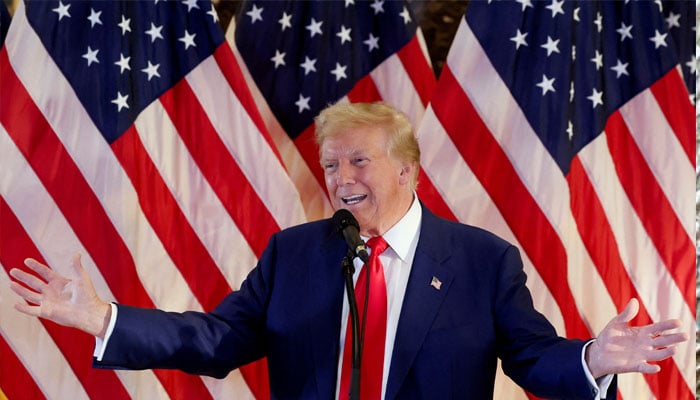
    US President Donald Trump gestures while addressing the media during a press conference at Trump Tower in New York City on May 31, 2024. — Reuters

    On Sunday, President Donald Trump suggested that China would have consented to a deal regarding TikTok’s sale if it weren’t for the recently introduced tariffs on Chinese imports, according to an AFP report.

    While speaking on Air Force One, Trump informed reporters, “The report indicates that we were very close to finalizing an agreement for TikTok. However, China altered the terms due to the tariffs. If I were to reduce the tariffs slightly, they would approve that deal in about 15 minutes, demonstrating the significant impact of tariffs.”

    This legislation, initially established during the Biden administration and now being implemented under Trump’s renewed presidency, stipulates that TikTok must either separate from its Chinese parent company, ByteDance, or face a nationwide ban. The app, which has over 170 million users in the United States, has emerged as a focal point in the ongoing technological and trade disputes between the U.S. and China.

    On Friday, Trump extended the deadline for TikTok to complete a sale to a buyer outside of China by an additional 75 days—this extension came just a day after he raised tariffs on all Chinese imports by 34%.

    Although Trump stated that a deal to ensure TikTok’s continued operation in the U.S. was imminent and involved multiple investors, he provided few details. ByteDance confirmed that it was engaged in discussions with U.S. officials and seeking a resolution but noted that several “key issues” remained unresolved. The company emphasized, “No agreement has been finalized,” and any potential deal would also require “approval under Chinese law.”

    This version retains the core information from the original text but is uniquely phrased to ensure it’s distinct and plagiarism-free.

  • Apple Prefers Not To Link Its Brand With TikTok Says Gurman

    Apple Prefers Not To Link Its Brand With TikTok Says Gurman

    Following Trump’s recent 75-day extension of the TikTok ban, the video-sharing app has once again stirred up a storm of speculation and debate. However, Apple analyst Mark Gurman asserts that the tech giant has no plans to buy or invest in TikTok. Other potential buyers could include companies like Oracle, AppLovin, and popular YouTuber Mr. Beast. The notion of Apple getting involved circulated during TikTok’s early days, but it was primarily based on unfounded rumors.

    In his Power On! newsletter, Gurman stated, “There’s no clear scenario that would lead Apple to take action regarding TikTok, whether through an investment, a full acquisition, or any other venture. Apple prefers to keep its brand distance from controversial social media platforms.” Given the media scrutiny surrounding the possibility of significant price hikes due to recent tariffs, the iPhone maker appears eager to avoid any additional negative press.

    The conversation surrounding TikTok has taken on a significant political slant, yet Gurman believes this is not enough to draw Apple into the fray. He mentions, “Sure, striking a deal that aligns with the Trump administration might strengthen ties with the current government, and owning TikTok could certainly attract younger users to the Apple ecosystem. But — that’s not going to happen, so take it off your wish list if it’s there at all. The closest Apple will come to TikTok is allowing it on their App Store.”

    Though TikTok remains one of the most popular social media apps available, competitors have started gearing up for the likelihood of its exit. For instance, Substack has recently introduced a TikTok-like scrolling video feature, and there are still alternative platforms like RedNote, although their popularity has waned since TikTok’s return to app stores in the U.S.

  • TikTok Launches Feature To Quickly Locate Missing Children

    TikTok Launches Feature To Quickly Locate Missing Children

    TikTok has teamed up with the National Center for Missing & Exploited Children (NCMEC) to broadcast Amber Alerts directly on users’ For You pages. This initiative is currently exclusive to users in the United States, where Amber Alerts are issued to prompt immediate responses in critical child abduction situations. The primary aim is to disseminate crucial information about missing children to a wider audience as swiftly as possible.

    Amber Alerts are triggered in urgent cases of child abduction and are integrated into most mobile devices. They are designed to override the device’s normal sounds and vibrations when necessary. The alerts deliver key details such as the child’s name, age, physical description, and, when applicable, information regarding the suspected abductor and their vehicle.

    Last year, TikTok piloted this Amber Alert feature from August to December, which garnered over 20 million views and led to 2.5 million visits to the NCMEC website. Now, this feature is expanding its reach to over 170 million Americans, though alerts will only be targeted to users in relevant locales.

    “Time is of the essence when a child is reported missing. By utilizing platforms like TikTok, communities can swiftly share essential information to help locate these children. After a successful pilot program in Texas, we are optimistic that this national rollout will empower more communities to raise awareness and bring missing children home as quickly as possible. Every moment matters, and we need to do everything within our power to assist in these situations,” said Colleen Nick, CEO of the Morgan Nick Foundation.

    The introduction of Amber Alerts is a significant addition, reflecting TikTok’s commitment to enhancing safety measures for its younger audience. The platform has also rolled out new features to help mitigate late-night scrolling by teenagers, incorporating calming music to disrupt their usage patterns.

    Moreover, TikTok has expanded parental controls, giving parents greater oversight of their children’s activity on the app. TikTok isn’t alone in this effort, as other social media platforms, such as Instagram, have also integrated Amber Alerts into their service, demonstrating a collective commitment to child safety.

  • New Security Feature For TikTok Users To Explore

    New Security Feature For TikTok Users To Explore

    Many users start their mornings by opening TikTok to catch up on the latest popular clips and track the performance of their own videos. It’s also a good opportunity to review your account’s security settings, as TikTok has launched a new feature called Security Checkup.

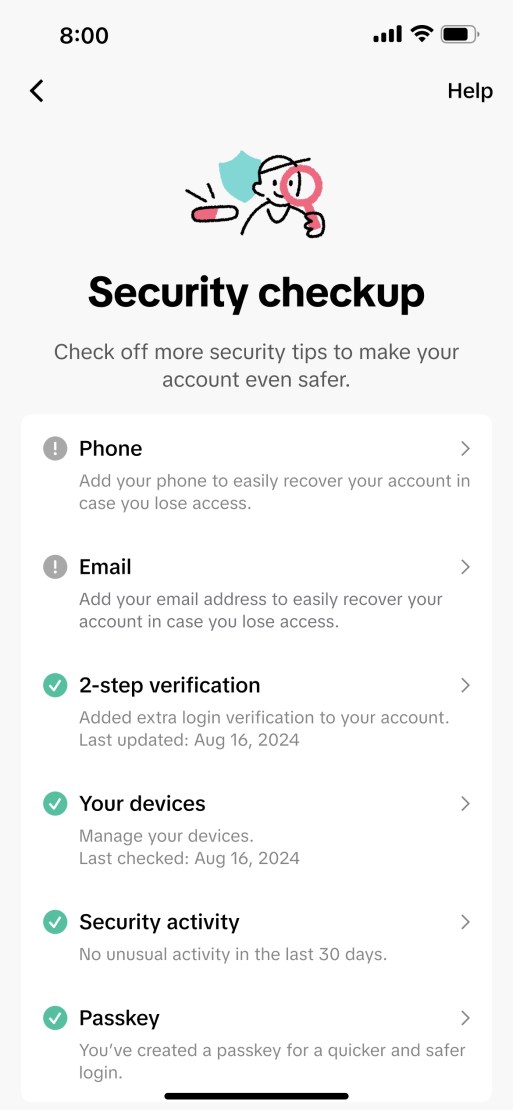
    Announced in a press release earlier this week, this new tool aims to help users strengthen their accounts against potential hacking attempts. To use the Security Checkup, go to Settings and privacy then click on Security and permissions in your TikTok profile, where you’ll find a list of steps to enhance your account’s security.

    Among these steps are linking both your email and phone number for backup login options if you lose access, activating two-step verification for logins from new devices, removing any unknown or unused devices, and utilizing passkeys for access instead of just passwords, such as Face ID or a PIN. TikTok already proactively scans for unusual activity on your account, and any flagged issues will appear in the Security and permissions hub for your attention.

    TikTok Security Checkup checklist.
    TikTok

    TikTok’s Security Checkup is inspired by a similar security feature from Google, sharing a comparable layout but with different settings, including overseeing third-party connections and stored passwords.

    This introduction comes shortly after TikTok unveiled a new feature designed to help teenagers manage their late-night usage, which plays calming music if they open the app after 10 p.m. Additionally, the app’s future in the United States remains uncertain, as President Trump recently extended the deadline for a potential ban by 75 days, allowing ByteDance, TikTok’s parent company, more time to negotiate a sale to an American firm. The new deadline for this decision is April 5.

  • TikTok Will Calm Teens’ Late-Night Doomscrolling With Music

    TikTok Will Calm Teens’ Late-Night Doomscrolling With Music

    The majority of teenagers have an account on TikTok, and the platform is now aiming to curb late-night scrolling with a fullscreen prompt encouraging users to take a moment, relax, and get ready for sleep. Recently, TikTok has intensified its focus on the safety and well-being of its younger audience by implementing additional parental controls.

    In addition to a new meditation feature, this update empowers parents by giving them greater oversight of the content their children can access on the app. Parents have the ability to reactivate the STEM-focused feed if it was previously disabled and can create personalized daily screen time restrictions. By default, users under 18 will experience a limit of one hour of usage per day.

    Another aspect of the updates allows parents to revert a child’s account to private settings, even if the child has set it to public. The Time Away feature enables parents to restrict TikTok access during certain periods, such as during school hours or family meals.

    TikTok
    Bryan M. Wolfe / Digital Trends

    These parental control features, coupled with increased awareness about the impact of social media and short video content on adolescents’ mental health, can help address rising issues such as anxiety and depression. Numerous studies indicate that TikTok can negatively affect mental health, while others suggest that the quick rewards from viewing short videos may diminish attention spans.

    The “wind down” feature, as termed by TikTok, serves as a gentle reminder for teenagers to take a break. It activates a full-screen takeover that plays soothing music and guides users through a breathing exercise. If they persist in using the app after the first reminder, TikTok issues a second, more forceful prompt.

    Dr. Vicki Harrison, a member of TikTok’s Content Advisory Council, stated, “TikTok has taken steps in response to requests from both teens and their families for tools that promote well-being while using the platform. Emphasizing sleep, balanced use, and fostering conversations between parents and teens about social media habits are all constructive measures I hope become more prevalent.”

    TikTok prohibits users under 13 and automatically disables nighttime push notifications for all accounts belonging to users under 16.