الوسم: Tibet

  • What Caused the Devastating Flood at the Nepal-Tibet Border?

    What Caused the Devastating Flood at the Nepal-Tibet Border?

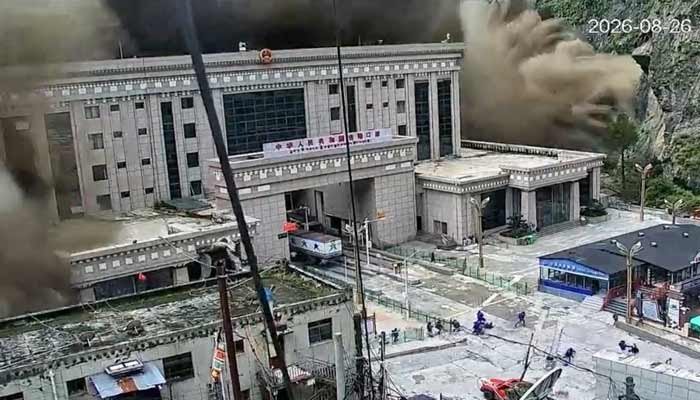
    Flash floods that impacted the Himalayan border region of Nepal and China’s Tibet on Wednesday have resulted in at least 165 fatalities. Nearly 1,500 individuals, including at least 800 foreigners, are reported missing following a massive mudslide that caused devastating floods in towns and valleys after a wall of debris collapsed into a Himalayan river.

    Here is a breakdown of the causes and current situation:

    What happened:
    Early Wednesday, a section of a Himalayan glacier broke apart and tumbled into the valley below. While initial speculations suggested an earthquake might have triggered the event, the U.S. Geological Survey clarified that the tremor was seismic energy generated by the glacier’s collapse and subsequent debris flow.

    The ice and rock avalanche descended along the Lhende Khola river, which runs along the Nepal/Tibet border. The resulting mudslide struck Gyirong port in Tibet and parts of Nepal, unleashing rapid flooding that destroyed entire roads, damaged power infrastructure, and inundated multiple villages.

    Casualties and Missing Persons:
    So far, Nepal has recovered 165 bodies, but the number is expected to rise sharply. About 1,500 people are still unaccounted for across both China and Nepal. Among those missing are nearly 750 foreigners, including:

    • 177 Indians, many on a pilgrimage to Kailash Mansarovar
    • 63 Americans
    • 53 Ukrainians
    • 34 Australians
    • 33 British citizens
    • 28 Malaysians
    • 25 Canadians
    • 9 South Koreans working at a hydropower plant

    Additionally, citizens from around 20 other nations are also reported missing. No immediate details are available regarding the foreign nationals missing in Tibet.

    Downstream in India, approximately 5,000 residents in Bihar were evacuated after flood warnings prompted precautionary measures.

    Current Situation:
    Rescue efforts are ongoing, with police and military personnel conducting search and rescue operations. Helicopters are delivering tents, food, and emergency supplies provided by India. Nepal’s army reports that over 5,000 personnel are engaged in recovery activities, and they’ve rescued 125 individuals—including 20 foreigners—by Thursday. The affected areas lack electricity, and flood sediments present additional challenges for responders.

    International aid is arriving:

    • The United Nations is mobilizing supplies and personnel to support flood-affected communities.
    • India is coordinating closely with Kathmandu for rescue and relief efforts.
    • South Korea is dispatching a rapid-response team to assist.

    The disaster highlights the devastating power of Himalayan glacier collapses and their potential to trigger widespread destruction in border regions. Rescue operations continue as authorities work to account for those missing and provide relief to displaced communities.

  • Dozens Unaccounted for Following Floods at Nepal-China Border

    Dozens Unaccounted for Following Floods at Nepal-China Border

    A Nepalese army member airlifting individuals stranded by floods at the Bhotekoshi river, Nepal, on July 8, 2025. — Reuters

    • Experts suggest the flooding may stem from an overflowing glacial lake in Tibet.
    • In Nepal, those reported missing include six Chinese workers and three police officers.
    • Torrential rainfall has destroyed the “Friendship Bridge,” which connects China and Nepal.

    KATHMANDU: Over two dozen individuals are unaccounted for following heavy rainfall in Tibet, China, which caused a surge in the Bhote Koshi River, resulting in the collapse of the “Friendship Bridge” connecting China and Nepal, officials reported on Tuesday.

    Weather specialists indicated that the flooding might have originated from an overflowing glacial lake in Tibet, as there wasn’t any significant rainfall in the river’s immediate catchment area within the last 24 hours.

    A total of 18 people are missing in Nepal, while the Chinese state-run Xinhua news agency reported that 11 individuals are untraceable on the Chinese side of the border.

    The individuals missing in Nepal include six Chinese construction workers and three police officers, according to the National Disaster Risk Reduction and Management Authority (NDRRMA) via X.

    The agency also noted that eight electric vehicles were swept away and a small hydroelectric facility suffered damage due to the floods.

    Officials stated that trade activities between Nepal and China have been hindered as a result of the bridge’s destruction.

    The missing Chinese nationals were employed at an Inland Container Depot under construction with Chinese support, located around 80 km north of Kathmandu, stated Arjun Paudel, a senior administrative official in Rasuwa district.

    “The river also carried away some containers filled with goods imported from China… This represents a substantial loss [of property], and we are gathering information,” he told Reuters.

    The Nepali army successfully rescued 11 individuals, and search and rescue operations are ongoing, said spokesperson Raja Ram Basnet.

    In recent years, China has ramped up its investments in Nepal, focusing on areas such as infrastructure, power generation, and healthcare.

    China has been severely impacted by recent downpours and flash floods, which have caused extensive damage, and the nation is now preparing for a tropical storm anticipated later this week.

    Nepal’s weather forecasting department is collaborating with Sentinel Asia—an international program utilizing space-based technology to aid disaster management in the Asia-Pacific region—to identify the causes of the flooding.

    “We have submitted an Emergency Observation Request to Sentinel Asia for satellite data to help determine the potential causes and effects of the flood,” they stated.

    Meanwhile, in Pakistan, at least 79 fatalities have been reported since June 26 due to floods and rain-related incidents, including landslides and building collapses, according to the National Disaster Management Authority (NDMA) on Tuesday.

    The NDMA has issued new warnings about potential flash flooding and glacial lake outburst floods in Pakistan’s northern and northwestern provinces of Gilgit-Baltistan and Khyber Pakhtunkhwa, citing “a notable increase in temperatures and an approaching weather system.”