Tag: terrorism

  • Woman’s bomb injures 21, kills 3 outside Moscow restaurant

    Woman’s bomb injures 21, kills 3 outside Moscow restaurant

    A homemade bomb carried by a woman resulted in three deaths and injured at least 21 others in an explosion near a high-end restaurant in downtown Moscow on Saturday evening, authorities reported.

    The blast happened shortly before 8 p.m. local time near an Italian eatery situated in one of Moscow’s seven Stalin-era skyscrapers at Kudrinkskaya Square.

    Russia’s Anti-Terrorism Committee stated that an unidentified woman attempted to enter the restaurant but was stopped by a security guard, according to the state news agency RIA.

    They reported that the woman, the security guard, and a customer at the Balzi Rossi Italian restaurant were killed in the explosion that ensued.

    Victims sustained wounds of various severities, authorities said.

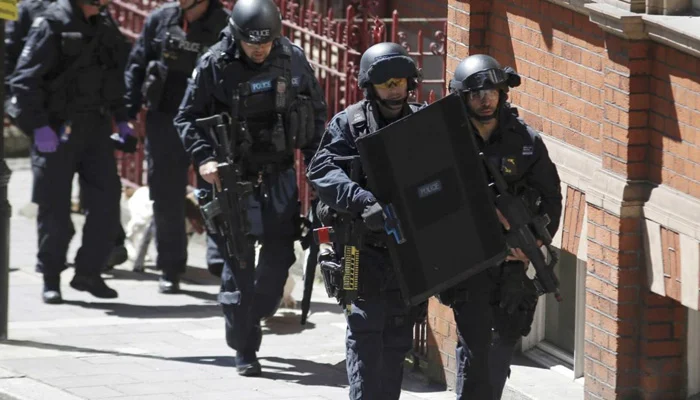
    The scene, which was cordoned off to the public, showed heavily armed law enforcement personnel according to footage released by Russia’s state news agency, RIA.

    Officials have not disclosed the identities of those killed or injured, nor have they identified suspects or motives.

    Four years into a full-scale conflict with Ukraine, Russia’s FSB security agency announced earlier this year that security measures for senior military officials would be heightened following a series of assassinations and attempted killings attributed to Kyiv.

    The daily newspaper Kommersant cited its sources suggesting that the bomb was intended to target and harm patrons enjoying the restaurant’s outdoor summer terrace.

    It was also suggested that the device was triggered remotely by someone else, and that the woman believed to have been carrying it may not have known it was explosive.

    The restaurant’s website indicated it was closed Saturday for a private event.

  • 12 Arrested in UK Plot Targeting Tablighi Jamaat Gathering

    12 Arrested in UK Plot Targeting Tablighi Jamaat Gathering

    Twelve individuals have been detained in connection with a right-wing terror threat targeting an Islamic event organized by Tablighi Jamaat at a rural estate in Suffolk, according to law enforcement authorities.

    Counter Terrorism Police in London reported that the UK Ijtima gathering hosted by Tablighi Jamaat at Shrubland Hall was concluded early on Sunday as a precaution due to a potential threat.

    Home Secretary Shabana Mahmood stated that police actions in response to a credible threat to the UK Ijtima festival undoubtedly played a role in saving lives.

    She emphasized: “This is deeply concerning news for British Muslims. We must stand united against hatred and promote a country that is welcoming, generous, and tolerant of all communities.”

    Suffolk Constabulary’s Assistant Chief Constable Alice Scott acknowledged that the arrests and the circumstances surrounding them might cause anxiety within local communities. To help reassure residents, police will maintain a visible presence near Shrubland Hall in the upcoming days and encourage community members to approach officers with questions.

    She explained that early Sunday morning, authorities declared a major incident, coordinating multiple agencies to ensure the safe and organized departure of approximately 15,000 event attendees. The incident status was lifted earlier on Monday.

    Scott added: “This situation was complex and developed rapidly. Our main goal was to ensure the safety of everyone involved. We appreciate the calmness shown by the organizer and attendees during these challenging circumstances, and we can confirm that all individuals left the site safely.”

    Helen Flanagan, the head of Counter Terrorism Policing in London, said: “Once we identified a serious potential threat targeting the Suffolk gathering, we responded swiftly with multiple arrests across the country. I thank Suffolk Police for their ongoing support, which was instrumental in declaring a major incident on Sunday. I also appreciate the cooperation of the event organizers and the public impacted by these events.

    While this news may be troubling, especially for the Muslim community who believed the threat was directed at an Islamic event, our commitment is to act decisively against any potential danger, regardless of the target. Although the event ended early, it was conducted in a safe manner.

    This incident serves as a stark reminder that the UK’s threat level remains at ‘severe,’ and the public should stay alert and report anything suspicious.”

  • India-based Organized Crime: 24 Sting Arrests Abroad

    India-based Organized Crime: 24 Sting Arrests Abroad

    An international crackdown on Indian organized crime networks has resulted in 24 arrests, according to U.S. officials on Tuesday. The operation also targeted suspects connected to the murder of a notable Sikh figure in Canada.

    Law enforcement agencies across the U.S., Canada, and Europe collaborated to investigate crime syndicates involved in racketeering, contract killings, shootings, extortion, and drug trafficking.

    Many individuals have been charged, including two who, according to authorities, managed their global criminal operations from Indian prisons. Currently, all except 10 suspects are in custody.

    First Assistant U.S. Attorney Bill Essayli emphasized, “Transnational criminal gangs responsible for spreading fear, drugs, and violence will face full justice and the power of the federal government.”

    One of the charges involves the 2023 murder of Hardeep Singh Nijjar, a Canadian citizen and prominent advocate for Khalistan, a movement seeking a separate homeland for Sikhs.

    Lawrence Bishnoi, 33, from Punjab—whose organization is labeled a terrorist group in Canada—is accused of ordering Nijjar’s killing while incarcerated in India. Although Bishnoi publicly portrays himself as a devout patriot, officials say he used this image to recruit members across India, the U.S., and beyond. Behind the scenes, he allegedly oversaw a sprawling criminal enterprise involved in political assassinations, murders, extortion, kidnapping, drug trafficking, human smuggling, and more.

    Also charged is Jaggu Bhagwanpuria, 38, another Punjab native who was once an associate and now a rival of Bishnoi. Bhagwanpuria established his own gang, now boasting over 1,000 members across the U.S., Canada, UK, Europe, Australia, and New Zealand.

    In addition to them, 16 others face charges for operating a global criminal network engaged in murder-for-hire, drug trafficking, kidnapping, weapons offenses, and extortion in multiple countries, including the U.S. and Canada.

  • Iran-U.S. Trade Tensions Escalate Amid Accusations of Breach

    Iran-U.S. Trade Tensions Escalate Amid Accusations of Breach

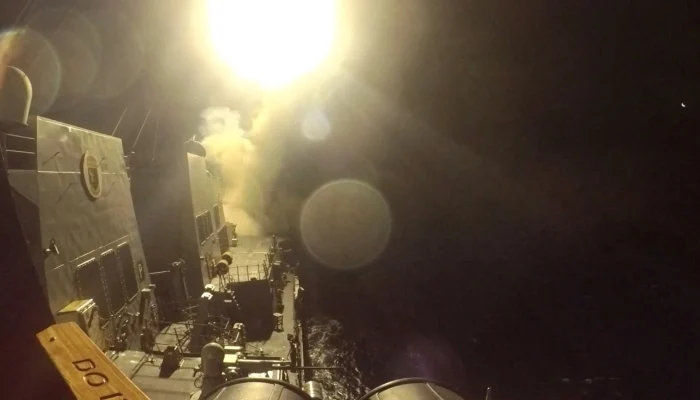
    A U.S. Navy destroyer, USS Michael Murphy (DDG 112), is seen launching Tomahawk cruise missiles from an undisclosed location amid new American strikes targeting multiple sites in Iran overnight, as captured in a still from a handout video released on June 10, 2026 — Reuters.

    The United States claims to have struck Iranian missile, drone, and radar facilities, while Iran reports hitting U.S. military installations in Kuwait and Bahrain. Meanwhile, Israel has conducted strikes in Lebanon, as regional tensions escalate.

    Iran and the U.S. continue to exchange retaliatory strikes in the Gulf, both accusing each other of violating a recent interim agreement aimed at de-escalation, just under two weeks after its signing. Tehran announced it carried out a third day of retaliatory attacks against U.S. targets following American operations on Iranian soil, with both nations accusing each other of breaching the fragile ceasefire. This ongoing cycle of escalation is straining negotiations brokered by Pakistan, intended to bring an end to the conflict ignited by the U.S. and Israel in February, which has disrupted shipping lanes through the Strait of Hormuz and unsettled global energy markets.

    Iran’s Revolutionary Guards indicated on Sunday that they are taking stricter measures to manage maritime traffic through the crucial Strait of Hormuz, warning that vessels violating regulations will face harsher penalties than before. Iran restricts passage to a designated corridor along its coast to maintain control.

    The Guards reported retaliatory strikes in Kuwait and Bahrain, claiming to have destroyed eight significant U.S. military sites, including facilities at the Ali al-Salem base in Kuwait and the Fifth Fleet naval base in Port Salman, Bahrain. They asserted that any form of enemy aggression, regardless of its justification or target size, would be met with “a crushing response.” Bahrain’s interior ministry confirmed that air raid sirens sounded twice on Sunday.

    A peace agreement brokered via Pakistan in mid-June stipulates that both Iran and the U.S., along with their allies, are committed to avoiding the initiation of war or military actions and refraining from threats or use of force against each other.

    U.S. President Donald Trump warned on Saturday that Iran might “no longer exist” if the U.S. is forced to restart military operations. This statement followed U.S. strikes targeting multiple Iranian facilities, including missile and drone storage sites and coastal radar systems, in response to recent attacks on shipping vessels in the Strait of Hormuz. Trump emphasized that Iran’s missile and radar sites had been targeted for violating the ceasefire agreement.

    The strikes aimed to disable Iran’s surveillance infrastructure, communication systems, air defenses, drone storage, and minelaying capabilities. Reports indicate explosions in Iran’s southern regions of Sirik and Qeshm, while the U.S. claims similar retaliatory strikes on Friday targeted the “Ever Lovely” vessel after an Iranian attack.

    Simultaneously, Israel targeted Lebanon, as Hezbollah’s leader Naim Qassem dismissed an agreement intended to end conflict there, calling it “humiliating” and a surrender of sovereignty, and demanding full implementation of the U.S.-Iran deal, which includes ending hostilities in Lebanon. The current deal does not explicitly promise a full Israeli withdrawal from southern Lebanon, a point frequently demanded by Hezbollah.

    Israeli Prime Minister Benjamin Netanyahu described the recent agreement as historic “a blow to Iran and Hezbollah,” while his security minister Itamar Ben Gvir criticized it as a “big mistake,” asserting only Israeli forces possess the capability to disarm Hezbollah.

    Lebanon and Israel signed a U.S.-backed peace agreement on Friday, but Hezbollah rejected it, emphasizing the need for Iran’s accord to be fully enforced and criticizing what they see as concessions. Israel maintains that its forces will stay in their southern security zone until Hezbollah disarms, with Netanyahu refusing to let civilians return until that occurs.

    Overall, regional tensions remain high, with ongoing military actions and diplomatic disputes threatening to destabilize this volatile part of the Middle East.

  • FBI Thwarts Alleged White House Attack Plot During Fight Night

    FBI Thwarts Alleged White House Attack Plot During Fight Night

    Law enforcement officials announced that they successfully thwarted a plot to assault the White House during a popular mixed martial arts event attended by President Donald Trump and other high-ranking officials. FBI Director Kash Patel stated on X that, thanks to swift action by the FBI, partner agencies, and the Department of Justice working across multiple states, several suspects are in custody, and the planned attacks have been halted. His post referenced a Fox News headline reporting: “FBI disrupts alleged explosive drone plot targeting White House UFC event, officials say.”

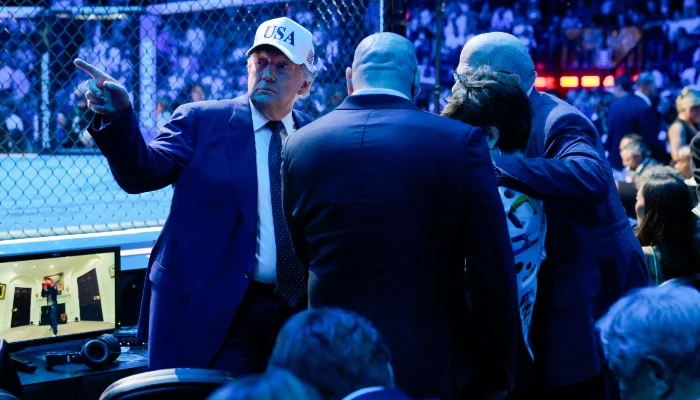
    Trump had participated in the event, which featured a temporary arena named “The Claw” set up on the South Lawn, on Sunday. According to anonymous US officials cited by Fox News, five individuals have been detained, with investigators identifying a potential network of 23 plotters who communicated via a Signal chat group. The alleged scheme involved deploying drones to strike areas near the White House during the UFC fight, causing a mass evacuation—intended to divert crowds toward a pre-positioned sniper team. There were also reports of plans to breach the White House gates in a coordinated second wave.

    It remains uncertain whether any concrete steps were taken toward executing the attack, as the White House is heavily protected with surveillance, fencing, checkpoints, anti-air defenses, snipers, and a dedicated quick-response team. The FBI declined to provide additional details beyond Patel’s announcement when contacted by AFP.

    Attorney General Vance pointed fingers at the political left, describing the incident as a “coordinated planned terrorist plot.” The UFC event on June 14—Donald Trump’s 80th birthday—was intended to kick off this year’s celebrations marking 250 years of U.S. independence. The FBI reportedly received information about the threat on June 10.

    The U.S. Secret Service highlighted the increasing number of protective intelligence operations, emphasizing the tireless efforts of their teams to investigate threats and identify those responsible. Secret Service Director Sean Curran noted that agents worked around the clock leading up to the event to ensure accountability.

    Trump has been subject to multiple assassination attempts over recent years, including an incident in April when a gunman tried to breach a White House press event he was attending. Vice President JD Vance, who also attended the UFC event, told Fox News he had just learned about the thwarted plot on Tuesday morning. When asked why the FBI disclosed the foiled attack—an action not always taken for security reasons—Vance suggested it was because of the potential scale of the threat.

    Vance characterized the plot as a “coordinated planned terrorist attack” and accused Democrats of fostering violence through anti-Trump rhetoric. He hinted at ongoing investigations into radical left-wing groups’ funding and coordination, though he did not specify the suspects’ identities or motivations. Vance also criticized some Democrats, suggesting a need for self-reflection about the rise in political violence within their circles.

    The White House has repeatedly claimed that critics of Trump and certain media outlets are fueling the increasing political tensions in the country. Opponents argue that Trump’s often inflammatory language against opponents, immigrants, and the electoral process contributes to the hostile climate.

  • Iran Peace Deal Near as Military Tensions Rise Near Strait of Hormuz

    Iran Peace Deal Near as Military Tensions Rise Near Strait of Hormuz

    A proposed agreement aims to reopen the Strait and lift the U.S. blockade. Iran indicates that changes are still possible, and negotiations on its nuclear program could occur later. The Israeli Prime Minister states that Israel will not participate in the deal.

    The U.S. and Iran signaled on Friday that they are nearing an agreement to end their conflict, with a senior U.S. official saying both sides have agreed on a draft text and that Washington expects to sign an initial deal soon. Iran’s Foreign Minister Abbas Araghchi noted that while modifications are still possible, the preliminary agreement demonstrates Iran has strengthened its position from the conflict. He declared, “Iran is the winner of the war with the U.S.,” on state TV.

    Later that day, U.S. forces intercepted multiple Iranian attack drones headed toward the Strait of Hormuz, citing a threat to commercial shipping. The U.S. Central Command confirmed the shoot-down and assured that the waterway remained open for transit. Meanwhile, reports emerged of explosions near Iran’s Sirik port and Qeshm Island, which residents and officials attributed to shots fired by Iranian forces to deter vessels attempting unauthorized passage through the waterway.

    The draft memorandum suggests reopening the strait and removing the U.S. naval blockade of Iranian ports. Negotiations over Iran’s nuclear activities, which was the primary justification for U.S. involvement in the war, are expected to follow. An anonymous U.S. official stated that the deal aligns with President Trump’s core priorities and sets a positive tone for further negotiations.

    Western, Pakistani, and Iranian sources indicate the draft terms might favor Iran, though Trump dismissed these reports as inaccurate. Generally, the proposals appear to grant Iran much of what it demands, with Trump seemingly focused mainly on reopening the strait, which Iran shut after the recent Israeli and U.S. strikes in February.

    Araghchi asserted Iran, along with Oman, will control traffic through the Strait, which before the conflict handled about 20% of the world’s oil and gas exports. “Our sword will always hang over the Strait of Hormuz,” he said.

    A Western source mentioned that the agreement could be finalized as soon as Sunday, with U.S. Vice President JD Vance and Iranian Parliament Speaker Mohammad Baqer Qalibaf expected to sign in Geneva. Although the U.S. considered Europe as a potential signing location, no official decision has been made. Araghchi indicated the deal would be signed remotely prior to public announcement.

    What does the deal entail?

    Draft terms suggest the U.S. would start releasing billions of dollars in frozen Iranian assets and lift sanctions on Iran’s oil exports in exchange for Iran opening the Strait. Over a 60-day period, negotiations over Iran’s nuclear program would take place. The U.S. official explained that ultimately, Iran’s nuclear program would be dismantled, with highly enriched uranium destroyed and removed, accompanied by a verification regime to ensure compliance.

    However, Araghchi stated on state TV that Iran, which reportedly has not agreed to dismantling its nuclear program, prefers to keep its uranium in a diluted form. “For Tehran, the only preferred solution for its highly enriched uranium stockpile is down-blending the material,” he explained.

    The proposals also discuss potential reparations for Iran and the removal of longstanding U.S. demands for limits on Iran’s missile program. The U.S. official refuted this, emphasizing that no funds would be released until Iran proves performance, the Strait remains open, and Iran ceases funding terrorism—calling it a “performance-based deal.”

    Israel’s stance

    Israel has not been involved in the negotiations, and Prime Minister Benjamin Netanyahu has declared that his country will not participate in the agreement. Tensions with Trump have risen recently over Israel’s military actions in Lebanon, which Washington has urged Israel to limit to facilitate a deal with Tehran. Araghchi implied the agreement could end the conflict in Lebanon, suggesting an Israeli withdrawal from occupied territories, but Israel’s defense minister stated it would not withdraw and expects to maintain freedom of action against threats.

  • US Judge Gives 42-Year Sentence to Former Taliban Commander

    US Judge Gives 42-Year Sentence to Former Taliban Commander

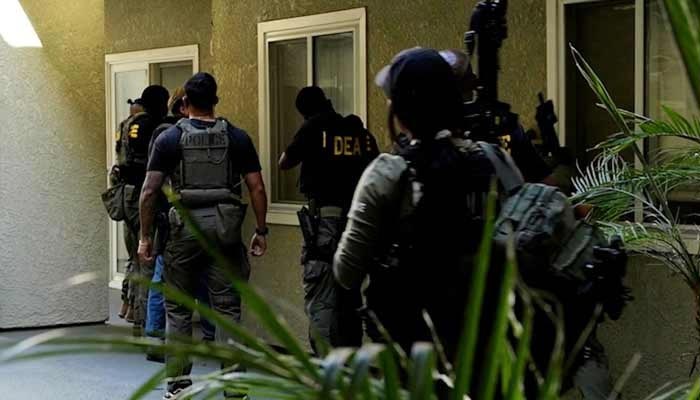
    A former Afghan Taliban commander, aged 50, who faced charges from the United States for kidnapping a journalist and causing the deaths of American troops in 2008, received a 42-year prison sentence on Tuesday. US prosecutors accused Haji Najibullah of kidnapping an American journalist, identified as David Rohde of the New York Times, along with two Afghan civilians. He was also charged with the deaths of three US soldiers and an Afghan interpreter during an attack led by his forces in June 2008.

    Najibullah was captured in Ukraine and extradited to the US in 2020. Last year, he pleaded guilty to charges of hostage-taking and providing material support for terrorist acts resulting in death, according to a Justice Department release.

    Acting Attorney General Todd Blanche emphasized, “Those who harm Americans and partake in terrorism activities will be tracked down and face justice, regardless of how long it takes.” Rohde, along with a translator and driver, was kidnapped in Afghanistan in November 2008. The New York Times, which kept the news confidential to protect Rohde, reported that he escaped captivity in June 2009.

  • San Diego Rally Honors Three Victims of Mosque Attack, Drawing 2,000+

    San Diego Rally Honors Three Victims of Mosque Attack, Drawing 2,000+

    More than 2,000 individuals gathered in a San Diego park on Thursday to pay their respects to a security guard and two other men who lost their lives while attempting to stop this week’s assault on the largest mosque in the city. Men and women, including uniformed police officers, formed rows for the funeral prayer, or Janazah, honoring the three men, celebrated by mourners as heroes for their bravery in delaying and diverting the attackers, thus preventing further violence, especially as children were present at the mosque’s school.

    The remains of Amin Abdullah, 51; Mansour Kaziha, 78; and Nadir Awad, 57, rested beneath cloths and rugs, beneath a white canopy. Mourners chanted “Allahu Akbar” (“God is the greatest”) in Arabic, raising their hands in prayer during the service held in a park nestled between the city’s riverfront and a soccer stadium.

    Later that day, the three men were scheduled to be buried side by side at a nearby cemetery. The imam of the center, Taha Hassane, emphasized the resilience of the community despite the tragedy, noting that attendees had come from across the United States and California to honor the fallen.

    The FBI is looking into the attack as a potential hate crime. The murders have heightened anxiety among Muslim communities across the country amid escalating Islamophobia. Ruba Abu Jamah, who knew all three men personally, appealed for an end to hatred toward Muslims, questioning why the mother of one of the teenage suspects, who had alerted authorities about her son’s suicidal tendencies, reportedly allowed him access to firearms.

    “Why are we going backwards? Hate sets us back,” Abu Jamah stated as hearses carried the bodies away for burial. “Parents, don’t display weapons if you know your 16-year-old is struggling.”

    Police stated Abdullah was shot during a gunfight with the teenage assailants, during which he used his radio to initiate a lockdown procedure. The attackers, after hearing gunfire, fled the scene in their vehicle and were later found dead from self-inflicted gunshot wounds.

    Kaziha, the mosque’s handyman and cook, and Awad, whose wife teaches at the center and who lived nearby, were also killed after hearing gunfire and rushing toward the mosque. Abdullah’s efforts in delaying the attackers are credited with giving the 140 students inside the center time to hide in closets and other spaces.

    The suspects fled the scene in their vehicle, and police later discovered them dead inside from self-inflicted wounds. Khaled Abdullah, the son of the security guard, expressed pride in his father’s bravery, saying, “He was on the front line fighting to protect kids and innocent people. Calling him a hero is the least we can do.”

  • PM Shehbaz, World Leaders ‘Relieved’ as Trump Safely Escapes Washington Shooting

    President Asif Ali Zardari labeled the incident as a “heinous act of terrorism.” Prime Minister Shehbaz Sharif expressed that he was “deeply shocked” by what happened. The Japanese Prime Minister emphasized that violence can never be tolerated anywhere in the world.

    Following the shooting at the White House Correspondents’ Dinner in Washington, D.C., world leaders showed relief that President Donald Trump, First Lady Melania Trump, and other high-ranking officials are safe. Gunfire erupted near the event at the Washington Hilton hotel, leading security personnel to evacuate Trump, his wife, Vice President JD Vance, and other top officials. The suspect was detained shortly afterward.

    The individual used a shotgun at a Secret Service checkpoint inside the Washington Hilton before being subdued and taken into custody. It remains unclear if Trump was targeted, though he was quoted as believing he was. He has previously survived two assassination attempts since 2024, a period marked by increasing political polarization in the United States.

    On X, President Zardari’s office condemned the attack, calling it a “heinous act of terrorism,” and expressed relief that Trump and the First Lady were unharmed.

    PM Shehbaz conveyed his shock and relief, stating, “I am deeply shocked by the violent shooting at the Washington, D.C., White House Correspondents’ Dinner. Thankfully, President Trump, the First Lady, and other attendees are safe. My thoughts and prayers remain with him, wishing him ongoing safety and health.”

    Indian Prime Minister Narendra Modi also voiced reassurance, stressing that violence has no place in democracy and must be unequivocally condemned.

    “Glad to hear President Trump, the First Lady, and Vice President are unharmed after the recent incident in Washington,” Modi posted on social media.

    Japanese Prime Minister Sanae Takaichi called the event terrifying and affirmed that violence must never be accepted under any circumstances.

    “I’m relieved President Trump is safe following the shooting. Violence is never acceptable anywhere in the world,” she stated.

    Mexican President Claudia Sheinbaum echoed similar sentiments, expressing hope for Trump’s continued safety and emphasizing that violence is never the answer.

    “It’s a relief that President Trump and his wife are doing well after the attack. We send our respect. Violence should never be the solution,” she said.

    Australian Prime Minister Anthony Albanese also expressed relief knowing that all attendees are safe. “We commend the swift response of the Secret Service and law enforcement agencies,” he noted.

  • Armed Men Launch Coordinated Attacks Inside and Outside Mali Capital, Army Reports

    Militants launched coordinated attacks in Mali’s capital, Bamako, and several internal locations Saturday morning, according to the Malian army. The assaults involved multiple groups and were marked by two loud explosions and ongoing gunfire just before 6 a.m. near Mali’s primary military base in Kati, outside Bamako. Observers reported soldiers blocking roads in the vicinity.

    Similar unrest was reported simultaneously in the central town of Sevare, as well as Kidal and Gao in the northern regions, with eyewitnesses noting heavy gunfire in Sevare. Mali continues to face insurgencies from regional al-Qaeda affiliates and Daesh, alongside a long-standing Tuareg-led rebellion in the north.

    In a statement, the Malian military claimed that unidentified “terrorist” groups attacked various locations across the country, including the capital, but did not specify exact sites. The military indicated that fighting persisted and urged civilians to stay calm.

    Since taking power through coups in 2020 and 2021, Mali’s military leaders pledged to improve security, yet frequent attacks on forces and civilians persist. Mohamed Elmaouloud Ramadane, spokesman for the Tuareg-led Azawad Liberation Front (FLA), claimed via social media that his forces seized multiple positions in Kidal and Gao. Independent verification of this has not been confirmed.

    Sources indicate that Jama’at Nusrat al-Islam wal-Muslimin (JNIM), an al-Qaeda regional affiliate, was involved in Saturday’s assaults, alongside suspected Daesh operatives in the Sahel. Neither group has publicly claimed responsibility yet.

    Officials from the government and military did not respond immediately to requests for comment.

    Residents near Bamako’s airport reported hearing gunfire early Saturday from a nearby military camp housing Russian mercenaries, though not directly at the airport itself. The government, led by Assimi Goita, has relied on Russian security support despite earlier reluctance to cooperate with Western nations. Recently, Mali has been moving closer to the U.S., with reports emerging in March of negotiations to allow Washington to conduct surveillance flights over the country to monitor insurgent activity.

  • Gunfight outside Israel’s Istanbul consulate leaves one dead, two wounded

    Gunfight outside Israel’s Istanbul consulate leaves one dead, two wounded

    A gunman was shot and killed, while two others were injured in a brief gunfight outside the Israeli consulate in Istanbul on Tuesday, according to Turkish authorities. Two police officers sustained minor injuries during the exchange. Governor Davut Gul confirmed that one of the assailants was killed during the incident, which occurred around 12:15 p.m. local time (9:15 a.m. GMT).

    It remains unclear whether the Israeli consulate was the specific target. A source familiar with the situation told AFP that no Israeli diplomats are currently present in Turkey. Following the October 7, 2023, attacks by Hamas on Israeli territory, Israeli diplomatic missions in Turkey and across the region were evacuated for security reasons, the source added.

    Israel stated it would not be intimidated by such threats, with President Recep Tayyip Erdogan condemning the attack as “treacherous” and pledging to combat all forms of terrorism. Erdogan emphasized, “We will not allow provocations to compromise Turkey’s security environment,” during a televised address.

    A police officer remains alert near the scene, with authorities and witnesses describing a scene of chaos. An eyewitness, who chose to remain anonymous, recounted witnessing gunfire that lasted for some time, observing a police officer collapse and widespread panic among the crowd.

    Turkish officials have not officially identified the group behind the attack, but local media speculate it could be linked to ISIS, especially after clashes between militants and police in Yalova—a region near the Sea of Marmara about 55 miles southeast of Istanbul—where three officers were killed and nine wounded in December.

    Following the Yalova incident, Turkish authorities increased their efforts by executing broader raids that led to the detention of 125 suspects. Witnesses described seeing police opening fire in a busy district, with an injured individual being carried away on a stretcher. The entire gunfight reportedly lasted approximately ten minutes, with heavy police presence at the Levent business district where the consulate is situated.

    The area around the consulate is regularly secured by police, with barriers in place even under normal conditions. Istanbul’s prosecutors have launched an investigation, and reports indicate that three suspects have been detained.

    The United States strongly condemned the attack. Ambassador Tom Barrack expressed deep displeasure, stating, “Attacks on diplomatic missions are attacks on the international order and the principles that unite nations.” He also praised Turkish security forces for their swift response.

    Historically, ISIS has carried out lethal attacks in Turkey, including the 2017 nightclub massacre in Istanbul that resulted in 39 deaths.

  • Maduro’s Case Challenges U.S. Narcoterrorism Law Amid Limited Wins

    Maduro’s Case Challenges U.S. Narcoterrorism Law Amid Limited Wins

    Venezuela’s detained President Nicolás Maduro and his wife, Cilia Flores, appear in court with defense attorneys Barry Pollack and Mark Donnelly to face federal charges in the United States, including narco-terrorism, conspiracy, drug trafficking, money laundering, and other allegations. The proceedings took place at the Daniel Patrick Moynihan U.S. Courthouse in Manhattan, New York City, on January 5, 2026, as depicted in a courtroom sketch. — Reuters

    – The credibility of witnesses plays a significant role in the trial.
    – Two out of three convictions have been overturned.
    – Maduro faces charges related to drug trafficking conspiracy.

    Ousted Venezuelan President Nicolás Maduro is appearing again before a U.S. court Thursday, facing serious criminal allegations, including narcoterrorism—a rarely tested statute with a limited history of successful prosecutions.

    Maduro, 63, governed Venezuela from 2013 until he was captured in Caracas by U.S. special forces on January 3. He entered a plea of not guilty on January 5 to all charges brought against him in the United States.

    The law under scrutiny, enacted in 2006, targets drug trafficking connected to activities that the U.S. classifies as terrorism. According to a Reuters review of federal court records, only four individuals have been convicted under this statute, with two convictions later reversed due to issues involving witness credibility.

    This mixed record illustrates one of the main hurdles prosecutors face: convincing a jury that evidence from cooperating insiders reliably links drug activities to terrorism.

    “The key takeaway from these past cases isn’t that the narcoterrorism law is unworkable,” stated Alamdar Hamdani, a partner at Bracewell law firm and former U.S. Attorney in Houston. “It’s that proving a defendant’s knowledge of a terrorism nexus requires evidence of exceptional quality and prosecutorial diligence, leaving no room for mistakes or unverified witness statements.”

    Prosecutors have not yet revealed who will testify against Maduro, but a former Venezuelan general indicted alongside him has expressed willingness to cooperate, according to Reuters.

    ### Maduro Accused of Supporting Colombian Rebels

    The narcoterrorism law was created two decades ago to prosecute drug traffickers financing activities considered terrorism by the U.S. Since then, 83 people—including Maduro—have faced charges under this law. Thirty-one have pleaded guilty to narcoterrorism or lesser charges, eight are awaiting trial, and many are outside U.S. custody, based on the review.

    Although some convictions have been overturned, this does not impact Maduro’s case, and he faces additional charges, including conspiracy to import cocaine.

    A socialist, Maduro is accused of orchestrating a conspiracy where his government officials aided in moving cocaine through Venezuela, collaborating with traffickers such as the Revolutionary Armed Forces of Colombia (FARC), designated as a terrorist organization by the U.S. from 1997 to 2021. Maduro and his associates have always denied any wrongdoing, claiming the charges are part of an imperialist plot to harm Venezuela.

    His attorney, Barry Pollack, has not responded to inquiries about the history of narcoterrorism trials or potential witnesses. The Manhattan U.S. Attorney’s Office also declined to comment.

    ### Broad Definition of Terrorism in Law

    Narcoterrorism carries a mandatory minimum sentence of 20 years, twice the standard penalty for typical drug trafficking, and can lead to life imprisonment. The law defines terrorism as premeditated, politically motivated violence targeting civilians.

    “Legal definitions of terrorism and terrorist acts are broad,” explained Shane Stansbury, a law professor at Duke University and former federal prosecutor.

    To secure a conviction, prosecutors must demonstrate that Maduro knew his drug trafficking activities profited a group engaged in terrorist acts, regardless of his intent or motivations.

    “Conviction does not require proof of motive,” added Artie McConnell, a former federal prosecutor now with BakerHostetler.

    Historically, attempts to prosecute individuals under this statute have resulted in mixed outcomes. For instance, in 2008, an Afghan man with alleged Taliban links was convicted of aiding a DEA informant in purchasing opium and heroin; however, a 2021 appeals court vacated his narcoterrorism conviction due to insufficient challenge of the sole witness linking him to the Taliban. Similarly, a 2011 case against an Afghan trafficker ended in deadlock; he was retried and convicted in 2012, but his narcoterrorism charge was later dismissed after evidence was discredited. Conversely, in recent years, convictions for drug trafficking involving FARC and Colombia have been upheld.

    ### Reliance on Cooperating Witnesses

    Legal analysts suggest the government may use testimony from two former Venezuelan generals, Cliver Alcalá and Hugo Carvajal, indicted in 2020. Both have pleaded guilty to charges related to their dealings with FARC but have not cooperated at the time of their pleas.

    In a phone interview from a Maryland prison, Alcalá stated his willingness to cooperate but criticized prosecutors for insisting he admit to drug trafficking—something he denies—before backing cooperation.

    Alcalá, a former Venezuelan military officer, retired after Maduro assumed office and later became an outspoken critic. He is serving nearly 22 years after pleading guilty to supporting FARC with weapons, which he claims he did under orders from the late Venezuelan leader Hugo Chávez, but denies aiding drug traffickers.

    Carvajal’s sentencing is scheduled for April 16. His legal representatives have not indicated whether he will cooperate.

  • Pair arrested on terror charges over NY explosives plot

    Pair arrested on terror charges over NY explosives plot

    Two men face charges of “terrorist” offenses after allegedly throwing a nail bomb near a protest over the weekend, with police reports indicating they admitted ties to the terrorist group Daesh. Both are U.S. citizens and remain in custody following the incident involving a bomb packed with explosives.

    Authorities are investigating this as an act inspired by Daesh terrorism. NYPD Commissioner Jessica Tisch clarified that the attack isn’t connected to the ongoing conflict in Iran. Fortunately, no one was injured during the blast.

    Police identified Emir Balat as the man who threw two suspicious devices—described as jars wrapped in tape filled with nuts, bolts, and screws—near the protest led by a far-right influencer. A second person, Ibrahim Kayumi, was also detained in connection with the events.

    Following the incident, a police bomb squad inspected a vehicle linked to the suspects. The device found in the car tested negative for explosives.

    According to reports, the devices emitted flames and smoke after being hurled through the air towards police barricades. Witnesses described seeing flames as the device traveled before hitting the barrier close to officers, prompting the police to respond quickly.

    The protest involved about 20 supporters of Jake Lang, who organized outside the official residence of New York Mayor Zohran Mamdani. A larger counter-protest gathered around 125 people, though Mamdani was not present at the time. Lang later returned to the scene, standing outside the mayor’s residence, where authorities observed him.

    Footage shows Balat, dressed in a dark hoodie and khaki pants, receiving a smoking device from Kayumi and dropping it near police lines before jumping over a barrier. The incident caused a brief panic, with sparks and smoke visible as the device traveled through the air.

  • Lawyers for Bondi Beach Shooting Suspect Request Gag Order to Shield Family

    Lawyers for Bondi Beach Shooting Suspect Request Gag Order to Shield Family

    Two individuals embrace beneath police officers standing guard outside Bondi Pavilion after an attack on a Jewish holiday celebration at Sydney’s Bondi Beach on December 15, 2025. — Reuters

    Lawyers representing a man accused of a fatal shooting at Bondi Beach in Sydney requested a court order Monday to prevent media outlets from naming his family, citing safety concerns.

    Authorities claim 24-year-old Naveed Akram opened fire during a Hanukkah celebration on December 14, resulting in 15 deaths, marking Australia’s most severe mass shooting in recent history.

    His father, Sajid Akram, who is also accused of involvement in the attack, was shot and killed by police at the scene.

    Police allege that both men were motivated by Daesh, using multiple high-powered firearms that Sajid Akram had legally obtained, to carry out the assault.

    Naveed Akram’s legal team sought a court order in Sydney to keep his mother, brother, and sister’s names, along with their residence and workplaces, from being made public.

    Judge Greg Grogan extended a temporary suppression order until the following month, citing intense international media interest.

    Akram faces 59 charges, including 15 counts of murder, 40 counts of attempted murder, and a terrorism offense. He has not yet entered a plea.

    The case is scheduled to return briefly to court next week, with a more extensive hearing set for April 8, during which prosecutors will present their evidence.

    The attack stunned the nation, which is known for its strict gun control laws, and prompted renewed calls for tougher regulations and increased efforts to combat antisemitism.

    Last month, Australia launched a government-led inquiry into antisemitism and social cohesion, expected to deliver its findings by December.

    The government has already responded by tightening gun laws and passing new legislation aimed at curbing hate speech.

  • Pakistani National Sentenced in US for Alleged Trump Plot

    Pakistani National Sentenced in US for Alleged Trump Plot

    Pakistani national Asif Merchant was found guilty in a U.S. court Friday for conspiring to assassinate President Donald Trump and other high-profile American officials, with ties to Iran, according to the Department of Justice. Merchant acknowledged during the trial his involvement with Iran’s Islamic Revolutionary Guard Corps but claimed he was acting under duress to protect his family in Tehran.

    He was accused of attempting to recruit individuals within the United States for a scheme targeting Trump and others as retaliation for Washington’s 2020 killing of Iranian military leader Qassem Soleimani, during Trump’s first term. Federal prosecutors reported that the plot also aimed at then-President Joe Biden and Nikki Haley, who challenged Trump for the Republican presidential nomination that year.

    The DOJ stated Merchant was convicted of “murder for hire and attempting to commit an act of terrorism crossing international borders,” with the plot allegedly directed by Iranian authorities. The trial took place in Brooklyn, New York, just days before Trump authorized a military strike on Iran in collaboration with Israel, which has escalated into the region’s largest conflict in years.

    Merchant claimed he was never explicitly ordered to kill a specific individual but mentioned that his Iranian handler listed three potential targets during conversations in Tehran. Law enforcement intercepted the plot before any attacks could occur. An individual contacted by Merchant in April 2024, who reported his activities, later became a confidential informant for authorities.

    Merchant was arrested that same year and pleaded not guilty. Tehran has denied any involvement or intent to target Trump or other U.S. officials.

  • Police investigate man for throwing lit devices near protest at Mayor Mamdani’s home

    Police investigate man for throwing lit devices near protest at Mayor Mamdani’s home

    A man threw flaming devices near far-right protesters demonstrating outside the mayor’s residence in New York City, prompting a police investigation. The NYPD described the objects as containing nuts, bolts, screws, and a fuse, but it remains uncertain whether they were live explosive devices or hoaxes. The FBI’s Joint Terrorism Task Force is actively looking into the incident alongside local authorities.

    There’s no evidence linking this event to the ongoing tensions in Iran, according to police officials. Authorities have arrested six individuals connected to the protest, including two suspects linked to the devices.

    The protest, led by far-right influencer Jake Lang, opposed what he called the “Islamification” of the city and demanded an end to public Muslim prayers. The demonstration occurred at Gracie Mansion, the official residence of Mayor Zohran Mamdani, who is Muslim. Around 20 supporters gathered, countered by approximately 125 counterprotesters.

    During the event, a man wearing a dark hoodie and beige cargo pants was handed a device wrapped in tape, which was emitting smoke. He discarded it near police officers and then threw a similar device at protesters. Witnesses reported seeing flames and smoke before the device struck a barrier just feet from officers. The suspect, identified as 18-year-old Amir Balat, was seen lighting the device and then dropping it before fleeing the scene. Police detained him and another individual shortly afterward.

    The bomb squad responded to the scene, analyzing the devices which measured slightly smaller than a football. Preliminary examinations indicated they were jars wrapped in black tape, loaded with nuts, bolts, screws, and a hobby fuse capable of ignition. It’s still unclear whether these contained explosive materials.

    A counterprotester, Mia Kurzer, a 23-year-old teacher, expressed her stance that hate has no place in the city. She emphasized that New York is a diverse city that celebrates its many cultures. Kurzer also called Lang an “idiot” and suggested he underestimates the will of the people.

    The police reported some scuffles between protesters and counterprotesters. Among those arrested was a protester from Lang’s group who used pepper spray against counterdemonstrators, as well as two men involved with handling and throwing the devices, and three others for disorderly conduct and obstructing traffic. Officials also noted that Mayor Mamdani was likely not at home during the incident.

    Another protester opposing Lang, Wally Khan, criticized Lang’s history of disruptive actions, citing an incident where Lang attempted to burn a Quran in Dearborn, Michigan.

  • What Are Trump’s Goals Regarding Iran?

    What Are Trump’s Goals Regarding Iran?

    President Donald Trump’s warnings about attacking Iran lack specifics regarding the long-term U.S. objectives if a conflict occurs, whether prolonged or brief. He has deployed warships and dozens of fighter aircraft to the Middle East, with multiple options that could cause regional instability.

    These options include targeted strikes against Iran’s Islamic Revolutionary Guard Corps, which is the regime’s core, potentially targeting its missile program—as Israel has urged—or even initiatives aimed at regime change in Tehran. Iran has warned that it would retaliate severely if attacked.

    Trump stated last Thursday that he would make a decision within 10 to 15 days on whether to order strikes if Iran and the U.S. fail to reach a nuclear agreement. Reports from Axios indicate he has been presented with several military options, including a possible direct attack on Iran’s top leader, Ayatollah Ali Khamenei.

    While Trump has expressed a preference for diplomatic solutions that address Iran’s nuclear ambitions, missile capabilities, and support for groups like Hezbollah and Hamas, Iran has refused to make such concessions. Recent indirect talks in Oman and Switzerland have yet to bridge the gap between the two nations, with discussions resuming soon in Switzerland.

    His envoy Steve Witkoff has noted Trump’s surprise that Iran has not capitulated amid the significant military buildup by the U.S. military. Analysts like Alex Vatanka believe the goal might be a limited, high-impact military campaign aimed at damaging Iran’s missile infrastructure, diminishing its deterrent, and shifting the regional balance of power—particularly after previous confrontations with Israel.

    Trump has maintained that U.S. military operations have crippled Iran’s nuclear efforts, especially through attacks on uranium facilities, and that he has sought to help Iranian protesters during recent unrest. He claims that regime change in Iran could promote regional peace, though Democrats warn that his approach risks escalating violence and call for congressional approval for any military action.

    The U.S. currently maintains a substantial naval presence in the Middle East, including the aircraft carrier USS Abraham Lincoln, nine destroyers, and three frigates. Additional ships like the USS Gerald Ford are en route to the Mediterranean, complementing the dozens of warplanes and tens of thousands of troops stationed across the region, all potential targets for Tehran.

    Experts like Richard Haas highlight uncertainty about the outcomes of any military engagement, noting it could either strengthen or weaken Iran’s government. Similarly, Secretary of State Marco Rubio emphasized the unpredictability of Iran’s collapse, implying that a transition might eventually lead to better prospects, though the ramifications remain uncertain.

    Gulf Arab monarchies, with close ties to Iran, have cautioned Trump against intervention, fearing retaliation and regional destabilization. Mona Yacoubian of the Center for Strategic and International Studies points out that Iran’s complex power structure makes a sudden decapitation strike risky, potentially unleashing chaos inside the country rather than resolving issues.