Tag: Temple

  • India investigates stolen donations, challenging temple financial integrity

    India investigates stolen donations, challenging temple financial integrity

    A review into the donations allegedly diverted at India’s grand Ram temple has reignited concerns over how religious sites handle large sums of money and gold donated by devotees.

    Police began investigating in June and detained eight individuals responsible for managing donations at the revered Hindu temple in Ayodhya, northern India.

    While the authorities haven’t revealed the exact amount allegedly stolen, reports suggest it could be around INR30 million ($314,000). Ashok Prasad Kushwaha, an auto-rickshaw driver in Delhi who visited the Ram temple three times in two years, noted that donations are acts of faith from people with modest means.

    “When we donate, we trust that the money is for God’s work,” he said. “If that hard-earned money is stolen from a temple, it feels like a personal loss.”

    This case adds to a series of scandals involving donations at major pilgrimage sites, such as the Badrinath shrine and Tirumala Tirupati Devasthanams, one of the world’s wealthiest temple trusts, with assets estimated at $31 billion.

    Given that some religious organizations manage enormous amounts of money and operate on a scale comparable to large corporations, transparency remains a constant challenge. Rahul Easwar, a Hindu activist and grandson of a former chief priest of Kerala’s Sabarimala temple, stated, “The fundamental systemic issue is the lack of transparency and accountability.”

    Major religious institutions require stronger financial controls, including the issuance of official receipts, digital accounting systems, CCTV cameras for donation handling, and independent oversight, Easwar told AFP. The vulnerabilities at the Ram temple are evident, where accused individuals reportedly exploited weak bookkeeping and surveillance gaps.

    Inaugurated in 2024 by Prime Minister Narendra Modi, the Ram temple has become one of India’s most prominent religious sites, attracting about 90,000 visitors daily. Devotees often bring offerings—cash, gold, and silver—which contribute to a continuous flow of donations.

    Because of its significance—built on a site historically linked to one of India’s longest-standing religious conflicts—the allegations of misconduct are particularly sensitive. Devout Hindus believe Lord Ram was born there over 7,000 years ago, and that the Babri mosque was constructed over his birthplace by a 16th-century Muslim ruler. This dispute led to widespread unrest in 1992 when Hindu mobs demolished the mosque, resulting in more than 2,000 deaths.

    In 2019, the Supreme Court awarded the land for the construction of the temple, prompting a nationwide fundraising effort that raised approximately $341 million, according to the managing trust.

    India’s religious and spiritual economy was valued at $70.14 billion in 2025 and is projected to reach $135.41 billion by 2034, according to IMARC. Oversight across India varies significantly because religious institutions function under diverse laws and tax codes. Sonam Chandwani, managing partner at KS Legal & Associates, explained, “There’s no uniform national framework enforcing consistent financial transparency standards across all religious organizations.”

    Easwar also highlighted the challenges of overseeing massive gatherings like the Kumbh Mela, where millions assemble and large amounts of offerings are collected. Political analyst Anurag Naidu emphasized that institutions handling substantial cash flows need systems similar to those used in major public entities. “Religious organizations have expanded well beyond their traditional worship roles; they require institutionalized financial controls and independent oversight,” he said.

  • India’s Ram Temple Trust Renews Leadership Following Donation Theft Scandal

    India’s Ram Temple Trust Renews Leadership Following Donation Theft Scandal

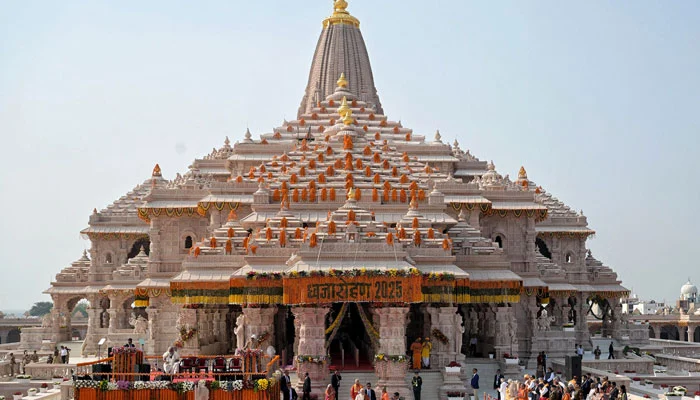
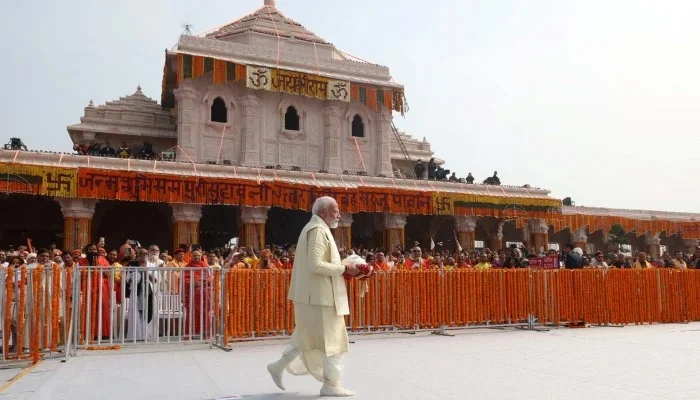
    India’s Prime Minister Narendra Modi attended the inauguration of a magnificent temple dedicated to Lord Ram in Ayodhya on January 22, 2024, marking a historic moment after years of debate and legal battles.

    A trust managing the construction of the Ram temple has announced a leadership restructuring following allegations that individuals involved in donation management illicitly diverted nearly eight million rupees. Trustees have accepted the resignations of General Secretary Champat Rai and trustee Anil Mishra. An interim secretary has been appointed, and a committee is being formed to find candidates for a new CEO role.

    Authorities recovered approximately 8 million rupees ($83,967) from seven individuals last month after detaining eight suspects. The temple had received over 5.82 billion rupees ($61 million) in offerings up until the end of March.

    Trust officials expressed their dismay over the theft, with Treasurer Govindadev Giri calling the incident “shameful” and emphasizing that it hurts everyone involved. The Rashtriya Swayamsevak Sangh, a Hindu nationalist organization linked to Modi’s party, urged calm among Hindus, urging patience and restraint to resist efforts by anti-Hindu and anti-national forces to exploit the situation and tarnish Hindu society.

    Opposition parties are demanding the trust be dissolved entirely and are calling on Modi to publicly address the scandal. They argue that the situation warrants a full overhaul and an investigation overseen by the Supreme Court.

    Meanwhile, Modi, who has been serving as the head of state since 2014 and leads the Bharatiya Janata Party (BJP), is currently traveling abroad, visiting Indonesia, Australia, and New Zealand. Critics within the opposition accuse his government of political opportunism, criticizing him for not acting more decisively on the matter domestically.

  • India investigates embezzlement at temple built on Babri mosque site

    India investigates embezzlement at temple built on Babri mosque site

    Indian authorities are probing allegations of financial misappropriation at a temple in northern India, a site closely associated with Prime Minister Narendra Modi’s Hindu-centric political stance, according to a senior government official on Friday.

    The Ram Mandir temple in Uttar Pradesh—built on the site where a mosque stood for centuries before being dismantled by Hindu nationalists—was officially opened in 2024 with significant ceremony led by Modi himself.

    Uttar Pradesh’s Chief Minister Yogi Adityanath stated that a special investigation team (SIT) has been formed to examine claims of illegal diversion of donations from devotees.

    “We have initiated an SIT inquiry based on the recommendations of the trust overseeing the temple,” Adityanath, a prominent Hindu monk, announced during a public event.

    He urged anyone with documentary evidence related to the allegations to submit it to the SIT.

    The extent of the alleged financial misconduct remains uncertain, but opposition parties and local media report that the amount could exceed $20 million.

    Construction costs for the temple were approximately $240 million, entirely funded by public donations, according to the project organizers.

    Reports from The Indian Express indicate that daily donations typically average around $10,000, with peak days seeing contributions up to $60,000.

    Believers hold that Lord Ram was born in Ayodhya—home to the temple—more than 7,000 years ago, though it is also believed that the Babri mosque was constructed on his birthplace by a Muslim ruler in the 16th century.

    The Bharatiya Janata Party (BJP), the current ruling party, was instrumental in the campaign that led to the mosque’s demolition in 1992. The incident propelled the party and Modi to national prominence, helping them overtake the secularist Indian National Congress, which had dominated Indian politics since independence.

  • Indian Court Declares Bhojshala Mosque a Hindu Temple

    Indian Court Declares Bhojshala Mosque a Hindu Temple

    A court ruling has terminated a 20-year-old worship agreement at the Bhojshala-Kamal Maula mosque complex in Madhya Pradesh, India, allowing daily Hindu prayers to resume. The Madhya Pradesh High Court’s Indore bench declared the site a Hindu temple dedicated to goddess Vagdevi (Saraswati), based on a 2024 Archaeological Survey of India (ASI) report indicating the structure was built using fragments of older temples, with the mosque constructed centuries later.

    Following the decision, the ASI issued a directive on May 16 permitting Hindu devotees unrestricted access for daily worship, replacing prior arrangements that limited Hindu worship to Tuesdays and Muslim Friday prayers. Advocate Vishnu Shankar Jain, representing Hindu petitioners, emphasized that Hindus can now visit and worship at the site freely.

    The site remains a protected monument under India’s 1958 law, with worship timings set by the superintending archaeologist in consultation with local authorities. The court’s ruling notes that the complex was built using remnants from earlier temples, reinforcing its status as a Hindu religious site. The Muslim community was offered an alternative location for building a mosque, but Dhar city Qazi Waqar Sadiq stated that Muslim petitioners plan to appeal to the Supreme Court and have expressed opposition to relocating.

    This site has long been a flashpoint, with Hindu groups claiming it is a Saraswati temple, while Muslims insist it is the Kamal Maula mosque. The decision effectively restricts Muslim access for prayer, placing the mosque off-limits. Legal, historical, and political voices from the Muslim community have criticized the ruling, warning it jeopardizes protections for Muslim religious sites in India. Lawyer Ashhar Warsi labeled it a “misjudgment” and a violation of established law, while politician Asaduddin Owaisi warned that the verdict poses a “serious threat” to Muslim worship rights and suggested it could set a precedent for similar claims, echoing concerns about the aftermath of the Babri Masjid verdict.

    Historian Audrey Truschke commented that this trend of targeting Islamic places of worship reflects deep-seated Islamophobia rooted in Hindu nationalism. The dispute is part of a broader movement to challenge medieval mosques and Islamic-era monuments across India, with claims that many were built over Hindu temples, a narrative that has gained momentum since Prime Minister Narendra Modi took office in 2014.

  • How to Play the Temple Faction in HoMM: Olden Era – Completing & Solving

    How to Play the Temple Faction in HoMM: Olden Era – Completing & Solving

    The Temple of the Sun originates from Karigor Isle and arrives in Jadame under the High Inquisition’s banner. Its mission combines spreading their beliefs with conquest. As a faction, it closely resembles the classic human units seen in Heroes of Might and Magic: Olden Era—infantry, crossbowmen, cavalry, flying units, and divine defenders—each fulfilling familiar roles without any obscure gimmicks.

    Temple’s playstyle rewards players who understand the basics of Heroes of Might and Magic. The key is to protect your ranged units, stack buffs effectively, and aim to scale into powerful late-game units. The ultimate goal is to summon Angels. Everything else is just preparation for that victory.

    Overall Strategy Tips

    Temple’s strategy revolves around discipline and building momentum over time. Unlike factions like Dungeon or Necropolis that snowball quickly, Temple gradually reaches a state where Morale synergies, buff extensions, and Angel resurrection make it very tough to defeat in a straightforward fight.

    All resources—gold, ore, and gems—are important simultaneously. Gold is needed for constant recruiting and construction, while ore and gems are necessary for advanced structures and units at tiers 6 and 7. Gems are particularly crucial—they’re the primary bottleneck, so securing gem mines early and actively controlling them is vital. Failing to do so can significantly delay the angel build and cause stalls in progress.

    The faction’s units—Guard Captains, Crossbowmen, Cavalry, and Inquisitors—have a basic Morale range. With the Encouragement Law and Leadership skill, a high-Morale swordsman stack can generate almost certain bonus turns each round. Many tend to overlook Morale, but when used right, it’s one of the faction’s most powerful mechanics.

    In the early game, Temple’s focus generation is slower than most factions. It’s best not to build armies around active abilities at first, as they won’t trigger reliably—focus on developing the hero and army as you level up. The strength of your focus improves as your hero levels and your army scales, but it’s not something to rely on during the initial weeks.

    Overall Play Style Philosophy

    Start by consolidating your position in the early game. Take fights that you can win comfortably, protect your Crossbowmen and Lightweavers, and accumulate Law Points. The faction’s full power arrives on schedule, but patience is key to reaching it.


    Best Temple Laws

    Temple’s Law tree is unusual: its top-tier Law, Architect’s Mastery (which doubles construction speed), requires a significant investment of Seals. However, hero Pip can unlock it as early as the third or fourth day. Planning efficiently and avoiding scattering Seals on too many early picks is rewarded here.

    Tax Collectors: Your first priority is this Law, as it provides extra gold daily. Temple’s growth depends heavily on income, and without it, other strategies become difficult. Reach level 1 immediately, then aim for level 2 before spending Seals elsewhere.

    Encouragement: Activate this Law later in the game. It increases the chance for Morale bonuses by 1% per Morale point. Without Encouragement, Morale is an inconsistent bonus, but with it and the Leadership skill, large stacks can generate meaningful bonus turns that snowball during fights. This Law is key to making the Morale system a major strength.

    Elite Crossbowmen: Improving the growth and attack of your staple early ranged unit. Increasing Crossbowmen production compounds over time, and it’s wise to prioritize this before advancing Swordsmen.

    Execute Excellence: Extends support spells like Bless and Haste by one turn, making it more efficient to cast buffs later in the game. It’s especially valuable if your hero leans toward magic.

    Architect’s Master: The most impactful economic Law; it speeds up building timelines dramatically and accelerates your entire strategy. Since Pip’s starting skills make this Law accessible early, it’s a strong long-term investment—use it early to gain an advantage.

    Vengeful Strike: Boosts the counterattack strength of your units, making frontline units more threatening when retaliating. It’s useful but not an urgent priority—invest after securing core units and Law priorities.


    Best First Week Strategy

    The first week is about establishing a solid ranged presence, accumulating Law Points, and surviving without losing critical units. It’s not an aggressive attack window.

    Day 1: Recruit Guard Captains and crossbowmen. Prioritize crossbowmen—they reduce early casualties—and find gem mines on your map as they form your long-term resource foundation.

    Days 1–2: Clear surrounding neutral stacks with clear wins. Position Guard Captains in front of your crossbowmen to absorb attacks and keep your ranged units alive. Avoid losing crossbowmen unnecessarily.

    Days 2–3: Build a Level 1 Mage Guild. Basic spells like Bless and Haste greatly improve nearby battles.

    Days 4–5: If possible, construct a Griffin Rookery. Griffins provide aerial reach and retaliation, helping map control early on.

    Days 5–7: Build Lightweavers if your economy allows. They will replace crossbowmen as your main ranged unit and are a significant upgrade in damage and utility, especially if your hero starts with a Lightweaver stack.

    Day 7: Focus on growth for the next week. Prioritize recruiting crossbowmen and Guard Captains, upgrade to Griffins if available, and aim to secure gem mines early—capturing a gem mine at the start of the second week can be more valuable than a week’s worth of recruits.


    Army Composition Tips

    The ranged backline must be protected. Temple’s combat relies on safeguarding your shooters, using front-line units as damage sinks, and amplifying overall output through buffs and Morale.

    Guard Captain / Sun’s Aegis (Tier 1): Use Sun’s Aegis to shield your crossbowmen or Lightweavers from ranged fire, positioning it as a defensive platform rather than a damage dealer.

    Crossbowman / Austringer / Marksman (Tier 2): The core early ranged unit. Marksman offers pure damage and versatility, while Austringer can harass with hawks. Boost production early with Elite Crossbowmen Law.

    Guardian Griffin / Temple Griffin / Griffin (Tier 3): The upgraded Griffin is more durable and retaliates reliably, making it a valuable aerial deterrent throughout the game.

    Lightweaver / Hierophant / Sun Herald (Tier 4): The main mid-game ranged unit, replacing crossbowmen. Hierophants focus on magic enhancements, while Sun Heralds focus on utility; their choice depends on your hero and strategy.

    Cavalry / Noble Cavalry / Sunspear Cavalry (Tier 5): Not the core, but useful for speed and flanking. They are not the faction’s main strength.

    Inquisitor / Mother Superior / Excommunicator (Tier 6): High-cost units for healing/support (Mother Superior) or debuffing enemies (Excommunicator). Build toward these after securing tiers 4 and 5, and only when your economy supports their costs without sacrificing gems.

    Angel / Archangel / Apotheosis (Tier 7): The ultimate goal. Angels counter buff-heavy strategies, especially if you’ve buffed your own units. Archangels are more versatile. Note that Angels are Embodiment type, which benefits less from Morale than Living units due to different Morale caps.


    Hero Strategy

    Temple supports both magic and might heroes well. Your choice depends on your hero and early skill rolls. Neither archetype is strictly better.

    Magic heroes: Focus on Spell Power and Intelligence. Temple favors support spells like Bless and Haste, which boost the entire army. Aim for Mage Guild Level 2 early to increase your spell options. The support approach, especially daylight magic, fits naturally here.

    Might heroes: Prioritize Attack, Defense, and Leadership. Thanks to the Morale system, Leadership makes units generate bonus turns reliably, which can be decisive. A Morale-focused hero like Aeos benefits greatly from the early use of buff spells and supports.

    Notable Heroes:

    • Zenith: Starts with Lightweavers, boosting their production everywhere. Her specialization makes Lightweavers more accessible and improves their stats.

    • Pip: His Insight skill doubles Law Point generation, accelerating your key Law unlocks early.

    • Aeos: Best for Morale systems, providing global +1 Morale and action bonuses early on.


    Single Hero Play

    Temple handles single hero mode more effectively than many factions because its self-contained unit roster and Law-driven level curve don’t heavily rely on secondary heroes or scouting. The main risk is recovery—if you suffer a bad fight and lose units like Lightweavers or crossbowmen, you won’t have a secondary hero to replace them during recovery. Play conservatively until your army is strong enough, and don’t overreach for map objectives until your units are secure.

  • Thai woman discovered alive in coffin just before cremation

    Thai woman discovered alive in coffin just before cremation

    This collage shows woman lying inside coffin in Thailand. — Viral Press

    Employees at a temple in Thailand were stunned when a 65-year-old woman was discovered alive inside her coffin moments before her scheduled cremation.

    The incident occurred at Wat Rat Prakhong Tham, a Buddhist temple in Nonthaburi province near Bangkok. Staff heard a faint knocking and saw slight movement inside the coffin. When they opened it, they found the woman opening her eyes and moving her arms.

    The woman’s brother, who traveled from Phitsanulok—about 500 kilometers away—brought her to the temple. According to Pairat Soodthoop, the temple’s general and financial manager, the man’s sister had been bedridden for two years and recently lost consciousness, appearing to have stopped breathing two days earlier.

    The brother sought hospital assistance but was turned away due to the absence of an official death certificate. He then asked the temple to perform a free cremation, but was again told that the necessary documentation was missing. During a discussion about obtaining the certificate, staff heard knocking from within the coffin. The woman was promptly examined and taken to a nearby hospital for treatment.


  • Tragedy at Indian Temple: Nine Dead, Multiple Injured in Stampede

    Tragedy at Indian Temple: Nine Dead, Multiple Injured in Stampede

    A stampede at a Hindu temple in India’s southern state of Andhra Pradesh resulted in the deaths of at least nine people early Saturday morning, with several others injured, according to government officials. The incident happened when worshippers crowded into the Sri Venkateswara Swamy Temple in Srikakulam city during Ekadashi, an auspicious day for Hindus, as explained by Pawan Kalyan, the state’s deputy chief minister.

    An investigation into the tragedy has been ordered. Kalyan mentioned that the temple is operated privately and confirmed the death toll of nine. Approximately 25,000 devotees had assembled at the temple, which has a capacity of only about 2,000, leading to a deadly crush, added state minister Anam Ramanarayana Reddy. District officials have been directed to provide medical assistance to those injured.

    So far, 18 individuals have sustained injuries, with two critically hurt patients transferred to a tertiary hospital for treatment, according to Swapnil Dinkar Pundkar, the district collector and magistrate of Srikakulam. The government announced plans to provide compensation of 200,000 Indian Rupees (roughly $2,300) to the families of the deceased and 50,000 Rupees (approximately $570) to the injured, as stated by Prime Minister Narendra Modi on X (formerly Twitter).

  • Nelveska Temple Battle Guide – FFT: The Ivalice Chronicles on Completing and Solving

    Nelveska Temple Battle Guide – FFT: The Ivalice Chronicles on Completing and Solving

    Chapter 4 is when Final Fantasy Tactics: The Ivalice Chronicles really opens up, allowing you to explore the world for errands, specialty shops, and random battles to strengthen your team. One very effective way to boost your power is through a side story that becomes available during this chapter.

    In this side story, you’ll recruit special characters and sometimes upgrade them without even realizing it! One of the quests involves turning Reis, a Holy Dragon, back into her original human form. She is recruited along with helpful Templar Beowulf, and once transformed, she becomes even more useful.

    How to Turn Reis Human

    Turning Reis into a human happens as part of this side story you can start in Chapter 4. You need to meet certain requirements:

    • Recruited both Beowulf and Reis after finishing their quests.
    • Completed the chapter’s main story battles and reached the Trade City of Sal Ghidos. There, you’ll see a cutscene with a flower girl—buying her flower is necessary if you want to recruit Cloud.

    Following this, a cutscene in the Clockwork City of Goug will unlock. Watch the scene to gain a new rumor, which can be read at Zeltennia Castle. Reading this rumor opens access to Nelveska Temple, linked to Zeltennia Castle.

    Traveling to Nelveska Temple will trigger a battle. Complete this battle to transform Reis into a human and continue with the next part of Chapter 4’s side story.

    How to Defeat Construct 7

    The Nelveska Temple battle features Construct 7, two Hydras, and three Cockatrices. The main threat is Construct 7—similar to Construct 8—so if you’re familiar with that fight, you’re halfway there. Unlike some enemies, Construct 7 doesn’t die instantly when its health drops to zero; it revives with minimal health, so focus on defeating it strategically.

    Magic attacks are mostly ineffective as Construct 7 is immune to them. Physical attackers are your best bet. Units like Orlandeau and Agrias are ideal, especially with their Hallowed Bolts attack that hits multiple enemies. It’s best to eliminate the Hydras and Cockatrices first because they are easier to kill and can interfere with healing.

    Once you isolate Construct 7, keep reviving any allies it kills while whittling down its health. Use units equipped with revival abilities—like Phoenix Down, Raise, or Revive—to keep your team alive.

    How to Get the Escutcheon and Javelin

    Nelveska Temple’s battlefield contains valuable, powerful equipment you can obtain with the Treasure Hunter ability, learned by Chemists. Focus on the tops of the two tall pillars near your starting area, which initially hold Hydras.

    The desired items are the Javelin and Escutcheon, which, despite sharing names with weaker versions, are the strongest and most powerful. Make sure your Treasure Hunter units are equipped to recognize and pick up these elite items; you’ll see special icons over their heads when they’re on the right tiles.

    To reach the top of these tall pillars, you’ll need:

    • A monster unit capable of being stepped upon (like Construct 8 or Reis in her Holy Dragon form) standing next to the pillar.
    • A Treasure Hunter with at least 4 Jump points, possibly equipped with Spiked Shoes to increase reach.

    During this process, beware that Treasure Hunt mechanics depend on your unit’s Bravery stat:

    • When ending a turn on a treasure tile, the game calculates whether you get the common or rare item.
    • Higher Bravery increases the chance of finding the rare, better item.
    • Units taking the Chemist job have an increased chance of obtaining rare items.
    • Rapha is a popular Treasure Hunter due to her starting Bravery of only 32, which makes her over 70% likely to get the rare weapons from the pillars.

    Using these strategies, you’ll be able to unlock some of the most powerful weapons in the game and successfully complete the chapter’s side missions.

  • Completing the Temple in Warframe: A Guide to Solving Challenges

    Completing the Temple in Warframe: A Guide to Solving Challenges

    Temple harnesses the energy of rock and roll to take on enemies, and as a character inspired by the 1990s, they stand out as one of Warframe’s most enjoyable fighters. Despite having a straightforward ability set, Temple offers players a lot of depth in gameplay. Mastering the timing of abilities, combining powers effectively, and using the right modifications can significantly boost Temple’s damage output.

    If you want to cut through foes with style, this guitar-slinging Warframe is hard to beat. This guide will walk you through acquiring Temple, clarify how their abilities function, and present recommended builds for both Temple and their iconic guitar, named Lizzy.

    How to Acquire Temple

    Temple’s components can be found during the Solstice Square Defense mission in Hollvania. To access this, complete "The Hex" quest—there’s no need to reach max rank in the Hex to farm this mission, as it automatically unlocks. Components for Temple drop in every reward rotation, with the best odds found in rotation C.

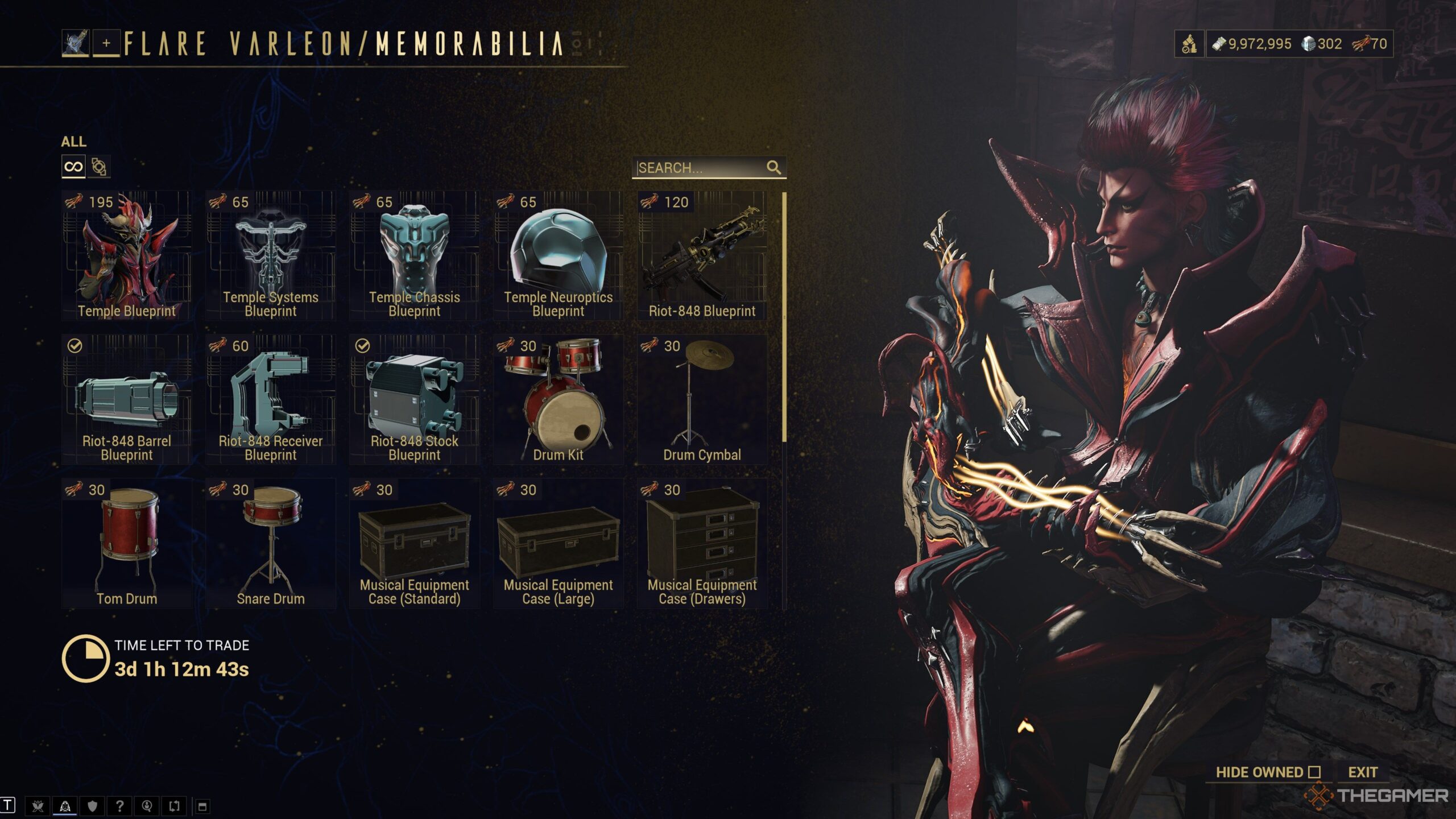
    If you’re having a tough time getting a specific piece to drop, you can trade "Beating Heartstrings" with Flare in the Hollvania hub for any components you might be missing. Heartstrings are earned from the same activity, providing a bit of insurance against bad luck. Keep participating in the mission, and you’ll eventually craft Temple.

    Temple Blueprint

    Drop Source
    Solstice Square (?% Drop Chance)
    Flare Vendor 195 Beating Heartstrings
    Crafting Costs
    Credits 25,000
    Temple Neuroptics 1
    Temple Chassis 1
    Temple Systems 1
    Orokin Cells 3

    | Crafting Time | 72 Hours |

    Temple Abilities

    Stats

    Temple Stat Value
    Armor 325
    Energy 215
    Health 505
    Shields 325
    Sprint Speed 1

    Passive Ability

    Temple’s passive feature is a metronome integrated into their targeting crosshair. Casting an ability while the metronome is centered results in a 50% efficiency boost. Perfect timing also triggers additional benefits for certain abilities, enhancing damage, duration, and critical chance.

    Pyrotechnics

    Releases heat-infused pillars of damage that hit enemies within a target area. Using the ability with perfect timing spawns extra pillars, boosting both damage and duration.

    • Base Drain: 25 Energy
    • Range: 25 Meters
    • Damage: 1,000 Heat

    Overdrive

    Temple creates a damaging wave of heat, amplifying critical hit chances for a duration. Aggressively making use of abilities with great timing enhances damage and duration.

    Ripper’s Wail

    This ability offers a healing boost and grants invulnerability to Temple while empowering allies’ weapons. The duration and power of the healing can be upgraded through effective timing.

    Exalted Solo

    Temple’s primary weapon, Lizzy, fires waves of elemental sound, consuming energy based on the damning inflicted. The elemental type varies based on the abilities used.

    Recommended Builds for Temple

    Temple is versatile enough to be modified easily. We’ll discuss two builds: the starter version, which requires minimal investment, and an optimized endgame build. For Focus schools, Zenurik is recommended due to its energy regeneration capabilities—helpful even when using Lizzy.

    Starter Build

    Temple is easy to mod since you don’t need to worry about energy efficiency. Focus on strength and range:

    • Blind Rage for a big boost to strength.
    • Primed Continuity to extend ability duration.
    • Archon Vitality is beneficial for survivability when heat status damage is applied.

    Endgame Build

    For those venturing into top-tier content, this build focuses on increased survivability and damage output:

    • Use Primed Sure Footed for knockdown protection.
    • Include Growing Power for extra ability strength.
    • Rolling Guard acts as a safety net in tough fights.

    Although this guide has no specific requirements for Archon Shards, consider adding key shards to enhance performance further.

    Conclusion

    In a nutshell, Temple is a dynamic Warframe that blends music with powerful abilities. With the right builds and playing strategy, you’ll be able to harness their full potential and rock your way through missions in no time.

  • Mastering the Khmer Warrior Temple in Indiana Jones: The Great Circle

    Mastering the Khmer Warrior Temple in Indiana Jones: The Great Circle

    The Kid Who Disappeared is an optional fieldwork mission found near the end of Indiana Jones and the Great Circle. While you might be eager to rush towards the game’s finale and reveal the mysteries you’ve been pursuing, taking a detour into the jungle to search for Aran is truly rewarding; this is a classic Indiana Jones adventure.

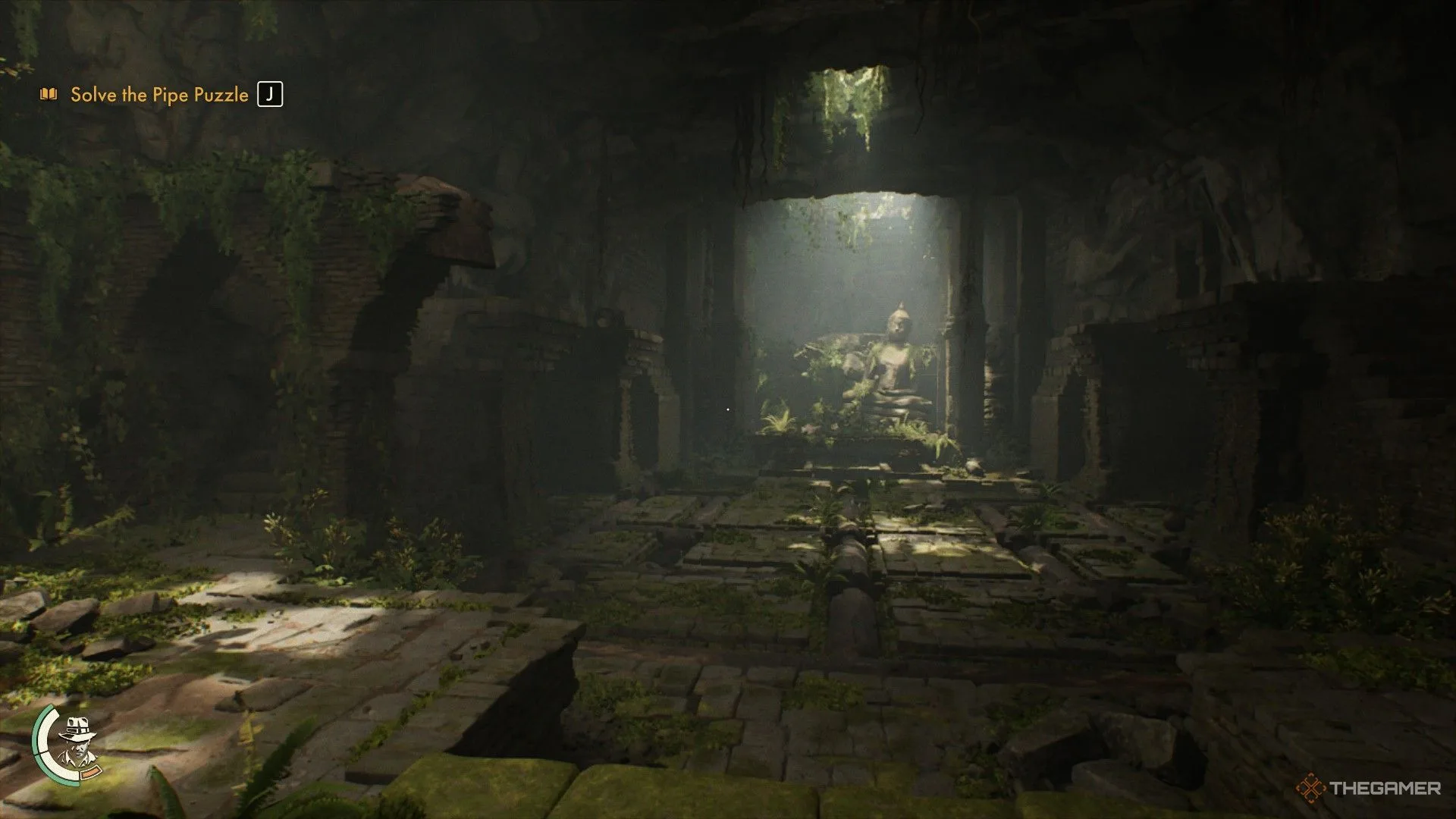
    The Khmer Warrior Temple, concealed beneath Wat Si Sawai, is filled with traps, challenges, and puzzles, making it one of the game’s most intricate exploration experiences. Keep reading to discover how to navigate it successfully, from start to finish.

    How to Begin the Kid Who Disappeared Fieldwork

    After you wrap up your first visit to Tongdang and hop back into your boat, Gina will inform you that Sunan’s nephew has gone missing for a while. Aran resides in a treehouse located near the southeast edge of the map, so your first order of business will be to head there with your boat.

    Pro Tip:

    The treehouse isn’t very far from Tongdang, but before searching for Aran, you might consider raiding Voss’ gold stash and gathering the Royal Army’s radio frequencies. This way, you can purchase map guides from Tongdang, ensuring you don’t overlook any hidden treasures during your exploration.

    You should be able to dock shortly after spotting the treehouse. Follow the path in a counterclockwise direction, climbing when necessary, until you reach the ladder leading up to the house. Don’t forget to grab the recipe next to the ladder before climbing up and pulling the planks off the door to get inside.

    Inside, examine the bulletin board to your right to find a snapshot of Aran and Sunan. Once you collect the photo, Gina will draw your attention to a loose plank on the floor. Lift it to discover a map of Wat Si Sawai, the vast temple complex in the southwest. With the map in hand, use the zipline from the balcony to make a swift return to your boat.

    How to Access the Khmer Warrior Temple

    Sail southwest from the treehouse and dock at the Wat Si Sawai pier, located on the eastern side of the island. There’s a single path that leads toward the temple complex, but be cautious of the two patrolling guards. You can either sneak up on them using the nearby ruins or find a way past them quietly.

    Pro Tip:

    As you approach Wat Si Sawai, look for a path on your left. You can discover the combination for the Sukhothai Rebels’ safe here as part of the Tiger’s Path Mystery. Snap a photo of it, then head back down the path; the climbable ledges along the way also provide an escape route later, although using them now might lead you straight into a trio of Blackshirts.

    As you navigate through the enemy camp, stay to the far right. This will give you enough cover to reach the main temple and allow you to pick up a shovel for defeating a heavy guard just inside the entrance. Usually, the heavy guard is positioned at the doorway on your left, while his companions are asleep and don’t pose any risk. Loot their stash for some cash, then return to the entryway.

    Pass through the root-covered tunnel directly across from the main entrance to access the Khmer Warrior Temple. You’ll soon hit a fork; the right path leads to a dead-end, but you’ll find the Handyman Adventure Book there, which enhances the durability of your melee weapons. The left path leads to the Warrior Trial, where Aran is trapped behind some debris.

    How to Free Aran

    Once the dialogue concludes, Gina will point out a door to the left of Aran’s location. The door has handles on either side; you should turn the handle on the right while Gina pulls the one on the left to open the door.

    To see better, use your lighter to ignite the brazier in the next room. The pipe below the brazier has water flowing but is missing a segment. Grab the pipe segment near the door that you came through and place it in the gap. This will allow the water to flow through the pipes and operate the hydraulic mechanism to open the next door.

    Pull the lever at the end of the hallway to descend to the lower level. Remember, you’ll need to wait for Gina to catch up before Indy will engage the lift. Once at the bottom, follow the sunlit path through the ruins, as any unlit paths will lead to dead ends and hazards.

    Cross the bridge made of large wooden gears and climb the big root to get over the wall. Take note of the blocked passage to your left; it won’t be accessible right now, but you’ll need to use it later once the gears start turning. For now, just drop down on the other side of the wall.

    Snap a photo of the Naga Statue ahead to your left, then go straight through the collapsed wall ahead; there’s a climbable wall just beyond it to your left. Turn right once you reach the top and move along the corridor until you see a large, inactive waterwheel. Use this as a platform to run across, but be quick, as Indy’s weight will cause it to turn, potentially dropping you into the pit below.

    How to Elevate the Platform for Aran

    Wait for Gina to catch up, then follow her into the room beneath you. Here you’ll find another pipe segment puzzle. Start by activating the water with the handle on the left, near Gina. Next, take a photo of the cogwheels next to the big wooden structure for bonus Adventure Points, then have Gina help you push the wooden structure forward. This will expose a lever that requires water to operate.

    Take the pipe segment and position it in the socket near the lever. This segment can be inserted either horizontally or vertically, but make sure it’s placed correctly to allow the water to flow. If placed incorrectly, just remove it and try again from a different angle.

    Even though the water still isn’t directed to the lever, this setup will open a nearby hydraulic door. Step inside to obtain an L-shaped pipe segment. Swap out the straight pipe in the main room with the L-shaped one to send the water to the lever, and place the straight pipe in the adjacent socket to complete the flow.

    Pull the lever, then head through the door Gina highlights to reach Aran.

    How to Navigate the Wooden Gears

    The corridor will lead you back to the wooden gears, which will now be turning in a rhythm. Time your movements carefully to slip through the openings in the vertical gears, while jumping to land on the horizontal gears as they come toward you.

    Swing across to the large root you climbed before; the left path is now open. Drop down onto the gears and move toward the furthest one. Stand at the edge to perform a running jump to the ledge on the right, allowing you to swing across the chasm from the opposite gear.

    Upon landing, crawl under the rotating gear that’s blocking your way, then take another running jump onto the cog to the right. From here, you can reach the stairs leading to the next room, where a lever to activate the lift for Gina is immediately to the right.

    When she joins you, Gina can turn the handles on the door across from the lift, just as you did in the first room, to clear the way forward. Follow the corridor ahead to a dead-end with an Ancient Relic. After that, take the side passage and turn right at the fork. When you arrive at a pit of spikes, a lever on the right side will raise a bridge for you to cross.

    How to Solve the Khmer Pipeworks Puzzle

    In the final chamber of the Khmer Warrior Temple, you need to divert water into three drains at the far end to get the waterwheels moving and raise the exit platform. However, several pipe segments are missing, and the water isn’t even flowing yet. Thankfully, that is an easy fix.

    How to Activate the Water

    Upon entering the chamber, immediately turn left to find a ladder. Climb it to reach the valve that will start the water.

    How to Collect All Four Pipe Segments

    The first two pipe segments can be found on the ledges on either side of the chamber. Climb the stairs on either side to grab them, and then throw them down to the ground level. This may take a bit of Indy’s stamina, so avoid consuming fruit until after you finish the puzzle.

    Look for a staircase on the left side of the room. Take a torch from the basket at the top and use it to light the braziers in the lower room. Then, return with the pipe segment you find.

    Pro Tip:

    Before proceeding, grab the metal rod at the top of the stairs and break through the bricked-up doorway in the lower room to uncover a space with an Ancient Relic.

    Afterward, you will have two L-shaped pipes and a T-shaped pipe. Place one of the L-shaped pipes in the socket where the water flows to redirect it to the left; if done correctly, the water will flow out near the locked door on the left side of the chamber. Then, use the other L-pipe to turn the water again, allowing it to open the door.

    Once inside, move through the large gear when you see an opening and retrieve the straight pipe beyond it. Bring it back to the main room. With all four pipes, you’ll be equipped to solve the puzzle.

    Correct Pipe Placements

    Remove all pipes from their sockets, then place the T-shaped pipe in the first socket to start water flowing both left and right. Follow the right-hand pipe to where it exits, and use an L-shaped pipe to steer it to the right, powering the rightmost wheel.

    Important Reminder:

    Always ensure the pipes are positioned correctly to direct the flow as intended.

    You should see water flowing into the central socket. Position the remaining L-shaped pipe to turn the water to the left, directing it straight towards the center drain. Finally, place the straight pipe in the socket by the door to power the left wheel.

    If everything is hooked up correctly, the platform will rise. Advance along the path until you can push open a door with Gina. You will reunite with Aran at the main entrance. Talk to him in the Shiva Shrine that he unlocks, and grab the Ancient Relic from the base of the statue. Collecting three relics in this adventure is a formidable achievement!

    However, the quest truly concludes only when you return to the village and speak with Sunan. Once you do, feel free to engage with him again to embark on a new quest titled Lost in the Past. Are you ready for even more excitement?