الوسم: talks

  • Damascus Calls for Israeli Exit as US Talks Aim to Halt Syria Strikes

    Syrian Foreign Minister Asaad al-Shaibani looks on during an interview with Reuters in Damascus, Syria, August 22, 2026. — Reuters
    Syrian Foreign Minister Asaad al-Shaibani observes during an interview with Reuters in Damascus, Syria, August 22, 2026. — Reuters

    • Discussions aim to halt Israeli strikes, arrests, and targeted operations.
    • Both parties are working to revive talks that could lead to a wider ceasefire.
    • Washington has been attempting for over a year to broker a security agreement.

    On Sunday, Syria and Israel engaged in high-level negotiations facilitated by the United States in Jordan, aiming to reduce recent tensions caused by Israeli military actions on Syrian soil, according to Syria’s state news agency, Sana, citing a foreign ministry diplomatic source.

    The focus of these talks was to develop tangible measures to stop Israeli strikes, arrests, and covert operations. Additionally, efforts were made to revive negotiations that could establish a security framework, potentially paving the way for a broader peace agreement, Sana reported.

    The parties also explored ways to de-escalate tensions between Israel and Turkey and prevent their rivalry from impacting Syria.

    Syrian Foreign Minister Asaad al-Shaibani told Reuters on Saturday that Damascus expects security talks with Israel to resume soon, though he acknowledged a lack of trust lingering between the two nations.

    Negotiations had been paused since the onset of the Iran conflict, with Syria severing all contacts following Israeli strikes on Syria’s Abu al-Duhur airbase last week, Shaibani explained.

    For over a year, Washington has been working to facilitate a security treaty between Israel and the Syrian government led by President Bashar al-Assad.

    Shaibani mentioned that, early this year, the two sides had nearly finalized agreements, including security zones in southern Syria and a buffer zone controlled solely by United Nations forces. However, Damascus remains wary about Israel’s commitment to implementing these agreements.

    The Israeli prime minister’s office did not respond to inquiries regarding Shaibani’s statements.

    During Sunday’s talks, Sana indicated that Syria’s immediate goals remain an Israeli withdrawal to pre-December 8, 2024 positions and the full reinstatement of a 1974 disengagement accord.

    Damascus emphasized to the Israeli delegation that it would not accept arrangements that limit Syria’s right to rebuild or expand its armed forces or to form alliances and partnerships.

    Syria reaffirmed that the Golan Heights, currently occupied by Israel, is Syrian territory. However, it noted that discussions about the region’s final status are premature, Sana added.

    Israel has conducted multiple strikes on Syrian military sites since Assad’s fall, claiming these actions are necessary for its security. Syria denies threatening Israel and has demanded an end to Israeli bombings and incursions.

    The two nations have technically been at war since 1948. Israel captured the Golan Heights from Syria during the 1967 Six-Day War and later annexed the territory—an act recognized by the U.S. but rejected by most of the international community.
  • US and Iran settle Swiss talks, agree on 60-day path to deal

    US and Iran settle Swiss talks, agree on 60-day path to deal

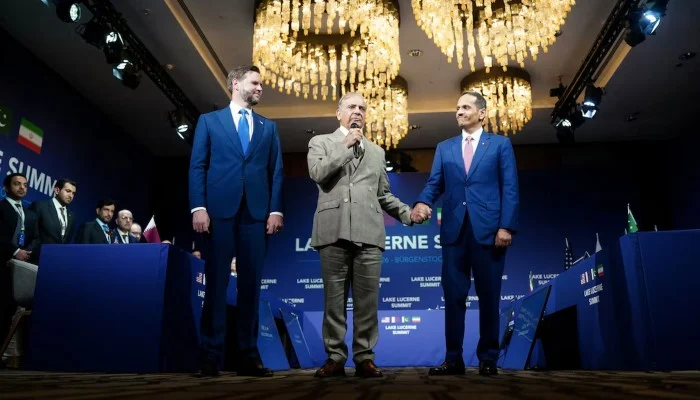
    Negotiations between top US and Iranian officials in Switzerland concluded on Monday, according to mediators, following a tense start marked by Tehran’s announcement of once again closing the Strait of Hormuz and President Donald Trump reiterating threats of military action against Iran.

    A combined statement from Pakistan and Qatar, acting as mediators, indicated that the US and Iran have agreed on a 60-day roadmap toward a final agreement. Technical discussions are scheduled to carry on throughout the week at the Swiss mountain retreat of Buergenstock, as per the statement released by Qatar’s foreign ministry.

    Both sides also committed to establishing mechanisms to halt hostilities in Lebanon and to opening channels of communication aimed at ensuring the safe passage of commercial ships through the Strait of Hormuz. The talks began with Vice President JD Vance discussing with Iranian officials on Sunday under an agreement to extend a fragile ceasefire from April for an additional 60 days, with discussions continuing into early Monday.

    Iranian Foreign Minister Abbas Araghchi announced on social media that Tehran has secured waivers allowing oil and petrochemical exports, the release of some frozen assets, and the initiation of a reconstruction and development plan. The White House did not immediately comment on whether the talks had concluded.

    Prior to the start of negotiations on Sunday, Fox News reported that Trump warned Iranian officials they “won’t have a country” if they attempt to close the Strait again. He also repeated an earlier threat that the US might take control of the waterway and impose a toll.

    Trump supported last week’s memorandum to prevent a global economic downturn caused by the Strait’s closure, which had sent oil prices plunging to levels not seen since the conflict began on February 28 after US-Israeli strikes on Iran. Following the joint statement, Brent crude futures dropped over $1 to $79.44 per barrel.

    Different reports emerged of the discussions. Iran’s semi-official Tasnim news agency cited an informed source indicating that after Trump’s threats became public, the Iranian delegation refused to return to the negotiation room, though communication persisted via Pakistani and Qatari mediators.

    A US diplomat involved in the negotiations told Reuters that Iran’s refusal to leave the talks was ongoing and that discussions covered issues including the Strait, Lebanon, nuclear matters, and implementation of the MOU. The agreement outlined the reopening of the Strait of Hormuz and the cessation of hostilities in Lebanon, where Israel continues military strikes and Iran-backed Hezbollah fights back.

    Iran claimed that the US had not fulfilled commitments made to cease fighting in Lebanon and stated it had once again halted maritime traffic through the strait. It emphasized that Sunday’s talks would not address nuclear developments. Vance downplayed violence in Lebanon, saying progress was made toward ending hostilities.

    In the US, Trump threatened renewed military strikes if Iran does not restrain its allies—specifically targeting Hezbollah—demanding Iran stop funding these proxies. Despite these threats, Vance reported that Trump had asked officials to seek a new approach to improve relations with Iran.

    Diplomats indicated that discussions included clarifying confusing Iranian messages about the Strait and establishing mechanisms to keep the Strait open.

    Despite a recent ceasefire announcement in Lebanon, ongoing violence persists. Iran said it had closed the Strait again Saturday, after nearly four months of closure severely disrupting global energy supplies. Data showed only five ships passing through on Sunday, a sharp decline from previous days, with some vessels possibly hiding transponders in transit.

    Lebanon experienced relative calm on Sunday after intense Israeli strikes and Hezbollah’s retaliation. Over a million residents have fled their homes since Israel’s invasion in March targeting Hezbollah fighters supporting Tehran. Reuters journalists in southern Lebanon observed significant traffic returning, with residents and Hezbollah supporters on the roads.

  • Trump: US-Iran Talks Possible as Soon as Friday

    U.S. President Donald Trump waves as he leaves after speaking to NCAA Collegiate National Champions in the White House's State Dining Room in Washington, D.C., April 21, 2026. — Reuters
    U.S. President Donald Trump waves as he departs after delivering remarks to NCAA Collegiate National Champions in the State Dining Room at the White House in Washington, D.C., April 21, 2026. — Reuters

    • No official timeline set for extending the ceasefire: source.
    • Trump states the US will maintain the blockade despite the truce extension.
    • Iran indicates talks will resume after US naval blockade is lifted.

    A second round of discussions between the US and Iran might occur as early as Friday, according to the New York Post, citing President Donald Trump.

    “It’s possible,” Trump reportedly told The Post via text message when asked about sources in Pakistan — which mediated the initial talks — suggesting that a second round could happen “within the next 36 to 72 hours” in Islamabad.

    On Tuesday, Trump extended the two-week ceasefire just as it was about to expire. A Pakistani digital news outlet reported a three-day window for further talks without providing additional details or sources.

    However, Reuters, citing a source, mentioned that no specific timeline has been announced for a long-term extension.

    An US official said Trump might agree to extend the ceasefire with Iran by an additional three to five days, emphasizing that the ceasefire wouldn’t be indefinite.

    Uncertainty remains as Washington and Tehran diverge on key issues, especially the Strait of Hormuz.

    Iran shut down the strait for all traffic after U.S. and Israeli strikes across Iran on February 28. Alongside closing Hormuz, Iran also launched attacks on Israeli and U.S. positions across the Middle East.

    The conflict halted on April 8 when Prime Minister Shehbaz Sharif announced a two-week ceasefire and invited both parties to Islamabad for negotiations, which ended without a resolution for a permanent peace.

    Nevertheless, Islamabad continues efforts to bring both sides back to negotiations and secure an extension of the ceasefire.

    Ceasefire Extended

    On Tuesday night, President Donald Trump announced he was extending the Iran ceasefire until Iran submitted a formal proposal and discussions wrapped up.

    Posting on Truth Social, Trump said he was acting at Pakistan’s request to delay military actions until Iran could present a “unified proposal.”

    Despite this, Trump clarified that the U.S. Navy would keep enforcing its maritime blockade on Iran, which Tehran regards as an act of war.

    Washington has listed its participants for the upcoming round of talks, but Iran states they will only return if the U.S. lifts its naval blockade of Iranian ports.

    “Once the blockade is lifted, the next negotiations will take place in Islamabad,” Iran’s UN ambassador, Amir-Saeid Iravani, told Al Jazeera.

    Meanwhile, Islamabad reports maintaining regular contact with Iranian leaders and continues diplomatic efforts through dialogue.

    “We are still awaiting a formal response from Iran confirming their delegation for the Islamabad peace talks,” wrote Information Minister Attaullah Tarar on X (formerly Twitter) Tuesday.

  • Iran: ‘Diplomacy Never Ends’ as Islamabad Talks End Without Deal

    Iran: ‘Diplomacy Never Ends’ as Islamabad Talks End Without Deal

    Iran’s Foreign Ministry spokesperson Esmaeil Baghaei participated in an interview amid the ongoing US-Israeli tension with Iran, in Tehran on April 5, 2026. — Reuters

    – The discussions represent the highest-level contact since the 1979 revolution.
    – The negotiations spanned approximately 21 hours.
    – The agenda was further complicated by issues concerning the Strait of Hormuz.

    Iran emphasized that diplomatic efforts persist even after the recent talks with the U.S. in Islamabad concluded without an agreement. According to the Tasnim news agency, Iranian Foreign Ministry spokesperson Esmaeil Baqaei stated that Tehran and Washington had reached a mutual understanding on several topics, though there were disagreements on two or three key issues.

    This Islamabad meeting marked the most senior engagement between the two nations since the Islamic Revolution. Tensions escalated following an attack by the U.S. and Israel on Iran on February 28, prompting Tehran’s retaliation, which has fueled conflict across the Middle East and disrupted the global economy.

    After the marathon 21-hour dialogue, U.S. Vice President JD Vance announced he was departing after presenting Tehran with what he called their “final and best offer.” Meanwhile, Iran’s Parliament Speaker Mohammad Bagher Ghalibaf, who led the negotiations for Iran, mentioned that the U.S. failed to gain Iran’s trust but acknowledged that Washington understood Iran’s reasoning and principles.

    Baqaei also commented that the talks were held in an atmosphere of mistrust. “It’s natural that an agreement wasn’t expected to be reached after just one session,” he told Iranian media. He stressed that “diplomacy is an ongoing process,” describing it as a tool to safeguard national interests that diplomats must wield both during wartime and peace.

    He noted that the success of negotiations depends on the “seriousness and good faith of the opposing side” and on accepting Iran’s legitimate rights and interests. Additionally, he highlighted the complexity of the issues at hand, mentioning that new concerns, such as the Strait of Hormuz, had been added to the agenda, each with its own challenges.

  • Iran’s Foreign Minister Says US Not Pushing for Zero Enrichment Talks

    Iran’s Foreign Minister Says US Not Pushing for Zero Enrichment Talks

    Iran’s Foreign Minister Abbas Araqchi attended a press conference after meeting with Russia’s Foreign Minister Sergei Lavrov in Moscow on April 18, 2025. — Reuters

    – Washington is not pushing for a complete halt to uranium enrichment.
    – Iran’s foreign minister stated that “confidence-building measures” would be implemented.
    – The U.S. president has set a 10-15 day deadline for Iran to reach a nuclear deal.

    The United States did not request Iran to cease uranium enrichment entirely during nuclear negotiations in Geneva this week, according to Iranian Foreign Minister Abbas Araghchi. He clarified that Iran has not offered to suspend enrichment, and the U.S. has not demanded zero enrichment.

    “We are focused on ensuring that Iran’s nuclear program, including enrichment, remains peaceful and always will be,” Araghchi said in an interview on MS NOW.

    He added that both technical and political confidence-building steps would be taken to guarantee the program’s peaceful nature, in exchange for some form of sanctions relief, though he did not specify details.

    Regarding Iran’s counterproposal for talks with U.S. envoys Steve Witkoff and Jared Kushner, Araghchi did not provide a precise timeline but expressed optimism about achieving a diplomatic solution swiftly. He anticipates presenting a draft within the next two or three days, with additional negotiations expected within a week.

    On Thursday, President Donald Trump issued a warning to Tehran, giving them 10-15 days to finalize an agreement or face severe consequences, amidst ongoing U.S. military preparations in the Middle East, which have heightened fears of an expanded conflict.

  • Tehran Celebrates US Talks as Vance Criticizes Ignored Trump Red Lines

    Tehran Celebrates US Talks as Vance Criticizes Ignored Trump Red Lines

    Iran announced on Tuesday that it reached an agreement with the United States during talks in Geneva on foundational principles for a potential conflict avoidance deal. However, Vice President JD Vance stated that Tehran hasn’t fully acknowledged all of Washington’s core red lines yet. These discussions, mediated by Oman, aimed to prevent US military intervention against Iran’s nuclear program, especially in the wake of recent brutal crackdowns on mass protests that resulted in thousands of casualties.

    Earlier in the day, Iran’s Supreme Leader issued a warning that the country could potentially sink a US warship recently deployed to the region, amid threats from President Donald Trump about possible consequences if a deal isn’t reached.

    Foreign Minister Abbas Araghchi conveyed that a broad consensus on guiding principles had been achieved, which will serve as a foundation for future negotiations on the text of a possible agreement. He mentioned plans to exchange draft texts once both sides have prepared them and to schedule a third round of talks.

    In the United States, Vance indicated that diplomatic efforts are ongoing but shared a more cautious outlook. He noted that while some aspects of the negotiations went well and additional meetings are planned, the President’s red lines remain unacknowledged by Iran. Vance emphasized that the U.S. will continue working on diplomacy but reserved the right to determine when it has exhausted all options.

    Araghchi acknowledged that bridging the gap between the two nations will require time, particularly after subsequent discussions involving Trump’s confidantes, Steve Witkoff and Jared Kushner. Iran has been seeking relief from extensive sanctions imposed by the U.S., including restrictions on its oil exports.

    Oman’s Foreign Minister, Badr Albusaidi, remarked that progress has been made but cautioned that much work remains. Meanwhile, the U.S. has dispatched two aircraft carriers to the region to exert pressure— the USS Abraham Lincoln, carrying around 80 aircraft, was positioned roughly 435 miles from Iran’s coast, with at least a dozen F-35 and F-18 fighter jets nearby, and a second carrier has been sent over the weekend.

    Supreme Leader Khamenei warned that warships are dangerous, but the real threat lies in weapons capable of sinking them. Iran insists that negotiations focus solely on its nuclear program, despite continued U.S. efforts to include discussions on Iran’s ballistic missile capabilities and support for regional armed groups.

    Simultaneously, Iran has begun military exercises in the Strait of Hormuz, testing its readiness against potential threats. The country has also repeatedly threatened to block this critical maritime route, vital for the global flow of oil and gas. A failed diplomatic effort last year ended with surprise Israeli strikes on Iran, sparking a brief 12-day conflict that saw U.S. involvement in bombing Iranian nuclear sites.

  • Iranian Minister Open to Concessions for Nuclear Deal with US

    Iranian Minister Open to Concessions for Nuclear Deal with US

    The second round of nuclear negotiations is scheduled for Tuesday, according to Iran’s foreign minister. Majid Takht-Ravanchi mentioned that initial discussions moved in a positive direction but emphasized that Iran does not accept zero uranium enrichment.

    Iran has expressed willingness to consider compromises for a nuclear deal with the U.S., provided Washington is open to lifting sanctions. The country is prepared to discuss limits on its nuclear activities separate from other issues like missile development.

    The upcoming talks in Geneva mark the continuation of discussions that resumed earlier this month in Oman. Takht-Ravanchi indicated that the preliminary conversations were generally positive but cautioned against premature conclusions.

    A U.S. delegation, including envoys Steve Witkoff and Jared Kushner, will meet with Iranian representatives on Tuesday morning, with Oman acting as a mediator in these negotiations, according to sources.

    Iran’s nuclear chief stated that the country might agree to lower its highly enriched uranium stockpile if all financial sanctions are removed. Takht-Ravanchi highlighted Iran’s flexibility during an interview, pointing out that Iran is willing to dilute its uranium in exchange for the sanctions relief.

    Iran maintains it does not seek nuclear weapons and rejects the idea of complete uranium enrichment ban, a major obstacle in negotiations last year. The U.S. views Iran’s enrichment activities as a potential pathway toward developing nuclear arms.

    Previously, the Trump administration withdrew the U.S. from the 2015 Iran nuclear agreement, known as the Joint Comprehensive Plan of Action, which was a key diplomatic achievement under President Barack Obama. The deal aimed to ease sanctions in exchange for Iran limiting its nuclear program to prevent making an atomic bomb.

  • Iran Security Chief Meets Oman Ruler Post-U.S. Talks

    Iran Security Chief Meets Oman Ruler Post-U.S. Talks

    Iran’s chief security official met with Oman’s Sultan of Muscat on Tuesday, shortly after the first round of talks between U.S. and Iranian officials took place there the previous Friday. Ali Larijani, who heads Iran’s Supreme National Security Council, and Sultan Haitham bin Tariq discussed recent developments in Iran-U.S. negotiations, according to the Oman News Agency. Larijani also held a meeting with Omani Foreign Minister Badr Albusaidi, who facilitated Friday’s indirect negotiations between Washington and Tehran, as seen in photos shared on Larijani’s official Telegram channel. The discussions centered on finding a fair and balanced agreement, emphasizing the need to resume dialogue and negotiations.

    During his visit to Muscat, Larijani also met with Mohammad Abdulsalam, the spokesperson for Yemen’s Houthi rebels backed by Iran. After Oman, Larijani is scheduled to travel to Qatar, according to Iran’s foreign ministry spokesperson Esmaeil Baqaei. This trip follows the resumption of negotiations between Iran and the U.S. in Oman on Friday—the first since the 12-day conflict between Iran and Israel last June, which involved brief U.S. military engagement.

    Iran issued a warning Tuesday about potential diplomatic disruptions ahead of Israeli Prime Minister Benjamin Netanyahu’s upcoming talks in Washington, expected to focus on negotiations with Tehran. Esmail Baqaei, Iran’s foreign ministry spokesperson, stated, “Our negotiating partner is the United States. It’s up to them to decide whether to act independently of regional pressures and harmful influences.” He added, “The Zionist regime has consistently opposed any diplomatic process in the region aimed at establishing peace, acting as a destabilizing force.”

  • Ukraine Calls Abu Dhabi-Russia Talks ‘Substantive and Productive’

    Ukraine Calls Abu Dhabi-Russia Talks ‘Substantive and Productive’

    The first day of negotiations among Ukraine, Russia, and the United States wrapped up Wednesday in Abu Dhabi, with Kyiv describing the talks as “meaningful and productive.” Although no major breakthroughs were achieved during this session, Kyiv indicated discussions will continue into a second day.

    This US-facilitated dialogue is part of a surge of diplomatic efforts that have yet to produce an agreement to put an end to the conflict initiated by Russia’s invasion in February 2022. The war has become Europe’s deadliest since World War II, resulting in hundreds of thousands of deaths, millions displaced within Ukraine, and significant destruction across much of the eastern and southern regions.

    Amid ongoing negotiations, Russian strikes on Ukraine’s power infrastructure intensified, leaving residents in Kyiv in darkness and cold, with temperatures plummeting to -20°C. Despite these hardships, Ukraine’s top negotiator, Rustem Umerov, assured that the initial day of talks was “substantive and productive,” focusing on specific measures and practical solutions.

    As discussions commenced, the Kremlin reiterated its steadfast position, insisting Kyiv must capitulate if it expects the four-year-long invasion to end. “Our stance is well known,” said Kremlin spokesperson Dmitry Peskov on Wednesday. “Until the Kyiv regime makes the appropriate decisions, the special military operation will continue,” he added, referencing Russia’s term for its military actions.

    In Kyiv, Foreign Minister spokesperson Georgiy Tykhy stated Ukraine is “keen to understand the true intentions of the Russians and Americans.” The discussions primarily concern “military and military-political issues,” although specifics were not provided.

    A key obstacle remains the future status of eastern Ukraine. Moscow demands that Kyiv withdraw its troops from the Donbas area, including heavily fortified cities rich in natural resources, as a prerequisite for any deal. Russia also seeks international acknowledgment that territories seized during the invasion belong to Russia. Conversely, Kyiv insists the conflict should be frozen along the current frontline and opposes unilateral withdrawals.

    Former President Trump sent his familiar envoy Steve Witkoff and son-in-law Jared Kushner to press for an agreement. Russia’s lead negotiator is Igor Kostyukov, director of military intelligence and a retired naval officer who has been sanctioned by the West due to his role in the invasion.

    Europe feels sidelined from the negotiations, even as France and Britain advocate for forming a peacekeeping force to potentially deploy in Ukraine following any peace deal. The EU’s ambassador to Ukraine, Katarina Mathernova, emphasized the importance of Europe participating in the negotiations as a strategic objective.

    Russia currently occupies about 20% of Ukraine, but Kyiv retains control over roughly 20% of the Donetsk region. Ukraine warns that ceding territory could embolden Moscow, stressing that any agreement must effectively deter future invasions. Russia also claims control over the regions of Luhansk, Kherson, and Zaporizhzhia, with pockets of territory in at least three other eastern Ukrainian regions.

    On the battlefield, Russia continues to make gains at a significant human cost, aiming to outlast Ukraine’s overstretched military. Recent Russian artillery shelling in Druzhkivka killed seven civilians, according to Ukrainian officials.

    Following the first round of US-mediated talks last month, many Ukrainians remain skeptical about reaching an agreement with Moscow. Petro, a Kyiv resident, remarked, “I think it’s mostly for show. We need to prepare for the worst and hope for the best.” Meanwhile, in Moscow, some are more optimistic. Larisa, a retiree with family in Ukraine and relatives fighting on the front lines, said, “Everyone hopes this will end one day. We’ve had enough.” Anton, a 43-year-old engineer, added, “It has to stop eventually.”

  • US, Ukraine, Russia to Hold Security Talks in UAE

    US, Ukraine, Russia to Hold Security Talks in UAE

    Service members of Ukraine’s 92nd Separate Mechanized Brigade conduct artillery drills at a shooting range in an undisclosed location in eastern Ukraine, as shown in a photo released on December 17, 2021, by Reuters.

    – The Kremlin reports that diplomatic efforts to resolve the Ukraine conflict are gaining momentum.
    – U.S. envoy Witkoff leads discussions with Vladimir Putin, which the Kremlin describes as “useful.”
    – Moscow states it prefers diplomatic solutions but will continue pursuing its objectives through military means.

    In Moscow, Ukrainian, American, and Russian officials are scheduled to hold security talks in the United Arab Emirates today, following a meeting between top U.S. negotiators and President Vladimir Putin in Moscow centered on a U.S.-proposed plan to bring an end to the Ukraine war.

    Diplomatic initiatives to resolve Europe’s most devastating conflict since World War II have accelerated recently, though disagreements over territorial concessions in a post-war arrangement persist between Moscow and Kyiv.

    U.S. negotiators, led by envoy Steve Witkoff, discussed with Putin into early Friday morning, according to a Kremlin statement. Yuri Ushakov, a Kremlin diplomatic adviser, reviewed the talks as “useful in every aspect.” Witkoff and his team are expected to fly next to Abu Dhabi for continued discussions.

    A Russian delegation, led by General Igor Kostyukov, head of Russia’s military intelligence agency GRU, will also attend in the upcoming hours, Ushakov confirmed. “The first meeting of a trilateral working group on security issues will take place today in Abu Dhabi,” he added.

    While Moscow claims it is interested in resolving the conflict politically and diplomatically, Ushakov emphasized that until an agreement is reached, Russia will continue achieving its objectives militarily.

    Witkoff previously remarked that the two sides were “down to one main issue,” though he did not specify.

    A video showed Putin smiling and shaking hands with Witkoff, Jared Kushner, and White House advisor Josh Gruenbaum, following the high-stakes discussions. This meeting occurred shortly after Ukrainian President Volodymyr Zelensky announced that a draft agreement was “almost ready” and that he and former President Trump had reached consensus regarding security guarantees post-conflict.

    Zelensky also stated that the UK and France had committed combat forces on the ground. He identified Rustem Umerov, Secretary of Ukraine’s National Security and Defense Council, and Lieutenant General Andriy Gnatov, chief of Ukraine’s armed forces, as Ukrainian delegates attending the UAE talks.

    Russia, which occupies approximately 20% of Ukraine, aims to regain total control of Ukraine’s eastern Donbas region as part of a potential deal. Kyiv warns that ceding land would embolden Moscow and insists it will not sign any peace agreement that doesn’t include measures to prevent Russia from renewing assaults.

    The specifics of the UAE talks remain undisclosed, and it’s unclear if the Russian and Ukrainian delegates will have face-to-face meetings. Zelensky indicated the negotiations would last two days.

    Former President Trump opined that Putin and Zelensky are “close to a deal,” suggesting they could reach an agreement soon, criticizing their perceived stalling.

    In his address at Davos, Zelensky criticized the European Union’s lack of political resolve in countering Putin, characterizing Europe as a “fragmented kaleidoscope” of small and middle-sized powers, rather than a unified global force.

    Recent Russian missile strikes have knocked out electricity in much of Kyiv, leaving 4,000 buildings without heating in freezing temperatures. Russia claims its strikes target Ukraine’s energy infrastructure to hamper its military. Kyiv regards these strikes as war crimes aimed at weakening civilians.

  • OpenAI’s Top Human-ChatGPT Talks Will Surprise You

    OpenAI’s Top Human-ChatGPT Talks Will Surprise You

    OpenAI has unveiled its most comprehensive analysis to date regarding how people interact with ChatGPT. In a study conducted by the company’s Economics Research team, alongside Harvard economist David Deming, data from 1.5 million ChatGPT conversations was examined. The findings shed light on some fascinating trends about user engagement with the AI chatbot.

    As of July 2025, ChatGPT boasts a user base of over 700 million, with users exchanging around 18 billion messages weekly—equating to about 2.5 billion messages daily. The primary purpose for most users appears to be work-related assistance, with writing being the most prevalent activity.

    Approximately 42% of all work-related messages involve writing tasks, and this form of interaction accounts for more than half of the messages among users in management and business roles. Interestingly, the gender gap among users has shifted; now, more than half of the users have female names, and nearly 50% of all ChatGPT users are under 26 years old.

    The most common topics discussed with ChatGPT revolve around practical advice, writing guidance, and information retrieval, which together make up about 78% of all interactions. Specifically, in nearly half of the messages, users are seeking guidance or information, while 40% are using ChatGPT to perform tasks connected to their workflow.

    There are some surprising insights as well. Despite the prevalent concern that programmers might be at high risk of losing jobs to AI, inquiries about coding and programming only represent around 4.2% of the chats analyzed.

    In recent weeks, discussions around ChatGPT’s potential negative impacts and incidents have sparked debate, prompting the company to implement parental controls and warning systems. Nonetheless, conversations related to relationships and personal reflection account for just 1.9% of the analyzed interactions. Additionally, only about 1% of users communicated personal feelings or self-expression to the chatbot, which is unexpected considering the reports of users engaging in romantic or personal conversations with AI personalities available on platforms like Nomi, CharacterAI, and Replika.

  • Su Burcu Yazgı Coşkun in Talks for Bold Role in Avlu Reboot

    Su Burcu Yazgı Coşkun in Talks for Bold Role in Avlu Reboot

    Digital Phablet – Su Burcu Yazgı Coşkun Joins the Reboot of Avlu with a Compelling Dramatic Narrative

    Readers may also be interested in: Hande Erçel breaks her silence, Hakan Sabancı denies infidelity, Arzu Sabancı responds

    There’s a strong desire among viewers for the highly acclaimed series Avlu to make a return, and it looks like that will soon become a reality. The original producer, Limon Yapım, released a teaser several months ago and is now preparing to shoot the new version for Show TV. Fans of this renowned prison drama have been eagerly awaiting its comeback for years.

    Several familiar cast members will reprise their roles in the new Avlu. Ceren Moray, who portrayed Azra during the first season, will return as a lead. She will be joined by Ümmü Putgül and Ayça Damgacı from the original cast, indicating that the story will pick up where it left off.

    The reboot promises to bring fresh characters and surprising storylines. One of the most talked-about new characters is “Canan,” a young woman who murders her lover and ends up incarcerated. It is reported that Su Burcu Yazgı Coşkun has been in serious negotiations with the production team for this role. The actress, now a prominent figure among youth, reviewed the script and was captivated by it. If everything falls into place, she will join the cast to bring this intense and emotionally charged character to life.

    Additionally, the series plans to explore the “newborn gang” case, one of Turkey’s most notorious recent crimes. Avlu aims to depict the emotional struggles of its characters while shedding light on pressing social issues that have affected the entire nation through this gripping storyline.

    Fans of Su Burcu Yazgı Coşkun are particularly excited about her potential to take on such a daring and mature role. Known for her emotionally powerful performances, she is expected to add significant depth to this new character.

    The upcoming season’s highly anticipated project is the return of Avlu. With a blend of beloved original cast members, new faces, and captivating narratives, the show is poised for success. If Su Burcu Yazgı Coşkun officially joins, it will elevate an already exciting comeback even further.

  • Geneva hosts Iran-Europe nuclear talks

    Geneva hosts Iran-Europe nuclear talks

    Iran’s Foreign Minister Abbas Araqchi addressed a gathering of foreign ambassadors in Tehran on July 12, 2025. The upcoming meeting between Iran and Britain, France, and Germany is set to take place in Geneva, according to Iranian state media reports. This will be the second round of discussions since Iran’s 12-day conflict with Israel in mid-June, during which the U.S. launched strikes against Iran’s nuclear facilities. The previous negotiations occurred in Istanbul on July 25.

    Following the conflict, Iran halted cooperation with the UN’s nuclear watchdog, citing the International Atomic Energy Agency’s (IAEA) failure to condemn Israeli and American attacks on its nuclear sites. The conflict disrupted nuclear talks involving Tehran and Washington during the 12-day war.

    The European countries—Britain, France, and Germany—have warned they might activate a “snapback mechanism” under the 2015 nuclear deal, which would restore UN sanctions lifted under the agreement, unless Iran agrees to limit its uranium enrichment and cooperate fully with IAEA inspections. Iran challenges the legitimacy of this move, accusing European nations of not upholding their commitments under the accord.

    The 2015 agreement, known as the Joint Comprehensive Plan of Action (JCPOA), was brokered by Iran, the U.S., and European nations, and aimed to lift sanctions in exchange for restrictions on Iran’s nuclear program to prevent it from developing nuclear weapons—a goal Iran has consistently denied pursuing. However, the U.S. withdrew unilaterally in 2018 under President Donald Trump, reinstating heavy sanctions that prompted Iran to scale back its commitments, notably on uranium enrichment.

    Despite the U.S. exit, Britain, France, and Germany reaffirmed their support for the JCPOA and intended to maintain trade with Iran. Consequently, UN and European sanctions were not reimposed, though many Western companies exited the Iranian market amid economic crisis and inflation. The European nations have proposed extending the October deadline to trigger the snapback mechanism, contingent on Iran resuming nuclear negotiations with Washington and reengaging with the IAEA. Iran’s Foreign Minister Abbas Araqchi has rejected this proposal, asserting that Europeans lack the authority to do so.

  • Kerem Bürsin Joins ABtalks: Success, Love, and Life Balance

    Kerem Bürsin Joins ABtalks: Success, Love, and Life Balance

    Digital Phablet – Kerem Bürsin Shares Insights on Success and Life on ABtalks.

    Kerem Bürsin, one of Turkey’s most admired actors, is the latest guest on ABtalks hosted by Anas Bukhash. This episode, which marks Chapter 230 of the series, will premiere on YouTube Tuesday at 9 PM GST.

    After engaging conversations with stars like Hande Erçel and Özcan Deniz, host Anas Bukhash mentioned that fans clamored for Bürsin’s appearance more than any other guest. As a result, this episode has become one of the most highly anticipated so far.

    In the preview clip posted by ABtalks on Instagram, Bürsin humorously asked, “Where’s the long chair so I can just lie back and talk about my traumas?” His relaxed and witty tone set a vibe of openness and sincerity for their conversation. When Bukhash inquired, “What does success mean to you?” Bürsin responded with clarity: “Being happy on your own terms.”


    Kerem Bürsin was born in Istanbul in 1987 and has enjoyed a remarkable career in Turkish cinema and television. He spent much of his childhood in the United States. Before returning to Turkey, he studied acting at Emerson College in Boston. He rose to fame with the hit series Güneşi Beklerken (“Waiting for the Sun”) and gained global recognition with Sen Çal Kapımı (“You Knock on My Door”), where he maintained a strong bond with Hande Erçel.

    Çarpıntı Instagram profile

    Aside from his acting career, Bürsin is known for his honesty and discipline. He frequently discusses the challenges of maintaining strong relationships while in the public eye and shares insights on balancing personal happiness with professional success. In this episode of ABtalks, he will delve into how he manages love, career, and fame, alongside lessons learned along the way.

    Fans are eagerly anticipating the full interview, which promises to reveal a more personal side of the actor beyond his scripted roles and public persona.

  • Iran Stands Firm on Nuclear Enrichment Ahead of EU Talks

    Iran Stands Firm on Nuclear Enrichment Ahead of EU Talks

    TEHRAN: Iran’s Foreign Minister, Abbas Araghchi, stated that the country has no intention of abandoning its nuclear program, including uranium enrichment, despite the significant damage inflicted on its facilities by U.S. strikes. This announcement comes as talks with European nations are set to resume.

    Iran is poised to engage in discussions with Britain, France, and Germany in Istanbul on Friday, amid accusations from Tehran that these European powers have undermined the 2015 nuclear agreement.

    This meeting marks the first set of discussions since last month’s 12-day conflict with Israel, during which the U.S. targeted Iran’s nuclear sites.

    “For the moment, enrichment is halted due to the serious damage,” Araghchi remarked in an interview with Fox News‘ “Special Report with Bret Baier” on Monday. “However, we cannot forsake enrichment, as it represents a significant achievement of our scientists and our national pride.”

    U.S. President Donald Trump chimed in on the matter, commenting on his platform Truth Social that the U.S. would retaliate if required.

    The 2015 accord was established between Iran and the five permanent members of the UN Security Council—Britain, China, France, Russia, and the United States—along with Germany. It aimed to limit Iran’s nuclear activities in exchange for the lifting of sanctions. However, the deal began to unravel in 2018 when the U.S., under Trump’s administration, exited the agreement and reinstated extensive sanctions.

    While Europe has assured ongoing support, a mechanism intended to mitigate U.S. sanctions never fully developed, prompting many Western businesses to withdraw from Iran and exacerbating its economic struggles.

    “Iran holds European parties accountable for their failure to implement the agreement,” said Foreign Ministry spokesman Esmaeil Baqaei prior to Friday’s discussions regarding the deal’s future.

    Additionally, Iran is set to hold a trilateral meeting with officials from China and Russia on Tuesday to address nuclear issues and potential sanctions. The Chinese Foreign Ministry has expressed its intention to facilitate dialogue and negotiations that take into account all parties’ legitimate concerns.

    In recent weeks, the three European nations have warned of the possibility of reinstating international sanctions against Tehran, accusing it of not adhering to its nuclear commitments. Germany stated that the Istanbul discussions would be conducted at the expert level, with the European trio, referred to as the E3, making a significant effort to reach a sustainable and verifiable diplomatic resolution.

    “Should no agreement be reached by the end of August, the snapback option remains on the table,” indicated Martin Giese, a spokesman for Germany’s Foreign Ministry. A clause in the 2015 agreement enables the UN to reinstate sanctions on Iran through a “snapback” procedure if the country is found to be non-compliant.

    However, as the agreement is set to expire in October, the clock is ticking.

    “No Plans for Talks with the U.S.”

    The International Atomic Energy Agency reported that Iran is the only non-nuclear-armed state currently enriching uranium to 60%—a level far exceeding the 3.67% limit established by the 2015 accord. This level is dangerously close to the 90% enrichment required for a nuclear weapon.

    Baqaei labeled the potential use of the snapback clause as “meaningless, unjustifiable, and immoral,” asserting that Iran’s reduced commitments were a response to the West’s failure to uphold the agreement.

    “Iran’s scaling back of its commitments was conducted according to the terms set forth in the agreement,” he said.

    Western powers, particularly the United States and Israel, have long accused Iran of secretly striving for nuclear armament, an allegation Iran has consistently rebuffed, asserting that its nuclear aspirations are strictly for peaceful purposes, such as energy production.

    Following five rounds of negotiations that began in April, a meeting scheduled for June 15 was scrapped after Israeli strikes on Iran triggered a 12-day escalation of conflict.

    “At this point, we have no plans to engage in discussions with the U.S.,” Baqaei stated on Monday.

    On June 13, Israel launched unexpected strikes aimed at critical military and nuclear facilities in Iran. Subsequently, the U.S. executed its own attacks against Iran’s nuclear infrastructure on June 22, targeting uranium enrichment sites in Fordo, as well as locations in Isfahan and Natanz.

  • Iran Promises New Approach to Cooperation with UN Nuclear Agency

    Iran Promises New Approach to Cooperation with UN Nuclear Agency

    The logo of the International Atomic Energy Agency (IAEA) is displayed at their headquarters in Vienna, Austria. — Reuters

    • Iran is currently evaluating the timing and conditions before entering talks.
    • Future discussions will be strictly focused on the nuclear program: FM Araghchi
    • “The reinstatement of UN sanctions could marginalize Europe in the Iranian nuclear issue.”

    On Saturday, Iran indicated that its collaboration with the International Atomic Energy Agency (IAEA) is set to change, showing an interest in finding a diplomatic resolution to the concerns surrounding its nuclear program.

    Last month, a 12-day conflict erupted between Iran and Israel, triggered by an Israeli bombing campaign targeting military, nuclear sites, and civilian areas, further straining Iran’s already tense relationship with the UN nuclear watchdog.

    The bombings occurred just days before a planned meeting between Tehran and Washington aimed at revitalizing stalled nuclear negotiations.

    Iran’s Foreign Minister, Abbas Araghchi, stated on Saturday that while Iranian cooperation with the IAEA has not ceased, it will enter “a new form” following the Islamic Republic’s decision to halt formal cooperation with the UN agency in early July.

    Tehran has partially held the IAEA accountable for the June attacks on its nuclear facilities, which Israel conducted to impede Iran’s potential development of nuclear weapons—a claim that Tehran has consistently denied.

    As part of ongoing negotiations, the United States, which had been in discussions with Iran since April 12th, carried out strikes on Iranian nuclear sites at Fordo, Isfahan, and Natanz on June 22nd.

    Araghchi remarked that requests to monitor nuclear sites “will be evaluated on a case-by-case basis, considering safety and security,” and would be managed by Iran’s Supreme National Security Council.

    Seeking Assurances

    A group of IAEA inspectors departed Iran for the organization’s headquarters in Vienna earlier in July after Tehran halted collaboration.

    The discussions aimed to regulate Iran’s nuclear activities in exchange for the lifting of economic sanctions.

    Before any new meeting occurs, “we are assessing its timing, location, format, content, and the guarantees required,” noted Araghchi, who also serves as Iran’s chief negotiator.

    He stated that any negotiations would focus solely on Iran’s nuclear efforts, excluding its military capabilities.

    “Should talks be conducted, the sole topic will be nuclear matters and building confidence in Iran’s nuclear program in exchange for lifting sanctions,” he conveyed to diplomats in Tehran. “No other topics will be open for discussion.”

    Araghchi also cautioned that reimposing UN sanctions could eliminate Europe’s role in the negotiations.

    On Enrichment

    “Such actions would mark the end of Europe’s involvement in the Iranian nuclear discussions,” he emphasized.

    A clause in the 2015 nuclear accord allows for the reinstatement of UN sanctions if Iran is found to be in violation of the agreement, from which former President Donald Trump withdrew the U.S.

    Araghchi underscored that any new nuclear arrangement must acknowledge Iran’s right under the Non-Proliferation Treaty to enrich uranium for peaceful purposes.

    “I want to stress that in any negotiated resolution, the rights of the Iranian people regarding the nuclear issue, including the right to enrichment, must be honored,” he asserted. “We will not accept any agreement that excludes enrichment.”

    At the BRICS summit in Rio on Monday, Russian Foreign Minister Sergei Lavrov expressed Moscow’s steadfast support for Iran and its nuclear endeavors, stating, “Russia possesses technological solutions for uranium enrichment and is ready to collaborate with Iran in this area,” according to Russian state news outlet TASS.

  • Iran to Unveil Counter-Proposal in Nuclear Negotiations with US

    Iran to Unveil Counter-Proposal in Nuclear Negotiations with US

    An illustration featuring Iranian and US flags printed on paper taken on January 27, 2022. — Reuters

    DUBAI: On Monday, Iranian Foreign Ministry spokesperson Esmaeil Baghaei stated that Iran plans to submit a counter-proposal for a nuclear agreement to the United States through Oman, following a US proposal that Tehran finds “unacceptable.”

    Reuters previously reported that Tehran was preparing a negative response to the US offer made in late May. An Iranian diplomat expressed that the US proposal does not address concerns about uranium enrichment within Iran, the removal of Iran’s entire stockpile of highly enriched uranium to foreign locations, and the lifting of US sanctions.

    “The US proposal is not acceptable to us. It didn’t emerge from previous negotiation rounds. We will send our own proposal to the other side via Oman once it’s finalized. Our proposal is reasonable, logical, and balanced,” said Baghaei.

    Baghaei mentioned that there are currently no specifics on when a sixth round of nuclear discussions between Iran and the US would take place.

    Last week, Iran’s Supreme Leader Ayatollah Ali Khamenei dismissed the US proposal as detrimental to the nation’s interests, vowing to continue uranium enrichment.

    In 2018, during his first term, former President Donald Trump abandoned a 2015 nuclear agreement between Iran and six major powers and reinstated sanctions that have severely impacted Iran’s economy. In response, Iran significantly increased its uranium enrichment beyond the parameters outlined in the original accord.