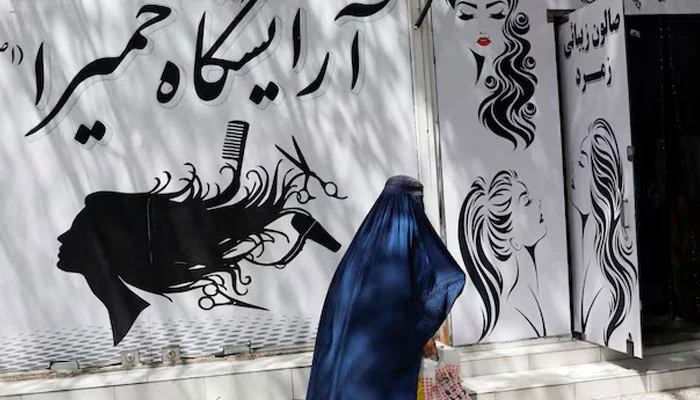
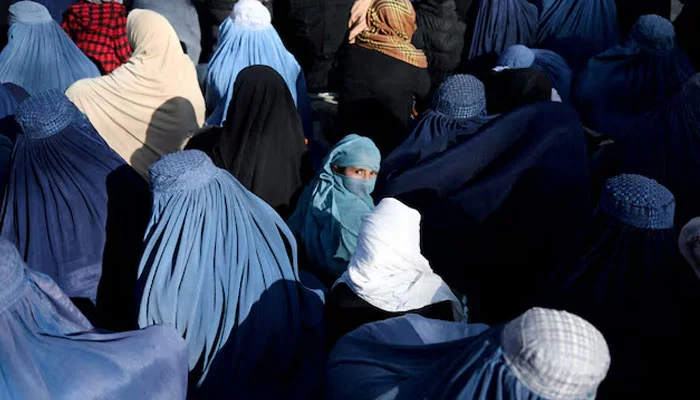
Afghan girls gaze at a school in Kabul on September 18, 2021—Reuters.
After speaking with numerous fathers across Afghanistan about the education ban that prevents their daughters from progressing beyond primary school, many are visibly overwhelmed with despair. Their pain and frustration are evident in private conversations, even among deeply religious men who now question the validity of the ruling.
The Taliban justify the ban as a religious interpretation, claiming it is necessary—yet no verse in the Quran states that education should be exclusive to men. One sincere father expressed his belief that the Quran does not support such restrictions, while another, who commends the Taliban for restoring stability and reducing corruption, admitted he could find no legitimate reason for the ban.
All these men, whose identities are protected, shared the emotional distress the policy causes, with many losing sleep over how to support their talented but excluded daughters. A UN survey last year revealed that nine out of ten Afghan men considered secondary education for girls important, and nearly two-thirds believed supporting their daughters’ schooling was a sign of piety.
Some men have even faced imprisonment for protesting against the ban. In March 2022, girls were officially forbidden from attending secondary schools, and university doors closed to women later that year. The Taliban have not responded to questions from AFP regarding the restrictions. While officials claim the ban is temporary, the UN estimates that over four years, at least one million girls have been directly affected.
Engineer Ahmad, whose wife used to teach secondary school math but is now barred from doing so, never imagined a future where his daughters would become illiterate. He warned that “stopping at sixth grade” effectively leaves them uneducated about the modern world. Both he and his wife are haunted by the prospect of their daughters being forced to stay home, many of whom are nearing the end of their primary years. Tuition for secret classes in their northern city costs more than half his salary, making escape to another country seem unfeasible.
Once, he had plans to take his family to the U.S., leveraging his experience working for an international organization, but those opportunities were shut down under President Trump. Although European countries voice strong condemnation of Afghanistan’s restrictions on women, Sweden, Denmark, and Germany have refused visas to the family. Ahmed, age 40, confides that their children don’t realize their hopes are slipping away, yet the daily question remains: “When will we leave?” They cling to hope, even as his eldest faces setbacks, possibly repeating her final year due to a fractured bone during exams.
Mohammad, a doctor from a small Kabul province town, dreams of sending his daughters to top universities. He emphasizes that Afghan development needs women involved, not just within the home. His daughters are 12 and 14, with the older having started school later, and are now in their last primary year. For four years, he’s searched for ways to circumvent the restrictions—considering sending them to school in neighboring Pakistan, but the country has sealed its borders amid escalating tensions. He recently learned of a clandestine school teaching both religious and general subjects, demanding high fees of around $153 a month for both girls, with no official diploma awarded. Fearing a raid or being taken into custody, Mohammad is anxious but committed, telling his daughters, “While I’m alive, I will find a way for you to get an education.”
N, who prefers to remain anonymous, hails from Kandahar, a Taliban stronghold where even tall girls can be barred from school early on. With three sons and a 12-year-old daughter, he describes her curiosity about astronomy, showing her a collage of the solar system and answering her questions about gravity. She asks, “How can I learn if I can’t go beyond sixth grade?” Seeking a solution, N moved his family to Kabul, exploring underground schools and online courses, yet fears he may no longer afford their education as international aid decreases. He tries to keep his daughter unaware of the growing stress their family faces.
On a recent holiday, M’s 13-year-old daughter cried in her room, unable to attend school anymore. Celebrations outside contrasted sharply with her grief. M tries to take her out to eat once a week to lift her spirits, despite the restrictions. A devout and self-made logistics manager from a poor background, M endorses the Taliban for restoring order and fighting corruption but cannot justify why girls are barred from secondary education. When at home, he admits to hiding his tears sometimes, desperate for his daughter to attend university someday. He had saved enough to move her to Iran for study but was thwarted by war. Now, he enrolled her in a Quranic school to provide some social contact, but she recently refused to go, saying, “Even if I keep going, there’s no future for me.”
Nasir, a father of two, reflects on the last day of primary school—marked by sadness and uncertainty. His wife, a teacher, helps them with home tutoring using secondhand textbooks, maintaining a strict routine. Still, his younger daughter struggles emotionally, losing morale during self-study sessions. To comfort her, Nasir gives her novels because she loves reading. The girls also secretly attend outside classes to continue learning, but the constant fear and sleepless nights weigh heavily on the family. Nasir laments that this regime seems intent on eradicating education, longing for a return to normal life.