Tag: survey

  • How To Find the Survey Equipment for Skeptical Sam in Borderlands 4

    How To Find the Survey Equipment for Skeptical Sam in Borderlands 4

    Some people refuse to accept the truth, whether in real life or in Borderlands 4. Despite all the proof that the Earth is round—like traveling across the world or even into space and viewing the planet from above—Skeptical Sam insists that Kairos isn’t a sphere.

    The Vault Hunters, who know Kairos is indeed a globe, aren’t happy with Sam’s nonsense. It’s your job to help Skeptical Sam see that his conspiracy theories are just as baseless as his insults toward those who believe otherwise.

    How to Find Skeptical Sam’s Shrine

    This side mission becomes available as soon as you reach the Terminus Mountains area, which opens after completing the main story mission A Lot To Process and unlocking missions against the Timekeeper’s subordinates.

    Speak to Skeptical Sam next to his van on the west side of Cuspid’s Climb. He’ll talk about his unusual beliefs. Take the Flat Kairos Model from him, and he will climb to the top of his van.

    Follow Sam up, then double jump to the Kairos model and use your Ground Slam to flatten it, as he requests. Afterward, follow him around the corner past a group of Kratch. He’ll ask you to climb the mountain to reach his shrine.

    Grapple onto the plateau using the two grapple points above. The shrine is at the cliff’s edge. Approach it to receive a call from Sam, then head north and down to the Wreck of the Big Carl point of interest along the shoreline.

    Where to Find and Launch Survey Equipment Pieces

    When you arrive at the Wreck of the Big Carl, clear out the Rippers first so they don’t bother you while searching for survey equipment.

    You’ll find three small computers with red screens that light up when you get close. There’s a chance a Badass enemy will spawn, but it’s unlikely, even on harder difficulties.

    Once you’ve taken out the enemies, search for the three pieces of survey equipment:

    • One is on top of a broken hallway section underneath the second-largest debris piece, against the cliff.
    • Another is on a crate near the bottom of the largest debris, next to an outhouse and two Ammo Crates.
    • The third is on top of the largest debris, between two Ammo Crates. Use your grapple to jump onto the second-largest debris and then onto the top of the larger piece.

    Gather all three, then find a spot to launch them from—the area is on top of a small mountain formation to the south. Exit the Wreck heading east, cross the road, and follow the smaller path east to a corrugated wall.

    Climbing to the Equipment Launch Spot

    Climb up, then jump onto the rock to the right and grapple onto the plateau above. Expect a swarm of Creeps once you land; you can run past or fight them to prevent more from following.

    There’s a red chest on a ledge at the top of the rock formation. Clear out the Creeps to unlock it; it offers a good chance to get rare or better weapons.

    Grapple across the broken bridge to reach the next plateau. Take out any Kratch enemies, then climb the corrugated wall to another ledge. Jump onto the roof of the house with a yellow fabric, climb the small wall above, and clear the Creeps that appear. Place the survey equipment on nearby bones, then hack each one to activate it. Before you leave, you’ll receive a call from Sam.

    How to Find All Three Survey Balloons

    The survey balloons are positioned across the Terminus Mountains, mostly spread out.

    The First Balloon
    Nearby in the northern part of Cuspid Climb, in a forest patch between the Shredded Summit and the Stonewarden Ancient Crawler.

    Follow the main road northeast through the mountains. Once there, clear out some Creeps or they’ll attack continuously while you aim for the balloon. Approach the ledge near the pole to trigger the update, then shoot down the balloon once it’s stuck. Hack the equipment when it lands to gather the data.

    The Second and Third Balloons
    The second is on the middle of the road to the west, near the edge of the mountains. As soon as you approach, the Order will shoot it down.

    The third lands on the roof of a nearby small house. Shoot it down and use your grapple to pull the antennae, causing the survey equipment to float down. Hack into it to get the final data and deliver it to Sam, who’s now located just east of the Gilded Drop Point of Interest.

    Getting to the Final Balloon and Completing the Mission

    Follow the eastbound road from the third balloon, then turn north at the junction. Continue northwest past the first turn, then go north again at the next fork.

    Turn south when the road splits again and follow it around to the Gilded Drop Point. Proceed past the houses along the road, looking for the tallest one with a Flat Kairos poster hanging from the bottom. Grapple onto its platform where Sam is waiting.

    Follow him to the nearby computer, hack it twice to upload the photos, and watch the scene unfold. The Flat Kairos Side Mission will then be complete.

    Rewards include experience points, $2,500 cash, eight Eridium, an uncommon or epic pistol, and the Flat As A Fritter style and paint job for your Vault Hunter and ECHO-4.

  • Global Faith Trends: 99% in Pakistan, 17% in China

    Global Faith Trends: 99% in Pakistan, 17% in China

    Understanding Global Religious Trends

    Religion continues to shape societies around the globe, affecting cultural norms, daily practices, and community life. Recent insights from a Statista Consumer Insights survey conducted between January 2024 and March 2025 reveal compelling regional patterns regarding religious beliefs across different countries.

    Highly Religious Nations

    Dominance in Africa and the Middle East

    The survey highlights that many of the most religious countries are located in Africa and the Middle East. Nations such as Pakistan, Egypt, and Nigeria stand out, with an impressive 99 percent of adults in these regions identifying with a religious faith. This overwhelming affiliation reflects the significant role religion plays in daily life, culture, and politics within these nations, often guiding personal and collective values.

    Case Study: Nigeria

    Nigeria, in particular, exhibits a diverse religious landscape, with a mixture of Christianity and Islam coexisting. This demographic balance not only informs individual belief systems but also shapes societal interactions, community structures, and even national policies.

    Secular Regions

    The Case of China

    In notable contrast, China emerges as the most secular nation in the survey, with only 17 percent of adults identifying as followers of a religion. This statistic can largely be attributed to the historical marginalization of religious beliefs during the Communist era. The state’s policies aimed at controlling religious practice have significantly shaped cultural perspectives around faith.

    Other Secular Countries in Asia

    Following China, other relatively secular countries in Asia include Vietnam, Japan, South Korea, and Hong Kong. The shared characteristics of these nations often reflect modern secular values, philosophical ideologies, and the influence of Western thought.

    European Religious Dynamics

    Czechia: A Historical Context

    In Europe, Czechia stands out with only 30 percent of the population claiming adherence to a religion. This trend is linked to a historical backdrop marked by Communist rule and longstanding tensions with the Catholic Church. The evolution of religious thought in Czechia serves as a fascinating study of how historical events influence contemporary beliefs.

    Comparison with Eastern Europe

    Conversely, Eastern European nations such as Romania, Serbia, and Lithuania demonstrate higher levels of religiosity. Their experiences with socialism did not lead to the same degree of secularization, suggesting that cultural and historical contexts play a pivotal role in shaping religious identity across the continent.

    Western Religious Landscape

    In the West, Ireland is recognized as the most religious country, maintaining a strong cultural connection to Catholicism. Southern European nations like Greece, Italy, and Portugal also display high levels of religious faith, emphasizing the importance of tradition and community in these societies.

    Religious Affiliation in the Americas

    High Levels in South America

    On the American continent, Peru and Brazil are distinguished by their faith, with over 80 percent of adults identifying as religious. This strong connection to faith reflects the deep cultural roots of religion within these countries, influencing their social and political frameworks.

    The North-South Divide

    While Canada shows a more secular trend, other countries in both North and South America, aside from the mentioned exceptions, maintain consistent levels of religious belief. This pattern highlights a nuanced understanding of how geography influences spiritual affiliation on the continent.

    Implications of Religious Beliefs

    These findings illustrate the diverse landscape of religious belief across various countries. Understanding these trends not only fosters greater cultural awareness but also prompts discussions about the implications of faith on global stability, community interactions, and individual identities.

  • 25% of Youth Worldwide Report Feelings of Loneliness

    25% of Youth Worldwide Report Feelings of Loneliness

    The Prevalence of Loneliness Among Young People: Insights from "The Global State of Social Connections"

    Introduction to the Study

    A significant study conducted by Gallup and Meta titled "The Global State of Social Connections" sheds light on the growing epidemic of loneliness, particularly among young people. This survey, which gathered responses from individuals aged 15 and older across 142 countries between June 2022 and February 2023, provides a comprehensive overview of social connectivity and isolation in today’s society.

    Key Findings on Loneliness by Age Groups

    Young Adolescents: Ages 15-18

    The data reveals striking statistics concerning young adolescents. Globally, 25% of respondents between 15 and 18 years old reported feelings of being "very lonely" or "fairly lonely." This age group represents a critical phase of life where social connections play a pivotal role in emotional and psychological development.

    Young Adults: Ages 19-29

    The trend of loneliness intensifies among young adults, with 27% of participants aged 19 to 29 expressing significant levels of loneliness. This demographic faces unique challenges such as transitioning into adulthood, forming new relationships, and often navigating educational and career pressures, which can contribute to feelings of isolation.

    Older Adults: Ages 65 and Above

    Interestingly, the survey indicates a decline in loneliness among the elderly population. Only 17% of respondents aged over 65 reported feeling lonely. This finding contradicts common stereotypes about isolation in older age, suggesting that many may have established robust social networks and coping mechanisms over their lifetime.

    The Continuing Impact of the COVID-19 Pandemic

    The coronavirus pandemic has had a lasting effect on social connections. Although lockdowns have ceased, the feelings of isolation experienced by many individuals during this time continue to linger. The study highlights that loneliness is not merely a consequence of the pandemic; it is a deep-rooted issue that has persisted and evolved beyond those initial lockdowns.

    Health Implications of Loneliness

    Physical Health Risks

    Loneliness is more than just an emotional experience; it carries serious health risks. Recent research links social isolation to an increased susceptibility to chronic diseases such as diabetes and dementia. The implications of loneliness extend far beyond mental health, indicating a pressing need for social interventions.

    Mental Health Disorders

    The correlation between loneliness and mental health disorders cannot be overlooked. Conditions like anxiety and depression have been found to be exacerbated by feelings of isolation. This suggests that addressing loneliness may not only improve overall well-being but also serve as a preventive measure against mental health issues.

    Exploring the Reasons Behind Loneliness

    While the survey provides clarity on the prevalence of loneliness, it also emphasizes the need for further research into the underlying causes. The data collected sheds light on how people feel but calls for deeper exploration into why these feelings persist. Understanding the reasons behind loneliness could lead to more effective interventions and support systems.

    Conclusion

    The findings from "The Global State of Social Connections" reveal a troubling trend in loneliness, particularly among young populations. As we continue to navigate the complexities of social interactions in a post-pandemic world, it remains crucial to recognize and address the implications of these feelings—not only to improve individual health and well-being but also to enhance societal cohesion as a whole.

  • Brits Lead with 40% Regular Sweet Consumption Globally

    Brits Lead with 40% Regular Sweet Consumption Globally

    Understanding Global Sweet Tooth Preferences: Insights from Statista

    Overview of Global Sweet Consumption

    Consumer preferences for sweets vary greatly across the world, influenced by cultural, social, and economic factors. A recent survey conducted by Statista Consumer Insights examined sweet consumption habits in 21 countries, revealing intriguing patterns and preferences.

    The Sweet Tooth Capital: The United Kingdom

    Highest Sweet Consumption Rates

    According to the survey, the United Kingdom stands out as the country with the most pronounced sweet tooth. A significant portion of the British population relishes sweets and chocolates, indicating a robust market for confectionery products.

    Comparing with Other Countries

    The results from the UK were particularly notable when contrasted with other European countries. Germany, Austria, Finland, and Sweden exhibit similar trends, with many residents also reporting regular consumption of sweets and chocolates. This commonality among these nations might suggest shared cultural norms around indulgence in sweet treats.

    European Nations Showcase Strong Preferences

    Countries with Notable Sweet Consumption

    Beyond the UK, several other nations feature prominently in the sweet consumption landscape:

    • Italy: Italian respondents revealed a high affinity for candy and chocolates, consistent with the country’s rich dessert culture.
    • Australia & Brazil: Both countries reported over 40% of their populations indulging in sweets frequently, showcasing a blend of cultural diversity in their candy consumption.
    • Poland, South Africa, Spain, and Switzerland: These nations also reflect significant percentages of sweet consumption, indicating that Western countries generally embrace sugary treats.

    The United States Sweet Consumption Patterns

    Similar Trends in North America

    Interestingly, the United States mirrored some of these European trends, with 40% of respondents indicating they consume sweets and chocolate regularly. This places the US in a competitive position in terms of sweet tooth prevalence, showcasing an enduring love for treats among its populace.

    Asian Countries: A Different Perspective

    Lower Consumption Rates

    In stark contrast to their Western counterparts, countries in Asia exhibited considerably lower rates of sweet consumption.

    • Japan: Only 31% of respondents reported regularly consuming sweets and chocolates, hinting at a more restrained approach to sugar in their everyday diets.
    • China: With 27%, Chinese respondents also showed similar trends, indicating a cultural preference for less sugary foods.
    • South Korea: Notably, South Korea displayed the lowest rate among the nations surveyed, with only 17% of the population saying they indulge in sweets regularly. This raises interesting questions about dietary habits and cultural practices in one of the most technologically advanced and rapidly modernizing nations.

    Cultural Factors Influencing Sweet Consumption

    Sweetness and Tradition

    The disparities in sweet consumption across these regions can often be traced back to cultural traditions, dietary norms, and historical influences. For instance, Western nations often celebrate sweet treats during holidays and significant occasions, embedding sweets deeply within societal rituals.

    Health Consciousness in Asia

    Conversely, Asian dietary habits may place more emphasis on health and wellness, potentially accounting for the lower rates of sweet consumption. In many Asian cultures, there is a strong focus on balance, often leading to the consumption of savory over sweet flavors.

    Economic Implications

    Market Opportunities for Sweets

    Understanding these consumption patterns can provide valuable insights for brands and manufacturers looking to tap into various markets. In countries where sweet consumption is high, opportunities for launching new products may be more abundant, while areas with lower consumption rates may require more innovative marketing strategies to introduce such products successfully.

    By dissecting these sweet consumption preferences across different cultures and regions, we gain a deeper appreciation for how dietary habits shape our choices around indulgence and health. The data from Statista offers a fascinating snapshot of global sweet preferences and provides a foundation for further exploration into consumer behavior in the confectionery industry.

  • 43% Boycott Brands Over Animal Cruelty, Survey Reveals

    43% Boycott Brands Over Animal Cruelty, Survey Reveals

    Understanding Brand Cancelation: The Reasons Behind the Boycott Movement

    In today’s socially conscious marketplace, consumers are more empowered than ever to hold brands accountable for their practices. Recent research by Statista highlights the primary reasons that lead consumers to boycott or protest against companies, revealing deep concerns regarding ethics and social responsibility.

    The Top Reasons for Brand Cancellation

    Animal Cruelty

    According to the survey conducted by Statista Consumer Insights, the foremost reason consumers choose to boycott a brand is due to animal mistreatment. In fact, 43% of over 3,000 respondents in the U.S. indicated that they would stop supporting companies that engage in practices they consider cruel to animals. This concern has risen to prominence across several Western countries, marking a significant shift in consumer priorities.

    Racism and Human Rights Violations

    Closely following animal cruelty, issues related to racism and human rights violations comprise another critical factor driving consumer boycotts. The survey shows that 42% of U.S. respondents cited racism, while 40% pointed to human rights abuses as significant deterrents to brand loyalty. These statistics underline the growing intolerance for unethical behaviors that impact marginalized communities.

    Environmental Concerns

    Environmental sustainability has become an increasingly vital aspect of corporate responsibility. In countries like Germany, respondents rated environmental concerns as a top reason for boycotting a brand—on par with human rights abuses. This perspective reflects a global recognition of the urgent need to mitigate climate change and reduce ecological harm.

    Health Risks and Misleading Advertising

    Interestingly, when examining consumer attitudes in Japan, there was a distinct emphasis on health risks associated with products and inappropriate advertising tactics. Japanese respondents prioritized the safety and integrity of products, suggesting a more health-conscious consumer base demanding transparency and authenticity from brands.

    Behavioral Insights from U.S. Consumers

    The survey not only sheds light on the reasons behind boycotts but also reveals consumer behaviors regarding brand engagement:

    Prevalence of Boycotting

    Approximately 13% of U.S. respondents admitted to having boycotted a brand in the past due to perceived unethical practices. This indicates that while many consumers express their willingness to actively support ethical business behaviors, only a fraction has translated this sentiment into action.

    Communication and Advocacy

    The survey also noted that 21% of consumers discussed their concerns about brands with friends, while 25% opted for social media platforms to broadcast their discontent. This highlights the role of social networks as influential space for consumers to rally support against companies they perceive as unethical.

    The Dichotomy of Intent vs. Action

    An intriguing finding from the survey is that while 86% of American respondents felt justified in boycotting or attacking a brand based on its practices, nearly half (49%) had never actually taken such action. This discrepancy calls into question the dynamics of consumer intent versus actual engagement, suggesting that while there’s significant awareness, it may not always translate to direct consequences for brands.

    Global Comparison of Concerns

    While the U.S. consumer landscape prioritizes animal cruelty, racism, and human rights violations, international perspectives vary. For instance, consumers in countries like Germany place equal weight on environmental issues, suggesting a more holistic view of corporate responsibility that includes the welfare of the planet. The contrast between these attitudes underscores the diverse values held by consumers around the world and indicates that brands must navigate a complex moral landscape.

    Cultural Differences in Consumer Attitudes

    Recognizing these cultural differences is imperative for brands operating in multiple markets. What resonates as a critical issue in one country may not hold the same weight in another, thus complicating the strategy for brand messaging and public relations across borders.

    The dynamics of cancel culture shed light on the increasing expectation for companies to align with ethical standards. With consumers wielding the power to shape brand reputations through their choices, businesses must remain vigilant and responsive to the concerns that drive today’s conscientious consumers.

  • Top 3 Breakfast Cereals: Enjoyed by 43%, 41%, and 34% of Americans

    Top 3 Breakfast Cereals: Enjoyed by 43%, 41%, and 34% of Americans

    The Breakfast Bowl: A Look into America’s Favorite Cereals

    The Cereal Craze in America

    For many Americans, breakfast is synonymous with a bowl of cereal. In recent surveys, oddly comforting brands like Cinnamon Toast Crunch, Cheerios, and Fruity Pebbles emerged as fan favorites. According to data from Statista, these cereals captivated the hearts (and taste buds) of approximately 43%, 41%, and 34% of respondents, respectively, who indulged in these sugary delights over the past year. This statistic sheds light on America’s enduring relationship with breakfast cereals, which serve as a nostalgic staple in the morning routine for countless households.

    Breakfast Habits Across the Nation

    A Unique Eating Culture

    American breakfast habits are unique and often scrutinized by observers from other countries. The tradition of standing up while consuming breakfast, perhaps over a sink, speaks volumes about the fast-paced lives many Americans lead. The love for sweet morning options is equally notable. From syrup-laden pancakes and waffles to sugary Pop-Tarts, the morning meal is often viewed as an invitation to indulge rather than a time to focus on nutrition. The scene becomes even more frenetic when considering the ritual of hastily preparing a cup of coffee, sometimes with generous amounts of creamer, before rushing out the door.

    The Global Influence of U.S. Cereals

    Despite criticism for dietary choices, American breakfast cereals like Lucky Charms and Cap’n Crunch are gaining popularity beyond U.S. borders. Their appeal fosters a sort of cult following in diverse markets, showcasing the power of American soft power and cultural influence. International consumers are increasingly seeking out these iconic brands, attracted by the charming mascots and enticing advertisements. The global demand serves as a testament to the cereal’s enduring status as a beloved breakfast option, transcending cultural and geographical boundaries.

    Nutritional Perspectives on Breakfast Cereals

    The Health Debate

    Amid the sugary allure, nutritionists are raising concerns about the dietary choices associated with these popular cereals. Health professionals recommend opting for whole grain cereals that boast high fiber content and minimal added sugars. They emphasize the importance of incorporating healthier options into the morning routine, steering clear of sugary cereals that could lead to negative long-term health impacts.

    The Call for Mindful Eating

    As consumers become more aware of health and wellness, there is a notable shift toward mindful eating practices. Dietitians advise taking the time to savor breakfast, encouraging individuals to sit down and enjoy their meal rather than rushing through it. This change reflects a growing emphasis on nutrition and the commitment to starting the day right—not just for our taste buds but for our overall health as well.

    The Evolving Landscape of Breakfast Choices

    Whether it’s nostalgia-driven consumption of childhood favorites or a conscientious decision to seek out healthier options, the cereal landscape in America is continuously evolving. The popularity of breakfast cereals remains high, but so does the awareness of making more informed dietary choices. As breakfast remains the most important meal of the day for many, it’s hard to deny that the love affair with cereal continues, albeit with an increasing focus on balancing enjoyment with health considerations.

  • Americans Divided on Sports Betting: 29% Find It Addictive

    Americans Divided on Sports Betting: 29% Find It Addictive

    Understanding America’s Ambivalence Towards Sports Betting

    The debate surrounding sports betting in the United States has elicited a range of opinions, reflecting the complexities of gambling culture. Recent data from a Statista Consumer Insights survey showcases the divided perspectives of Americans on the topic, revealing a nation caught between excitement and caution.

    The Spectrum of Opinions on Sports Betting

    The Statista survey indicates a substantial level of ambivalence among Americans regarding sports betting. A notable 24% of respondents expressed neutrality, indicating they do not align with either the positive or negative aspects of this gambling practice. This highlights a significant portion of the population that remains unsure or indifferent about the implications of sports betting on society and individual behavior.

    Addictive or Entertaining?

    Among those with a more definitive stance, the divide becomes pronounced. Approximately 29% of respondents characterized sports betting as "highly addictive," raising concerns about the potential for developing problematic gambling behaviors. This viewpoint aligns with ongoing discussions about addiction and the responsibility of regulatory bodies to address such issues effectively.

    Conversely, a slight majority of the opinions collected from the survey lean towards the benign, with 28% of participants categorizing sports betting as simply “fun.” This notion of enjoyment is a crucial factor in understanding why many individuals engage in betting activities, as it signifies not just a potential financial gain, but also an opportunity for entertainment and camaraderie among fans.

    Thrill vs Risks

    The survey further categorizes American sentiments into the thrill of betting and the inherent risks associated with it. A significant 24% of respondents found sports betting "thrilling," suggesting that the excitement surrounding potential wins fuels participation in these activities. However, this thrill is met with caution, as 19% of people believe that discussions about the risks of gambling are often insufficient. This discrepancy raises important questions about the need for more comprehensive information and education on responsible gambling.

    In contrast, a smaller faction, comprising 14% of respondents, advocated for a complete ban on sports betting. This group likely prioritizes the potential social costs and health risks associated with gambling, reflecting concerns that persist in the broader conversation about sports betting legality and regulation.

    Participation Rates in Sports Betting

    The survey also sheds light on the participation rate in sports betting, revealing that around 30% of the more than 1,000 respondents had engaged in some form of betting within the last year. This statistic demonstrates that sports betting is not merely a fringe activity but rather a widespread phenomenon among American sports fans.

    Most Bet on Football

    When broken down by sport, football emerges as the standout favorite for betting enthusiasts. An impressive 51% of those who had participated in sports betting reported placing bets on football matches. This preference for football is likely influenced by the sport’s immense popularity across the country, especially given the cultural significance of events like the Super Bowl.

    Basketball follows closely, with 38% of bettors stating they placed wagers on games in the past year. Other sports also drew interest from bettors, including:

    • Baseball: 25%
    • Soccer: 25%
    • Boxing: 18%
    • Tennis: 11%

    These statistics highlight that sports betting interests are diverse, with various sports finding substantial backing from bettors.

    The Regulatory Landscape

    The findings from the Statista survey also underscore the importance of understanding the regulatory environment surrounding sports betting in the U.S. As it stands, betting regulations vary significantly from state to state, with some states implementing very restrictive measures while others embrace a more open policy. This inconsistency can contribute to the confusion and mixed feelings many Americans have regarding the practice.

    Ultimately, the conversation about sports betting in America continues to evolve. As more states explore the potential benefits and challenges of legalized betting, public opinion will play a crucial role in shaping future legislation and regulatory frameworks. The dynamics of sports betting capture the essence of American culture—balancing the thrill of competition with the need for responsible participation.

  • Ukrainians’ Hope for NATO Membership Plummets: 22% Doubt

    Ukrainians’ Hope for NATO Membership Plummets: 22% Doubt

    The Evolving Landscape of Ukraine’s NATO Aspirations

    The Context of NATO Membership for Ukraine

    For years, Ukraine has pursued NATO membership fervently, driven by the desire for closer alignment with Europe and the United States. The significance of this aspiration has become even more pronounced in light of ongoing aggressions from Russia. President Volodymyr Zelensky’s remarks indicate a willingness to explore extraordinary measures, including his resignation, to achieve NATO membership and foster peace in his homeland.

    President Zelensky’s Commitment to Peace

    In a bold statement made on the eve of the third anniversary of Russia’s full-scale invasion of Ukraine, President Zelensky expressed his readiness to step down from office if that decision would lead to peace. This willingness reflects the intense pressure and dire circumstances facing Ukraine amidst the ongoing conflict with Russia. Zelensky’s proposition underlines Ukraine’s precarious situation, where the pursuit of NATO membership is not merely a strategic choice but a lifeline for national security.

    NATO’s Stance on Ukraine’s Membership

    NATO has consistently maintained that Ukraine’s future lies within its framework. The alliance has expressed unwavering support for Ukraine’s aspiration, framing it as part of a broader commitment to uphold Euro-Atlantic integration. NATO’s reaffirmation of support comes at a critical time when tensions with Russia remain high, and the threat of further aggression looms large. The alliance portrays Ukraine’s accession as an inevitable milestone in the trajectory of Western integration, a commitment that aims to provide a protective security umbrella for Ukraine.

    Public Sentiment Towards NATO Accession

    Despite NATO’s assurances, recent Gallup data reveals a notable shift in public opinion among Ukrainians regarding their nation’s prospects for NATO membership. As political climates evolve and uncertainties loom—especially with upcoming elections in the United States—faith in the ability to join the alliance appears to be dwindling.

    Growing Doubts Among the Ukrainian Public

    A stark increase in skepticism is evident in the statistics. Prior to the anticipated re-election of former President Donald Trump, 22% of Ukrainians indicated they believed their country might never join NATO. This figure more than doubled from the previous year, where only 10% held such beliefs. This erosion of confidence is alarming, especially as public support for NATO membership has historically been a powerful tool for Ukraine in its fight against Russian aggression.

    A Shift in Expectations

    Coupled with rising skepticism is a palpable decline in the optimism surrounding the timeline for NATO accession. The proportion of surveyed Ukrainians who anticipated joining NATO within the next decade plummeted from 69% to 51% between August 2023 and August 2024. This shift suggests a growing consciousness of geopolitical realities that may hinder Ukraine’s path to NATO, including internal and external factors that continue to shape public opinion and strategic calculations.

    The Broader Implications of Ukraine’s NATO Aspirations

    The implications of Ukraine’s NATO aspirations extend beyond the immediate political landscape. The interplay between Ukraine’s quest for NATO membership and Russia’s perceptions of security threats significantly impacts regional stability. This dynamic is critical both for understanding the ongoing conflict and for evaluating the evolving nature of military alliances in Europe.

    NATO and Russia: A Complicated Relationship

    Russia’s opposition to NATO’s eastward expansion forms the backdrop of its justification for military actions in Ukraine. The narrative that NATO poses a direct threat to Russian sovereignty fuels a sense of urgency in Moscow’s military strategy, creating a complex web of tension and conflict in Eastern Europe. As Ukraine seeks NATO membership, the potential for escalation in these hostilities cannot be overlooked.

    The Future of Ukraine’s Security Landscape

    As the situation evolves, Ukraine’s relationship with NATO continues to be a fundamental aspect of its security policy. The waning hope among some Ukrainians for immediate NATO accession may influence not only domestic perceptions but also how the international community engages with Ukraine going forward.

    The discourse surrounding Ukraine’s NATO ambitions underscores a pivotal moment in the region’s history, marked by both aspirations for integration and the profound challenges posed by external threats. As the conflict persists, the journey toward NATO membership will remain a critical topic for discussion among policymakers, analysts, and civilians alike.

  • Zelensky’s Approval at 57% Defies Trump’s 4% Claim

    Zelensky’s Approval at 57% Defies Trump’s 4% Claim

    Understanding the Dispute Between Trump and Zelensky

    In recent weeks, tensions have escalated between U.S. President Donald Trump and Ukrainian President Volodymyr Zelensky. The backdrop of this conflict is the ongoing war in Ukraine, which has led to a complex international landscape. This blog delves into the exchange of claims and counterclaims, focusing on the accuracy of Zelensky’s approval ratings and the political ramifications of the dispute.

    Trump’s Claims About Zelensky’s Approval Rating

    Donald Trump has publicly stated that Ukrainian President Volodymyr Zelensky holds only a four percent approval rating. This assertion has raised eyebrows, given the tumultuous political environment both leaders are navigating. Trump further went on to label Zelensky a “dictator without elections,” a statement that is not only provocative but also misleading.

    Zelensky Responds: A Web of Disinformation

    In response to Trump’s claims, Zelensky accused the former U.S. President of being ensnared in a "web of disinformation." This assertion highlights a growing concern regarding misinformation in political discourse, especially against the backdrop of war. Zelensky’s defiance underscores a commitment to transparency and factual representation during a period rife with conflict and distortion.

    The Reality of Zelensky’s Approval Ratings

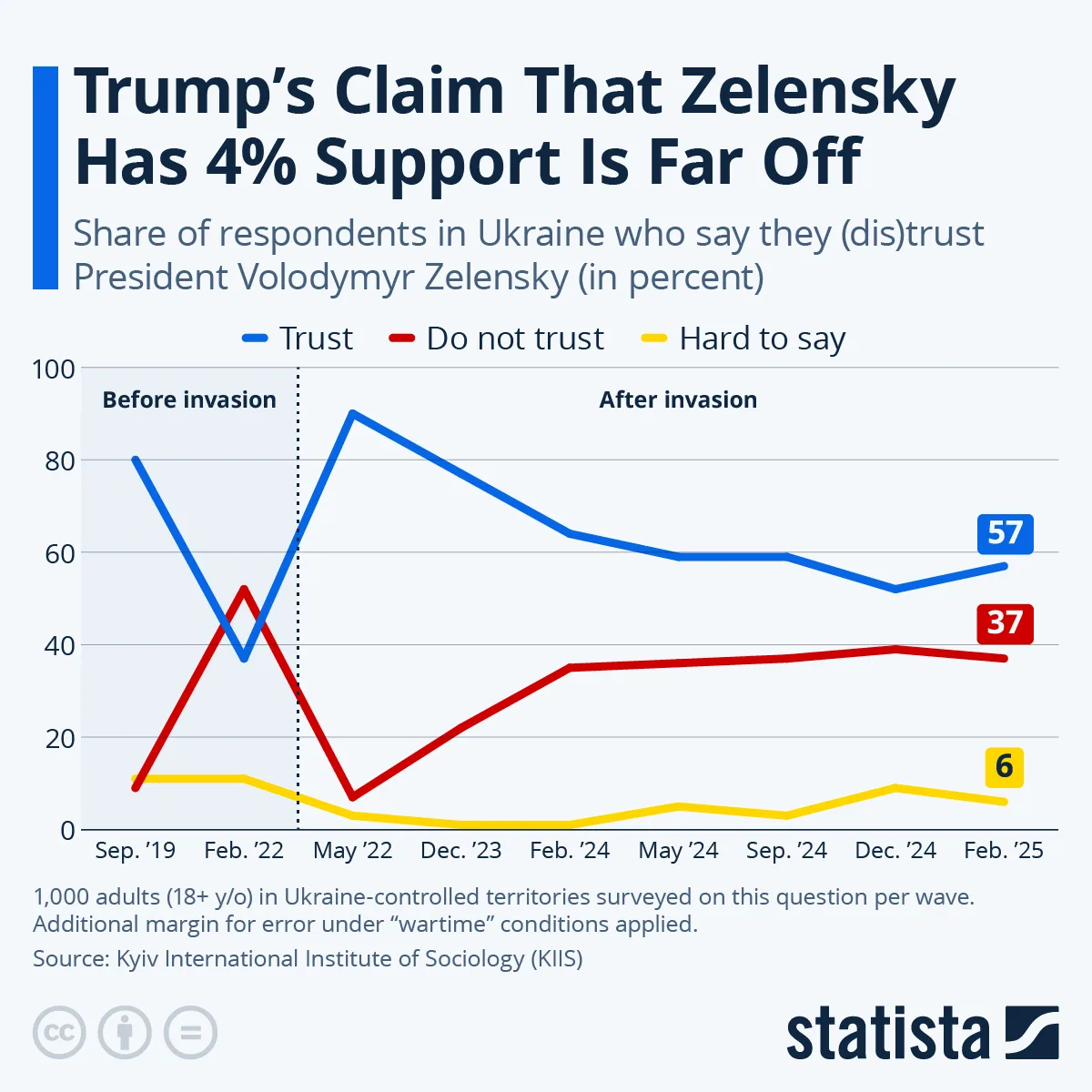
    To offset Trump’s erroneous claims, the Kyiv International Institute of Sociology (KIIS) conducted a poll that reflects a more favorable view of Zelensky among the Ukrainian populace. The survey, conducted between February 4-9, reveals that a significant 57 percent of adults trust Zelensky, while 37 percent do not. This statistic starkly contrasts Trump’s assertion, indicating a disconnect between political rhetoric and public sentiment.

    Historical Context of Approval Ratings

    Zelensky’s approval ratings have indeed fluctuated since Russia’s invasion in February 2022. Back in May 2022, the Ukrainian president enjoyed a remarkable 90 percent trust rating, a figure reflecting the unity and resilience of the Ukrainian people in the face of war. However, as the conflict has persisted, these numbers have naturally declined. Despite this downward trend, recent polling indicates a recovery; Zelensky’s approval rose five percentage points compared to December 2024, suggesting that public sentiment may be stabilizing.

    Methodology of the KIIS Poll

    The KIIS poll was designed to present a representative sample of individuals from Ukrainian-controlled territories, paying particular attention to the unique challenges posed by wartime conditions. Methodological rigor was applied, taking into account systemic deviations alongside traditional margins of error, thereby enhancing the credibility of the results.

    The Politics of Wartime Elections

    Zelensky was elected in 2019 with a landslide 73 percent of the vote, reflecting the Ukrainian public’s strong mandate for reform and governance. However, in light of the ongoing conflict with Russia, national elections scheduled for 2024 have been postponed indefinitely. Zelensky has publicly stated that elections will resume once what he terms the “hot phase” of the war comes to an end, showcasing his commitment to democratic processes even amidst turmoil.

    Conclusion

    The misinformation tactics that often surface in political narratives can have profound implications for public perception and international relations. As the situation evolves, it is critical for both leaders and followers to sift through these claims critically, seeking out factual representation in an era increasingly characterized by disinformation. The conversation between Trump and Zelensky is reflective of broader themes surrounding leadership, trust, and the challenges of governance in a time of crisis.

  • 33% of Spaniards Report Overtourism in Their Area

    33% of Spaniards Report Overtourism in Their Area

    Understanding Overtourism in Spain

    The Growing Concern of Overtourism

    Overtourism has emerged as a significant issue in various tourist destinations worldwide, and Spain is no exception. A recent survey conducted by YouGov reveals that approximately one in three Spaniards perceive their local area as suffering from the consequences of overtourism. This situation signals a need for urgent attention and action from local authorities and tourism boards.

    Regional Disparities in Perception

    Impact on Catalonia

    The effects of overtourism are not uniformly felt across Spain. In Catalonia, the sentiment is particularly strong, with 48 percent of respondents expressing concerns about the overwhelming number of international visitors. This statistic highlights how specific regions can be disproportionately affected by tourism, leading to local anxieties regarding sustainability and community integrity.

    Other Regions Across Spain

    Comparatively, when we look at the general sentiment across the country, 45 percent of Spanish respondents indicated a negative view towards the holiday rental properties industry. This figure contrasts with the 21 percent of people who feel similarly about the traditional hotel industry, suggesting that holiday rentals are a focal point of dissatisfaction among locals. This negative sentiment could be related to various factors, including the impact of holiday rentals on housing availability and community cohesion.

    Comparisons with Neighbors: France and Beyond

    France’s Overtourism Perspective

    To understand Spain’s stance on overtourism, it is insightful to compare it with neighboring countries. In France, only 18 percent of respondents identified overtourism as a problem in their areas, indicating a less acute concern compared to Spain. Furthermore, 44 percent of French respondents believe that the number of international tourists is just right, while 24 percent argue that there aren’t enough tourists.

    Views from the North: The UK, Denmark, and Sweden

    When examining perceptions from countries further north, such as Britain, Denmark, and Sweden, the concerns about overtourism appear to be minor. Very few respondents from these countries reported viewing overtourism as a significant issue, which could suggest differing tourism management strategies or cultural attitudes towards tourism in general.

    The Housing Crisis Response: Tax on Foreign Buyers

    Government Measures

    In light of rising concerns over overtourism and its implications, particularly regarding housing affordability, the Spanish government has initiated steps to address these issues. Recently, a proposal was put forth to impose a 100 percent tax on properties purchased by non-residents from outside the European Union (including the UK). This measure aims to mitigate the impact of foreign investment on the local housing market, which is seen by many as contributing to the housing crisis in Spain.

    The Dual Edge of Tourism

    Tourism, while being a major economic driver for Spain, comes with challenges that need addressing to ensure the sustainability of both local communities and the environment. The differing views on holiday rentals versus hotels, the acute awareness of overtourism in regions like Catalonia, and the proactive approach taken by the government regarding housing policy reflect a complex relationship between tourism and local quality of life.

    An Ongoing Conversation

    As Spain navigates this delicate balance, it remains clear that the conversation around overtourism is far from over. Continued dialogue among stakeholders, including residents, tourists, and government officials, is essential to identify effective strategies that promote sustainable tourism while preserving the unique charm and character of local communities in Spain and beyond.

  • 30% of Americans Bet on Sports: Football Dominates at 50%

    30% of Americans Bet on Sports: Football Dominates at 50%

    The Popular Landscape of Sports Betting in America

    In recent years, the phenomenon of sports betting has gained substantial traction across the United States, reshaping how fans engage with their favorite sports. A survey conducted by Statista Consumer Insights in 2024 reveals critical insights into the habits and attitudes of American sports bettors.

    The Engagement in Sports Betting

    According to the survey, approximately 30 percent of Americans reported that they had placed a bet on a sporting event within the past twelve months. This statistic highlights a significant portion of the population actively engaging in this recreational activity, underscoring how integral sports betting has become to the overall sports culture in the United States.

    Most Bet-On Sports

    When examining the specific sports that people are most inclined to bet on, football emerges as the unequivocal leader. More than 50 percent of people who participated in sports betting favored placing their bets on football matches, solidifying its status as America’s most popular sport for betting.

    Basketball

    Following closely behind football is basketball, with 38 percent of bettors expressing their preference for this fast-paced sport. The NBA, in particular, has a massive following, and its playoff seasons often see a spike in betting activity.

    Baseball

    Baseball, America’s pastime, holds a respectable position in the sports betting realm, with 25 percent of bettors throwing their wagers on Major League Baseball games. The blend of full-season match-ups and playoff excitement provides numerous opportunities for fans to engage.

    Soccer

    Soccer is also making strides in the betting landscape, with 25 percent of bettors choosing to place wagers on matches from various leagues, including the MLS and international events. The global appeal of soccer continues to grow, attracting both dedicated fans and newcomers.

    Other Notable Sports

    Beyond the top four, several other sports have captured the interest of bettors:

    • Boxing: This combat sport has historically been a betting favorite, particularly during major fight events.
    • Tennis: With numerous tournaments held throughout the year, tennis attracts bettors who enjoy the unpredictability of match outcomes.
    • Ice Hockey: The NHL has a loyal fanbase and offers another avenue for betting enthusiasts to engage with the sport.

    Bettors’ Attitudes Toward Sports Betting

    The survey also delved into the attitudes of both bettors and non-bettors regarding the implications of sports betting. A notable 29 percent of respondents equated sports betting to being as addictive as substances like alcohol, drugs, or tobacco. This statement reflects growing concerns about the potential adverse effects of betting.

    Opinions on Regulation

    Furthermore, 14 percent of participants advocated for a ban on sports betting, indicating apprehension towards the normalization and accessibility of this activity. On the other side of the spectrum, about 25 percent of respondents embraced sports betting as a source of enjoyment, suggesting that it enhances the excitement of watching professional sports.

    Conclusion

    The intricacies of sports betting in America reflect a complex, multifaceted activity that is intertwined with sports culture. The survey results reveal not only the popularity of various sports but also the diverse attitudes that Americans have towards this rapidly evolving form of engagement. As the landscape continues to change, further studies may provide deeper insights into this fascinating domain.

  • Radio Listening Habits: 16% in Austria vs. 4% in Mexico

    Radio Listening Habits: 16% in Austria vs. 4% in Mexico

    The Popularity of Radio Listening Across the Globe

    As the world continues to evolve with new technology and shifting media consumption patterns, radio remains a steadfast companion for millions. To celebrate World Radio Day on February 13th, we explore recent data that highlights where radio listening is most prevalent and where its popularity is waning.

    Global Insights into Radio Consumption

    According to a comprehensive survey conducted by Statista, radio listening habits vary significantly across different countries. The findings illustrate a noteworthy disparity in the number of heavy radio listeners, defined as individuals who commit at least 11 hours per week to listening.

    Heavy Radio Listening by Country

    Austria and Germany: Leaders in Radio Engagement

    Among the countries surveyed, Austria and Germany stand out as the most engaged in radio consumption. Approximately 16% of respondents from both countries reported being heavy radio listeners. This statistic highlights a cultural affinity for radio in these German-speaking nations, suggesting that auditory content remains a preferred medium for entertainment and information.

    Mexico and South Korea: Lower Engagement Levels

    In stark contrast, countries such as Mexico and South Korea demonstrate significantly lower engagement with radio. In these nations, only about 4% of respondents identified as heavy radio listeners. Factors contributing to this trend might include the prevalence of digital streaming services and the diverse range of entertainment options that compete for attention.

    Factors Influencing Radio Popularity

    Cultural Significance of Radio

    The cultural backdrop of a country plays a critical role in its residents’ connection to radio. In places like Germany and Austria, radio is not just a source of music but also a significant platform for news, talk shows, and local events, making it a vital part of daily life.

    Impact of Digital Media

    The rise of digital media has profoundly influenced how people consume audio content. Platforms such as Spotify, Apple Music, and various podcast services have reshaped listener preferences, allowing for more personalized and on-demand experiences. This shift is particularly evident in regions like Mexico and South Korea, where digital innovation has taken a firm hold, impacting traditional media formats like radio.

    The Future of Radio Listening

    As we examine the shifting tides of radio consumption, it is essential to recognize that radio is far from obsolete. While some nations show a declining trend, others continue to embrace it as a valued source of information and entertainment. The adaptability of radio, including the integration of streaming capabilities and podcasting, signals that it can still find relevance in an increasingly digital world.

    Conclusion

    As the landscape of media consumption evolves, radio remains a vital part of our auditory culture. By understanding where radio is most and least popular, we can appreciate the enduring nature of this medium while acknowledging the forces shaping its future.

  • 48% of Americans Can’t Name a Concentration Camp

    48% of Americans Can’t Name a Concentration Camp

    The Importance of Remembering the Holocaust: A Forgotten History

    Commemoration of Auschwitz Liberation

    January 27, 2025, marks 80 years since the Red Army liberated Auschwitz, one of the most notorious concentration and extermination camps operated by the Nazis during World War II. The events that transpired within the walls of Auschwitz encapsulate the horrors of the Holocaust, where an estimated one million Jews met their tragic fate. In addition to Auschwitz, extermination camps such as Bełzec, Sobibór, and Treblinka collectively claimed an estimated 1.6 to 1.8 million lives. Other horrific figures include 152,000 lives lost in Chełmno and up to 80,000 in the Lublin-Majdanek camp. These statistics not only highlight the scale of loss but also the necessity of keeping the memory of these atrocities alive for future generations.

    The Erosion of Memory: A Disturbing Trend

    Despite the significance of these historical events, a troubling trend has emerged regarding public awareness. A recent survey conducted by the Conference on Jewish Material Claims Against Germany revealed that nearly half (48 percent) of American adults cannot name a single concentration camp. This statistic raises serious concerns about the collective memory of the Holocaust and serves as a somber reminder of the fading awareness of such a significant part of human history.

    Comparison of Awareness: United States vs. Europe

    European Perspective

    In Europe, the awareness of concentration camps tends to be significantly higher, particularly in countries that were directly affected by Nazi occupation. For instance, in Germany, Austria, Poland, and Hungary, the percentage of individuals who could not name a concentration camp ranges from only 7 to 18 percent. This higher awareness may stem from the cultural and educational emphasis placed on the remembrance of these historical events. In Poland, where most of the extermination camps were located, the memory remains particularly vivid among the population.

    Disheartening Trends Among Young Adults

    Despite this awareness in Europe, there exists a worrisome trend among younger adults. In Germany and Hungary, about 26 percent of individuals aged 18-29 are unable to name a concentration camp. This reflects a generational gap in knowledge that may stem from educational differences or a lack of emphasis on Holocaust education. Similarly, in countries like the United Kingdom, France, and Romania, approximately a quarter of adults are unable to identify a concentration camp, with concerning statistics indicating that more than half of Romanian young adults are unaware of such pivotal historical knowledge.

    The Impact of Education on Memory

    The fading memory of the Holocaust raises significant questions about the role of education in preserving historical truths. Educational frameworks in various countries play a crucial role in how younger generations perceive and understand the Holocaust. The variability in awareness can often point to the effectiveness of Holocaust education programs and the methodologies employed to teach this subject matter.

    Importance of Holocaust Education

    Properly structured Holocaust education can counter ignorance and foster a sense of empathy and understanding among students. Incorporating survivor testimonies, historical documents, and field trips to memorial sites can dramatically enhance learning experiences. Engaging students in discussions about prejudice, discrimination, and human rights issues can create a more informed citizenry that values the lessons of history.

    The Role of Memorials and Museums

    Memorials and museums dedicated to Holocaust remembrance play a pivotal role in educating the public and ensuring that such atrocities are never forgotten. By preserving artifacts, personal stories, and comprehensive exhibits, these institutions help to maintain a tangible connection to the past. They serve as important educational resources and are crucial for fostering awareness and understanding about the Holocaust, not just for future generations but for today’s society as well.

    The Need for Continued Dialogue

    In light of the worrying statistics regarding the awareness of concentration camps, it is clear that continued dialogue about the Holocaust is essential. Public discussions, educational initiatives, and community events can help keep the memory alive. Engaging various demographics, especially young people, in conversations about these historical events invites opportunity for fascination, inquiry, and ultimately, remembrance.

    Regardless of geographical differences in awareness, recognizing the necessity of education, remembrance, and dialogue about the Holocaust is vital. As we reflect on events like the liberation of Auschwitz, we must also consider our responsibility in ensuring that the lessons of the past are learned and passed on to future generations.

  • 40% Support Hostile Activism for Societal Change: Survey

    40% Support Hostile Activism for Societal Change: Survey

    Understanding Activism in Today’s Society

    The Rise of Hostile Activism

    In recent years, the landscape of activism has undergone significant changes. According to the 25th edition of Edelman’s Trust Barometer, a striking 40% of people are open to the idea of using hostile activism as a means to achieve societal change. This phenomenon is not just a passing trend; it signals a deeper unrest within society and indicates a discontent that is particularly pronounced among younger generations.

    Who Approves of This Shift?

    The support for hostile activism is notably prevalent among younger demographics. Over half (53%) of respondents aged 18-35 expressed approval for measures that could be viewed as extreme or aggressive in pursuit of societal reforms. This trend reveals a critical generational divide, suggesting that younger individuals may feel increasingly marginalized or unheard by traditional political avenues.

    Perceptions of Wealth and Inequality

    The Wealth Gap: A Growing Grievance

    One of the central themes of the Edelman report is the growing sense of grievance directed toward the wealthy and powerful institutions. A significant 67% of those surveyed assert that the wealthy do not contribute their fair share in taxes. The report emphasizes that perceptions of unfairness are driving many to consider more radical forms of expression to voice their frustration.

    The Source of Discontent

    Moreover, 65% of respondents indicated that they believe the selfishness of the wealthy is a primary factor contributing to societal issues. This sentiment underscores a broader narrative of inequality, where economic disparity is not just an abstract statistic but a lived reality that fosters resentment and demands for change.

    Global Perspectives on Activism

    Voices from Around the World

    The report reveals that sentiments of grievance against powerful entities—whether they be corporations or government institutions—are prevalent across numerous countries. Notably, nations such as Spain, Nigeria, South Africa, the United Kingdom, and Kenya exhibited high levels of dissatisfaction, with 70-72% of respondents expressing grievances against the rich and powerful.

    Diverse Forms of Activism

    When it comes to translating grievances into action, the report indicates a willingness among individuals to resort to various forms of activism. Actions that were deemed acceptable include:

    • Attacking individuals online: About 23% of respondents consider this an appropriate method to effect change.
    • Spreading disinformation: This controversial tactic was deemed acceptable by a similar percentage.
    • Threatening or committing violence: 27% of the surveyed population views this as a justifiable response to social injustice.
    • Vandalism of property: Again, around a quarter are willing to condone damaging public or private property as a form of protest.

    Implications for Future Activism

    Shifting Norms and Acceptance of Extremity

    The willingness to accept hostile activism raises critical questions about the future of civic engagement. As traditional methods of protest become overshadowed by more aggressive tactics, the implications could lead to greater divisions within societies, lessened trust in institutions, and difficulty in addressing concerns through peaceful dialogue.

    A Call for Reflection

    The findings of the Edelman Trust Barometer compel leaders and institutions to reflect on their roles in fostering understanding and addressing grievances. As activism continues to evolve in response to societal stresses, it is vital for all stakeholders to engage in meaningful conversations about equity, justice, and the means through which change is pursued.

  • 20% of Americans and French Distrust Mainstream Media

    20% of Americans and French Distrust Mainstream Media

    The Growing Distrust in Mainstream Media: A Global Perspective

    Understanding Distrust: A Comparative Analysis

    In recent years, the issue of trust in mainstream media has taken center stage, particularly in Western countries. A survey conducted by Statista Consumer Insights indicates a concerning trend: substantial portions of the population in various countries express skepticism towards their media outlets. This blog delves into the degrees of distrust across nations, particularly focusing on the United States, France, Spain, Switzerland, and China.

    Distrust in the United States and France

    High Levels of Distrust

    The survey reveals that approximately 20% of respondents in both the United States and France openly express a lack of trust in mainstream media. This significant percentage places these two countries at the forefront of media skepticism among the 21 nations surveyed. This distrust can be attributed to various factors, including political polarization, sensationalism in reporting, and perceived biases in news coverage.

    The Impact of Partisanship

    In the U.S., trust in media tends to be closely tied to political affiliation. Many individuals believe that mainstream media outlets favor certain political viewpoints, which exacerbates distrust among those who feel misrepresented. Similar trends can be observed in France, where media coverage of political events is often scrutinized for partiality.

    The Situation in Spain

    Emerging Skepticism

    In Spain, 19% of respondents reported distrust in mainstream media, reflecting a sentiment similar to that observed in the U.S. and France. This skepticism is not entirely surprising, considering Spain’s turbulent political landscape and the rise of various political factions that continuously criticize traditional media outlets. The public increasingly turns to alternative news sources, which can sometimes lead to echo chambers of information.

    Contrast with Switzerland and China

    Swiss Confidence in Media

    Conversely, Switzerland stands out in this survey, with only 13% of respondents conveying distrust toward their mainstream media. The Swiss media landscape is often viewed as robust and reliable, characterized by high journalistic standards and a tradition of neutrality. This cultural context fosters greater public trust, enabling news organizations to maintain credibility.

    Analyzing China’s Perspective

    China presents another unique scenario; fewer than 10% of respondents indicated any distrust in their mainstream media. This is reflective of the controlled media environment in the country, where the government exerts significant influence over news reporting. While this results in limited dissenting voices, it creates a perception of stability in information dissemination among the population.

    Factors Influencing Trust

    The Role of Digital Media

    The rise of digital media has fundamentally altered how individuals consume news. The proliferation of social media platforms allows for instantaneous sharing of information, but this can also lead to misinformation. As users grapple with competing narratives, the trustworthiness of traditional media is called into question.

    Critical Media Literacy

    Furthermore, a lack of media literacy can exacerbate distrust. As individuals become more adept at navigating information online, the ability to critically engage with news content varies widely. In countries where media education is prioritized, such as Switzerland, this could explain higher levels of trust in traditional media outlets.

    Conclusion

    This pervasive trend of distrust in mainstream media across various countries highlights a need for dialogue and reform within the industry. Understanding the factors contributing to this skepticism can help media organizations better engage with their audiences and improve their credibility.

  • Global Optimism for 2025 Rises to 71% Despite Challenges

    Global Optimism for 2025 Rises to 71% Despite Challenges

    Global Optimism for 2025: A Rising Tide Amidst Turbulence

    As the world navigates through myriad challenges—be it geopolitical tensions, the accelerating impact of artificial intelligence, or the specter of climate change—there is an intriguing silver lining emerging on the horizon: a notable sense of optimism for the year 2025. Recent data from Ipsos reveals that a global average of 71% of respondents express hopefulness that their upcoming year will be better than 2024. This slight but significant rise from the previous year signals a shift in public sentiment, suggesting that hope and resilience are taking root, even in the face of adversity.

    Understanding the Pandemic of Optimism

    The Numbers Tell a Story

    Despite the turmoil experienced over the past few years, the latest Ipsos survey indicates an increase of 16 percentage points from the all-time low recorded in 2023. These figures are indicative of a year marked by global crises, yet they also underscore humanity’s enduring capacity to look towards the future with a sense of hope.

    A Closer Look at the Data

    While the global average offers a broad perspective, the nuanced differences among individual countries paint a richer picture. Some nations stand out prominently:

    • Indonesia shines as a beacon of optimism, with 90% of its respondents feeling positive about the upcoming year. This marks a slight decline from last year’s high of 91%, yet the figure remains reflective of a strong national sentiment.

    • In stark contrast, France and Japan exhibit caution, reporting only 50% and 38% of respondents, respectively, expressing a similar outlook for 2025. This disparity highlights varying national contexts and the differing impacts of current events on public sentiment.

    Regional Insights and Trends

    South Korea: A Unique Perspective

    In South Korea, public sentiment faces a juxtaposition. Even as 84% of participants categorized 2024 as a challenging year, a surprising 56% still maintain a belief that 2025 will usher in improvements. This indicates a resilient spirit despite the political and social upheaval that has characterized recent months.

    The United Kingdom: A Dip in Optimism

    For the United Kingdom, the survey reveals a slight decline in optimism—down three percentage points from the previous year. This decrease raises questions about the factors contributing to waning hope, encouraging further examination of the sociopolitical climate within the country.

    The United States and India: Contrasting Journeys

    Shifts in American Sentiment

    In the United States, optimism is on the rise, with a 5 percentage point increase bringing it to 70% of respondents who are hopeful about 2025. This rejuvenation suggests a shift in mood and perspective, possibly influenced by political developments or societal changes.

    India’s Evolving Outlook

    India experiences a notable transformation, marked by a 11 percentage point loss in optimism, landing at 76%. This decline stems from widespread perceptions of 2024 being a particularly difficult year for many. Yet, the percentage remains significantly positive, indicating a complex interplay of hope and reality among the Indian populace.

    Conclusion

    The Ipsos data highlights a remarkable trend: despite the myriad challenges confronting the globe, a wave of optimism seems to be growing. While variation exists among countries—from Indonesia’s high hopes to the more cautious outlook of nations like France and Japan—the overall sentiment towards a brighter future in 2025 appears to be resurgent. The nuances present in these statistics not only reflect a snapshot of current attitudes but also provide an invaluable insight into the resilience of the human spirit in challenging times.

  • 26% of Global Respondents View Corruption as a Top Concern

    26% of Global Respondents View Corruption as a Top Concern

    Understanding Corruption and Its Global Perception: Insights from International Anti-Corruption Day

    What Is International Anti-Corruption Day?

    International Anti-Corruption Day, observed on December 9 annually, serves as a global initiative aimed at raising awareness about the adverse effects of corruption. Established by the United Nations in 2003 following the adoption of the United Nations Convention against Corruption, this day highlights the widespread implications of corruption that erode public trust and hinder sustainable development. The observance is not just a mere formality but rather a crucial reminder of the collective responsibility to confront and combat corruption worldwide.

    The Global Nature of Corruption

    Corruption is a pervasive issue that transcends national borders. It manifests in various forms, including bribery, embezzlement, and nepotism, and has the potential to undermine societal values and economic stability. According to the United Nations, corruption exacerbates inequality, stifles development, and undermines global peace and security. The effects are often seen most profoundly in developing nations, but it is a problem that requires attention regardless of geographic location.

    Varied Perceptions of Corruption

    The perception of corruption as a significant issue varies greatly across different countries. A noteworthy survey conducted by Ipsos, known as the "What Worries the World" survey, sheds light on how different nations view corruption in relation to other pressing concerns. In November 2024, 26 percent of respondents from 29 countries identified financial and political corruption among their top three concerns. This statistic indicates that while corruption is acknowledged as a significant problem, it exists within a broader context of issues that include crime, inflation, poverty inequality, and unemployment.

    Countries Most Concerned About Corruption

    In the Ipsos survey, certain countries stood out due to high percentages of respondents who cited corruption as a top worry. Indonesia and Hungary topped the list, with 52 percent of individuals expressing concerns about corruption. Following closely were Peru and South Africa, with 47 and 46 percent, respectively, feeling similarly. This significant concern illustrates how corruption impacts public perception and sentiment within these nations, highlighting a critical need for transparency and anti-corruption measures.

    Countries With Low Concerns About Corruption

    Conversely, in some nations, the perception of corruption as a critical issue is strikingly low. The Netherlands, Germany, and France reported that only 7, 9, and 10 percent of their respondents, respectively, considered corruption to be a top-three issue within their countries. This discrepancy highlights the varying cultural, political, and social landscapes that influence how corruption is perceived and addressed. Countries experiencing higher levels of trust in their institutions may be less likely to view corruption as a pressing concern.

    Empowering the Next Generation Against Corruption

    This year, the campaign for International Anti-Corruption Day focuses on empowering young people to instigate change within their communities. Young individuals, while significantly impacted by the consequences of corruption, also possess the unique ability to become catalysts for transformation. The campaign advocates for youth to demand accountability, embrace a culture of integrity, and actively engage in anti-corruption efforts.

    The message is clear: the fight against corruption is not solely the responsibility of governments or organizations; it requires active participation from all members of society, particularly the younger generation. By equipping young people with the knowledge and tools needed to recognize and combat corruption, societies can foster a more transparent and trustworthy future.

    Conclusion

    [Note: The conclusion has been intentionally omitted as per your request.]