الوسم: successor

  • AMD Flagship GPUs To Return With RDNA Successor

    AMD Flagship GPUs To Return With RDNA Successor

    A recent revelation from the Chiphell forums has shed light on AMD’s ambitious strategies for its next-generation CPU and GPU architectures. A post by forum contributor zhangzhonghao states that AMD is planning to implement TSMC’s advanced N3E process node in its forthcoming line of Radeon GPUs and potentially for future CPUs as well.

    This leakage emphasizes the development of GPUs built on the innovative UDNA architecture, designed to replace the existing RDNA framework. Among these new GPUs is expected to be a flagship model, aimed at rivaling Nvidia’s elite GeForce RTX offerings, which would fill a significant gap in AMD’s current RDNA 4 range.

    AMD affirmed its commitment to UDNA during last year’s IFA, indicating it will cater to both gaming and enterprise markets. This new unified architecture aims to streamline development by merging the previously separate RDNA and CDNA architectures into a cohesive design. This consolidation should enhance software optimization across all AMD GPUs, addressing previous inefficiencies in the hierarchy.

    Utilizing TSMC’s N3E node, an upgraded version of the 3nm process, signals AMD’s dedication to improving both performance and efficiency. This cutting-edge technology is poised to enhance transistor density and power management capabilities, contributing to improved gaming and computing power. Furthermore, the UDNA architecture may introduce advancements tailored for ray tracing and AI tasks, areas where AMD has historically trailed behind rivals.

    On the CPU front, the leak indicates that AMD intends to leverage TSMC’s N3E process node for its upcoming Zen 6 CPU chiplets, while the N4C node is anticipated for the next-generation input/output dies. This shift to more advanced lithography coupled with architectural innovations suggests that the next iteration of AMD CPUs could yield significantly better performance compared to prior generational updates.

    Additionally, the post reveals AMD’s plans for additional X3D chips, notably the next-gen Halo, a successor to Strix Halo. The company is looking into implementing 3D V-Cache on both CPU and GPU components, potentially allowing X3D tiles to be incorporated into both chiplet designs and I/O configurations. There is speculation that the next PlayStation 6 APU could feature 3D V-Cache, while Microsoft has yet to finalize its decision regarding the adoption of this technology in future Xbox consoles.

  • Unique 2024 Folding Phone May Soon Have A Successor

    Unique 2024 Folding Phone May Soon Have A Successor

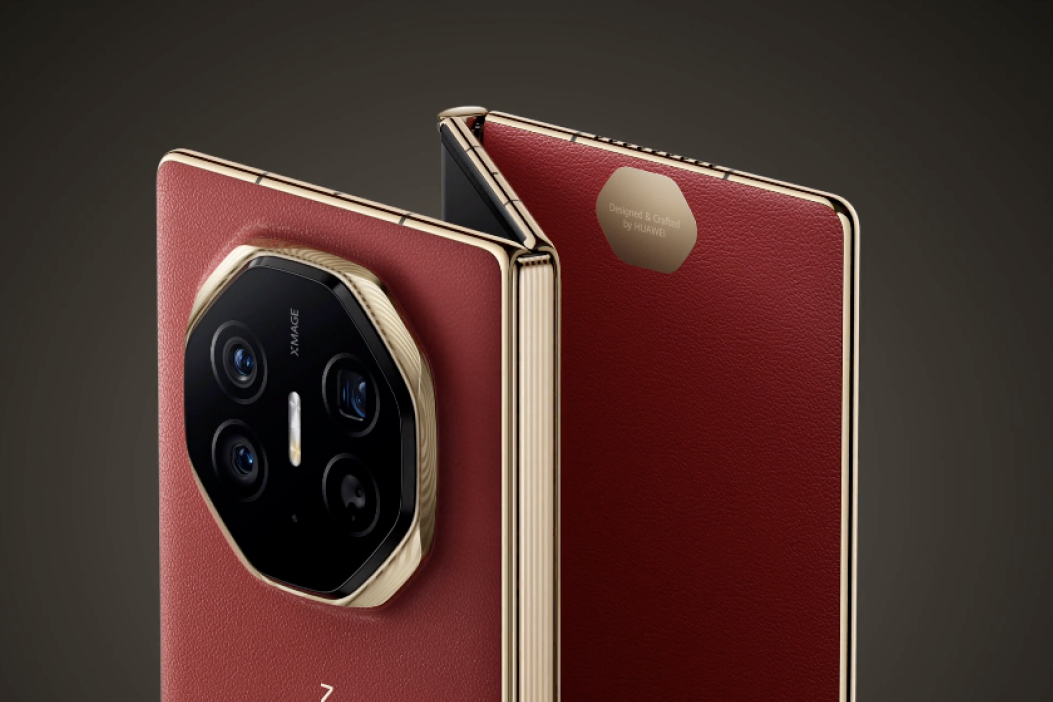
    The world’s first triple-screen foldable phone is set to receive an upgrade. The upcoming Huawei Mate XTs is likely to take over from the Huawei Mate XT that was released in China last year, as reported by Fixed Focus Digital (via Android Authority).

    Details about this new device are still scarce, but it is expected to come equipped with the HiSilicon Kirin 9020 chipset, already found in Huawei’s Mate X6 and Mate 70 series. Apart from this, few modifications are anticipated as the brand moves from the Mate XT to the Mate XTs. Generally, Huawei maintains an “s” model naming structure when launching updates that feature upgraded internal components like system on chips (SoCs), while preserving most of the existing features.

    With a distinctive design, the Mate XT can fold twice, allowing it to transform into a compact size when closed and a spacious tablet-like display when opened. This approach contrasts sharply with leading foldable phones like the Samsung Galaxy Z Fold 6 and Google Pixel 9 Pro Fold, which adopt a book-style folding mechanism.

    The Huawei Mate XT.
    Huawei

    The Mate XT features a 10.2-inch ultra-compact triple foldable display, a robust 5600mAh battery with support for 66-watt wired and 50W wireless charging, and a triple-lens rear camera system composed of 50MP, 12MP, and 12MP sensors. It runs on the HarmonyOS 4.2 operating system and is compatible with NFC and FM radio. The device also includes 16GB of RAM with options for 256GB, 512GB, or 1TB of internal storage and is powered by the Kirin 9010 chipset.

    Since the Mate XT made its debut in September of the previous year, its successor is likely just a few months away from being officially revealed.

    Considering purchasing a Huawei smartphone? Depending on your location, it may be a challenging endeavor. Nations such as the U.S., U.K., and Australia have imposed bans on Huawei devices due to security concerns.

    When might consumers in the West see a trifold smartphone? Rumors suggest that Samsung is currently in development on one that could launch later this year.

  • Valve’s Fremont May Replace The Steam Machine

    Valve’s Fremont May Replace The Steam Machine

    Back in 2015, when the original Steam Machine was unveiled, it was set to revolutionize the gaming landscape. The hybrid of a console and PC generated a considerable buzz, yet various issues hindered its success. Subpar performance drove gamers back to traditional PC setups, while its steep price tag led Valve to sell fewer than 500,000 units. Nevertheless, the Steam Machine cultivated a dedicated fanbase, many of whom have been eagerly anticipating a sequel. It seems that this much-anticipated follow-up may finally be on the horizon.

    A Reddit user known as u/coolbho3k discovered a mention of the Fremont project within the Steam Deck kernel. While the code doesn’t specify the exact nature of the Fremont device, it alludes to a platform identified as AMD Lilac. This platform has appeared on Geekbench, where it outperforms the Steam Deck by a notable margin. If Fremont turns out to be another handheld, it could leave the Steam Deck behind, leading many to speculate it might be a TV box or set-top unit, a theory supported by Tom’s Hardware.

    The Lilac reference is not new; it was first identified over two years ago, suggesting that Valve is not the only company interested in this chip.

    A close up of the Steam machine
    Steam

    Notably, there has been mention of HDMI-CEC, which is usually not associated with handheld devices. This specific type of CEC is frequently connected to Google hardware, particularly Chromebooks, due to its driver. This has prompted u/coolbho3k to speculate on the possibility of Google’s involvement in the development process.

    If Fremont indeed represents a new Steam Machine, it may introduce streaming capabilities akin to those found in the Nvidia Shield. Should Google and Valve collaborate to integrate ChromeOS into the platform, users could potentially enjoy both ChromeOS and SteamOS, as well as access to the Google Play Store.

    At this stage, all of this remains speculative. Until Valve releases an official announcement, we can only make informed predictions regarding the hardware. The inaugural Steam Deck was revealed at CES in 2014, following a similar timeline. With CES 2025 approaching quickly, it’s the perfect opportunity for Valve to unveil a successor. Additionally, a recent leak indicating that Valve is developing a follow-up to the Steam Controller supports the notion that exciting new developments may be underway.