الوسم: success

  • Mojtaba Khamenei: Iran’s Potential Next Supreme Leader

    Mojtaba Khamenei: Iran’s Potential Next Supreme Leader

    Mojtaba Khamenei, the second son of Iran’s Supreme Leader Ayatollah Ali Khamenei, visited Hezbollah’s office in Tehran on October 1, 2024. — Reuters

    Mojtaba Khamenei, 56, has become a leading contender to succeed his late father as Iran’s Supreme Leader after years of cultivating strong connections with the elite Revolutionary Guard and gaining influence within the clerical hierarchy.

    Having survived U.S.-Israeli airstrikes targeting Iran, Mojtaba is viewed by Iran’s ruling establishment as a potential successor to his father, who was martyred during an airstrike last Saturday, according to two Iranian sources.

    As a prominent mid-ranking cleric, Mojtaba has opposed reform-minded groups seeking to foster better ties with the West, especially as efforts intensify to limit Iran’s nuclear ambitions. He’s been known to favor more restrictive policies and has enjoyed broader freedoms compared to other clerics.

    His close alliance with the Islamic Revolutionary Guard Corps (IRGC) enhances his power across Iran’s political and security sectors. Officials familiar with the situation describe him as operating behind the scenes as a “gatekeeper” for his father.

    “He’s got a strong base of support within the IRGC, particularly among the younger radical factions,” explained Kasra Aarabi, head of IRGC research at United Against Nuclear Iran, a U.S.-based policy group. “If Mojtaba is alive, chances are high he could succeed his father,” he added, describing Mojtaba as already functioning as a “miniature supreme leader.”

    ### Decision on the Next Supreme Leader Expected Soon

    The Assembly of Experts, responsible for selecting Iran’s next leader, is nearing a decision, with an announcement imminent, Tehran-based Assembly member Ayatollah Ahmad Khatami told state TV on Wednesday. The candidates remain unnamed.

    The supreme leader holds the ultimate authority on national policies, including foreign affairs and nuclear issues. Western nations aim to prevent Iran from developing nuclear weapons, insisting its program is purely for civilian use.

    Should Mojtaba be chosen, he will face mounting pressure from U.S. sanctions that have severely impacted Iran’s economy. He would also encounter opposition from Iranians prepared to stage mass protests demanding more freedoms, despite the government’s violent crackdowns.

    Born in 1969 in Mashhad, Mojtaba grew up during his father’s leadership against the Shah’s regime and served as a young man in the Iran-Iraq War.

    Educated under conservative religious scholars in Qom’s seminaries—the heart of Iran’s theological education—he holds the clerical rank of Hojjatoleslam.

    Despite his influence, Mojtaba has never formally held a governmental position, though he is widely recognized as his father’s chief confidant. He has appeared at loyalty rallies but has spoken publicly only sparingly.

    His role has been a subject of controversy, with critics opposing dynastic politics in Iran—a nation that overthrew a U.S.-backed monarchy in 1979.

    ### U.S. Sanctions and Controversies

    In 2019, the U.S. Treasury Department imposed sanctions on Mojtaba, citing his role as a de facto representative of the supreme leader, despite lacking any official government position. These sanctions targeted him for what the U.S. perceives as undue influence and legitimacy.

    He faced particular criticism during protests in 2022, sparked by the death of a young woman in police custody after her arrest for allegedly violating strict Islamic dress codes.

    In 2024, Mojtaba’s publicly shared video in which he announced the suspension of his religious classes in Qom stirred speculation about possible reasons behind the decision.

    Mojtaba resembles his father significantly and wears the black turban typical of Sayyeds, indicating lineage tracing back to Prophet Muhammad.

    Despite this, critics argue he lacks the clerical credentials—ranked below Ayatollah—that many believe are necessary for the role of supreme leader. His rank of Hojjatoleslam is a step below Ayatollah, a position held by his father and Iran’s founder Ruhollah Khomeini.

    He remains a candidate primarily because former President Ebrahim Raisi died in a helicopter crash in 2024, removing a leading competitor.

    A 2007 U.S. diplomatic cable published by WikiLeaks recounts Iranian sources describing Mojtaba as a pathway to reaching Khamenei himself. He is widely believed to have played a key role in the rise of hardliner Mahmoud Ahmadinejad, elected president in 2005.

    Mojtaba supported Ahmadinejad’s disputed 2009 re-election, which triggered Egypt-style protests suppressed by security forces, including the Basij militia. Moderate cleric Mehdi Karroubi, who ran against Ahmadinejad, accused Mojtaba of supporting him—an allegation Khamenei denied.

    His wife, who was killed in Saturday’s airstrike, was the daughter of prominent hardliner Gholamali Haddad-Adel, a former parliament speaker.

  • How to Easily Win at Wrestling in Where Winds Meet by Completing and Solving

    How to Easily Win at Wrestling in Where Winds Meet by Completing and Solving

    In Where Winds Meet, there’s a lot to explore. You can follow the main story, sometimes touching on emotional moments, or you can try other activities like playing veterinarian in online mode, fishing, card games, battling in the arena, stealing from random citizens, or debating with people. The options are broad, but one activity worth trying is wrestling.

    Like many mini-games in the game, wrestling can boost your attributes. However, it also has more complicated mechanics, so it might take some time to understand how it works.

    What Is Wrestling?

    First, it’s important to note that the wrestling mini-game isn’t available in Qinghe. You’ll need to progress far enough in the main story to unlock Kaifeng, which is currently the only place where you can participate in wrestling.

    Your first real wrestling match can be found in Kaifeng City. There, you can practice anytime to learn or review the mechanics.

    Winning wrestling matches earns you rewards, mainly on your first win, including Jade Coins, Five Dynasty Coins (your standard spending money), Commerce Coins, Experience, Exploration Points, and points to improve your Constitution attribute.

    Mechanics of Wrestling

    Most mini-games in Where Winds Meet are straightforward and require practice, but wrestling is more about anticipation. It’s comparable to a more complex game of Rock-Paper-Scissors.

    Your primary goal is to deplete your opponent’s Fighting Spirit by using Techniques against them. Both you and your opponent choose actions before executing them, and neither knows what the other has chosen until the moves are played out.

    Here’s a closer look at the mechanics:

    Building Momentum

    Building Momentum is essential for using powerful moves. When you choose to Build Momentum, your turn is spent gaining one Momentum point. These points are only used for attack moves and can’t be removed by your opponent.

    While building Momentum, you’re vulnerable to attack — if your opponent decides to attack, they’ll land full damage regardless of your action. Still, you will successfully gain the Momentum point even if attacked.

    Blocking Attacks

    When attacked, you should block if possible. Since you don’t know when an attack is coming, you’ll have to guess.

    NPCs tend to attack once they’ve built at least one Momentum point, so blocking after they build is usually safe. If you block successfully, you’ll negate all damage and force your opponent to use up the Momentum they invested in the attack.

    There are two types of blocks:

    • Block: Defends against most attacks except Vajra Toss.
    • Vajra Block: Only blocks Vajra Toss. Other attacks bypass it.

    If your opponent has three Momentum points, they will likely use Vajra Toss, so using Vajra Block in those situations is smart.

    Performing Techniques

    To drain your opponent’s Fighting Spirit, you need to perform Techniques. An opponent only loses Fighting Spirit if they are directly hit, and matches are limited to 20 rounds, so stalling won’t work.

    There are four Techniques, each requiring different amounts of Momentum:

    • Thrust Attack: Light damage, requires no Momentum.
    • Stake Technique: Moderate damage, costs 1 Momentum.
    • Pushing Attack: High damage, requires 2 Momentum.
    • Vajra Toss: Ends the fight instantly by depleting all Fighting Spirit, needs 3 Momentum.

    Achieving three Momentum points to use Vajra Toss is the ultimate goal, as it ends the match immediately. Opponents will also try to prevent this move once you have enough Momentum, making the game a mind game.

    Action Priority

    Since both players pick actions simultaneously, planning isn’t possible in real-time. Instead, the game uses action priority to determine who wins each round.

    Generally, the strongest moves take priority. For example, if you use a Pushing Attack and your opponent uses a Stake Technique, your move wins, and your attack hits while theirs is nullified.

    When you choose to build Momentum, all attack moves take priority, though you still gain the point. Blocking prevents damage unless your opponent uses Vajra Toss, which overrides normal blocks if you use Vajra Block; otherwise, your block will succeed.

    How to Win at Wrestling

    Winning is generally consistent because NPC behaviors are predictable. NPCs tend to react to your last move; for instance, if you build Momentum, they’ll often block, anticipating an attack.

    When they build Momentum, they usually attack right afterward. In response, blocking is often the best move. After blocking, you can counterattack with a Technique that requires Momentum, gaining the upper hand.

    If NPCs reach three Momentum points, they will almost always try Vajra Toss. To counter that, performing a Pushing Attack when they are ready can catch them off guard.

    Playing online with real players introduces unpredictability. Human opponents react differently, so you’ll need to adapt your tactics and use mind games to succeed.

  • Unique Routes to Nobel Honors

    Unique Routes to Nobel Honors

    Some Nobel laureates have always been straight-A students from the start. However, others—based on interviews—share stories of skipping classes, facing expulsions, and questioning their futures.

    Albert Einstein, arguably the most renowned Nobel winner, was once a below-average student at Zurich Polytechnic, now ETH Zurich. In 1900, he ignored classes, was solely interested in physics, and finished near the bottom of his class. After graduation, he wasn’t offered a research assistant role, according to ETH Zurich’s website. Despite early setbacks, he later earned the Nobel Prize in Physics in 1921.

    Frances Arnold, who received the 2018 Nobel Prize in Chemistry, also had a turbulent educational journey in the United States during the 1960s and 1970s. She recalled, “I was disruptive, bored, and beyond what most students were doing. Teachers often gave me small projects like decorating the classroom.” At age 10, she started taking high school courses such as geometry, which she initially enjoyed. But by her teenage years, she lost interest, stopped attending school, and was expelled. “I wasn’t really interested in what they taught, or I learned on my own from textbooks. I managed to pass despite missing many classes,” she said. Now at 69, she admits her path isn’t a model to follow but believes schools should be more flexible, especially for students who need extra support.

    Overcoming challenges

    David Card, awarded the Nobel in Economics in 2021, also had an unconventional educational background. “Most people I’ve met in an economics PhD program have backgrounds unlike mine—growing up in rural schools,” he explained. Born on a Canadian farm in the 1950s, he attended a small, one-room schoolhouse where one teacher managed about 30 students at various grade levels. He described the teaching approach: “The teacher would spend some time with each grade, so I paid attention to subjects beyond my own grade, which helped me learn quickly.” He acknowledged that this system worked well for accelerating students but lacked the personalized support some learners needed.

    According to the Nobel Foundation, other laureates faced significant academic hurdles before winning the prize. Elinor Ostrom, the first woman to win the Nobel in Economics, was rejected when applying for a PhD. Carol Greider, the 2009 Nobel in Medicine recipient, struggled with dyslexia as a child. Tomas Lindahl, who took home the 2015 Nobel in Chemistry, failed high school chemistry.

    Humble beginnings

    Both Arnold and Card began working at young ages, viewing it as pivotal life experience. During her teens, Arnold worked as a waitress, receptionist, and taxi driver. “Those jobs helped me appreciate what a college education can do for your career,” she said. “And they taught me how to manage my time.” Similarly, Card balanced school with farm chores early on. “Back then, homework wasn’t heavy, leaving plenty of free time,” he recalled. “I helped my father on the farm, learned to drive a tractor by age 11, and helped milk cows at dawn before heading to school.”

    Both scientists experimented with different subjects before discovering their true passions. Arnold studied mechanical engineering and aeronautics before shifting to chemistry. “I wasn’t sure what I wanted to do, so I chose mechanical engineering because it had the fewest requirements,” she admitted. Card initially studied physics but later switched to economics. Despite their unconventional routes, both ultimately achieved remarkable success.

  • Kerem Bürsin Joins ABtalks: Success, Love, and Life Balance

    Kerem Bürsin Joins ABtalks: Success, Love, and Life Balance

    Digital Phablet – Kerem Bürsin Shares Insights on Success and Life on ABtalks.

    Kerem Bürsin, one of Turkey’s most admired actors, is the latest guest on ABtalks hosted by Anas Bukhash. This episode, which marks Chapter 230 of the series, will premiere on YouTube Tuesday at 9 PM GST.

    After engaging conversations with stars like Hande Erçel and Özcan Deniz, host Anas Bukhash mentioned that fans clamored for Bürsin’s appearance more than any other guest. As a result, this episode has become one of the most highly anticipated so far.

    In the preview clip posted by ABtalks on Instagram, Bürsin humorously asked, “Where’s the long chair so I can just lie back and talk about my traumas?” His relaxed and witty tone set a vibe of openness and sincerity for their conversation. When Bukhash inquired, “What does success mean to you?” Bürsin responded with clarity: “Being happy on your own terms.”


    Kerem Bürsin was born in Istanbul in 1987 and has enjoyed a remarkable career in Turkish cinema and television. He spent much of his childhood in the United States. Before returning to Turkey, he studied acting at Emerson College in Boston. He rose to fame with the hit series Güneşi Beklerken (“Waiting for the Sun”) and gained global recognition with Sen Çal Kapımı (“You Knock on My Door”), where he maintained a strong bond with Hande Erçel.

    Çarpıntı Instagram profile

    Aside from his acting career, Bürsin is known for his honesty and discipline. He frequently discusses the challenges of maintaining strong relationships while in the public eye and shares insights on balancing personal happiness with professional success. In this episode of ABtalks, he will delve into how he manages love, career, and fame, alongside lessons learned along the way.

    Fans are eagerly anticipating the full interview, which promises to reveal a more personal side of the actor beyond his scripted roles and public persona.

  • Devrim Özkan Undergoes Emergency Surgery After “Çift Kişilik Oda” Success

    Devrim Özkan Undergoes Emergency Surgery After “Çift Kişilik Oda” Success

    ALBAWABA – Devrim Özkan Shares Health Scare While Filming Çift Kişilik Oda

    In a surprising turn of events during the filming of "Çift Kişilik Oda" (Dream Hotel), star Devrim Özkan revealed she faced a serious health challenge that required urgent surgery. This announcement came amidst the show’s rising popularity and significant audience engagement.

    Despite the distressing circumstances, Özkan reassured her fans through social media, detailing her medical situation and expressing heartfelt gratitude for the outpouring of support and kindness.

    Her health issues began when intense renal pain struck while she was on set. A visit to the hospital confirmed the diagnosis of kidney stones, which made surgery necessary.

    "Thank you for all your calls and messages,” Özkan shared online. "Going through kidney surgery has been the toughest medical ordeal I’ve ever faced. Please take good care of your health. I am on the mend slowly but surely. I apologize for my delayed responses and appreciate your love and concern."

    Currently, she is recovering at home, surrounded by well-wishes from her followers, who have flooded social media with messages wishing her a swift recovery.

    Despite this setback, there are expectations that Devrim will return to her role in "Çift Kişilik Oda," which has gained significant traction since its launch, amassing over four million views on YouTube shortly after its debut. The series is available on the Shahid platform and the Turkish NOW channel, under the titles "The Double Room" and "A Room for Two."

    In "Room for Two," Özkan plays Nilufer, an ambitious young woman whose cherished memories of the Lutetia Hotel represent the love of her deceased parents. Growing up, she dreamt of working there and continuing their legacy. However, Nilufer’s journey is fraught with challenges, especially with Sevil, the hotel’s current domineering heir, complicating her aspirations. Driven by determination, Nilufer enters the hospitality industry to carve out her path amidst steadfast rivalries and obstacles.

  • Andor Creator Enjoys Full Creative Freedom After Season 1 Success

    Andor Creator Enjoys Full Creative Freedom After Season 1 Success

    Upon its debut in late 2022, Andor‘s inaugural season quickly became one of the most praised entries in the Star Wars franchise during Lucasfilm’s time under Disney. The series garnered eight Emmy nominations, including one for Outstanding Drama Series. According to Tony Gilroy, the creator of Andor, the overwhelmingly positive feedback has played a crucial role in persuading Disney and Lucasfilm to align with his creative direction for the upcoming second and final season.

    In an interview with Empire, Gilroy noted, “The critical acclaim for the show was incredibly beneficial, if not vital, in helping Disney accept the cost of what this entails.” It’s reported that the first season of Andor had a hefty budget of $250 million, and based on Gilroy’s remarks, it seems the second season will either match or exceed that expenditure. Fans of the series generally feel that the budget for season one was well-spent, as the quality was evident in every episode.

    Lucasfilm has a reputation for being heavily involved and somewhat risk-averse when it comes to its Star Wars productions. However, the success of Andor season one appears to have allowed it some leeway in this instance. Gilroy shared with Empire that he “never received any notes on this show.” He remarked, “In terms of creative feedback, no one has come to me and said, ‘No, they shouldn’t say that.’”

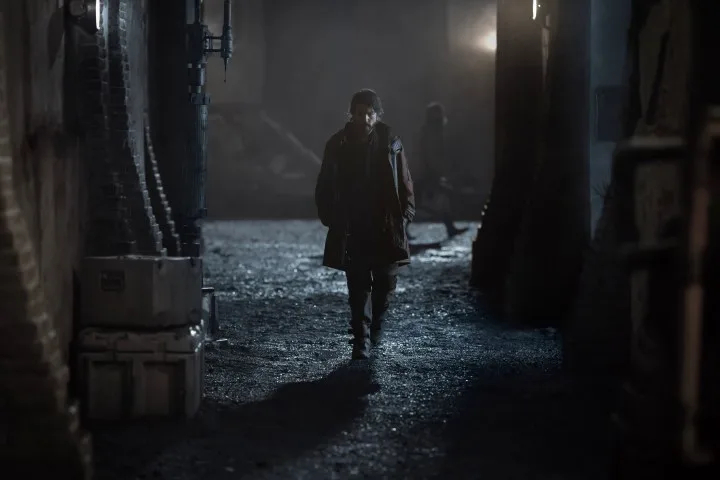
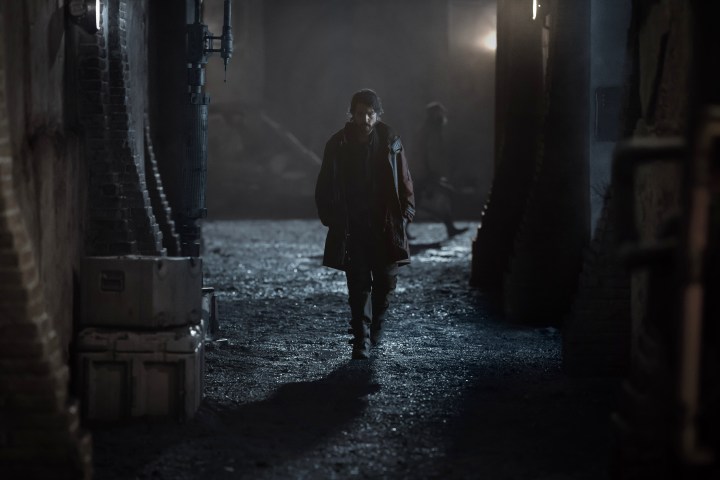
    Cassian Andor walks through an alleyway in Andor season 1.
    Lucasfilm

    Given the accolades for Andor’s storytelling and dialogue, it seems prudent for Lucasfilm to grant Gilroy this level of creative freedom. The studio, however, has a history of tightly controlling its Star Wars projects, which includes significantly reworking 2016’s Rogue One: A Star Wars Story and changing directors mid-production for 2018’s Solo. Fortunately, fans can rest assured that when Andor returns next year, it will do so with the creative independence that its creator truly deserves.

    Andor season 2 is set to premiere on April 22, 2025, exclusively on Disney+.