Tag: Solar

  • Innovative Paste-and-Laser Technique Boosts Solar Cell Efficiency to 26.31%

    Innovative Paste-and-Laser Technique Boosts Solar Cell Efficiency to 26.31%

    Scientists have developed a novel manufacturing process that enables the production of high-efficiency solar panels with increased power output without significantly raising manufacturing complexity or costs.

    This innovative approach combines a specially formulated silver paste with laser treatment to enhance a type of solar cell called a tunnel oxide passivated contact (TOPCon) cell. The improved device achieved a certified power conversion efficiency of 26.31%, ranking it among the top-performing TOPCon solar cells to date.

    The project was led by Professor Ye Jichun’s team at the Ningbo Institute of Materials Technology and Engineering, Chinese Academy of Sciences. Collaborating with researchers and industry partners from Soochow University, Zhejiang Gonda Electronic Technology, and JA Solar Technology, the team published their findings in the journal Matter.

    Crystalline silicon solar cells are currently the leading technology in the solar industry, with TOPCon technology gaining popularity because it is compatible with existing manufacturing equipment and processes used for traditional silicon cells. However, creating metal electrical contacts on TOPCon cells presents a significant challenge.

    Typically, manufacturers print a silver-aluminum paste onto the cell and then heat it to ensure a good electrical connection for current flow. This process, however, can harm the cell’s sensitive surface layers, which are crucial for minimizing energy loss. Additionally, the heat causes the metal lines to widen, casting more shadow and reducing the sunlight reaching the active area.

    The researchers addressed these issues by developing a new approach. They first created an aluminum-free silver paste that maintains its shape after printing, allowing for taller and narrower metal lines. These gridlines have an aspect ratio of 55%, balancing electrical conductivity with minimal shading to maximize sunlight absorption.

    Next, they integrated the paste with a technique called laser-enhanced contact optimization (LECO). This involves scanning a laser along the metal gridlines while applying an electrical voltage, producing highly localized heating. This process establishes solid electrical contacts at specific points while minimizing heat exposure elsewhere.

    By concentrating heat only where needed, the method reduces damage to the solar cell’s protective surface layers compared to traditional high-temperature techniques. The combined process yielded impressive results: the completed TOPCon cells achieved a certified efficiency of 26.31% and a high short-circuit current density of 41.98 mA/cm², the highest recorded for large-area TOPCon cells.

    This advancement holds significant promise for the solar industry. It offers a way to obtain reliable electrical contacts without compromising the cell’s protective features. Furthermore, the method is designed to be scalable, providing a practical pathway for manufacturing more efficient commercial solar panels and increasing electricity production from the same amount of sunlight.

  • Solar Dilemmas Unveiled

    Solar Dilemmas Unveiled

    PUBLISHED
    May 03, 2026

    KARACHI:

    As the global energy crisis worsens, electricity bills skyrocket, and a widespread yet divided consensus against fossil fuels emerges, there’s an increasing push in the developed nations to transition to cleaner energy sources. Meanwhile, in the developing world, many are reaching similar conclusions—not purely out of environmental concern, but out of economic necessity. Pakistan is no exception. The idea of switching to solar power is on many minds. Some can afford it now, others plan to wait until they save enough or until policy conditions improve.

    Asad from Karachi, the southern port city blessed with abundant sunshine, is among those contemplating solar energy. Over recent months, especially as the energy crisis continues pounding consumers, he has repeatedly jotted down numbers on a scrap of paper. The calculations are straightforward, but acting on them is complicated—especially for someone watching every rupee, with little room for error. Rising tariffs and frequent load-shedding have made the switch seem logical—payback periods seem reasonable, and long-term savings appealing. Yet, when he decided to proceed, the realities around him had shifted, making the move less feasible.

    The net metering policy he had based his calculations on had transitioned to a net billing system. The previously generous buyback rate for surplus electricity was slashed, sometimes to less than a third of its former value. The financial logic that once made solar investment attractive no longer held. Instead of placing an order, Asad hesitated, redoing his calculations and reconsidering his options.

    His experience reflects a rising uncertainty among Pakistani consumers who, until recently, drove solar adoption. Middle-income households like his can still afford the upfront expense, but policy shifts have begun to diminish the incentives that spurred earlier adoption. Beyond this group, a larger segment faces the same challenges—higher electricity costs, rising fuel prices, and unreliable supply—yet remains excluded from solar benefits.

    Over the past few years, solar capacity in Pakistan has increased markedly. According to The Guardian, installations expanded rapidly between 2021 and 2025, sometimes accounting for a notable share of the national energy mix. However, this shift has been driven more by consumer demand than government policy. Faced with rising costs and unreliable power, households and businesses have sought ways to regain control over their energy use.

    Just as solar adoption was picking up momentum, new policies introduced hurdles—import restrictions, extra taxes, and changes to net metering rules—altered the economics. For some, the payback period has lengthened, making the investment less attractive. For others, entry costs have increased significantly.

    Interestingly, other countries have taken different routes: many reduced or eliminated taxes once solar gained popularity to further encourage adoption. Pakistan, by contrast, has seen costs rise at a time of increased demand.

    Simultaneously, relief remains elusive. Fuel prices stay unpredictable, electricity bills continue rising, and most households feel mounting pressure. Although global supply disruptions aren’t directly tied to Pakistan, their ripple effects are felt locally. The country heavily depends on imported fuels, so international shifts influence costs here too.

    While more people turn to solar to cope with these pressures, the energy system itself has not kept pace, slowing progress and causing uneven growth.

    This raises key questions: If solar is expanding, why does Pakistan remain so reliant on imported energy? What barriers prevent solar from advancing further? And who truly benefits from this transition—are some left behind?

    Dependence on Imports

    Despite the talk of a solar revolution, Pakistan’s reliance on imported energy persists and continues to expose economic vulnerability.

    The country has made some strides in integrating renewables, and solar has become more visible recently. Still, when viewed in the broader energy context, the overall shift remains limited.

    Expert economist Dr. Kaiser Bengali, who has extensively studied energy and development issues, notes that the core problem remains unchanged: “Over the past 25 to 30 years, we’ve increased our dependence on imports. Though renewable energy has grown, its share remains minimal—almost negligible in the overall energy landscape. Solar mainly benefits urban, upper-middle-class households.”

    He emphasizes that not just the volume of solar capacity, but who benefits from it, is critical. “Affordability remains a major barrier. Many cannot even meet basic energy needs, let alone afford solar systems or backup solutions.”

    This imbalance sustains the existing structure: even as some consumers turn to solar, Pakistan’s energy system continues to rely heavily on imported fuels. External shocks—global price swings or regional instability—still hit the country swiftly.

    When asked whether Pakistan can cut its fuel import costs in the next five to ten years, Bengali highlights factors beyond internal control. “Much depends on global geopolitics, like conflicts in the Middle East,” he states. “But our vulnerability stems from our own dependency. If we used fewer imported fuels, external shocks would impact us less.”

    Similarly, SDPI energy researcher Dr. Khalid Waleed sees the current transition as incomplete. “Pakistan’s shift to solar is real but not fully systemic,” he says. “What we’re witnessing is mainly a market response to high tariffs, unreliable supply, and fuel price volatility—more of a hedge than a deliberate policy move.”

    He warns that this approach risks creating a fragmented system—shifting reliance from fuels to imported panels, inverters, and storage, without fostering domestic industrial capacity.

    Economic constraints further complicate matters. “With over Rs2 trillion in circular debt in the power sector and limited fiscal space, policymaking tends to prioritize short-term fixes over long-term restructuring,” Waleed adds.

    Overall, Pakistan’s dependence on imported fuels remains a key vulnerability. “Reducing this reliance would lessen external impacts,” Bengali reiterates, underscoring that the current system still leans heavily on imports, limiting the transformative potential of solar power.

    This complex reality means solar is expanding, but the underlying system remains largely unchanged. The question then becomes: if solar continues to grow, why does the wider energy infrastructure look the same? Why does fossil fuel continue to dominate, and what’s really changing beneath the surface?

    System Resistance to Change

    If solar capacity is increasing so rapidly, one would expect a corresponding shift in the overall energy system. But that hasn’t happened.

    Most visible are rooftop and small commercial solar projects in urban centers. Behind the scenes, however, the core structure remains intact.

    Professor Kaleem Ullah, from the US-Pakistan Center for Advanced Studies in Energy at UET Lahore, confirms that Pakistan’s centralised, fossil-intensive power grid has not fundamentally changed. “As of March 2025, thermal power still accounts for roughly 56% of capacity and remains the main source of electricity,” he notes.

    Persistent systemic issues include high transmission and distribution losses, rising circular debt—around Rs2.39 trillion—and underutilized capacity—only about a third of installed power being effectively used. “Solar growth has occurred, but the core architecture remains unaltered,” he says.

    This disconnect explains why solar’s visible expansion doesn’t translate into systemic transformation. Although solar can reduce reliance on fossil fuels in theory, in practice, the entire energy economy remains intertwined with conventional fuels—oil, gas, coal—not just within the power sector but also in transportation, industry, and household uses.

    “The toughest sectors to transition are transportation, heavy industry, and residential gas,” Kaleem states. “While solar can replace daytime electricity quickly, it cannot easily substitute diesel fuel for transport or natural gas for heating.”

    Thus, even as solar adoption rises, the system’s foundation—built on different assumptions—limits how far the transition can go.

    This prompts a vital question: if solar is burgeoning but broader system changes are lagging, what exactly is causing the slowdown? Is it costs, policies, or fundamental systemic constraints?

    Growth but Limited Scale

    If solar is expanding and providing benefits to households and businesses, then why isn’t this growth translating into a broader systemic shift?

    The answer involves multiple factors—policy contradictions, pricing issues, and the inherent design of the energy system.

    SDPI’s Waleed suggests that the main obstacle isn’t the absence of policies but conflicting objectives within existing ones. “Regulatory barriers are rooted more in policy contradictions,” he explains. “On one side, there’s a push for renewables, while on the other, efforts to protect utilities’ revenues and uphold long-term power purchase agreements.”

    This tension results in inconsistent policy signals. For example, each additional rooftop solar installation reduces demand on the grid, which raises per-unit costs due to fixed capacity payments—a feedback loop that discourages full-scale adoption.

    Consequently, the transition is uneven. Middle- and upper-income households tend to adopt solar more readily, whereas lower-income groups remain dependent on increasingly expensive grid power.

    Market analyst Waqas Moosa notes that recent demand surges—especially after import restrictions disrupted supply chains in 2022—resulted in a backlog of demand that is now stabilizing. “Demand is still there,” he says, “but it is being shaped by policy and cost constraints.”

    Component costs, for instance, remain high—an 18% import tax inflates the price of solar parts, pushing a system that should cost around Rs1 million closer to Rs1.2 million, a substantial hurdle for many households.

    Efforts to streamline processes—such as removing licensing fees—have marginal impact. Moosa points out that delays are often caused by central approvals, with application processing still bogged down by bureaucratic inefficiencies dating back to 2015, when regulation was first introduced and then shifted to DISCOs.

    Financing is another major barrier. “Solar is a high-cost investment requiring access to credit,” he says. “Currently, support for financing, especially for middle-income households and small businesses, remains limited.”

    Altogether, the demand for solar exists, technology is available, and the economy’s logic still supports it. But systemic issues—cost, policy inconsistency, and infrastructure—continue to hold back broader, faster deployment.

    The System Isn’t Prepared

    While policy and market factors restrict solar growth, a deeper problem lies in the structure of Pakistan’s energy system itself. It hasn’t been designed to fully integrate large-scale solar.

    A key issue is Pakistan’s reliance on long-term contracts with existing fossil fuel plants. Kaleem Ullah explains, “Many legacy Independent Power Producer (IPP) deals are based on dollar indexation, guaranteed returns, and capacity payments, regardless of whether the plants operate or not.”

    These contracts mean that even if solar decreases daytime costs, the fixed payments for old plants remain, preserving the high cost burden. “Capacity payments have ballooned into trillions of rupees—consumers end up paying for capacity that isn’t always used,” Kaleem notes. “This structure adds renewable energy on top of a system that’s already expensive, without reducing the underlying costs.”

    This creates resistance within the system—rather than welcoming solar, existing incentives hinder its growth.

    Technical infrastructure is another bottleneck. “The biggest challenge isn’t sunlight availability,” Kaleem asserts. “It’s the grid’s capacity to absorb, transmit, and balance solar power effectively.”

    Transmission constraints, weak distribution networks, and slow upgrades limit how much solar the grid can handle. While rooftop and small-scale projects grow quickly, scaling up at the national level remains difficult—mainly because the grid has not kept pace.

    These issues aren’t solely technical; financial limitations are equally critical. Waleed emphasizes that the same fiscal constraints that affect policy also restrict investments in system upgrades like transmission and grid flexibility.

    “Households face high initial costs, and at the government level, limited fiscal space hampers the necessary infrastructure development,” he explains. “This results in a situation where consumer-led growth is happening without sufficient institutional or infrastructural support to sustain it on a large scale.”

    The core challenge isn’t just adding solar capacity; it’s whether the system can accommodate that growth in a way that meaningfully transforms energy production and delivery. If the system remains misaligned, the question arises: who benefits, and who’s left out?

    Who Gains from Solar?

    As solar continues to grow, another crucial issue surfaces—who actually benefits? Initially, the most visible beneficiaries are wealthier households and companies that can afford the upfront expenses.

    However, Moosa warns that focusing solely on early adopters can be misleading. “Typically, wealthier groups are the first to adopt new technology,” he notes. “The important question is how benefits will spread over time.”

    He emphasizes that impact matters more than just distribution. “For some, solar means savings. For others—particularly those with unreliable or no access to electricity—it can be transformative—allowing night-time study, proper food storage, and improved daily life.”

    Nevertheless, inequality persists. Waleed points out that current trends risk deepening existing divides. “Solar adoption is disproportionately skewed toward middle and upper-income households, leaving poorer consumers tied to an increasingly costly grid,” he says.

    This dynamic shifts how costs are shared across the system. “As more people switch to solar, those remaining on the grid shoulder a larger portion of fixed costs,” he explains—raising concerns about equity.

    Additionally, Moosa warns of a “utility spiral”: as wealthier consumers leave the grid for solar, the remaining users face higher charges, potentially pushing the most vulnerable further into energy poverty.

    This underscores that the transition isn’t just about technology—it’s also about system design and fairness. While some gain savings and flexibility, others are excluded or forced to bear increasing costs.

    Ultimately, for solar to be truly inclusive, systemic reforms are necessary. Without them, the shift risks replicating existing inequalities, benefiting a limited segment while leaving many behind.

    Addressing the System Before Scaling Up Solar

    The core insight is clear: solar isn’t lacking momentum. Demand exists, technology is available, and economic reasons support adoption. What’s missing is systemic alignment.

    Waleed asserts that future growth—aiming for a 50-60% renewable share—requires a shift in planning philosophy. “The focus should be on increasing system flexibility—deploying large-scale batteries, modernizing transmission, and digitalizing grid operations,” he suggests. “Confronting the legacy system is crucial—early retirement or repurposing inefficient plants can free capacity and cut costs.”

    Progress is complex, and hurdles remain. “Pakistan’s renewable targets are aspirational under current conditions,” Kaleem warns. “Solar will grow, especially with storage, as consumers seek more reliable options.”

    The fundamental barriers—weak grids, outdated thermal contracts, financial difficulties, and policy inconsistency—limit the scale of potential transformation. “We can make solar larger,” Kaleem agrees, “but to do so as a dominant source, we must first fix our institutions and infrastructure.”

    In the meantime, immediate measures can help make benefits more accessible—for example, passing on cheaper daytime electricity costs to all consumers. Waqas Moosa emphasizes that the advantage of lower daytime rates should be reflected in tariffs, ensuring even non-solar households benefit.

    The overarching reality is that solar will continue to expand. The question is whether the existing energy system can adapt swiftly enough—not just to accommodate growth, but to enable a meaningful transformation that benefits the entire economy.
  • Pakistani Roads Shine Bright, Robots Get Flirty, Keyboards Slim Down

    Pakistani Roads Shine Bright, Robots Get Flirty, Keyboards Slim Down

    Pakistan’s V-SenseDrive Tackles Road Safety Using AI

    Created with Gemini

    Road accidents are a constant concern amidst Pakistan’s hectic traffic scene, but a new local initiative aims to make a difference. Developers have launched V-SenseDrive, the nation’s first driver behavior dataset designed with privacy in mind, and built entirely from data collected on Pakistani roads.

    Instead of invasive facial recordings, the dataset employs smartphone sensors such as accelerometers, gyroscopes, and GPS, combined with video footage of the road to categorize driving styles into normal, aggressive, and risky behaviors. It has been tested across various environments, from city streets to highways, reflecting the chaotic nature of Pakistani traffic.

    By organizing the data into raw, processed, and semantic layers, the project provides tools for developers and policymakers to train advanced driver-assistance systems (ADAS), enhance fleet safety, and develop insurance models that are specifically tailored to Pakistan’s driving habits.

    Advancing Toward a Skynet Future

    Source: REUTERSSource: REUTERS

    We’ve previously discussed augmented reality glasses, with Meta and Amazon rushing to develop their own versions, but Meta is taking it even further.

    In an interview with Meta’s CTO, Andrew Bosworth, journalist Alex Heath reported that Meta is delving deeper into robotics. This isn’t driven by competition but aims to develop software that other companies can license.

    Bosworth acknowledges that software remains the primary challenge in advancing robotics technology, and he hopes that Meta’s robotics team and their ‘Superintelligence Labs’ will find viable solutions.

    Initially, their focus is on enabling robots to animate a hand; progress will then extend to more complex movements. For now, humans can breathe a sigh of relief from the threat of total replacement—or even enslavement.

    Logitech Unveils a Solar-Powered Keyboard That Doesn’t Need Sunlight

    Created using GeminiCreated with Gemini

    After more than ten years of letting solar keyboards gather dust, Logitech has returned with the Signature Slim Solar Plus K980—a keyboard powered entirely by light, eliminating the need for USB cables or disposable batteries.

    Its solar panel absorbs sunlight or artificial office lighting (200 lux or brighter) to recharge a battery Logitech claims can last up to a decade.

    Once charged, the keyboard can operate for up to four months without any light. It features a full-size layout with all standard amenities, including media controls, customizable shortcuts, and even a mic mute button. The standout feature is the new AI Launch key.

    Out of the box, this button activates Copilot on Windows or Gemini on ChromeOS. Users can also reprogram it to launch ChatGPT, Perplexity, or any other AI tool to enhance productivity.

    Additional perks include Bluetooth pairing with up to three devices (or via Logitech’s Bolt dongle, sold separately), plus a sleek design available in graphite and a Mac-compatible off-white. The keyboard combines eco-friendly principles with cutting-edge AI integration—hopefully living up to these promises.

  • How to Completing the Solar Panel Puzzle in Flarewell – Borderlands 4

    How to Completing the Solar Panel Puzzle in Flarewell – Borderlands 4

    Claptrap—your loyal but bossy robot guide and occasional annoyance—is back in Borderlands 4. After everything he’s been through in previous games, he has numerous memories—both good and bad—which are mostly stored as physical keepsakes.

    Claptrap tried to throw a little party, but The Order crashed it and stole his precious memories. As his trusty second-in-command in the Crimson Resistance, it’s your job to retrieve them from their mechanical hands. Help him out — or just do it for the rewards.


    How to Find Claptrap’s Portrait

    If you travel south from the Outlander town called The Launchpad, you’ll find Claptrap near a small fishing shack by the lake. Talking to him will start his side quest, No Place Like Home.

    Next, head to the large Order base on the east called The Flarewell. Fight your way through the road section of the building on the right side. Once all regular enemies are defeated, a special enemy named Big Orange Hothead will appear nearby. He uses a long-range flamethrower to attack and deal incendiary damage but isn’t too tough to defeat. When he’s down, he will drop a keycard you need.


    How to Get to Claptrap’s Portrait

    Bring the keycard to the console near the edge of the building. Jump through the hole in the wall nearby and interact with the console next to a barriered container. Open the container, drop through the floor, crawl through the tunnel, and drop into the building below. Climb the ladders, and you’ll find a room filled with Moxxi. The stolen portrait is on a table covered with candles.


    How to Find VR-0N1CA’s Processor

    After retrieving Claptrap’s portrait, he will ask you to find VR-0N1CA’s processor. Outside again, you’ll need to fight off some Order enemies when the exit door opens.

    Go up the stairs at the back of The Flarewell and grapple onto the building in the center to trigger a call from Claptrap. This will summon waves of Order enemies, including Armatures and Witnesses.

    After two waves, a Warden and a Bulkhead will spawn and are often accompanied by a high chance of a Badass enemy and an elementally-modified Armature. Once they’re defeated, approach the window in the room for another call from Claptrap.

    Use the console behind you to activate the laser and solar panels below. Use your grapple to turn the solar panels to the right positions:

    • Turn the panel closest to the staircase six times to redirect the laser away from the building.
    • Turn the adjacent panel six times to aim the laser into the room at the top.

    Head back upstairs, defeat the Badass that appears, then inside, grab VR-0N1CA’s processor from the crate near the entrance.


    How to Reach the Crimson Resistance Asset

    Claptrap will give you a new task to find his VR-0N1CA’s processor. Afterward, the back door of the room will open, revealing more Order enemies—most of them Armatures and Witnesses. Eliminate them, then climb the corrugated wall to the next level. Use your grapple again to adjust the solar panel twice, creating a platform to jump across.

    Tip: Watch out for Witnesses on the upper floor; many are Spiteful Witnesses that can ambush you or knock you back down, forcing you to run all the way back down.

    Use the solar panel to leap to the other side of the tower, then climb the next two corrugated walls. Adjust the solar panel twice more so you can jump to the other platform. Clear the Witnesses once again before proceeding.


    How to Get the Processor & the Crimson Resistance Asset

    Climb the longest wall to find a small alcove at the top with a red outhouse. Open it and take Rustknuckle’s mask from his corpse. Return to Claptrap at the lakeshore shack, talk to him, and pick up the nearby explosives. Attach the explosives and the keepsakes he asked for to the small raft by the shore.

    Claptrap will push the raft into the water; shoot it to detonate the explosives and finish the quest. This rewards you with XP, cash, some Eridium, a random Uncommon or Epic pistol, and the Crimson Takeover style for your Vault Hunter and Echo-4.

  • New Dwarf Planet Discerned at Solar System’s Edge

    New Dwarf Planet Discerned at Solar System’s Edge

    Sure! Here’s a rewritten and unique version of the content in American English:


    A Newly Discovered Distant Object in Our Solar System

    Scientists have observed a celestial body measuring around 435 miles (700 kilometers) in width, located in the icy outskirts of our solar system. This object, believed to have the potential to be classified as a dwarf planet, follows an elongated orbital path around the sun.

    Researchers have dubbed this entity one of the most distant known objects within our solar system. Its discovery suggests that the vast area beyond the furthest planet, Neptune, and the Kuiper Belt, may not be as empty as previously thought. The Kuiper Belt is home to a variety of icy celestial bodies.

    Designated 2017 OF201, this object is classified as a trans-Neptunian object, which refers to bodies that travel around the sun at distances greater than Neptune. Remarkably, it takes approximately 25,000 years for 2017 OF201 to complete a single orbit around the sun, in contrast to Earth’s 365-day orbit.

    This discovery was made possible through telescopic observations in Chile and Hawaii over a span of seven years.

    Astrophysicist Sihao Cheng, from the Institute for Advanced Study in Princeton, New Jersey, who spearheaded this study alongside Princeton graduate students Jiaxuan Li and Eritas Yang, stated, "It may be large enough to be classified as a dwarf planet. Its extensive and eccentric orbit indicates it has undergone an intriguing migration in the past."

    The estimated size of 2017 OF201 is slightly smaller than Ceres, the smallest recognized dwarf planet in our solar system, which has a diameter of about 590 miles (950 kilometers). In comparison, Pluto, the largest dwarf planet, measures roughly 1,477 miles (2,377 kilometers) in diameter.

    The mass of 2017 OF201 is believed to be around 20,000 times less than that of Earth and 50 times less than Pluto’s.

    "We are still unsure about its shape. Its distance makes it challenging to resolve with existing telescopes," Cheng explained. "Its composition remains a mystery, but it is likely similar to other icy bodies."

    The Minor Planet Center, affiliated with the International Astronomical Union, announced the discovery, with further details provided in a paper submitted to the open-access research platform arXiv, which is pending peer review.

    The distance between Earth and the sun is known as an astronomical unit (AU). Currently, 2017 OF201 lies at a remarkable distance of 90.5 AUs from the sun, which is 90.5 times farther than Earth.

    At its furthest point in the orbit, 2017 OF201 can be over 1,600 AUs away from the sun, while its closest approach is about 45 AUs. This positioning sometimes brings it nearer to the sun than Pluto, which travels in an elliptical pattern, varying its distance from 30 to 49 AUs.

    Researchers suspect that the unusual orbit of 2017 OF201 may have been influenced by a historical close encounter with a giant planet’s gravitational field.

    Cheng articulated the challenge of studying distant regions of the solar system: "We know very little about the solar system’s outskirts because direct observations are difficult beyond approximately 150 AUs. The presence of this single object implies there might be another hundred similar entities that remain undetectable due to their extreme distance."

    The five dwarf planets recognized by the International Astronomical Union, in order of distance from the sun, are Ceres, Pluto, Haumea, Makemake, and Eris, all of which orbit beyond Neptune.

    The organization distinguishes between planets and dwarf planets based on their characteristics. A planet must orbit its star, be mostly spherical, and possess enough mass to clear its orbit of other similar-sized objects. In contrast, a dwarf planet must also orbit the sun and be mostly round, but it hasn’t cleared its orbital path.

    Cheng remarked that the discovery of 2017 OF201 could have significant implications for theories about a potential ninth planet within our solar system, referred to as Planet X or Planet Nine. This is due to 2017 OF201’s atypical orbit, which diverges from the clustering pattern seen in known trans-Neptunian objects. Some scientists speculated that this clustering might be influenced by an unseen planet’s gravity.

    "The fact that 2017 OF201 acts as an outlier challenges this hypothesis," Cheng concluded.


    Let me know if you need any changes or further assistance!

  • Gadhouse’s Clear Cosmo Solar Turntables Recall Old iMac G3

    Gadhouse’s Clear Cosmo Solar Turntables Recall Old iMac G3

    If you’re in search of a stylish retro-inspired turntable to enhance your home décor, Gadhouse, a Bangkok-based company, has unveiled an exciting new collection of its charming and trendy Cosmo portable record players. Among them is the transparent Solar Edition, available for just $200.

    Designed with newcomers in mind, Gadhouse’s Solar turntables are compact and feature a detachable hard-shell dust cover. They include all the essentials a vinyl enthusiast might need to begin their journey, such as built-in 5-watt speakers for convenient playback, RCA connectivity for amplifiers or powered speakers, and Bluetooth capability for pairing with wireless speakers.

    Gadhouse Cosmo Solar turntable in Neptune Blue.
    Gadhouse

    This time around, Gadhouse has introduced a vibrant palette to the Solar lineup, reminiscent of those nostalgic early 2000s vintage days with classic iMac G3 computers. The Cosmo Solar Edition is available in three new eye-catching transparent colors, as detailed in their press release:

    • Venus Red: Capturing the essence of bold characters from classic films, this shade radiates vibrant energy and ensures you stand out in any environment.
    • Jupiter Green: This lively shade of green promotes a sense of calm and rejuvenation, encouraging your inner child to revel in the joyful experience of music.
    • Neptune Blue: A nostalgic clear blue that gently brings back fond memories from the past.
    Gadhouse Cosmo Solar turntables.
    Gadhouse

    Each turntable offers playback at 33 1/3 and 45 RPM, featuring an automatic start and stop mechanism to help preserve your records. It also comes with a moving magnet (MM) cartridge and offers control options including play, pause, rewind, fast forward, and pitch adjustment for some playful sound experimentation. With bass and treble dials, you can further customize your listening experience.

    Gadhouse Cosmo Solar turntable in Venus Red.
    Gadhouse

    With dual headphone jacks (3.5 mm and the larger 6.35 mm), the turntable accommodates a variety of wired headphones and audio outputs. Additionally, the Gadhouse Cosmo Solar series includes an FM radio, as well as USB and SD ports for playing back music stored on digital media. You can even record your vinyl directly onto a USB stick using the USB port.

    The Gadhouse Cosmo Solar Edition turntables are now available for purchase at $200 on the Gadhouse website.

  • Tesla Powerwall: Top Solar, Home Backup And EV Support

    Tesla Powerwall: Top Solar, Home Backup And EV Support

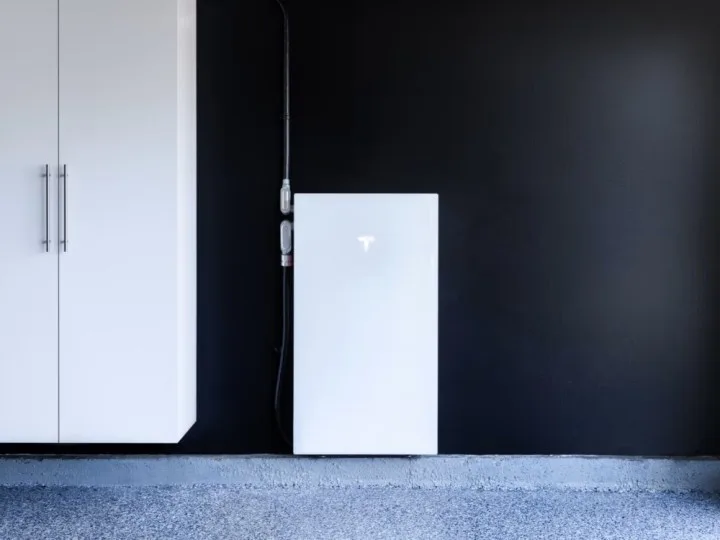
    Installing solar panels on your home is an excellent approach to save energy and reduce your utility bills, especially if you reside in a sunny state like Florida or California. However, there’s a significant drawback. When the power grid fails, you still lose electricity due to the connection setup. Your solar panels are unable to generate enough power or store energy to keep your home running independently. Essentially, your current energy system may not provide much value in such situations, unless you invest in a power backup system for your home. A Tesla Powerwall, for example, serves as a compact home battery that captures energy generated from the grid and can be utilized as a backup when conventional grid power is unavailable.

    To illustrate this point further, having a Tesla Powerwall ensures that your electricity remains operational even during significant blackouts or outages. It provides comprehensive home backup, which means you can power everything from lights and appliances to electronics. If you’ve ever faced the nightmare of losing an entire refrigerator’s worth of food due to a prolonged outage—like I have—you will surely understand the advantage of keeping your devices powered. Additionally, the Tesla Powerwall is an excellent asset for Tesla electric vehicle (EV) owners, fostering a complete smart energy ecosystem. Let’s delve deeper into this.

    Generating Whole-Home Backup Power from Solar

    Tesla Powerwall

    When the power goes out, people usually depend on a generator to restore electricity, but gas-powered generators can be noisy, require outdoor placement due to harmful fumes, and pose significant convenience challenges. They are often bulky and need a considerable amount of setup time, which can become even more complicated during severe weather conditions. In contrast, the Tesla Powerwall is a sleek battery backup that integrates with both your home’s electrical system and your solar installation.

    Essentially, your solar panels will continue to produce energy as usual, with any excess stored in the Tesla Powerwall. When the grid fails, the Powerwall seamlessly takes over and supplies your home with the necessary backup power. It automatically detects power outages and instantly activates to keep your home running on the stored energy. An added feature, known as Storm Watch, ensures that your Powerwall is fully charged before a significant storm hits. This guarantees you are always ready for any power interruption. The system is also expandable, allowing you to increase its capacity to support more devices. Importantly, it functions effectively with or without solar energy.

    Plus, Smart Energy Controls with the Tesla App

    Every Tesla Powerwall comes equipped with advanced energy monitoring, metering, and smart control features. It syncs with the Tesla app, granting you the ability to manage and configure your system straight from your smartphone at any time, and track energy usage along with other functional stats. You can customize various aspects of your setup, such as programming the system to charge only during off-peak electricity hours to save money, or discharging power when electricity prices spike, minimizing reliance on the grid. You have the flexibility to utilize your energy on your terms, freeing yourself from the constraints of local utility companies.

    Furthermore, as of 2023, the Powerwall qualifies for a federal tax credit of 30%. This Residential Federal Investment Tax Credit provides a financial incentive regardless of your energy source, making it an appealing investment overall. If you already have a solar system, there’s no reason to forgo a Powerwall and its home battery backup capabilities. It allows you to harness the solar energy you generate—your solar energy—even when the grid is offline.

    The Solar and Tesla Ecosystem is Where It’s At

    In addition to saving money and ensuring solar energy can serve as a home backup, the Tesla Powerwall opens up further benefits, particularly for Tesla EV owners. The Powerwall works in conjunction with Tesla vehicles to provide advanced vehicle charging features during outages. Importantly, Powerwall manages vehicle charging without overextending the energy and power limits of the battery system.

    Here’s the mechanism: During an outage, the Powerwall will charge your Tesla based on a predetermined charging threshold that dictates the energy allocated to the vehicle. This means that the Powerwall will not dip below the set threshold, ensuring the vehicle charging stops safely when the threshold is reached. Meanwhile, the Powerwall continues to supply backup power to your household. If your home has solar panels—and why wouldn’t it?—the solar energy can help restore the Powerwall charge, indirectly charging your Tesla EV.

    As long as you have the appropriate connectors in place, you can keep everything connected for automatic management by the Tesla Powerwall system. You won’t need to manually connect or disconnect anything in your garage, and you won’t have to tangle with cables and ports. The entire process is automated, and you can monitor the system’s status conveniently via the Tesla app. This not only offers tremendous convenience but also provides peace of mind in the event of severe conditions like storms, outages, and hurricanes.

    The Ultimate Solar, Home Backup, and EV Companion

    If you’ve installed a solar system on your property and haven’t connected a home battery backup like the Tesla Powerwall, you’re missing out on its full potential. You’re sacrificing the benefits of your investment. The Powerwall can keep your lights on during outages, conserve energy, and reduce your bills even more. Best of all, it serves as a great partner for Tesla EVs, facilitating the charging of your vehicle when necessary, whether during a power outage or through solar energy.

    Regardless of how often power outages occur in your area—especially if they are frequent—the first time you lose food, can’t maintain comfort in your home, and go without power for days, you will genuinely appreciate innovations like these. It’s wise to consider equipping your home with a Tesla Powerwall before you reach such a point. Being prepared for whatever challenges arise will ensure you can keep charging your EV without accumulating high power bills.

  • University Students Develop Solar Panels That Work At Night Too!

    A team of engineers at Stanford University have developed a solar cell that can generate some electricity at night. This photovoltaic (PV) cell uses a process called radiative cooling to allow for 24-hour renewable energy generation.

    (more…)